Article Contents:
- Philosophy of decorative craftsmanship
- Aesthetic nature of stucco art
- Cultural heritage in modern embodiment
- Material science achievements of modernity
- Polyurethane revolution
- Nanotechnology additives
- Technological processes of creating perfection
- Computer modeling
- Multi-Stage Quality Control
- Stylistic diversity of stucco art
- Neoclassical Elegance
- Baroque opulence
- Modernist interpretations
- Functional capabilities of decorative stucco
- Architectural correction of space
- Zoning and organization of space
- Masking structural flaws
- Color solutions and decorative effects
- Classic white finish
- Patina and Aging
- Gilding and metallization
- Integration of lighting into stucco compositions
- Accent Lighting
- Hidden Lighting
- Technologies of Professional Installation
- Preparatory work
- Marking and positioning
- Adhesive systems and fasteners
- Economic aspects of stucco decoration
- Investment attractiveness
- Pricing structure
- Seasonal price fluctuations
- Russian traditions of wooden architecture
- European Influences
- Russian traditions
- Eastern Motifs
- Modern Trends in Development
- Ecological innovations
- Digital technologies
- Interactive solutions
- Maintenance and preservation of beauty
- Regular Maintenance
- Preventive measures
- Restoration work
- Prospects for the development of stucco art
- Materials of the Future
- Personalization of mass production
- Conclusion
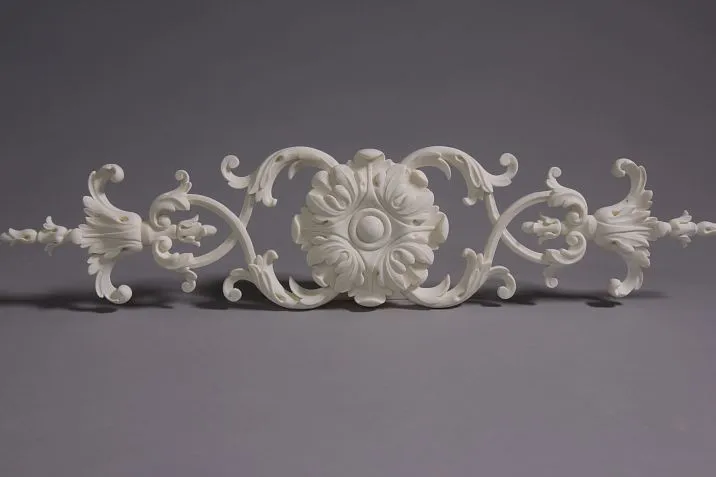
The majestic beauty of three-dimensional forms is capable of instantly transforming the most ordinary walls into works of art. Stucco decoration is a unique way to give the interior a distinctive character, highlight the owner's status, and create an atmosphere of elegance. In the era of mass production and standard solutions, decorative stucco becomes a symbol of individuality and impeccable taste, allowing to realize the most daring design concepts.
The modern understanding of stucco decoration has been radically expanded thanks to the emergence of innovative materials and advanced manufacturing technologies. If previously creating quality stucco required months of meticulous work, today advanced production methods allow creating masterpieces of decorative art in the shortest time while maintaining the highest quality.




Philosophy of decorative craftsmanship




Aesthetic nature of sculptural art
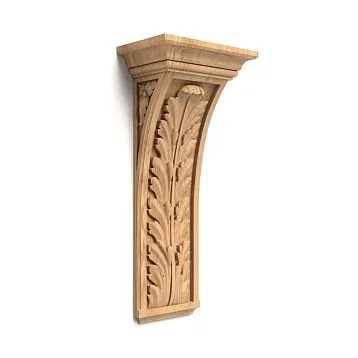
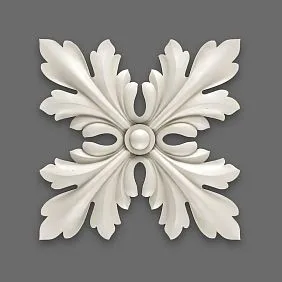
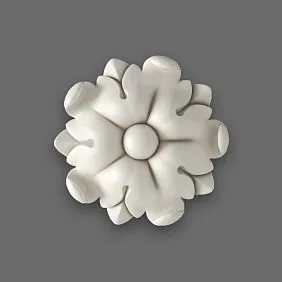
What does molding represent in the context of modern design? It is a complex artistic system where each element carries a specific semantic load. Rosettes, cornices, moldings, pilasters — all these elements create a unified composition that tells the story of the house and its inhabitants.
The psychological impact of three-dimensional forms is based on the characteristics of human spatial perception. Relief surfaces activate brain areas responsible for tactile sensations and emotional responses. That is why well-executed molding evokes an irresistible desire to touch, explore the texture, and feel the play of light and shadow.
Our factory also produces:



Cultural Heritage in Modern Realization
The traditions of molding craftsmanship trace their roots back to deep antiquity. Egyptian pharaohs adorned their palaces with relief compositions, ancient Greece gifted the world with perfection of proportions, medieval cathedrals astonish with the complexity of stone carving. Each era brought its own characteristics, creating a rich heritage of decorative art.
Modern masters do not merely copy historical samples — they reinterpret classical forms, adapting them to the requirements of contemporary life. The use of high-tech materials allows creating items surpassing historical analogs in durability and functionality.
Get Consultation
Material Science Achievements of the Modern Era
The Polyurethane Revolution
The emergence of high-tech polyurethane has fundamentally transformed the decorative molding industry. Material with density of 250-450 kg/m³ ensures perfect reproduction of the finest details while keeping the finished product lightweight. The unique molecular structure of the polymer allows creating elements ranging from 3 mm to 300 mm in thickness.
Polyurethane's thermal stability is remarkable — the material retains its properties within a range from -65°C to +95°C. This is especially important for Russian climatic conditions, where daily and seasonal temperature fluctuations reach extreme values. Frost resistance ensures the longevity of decorative elements even in unheated rooms.
Nanotechnological Additives
Modern compositions contain nanoparticles that impart unique properties to the material. Titanium dioxide creates a self-cleaning effect under ultraviolet light. Silver nanoparticles provide antibacterial protection, preventing mold and fungi growth. Carbon nanotubes significantly enhance strength.
The ecological safety of modern materials is confirmed by international certifications. The absence of formaldehyde, heavy metals, and volatile organic compounds makes polyurethane molding absolutely safe for human health.
Technological Processes of Creating Perfection
Computer modeling
The process of creating modern molding begins with 3D modeling in specialized programs. Designers work with virtual objects, experimenting with shapes, proportions, and details. The ability to preview visualization allows clients to see the result even before production begins.
Automated design systems ensure modeling accuracy down to 0.001 mm. This is critically important for reproducing the finest details of classical samples or creating original works of unprecedented complexity.
Precision Manufacturing
CNC milling of master models occurs with cosmic technology precision. Modern machines can process the most complex curved surfaces, creating details unattainable by hand. Five-axis processing allows creating recesses, indentations, and intricate ornament interweavings.
Casting processes occur in vacuum chambers at 4-6 atmospheres pressure. Controlled environment eliminates the formation of pores, inclusions, and other defects. Temperature regime of 70-90°C and humidity of 40-50% provide ideal conditions for polymerization of the material.
Stylistic Diversity of Molding Art
Neo-classical elegance
The classical style remains the benchmark of aristocratic taste. Strict proportions based on the golden ratio, symmetrical compositions, traditional motifs create an atmosphere of eternal beauty. Corinthian capitals with acanthus leaves, Doric columns, Ionic scrolls — each element carries deep symbolic meaning.
Especially impressive are portrait medallions of historical figures executed in the bas-relief technique. The delicate rendering of facial features, conveying character and emotion, requires exceptional skill from the sculptor-modeler.
Baroque opulence
The Baroque style embodies the philosophy of luxury and theatricality. Dynamic compositions, rich in detail, create a sense of movement and life. Sinuous lines, complex ornament interweavings, abundance of gilding transform interiors into theatrical spaces.
Baroque angels with flowing garments, putti among clouds, allegorical figures of the seasons — all this creates an unparalleled atmosphere of grandeur and solemnity.
Modernist Interpretations
Modern designers boldly experiment with traditional forms, creating fundamentally new artistic solutions. Minimalist compositions, geometric ornaments, abstract forms allow molding to seamlessly integrate into contemporary interiors.
Particularly interesting are biomorphic compositions inspired by natural forms. Stylized plants, marine motifs, abstract natural textures create a sense of harmony with the surrounding world.
Functional Capabilities of Decorative Molding
Architectural Space Correction
Correctly selected Stucco decoration is a powerful tool for visual transformation of space. Vertically oriented elements — pilasters, columns, panels — visually increase ceiling height. Horizontal friezes and cornices expand narrow rooms.
Using various scales creates an illusion of changing room proportions. Large elements make big spaces more cozy, while small details add intimacy to small rooms.
Zoning and spatial organization
Relief elements perform an important function in spatial zoning. Arched openings with decorative frames create transitions between functional zones. Colonades and pilasters visually divide a single space without using walls.
Multi-level ceiling compositions create a complex play of planes and visually structure the space. Coffered ceilings with rosettes and moldings transform an ordinary room into a grand hall.
Masking structural flaws
Decorative molding excellently handles architectural flaws. Poorly placed beams become decorative elements with applied rosettes. Protruding utilities are concealed behind elegant panels. Height variations are accentuated by multi-level cornices.
Special skill is required when working with uneven walls. Specially developed flexible elements allow creating a perfectly flat surface, hiding all foundation defects.
Color solutions and decorative effects
Classic white finish
Traditional white finish emphasizes the purity of forms and perfection of proportions. Various shades of white—from warm ivory to cool Arctic—allow precisely adjusting the color tone to a specific interior.
Matte surfaces create noble restraint, semi-gloss adds elegance, glossy effects suit grand interiors. Texture play within the white palette creates rich visual effects.
Patina and aging
Patina technique allows creating an effect of noble aging. Multi-layer application of special compounds imitates natural patina that forms on material surfaces over decades.
Different types of patina create different emotional effects. Greenish copper patina associates with maritime themes, brownish bronze patina—with antiquity, grayish—with northern latitudes.
Gilding and metalization
Gilding remains the pinnacle of decorative craftsmanship. Using gold of different purity creates coatings of varying intensity and shades. From warm red to cool white gold—each shade creates its own unique atmosphere.
Modern technologies allow using not only traditional sheet gold, but also powder compositions creating more economical, yet no less effective coatings.
Integration of lighting into relief compositions
Accent lighting
Proper lighting can turn the simplest molding into a work of art. Directional light at a 35-45 degree angle creates expressive shadows, emphasizing the volume of forms. Adjustable color temperature allows creating various moods.
Spotlights embedded in ceiling rosettes create an effect of internal illumination. This solution is especially effective at night, when relief elements become sources of soft diffused light.
Hidden lighting
LED technologies have opened new possibilities for lighting relief decor. Ultra-thin LED strips hidden in recesses of cornices and moldings create an effect of floating elements in the air.
Programmable controllers allow creating dynamic lighting effects. Smooth transitions in intensity, color temperature changes, synchronization with music transform static relief elements into living works of art.
Professional Installation Technologies
Preparation Work
Quality installation begins with careful preparation of the base. Walls must be leveled with a tolerance of no more than 3 mm per linear meter. Any irregularities will be noticeable on the finished product, especially under side lighting.
Priming with special compounds ensures optimal adhesion of adhesive systems. Modern primers contain antiseptic additives preventing mold growth under decorative elements.
Marking and Positioning
Precise marking is the foundation of quality installation. Using laser levels and special templates ensures ideal positioning of elements. For complex compositions, a detailed installation drawing is created to scale.
Special attention is paid to corner joints and element seams. Preliminary fitting allows identifying and eliminating all discrepancies before final installation.
Adhesive systems and fasteners
Modern polyurethane adhesives provide joint strength up to 5 MPa while maintaining elasticity. Such adhesives compensate for thermal deformations, preventing cracks at joints.
For particularly heavy elements, additional mechanical fasteners are used. Stainless steel anchor systems are concealed within the relief decor, ensuring secure fastening for decades.
Economic aspects of relief decoration
Investment Appeal
Quality decor molding is not just interior decoration, but a long-term investment. The service life of modern polyurethane items exceeds 35 years without loss of aesthetic qualities. This significantly surpasses other types of decorative finishes.
Property market value increases by 15-30% with quality relief decoration. Unique artistic solutions make the property more attractive to buyers and tenants.
The cost of stucco decoration is composed of several components. Material costs account for 20-30%, artist-modeler work — 35-45%, manufacturing processes — 25-30%, installation and finishing — 10-15%.
Cost savings are achieved through a comprehensive approach to decoration. Ordering a full set of elements for one object allows reducing the unit cost by 20-35% due to optimization of manufacturing processes.
The market for stucco decoration is subject to seasonal fluctuations. Peak demand occurs during the spring-summer period when renovation activities are active. Winter months are characterized by minimal demand and maximum discounts up to 40%.
Seasonal Price Fluctuations
Planning purchases during off-seasons allows significant savings without compromising quality. Most manufacturers offer pre-order programs with fixed prices.
European traditions of stucco art are based on classical heritage. The French style is distinguished by elegance of proportions and delicacy of execution. Italian Baroque impresses with its opulence and drama. English neoclassicism demonstrates restrained elegance.
Regional characteristics and cultural traditions
European influences
Each European school has contributed to the development of stucco art. Understanding these differences helps create authentic interiors in a specific style.
Russian stucco evolved under the influence of Byzantine, European, and Eastern traditions. National characteristics are reflected in the use of natural motifs, Orthodox symbolism, and folk ornaments.
Russian Traditions
Modern Russian masters continue these traditions, creating works that reflect national identity while meeting international quality standards.
Modern Russian masters continue these traditions, creating works that reflect national identity while adhering to international quality standards.
Eastern motifs
Eastern philosophy brings a unique spirituality and symbolism to stucco art. Chinese dragons, Japanese cherry blossoms, Indian lotuses create a meditative atmosphere conducive to inner peace and harmony.
Islamic ornaments, with their complex geometry and plant motifs, open new possibilities for modern interpretations of traditional forms.
Modern Development Trends
Ecological Innovations
The modern stucco decoration industry actively implements eco-friendly technologies. Biodegradable polymers, materials from recycled raw materials, water-based dyes form a new philosophy of production.
Principles of sustainable development are becoming a priority for leading manufacturers. Closed production cycles, waste minimization, use of renewable energy sources — all this forms the industry of the future.
Digital technologies
Artificial intelligence and machine learning revolutionize stucco decoration design processes. Systems analyze customer preferences, creating personalized design solutions.
Virtual and augmented reality allow clients to "try on" various decoration options even before purchase. Such technologies significantly reduce the risk of making a wrong choice.
Interactive Solutions
The future of stucco decoration is linked to the integration of interactive technologies. Elements with embedded sensors react to human presence by changing lighting or playing sounds.
Integration with "smart home" systems transforms decorative elements into functional components of living space. Such solutions are especially popular among younger consumers.
Modern stucco requires minimal maintenance due to the use of high-tech materials. Regular dust removal using soft brushes or vacuum cleaners with brush attachments maintains the original appearance of items.
Regular Maintenance
Complex relief requires special attention to hard-to-reach areas. Special brushes of various shapes allow thorough cleaning of all recesses and protrusions without damaging the surface.
Controlling the microclimate of a room contributes to the maximum longevity of stucco decoration. Optimal temperature 20-24°C and relative humidity 45-60% prevent deformation and cracking.
Preventive measures
Controlling the microclimate of the room contributes to the maximum longevity of sculptural decoration. Optimal temperature 20-24°C and relative humidity 45-60% prevent deformation and cracking.
Protection from direct sunlight is especially important for painted elements. Ultraviolet radiation may cause fading of some pigments, so it is recommended to use sun protection films on windows.
Restoration work
In case of restoration, it is necessary to consult specialists using original materials and technologies. Attempting repairs independently often leads to irreversible damage.
Modern restoration methods allow restoring even severely damaged elements. The use of 3D scanning and printing opens new possibilities for recreating lost details.
Perspectives of stucco art development
Materials of the future
Development of new materials proceeds along the path of creating "smart" composites with changing properties. Thermochromic additives allow elements to change color depending on temperature. Photochromic pigments react to lighting.
Self-healing materials with polymer microcapsules automatically fill small cracks, extending the service life of decorative elements. Such technologies are already undergoing laboratory testing.
Mass customization
The development of digital technologies makes it possible to mass-produce personalized items. Each customer will receive a unique decoration, created specifically for their interior and reflecting their personal preferences.
AI systems analyze the client's lifestyle, cultural preferences, and aesthetic tastes, creating optimal design solutions. This approach revolutionizes the interaction between producer and consumer.
Conclusion
Modern Moldings are decorationwhich combines centuries-old craftsmanship traditions with innovative 21st-century technologies. Each piece of molding art becomes a unique reflection of the owner's personality, cultural level, and aesthetic preferences.
Technological progress has made high art accessible to a broad circle of admirers of beauty. Modern materials ensure durability, practicality, and ecological safety while preserving unparalleled aesthetic qualities.
Investing in quality moldings is an investment in beauty, comfort, and prestige for many years. Thoughtfully chosen decorative elements create a unique atmosphere, highlight the individuality of the interior, and increase property value.
The future of molding art is linked to further development of technologies while preserving core principles — striving for beauty, harmony, and perfection. Each new piece will be another step toward creating an ideal living space.
Choosing decorative molding is a solution that will delight you and your loved ones for decades. Beauty is eternal, and well-executed works of decorative art become worthy guardians of that beauty in your home.
Modern possibilities allow to realize any creative ideas — from precise reproduction of historical samples to creation of avant-garde compositions. The key is to find a balance between tradition and innovation, creating a space that inspires and elevates the soul.
STAVROS, recognized as a leading company in the field of elite molding decoration, offers a full range of services for designing, manufacturing, and installing decorative elements of any complexity. A team of highly skilled sculptors, designers, and technologists brings the most daring creative ideas to life, creating works that become true masterpieces of interior art.
Years of experience working with various styles and materials, deep understanding of modern design trends, use of advanced manufacturing technologies, individual approach to each project, and impeccable execution quality make STAVROS the ideal partner for creating unique decorative solutions. From the first consultation to the grand completion of the project, every stage is accompanied by maximum professionalism and attention to detail, worthy of high art.