Article Contents:
- What molding can be bought in Moscow
- Ceiling molding
- Molding for Walls
- Facade stucco
- Molding for furniture and doors
- Polyurethane or wood molding: what to choose
- Polyurethane: lightness, stability, moisture resistance
- Wood: naturalness, texture, premium level
- Comparison: which material for which task
- Which molding elements are suitable for ceilings, walls, and facades
- Moldings
- Cornices
- Baseboards
- Ceiling Rosettes
- Decorative Overlays and Corner Elements
- Corbels and capitals
- How to choose molding to match the interior style
- Classicism and Baroque
- Neoclassicism
- Art Deco
- Modern Interior
- Minimalism with decorative accents
- How to choose molding by room
- Living Room
- Bedroom
- Entry Hall
- Kitchen
- Bathroom
- Study and commercial premises
- What to consider before buying molding in Moscow
- Common mistakes when choosing molding
- How to order molding in Moscow without making mistakes
- Why it's convenient to buy molding from a manufacturer with a large catalog
- 10 practical tips for choosing molding
- Questions and answers about buying molding
- STAVROS — decorative molding manufacturer since 2002
- What molding can be bought in Moscow
- Ceiling molding
- Molding for Walls
- Facade stucco
- Molding for furniture and doors
- Polyurethane or wood molding: what to choose
- Polyurethane: lightness, stability, moisture resistance
- Wood: naturalness, texture, premium level
- Comparison: which material for which task
- Which molding elements are suitable for ceilings, walls, and fa

Molding in Moscow is experiencing a true revival. Just twenty years ago, decorative molding was perceived as an attribute of pompous mansions and Soviet theater foyers. Today, it is a living, flexible tool of interior design that is equally organic in a classic living room of a country house, a minimalist city apartment, and a commercial space with stylistic ambitions. Both apartment owners undertaking renovations, designers working on high-level projects, and finishing contractors who value installation technology want to buy molding in Moscow.
But between desire and the right result lies a whole chain of decisions. Which material to choose? Which elements are needed specifically for your task? How to avoid mistakes with size, not overload the space, not mix incompatible ornaments? This article is a commercial selection guide. It will help you understand the types of molding, compare materials, select decor for a specific interior, and place an order consciously.




What kind of molding can be bought in Moscow
First, you need to understand: molding is not a single product. It's a broad category of decorative elements, each solving a specific task. Before opening the catalog, determine the application area and product type.




Ceiling molding
The ceiling is the traditional field for molded decor. It's here that it works with maximum expressiveness: creating an architectural transition from wall to ceiling, forming frame compositions, highlighting light fixtures.
Ceiling MoldingCornices — linear elements attached at the junction of the wall and ceiling. The cornice sets the scale of the entire space, so choosing its width and profile height is one of the key decisions in interior design. For rooms with ceiling heights up to 2.7 m, cornices 50–80 mm wide are suitable. For high spaces from 3 meters — profiles from 100 mm and above, often multi-tiered, with several decorative shelves.
Ceiling rosettes — round or polygonal decorative elements placed in the center of the ceiling around a light point. They range from small, 200–300 mm in diameter, to monumental, with diameters of 800–1200 mm and complex ornamentation. A chandelier rosette is not just decoration, but the visual center of the room, around which the entire ceiling composition is built.
Decorative ceiling inserts, corner blocks, central medallions — all this complements and complicates the ceiling system, turning a flat surface into a full-fledged architectural solution.
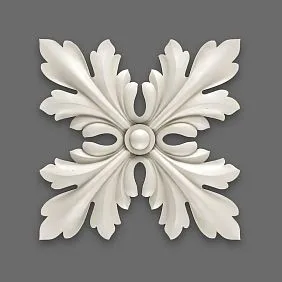
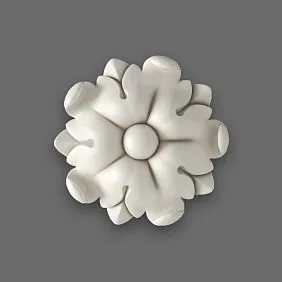
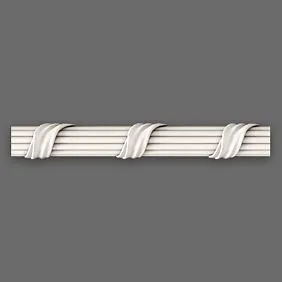
Our factory also produces:




Wall molding
Wall molding is primarily moldings and frame systems. A molding is attached to the wall vertically or horizontally, creating a frame grid — so-called 'panels'. Inside each frame, you can leave the wall neutral, apply paint of a different tone, wallpaper, or attach a decorative insert.
Moldings for wallsMoldings — one of the most popular tools for creating a classic interior. They are easy to install, available in a wide range of profiles and sizes, and organically combine with cornices, baseboards, and rosettes from the same collection.
Decorative wall overlays and central elements are point accents: cartouches, mascaron, medallions, corner blocks, ornamental inserts. They enrich the frame system and give the wall sculptural expressiveness.
Accent panels with molded decor — a more complex solution where the entire wall or part of it is designed as an architectural composition with pilasters, cornices, and ornamental inserts. This is a solution for formal rooms and high-level interiors.
Get Consultation
Molding for facade
Facade molding is a separate story. The requirements for the material here are fundamentally stricter: the products operate under conditions of temperature fluctuations, humidity, and ultraviolet radiation. Ordinary interior molding is not suitable for exterior use.
Facade DecorationWeather-resistant polyurethane is the optimal choice for exterior decoration. It does not absorb moisture, does not crack in frost, and does not deform when heated. With proper priming and painting with vapor-permeable paints, facade molding lasts for decades without losing its shape and geometry.
Facade decor includes window and door trims, corner pilasters, decorative pediments, gable elements, cornice blocks, medallions, and cartouches for walls. All of this forms the architectural character of the building and makes the facade recognizable.
Molding for furniture and doors
Decorative molding for furniture — overlays for facades, inserts in door panels, corner elements, and cornice blocks for cabinets and dressers. This type of decor is especially in demand when creating classic kitchen sets, library sections, wardrobes, and case furniture in a historical style.
Polyurethane molding is well-suited for furniture projects: it is lightweight, easy to cut, adheres well to facade surfaces, and takes enamel excellently. Wooden overlays provide a more premium result under a transparent coating — when the natural texture is important.
Polyurethane or wood molding: what to choose
This question arises for everyone who starts making a choice. Both materials give a visually similar result — but fundamentally differ in properties, application areas, and the logic of working with them.
Polyurethane: lightness, stability, moisture resistance
Polyurethane moldings— a modern and technological choice. Polyurethane is a dense closed-cell polymer that does not absorb moisture, does not change dimensions with temperature and humidity fluctuations, does not crack, does not rot, and at the same time weighs several times less than plaster or wood.
Key advantages of polyurethane moulding:
-
Lightweight. A 2-meter polyurethane cornice weighs significantly less than its plaster counterpart. This means the adhesive holds securely, and installation is possible even without special equipment.
-
Moisture resistance. Polyurethane is not afraid of damp rooms—kitchens, bathrooms, hallways. It does not swell or lose its shape.
-
Stable geometry. The product maintains precise dimensions and profile regardless of operating conditions.
-
Easy processing. Polyurethane moldings can be cut with a regular handsaw or sharp knife, and they sand, prime, and paint well.
-
Ready for painting. The surface is even, without pores—an ideal base for any paint or enamel.
Polyurethane is the choice for most interior tasks: walls, ceilings, damp areas, facades. It is a practical, durable, and economically justified material.
Wood: naturalness, texture, premium level
Wooden moldings and cornices—the choice for those who value the natural texture and tactile expressiveness of genuine material. Wood creates a sense of authenticity that cannot be replicated by polymer materials.
Wooden molding is preferable:
-
in interiors with a transparent finish, where the wood texture is part of the design;
-
in author's projects with an emphasis on natural materials;
-
for furniture projects with artistic detailing;
-
in rooms with controlled humidity and temperature.
Wood requires proper drying of blanks and a stable indoor microclimate. Products made from properly dried solid wood are stable, durable, and visually flawless.
Comparison: which material for which task
| Parameter | Polyurethane | Wood |
|---|---|---|
| Weight | Lightweight | Heavier |
| Moisture resistance | High | Requires treatment |
| Application | Walls, ceilings, facades, wet areas | Interiors, furniture, author's projects |
| Finishing | For any paint, enamel | For paint, enamel, tinting, oil |
| Texture | Homogeneous | Natural, expressive |
| Installation | Simple, adhesive | Requires experience |
| Price | Affordable | Higher |
| Suitable for facades | Yes (weather-resistant) | No |
The conclusion is simple: polyurethane is for most interior tasks and for facades. Wood is for premium projects with natural finishes and furniture decor.
Which molding elements are suitable for ceilings, walls, and facades
Let's examine specific products—not in theory, but in relation to real tasks and application areas.
Moldings are linear profiles used to create framed compositions, zone walls, and frame openings. They come in various widths (from 20 to 150 mm) and relief complexity — from smooth to richly decorated.
Molding is a profiled linear element. By cross-section shape, it can be flat, convex, concave, or complex multi-step. By application—wall, ceiling, floor, furniture.
Moldings are used for:
-
creating frame systems on walls;
-
forming framed furniture facades;
-
framing door and window openings;
-
for creating decorative transitions between surfaces.
Moldings made of polyurethaneare available in hundreds of profiles: from simple flat strips to multi-level classical profiles with shelves, cantilevers, and ornamental details.
Crown mouldings
A cornice is a ceiling molding that decorates the transition from wall to ceiling. It is one of the main formative elements of interior design: it sets the scale, style, and visual 'height' of a room.
Proportion rule: the width of the cornice should correlate with the ceiling height. For ceilings 2.5–2.7 m — cornices 60–90 mm wide. For 3–3.5 m — 100–160 mm. For formal rooms above 3.5 m — from 180 mm and above, often with additional details: sub-cornice moldings, brackets, decorative casts.
Polyurethane ceiling cornices— the most popular category in stucco decoration. They are mounted with adhesive, easily joined in corners using corner elements, and create a visually finished interior with minimal labor.
Baseboards
A floor skirting board is the 'mirror' counterpart to the cornice, but at the bottom. A properly chosen skirting board creates visual completeness in the interior: the space gets a clear lower boundary, and the wall smoothly transitions into the floor.
In classical interiors, floor skirting boards are often tall — from 150 to 250 mm, with an ornamental profile. For modern interiors, flat and minimalist profiles with a height of 60–100 mm are suitable. Polyurethane skirting boards are easy to work with, can be cut to fit corners without special equipment, and do not deform when in contact with a damp floor.
Ceiling Rosettes
A ceiling rosette is a decorative element placed in the center of the ceiling. It can be flat, relief, with or without ornament. The main rule: the diameter of the rosette should not exceed one-fifth of the room's width. That is, for a room 4 × 5 m, the optimal rosette diameter is no more than 800–900 mm.
ceiling rosettesmade of polyurethane are available in a huge range of sizes and styles: from strict geometric ones for modern interiors to lush Baroque ones with acanthus leaves and rococo scrolls for classic styles.
Decorative overlays and corner elements
These are point decorative details: corner blocks for frame systems, central rosettes for moldings, cartouches, medallions, mascaron. They enrich the frame system and create accents in the desired points of the space.
Decor for Molding— a separate category that includes insert elements for frame systems. Corner blocks allow you to organize a frame grid without the need to trim moldings to an exact angle—the element is simply installed in the corner, and the molding meets it in a straight line.
Brackets and capitals
Brackets—decorative support elements for shelves, cornices, and beam structures. Capitals—crowning elements of pilasters and columns. These products add architectural depth to the interior and create accents in key points of the space.
How to choose molding to match the interior style
Molding does not exist in a vacuum — it either enhances the style or ruins it. Let's examine the main directions.
Classical and Baroque
Here, molding works at full strength: lush cornices with ornamental bands, rosettes with acanthus leaves, moldings with ogee profiles, brackets with volutes. Everything is voluminous, expressive, rich in detail. Materials—polyurethane or wood, finishes—gold, white enamel, marble imitation.
Important: in a classic interior, all molding elements must belong to the same collection or at least the same stylistic range. Mixing Baroque rosettes with Art Nouveau moldings is a crude mistake that no painting can save.
Neoclassicism
Neoclassicism—a more restrained version of classicism. Profiles are stricter, ornaments more concise: meander, ionic, straight shelves, fluting. Cornices are flatter, rosettes more geometric. Color—often white or light gray, less often gold. This is a style that works well in modern living spaces without losing its classical character.
Art Deco
Art Deco implies geometry, contrast, and clarity of lines. Moldings are straight and stepped, without organic ornaments. Rosettes—strict, with geometric patterns. Materials—metallic finishes, contrasting two-color schemes. Molding here is used with moderation and in a targeted manner.
Modern interior
Yes, molding is appropriate even in a modern interior—but it is applied differently. Not as a system, but as an accent. One strict ceiling cornice without ornament. A geometric frame made of flat molding on an accent wall. A minimalist rosette in the center of the ceiling.
Modern molding is not about 'decorations,' it's about the architectural structure of space. One or two correctly chosen elements make the interior complete without overloading it with details.
Minimalism with decorative accents
For minimalist spaces, molding is used in the most restrained way: a flat cornice without ornamentation, a simple baseboard, possibly a geometric frame on one accent wall. No more. The goal is to create architectural structure, not to decorate surfaces.
How to choose molding for a room
Each room has its own requirements — for element size, material, style.
Living Room
The living room is the main space for decorative molding. A full system is possible here: ceiling cornice, baseboard, wall frame moldings, ceiling rosette. Element sizes correspond to the room's area and height — for spacious living rooms, wide cornices from 120 mm and rosettes with a diameter of 600–1000 mm are appropriate.
Molding for the living room in Moscow is one of the most frequent requests in our category. And that's understandable: it's the living room that sets the tone for the entire house.
Bedroom
In the bedroom, molding should work softly. The cornice should be of moderate width, with subdued ornamentation or none at all. The rosette should be medium-sized. Wall moldings are optional, in a restrained format. Heavy Baroque molding in the bedroom creates tension where an atmosphere of calm is needed.
Molding for the bedroom: the optimal choice is neoclassical profiles of medium width in white or cream color.
Entryway
The hallway is a small but important space: it forms the first impression. Here, decorative molding should be applied in a targeted way: ceiling cornice, baseboard, possibly frame moldings on the wall with a mirror. Do not overload a small space with voluminous elements.
Kitchen
The kitchen is a wet area. For the ceiling cornice and baseboard in the kitchen, polyurethane is mandatory: it does not absorb moisture, does not swell, and is easy to clean. Wooden moldings in the kitchen are used only in the dining area, provided there is normal ventilation and stable humidity.
A classic white polyurethane ceiling cornice is the ideal solution for the kitchen, creating a finished interior without the risk of material damage.
Bathroom
The bathroom is the most humid area in the house. Only polyurethane molding made from weather-resistant material is possible here. A cornice under the ceiling and a baseboard at the floor are usually sufficient. Additional decor in the bathroom should be used with caution: do not overload the small space.
Study and commercial premises
Study, library, meeting room — spaces where molding creates an atmosphere of authority and professionalism. Strict classical or neoclassical profiles, frame systems made of moldings, and wooden overlays on furniture are appropriate here. Commercial interiors — restaurants, hotels, offices — use molding as a tool for shaping the branded character of the space.
What to pay attention to before buying molding in Moscow
Before placing an order, go through this checklist. Each item is a prevented mistake.
-
Ceiling height. This is the first and main parameter. It determines the maximum allowable width of the cornice and the size of the rosette. Do not focus on what looks 'beautiful' — focus on proportions.
-
Room area. A large ornamental cornice in a small room overwhelms the space. A small profile in a spacious hall gets lost. The scale must match the space.
-
Material for the room type. Humid zones — only polyurethane. Interiors for transparent finishing — wood or polyurethane for tinting. Facade — weather-resistant polyurethane.
-
Compatibility of elements. Cornice, molding, baseboard, and rosette in one space should belong to the same stylistic series. Choose elements from one collection or at least one stylistic direction.
-
Paintability. Check if the material is suitable for your final finish. Most polyurethane products are ready for painting immediately after installation.
-
Availability of corner and additional parts. For proper joining of moldings and cornices, corner elements are needed. Make sure they are included in the selected collection.
-
Allowance for trimming. When ordering linear products, add 10–15% to the calculated quantity — for trimming at corners and joints.
-
Mounting surface. Drywall, plaster, concrete — each surface may require different adhesive and fastening methods.
Common mistakes when choosing molding
These mistakes are made again and again — and each time they cost either money or the desired result.
-
Choosing only by photo, without dimensions. A beautiful cornice in a photo of luxurious apartments may look out of place in a standard apartment. Check the dimensions, not just the picture.
-
Not considering ceiling height. For a 2.6 m ceiling, a cornice 200 mm wide is a disaster. The space will visually 'collapse'. Proportions are the foundation of selection.
-
Mixing different styles. A Baroque rosette, Art Nouveau molding, and classic baseboard in one room — that's not eclecticism, it's chaos.
-
Ignoring room humidity. A wooden cornice in the bathroom is a recipe for mold and deformation. For wet areas — only polyurethane.
-
Buying without a layout diagram. Without a diagram, it's unclear how many elements are needed, where joints will be, or how to place corner blocks. The result — uneven layout and extra expenses.
-
They don't take extra. Trimming in corners, defects, installation errors — all this requires extra. Minimum 10%, better 15%.
-
They skimp on glue and surface preparation. Cheap glue or unprepared surface leads to molding peeling off — sometimes months after installation.
-
They don't consider compatibility with lighting. A ceiling rosette without considering the type and size of the chandelier can look ridiculous. First determine the light fixture, then choose the rosette.
-
They take too wide a cornice for a small room. Proportions are disrupted, the ceiling 'lowers', the room becomes more cramped.
-
They don't account for the finish. If you plan to paint the molding the color of the walls — primer is needed. If for gilding — special technique. Without preparation, the result will be mediocre.
How to order molding in Moscow without making a mistake
Buying molding in Moscow today is easy — if you know exactly what to look for. Here's an algorithm that will help you place an order without errors.
-
Determine the application area. Ceiling, walls, facade, furniture — these are different product categories.
-
Measure the room. Ceiling height, wall perimeter, area — all this is needed for the correct size selection and quantity calculation.
-
Choose the material. Polyurethane — for most tasks. Wood — for natural finishing and furniture.
-
Choose a style. Determine the main stylistic direction: classic, neoclassic, contemporary, minimalism. Select all elements in the same key.
-
Go to the catalog and choose a collection. It's better to choose systematically — cornice, molding, baseboard, and rosette from the same collection.
-
Calculate the quantity with a margin. For linear products +10–15%. For piece goods — +1–2 units in case of defects during installation.
-
Clarify the installation method. For different surfaces — different adhesives and techniques. If installing yourself — study the instructions.
-
Place your order. The extensive STAVROS stock program allows shipping orders from a single piece — without waiting for a production cycle.
Why it's convenient to buy molding from a manufacturer with a large catalog
When you work with a manufacturer that offers a full catalog of molding, several things become easier and more reliable.
First — systematicity. All elements within one collection are designed as a single whole: cornice, molding, baseboard, rosette, corner blocks — everything is proportional and stylistically coordinated. You don't need to independently select compatible parts from different sources.
Second — wide selection.STAVROS stucco catalog counts thousands of items in dozens of styles and sizes. The probability of finding the right solution is maximum.
Third — reliability. The manufacturer controls quality at every stage: from raw materials to packaging. The product geometry matches the stated parameters, the surface is ready for finishing, and each batch is identical to the previous one.
Fourth — a single supplier for the entire project. Molding for ceilings,Wooden cornices for furniture, facade decor — all of this can be ordered in one place. This saves time and logistics.
10 practical tips for choosing molding
These tips are a concentrate of practical experience. Apply them to your project.
-
Start with the main element. Choose a ceiling cornice — and select everything else based on it.
-
Maintain proportions. The width of the cornice in centimeters should not exceed the ceiling height in tens of centimeters (for example, for a 2.7 m ceiling — cornice no wider than 80–90 mm, for 3.0 m — up to 120 mm).
-
Do not mix more than two active ornamental motifs in one space.
-
For wet areas — only polyurethane.
-
Create a layout on paper before ordering: this reveals all corners, joints, and problem areas.
-
Always take a 10–15% surplus.
-
If painting — prime first.
-
Choose systematic collections where elements are coordinated.
-
First choose the size, then the pattern. An incorrect scale cannot be fixed with a beautiful design.
-
Consider the light: large profiles cast shadows that change the perception of space under different lighting.
Questions and answers about buying molding
Where to buy molding in Moscow for apartments and houses?
The best choice is manufacturers with a large catalog of ready-made products and a stock program. STAVROS offers thousands of polyurethane and wood items with shipment from a single piece.
What is better to choose: polyurethane or wood molding?
For most tasks — polyurethane: it is lightweight, moisture-resistant, and stable. For interiors with transparent finishes and furniture projects — wood.
What kind of molding is suitable for the ceiling?
Ceiling MoldingPolyurethane rosettes and medallions are the optimal choice. They are lightweight, adhere well, and are available in a wide range of profiles.
What moldings are best to use for walls?
Polyurethane moldings with a profile that matches the interior style. For classic — with ornamental details, for modern — flat or semi-circular profiles.
Is molding suitable for bathrooms and kitchens?
Yes — only polyurethane, moisture-resistant. Wooden products cannot be used in damp rooms.
Can stucco be used in modern interiors?
Yes. Modern molding includes strict geometric cornices, flat moldings for framing systems, minimalist rosettes. Point application without overloading with ornaments.
How to choose the size of the cornice according to the ceiling height?
For ceilings 2.5–2.7 m — cornices 50–90 mm wide. For 3.0–3.5 m — 100–150 mm. For higher rooms — from 160 mm and above.
Does molding need painting after installation?
Not necessarily—many products are white and look good without additional painting. If a different finish is needed—preliminary priming is mandatory.
Can ceiling rosettes and moldings be combined in one project?
Yes, this is a classic solution. It is important that both elements belong to the same stylistic series and are proportional to the scale of the room.
How to calculate the amount of molding before ordering?
For linear products (cornices, moldings, baseboards): measure the perimeter of the room, add 10–15% for joints and trimming. For piece items (rosettes, overlays): determine the number of application points and add 1–2 units as a reserve.
STAVROS — production of decorative molding since 2002
If you are looking for where to buy molding in Moscow with a quality guarantee, wide selection, and convenient ordering system—STAVROS solves this task
Molding in Moscow is experiencing a true revival. Just twenty years ago, decorative molding was perceived as an attribute of pompous mansions and Soviet theater foyers. Today, it is a living, flexible tool of interior design that is equally organic in a classic living room of a country house, a minimalist city apartment, and a commercial space with stylistic ambitions. Both apartment owners undertaking renovations, designers working on high-level projects, and finishing contractors who value installation technology want to buy molding in Moscow.
But between desire and the right result lies a whole chain of decisions. Which material to choose? Which elements are needed specifically for your task? How to avoid mistakes with size, not overload the space, not mix incompatible ornaments? This article is a commercial selection guide. It will help you understand the types of molding, compare materials, select decor for a specific interior, and place an order consciously.
What kind of molding can be bought in Moscow
First, you need to understand: molding is not a single product. It's a broad category of decorative elements, each solving a specific task. Before opening the catalog, determine the application area and product type.
Ceiling molding
The ceiling is the traditional field for molded decor. It's here that it works with maximum expressiveness: creating an architectural transition from wall to ceiling, forming frame compositions, highlighting light fixtures.
Ceiling MoldingCornices — linear elements attached at the junction of the wall and ceiling. The cornice sets the scale of the entire space, so choosing its width and profile height is one of the key decisions in interior design. For rooms with ceiling heights up to 2.7 m, cornices 50–80 mm wide are suitable. For high spaces from 3 meters — profiles from 100 mm and above, often multi-tiered, with several decorative shelves.
Ceiling rosettes — round or polygonal decorative elements placed in the center of the ceiling around a light point. They range from small, 200–300 mm in diameter, to monumental, with diameters of 800–1200 mm and complex ornamentation. A chandelier rosette is not just decoration, but the visual center of the room, around which the entire ceiling composition is built.
Decorative ceiling inserts, corner blocks, central medallions — all this complements and complicates the ceiling system, turning a flat surface into a full-fledged architectural solution.
Our factory also produces:
Wall molding
Wall molding is primarily moldings and frame systems. A molding is attached to the wall vertically or horizontally, creating a frame grid — so-called 'panels'. Inside each frame, you can leave the wall neutral, apply paint of a different tone, wallpaper, or attach a decorative insert.
Moldings for wallsMoldings — one of the most popular tools for creating a classic interior. They are easy to install, available in a wide range of profiles and sizes, and organically combine with cornices, baseboards, and rosettes from the same collection.
Decorative wall overlays and central elements are point accents: cartouches, mascaron, medallions, corner blocks, ornamental inserts. They enrich the frame system and give the wall sculptural expressiveness.
Accent panels with molded decor — a more complex solution where the entire wall or part of it is designed as an architectural composition with pilasters, cornices, and ornamental inserts. This is a solution for formal rooms and high-level interiors.
Get Consultation
Molding for facade
Facade molding is a separate story. The requirements for the material here are fundamentally stricter: the products operate under conditions of temperature fluctuations, humidity, and ultraviolet radiation. Ordinary interior molding is not suitable for exterior use.
Facade DecorationWeather-resistant polyurethane is the optimal choice for exterior decoration. It does not absorb moisture, does not crack in frost, and does not deform when heated. With proper priming and painting with vapor-permeable paints, facade molding lasts for decades without losing its shape and geometry.
Facade decor includes window and door trims, corner pilasters, decorative pediments, gable elements, cornice blocks, medallions, and cartouches for walls. All of this forms the architectural character of the building and makes the facade recognizable.
Molding for furniture and doors
Decorative molding for furniture — overlays for facades, inserts in door panels, corner elements, and cornice blocks for cabinets and dressers. This type of decor is especially in demand when creating classic kitchen sets, library sections, wardrobes, and case furniture in a historical style.
Polyurethane molding is well-suited for furniture projects: it is lightweight, easy to cut, adheres well to facade surfaces, and takes enamel excellently. Wooden overlays provide a more premium result under a transparent coating — when the natural texture is important.
Polyurethane or wood molding: what to choose
This question arises for everyone who starts making a choice. Both materials give a visually similar result — but fundamentally differ in properties, application areas, and the logic of working with them.
Polyurethane: lightness, stability, moisture resistance
Polyurethane moldings— a modern and technological choice. Polyurethane is a dense closed-cell polymer that does not absorb moisture, does not change dimensions with temperature and humidity fluctuations, does not crack, does not rot, and at the same time weighs several times less than plaster or wood.
Key advantages of polyurethane moulding:
-
Lightweight. A 2-meter polyurethane cornice weighs significantly less than its plaster counterpart. This means the adhesive holds securely, and installation is possible even without special equipment.
-
Moisture resistance. Polyurethane is not afraid of damp rooms—kitchens, bathrooms, hallways. It does not swell or lose its shape.
-
Stable geometry. The product maintains precise dimensions and profile regardless of operating conditions.
-
Easy processing. Polyurethane moldings can be cut with a regular handsaw or sharp knife, and they sand, prime, and paint well.
-
Ready for painting. The surface is even, without pores—an ideal base for any paint or enamel.
Polyurethane is the choice for most interior tasks: walls, ceilings, damp areas, facades. It is a practical, durable, and economically justified material.
Wood: naturalness, texture, premium level
Wooden moldings and cornices—the choice for those who value the natural texture and tactile expressiveness of genuine material. Wood creates a sense of authenticity that cannot be replicated by polymer materials.
Wooden molding is preferable:
-
in interiors with a transparent finish, where the wood texture is part of the design;
-
in author's projects with an emphasis on natural materials;
-
for furniture projects with artistic detailing;
-
in rooms with controlled humidity and temperature.
Wood requires proper drying of blanks and a stable indoor microclimate. Products made from properly dried solid wood are stable, durable, and visually flawless.
Comparison: which material for which task
| Parameter | Polyurethane | Wood |
|---|---|---|
| Weight | Lightweight | Heavier |
| Moisture resistance | High | Requires treatment |
| Application | Walls, ceilings, facades, wet areas | Interiors, furniture, author's projects |
| Finishing | For any paint, enamel | For paint, enamel, tinting, oil |
| Texture | Homogeneous | Natural, expressive |
| Installation | Simple, adhesive | Requires experience |
| Price | Affordable | Higher |
| Suitable for facades | Yes (weather-resistant) | No |
The conclusion is simple: polyurethane is for most interior tasks and for facades. Wood is for premium projects with natural finishes and furniture decor.