Article Contents:
- Polyurethane: the alchemy of modernity
- Chemical inertness and ecological safety
- Production technology innovations
- Digital revolution in the world of decoration
- Advantages of online shopping for decorative elements
- Virtual design technologies
- Range of possibilities for polyurethane decoration
- Fundamental elements of decorative compositions
- Central compositional elements
- Technical specifications: the science of quality
- Physical and Mechanical Properties
- Production Technologies
- Stylistic diversity: from classic to avant-garde
- Classical styles
- Modern directions
- Installation technologies: from science to art
- Engineering preparation
- Precision installation
- Final finishing: the art of color and texture
- Preparation operations
- Decorative technologies
- Economic efficiency: investments in beauty
- Comparative cost analysis
- Increase in property value
- Regional characteristics and climate adaptation
- Arctic and Subarctic Regions
- Hot and arid regions
- Coastal zones
- Psychology of perception and its impact on people
- Neuroaesthetics of decorative elements
- Social psychology of prestige
- Innovations and technologies of the future
- Nanotechnologies in decorative materials
- Industry 4.0 technologies
- Ecological aspects and sustainable development
- Product Lifecycle
- Waste disposal and recycling programs
- Global trends and directions of development
- Urbanization and change in lifestyle
- Technological Integration
- Cultural globalization
- Conclusion: the bridge between dream and reality
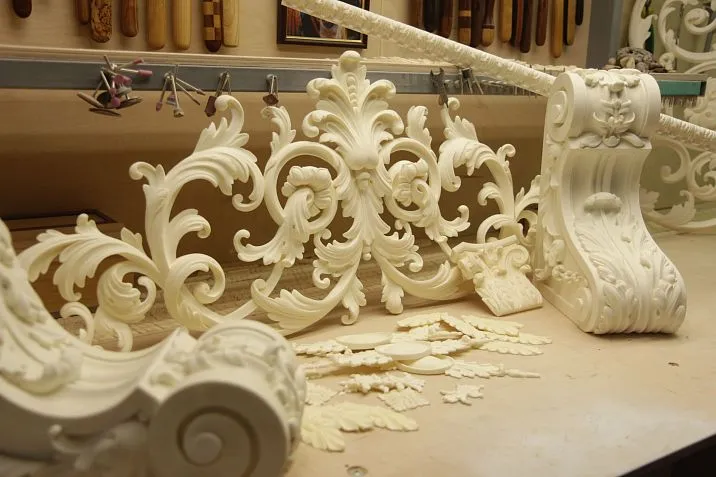
The world has changed. What was once considered luxury, accessible only to the elite a few decades ago, is now a reality for anyone who appreciates beauty and strives for perfection. We are talking about decorative moldings — an art that adorned palaces and mansions for centuries, and has now found new life thanks to revolutionary materials and modern technologies.
Opening unique opportunities for home craftsmen to express creativity and create unique architectural compositions. This process requires patience, precision, and deep understanding of technological features, but rewards the creator with pride in the completed work and significant savings on the family budget. Buy polyurethane molding online It became a turning point in the history of interior design. It opened doors to a world of boundless possibilities, where everyone can become a creator of their own space, realizing the boldest architectural fantasies without compromise between quality and accessibility.
What lies behind this digital revolution? What secrets does polyurethane — the material that has surpassed centuries-old traditions of plaster molding — conceal? And why has the internet space become the ideal platform for selecting decorative elements? Let's dive into the amazing world where science meets art, and technology serves beauty.




Polyurethane: The Alchemy of the Modern Age
Imagine a material that combines the lightness of a feather with the strength of steel, the flexibility of rubber with the precision of mathematical calculations. This is not science fiction — it is polyurethane, the polymer of the 21st century, which literally rewrote the rules of the game in the world of decorative finishes.
The story of its creation resembles a true scientific saga. In 1937, the German chemist Otto Bayer first synthesized this remarkable compound, unaware that within a few decades his discovery would revolutionize the construction industry. Today, polyurethane chemistry has reached such perfection that it enables the creation of items indistinguishable from those crafted by artisans of past eras.




Molecular Architecture of Perfection
The secret of polyurethane lies in its unique molecular structure. During polymerization, isocyanates combine with polyols to form long chains of macromolecules linked by cross-links. This three-dimensional network grants the material exceptional properties: high strength at minimal weight, resistance to deformation, and the ability to preserve the finest details of relief.
The density of quality polyurethane for decorative elements ranges from 400 to 700 kg/m³, which is three times less than the density of plaster. At the same time, its flexural strength reaches 30–40 MPa, surpassing the performance of traditional materials by several times. The modulus of elasticity varies from 1200 to 2500 MPa depending on the composition, enabling the creation of both rigid architectural elements and flexible profiles for complex surfaces.
Our factory also produces:


Technological Innovations in Production
Modern production of polyurethane molding is a symphony of high technologies, where every note is perfected. The process begins with computer modeling of future products using the latest-generation CAD systems. Three-dimensional models undergo virtual tests for strength, weight optimization, and aesthetic appeal.
Master molds are manufactured on high-precision CNC milling machines capable of reproducing details as small as 0.01 mm. Silicone molds of the new generation withstand up to 3000 casting cycles while preserving the ideal geometry of the products.
The molding process takes place in climate-controlled chambers with programmable parameters for temperature, humidity, and pressure. Polymerization occurs under strictly controlled conditions: temperature 65–85°C, relative humidity 45–55%, and curing time from 45 minutes to 3 hours depending on the complexity of the item.
Get Consultation
The Digital Revolution in the World of Decoration
The internet has fundamentally changed the approach to selecting and purchasing building materials. What once required visits to dozens of stores can now be resolved with just a few clicks. The possibility Buy polyurethane molding online of online shopping has ushered in a new era in the world of design, where the boundaries between dream and reality have almost vanished.
Advantages of Online Shopping for Decorative Elements
Unlimited Choice
Virtual catalogs contain thousands of decorative elements unavailable in regular stores. You can explore collections from leading manufacturers around the world, compare styles from different eras, and select elements for the most exotic design concepts.
Search and filtering systems allow you to find exactly what you need in seconds. Size, style, price, material — any parameters can be set for precise selection of suitable options.
Information Transparency
Each element is accompanied by detailed technical specifications, dimension drawings, high-resolution photographs with zoom capabilities. You can examine surface textures, evaluate the quality of detailing, and understand how the element will appear from different angles.
360-degree viewing systems allow you to examine the product from all sides, while augmented reality technologies enable you to "try on" decorative elements in your own interior before making a purchase.
Economic Efficiency
The absence of intermediaries, retail storage costs, and expenses for maintaining commercial spaces makes online purchases significantly more cost-effective. Direct deliveries from manufacturers ensure the most attractive prices.
Loyalty programs, seasonal promotions, and wholesale discounts further reduce the cost of quality decor. The ability to compare prices among different suppliers guarantees you the best offers on the market.
Virtual Design Technologies
Modern online platforms offer unique tools for planning decorative compositions. 3D modeling programs allow you to create an exact replica of your space and experiment with various design options.
Material consumption calculators automatically calculate the required quantity of elements, taking into account the layout specifics, ceiling height, number of corners, and openings. This eliminates planning errors and ensures that the ordered materials will be sufficient to complete the project.
The Spectrum of Possibilities of Polyurethane Decoration
The assortment of modern polyurethane molding is astonishing in its variety. From elegant polyurethane moldings For fine finishing up to monumental architectural elements — everyone will find a solution to realize their design concepts.
Fundamental elements of decorative compositions
Modern cornices and moldings
Modern cornices are not just decorative strips, but complex engineering structures combining aesthetic function with practical capabilities. Multi-level profiles create play of light and shadow, visually altering the proportions of a room.
Hidden channels for LED strips transform cornices into lighting elements, creating a "floating" ceiling effect. Special grooves for attaching curtains and blinds make cornices multifunctional interior elements.
Moldings from modern collections cover the entire spectrum of architectural styles — from strict minimalism to lavish baroque. Modular production allows combining different profiles to create unique compositions.
High-design baseboards
Modern baseboards have long moved beyond their utilitarian function. High baseboards with rich profiling become independent decorative elements capable of radically changing the perception of space.
Baseboards with integrated cable channels solve the problem of concealed communication wiring. Special profiles for underfloor heating ensure proper air circulation and prevent overheating of the floor covering.
Central compositional elements
Receptacles and medallions
Ceiling receptacles are experiencing a second life in modern design. Classic motifs are adapted to the requirements of modern lighting, including spotlights, complex chandeliers, and "smart home" systems.
The size range of modern receptacles covers a spectrum from miniature elements with a diameter of 15-20 cm for small rooms to grand compositions with a diameter exceeding 2 meters for grand halls.
Wall medallions are used to create compositional centers, frame artworks, and decorate niches and alcoves. Modular systems allow creating complex panels of any size and configuration.
Columns and Pilasters
Full and half-columns made of polyurethane allow creating impressive architectural compositions without massive expenditures on natural stone or heavy timber. Modern technologies ensure perfect geometry of columns of any height.
The modular production system includes numerous options for bases, shafts, and capitals, allowing the creation of columns in any architectural style — from Doric to Corinthian orders, from Gothic pillars to modern minimalist supports.
Technical characteristics: science of quality
The quality of polyurethane molding is determined by numerous technical parameters, understanding which is critically important for the correct selection of materials.
Physical and mechanical properties
Strength characteristics
The compressive strength of quality polyurethane ranges from 40-80 MPa, comparable to concrete. Flexural strength reaches 25-45 MPa, 2-3 times exceeding similar gypsum characteristics.
Impact resistance of polyurethane is 15-25 kJ/m², ensuring high resistance to accidental mechanical impacts. The material can deform by 15-20% without residual changes, preventing cracks during temperature fluctuations.
Temperature stability
Working temperature range of polyurethane molding: from -60°C to +120°C. The linear expansion coefficient is only 7×10⁻⁵ 1/°C, 2-3 times less than most construction materials.
Polyurethane thermal conductivity varies from 0.025 to 0.035 W/(m·K), providing additional thermal insulation properties for decorative elements.
Operational characteristics
Moisture and chemical resistance
Water absorption of high-quality polyurethane does not exceed 1-2% by volume within 24 hours, 15-20 times less than gypsum. Closed-porous structure prevents capillary moisture rise and salt formation.
Polyurethane is inert to most chemicals, including acids, alkalis, solvents, and cleaning agents. This allows the use of any coatings and cleaning agents.
Fire resistance and ecological safety
Special flame-retardant additives impart self-extinguishing properties to polyurethane. Fire class G1-G2 according to Russian standards ensures safe use in residential spaces.
Modern polyurethane compositions do not contain formaldehyde, toluene, or other harmful substances. Emission of volatile organic compounds does not exceed norms for children's facilities.
Stylistic diversity: from classic to avant-garde
Modern polyurethane decoration collections cover the entire spectrum of architectural styles, from historically accurate classical samples to bold experiments of contemporary design.
Classic styles
Baroque and Rococo of the 21st century
Modern interpretations of Baroque motifs retain the full opulence and theatricality of the original style, adapting it to the realities of contemporary life. molded decoration made of polyurethane Reproduces the most intricate floral ornaments, cartouches, and mascarons with precision unattainable by handwork.
Rococo's asymmetrical compositions require special skill in creating forms. Computer modeling allows achieving the ideal balance between elegance and expressiveness, characteristic of this style.
Neoclassicism and Classicism
The strictness and monumentality of Empire are reflected in geometrically correct forms, military symbolism, and classical motifs. Modern technologies allow reproducing the finest details of imperial interiors — from laurel wreaths to eagles with outstretched wings.
Neoclassicism, with its mathematical precision of proportions and order system, imposes the highest requirements for geometric accuracy of items. Tolerances in dimensions, unacceptable for other styles, become critical here.
Modern interior styles also use oak skirting boards, but in a different interpretation. Minimalism prefers simple rectangular profiles without decorative elements. Smooth surfaces with matte finish create a sense of strictness and elegance.
Neoclassicism and Art Deco
Neoclassical interiors require a special approach to decorative elements. Simplification of forms while preserving classical proportions, use of modern materials and technologies within classical aesthetics — these are the main principles of this direction.
Art Deco, with its geometric ornaments, stepped forms, and solar motifs, adapts perfectly to the capabilities of polyurethane technologies. Clear line graphics and contrasting forms create dynamic compositions.
Modern Minimalism
Minimalist interiors do not completely reject decorative elements, but use them selectively to create subtle accents. Concise profiles, strict geometry, absence of excessive details — these are characteristic features of the modern approach to sculptural decoration.
Surface quality plays an important role — ideal smoothness, absence of even the slightest defects, geometric precision. Any imperfections in a minimalist interior become noticeable and unacceptable.
Installation technologies: from science to art
Quality installation of polyurethane moldings is a synthesis of scientific approach and artistic skill. Modern installation technologies have significantly simplified the process, but require strict adherence to technical standards.
Engineering preparation
Analysis of the base and structural features
The quality of the base determines the longevity of the entire decorative composition. The base strength should be at least 15 MPa, moisture content — no more than 4% for mineral surfaces and 8% for wooden surfaces.
Base irregularities are measured using laser levels and digital levels. Deviations exceeding 2 mm per linear meter require leveling with special compounds.
The room's temperature and humidity regime must be stabilized: temperature 18-24°C, relative humidity 45-65%. Sudden fluctuations in microclimate parameters may lead to deformation of decorative elements.
Design of fastening systems
Special fastening systems are developed for heavy elements using anchor bolts, spread anchors, and mechanical brackets. Calculations are performed with a safety factor of at least 3.
Adhesive joints are calculated based on contact area, type of base, and operational loads. Modern polyurethane adhesives provide joint strength up to 2.5 MPa.
Precision installation
Marking and positioning
Marking accuracy is achieved using laser measurement systems. Permissible deviations for horizontal elements — no more than 1 mm per 2 meters, for vertical elements — no more than 2 mm per floor height.
Templates and guides ensure repeatability of installation of similar elements. For complex compositions, full-scale drawings are created on walls and ceilings.
New-generation adhesive technologies
Modern adhesive compositions are high-tech systems with programmable properties. Open time may vary from 5 to 30 minutes depending on the size of the elements.
Thixotropic additives prevent adhesive from dripping from vertical surfaces. Adhesion modifiers ensure reliable bonding to any base — from concrete to gypsum board.
Finishing: the art of color and texture
Polyurethane products are supplied in a base white color and require finishing to integrate into the overall interior concept. Modern coloring technologies open up limitless creative possibilities.
Preparation operations
Cleaning and priming
Element surfaces are cleaned of dust, technical lubricants, and fingerprints using special degreasing agents. Priming is performed with adhesive primers that ensure reliable adhesion of coatings.
Quality primers contain corrosion inhibitors, UV filters, and antiseptic additives. Drying time for primer is 2-4 hours at 20°C and 65% humidity.
Decorative technologies
Imitation of natural materials
Modern decorative coatings allow creating an indistinguishable imitation of marble, granite, valuable wood species, and patinated bronze. Multi-layer coating systems include a base color, decorative layers, and protective coating.
Venetian plaster technique has been adapted for polyurethane surfaces. Special compositions create an illusion of centuries-old texture of old walls.
Special effects and innovative coatings
Photocatalytic coatings with titanium dioxide have self-cleaning properties under daylight. Antibacterial additives based on silver ions prevent microbial growth.
Thermochromic pigments change color depending on temperature, creating dynamic visual effects. Luminescent compositions accumulate daylight energy and softly glow in darkness.
Economic efficiency: investment in beauty
Usage decorative elements made of polyurethane represents an economically justified solution with high investment return.
Cost comparison analysis
Initial investments
The cost of polyurethane moldings is 30-50% of the price of similar natural stone items and 60-80% of the cost of quality plaster. At the same time, polyurethane's operational characteristics exceed traditional materials.
Installation cost savings reach 40-60% due to the lightweight nature of the items and ease of installation. The absence of need for special equipment and highly skilled labor further reduces the overall project cost.
Operational expenses
Polyurethane moldings require virtually no maintenance throughout their entire service life. Periodic cleaning and possible repainting of the coating every 12-15 years are the only operational expenses.
Polyurethane's energy-saving properties provide additional insulation for rooms. Heating cost savings may amount to 3-5% of total utility expenses.
Increase in property value
Quality finishing using decorative elements increases the market value of real estate by 10-20%. This is especially relevant for luxury housing, where aesthetic characteristics play a decisive role.
Unique design using decoration for moldings creates additional value, distinguishing the property among standard real estate offerings.
Regional characteristics and climate adaptation
Application of polyurethane decoration in various climatic zones requires consideration of regional characteristics and adaptation of technologies to local conditions.
Arctic and subarctic regions
Extremely low temperatures require the use of special frost-resistant adhesive and sealant compositions. Polyurethane retains elasticity down to -60°C, but installation materials must meet operational conditions.
The short construction season makes the possibility of year-round installation of polyurethane elements indoors especially valuable. Factory readiness of items for installation saves precious time.
Hot and arid regions
Intense sunlight and high temperatures require the use of UV-resistant compositions and special protective coatings. Reflective pigments reduce surface heating and prevent thermal deformation.
Low air humidity may cause accelerated drying of adhesive compositions. Special polymerization retarders are used, extending the open time.
Coastal zones
High humidity and salty air create an aggressive environment for most construction materials. Polyurethane demonstrates exceptional resistance to marine atmosphere due to its chemical inertness.
Anti-corrosion coatings protect metal fasteners from salt exposure. Special sealants prevent moisture penetration into joints and connections.
Psychology of perception and its influence on humans
Scientific research confirms significant influence of architectural environment on human psychological and physical state. Quality decoration can shape mood, affect productivity, and overall well-being.
Neuroaesthetics of decorative elements
Influence of shapes on subconscious
Smooth, rounded shapes activate the parasympathetic nervous system, promoting relaxation and reducing stress levels. Angular, geometric elements, conversely, stimulate cognitive activity and enhance attention concentration.
MRI studies show different brain activity when perceiving various ornaments. Floral motifs activate areas responsible for positive emotions, while geometric patterns stimulate logical thinking regions.
Color psychology in decoration
Color solutions for decorative elements exert powerful influence on emotional state. Warm tones create a sense of coziness and security, while cool tones expand space and enhance productivity.
Decor contrast relative to main surfaces determines the degree of its impact. High contrast creates a dramatic effect, low contrast — a harmonious atmosphere.
Social psychology of prestige
Quality moldings have historically been associated with high social status and material prosperity. These associations persist in modern society, influencing perceptions of property owners.
Psychological studies show that being in richly decorated interiors increases self-esteem and confidence. The "beautiful interior" effect extends to all aspects of a person's life.
Innovations and technologies of the future
Development of polyurethane technologies does not stop — new materials, production methods, and application areas are constantly emerging.
Nanotechnologies in decorative materials
Self-cleaning surfaces
Titanium dioxide nanoparticles incorporated into the surface layer of polyurethane provide photocatalytic properties. Under ultraviolet radiation, organic contaminants decompose at the molecular level.
The lotus effect is achieved by creating a microrelief surface with specific geometry. Hydrophobic properties prevent accumulation of dust and dirt.
Smart materials
Polyurethane compositions with shape memory can return to their original geometry after deformation upon heating. This opens possibilities for creating dynamic decorative elements.
Piezoelectric additives allow creating decorative elements that generate electricity under mechanical stress. The energy can be used to power built-in lighting or sensors.
Industry 4.0 technologies
Digital production
Integration of CAD/CAM/CAE systems allows creating products of any complexity in the shortest time. From idea to finished product takes no more than 48 hours.
Robotic systems ensure stable product quality and enable round-the-clock production. Machine vision systems control the quality of each item.
Personalization and customization
Mass customization technologies allow producing unique items without increasing cost. Each customer can order decorative elements according to individual design.
Integration with augmented reality systems enables trying out various decoration options in real time, without physical samples.
Ecological aspects and sustainable development
Modern polyurethane decoration production is based on principles of ecological responsibility and sustainable development.
Product Lifecycle
Production eco-friendliness
Modern polymerization technologies virtually eliminate emissions into the atmosphere. Closed water circulation cycles minimize water resource consumption.
Using renewable plant-based raw materials for synthesizing polyols reduces the product's carbon footprint. New-generation bio-polyurethanes contain 30-50% renewable components.
Energy efficiency in operation
Polyurethane elements' thermal insulation properties reduce building energy consumption for heating and air conditioning. Energy savings over the decor's lifespan are 10-15 times greater than the energy consumed during its production.
Material durability eliminates the need for frequent replacement, reducing overall environmental impact.
Waste management and recycling programs
Polyurethane can be recycled to produce secondary raw materials. Mechanical recycling allows ground material to be used as a filler for new products.
Chemical recycling via glycolysis returns original polyols to the production cycle, closing the material balance of production.
Global trends and development directions
The global market for decorative materials develops under the influence of global trends that define the industry's future.
Urbanization and lifestyle change
Growth in urban populations increases demand for high-quality finishing materials. Limited living space in megacities requires maximum functionality of each interior element.
Remote work has changed requirements for residential spaces. Home offices require creating a work atmosphere through appropriate decor.
Technological Integration
The 'smart home' concept integrates decorative elements into an overall automation system. Cove lighting synchronizes with music, and decor color changes according to the owner's mood.
The Internet of Things transforms decorative elements into sources of data about room conditions. Built-in sensors monitor temperature, humidity, and air quality.
Cultural globalization
The blending of cultural traditions creates demand for decor that combines elements from various styles and eras. Polyurethane technologies enable the accurate reproduction of ornaments from any culture.
Growing interest in national traditions stimulates the development of collections in ethnic styles — Russian carving, Islamic geometry, African motifs.
Conclusion: the bridge between dream and reality
Opening unique opportunities for home craftsmen to express creativity and create unique architectural compositions. This process requires patience, precision, and deep understanding of technological features, but rewards the creator with pride in the completed work and significant savings on the family budget. Buy polyurethane molding online has become a symbol of a new era in the world of design and architecture. Eras where beauty ceased to be a privilege of the chosen and became accessible to anyone willing to dream and bring their dreams to reality.
The polyurethane revolution has changed not only materials and technologies — it has changed the very philosophy of approaching the creation of living spaces. Today, everyone can become an architect of their own happiness, creating interiors that reflect individuality, inspire creativity, and bring daily joy from being in beautiful spaces.
We stand at the threshold of even more astonishing discoveries. Nanotechnology, artificial intelligence, biotechnology promise new breakthroughs in creating materials of the future. But already today, polyurethane molding offers boundless opportunities for creative self-expression and the creation of unique spaces.
Choosing quality materials from reputable manufacturers is an investment not only in beauty, but also in durability, eco-friendliness, and economic efficiency. It is the choice of people who understand the value of true quality and are unwilling to compromise when it comes to creating a dream home.
The future of decorative art has already arrived. It is accessible here and now for anyone willing to open the door to a world of boundless possibilities, where classical beauty harmoniously combines with modern technologies, creating spaces worthy of the most discerning aesthetic demands.
For many years, the company STAVROS has been recognized as an innovator and leader in the production of high-quality polyurethane molding. By combining the best European quality traditions with advanced Russian technologies, STAVROS creates products that set new industry standards for decorative materials. Years of experience, proprietary high-tech production, continuous innovations, and impeccable service have made STAVROS a trusted partner for thousands of satisfied customers across the country. Every STAVROS product is created with a deep understanding of its role in forming a unique architectural appearance, where every detail, every element, every solution matters. Choosing STAVROS means choosing not just quality products, but a philosophy of perfection that transforms ordinary spaces into masterpieces of architectural art. Trust the experience of true STAVROS professionals and discover the incredible world of boundless possibilities, where dreams of beauty become tangible reality.