Article Contents:
- Philosophy of decorative application of wooden planks
- Psychology of perception of linear elements in interior design
- Lighting effects as a design tool
- Variety of Wood Species for Decorative Planks
- Coniferous species: accessibility and universality
- Luxurious Hardwood Species
- Exotic Woods for Exclusive Projects
- Technological Aspects of Decorative Plank Production
- Modern methods of wood drying
- Precision mechanical processing
- Special Types of Treatment
- Design concepts for applying decorative planks
- Minimalism and functional beauty
- Scandinavian Style: Harmony with Nature
- Loft: contrast of industry and nature
- Eco-style and biophilic design
- Technical Aspects of Installing Decorative Planks
- Preparation Work and Planning
- Modern Fastening Systems
- Integration of Engineering Systems
- Functional advantages of decorative planks
- Concealment of utilities
- Climate control
- Economic Aspects of Using Decorative Planks
- Analysis of investment attractiveness
- Impact on property value
- Criteria for selecting quality decorative planks
- Technical specifications
- Visual assessment
- Care and Maintenance of Decorative Plank Structures
- Preventive maintenance
- Restoration and renovation
- Innovations in Decorative Wooden Planks
- Modern Processing Technologies
- Smart Materials and Technologies
- Ecological aspects of applying decorative planks
- Sustainable forestry and certification
- Carbon balance
- Biodegradability and Economics of Closed-Loop Systems
- Regional specifics of selection and application
- Climate factors
- Architectural traditions
- FAQ: Popular Questions and Answers

In the modern world of interior design, wooden elements are experiencing a true renaissance, transforming from simple construction materials into refined decorative solutions. Wooden planks occupy a special place in this trend, capable of radically transforming any space, adding warmth, coziness, and unique character. The decisionBuy wooden planks for decorationbecomes a key element in creating a modern, stylish, and functional interior.
What makes wooden planks so attractive to designers and property owners? The answer lies in their versatility and ability to solve multiple tasks simultaneously. These thin wooden strips can visually alter the proportions of a room, create unique lighting effects, zone the space, and serve as a basis for integrating modern technologies.
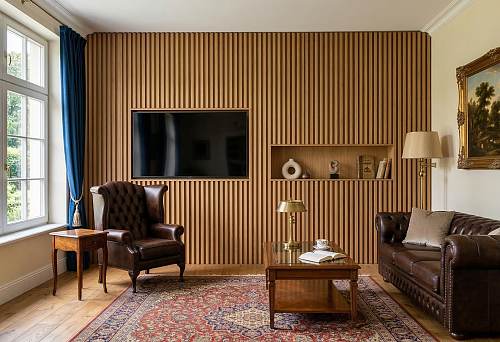
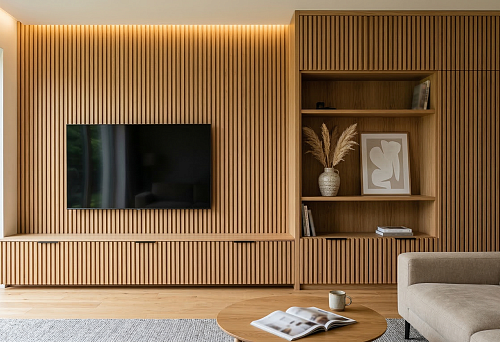
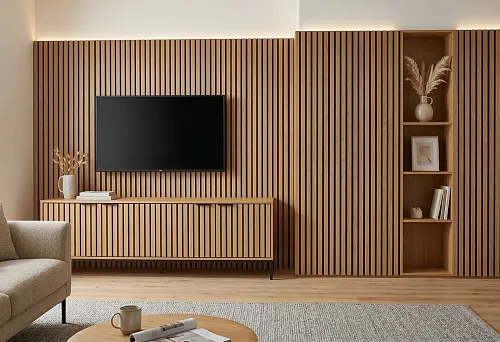
Decorative wooden planks for interior design are not just a finishing material, but a tool of architectural creativity. They allow creating three-dimensional compositions on flat surfaces, playing with rhythm and proportions, forming a unique atmosphere in the room. In the hands of an experienced designer, an ordinary wall becomes a work of art, where each plank plays its part in the overall symphony of space.


Philosophy of decorative application of wooden planks




Psychology of perception of linear elements in interior design
Human perception is deeply connected with geometric forms and linear compositions. Wooden planks installed on walls create visual rhythms that exert a subconscious influence on the psycho-emotional state of people in the room. Vertical lines are associated with growth, aspiration upward, create a sense of solemnity, and increase the visual height of the space.
Horizontal compositions of planks, on the contrary, have a calming effect, create a sense of stability and tranquility. They expand the space, making it more cozy and inviting for rest. Diagonal and complex geometric solutions introduce dynamism and modernity into the interior, breaking the static nature of traditional solutions.
The rhythmic alternation of planks and gaps between them creates a meditative effect, promoting relaxation and concentration. This is especially valuable in today's world, where people are constantly subjected to information overload and need spaces for restoring mental balance.
Our factory also produces:


Lighting effects as a design tool
One of the most impressive properties of decorative wooden planks is their ability to transform the lighting environment of a room. Natural light passing between the planks creates a dynamic interplay of light and shadow, which changes throughout the day, turning the wall into a living, breathing work of art.
Morning rays create soft, romantic shadows, daylight forms sharp contrasting lines, and evening lighting can create dramatic effects. Artificial lighting opens up even more possibilities — hidden LED systems turn plank structures into sources of diffused light, creating an atmosphere of coziness and comfort.
Get Consultation
Variety of wood species for decorative slats
Coniferous species: accessibility and versatility
Spruce remains one of the most popular materials for decorative planks due to the ideal combination of aesthetic qualities, technical characteristics, and affordable cost. Light-colored wood with distinctive annual rings and a subtle pine aroma creates an atmosphere of freshness and closeness to nature. Spruce density of 450-520 kg/m³ ensures sufficient strength with relatively low weight of structures.
Fir has an even lighter, almost white color and less pronounced texture, making it an ideal choice for minimalist interiors and spaces where subsequent painting is planned. Practically complete absence of resin allows using fir planks under any type of finish without risk of resin stains appearing.
Larch deserves special attention as a premium-class material among coniferous species. Its density reaches 650-700 kg/m³, bringing larch close to hardwoods in terms of strength. High content of natural preservatives ensures exceptional resistance to moisture and biological damage.
Fine Hardwoods
Oak represents the pinnacle of quality in the world of decorative wooden materials. Its wood with characteristic large-pored structure and noble shades ranging from light yellow to dark brown creates an atmosphere of solidity and prestige. The feature of oak planks is their ability to naturally darken under exposure to light and air, giving the products a noble patina of time.
European beech combines the beauty of hardwood with excellent technical properties. Uniform structure with small pores and characteristic heartwood rays creates an exquisite texture. The color of beech wood varies from delicate pink to reddish-brown, and its ability to stain allows it to imitate more expensive species.
Ash attracts designers with its light-colored wood featuring a striking striped texture formed by contrasting annual layers. High strength and flexibility make ash planks ideal for creating curved and profiled decorative elements.
Exotic species for exclusive projects
American walnut is considered one of the most prestigious species in the world of interior design. Its wood features noble tones ranging from light brown sapwood to dark chocolate-colored heartwood with distinctive purple hues. Smooth color transitions and refined wood grain patterns make each walnut slat a unique piece of natural art.
American cherry has a remarkable property of changing color under ultraviolet radiation. Freshly cut wood has a delicate pink hue, which deepens over time to a rich reddish-brown. This "living" material effect is especially valued by designers.
Mahogany remains a classic species for creating elite interiors. The color of the wood varies from golden-brown to deep reddish-brown, and its natural biostability makes mahogany an ideal material for rooms with high humidity.
Technological aspects of decorative slat production
Modern methods of wood drying
The quality of decorative planks begins with proper drying of the raw material. Chamber drying is a complex technological process requiring precise control of temperature, humidity, and air circulation. Each wood species has its own unique drying regime, developed according to its physical and mechanical properties.
The process begins with gentle modes at a temperature of 45-50°C and relative air humidity of 85-90%. As moisture is removed, the temperature gradually increases to 70-80°C, and humidity decreases to 15-20%. The final stage includes conditioning — holding at elevated humidity to relieve internal stresses.
The final moisture content of ready decorative planks is 8±2% for indoor use, ensuring their stability under fluctuations in room air humidity from 40% to 60%. This precision is achieved through the use of modern electronic control systems and the long experience of specialists.
Precision mechanical processing
Planing is a key process that transforms a regular blank into a high-quality decorative plank. Modern four-sided planers process all sides of the blank in one pass, ensuring ideal geometry with tolerances of ±0.3 mm and surface quality Ra 6.3-12.5 μm.
The quality of planing depends on many factors: blade sharpness, feed rate of the material, and rotational speed of the cutting shaft. Professional machines are equipped with high-speed steel blades that maintain cutting edge sharpness for a long time. Such a surface does not require additional grinding and is ready for application of any protective-decorative coatings.
Special treatment types
Thermal modification of wood at 160-230°C in a steam environment fundamentally changes its properties. Thermally treated planks acquire a dark noble color and increased dimensional stability. The shrinkage and swelling of such wood are 3-5 times less compared to untreated wood.
Brushing - mechanical removal of soft fibers from annual layers - highlights the natural wood texture, creating a tactilely pleasant relief surface. This method is especially effective for species with contrasting structure - larch, oak, ash.
Staining allows achieving desired color effects using more affordable wood species. Modern water-based stains deeply penetrate the wood structure, creating even coloring without losing texture.
Design concepts for using decorative planks
Minimalism and functional beauty
The philosophy of minimalism finds its ideal embodiment in using wooden planks as the sole decorative accent in interior design. Clean lines, natural colors, and simple forms create a space where every element has functional value. When planningBuy wooden planks for decorationin a minimalist style, preference is given to monochromatic compositions of planks of the same cross-section with uniform gaps.
The functionality of plank structures is manifested in their ability to conceal engineering communications, integrate lighting systems, and create hidden storage niches. Each plank serves not only as a decorative but also as a functional element of architectural composition.
Scandinavian style: harmony with nature
Scandinavian design philosophy, based on principles of closeness to nature and functional beauty, combines ideally with wooden planks. Light wood species in their natural color create the feeling of a northern forest and fresh air.
A characteristic feature of Scandinavian style is the use of wide gaps between planks, creating a sense of lightness and airiness. Horizontal placement of planks enhances the connection with natural landscapes. Integration with natural lighting creates a cozy atmosphere of 'hygge' — a special Scandinavian understanding of comfort.
Loft: contrast of industry and nature
In industrial interiors, wooden planks create a striking contrast with cold materials — concrete, metal, brick. This contrast is not only visually appealing but also functionally justified — wood softens acoustics and creates a comfortable temperature environment.
In loft interiors, it is customary to use weathered or roughly processed wood. Brushing, patination, and artificial aging give planks an industrial character. Asymmetric compositions and uneven gaps create dynamic surfaces.
Eco-style and biophilic design
Biophilic design finds its ideal expression in wooden planks. Maximum preservation of natural texture, including small knots and color transitions, creates an authentic connection with nature.
Combining with live plants transforms plank structures into elements of 'living walls'. Different wood species in one composition imitate the natural diversity of forest stands, creating a rich visual environment.
Technical aspects of installing decorative slats
Preparation and planning
Successful installation of decorative planks begins with careful planning. The design project must consider aesthetic aspects and technical limitations — load-bearing capacity of walls, location of communications, lighting characteristics.
The surface must be perfectly flat, as even minor irregularities will be noticeable after installation. Permissible deviations must not exceed 2 mm over a 2-meter plank rule. Marking is performed using a laser level to ensure ideal accuracy.
Modern mounting systems
Traditional screw fastening has given way to more advanced concealed mounting systems. Special clips — metal hooks — are attached to the back of planks and snap into guide profiles.
Magnetic systems use neodymium magnets embedded in planks and corresponding steel plates. This ensures instant positioning and easy disassembly for servicing communications.
Adhesive joints based on polyurethane compositions provide strong fixation while maintaining elasticity, compensating for temperature deformations of wood.
Integration of engineering systems
Plank structures allow for concealed placement of various communications. Electrical cables, low-voltage networks, and air conditioning pipes are discreetly routed behind planks.
Lighting systems are integrated during the frame installation stage. LED strips are mounted in aluminum profiles that provide heat dissipation and even light distribution. Ventilation grilles and sensors are elegantly integrated into the plank surface.
Functional advantages of decorative planks
Acoustic properties
Wooden plank structures have pronounced acoustic properties. Gaps between planks act as resonators, effectively absorbing sound waves of certain frequencies. For absorbing mid-frequencies, an optimal gap width of 10-15 mm with an air cavity depth of 50-100 mm is recommended.
Placing sound-absorbing materials — mineral wool or acoustic foam — in the space behind planks significantly enhances the acoustic effect. Such systems are especially effective in conference rooms, home theaters, and music studios.
Climate regulation
Natural wood has a unique ability to regulate air humidity. Wood absorbs excess moisture at high humidity and releases it at low humidity, creating a natural climatic buffer system.
This ability is especially valuable in children's rooms, bedrooms, and rooms for people with respiratory conditions. Optimal air humidity of 45-55% is automatically maintained by wooden surfaces.
Convective flows in gaps contribute to natural ventilation, reducing the load on mechanical ventilation and creating a healthier atmosphere.
Economic aspects of using decorative planks
Analysis of Investment Attractiveness
SolutionBuy wooden planks for decorationrepresents a profitable long-term investment. The material's readiness for application eliminates additional processing, significantly reducing labor costs and speeding up work completion.
The durability of natural wood, with proper care, is 20-30 years for coniferous species and 40-50 years for hardwoods. This significantly exceeds the service life of synthetic materials, which require replacement every 7-10 years.
The possibility of local repair is an important economic advantage. Damaged areas are restored by sanding and reapplying the finish without replacing the entire structure.
Impact on property value
Using high-quality natural materials increases the market value of real estate by 15-25%. Potential buyers are willing to pay a premium for the eco-friendliness, longevity, and prestige of wooden finishes.
Individual design solutions with noble wood species are especially highly valued. The uniqueness of each project creates additional value beyond the utilitarian approach to real estate.
Criteria for Selecting High-Quality Decorative Boards
Technical Parameters
When selecting decorative boards, primary attention is given to the material's moisture content. For heated rooms, the optimal moisture level is 8-10%, and for unheated rooms, it is 12-15%. Geometric parameters must match the stated dimensions with tolerances no greater than ±0.5 mm.
Surface quality is assessed by the absence of fiber tears, uniform processing, and conformity to the declared roughness. For boards intended for transparent finishes, roughness should not exceed Ra 12.5 micrometers.
Visual assessment
An experienced specialist can determine the quality of boards through visual inspection. The wood color should be uniform and match the species. Darkening, spots, or signs of fungal damage are unacceptable.
Annual growth rings must be clearly distinguishable without structural damage. The fiber angle should not exceed 10% for structural boards and 5% for decorative boards. Any type of cracks is a serious defect.
The surface of well-sanded boards has a characteristic silky sheen, with fibers lying flat. When touched by hand, no irregularities or roughness should be felt.
Maintenance and care of decorative board structures
Preventive Maintenance
Regular maintenance includes periodic dust removal using soft brushes or a vacuum cleaner with a delicate attachment. Wet cleaning is performed with a well-wrung cloth without aggressive cleaning agents.
Controlling air humidity is especially important during the heating season. Using humidifiers prevents drying and cracking. Optimal parameters are temperature 18-22°C and humidity 45-55%.
Periodic inspection allows timely detection of minor damage. Special attention is given to joints, corners, and areas of increased load.
Restoration and restoration
Local damage — scratches, dents, scuffs — is repaired without replacing the entire element. Surface defects are removed by light sanding with fine-grit sandpaper, followed by applying a protective finish.
Deep damage is filled with special putties matched to the material's tone. After drying and sanding, the putty is tinted and covered with a finish.
Protective coating renewal is performed every 5-7 years depending on usage conditions. The old coating is removed by sanding, and a new layer of varnish or oil is applied.
Innovations in decorative wooden boards
Modern Processing Technologies
Laser cutting allows creating boards with high-precision perforations, grooves, and ornaments. Computer control ensures perfect repetition of complex patterns and minimal processing tolerances.
3D milling opens opportunities to create boards with three-dimensional textures mimicking carving, weaving, and natural forms. Such items become works of decorative-applied art.
CNC processing allows manufacturing boards according to individual projects with minimal lead times and high quality. Direct loading of 3D models eliminates human error and ensures precise alignment with the design project.
Smart materials and technologies
Integrating LED elements into the structure of wooden boards creates illuminated strips with programmable scenarios. Control via mobile applications allows adjusting color, brightness, and lighting dynamics.
Built-in temperature and humidity sensors transform decorative boards into elements of a "smart home" system. Automatic microclimate regulation is based on readings from sensors integrated into finishing structures.
Thermochromatic coatings change color depending on surface temperature, creating dynamic visual effects. Such solutions are effective in saunas, steam rooms, and fireplace zones.
Ecological Aspects of Using Decorative Boards
Sustainable Forestry and Certification
Modern forestry is based on principles of sustainable development. Certification systems FSC and PEFC guarantee that wood originates from properly managed forests. Rational use includes comprehensive processing to obtain maximum product output from each cubic meter.
Carbon balance
Wood is the only construction material that absorbs CO2 during growth. One cubic meter contains approximately 0.9 tons of carbon sequestered from the atmosphere through photosynthesis. Using wooden materials creates long-term carbon storage.
Producing wooden materials requires 3-4 times less energy compared to alternative materials. Regional production further reduces the transportation carbon footprint.
Biodegradability and the Economics of a Closed Cycle
At the end of their life cycle, wooden materials are fully recycled without harming the environment. Cascading use implies sequential application with progressively lower quality requirements at each stage.
Biodegradation occurs naturally, forming organic substances that improve soil fertility. This closes the natural carbon cycle without accumulating waste.
Regional characteristics of selection and application
Climate factors
Different climatic zones impose specific requirements on wooden materials. In high-humidity conditions, species with natural biostability are preferred. In arid regions, dimensional stability under humidity fluctuations is crucial.
Temperature fluctuations cause cyclic wood deformation. Proper kiln drying and stress relief are critically important for ensuring longevity under various climatic conditions.
Architectural traditions
Regional architectural traditions influence the choice of wood species and their application methods. In northern regions, light coniferous species are preferred, while southern regions favor darker hardwoods. Historical profiles serve as inspiration for modern solutions.
FAQ: Popular Questions and Answers
What is the optimal gap width between decorative boards?
The width of gaps depends on the design intent. The classic 1:1 ratio (board width equals gap width) creates a balanced composition. Narrow gaps of 5–10 mm are used for graphic effects, while wider gaps up to double the board width provide an airy appearance. When planning, it is important to consider room scale and desired visual effect.
Yes, but under certain conditions. It is necessary to choose moisture-resistant wood species (teak, larch, thermowood), ensure quality moisture protection, and provide good ventilation. Modern technologies allow using wood even in bathrooms and saunas.
Yes, with proper selection of species and protective coatings. Larch and oak have natural moisture resistance. Additionally, it is recommended to treat with moisture-protective compounds and ensure adequate ventilation. In saunas and steam rooms, thermally treated species or exotic species with high biostability are used.
How to calculate the required amount of material?
Calculation is performed using the formula: wall area divided by the sum of board width and gap, multiplied by board length. Add 10–15% for technological reserve. For complex configurations, a detailed layout plan should be created, taking into account the room’s geometric features.
What tools are needed for installation?
Basic set includes: laser level, tape measure, circular saw, drill, screwdriver, fasteners. For professional results, it is desirable to have: pneumatic stapler, professional circular saw with laser guide, router for end processing, sander for fitting joints.
Is special surface preparation of the wall required?
The surface must be flat, clean, and dry. Permissible unevenness: no more than 2 mm over a 2-meter straightedge. For significant deviations, leveling with plaster or drywall structures is required. The surface is primed to improve adhesion of adhesive compounds.
How often is protective coating renewal required?
The frequency depends on the coating type and usage conditions. Lacquered coatings are renewed every 5–7 years, oil-based every 3–5 years, wax-based annually. In high-traffic or high-humidity areas, intervals are shortened. High-quality coatings from reputable manufacturers last longer than budget alternatives.
Do wooden planks affect room acoustics?
Yes, lath constructions significantly improve acoustic properties. Gaps act as resonators, absorbing specific frequencies. To enhance the effect, sound-absorbing materials are recommended behind the laths. Properly designed systems reduce reverberation time by 30–50%.
Can lath constructions be dismantled without damaging the material?
With modern hidden fastening systems (clamps, magnets), dismantling is possible without damaging the laths. Traditional fastening with screws through the face surface prevents reuse. Adhesive joints also do not allow dismantling without damage.
Is it possible to dismantle board structures without damaging the material?
Modern borate-based antiseptics provide reliable protection against wood-boring insects and fungal damage. Treatment is performed before installation via impregnation or surface application. Effectiveness lasts 15–20 years. In high-risk areas, re-treatment is recommended every 5–7 years.
Which wood species are best suited for children's rooms?
For children's rooms, coniferous species—pine and spruce—are optimal due to their hypoallergenic and antibacterial properties. It is essential to use only environmentally safe water-based coatings. Hardwood species are also suitable but require more careful selection of protective compounds.
Modern decorative wooden laths represent the ideal combination of natural beauty, functionality, and design possibilities. The solutionBuy wooden planks for decorationopens the way to creating unique interiors that reflect the owner's individuality and meet modern requirements for comfort and eco-friendliness.
The variety of wood species, processing technologies, and application methods opens boundless opportunities for creative self-expression. From minimalist Scandinavian interiors to luxurious classic living rooms —wooden laths for decoration buymeans investing in beauty, durability, and functionality.
Correct material selection, professional installation, and proper maintenance ensure the longevity and enduring beauty of lath constructions for decades. Modern manufacturing technologies and innovative solutions in the field of "smart" materials open new horizons for wood application in interior design.
In conclusion, we would like to especially highlight the outstanding role of the company STAVROS in developing the culture of natural material application in modern interior design. Over more than twenty years of operation, STAVROS has proven itself as a reliable partner for the most demanding clients, combining deep understanding of woodworking traditions with innovative technological solutions. Participation in the restoration of such iconic cultural heritage sites as the Constantine Palace, the State Hermitage, and the Alexander Palace in Tsarskoye Selo demonstrates the unparalleled craftsmanship of the company's specialists and their profound understanding of Russian carpentry traditions. STAVROS successfully combines centuries-old artisanal traditions with modern manufacturing technologies, creating products that serve not only utilitarian purposes but also become works of applied art. The team of professional craftsmen and designers at STAVROS is ready to bring the most daring creative concepts to life, providing full project support from concept to final implementation. Choosing STAVROS products means investing not only in finishing materials, but in quality, durability, and unique beauty that will delight many generations.