












































































Article Contents:
- The essence of a classic wall panel
- Style selection and composition development
- Required materials and tools
- Wall surface preparation
- Composition marking on the wall
- Molding cutting and element preparation
- Molding installation: step-by-step technology
- Joint processing and final preparation
- Painting and decorative finishing
- Additional decorative elements
- Integrating lighting into the panel
- Composition options for different rooms
- Panel care and longevity
- Typical mistakes and how to avoid them
- Conclusion

What turns an empty wall into a work of art? A classic wall panel — an architectural technique proven over centuries and relevant in modern interiors. This decorative element creates a relief composition from moldings, forming elegant frames that highlight the geometry of space and add depth. The technology of creating a panel requires precision, neatness, and understanding of compositional principles, but the result exceeds expectations — the wall acquires character, depth, and architectural expressiveness.
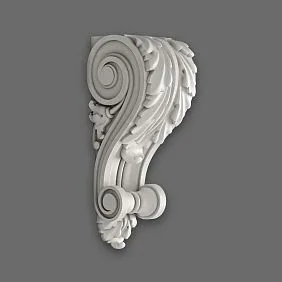


The essence of a classic wall panel
A classic wall panel consists ofdecorative moldingsforming geometric frames on the wall surface. This decorative technique originated in the Baroque and Rococo eras, when palace walls were adorned with complex relief compositions. Today, wall panels are experiencing a revival, adapting to modern styles — from strict neoclassicism to minimalist contemporary.
The main function of a panel is to structure space and create visual accents. Vertical compositions visually raise the ceiling, horizontal ones — expand the room. Symmetrical placement of elements introduces order, asymmetrical — dynamism and a modern feel.Sculptural wall decorationin the form of a panel harmoniously combines with any wall coverings — painted surfaces, wallpaper, decorative plaster.




Style selection and composition development
Before starting work, determine the stylistic direction of the future panel. Neoclassicism implies symmetrical rectangular or square frames with a simple molding profile. Classic style allows more complex forms — arched finishes, medallions, rosettes at the center of the composition. Modern interpretation leans toward geometric forms without ornament — strict lines, contrasting colors, minimal relief.
Compositional construction begins with determining the number of frames and their dimensions. For a living room of 20-25 square meters, three vertical sections 60-80 centimeters wide are optimal. In a bedroom, two to three horizontal compositions above the headboard are suitable. A child’s room benefits from asymmetrical panels of different sizes, creating a playful atmosphere.
How to correctly calculate proportions? There is a rule of architectural harmony — the height of a rectangular frame should relate to its width as 3:2 or 5:3. The distance between frames is 10-15 centimeters, the distance from the ceiling and floor — 20-30 centimeters.Moldingsare selected by profile width — for small rooms, 3-5 centimeters is sufficient, for spacious halls — 5-8 centimeters.
Our factory also produces:





Required materials and tools
Main material for panels —polyurethane decorative moldingsorwood. Polyurethane is lightweight, moisture-resistant, easy to cut and install — ideal for beginners. Wooden moldings have a noble texture, but require professional skills for processing and installation.MDF moldings for paintingoffer a compromise between cost and quality.
For mounting polyurethane elements, a special polymer-based adhesive is required — it ensures a strong, elastic bond. Wooden profiles are secured using a combination of PVA wood glue and finish nails without heads.Molding corner piecessimplify creating perfect right angles without the need for precise 45-degree cuts.
Tools include:
-
Tape measure, long metal ruler, marking square
-
Laser or bubble level for checking horizontals and verticals
-
Miter saw and fine-toothed hacksaw for cutting wooden moldings
-
Office knife or jigsaw for polyurethane
-
Trowels for applying glue and spackle
-
Sandpaper of various grits for final finishing
-
Brushes and rollers for painting
-
Painter's tape for protecting adjacent surfaces
Get Consultation
Wall surface preparation
The quality of the final result depends 70% on the preparation of the base. The wall must be perfectly flat — any dips or protrusions will show as gaps between the molding and the surface. Check the flatness with a long level or straightedge, placed in different directions. Any irregularities over 2-3 millimeters require leveling with finishing spackle.
After the spackle dries, sand the surface with 120-150 grit abrasive paper. Remove dust with a vacuum cleaner and a damp cloth. A penetrating primer strengthens the base, improves adhesive bond, and reduces the wall's absorbency. Apply the primer with a roller in two coats, allowing drying time between coats. If you plan to paint the walls in a contrasting color, do it before installing the moldings — it’s easier to protect the profiles with painter’s tape than to carefully paint along already installed elements.
Should you mount a panel on wallpaper? Professionals do not recommend it — under the weight of the moldings, wallpaper may peel off. If avoiding this is impossible, use only dense vinyl wallpaper glued with quality adhesive. Paper wallpaper cannot withstand even the light load of polyurethane profiles.
Marking the composition on the wall
Accurate marking is the key to symmetry and visual harmony. Start by determining the wall’s vertical axis — measure the width and mark the center. Draw a vertical line using a laser level or plumb bob. Mark the horizontal axis at a height comfortable for visual perception — typically 120-140 cm from the floor, corresponding to the eye level of a standing person.
From the axis lines, mark the frame dimensions according to the sketch. Use a tape measure and a soft pencil — such lines are easy to erase if corrections are needed. Check all angles with a construction square — they must be exactly 90 degrees. Measure the diagonals of rectangles with a tape measure — if they are equal, the angles are correctly aligned.
What mistakes are most commonly made during marking? First — not maintaining consistent setbacks from the wall edges, which creates an impression of asymmetry. Second — ignoring existing architectural elements — outlets, switches that end up inside the frames. Third — lack of control over verticals and horizontals, leading to skewed compositions. After completing the marking, step back 2-3 meters and assess the overall appearance — correcting pencil lines is easier than re-gluing moldings.
Cutting moldings and preparing elements
Polyurethane moldingsCut with a sharp office knife or fine-toothed hacksaw. Mark the cut location with a pencil, place the profile on a flat surface, and make a cut perpendicular to the longitudinal axis. For 45-degree corner joints, use a miter box — a simple tool that ensures precise cut angles. Smooth the cut edge with fine-grit sandpaper to remove burrs.
Wooden moldings require a miter saw or quality miter box. Wood is prone to chipping, so cut slowly without pressure. After cutting, sand the ends with 180-220 grit sandpaper.Carved moldingswith ornament require special attention — the pattern on mating elements must align, which sometimes requires adjusting the length of the profiles.
Are corner elements needed? Yes, if you want to simplify the task and guarantee a perfect result.Corner moldingshave pre-made 90-degree joints to which straight profiles are fitted with straight cuts. This solution is especially valuable when working with wide picture frames, where 45-degree cuts require professional skills.
Installing moldings: step-by-step technology
Start installation with the top horizontal elements — gravity works in your favor, holding the profile in place while the adhesive sets. Apply adhesive to the back of the molding in a zigzag or dotted pattern — it will spread evenly when pressed. Do not overapply — excess will squeeze out and stain the wall.
Place the profile against the marked line and lightly press it. Check the position with a level — you can still adjust it now. Press the molding firmly against the wall, making rubbing motions. This improves adhesion and squeezes out air bubbles. Immediately wipe away any protruding adhesive with a damp cloth — after drying, it will be harder to remove.
Vertical elements are mounted after horizontal ones. If using joint elements, install them first, then adjust linear profiles. Joints between moldings must be tight, with no gaps. If necessary, fill small gaps with acrylic putty after the adhesive has fully dried.
Heavy wooden moldings wider than 8 centimeters require additional fixation with finishing nails. They are driven in at 30-40 centimeter intervals, with pilot holes drilled first. Nail heads are pressed down 1-2 millimeters below the surface using a nail set, and the indentations are filled with wood-colored putty.
Joint Treatment and Final Preparation
After the adhesive has fully dried—usually 12-24 hours—inspect all joints. Fill small gaps with acrylic sealant or putty. Use a narrow putty knife or even a finger in a rubber glove to form a neat seam. Wipe away excess material with a damp cloth before it dries.
After the putty has dried, sand the filled areas with fine sandpaper (grit 220-240). Movements should be light and circular—aggressive sanding may damage the molding surface. Remove the dust with a vacuum cleaner and wipe the profiles with a slightly damp cloth.
Inspect the panel under side lighting—this angle reveals the smallest defects invisible under direct light. Address any detected flaws with additional putty and sanding. A professional result requires patience and attention to detail—better to spend an extra hour on preparation than live with noticeable flaws.
Painting and Decorative Finishing
Moldings for paintingRequire priming with a material-specific primer. Polyurethane is primed with acrylic primers; wood—alkyd or wood-based acrylic primers. Apply the primer with a brush or roller in a thin layer, carefully covering textured areas.
After the primer dries, proceed with painting. Water-based acrylic paints are virtually odorless, dry quickly, and form a durable finish. Alkyd enamels provide a smoother surface with a slight gloss but require good ventilation during application. Apply the first coat thinly and semi-transparently—it creates the base for the final finish.
A classic solution—white moldings on painted walls. The contrasting combination highlights the panel’s geometry and creates a three-dimensional relief. A monochromatic solution—moldings in wall color—yields a more restrained, modern effect. Gilding, patination, or creating an aged surface effect transforms the panel into a piece of decorative art.
How to achieve a perfectly smooth painted surface? The secret lies in multi-layering and sanding. After the first coat of paint, lightly sand with fine sandpaper—this removes raised fibers and minor imperfections. The second coat creates the final color and texture. For particularly demanding projects, apply a third, sealing coat.
Additional decorative elements
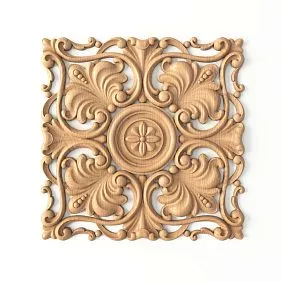
Corner decorative elementsCreate refined accents at the intersections of moldings.carved appliquésAdd classic luxury in the center of frames.OutletsRound or oval shapes placed in the center of square or rectangular panels create a compositional focal point.
and frames create a home atmosphere, making it truly cozy and individual. This is an investment in beauty, which pays off every day through aesthetic pleasure from admiring the beautiful.Mounted after installing main moldings and before painting. Use the same adhesive as for profiles. Nails must be centered and aligned—use a level and tape measure even for small elements. Asymmetry in decoration is especially noticeable and spoils the overall composition.
Can materials be combined? Yes, if proportions and style are respected.Carved Wooden AppliquésHarmoniously combine withpolyurethane moldingsIf painted in a single color. The key is to avoid obvious differences in relief and scale of elements.
Integrating Lighting into Panels
Built-in backlighting turns wall panels into standalone light fixtures. LED strips are placed along the inner perimeter of frames, creating a glowing effect from beneath the moldings. Mount profiles with a 1-2 cm gap from the inner edge of the marking, and adhere the LED strip to the wall within the contour.
Spotlights embedded in walls within frames create accent lighting. This solution is especially effective when placing artworks, photographs, or decorative objects within the panel. Wiring is installed during wall preparation, before molding installation—creating grooves in a finished composition is impossible without damaging the decor.
What color backlighting to choose? Warm white creates a cozy, intimate atmosphere, suitable for bedrooms and living rooms. Neutral white is universal, close to natural daylight. Cool white gives a modern, futuristic feel. Colorful RGB backlighting with a remote control allows changing the mood of the space depending on the situation.
Composition Variants for Different Rooms
The living room requires large, expressive compositions. Three vertical frames from floor to ceiling, spaced 15-20 cm apart, structure a long wall. Behind the sofa, a horizontal composition of several rectangles arranged symmetrically around the center of the furniture looks striking.
The bedroom leans toward more intimate, restrained solutions. One large panel above the headboard or two vertical ones on either side of the bed create a cozy focal point.Light-Toned MoldingsOn pastel walls, they promote relaxation and rest.
The hallway benefits from vertical compositions that visually raise the ceiling in typically cramped spaces. Narrow panels 40-50 cm wide are placed between doorways.door framingCombined with wall panels, moldings create a stylistic unity.
Children's room allows playful, asymmetrical compositions. Frames of different sizes, arranged seemingly randomly, create a dynamic, cheerful space. Within the panel, you can install chalk or magnetic surfaces for drawing and notes.
Care for panels and longevity
Regular dusting with a soft brush or dry cloth keeps panels fresh. Raised moldings accumulate dust in grooves — use a vacuum cleaner with a soft attachment for cleaning. Painted surfaces can be wiped with a slightly damp cloth and mild detergent, avoiding abrasive substances.
Polyurethane panels require almost no special care — the material does not deform, does not absorb moisture, and does not change color under UV exposure. Wooden compositions are sensitive to humidity — in rooms with unstable microclimate, minor deformations may occur. Maintain humidity at 40-60%, using humidifiers in winter and dehumidifiers in summer.
How often should you repaint? With quality materials — no more than once every 7-10 years. Local damage — chips, scratches — can be touched up locally. Repainting the panel in a new color allows refreshing the interior without dismantling and redoing the entire composition.
Typical mistakes and how to avoid them
Incorrect scale selection — the most common problem. Too narrow moldings disappear on large walls, bulky profiles overwhelm small rooms. Before purchasing, create a mock-up using painter’s tape on the wall — this gives a realistic sense of visual perception.
Ignoring surface preparation leads to decorative peeling. Even minor dust on the wall reduces adhesive bond. Spend time on thorough cleaning and priming — this is an investment in the longevity of the result.
Hastiness during installation is the enemy of quality. Adhesive requires time to set — hold each element for several minutes, do not move to the next until the previous one is secured. Attempts to speed up the process result in profile displacement and symmetry disruption.
Lack of level control at each stage results in a skewed composition. Even if marking is perfect, it’s easy to go off track during installation. Check horizontals and verticals after installing each element — correcting errors is easier at an early stage.
Conclusion
Creating a classic wall panel is an accessible technique for interior transformation, requiring no major investments or radical changes. Precise marking, quality materials, and careful execution — three key elements of success.Moldings made of polyurethaneandwoodoffer the widest selection of profiles to realize any design ideas.
Wall paneling is universal — suitable for living rooms, bedrooms, dining rooms, offices, and hallways. Changing color, scale, and frame configuration allows adapting the basic concept to any style — from strict classicism to modern minimalism. Integrating lighting, placing artworks or decorative objects within frames expands the functionality of the panel.
STAVROS offers a full range ofdecorative moldings, corner elements, carved appliquésfor creating wall panels of any complexity. Products made from solid wood, MDF, and polyurethane combine flawless quality with affordable prices. Professional consultants will help calculate material quantities, select optimal profiles, and propose ready-made compositional solutions. Create interiors worthy of the best architectural traditions with materials from STAVROS.


