Article Contents:
- Revolution in Oak Production Approaches
- Raw Material Selection and Preparation: The Beginning of the Great Journey
- Technological Innovations in Drying
- Secrets of Professional Oak Wood Processing
- Modern Milling Equipment
- Turning: The Art of Form Creation
- Carving Oak: Traditions and Innovations
- Final Finishing: The Final Touch of Mastery
- Sanding: The Foundation of an Ideal Surface
- Modern protective coatings
- Quality Control: Guarantee of Perfection
- Measuring Equipment
- Visual inspection
- Specialized Technologies for Various Products
- Furniture manufacturing
- Architectural elements
- Floor coverings
- Ecological aspects of production
- Zero-waste production
- Energy Saving
- Industrial Emissions Cleaning
- Innovations in Oak Product Design
- Digital Modeling
- Parametric Design
- Mass Customization
- Quality Control of Finished Products
- Functional tests
- Climate Testing
- Long-Term Research
- Packaging and Logistics
- Protective Packaging
- Warehouse logistics
- Transportation

When it comes to true craftsmanship and unparalleled quality, Oak Woodworking it becomes the standard of perfection in the world of woodworking. This is not merely a manufacturing process—it is a philosophy where every stage, from raw material selection to final finishing, demands deep knowledge, years of experience, and a special relationship with the material that nature has cultivated over decades.




Revolution in Oak Production Approaches
The modern woodworking industry is undergoing a true revolution. What was once considered impossible half a century ago is now a reality thanks to the fusion of traditional craftsmanship with advanced technologies. Oak product manufacturing has become a high-tech process, where every operation is meticulously fine-tuned to the smallest details.




Raw Material Selection and Preparation: The Beginning of the Great Journey
The quality of the finished product is established even at the stage of selecting the wood. Experienced craftsmen can read wood like an open book, determining all its hidden qualities based on external characteristics. The oak tree must be at least 80-120 years old—only such wood possesses the necessary density and stability.
The trunk diameter at the base must exceed 60 centimeters, indicating slow, even growth of the tree. Fast-growing oaks produce wood with a loose structure, unsuitable for creating high-quality products.
The timing of felling plays a critically important role. The winter period, when the tree’s sap is dormant, is considered optimal. Wood harvested during this time has minimal moisture content and is less prone to cracking during drying.
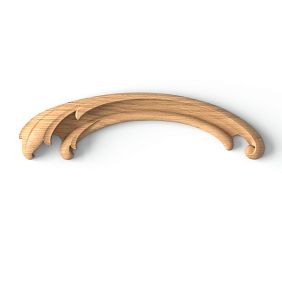
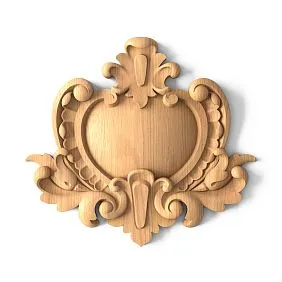
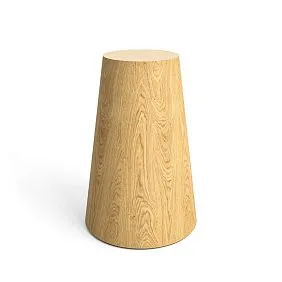
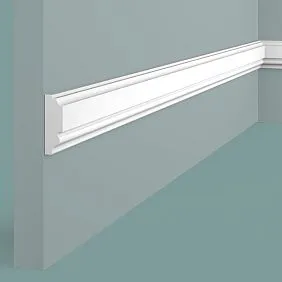
Our factory also produces:




Technological Innovations in Drying
The drying process is the heart of the entire production cycle for oak products. Modern drying chambers are high-tech complexes where every parameter is controlled with jewel-like precision.
Vacuum drying removes moisture from the wood at reduced temperatures, eliminating internal stresses. The process occurs in a sealed chamber at a pressure of 0.1–0.3 atmospheres and a temperature of 45–55 degrees Celsius.
Combined drying combines the advantages of convective and conductive methods. The wood is placed on special heating plates, and hot air ensures even moisture removal throughout the entire volume of the blank.
The drying time for oak blanks with a thickness of 50 millimeters is 21-28 days depending on the initial moisture content. Thicker blanks require proportionally more time.
Get Consultation
Secrets of professional oak wood processing
Oak Woodworking Requires a special approach to processing. The high density and hardness of oak wood impose specific requirements on tools and processing regimes.
Modern milling equipment
Oak blank processing is performed on high-speed milling machines with spindle speeds up to 24,000 rpm. This speed ensures ideal surface quality without chips or scratches.
Cutters are made of high-speed steel or equipped with carbide inserts. The cutting geometry is specially adapted for processing hardwoods: the front angle is 15-20 degrees, the back angle is 12-15 degrees.
The feed rate is automatically adjusted depending on the hardness of the processed wood. For oak, the optimal feed rate is 3-5 meters per minute at a cutting depth of 2-3 millimeters per pass.
Turning processing: the art of creating shapes
Manufacturing turned elements – balusters, posts, decorative parts – requires special skill. Oak blanks are pre-conditioned in a climate chamber to stabilize moisture at 8-10 percent.
CNC turning machines allow reproducing the most complex profiles with an accuracy of 0.1 millimeter. Program control ensures absolute identity of all parts in a series, which is critically important for architectural elements.
The cutting speed during oak turning is 120-150 meters per minute. Higher speeds lead to wood overheating and surface quality deterioration.
Carving oak: traditions and innovations
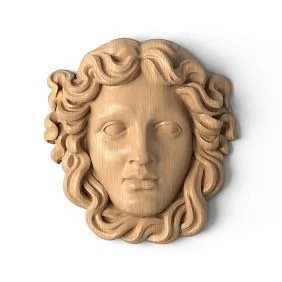
Artistic carving remains one of the most complex and demanding types of processing. Modern masters use both traditional hand tools and high-tech CNC machines.
Deep relief carving creates three-dimensional compositions with height variations up to 50-70 millimeters. This technique requires the use of special cutters with extended cutting edges and a rigid workpiece clamping system.
Laser engraving allows applying delicate patterns and inscriptions with a resolution up to 1000 dots per inch. A laser beam of 100-200 watts vaporizes wood to a specified depth, creating clear, contrasting images.
Final processing: the final touch of craftsmanship
The final stage of manufacturing oak products largely determines their final quality and durability. Modern materials and technologies allow creating coatings that not only protect the wood but also highlight its natural beauty.
Sanding: the foundation of an ideal surface
Sanding oak surfaces is performed in several stages with gradually decreasing abrasive grit. Initial processing uses abrasive grit 80-100 to remove marks from mechanical processing.
Intermediate sanding with abrasive grit 150-180 smooths micro-irregularities and prepares the surface for final processing. At this stage, special attention is paid to the direction of abrasive movement – it should align with the direction of wood grain.
Final sanding with abrasive grit 220-320 creates a perfectly smooth surface without any scratches. Sanding quality is controlled under a 10x magnifying lens.
Modern Protective Coatings
Modern polyurethane finishes provide coating hardness up to 2H on the pencil scale. Two-component formulations polymerize at room temperature over 24 hours, forming a durable protective film.
Oil-based finishes deeply penetrate wood pores, creating a breathable coating. Such formulations are ideal for products used in rooms with variable humidity.
Wax finishes give oak surfaces a noble matte sheen and pleasant tactile sensations. Natural carnauba wax is applied in several thin layers with intermediate polishing.
Quality Control: Guarantee of Perfection
Manufacturing oak products implies strict quality control at every production stage. Modern control methods allow detecting even minor deviations from specified parameters.
Measuring equipment
Coordinate measuring machines with an accuracy of 0.01 millimeter control the geometric parameters of finished products. Software automatically compares obtained data with reference values.
Pin-type moisture meters determine wood moisture content with an accuracy of 0.1 percent. Measurements are taken at several points on each blank to ensure uniform moisture distribution.
Brinell hardness testers allow controlling the mechanical properties of wood. For oak, normal hardness ranges from 3.7 to 4.2 units depending on density.
Visual inspection
Experienced inspectors examine each item under special lamps simulating various lighting conditions. This allows detecting the slightest coating defects, color inconsistencies, and processing marks.
Texture control is performed using special standards. The wood grain pattern should be expressive but not excessively contrasting. Knots with a diameter exceeding 10 millimeters are not permitted on visible surfaces.
Connection inspection includes checking gaps, tightness of part fitting, and quality of adhesive joints. All connections must be practically invisible and provide maximum structural strength.
Specialized technologies for various products
Each type of oak product requires specific technological approaches. Oak Woodworking for various applications has its own features and secrets.
Furniture manufacturing
Oak furniture manufacturing begins with careful planning of cutting layouts. Optimization programs allow minimizing waste and maximizing efficient use of expensive raw material.
Glued panels made from oak laminates ensure dimensional stability of large components. Laminates with a thickness of 20-30 millimeters are bonded using polyurethane adhesive under a pressure of 0.8-1.2 MPa.
Dowel joints are milled on special machines with an accuracy of 0.05 millimeters. The fit should allow assembly of parts with minimal force without using a hammer.
Hardware for oak furniture is selected considering the heavy weight of the products. Hinges must withstand a load of no less than 80 kilograms, drawer guides — up to 60 kilograms.
Architectural elements
Production of moldings, baseboards, and cornices requires special geometric precision. Deviations must not exceed 0.5 millimeters per meter of length.
Profiled knives are manufactured from high-speed steel according to individual drawings. Sharpening is performed on special machines with angular accuracy up to 1 degree.
Joining short blanks into long components is done using a toothed dowel. The tooth length is 15-20 millimeters with a pitch of 3-4 millimeters.
Bent elements are manufactured by steaming and gradual bending in special fixtures. The bending radius for oak should not be less than 100 times the thickness of the part.
Floor Coverings
Oak parquet flooring requires special precision in processing interlocking joints. Gaps in the joint must not exceed 0.1 millimeters to ensure tight connection.
Selection of boards by color and texture is performed visually by experienced sorters. Boards from the same batch must have similar shades and comparable wood grain patterns.
Bevels on board edges are milled at a 45-degree angle to a depth of 0.5-1 millimeter. This creates visible seams between boards and emphasizes the surface structure.
Ecological Aspects of Production
Modern oak product manufacturing is unthinkable without meeting ecological requirements. Responsible manufacturers implement technologies minimizing environmental impact.
Waste-free production
Sawdust and shavings generated during oak processing are used to produce biomass briquettes. The calorific value of oak sawdust is 4200-4500 kcal/kg.
Offcuts and non-conforming blanks are ground into wood chips for producing particleboard. Oak chips enhance the strength and moisture resistance of composite materials.
Bark removed during log preparation is composted and used as mulch for landscape design. Oak bark contains tannins that inhibit weed growth.
Energy saving
Boilers fueled by wood waste provide up to 70 percent of energy consumption for wood processing enterprises. The efficiency of modern boilers reaches 85-90 percent.
Heat recovery from exhaust air of drying chambers allows reducing energy consumption by 20-25 percent. Heat exchangers return up to 60 percent of thermal energy back into the process.
LED lighting in production workshops consumes 5-7 times less electricity compared to traditional lamps. The lifespan of LED fixtures is 50,000-100,000 hours.
Industrial emissions cleaning
Cyclones and bag filters capture up to 99.9 percent of wood dust from the air. Cleaned air is returned to production areas, reducing ventilation energy consumption.
Centralized dust extraction systems for aspiration serve multiple machines simultaneously. Air velocity in ducts is 18-25 m/s to ensure reliable chip transport.
Sound insulation of production areas reduces noise levels to regulatory standards. Acoustic panels made from wood fiber absorb up to 85 percent of sound energy.
Innovations in oak product design
Oak Woodworking today is closely linked with innovative design solutions. Modern technologies open up boundless opportunities for creativity.
Digital modeling
Three-dimensional models of products are created in specialized CAD programs taking into account all technological constraints. Virtual assembly allows identifying potential issues even at the design stage.
Rendering photorealistic images helps customers visualize the appearance of the future product. Various options for finishes and lighting are demonstrated on the computer screen.
Virtual reality allows users to 'immerse' themselves in an interior with oak furniture. The customer can evaluate proportions, color combinations, and layout functionality.
Parametric design
Changing one parameter automatically adjusts the entire product structure. This enables quickly adapting standard models to meet the customer's individual requirements.
Libraries of standard elements accelerate the design process. Hardware, connections, and decorative elements are selected from ready catalogs with known characteristics.
Automatic generation of drawings eliminates errors in information transfer from designers to manufacturers. All dimensions, tolerances, and technological instructions are generated by the program.
Mass customization
Modular systems allow creating unique products from standard components. The customer selects dimensions, configuration, and finish from available options.
Flexible production lines quickly reconfigure for manufacturing various modifications of the base model. Setup time is 15-30 minutes.
Digital marking of parts eliminates errors during assembly of individual orders. QR codes contain all necessary information about the part and its position in the product.
Quality control of finished products
Final quality control is the concluding stage that determines the manufacturer's reputation. Each product undergoes multi-stage inspection before delivery to the customer.
Functional tests
Furniture undergoes load tests simulating long-term use. Tables are loaded with 300-500 kilograms, chairs withstand cyclic loads up to 100 kilograms.
Doors and drawers are opened and closed 10,000–50,000 times depending on the product class. Hinges and guides must not show signs of wear or misalignment.
Joints are tested for strength using destructive and non-destructive methods. Samples are tested until failure to determine the safety factor.
Climate tests
Products are subjected to climate chambers under various combinations of temperature and humidity. Conditions simulating operation in different climate zones are replicated.
Cyclic tests include multiple temperature changes from -10 to +40 degrees Celsius and humidity changes from 30 to 80 percent. The product must not show signs of deformation or cracking.
Salt spray simulates aggressive marine climate conditions. Metal hardware must not show signs of corrosion after 240 hours of testing.
Long-term studies
Products are placed in special rooms for long-term observation. Changes in dimensions, color, and mechanical properties are recorded over several years.
Accelerated aging in UV chambers allows simulating years of sunlight exposure in just a few weeks. Color change must not exceed established norms.
Microbiological studies confirm the resistance of coatings to mold and bacteria. This is especially important for products used in high-humidity conditions.
Packaging and logistics
The preservation of products during transportation largely depends on packaging quality. Oak products require special attention due to their significant weight and value.
Protective packaging
Bubble wrap protects surfaces from scratches and chips. Film thickness is selected based on the product's weight and dimensions.
Cardboard corner protectors prevent damage to edges and corners. Three-layer corrugated cardboard withstands compression loads up to 200 kilograms.
Wooden frames are used for particularly valuable and large-sized products. Frames are made from dry planed boards 25–40 millimeters thick.
Warehouse Logistics
Automated warehouses with address-based storage systems ensure rapid product retrieval and dispatch. Barcodes contain all product information.
Climate control in warehouses maintains optimal storage conditions: temperature 18–22 degrees Celsius, humidity 45–55 percent.
Loading and unloading equipment is adapted for handling heavy oak products. Forklifts with 3–5 ton capacity are equipped with soft pads.
Transportation
Specialized vans with air suspension provide smooth transportation without jolts and impacts. The cargo securing system prevents shifting of items during braking and turns.
Transport conditions are monitored using temperature, humidity, and vibration sensors. Data is transmitted in real-time via GSM.
Cargo insurance covers the full cost of items in case of damage or loss. Specialized insurance companies offer policies for expensive furniture items.
Modern production of oak items represents a unique synthesis of centuries-old craftsmanship traditions and advanced technologies. Each item undergoes a long journey from raw material selection to final packaging, requiring the highest level of professionalism at every stage.
Investments in modern equipment, staff training, and new technology development are rewarded by creating products that become sources of pride for owners and are passed down from generation to generation. Oak items are not just interior decor — they are embodiments of dreams about beauty, quality, and longevity.
STAVROS understands the full complexity and responsibility of creating oak masterpieces. By combining the best traditions of domestic craftsmanship with global technological achievements, STAVROS creates items that set new quality standards in the industry. Every STAVROS item is the result of meticulous work by a team of professionals, for whom perfection is not just a goal, but a lifestyle and philosophy of work.