Article Contents:
- Molding: From Functionality to Decorative Art
- Evolution of Wall Decoration: Molding Through the Centuries
- Anatomy of Style: Types of Molding for Walls
- Material Question: What Are Modern Moldings Made Of?
- Design Possibilities: How Moldings Transform Space
- Visual correction of room proportions
- Stylistic Solutions: Moldings in Different Interior Styles
- Creative Ideas: Unconventional Use of Moldings
- Practical Guide: From Selection to Installation
- Selection Criteria: What to Pay Attention to When Buying Moldings
- Material Calculation: How to Avoid Buying Too Much or Running Short
- Installation Technology: Step-by-Step Instructions for Different Types of Moldings
- Final Finishing: Secrets of a Professional Result
- Where to Buy Wall Decor Moldings: Market Overview and Recommendations
- Specialized Stores for Architectural Decoration
- Construction Hypermarkets
- Online Stores
- Custom Manufacturers
- Supplier Selection Criteria: What to Pay Attention to
- Economic Aspects: Investments in Interior Beauty
- Price-to-Quality Ratio: How to Avoid Overpaying and Disappointment
- Impact on Property Value: Long-Term Investments
- Budget Solutions: How to Create a Luxurious Interior with Limited Funds
- Trends and Prospects: Moldings in Modern Design
- Modern Trends in Using Moldings
- Innovative materials and technologies
- Expert Forecasts: What Will Be Trendy Tomorrow
- Conclusion: Moldings as the Art of Transforming Space

Empty walls are like a blank canvas for an artist. They hold boundless creative potential capable of transforming any space beyond recognition. Among various wall decoration methods, moldings occupy a special place — architectural elements that have evolved from auxiliary details into independent accents of modern design. If you are considering, Where to Buy Moldings for Wall Decorationthis article will be your guide through the world of refined interior solutions.


Molding: From Functionality to Decorative Art
Before diving into the question of, Where to Buy Moldings for Wall DecorationLet's examine what these elements represent and why they deserve special attention when designing interiors.




Evolution of wall decoration: the journey of moldings through centuries
Moldings are not an invention of modern designers. Their history spans millennia. Even in ancient Greece and Rome, architectural elements resembling modern moldings were used to decorate temples and palaces. They served not only decorative purposes but also structural ones — concealing joints between different materials and protecting walls from damage.
During the Renaissance, moldings experience a true golden age. They become an indispensable part of luxurious interiors, showcasing the status and wealth of their owners. Baroque and Rococo introduce elegance and extravagance into molding design, while Classicism brings strictness and symmetry.
The 20th century, with its drive toward minimalism, temporarily pushed moldings to the background. However, by the end of the century, interest in them revived, and today we witness a true renaissance of these decorative elements.
Our factory also produces:


Anatomy of style: varieties of moldings for walls
The modern market offers an impressive variety of moldings, differing in shape, size, material, and purpose. Understanding their features will help you make an informed choice when addressing the issue, Where to Buy Moldings for Wall Decoration.
Ceiling moldings (cornices) are installed at the junction of the wall and ceiling. They visually increase the height of the room, conceal imperfections, and create a smooth transition between vertical and horizontal surfaces. The width of ceiling cornices can vary from 2 to 20 cm, and the design can range from strict geometric forms to complex floral ornaments.
Wall moldings are used for decorative wall treatment. With their help, various compositions are created: panels, frames, friezes. Wall moldings allow space zoning, highlighting functional zones, and drawing attention to specific interior elements.
Baseboards are installed at the junction of the wall and floor. In addition to their aesthetic function, they protect the lower part of the wall from damage and conceal technical gaps. The height of baseboards is usually 5 to 15 cm.
Corner moldings are used to decorate internal and external corners. They give the interior a finished look and protect corners from mechanical damage.
Rosettes are round or oval decorative elements installed on the ceiling around chandeliers or on walls as a standalone decorative accent.
Get Consultation
Material question: what are modern moldings made of
The choice of material for moldings determines not only their appearance but also their performance characteristics, durability, and cost. Let's consider the main materials used for manufacturing moldings.
Polyurethane — the most popular material for modern moldings. Its advantages:
- Lightweight (the weight of a polyurethane molding is 3-4 times less than that of a gypsum analog)
- Moisture resistance (does not deform under high humidity)
- Strength (does not crack or crumble during installation)
- Flexibility (allows decorating curved surfaces)
- Detailing (ability to create complex relief patterns)
- Durability (service life — over 25 years)
Wood — a classic material for moldings, giving interiors a natural warmth and elegance. Wooden moldings are made from various types of wood — from affordable pine to premium oak or mahogany. They are eco-friendly and have a unique texture, but require regular maintenance and may deform under changes in humidity.
Gypsum — a traditional material for manufacturing moldings, allowing the creation of items with high relief detail. Gypsum moldings are strong and durable, but they have significant weight, making installation difficult, and are fragile during transportation.
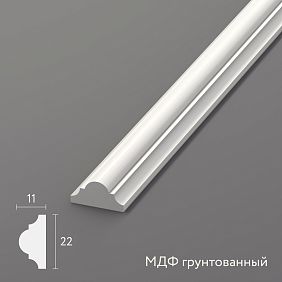
MDF — an affordable material with good performance characteristics. MDF is easy to process, does not deform, and has a smooth surface. However, this material is afraid of moisture, so it is not suitable for rooms with high humidity.
Polystyrene (expanded polystyrene) — the lightest and most budget-friendly material for moldings. Its advantages — low cost and ease of installation, disadvantages — fragility and short lifespan.
Design possibilities: how moldings transform space
Moldings are not just decorative elements, but a powerful tool in the designer's hands, capable of radically changing the perception of space. Let's consider the main techniques for using moldings in modern interiors.
Visual correction of room proportions
Properly selected and positioned moldings can visually alter the proportions of a room, correcting its shortcomings.
For low ceilings:
- Vertical wall moldings, creating panels from floor to ceiling, visually 'stretch' the space upward
- Narrow ceiling moldings in light shades do not 'eat up' the height
- Vertical lines in the design of wall panels enhance the effect of height
For overly high rooms:
- Horizontal moldings on walls (for example, at the level of 2/3 of the height) visually 'lower' the ceiling
- Wide ceiling moldings with complex profiles make the transition from walls to ceiling smoother
- Cove ceilings made of moldings create a sense of coziness in rooms with high ceilings
For narrow rooms:
- Horizontal lines in the design of wall panels visually expand the space
- Moldings painted in the same tone as the walls create an effect of a single surface, visually expanding the boundaries
For overly spacious rooms:
- Complex compositions of moldings divide the space into visual zones
- Moldings with contrasting colors create clear boundaries and structure the space
Stylistic solutions: moldings in different interior styles
Contrary to popular belief, moldings are suitable not only for classical interiors. Modern designers successfully integrate them into various stylistic directions.
Classicism and Neoclassicism:
In these styles, moldings play a key role. Here, wide moldings with rich relief ornamentation, elegant ceiling rosettes, and three-dimensional door and window casings are appropriate. Symmetrical compositions of moldings on walls, creating an effect of expensive finishing, are characteristic of classical style.
Modern minimalism:
In minimalist interiors, thin, minimalist profiles with clear lines and no decorative elements are used. The color of moldings usually matches the color of walls or ceiling, creating an effect of a subtle architectural detail rather than a bright decorative accent.
Scandinavian style:
In Scandinavian interiors, moldings are used sparingly. Here, simple ceiling moldings, narrow baseboards, and minimalist casings are appropriate. The color of moldings is predominantly white, matching the light color palette of Scandinavian style.
Provence and country:
For these styles, moldings with floral ornamentation, imitating handcrafted work, are characteristic. Here, wear, unevenness, and other signs of aging are appropriate. The color palette consists of pastel shades, typical for these styles.
Loft and industrial style:
In loft and industrial styles, moldings are used minimally. If they are present, they have a simple geometric shape and are often painted in contrasting colors, highlighting the architectural features of the room.
Art Deco:
In this style, moldings become a bright decorative accent. Here, geometric patterns, zigzags, stepped forms are appropriate. Moldings are often painted in contrasting colors or covered with gold or silver paint.
Creative ideas: non-standard use of moldings
Modern designers are not limited to traditional use of moldings and find new, unexpected applications for them.
Decorative wall panels:
- Classic rectangular panels
- Complex geometric compositions
- Asymmetric panels
- Panels with rounded corners
- Panels with inserts of wallpaper, fabric, or mirrors
Accent wall:
- Complex geometric molding pattern on a plain wall
- Combination of moldings with wallpaper or decorative plaster within panels
- Wall lighting with moldings to create a dramatic effect
Ceiling decoration:
- Coffered ceilings made of moldings
- Rosettes around chandeliers
- Geometric patterns on the ceiling
Space zoning:
- Moldings on the ceiling to mark functional zone boundaries
- Decorative panels made of moldings to highlight a work area or relaxation zone
- Combination of moldings with different color schemes to delineate space
Furniture decoration:
- Decorative panels made of moldings on cabinet facades
- Moldings as frames for mirrors
- Decorative inserts made of moldings on furniture doors
Practical guide: from selection to installation
When deciding to decorate your interior with moldings, it is important not only to determine their design, but also to choose the right material, calculate the required quantity, and properly install them.
Selection criteria: what to pay attention to when buying moldings
When choosing, Where to Buy Moldings for Wall Decoration, pay attention to the following parameters:
Material of manufacture:
The choice of material depends on the conditions of use, budget, and interior style. For humid areas, polyurethane moldings are suitable; for classic interiors — wooden or plaster moldings; for budget renovations — MDF or polystyrene products.
Dimensions:
The width and height of moldings should correspond to the proportions of the room. In rooms with high ceilings (from 3 m), wide cornices (from 10 cm) are appropriate; in small rooms with low ceilings, it is better to use narrow profiles (2–5 cm).
Design:
The pattern and complexity of the molding profile should match the interior style. For classic interiors, moldings with floral ornamentation are suitable; for modern interiors — geometric patterns or smooth profiles.
Quality of execution:
Pay attention to the clarity of the relief, absence of defects (cracks, chips, unevenness), and uniform color (if the moldings are painted).
Ecological:
Especially important for those suffering from allergies or with young children. Prefer materials with environmental safety certificates.
Ease of Installation:
If you plan to install moldings yourself, choose lightweight materials (polyurethane, polystyrene) and simple profiles.
Price:
The cost of moldings varies widely depending on the material, design complexity, and manufacturer. Set your budget in advance, but remember that saving on quality may result in additional expenses in the future.
Material calculation: how to avoid buying excess or running short
Before heading out to buy moldings for wall decoration, it is important to correctly calculate the required amount of materials:
- Measure the perimeter of the room for ceiling cornices and baseboards. Don't forget to subtract the width of doorways.
- Calculate the total length of wall moldings according to your design project. If you plan to create decorative panels, measure the perimeter of each panel and multiply by the number of panels.
- Account for trimming and potential waste by adding 10-15% to the calculated amount.
- Don't forget about auxiliary materials: adhesive, sealant, primer, paint. The adhesive consumption is usually indicated on the packaging and depends on the type of molding and the surface it is mounted on.
- Calculate the number of corner pieces if you are using special corner connectors instead of cutting moldings at an angle.
Installation technology: step-by-step instructions for different types of moldings
Installing moldings is a process requiring care and attention to detail. Let's consider the main stages of installing different types of moldings.
Required tools and materials:
- Miter saw and fine-toothed hacksaw for precise angled cutting of moldings
- Measuring tape and pencil for marking
- Putty knife for applying adhesive
- Molding adhesive (selected based on the material of the molding and the surface)
- Acrylic sealant for filling joints
- Sandpaper of various grits for sanding
- Primer and finish paint
- Painting tape for surface protection
- Level for checking horizontal and vertical alignment
Installation of ceiling cornices:
- Surface preparation: clean walls and ceiling from dust, dirt, and grease stains. Level the surface with putty if necessary and prime it.
- Marking: mark the wall with a line where the bottom edge of the cornice will run. Use a level to ensure horizontal alignment.
- Cornice preparation: measure the wall length and cut the cornice to the appropriate length. For inside corners, use a miter saw to cut at a 45° angle.
- Installation: apply adhesive to the back of the cornice in a zigzag pattern. Attach the cornice to the installation location, aligning the bottom edge with the marking, and press firmly. Secure the cornice with painter's tape if necessary until the adhesive dries completely.
- Joint treatment: fill gaps between cornices and at junctions with ceiling and walls using acrylic sealant. After drying, sand the joints with sandpaper.
- Final finishing: prime the cornices and joints, then paint in the chosen color, applying paint in 2-3 coats with intermediate drying.
Installation of wall moldings for creating decorative panels:
- Design project development: determine the placement and dimensions of the panels. Draw a layout of the moldings on paper or use specialized software for visualization.
- Marking: transfer the layout to the wall using a pencil, tape measure, and level. Check the horizontal and vertical alignment of the lines.
- Molding preparation: cut moldings to the required length. For 45° angled joints, use a miter saw.
- Installation: apply adhesive to the back of the molding and attach it to the marked line on the wall. Press firmly and secure with painter's tape if necessary until the adhesive dries.
- Joint treatment and final finishing: fill gaps with acrylic sealant, sand after drying, prime, and paint.
Installation of baseboards:
- Surface preparation: clean walls and floor from dust and dirt. Level joints between wall and floor if necessary.
- Marking: mark the wall with a line where the top edge of the baseboard will run.
- Baseboard preparation: measure the wall length and cut the baseboard to the appropriate length. For inside and outside corners, use a miter saw to cut at a 45° angle.
- Installation: apply adhesive to the back of the baseboard and attach it to the wall, aligning the top edge with the marking. Press firmly and secure with painter's tape if necessary until the adhesive dries.
- Joint treatment and final finishing: fill gaps with acrylic sealant, sand after drying, prime, and paint.
Finishing touches: secrets of a professional result
Quality final finishing is the key to the aesthetic appearance and longevity of moldings.
Surface preparation:
Before painting, moldings must be carefully prepared:
- Fill all joints, cracks, and uneven areas with acrylic sealant
- After the sealant dries, sand the surface with fine-grit sandpaper
- Wipe away dust after sanding with a damp cloth
- Apply primer for better paint adhesion
Paint selection:
For molding painting, it is recommended to use:
- Acrylic paints - they dry quickly, have no strong odor, are eco-friendly, and durable
- Alkyd enamels - more durable, but have a strong odor and take longer to dry
- Paints with various effects (metallic, pearlescent, patina) - for creating special decorative effects
Painting technique:
- Use high-quality brushes with natural bristles for smooth paint application
- Apply paint in thin layers, avoiding drips
- Allow each layer to dry completely before applying the next
- To create an aged effect, use dry brush technique or patina
- To protect the painted surface, you can apply a layer of clear varnish
Special effects:
- Gilding - applying gold leaf or simulating gold using special paints
- Silvering - creating a silver coating effect
- Patination - simulating an aged effect using special compounds
- Crackle - creating a cracked paint effect for a vintage style
Where to buy wall decor moldings: market overview and recommendations
Once you've decided on the design and material of the moldings, you encounter the question: Where to Buy Moldings for Wall Decoration? Let's consider the main options and their features.
Specialized stores for architectural decor
Specialized stores offer a wide variety of moldings in different styles, sizes, and materials. Their advantages:
- Professional consultation from sales consultants
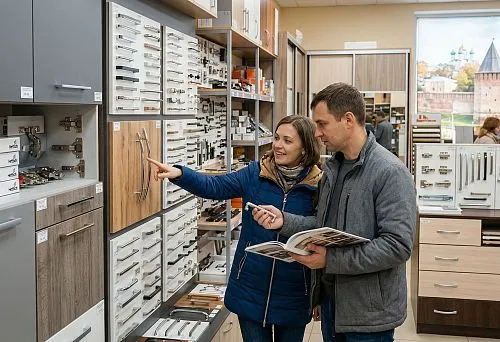
- Ability to see samples in person and assess their quality
- Availability of catalogs and display stands for visualization
- Comprehensive solutions (moldings, outlets, cornices in a unified style)
- Additional services (delivery, installation, painting)
One of the leaders in the architectural decor market is the company 'Stavros', offering a rich selection of wall decor moldings made of polyurethane. The assortment includes items of various styles, sizes, and configurations, allowing you to select the optimal option for any interior.
Construction hypermarkets
Large construction hypermarkets, such as Leroy Merlin, OBI, Castorama, also offer a sufficiently wide selection of moldings. Their advantages:
- Ability to purchase all necessary repair materials in one place
- Availability of complementary products (adhesives, tools, paint)
- Regular promotions and discounts
- Convenient location within the city
- Ability to return the product if defects are discovered
However, the selection of moldings in construction hypermarkets is usually limited to basic models and does not always include exclusive or non-standard options.
Online stores
For those who value their time and prefer to shop from home, online stores are an excellent solution. Their advantages:
- Wide assortment, not limited by store floor space
- Convenient search and filtering of products by various parameters
- Detailed descriptions and photos of products
- Ability to compare prices and features
- Delivery to your home
- Customer reviews that help make a decision
Company "Stavros" offers a convenient online catalog where you can select and order wall decor moldings with delivery to your home. The website features photos of the products, their dimensions, material of manufacture, and other technical specifications, allowing for an informed choice.
Manufacturers on order
If you did not find moldings in the ready assortment that match your vision of the ideal interior, you can contact manufacturers who produce decorative elements to order. Their advantages:
- Ability to implement individual design
- Manufacture of non-standard sizes
- Choice of any material
- Creation of unique decorative elements
- High quality execution
However, the cost of custom molding production is usually higher than purchasing ready-made items, and production times may be quite lengthy.
Criteria for choosing a supplier: what to pay attention to
When choosing a place, Where to Buy Moldings for Wall Decorationpay attention to the following criteria:
Company reputation:
Review customer feedback, learn how long the company has been operating in the market, whether it has quality certifications and awards.
Product assortment:
Assess the variety of moldings offered by style, size, and material. The ability to purchase all necessary elements in one place significantly simplifies the repair process.
Product quality:
If possible, examine product samples in person. Pay attention to the clarity of relief, absence of defects, and uniformity of color.
Prices:
Compare prices for similar items from different suppliers. An excessively low price may indicate poor quality, while an unjustifiably high price may reflect unreasonable markup.
Additional services:
Find out whether the company offers delivery, installation, or designer consultation services. These additional options can significantly simplify the process of updating the interior.
Warranties and returns:
Clarify warranty terms for products and the possibility of returning items if defects are found or if the items do not fit in size or color.
Economic aspects: investments in interior beauty
Moldings are not only an aesthetic pleasure, but also an investment in your interior. Let's consider the economic aspects of their use.
Price-to-quality ratio: how to avoid overpaying and disappointment
The cost of moldings depends on the material used, design complexity, and size. The most affordable are polystyrene and MDF moldings, more expensive are polyurethane and wooden, the most expensive are plaster moldings with handcrafted work.
When choosing moldings, it is important to consider not only their cost, but also durability, resistance to damage, and ease of installation. For example, polyurethane moldings, although more expensive than polystyrene, last significantly longer and do not require frequent repairs or replacements.
Molding price range (per linear meter):
- Polystyrene: 100-300 rubles
- MDF: 300-800 rubles
- Polyurethane: 500-2000 rubles
- Wooden: 800-3000 rubles
- Gypsum: 1000-5000 rubles and above
In addition to the cost of moldings themselves, it is necessary to consider expenses for accompanying materials (adhesive, sealant, primer, paint) and tools, as well as installation costs, if you do not plan to install moldings yourself.
Impact on property value: long-term investments
A well-executed decoration using moldings can increase the market value of your property. Elegant interiors with architectural details are always valued higher than standard solutions.
The impact of moldings on property value is especially noticeable in the premium segment, where details and quality of finishing play a decisive role in pricing. According to experts, a well-designed interior using moldings can increase property value by 5-15%.
Moreover, moldings are a long-term investment. High-quality polyurethane or wooden items retain their appearance for decades, making them a worthwhile investment in the long run.
Budget-friendly solutions: how to create a luxurious interior with limited funds
If your budget is limited, but you want to create an impressive interior using moldings, consider the following options:
Accent wall:
Instead of installing molding on the entire room, focus on one wall that will become the composition's focal point. This will significantly reduce material and installation costs.
Combining materials:
Use expensive moldings (e.g., polyurethane or wooden) only in the most prominent areas, and choose more affordable options for other surfaces.
Simple profiles:
Moldings with simple profiles are cheaper than those with complex relief ornamentation, but when used appropriately, they can create an equally striking interior.
Self-installation:
Installing moldings yourself will save on professional services. Modern materials (polyurethane, polystyrene foam) are easy to work with and install, making them accessible for DIY installation even without special skills.
Promotions and sales:
Many stores regularly hold promotions and sales, during which you can purchase quality moldings at significant discounts. Keep an eye on special offers in stores, Where to buy wall decorative moldings.
Trends and prospects: moldings in modern design
The world of interior design is constantly evolving, and trends in molding usage also change. Let's consider what is currently relevant and what trends are expected in the future.
Modern Trends in Molding Usage
Minimalism and geometry:
Modern designers increasingly prefer minimalist moldings with clear lines and minimalist design. Geometric compositions using moldings are trending — rhombuses, hexagons, asymmetrical shapes.
Colored moldings:
If moldings were traditionally white in the past, today designers actively experiment with color. Current trends include:
- Moldings in wall color to create monochromatic interiors
- Contrasting moldings creating graphic compositions
- Moldings in saturated colors — emerald, blue, terracotta — as a bright accent in the interior
- Moldings with metallic effect — gold, silver, bronze
Combining with other materials:
Interesting trend — combining moldings with other materials and textures:
- Moldings combined with wallpaper or textile inserts within panels
- Combining moldings with mirrored or metallic surfaces
- Moldings as framing for decorative plasterwork or painting
Ecological and natural properties:
Eco-friendly materials and natural textures are trending. Wooden moldings made from certified wood and products from biodegradable materials are becoming increasingly popular.
3D effects:
Modern technologies allow creating moldings with a volumetric 3D effect, which become independent decorative elements rather than mere framing.
Innovative materials and technologies
Technological advancements have not bypassed molding production. Today, the market offers innovative materials and technologies that expand the possibilities of interior decoration:
Composite materials:
New composite materials combine the advantages of various components—lightweight, durability, moisture resistance, and eco-friendliness. They enable the creation of moldings with unique characteristics not achievable with traditional materials.
3D Printing:
3D printing technology opens new possibilities for creating moldings with unique designs and complex geometries. It allows bringing the most daring design ideas to life and creating truly unique interiors.
Glowing Moldings:
Innovative luminescent materials allow creating moldings that glow in the dark, producing an unusual decorative effect.
Smart Moldings:
Integrating moldings with smart home systems is another promising trend. Moldings can serve not only as decorative elements but also as functional ones—for example, concealing LED lighting controlled via smartphone.
Expert forecasts: what will be trending tomorrow
Interior design experts predict the following trends in molding usage:
Personalization:
Individual solutions will gain increasing popularity — moldings created according to the client’s or designer’s sketches, with unique patterns and dimensions.
Functionality:
Moldings will serve not only decorative but also functional roles — for example, integrating with lighting, ventilation, and acoustic systems.
Ecological:
The trend toward eco-friendliness and sustainability will strengthen. Moldings made from recycled materials or biodegradable components will gain increasing popularity.
Technological advancement:
The development of technology will lead to the emergence of "smart" moldings, integrated with smart home systems and performing various functions - from lighting to climate control.
Return to traditions:
Alongside innovative solutions, there will be a renewed interest in traditional techniques and materials - hand-carved stucco, wood carving, hand-painted plaster moldings.
Conclusion: Moldings as the art of transforming space
Moldings are not just decorative elements, but true architectural details capable of transforming any space, giving it individuality and completeness. They create a sense of thoughtfulness and cohesion in the interior, add depth and texture, structure the space, and set accents.
When choosing, Where to Buy Moldings for Wall DecorationPay attention not only to price, but also to material quality, manufacturer reputation, possibility of receiving professional consultation and additional services.
Investing in quality architectural decor is investing in the beauty and comfort of your home, which will delight you for many years. Moldings are not subject to rapid fashion trends, they are timeless and always relevant, making them an ideal choice for those who appreciate classic elegance and thoughtful design.
Create unique, stylish interiors using moldings, experiment with shapes and compositions, combine tradition and modernity — and your home will become a true reflection of your individuality and taste.