Article Contents:
- Material Poetry: A New Reading of Textures and Surfaces
- Tactile Revolution in Modern Interior Design
- Multilayered Architecture of Sensations
- Color Neurotherapy: Healing Through Palette
- Scientific Chromaturgy of the Present
- Dynamic Chromatology
- Biophilic Integration: Nature as Co-Author of Space
- Living Ecosystems in Urban Context
- Natural Materials as Energy Conductors
- Neuroarchitecture: Design Considering Perception Characteristics
- Geometry of Emotions
- Ceilings as the Fifth Wall
- Technological Symbiosis: Intelligence Without Domination
- Smart Home as Invisible Butler
- Biometric Personalization
- Adaptive Multi-Functional Architecture
- Transformable Ecosystems
- Hidden Systems of Effective Organization
- Culinary Laboratory of the Future
- Gastronomic Technologies at Home
- Ecological responsibility
- Bedroom as a Regeneration Capsule
- Science of the Ideal Sleep
- Circadian Phototherapy
- Bathroom as Personal Wellness Center
- High-Level Hydrotherapy
- Materials of the Future
- Children’s Spaces: Design for Developing Future Geniuses
- Developing Environment of Scientific Approach
- Safety Through Innovative Design
- Workspaces of the Digital Nomad Era
- Neuroergonomics of productivity
- Psychoacoustic Optimization
- Lighting as Mood Direction
- Architectural Light of a New Era
- Personalized Circadian Lighting
- Aromatic design: olfactory architecture
- Personalized Aromatic Landscapes
- Therapeutic Aromatherapy
- Personalization as the highest art of design
- Interior as a Reflection of Personal DNA
- Evolutionary interiors
- Social spaces of a new kind
- Technologies of Connection
- Intergenerational design
- Ecological Alchemy: Transforming Waste into Beauty
- Circular Design Philosophy
- Local production as philosophy
- Conclusion: Design as a bridge between the present and the future
Why some homes give a sense of harmony and inspiration, while others merely demonstrate the owners’ financial capabilities? The secret lies in understanding the subtle mechanisms by which space affects the human psyche. Latest interior design trends for 2025 They open before us a new era of conscious design, where each element serves not merely as decoration, but as a tool for creating the ideal living environment.
Imagine a home that senses your mood and instantly adapts to it. In the morning, it charges you with the energy of sunlight, during the day it maintains focus with cool tones, and in the evening it wraps you in the warmth of cozy embraces. This is not utopia — it is the reality of modern interior design, grounded in a deep understanding of neurobiology of perception and psychology of space.





Material Poetry: A New Reading of Textures and Surfaces




Tactile Revolution in Modern Interior Design
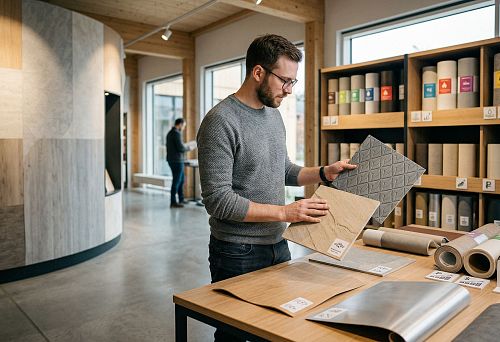
Touch becomes an equal participant in the designer’s symphony. Every surface tells its story through touch. The rough texture of unprocessed wood awakens ancient instincts, connecting us to primal nature. The softness of cashmere offers a sense of protection, while the coolness of polished marble refreshes and invigorates the mind.
Innovative materials with programmable properties open incredible possibilities. Smart fabrics react to body temperature, automatically regulating heat exchange. Coatings with memory effect return to their original shape after deformation, creating an illusion of living surfaces.
Contrasting combinations become tools of emotional impact. The juxtaposition of rough and smooth surfaces activates the nervous system, stimulating creative processes. Conversely, harmony among similar-textured materials calms and relaxes, creating an atmosphere of meditative peace.
Our factory also produces:





Multi-layered Architecture of Sensations
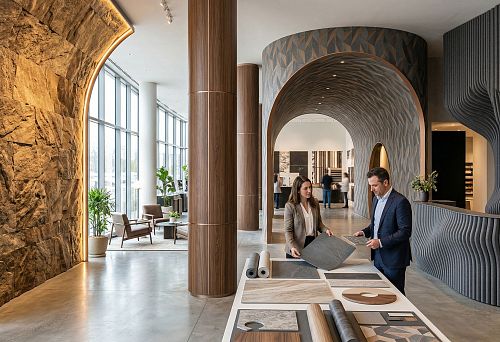
Decorative plasters reach the level of sculptural art. Three-dimensional reliefs imitate natural formations — from coral reefs to rock formations. Parametric design creates complex geometric patterns that captivate the gaze and activate brain regions responsible for aesthetic perception.
Metallic surfaces acquire artistic expressiveness through patination and oxidation. Copper with a greenish patina of time, steel with rainbow streaks, brass with uneven darkening — each material becomes a carrier of unique energy.
Get Consultation
Color Neurotherapy: Healing Through Palette
Scientific Chromaturgy of Modernity
Mocha Mousse — the healing color of 2025 — is a complex symphony of brown, beige, and gray mid-tones. Neurophysiological studies prove its ability to stabilize limbic system function, reduce anxiety levels, and enhance cognitive functions. In interior design, this shade creates a sense of reliable shelter from the chaos of the external world.
Deep emerald tones act as a natural antidepressant, activating serotonin and dopamine production. Particularly effective in rest and meditation zones, where achieving deep relaxation is essential.
Terracotta nuances stimulate social activity and creative thinking. This color, reminiscent of fertile earth and solar warmth, awakens primal instincts of creation and communication.
Dynamic Chromatics
Smart paints revolutionize the concept of static interiors. Thermochromic coatings change shades depending on temperature, creating visual effects of warmth and coolness. Photochromic materials adapt to lighting intensity, automatically adjusting color perception of space.
Electrochromic surfaces allow instant transformation of color palette with a single touch on a smartphone. This opens boundless possibilities for personalizing atmosphere according to mood and momentary needs.
Biophilic Integration: Nature as Co-Author of Space
Living Ecosystems in Urban Context
Vertical gardens evolve into complex biotechnological systems with autonomous control. Sensors for humidity, soil composition analyzers, drip irrigation systems, and full-spectrum plant lamps create ideal conditions for plant growth. Such phyto-walls not only purify air — they generate negative ions, improving overall well-being and productivity.
Aquaponic systems combine decorative fishkeeping with cultivation of edible plants. Fish provide organic fertilizers, while plants naturally filter water. This closed ecosystem demonstrates principles of sustainable development directly within living space.
Terrariums and florariums transform into miniature biospheres where one can observe the full life cycle of plants. Automated microclimate maintenance systems make care for such compositions minimal, while aesthetic effect is maximized.
Natural Materials as Energy Conductors
Latest interior design trends for 2025 Emphasize the importance of using natural materials as sources of life energy. Solid oak, walnut, ash with preserved natural texture creates a tactile connection with living nature.
Natural stone is used not merely as a decorative material, but as an element of energetic harmonization of space. Travertine regulates air humidity due to its porous structure. Slate creates a sense of stability and reliability. Marble introduces elements of elegance and nobility.
Neuroarchitecture: Design Considering Perception Characteristics
Geometry of Emotions
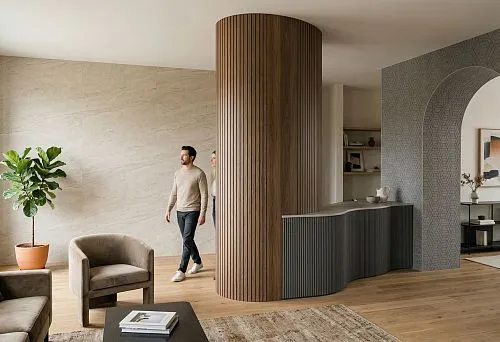
The form of space directly affects brain function and emotional state. Arched openings of various configurations — from classical semicircular to modern parabolic — create smooth transitions between zones, which are subconsciously perceived as harmonious movement.
Organic shapes in furniture and architectural elements activate ancient brain regions responsible for connection with nature. Curves mirroring natural lines — river meanders, hill contours, leaf veins — create a sense of naturalness and psychological comfort.
Fractal patterns, based on mathematical principles of self-similarity, soothe the nervous system and promote meditative states. These patterns are embedded into textiles, wallpapers, decorative panels, creating a subconscious sense of order and harmony.
Ceilings as the Fifth Wall
Ceiling structures become active participants in designer dramaturgy. Multi-level systems create complex interplay of light and shadow, forming a volumetric perception of space. Suspended elements of various configurations zone rooms without creating physical barriers.
Tensioned systems with integrated lighting transform the ceiling into a source of soft, diffused illumination. Photoprints on ceiling surfaces create illusions of open sky, starry constellations, or abstract artistic compositions.
Technological symbiosis: intelligence without domination
Smart home as an invisible butler
Automation systems reach a new level of delicacy, becoming practically invisible to users. Multiple sensors — presence, temperature, humidity, air quality, lighting — operate in the background, creating ideal conditions without active human involvement.
Artificial intelligence analyzes the behavioral patterns of each family member and creates personalized comfort profiles. The system remembers that you prefer to read in a specific armchair, and automatically turns on the floor lamp when you approach it with a book.
Predictive algorithms anticipate needs: knowing that on Sundays you prepare a family breakfast, the system pre-activates additional kitchen lighting and starts the coffee machine at the optimal time.
Biometric personalization
Wearable devices transmit data on pulse, body temperature, sleep phases, stress levels, and the smart home automatically adjusts lighting, temperature, and humidity parameters to achieve optimal well-being for each occupant.
Facial recognition and gait analysis systems create individual comfort scenarios. When a specific person enters a room, their personal profile is automatically activated: favorite music, optimal temperature, preferred lighting level.
Multi-functional adaptation architecture
Transformable ecosystems
Modern housing becomes maximally flexible for various usage scenarios. Transformable furniture reaches unprecedented sophistication: tables convert into beds via complex mechanisms, cabinets open to reveal full-sized workspaces with integrated systems.
Mobile partitions create dynamic layouts, adapting to the needs of the moment. Glass panels with liquid crystal inserts can instantly change transparency, creating private zones or unifying space for social interaction.
Hidden systems of efficient organization
Built-in storage systems become part of the architectural composition. Cabinets are integrated into walls using hidden hinges and guides, creating the impression of a monolithic space. Each item receives a specially designed place, taking into account ergonomic principles and usage frequency.
Pull-out drawers with automatic lighting and climate control, rotating carousels for utilizing corner spaces, lift systems for tall cabinets — all of this makes the storage and access to items intuitive and pleasant.
The kitchen of the future
Gastronomic technologies at home
Modern kitchens transform into centers of culinary creativity, equipped with professional equipment. Induction surfaces with precise temperature control allow cooking with the accuracy of professional chefs. Combination steam ovens create ideal conditions for healthy cooking while preserving all nutrients.
Sous-vide systems integrated into kitchen islands open up possibilities for molecular gastronomy in home settings. Ultrasonic baths for flavor extraction, cryogenic systems for instant freezing, precision scales accurate to the gram — all of this turns cooking into a scientific experiment.
Ecological responsibility
Smart resource management systems minimize waste and losses. Refrigerators with AI content analysis suggest recipes based on available ingredients and track expiration dates. Composters built into kitchen furniture convert organic waste into fertilizer for indoor plants.
Water filtration systems achieve laboratory-grade purification, removing not only mechanical impurities but also microplastics, heavy metals, chlorine, and other chemical contaminants. This not only improves the taste of dishes but also contributes to the long-term health of the family.
Bedroom as a regeneration capsule
The science of ideal sleep
Latest interior design trends for 2025 Transform the bedroom into a high-tech system for body recovery. Smart mattresses with zonal firmness adjustment adapt to the individual body characteristics of each partner, providing optimal spinal support.
Built-in biosensors track sleep phases, body temperature, breathing rate, and can adjust mattress parameters to improve rest quality. Smart pillows with memory foam automatically adjust height and firmness based on the sleeper’s position.
Climate control systems maintain ideal temperature and humidity for each sleep phase. Air purifiers with HEPA filters remove allergens and micro-particles, while ionizers create an atmosphere comparable to mountain or sea air.
Circadian phototherapy
Bedroom lighting is programmed strictly according to natural circadian rhythms. In the evening, the system generates warm red light with a 660 nm wavelength, stimulating melatonin production. In the morning, cool blue light at 480 nm is activated, suppressing melatonin and activating wake-up processes.
Ceiling panels with starry sky simulation create a calming atmosphere for sleep. Projection systems can reproduce slow cloud movement, auroras, or other natural phenomena, promoting deep relaxation.
Bathroom as a personal wellness center
High-level hydrotherapy
Bathrooms become centers for comprehensive wellness procedures. Deep bathtubs with multi-functional hydrotherapy, water mineralization, and chromotherapy systems transform ordinary bathing into a full-fledged spa experience.
Shower cabins are equipped with multiple nozzles for various purposes: tropical rain for relaxation, side jets for massage, mist generators for aromatherapy. Steam generators with essential oil dispensers create personalized programs for various therapeutic effects.
Compact infrared saunas integrate into bathrooms, allowing regular detoxification procedures. Precise temperature control and various radiation modes make home saunas safe and effective for all family members.
Materials of the future
Antibacterial coatings based on silver and copper nanoparticles prevent pathogenic microorganism proliferation without using chemical disinfectants. Self-cleaning surfaces with photocatalytic properties break down organic contaminants under light exposure.
Thermoregulating materials maintain comfortable surface temperatures, preventing condensation and providing additional tactile comfort upon contact with skin.
Children's spaces: design for nurturing future geniuses
Educational environment based on scientific approach
Children's rooms are designed as interactive educational centers, where every element contributes to intellectual and emotional development. Interactive walls with touch-sensitive surfaces become educational tools: children can study geography by touching an interactive world map, or math by solving problems on smart panels.
Projection systems create immersive educational environments. The ceiling can transform into a planetarium for studying astronomy, walls into an underwater world for learning marine biology, and the floor into an interactive map for geographical adventures.
Interior-scale modular construction sets allow children to independently organize space, developing spatial thinking, engineering skills, and creativity. Transformable furniture grows with the child, adapting to their physical parameters and evolving needs.
Safety through innovative design
Modern child safety is achieved not through restrictions and prohibitions, but through thoughtful design and smart materials. Surfaces with memory foam effect instantly return to their original state after deformation, cushioning impacts and preventing injuries.
Biometric sensors integrated into toys and furniture track the child's physical condition and can alert parents to the onset of illness even before visible symptoms appear. Air monitoring systems ensure ecological safety and automatically activate purifiers when exceeding regulatory thresholds.
Workspaces of the digital nomad era
Neuroergonomics of productivity
Home offices are designed as scientifically grounded environments for maximum cognitive efficiency. Desks with biometric feedback automatically adjust height based on posture, fatigue level, and task type. Chairs with AI control adapt to individual posture characteristics and can suggest micro-breaks for stretching.
Workplace lighting synchronizes with circadian rhythms and activity specifics. For analytical tasks, bright cool white light is automatically activated; for creative tasks, warm diffused light is used. Adaptive systems can detect activity type via eye movements and gestures, adjusting lighting parameters in real time.
Psychoacoustic optimization
Workplace sound design considers the impact of various frequencies on cognitive functions. White noise at specific intensity masks distractions, nature sounds stimulate creative thinking, and binaural rhythms improve concentration and memory.
Adaptive acoustic systems analyze the surrounding sound environment and generate optimal audio for specific types of intellectual activity.
Lighting as mood choreography
Architecture of light in a new era
Modern lighting systems go far beyond simple functionality, becoming tools of emotional impact and artistic expression. Architectural lighting creates dramatic effects, highlights material beauty, and forms a unique atmosphere in each room.
LED technologies enable the creation of lighting that precisely mimics all nuances of natural sunlight at different times of day. Systems can reproduce the golden glow of dawn, the brightness of midday sun, or the soft tones of sunset.
Dynamic light installations transform static interiors into living, constantly evolving spaces. Systems can simulate the aurora borealis for meditative relaxation, the flicker of a campfire for cozy ambiance, or pulsating rhythms for energetic events.
Personalized circadian lighting
Latest interior design trends for 2025 Include biorythmic lighting systems synchronized with each family member's internal clock. Personalization considers individual chronotypes, age, health status, and even seasonal variations in light perception.
Morning light with high intensity and blue spectrum dominance stimulates cortisol production, ensuring natural awakening and activation. Daylight supports high performance, while evening light gradually prepares the body for rest, stimulating melatonin synthesis.
Aromatic design: olfactory architecture
Personalized aromatic landscapes
Each functional zone in the home receives its own characteristic aroma, creating an additional sensory zoning level and emotional impact. Programmable diffusers create complex compositions that evolve throughout the day: invigorating citrus notes in the morning, focusing mint accents during the day, and relaxing lavender tones in the evening.
Aromatization systems integrate with ventilation systems, ensuring even distribution of scents throughout the room. Intensity and composition of aromatic blends can be individually adjusted for each family member according to their preferences and needs.
Therapeutic aromatherapy
Various scents are programmed to achieve specific therapeutic and psychological effects. Citrus notes enhance concentration and stimulate cognitive processes. Lavender compositions promote deep relaxation and quality sleep. Eucalyptus aromas clear respiratory passages and improve overall well-being.
Natural aromatherapy uses live plants integrated into ventilation systems. Lavender in the bedroom, mint on the kitchen, rosemary in work zones create a natural aromatic environment without synthetic air fresheners.
Personalization as the highest art of design
Interior as reflection of personal DNA
Modern technologies enable the creation of interiors that consider not only aesthetic preferences but also the biological characteristics of the owners. Genetic analysis of chronotype determines optimal lighting regimes. Research into sensitivity to sounds helps select acoustic solutions. Predisposition to allergic reactions influences the choice of materials and air purification systems.
Collecting transforms into an art of creating unique energy in space. Special display cases with precise climate control, rotating exhibition systems, interactive information panels turn the presentation of personal collections into a museum-level experience.
Evolutionary interiors
Homes become living organisms that grow and develop alongside their owners. AI systems continuously analyze changes in lifestyle, preferences, family composition and automatically adapt the space to new needs and circumstances.
The arrival of a child triggers an automatic reconfiguration of security systems. Changes in professional activity lead to adaptation of work zones. Age-related changes result in adjustment of ergonomic parameters and support systems.
Social spaces of a new type
Technologies of closeness
Common areas in the home are equipped with systems that promote high-quality social interaction. Acoustic solutions create intimate zones for confidential conversations and open spaces for group events. Adaptive lighting automatically adjusts to different types of social activities.
Multimedia systems allow easy sharing of memories, viewing family photos, and jointly studying new information. Projection surfaces turn any wall into a screen for family movie nights or educational programs.
Inter-generational design
Spaces are designed for comfortable coexistence of multiple generations within one family. Adaptive technologies account for different needs: large control elements and bright lighting for the elderly, safe materials and interactive surfaces for children, high-tech solutions for youth.
Common areas promote natural interaction between generations, while private spaces provide necessary solitude for each age group.
Ecological alchemy: transforming waste into beauty
Circular design philosophy
Principles of circular economy penetrate the very essence of modern design. Recycled materials undergo remarkable transformation: old wood from decommissioned ships becomes exclusive furniture with a rich history, ocean plastic turns into high-quality flooring, recycled aluminum becomes elegant designer lamps.
Upcycling reaches the level of high art, where used items acquire new functionality and aesthetic value. Vintage industrial components become the basis for original lamps, old doors transform into countertops, and wooden crates become stylish garden furniture.
Local production as philosophy
Supporting regional artisans and manufacturers becomes not only ecologically but also culturally significant. Furniture from local carpenters carries the energy of native land, ceramics from regional artists reflect local traditions, textiles from traditional weavers preserve cultural heritage.
Short supply chains minimize environmental impact from transportation, while direct interaction with creators adds emotional value to each item in the interior.
Conclusion: Design as a bridge between the present and the future
Latest interior design trends for 2025 They represent not merely a change in aesthetic preferences, but a fundamental revolution in understanding the role of living space in human life. Interior design ceases to be static decoration and transforms into an active, living environment that thinks, feels, and evolves alongside us.
We enter the era of conscious design, where every decision is based on a deep understanding of human nature and needs. Neurobiology of perception, psychology of color, ergonomics of movement, acoustics of comfort — all these sciences unite to create spaces that are not only beautiful but also beneficial for physical health, emotional well-being, and spiritual growth.
Technologies cease to be ends in themselves and become invisible assistants, delicately supporting our comfort and safety. The smart home of the future is not a gadget exhibition, but a finely tuned ecosystem that understands our needs better than we do ourselves.
Ecological responsibility transforms from a trendy trend into an ethical foundation of any design solution. Every material, every item must not only serve beauty but also care for the planet we leave for future generations.
Personalization reaches unprecedented heights, allowing the creation of spaces that reflect not only tastes but also character, lifestyle, even genetic traits of the owners. At the same time, individuality does not contradict functionality — on the contrary, it enhances it, creating the most comfortable environment for a specific person.
It is important to understand that creating a modern interior is a multidisciplinary task requiring deep knowledge in psychology, technology, ecology, and art. A professional designer today is not merely a decorator, but a scientist, engineer, psychologist, and artist in one.
The future of interior design is a symbiosis of science and poetry, technology and human warmth, global innovations and local traditions. These are spaces that not only impress visually but also actively contribute to our happiness, health, creative development, and spiritual growth.
STAVROS Company stands at the forefront of this design revolution, creating interiors that anticipate the future and set new standards for quality of life. Our team of professionals combines rich experience in classic design with deep understanding of modern scientific achievements and technological possibilities. Each project becomes a unique laboratory for creating the ideal living environment, where beauty serves well-being, and innovations serve human happiness. In our interiors, the future has already arrived, and it is beautiful.