Article Contents:
- Anatomy of the right choice: where to start buying
- Inventory of needs: composing a technical specification
- Measurements and calculations: the mathematics of safety
- Stylistic planning: harmony with interior
- Geography of choice: where to find quality hardware
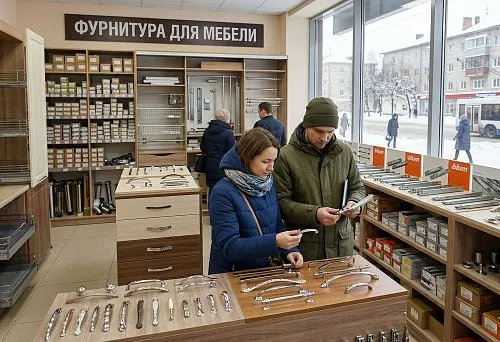
- Specialized Salons: Expertise and Service
- Construction hypermarkets: variety and accessibility
- Online stores: convenience and time-saving
- Direct sales from the manufacturer: maximum quality
- Hardware materials: choosing the basis of reliability
- Wood: classic, proven over centuries
- Metal: strength and modernity
- Composite materials: technologies of the future
- Technical specifications: numbers defining quality
- Strength characteristics
- Dimensional Accuracy
- Surface Quality
- Safety above all: regulatory requirements
- Geometric requirements
- Load requirements
- Requirements for materials
- Aesthetic aspects: beauty in harmony with function
- Stylistic compatibility
- Color solutions
- Textural Solutions
- Practical buying tips: avoiding common mistakes
- First mistake: cutting corners on safety
- Second mistake: ignoring compatibility
- Third mistake: inaccurate measurements
- Fourth mistake: ignoring operating conditions
- Installation and operation: extending the life of the staircase
- Preparation for Installation
- Tools and fixtures
- Installation Technology
- Operation and maintenance
- Development prospects: the future of staircase hardware
- Smart technologies
- New Materials
- Customized Production
- Regional purchasing features: climate and traditions
- Northern Regions
- Southern Regions
- Humid climate
- Ecological aspects: responsibility to the future
- Ecologically clean materials
- Safe Coatings
- Waste disposal and recycling
- STAVROS: where buying becomes an investment in the future
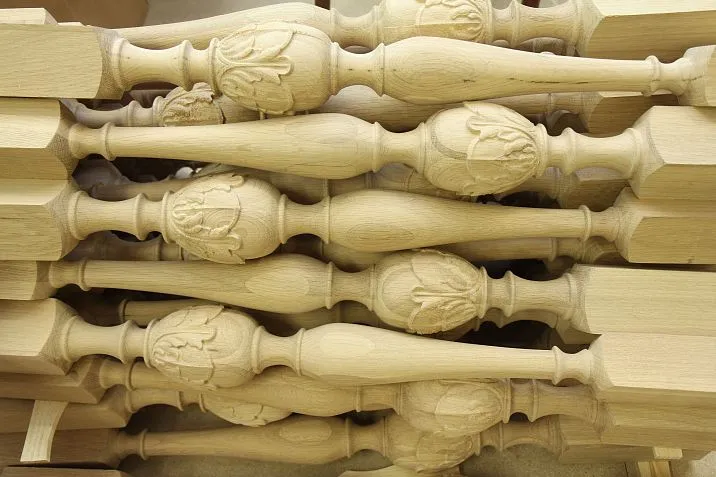
You stand before a choice and ponder where staircase hardware to buy quality and reliable? This question concerns everyone who has encountered the need to build or reconstruct a staircase in their home. For, the correctness of this choice depends not only on the appearance of the structure, but also on the safety of all family members for many years.
The modern market of staircase hardware is astonishing in its diversity — thousands of offers from hundreds of manufacturers, numerous materials, styles, price categories. How not to get lost in this abundance? How to distinguish quality products from cheap counterfeits? How to find the optimal price-to-quality ratio? We will provide exhaustive answers to these and many other questions.
Over decades of work in the fields of architecture and interior design, I have seen numerous examples of how the wrong choice of hardware turns a beautiful staircase into a source of constant problems. Creaking, loosening, premature wear — all this is the result of cutting corners on quality. But I have also observed how properly selected hardware turns even a simple staircase into a true work of art, serving the family for decades without a single breakdown.


Anatomy of the Right Choice: Where to Start When Buying
Successful purchase of staircase hardware begins long before visiting a store or opening a catalog online. It is a comprehensive process requiring careful preparation and understanding of many nuances.




Inventory of needs: preparing a technical specification
The first stage — detailed inventory of exactly what you need. A staircase is a complex engineering structure composed of many elements, each serving its own function. staircase components including load-bearing structures, guard elements, decorative details, and fastening hardware.
Load-bearing elements: stringers, treads, risers, and nosings — the foundation of staircase safety. These elements are subject to the strictest requirements for strength and material quality. The slightest defect in load-bearing elements may lead to catastrophic consequences.
Guard structures: handrails, balusters, and handrail supports — ensure safety during movement and largely determine the staircase’s appearance. Height, spacing, and material of manufacture — all these parameters are regulated by building codes.
Fastening elements: bolts, screws, brackets, and angles — invisible heroes whose reliability determines the entire structure’s safety. Saving on fasteners is unacceptable — it is a direct path to an accident.
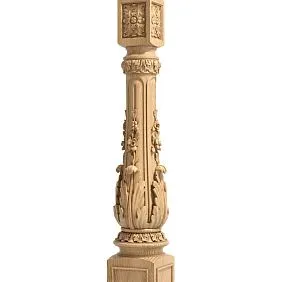
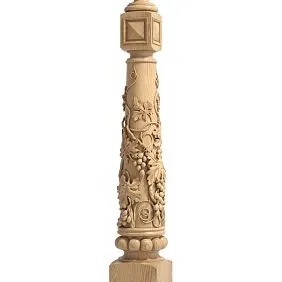
Our factory also produces:



Measurements and calculations: the mathematics of safety
Accurate measurements — the foundation of a successful purchase. An error in dimensions may result in the need to completely redo the staircase or, at best, additional costs for modifying elements.
Floor height, doorway width, slope angle, number of steps — all these parameters are interrelated and determine the type and quantity of required hardware. Modern building codes clearly regulate the geometric parameters of staircases: step height 150–200 mm, tread width 250–320 mm, slope angle 30–45 degrees.
Get Consultation
Stylistic planning: harmony with interior design
A staircase does not exist in a vacuum — it must harmoniously fit into the overall style of the interior. A classical mansion requires one set of solutions, while a modern loft-style apartment requires completely different ones. Materials, colors, and forms — all must contribute to creating a cohesive overall impression.
Traditional styles — classicism, baroque, Provence — prefer natural materials: oak, beech, ash. Complex profiled elements, carving, patina — all of this creates the atmosphere of an old estate.
Modern styles — minimalism, high-tech, Scandinavian style — lean toward simple forms and innovative materials. Glass, metal, composites — combined with natural wood, they create current solutions.
Geography of choice: where to find quality hardware
Modern buyers have numerous channels for purchasing staircase hardware. Each has its own advantages and disadvantages, which must be considered when planning a purchase.
Specialized stores: expertise and service
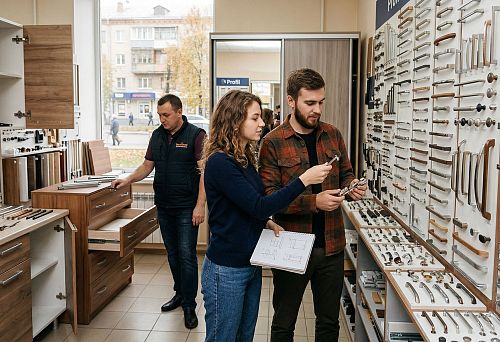
Specialized staircase stores — the optimal choice for serious projects. Here, specialists work who will not only help you select the required elements but also calculate their quantity, provide installation recommendations, and offer quality guarantees.
The advantages of specialized stores are obvious: wide selection of quality products, professional consultations, opportunity to see and touch the goods, services for manufacturing non-standard elements, warranty and post-warranty service.
Disadvantages also exist: higher prices due to overhead costs, limited brand assortment, possible bias of consultants toward certain manufacturers.
Construction hypermarkets: variety and accessibility
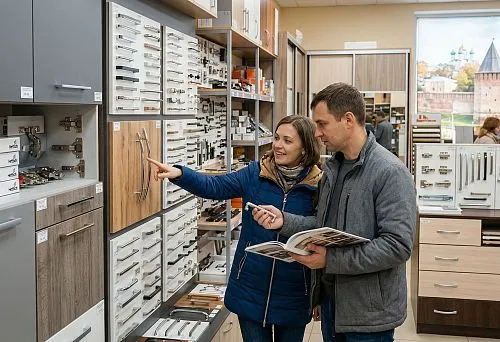
Large construction networks offer an enormous selection of hardware from various manufacturers under one roof. This is convenient for comparing prices and characteristics, especially if you know exactly what you need.
Main advantages of hypermarkets: competitive prices due to large purchase volumes, wide assortment of various brands, convenient location and long operating hours, availability of warehouse stock, well-developed logistics network.
Disadvantages are also obvious: limited expertise of consultants in specific issues, lack of individualized approach, difficulty obtaining professional advice for complex projects.
Online stores: convenience and time savings
Online purchasing of hardware is becoming increasingly popular due to convenience, wide selection, and often lower prices. The ability to compare offers from dozens of suppliers in a few minutes — an undeniable advantage of online trade.
Advantages of online purchases: time savings, vast selection of products and suppliers, opportunity for detailed study of characteristics, customer reviews, often lower prices due to savings on retail space maintenance.
Risks and disadvantages: inability to physically inspect the product, difficulties with returns if expectations are not met, risk of fraud, absence of professional consultations.
Direct sales from manufacturers: maximum quality
Purchasing directly from the manufacturer — the optimal option for large projects or when non-standard solutions are needed. This guarantees the authenticity of the product, the best prices, and the possibility of ordering custom-made items.
Hardware Materials: Choosing the Foundation of Reliability
The material of staircase hardware is the foundation of its reliability, durability, and appearance. The modern market offers a wide range of materials, each with its own characteristics.
Wood: Classic, tested over centuries
Natural wood remains the most popular material for staircase hardware due to the combination of beauty, strength, and eco-friendliness. Staircase wooden elements create a unique atmosphere of warmth and coziness.
Coniferous species — pine, spruce, larch — are distinguished by affordable price and good operational characteristics. Natural resin provides protection against moisture and biological damage. Density of 400-600 kg/m³ ensures sufficient strength for most applications.
Hardwood species — oak, beech, ash — are premium choices for load-bearing elements. Density of 600-800 kg/m³ and high hardness provide exceptional wear resistance. Expressive texture makes them ideal for elements without paint.
Exotic species — merbau, teak, wenge — are exclusive solutions for special projects. Unique decorative properties and exceptional biostability make them ideal for luxury interiors.
Metal: Strength and Modernity
Metal hardware ensures maximum strength and durability. Modern alloys and coatings solve corrosion and aesthetic issues.
Stainless steel is the benchmark of reliability. Grades AISI 304 and AISI 316 provide excellent corrosion resistance in any conditions. Various surface treatments — polishing, satinizing, etching — allow achieving diverse decorative effects.
Aluminum alloys attract with lightness and corrosion resistance. Anodized coatings in various colors expand design possibilities. Particularly relevant for outdoor staircases and environments with aggressive conditions.
Cast iron and steel with protective coatings are used to create elements in a classic style. Modern powder coatings provide long-term corrosion protection while preserving the traditional appearance.
Composite materials: technologies of the future
Modern composites combine advantages of various materials, eliminating their drawbacks. Glass-fiber reinforced plastics, carbon-fiber reinforced plastics, and wood-plastic composites open new possibilities for designers.
Wood-Plastic Composites (WPC) combine the beauty of wood with the practicality of plastic. Resistance to moisture, absence of rotting and cracking while maintaining a natural appearance make WPC ideal for demanding operating conditions.
Technical Specifications: Numbers Defining Quality
When selecting staircase hardware, it is critically important to understand technical specifications that determine its suitability for a specific application.
Strength Indicators
Staircase hardware must withstand significant loads — both static and dynamic. The standard load on a handrail is 100 kg/m horizontally. Treads must withstand a load of up to 400 kg per square meter.
The material's strength limit must provide the necessary safety margin. For wooden elements, the bending strength limit is 60-120 MPa depending on the species. Metallic elements have significantly higher values — 200-600 MPa.
The modulus of elasticity determines the structure's stiffness. For wood, it is 8-15 GPa, for steel — 200 GPa. Proper stiffness calculation eliminates excessive deflection and vibrations in the staircase.
Dimensional Accuracy
Quality hardware is manufactured with high dimensional accuracy. Linear dimension tolerances should not exceed ±1 mm for wooden elements and ±0.5 mm for metallic ones. Angular dimensions must be maintained with accuracy ±30 angular minutes.
Surface quality
Surface roughness affects both appearance and operational characteristics. For elements intended for painting, roughness should not exceed Ra 6.3 μm. Polished surfaces should have roughness no more than Ra 0.8 μm.
Safety First: Regulatory Requirements
Staircase hardware must comply with strict safety requirements established by building codes and regulations.
Geometric Requirements
Guardrail height should be at least 900 mm for residential buildings and 1200 mm for public buildings. The distance between vertical guardrail elements should not exceed 120 mm. Tread width should be at least 250 mm, and riser height — no more than 220 mm.
Load Requirements
Railing must withstand a horizontal load of 100 kg/m without deformation or damage. The vertical load on the handrail should not exceed 100 kg at any point. These requirements ensure safety during normal operation and emergency situations.
Material Requirements
All materials must be fire-safe and non-toxic. Wood must be treated with fire retardants and antiseptics. Metal components must have protective coatings that prevent corrosion.
Aesthetic Aspects: Beauty in Harmony with Function
Modern stair hardware must not only ensure safety and functionality, but also meet high aesthetic standards.
Stylistic Compatibility
The choice of hardware style should be based on the overall interior design concept. Classic styles require elements with traditional proportions and ornamentation. Modern trends prefer minimalist forms and innovative materials.
Color solutions
The color of the hardware should harmonize with the overall color palette of the interior. Natural wood tones create a warm, cozy atmosphere. Metallic surfaces can be neutral (stainless steel) or accent (patinated bronze, black metal).
Textural solutions
Surface texture affects tactile sensations and visual perception. Smooth polished surfaces create a sense of luxury, sanded surfaces — modernity, brushed surfaces — naturalness and closeness to nature.
Practical Tips for Purchase: Avoiding Common Mistakes
Experience shows that most problems when purchasing stair hardware arise from common mistakes that can easily be avoided with the right approach.
Error #1: Cutting Corners on Safety
The most dangerous mistake is attempting to save money on safety-critical components. Fasteners, load-bearing structures, railings — here, cost-cutting is unacceptable. Quality hardware costs more, but it is an investment in family safety.
Error #2: Ignoring Compatibility
Stair hardware components must be compatible with each other in terms of size, mounting method, and material. Purchasing mismatched components from different manufacturers may lead to installation problems.
Error #3: Inaccurate Measurements
Inaccurate measurements lead directly to rework and additional expenses. Use quality measuring tools, perform double-check measurements, account for tolerances and temperature-induced deformation.
Error #4: Ignoring Operating Conditions
Hardware for heated rooms and unheated cabins must differ. Humidity, temperature fluctuations, UV radiation — all these factors influence material and coating selection.
Installation and Operation: Extending the Lifespan of the Staircase
Correct installation and operation are at least as important as the quality of the hardware itself. Even the highest-quality components may fail due to improper installation or maintenance.
Preparation for Installation
Material acclimatization is the first step toward successful installation. Wooden elements must rest in the room for 48–72 hours to equalize moisture levels. This prevents deformation after installation.
Tools and Equipment
Quality tools are essential for quality installation. Use professional measuring instruments, sharp cutting tools, and quality fasteners. Cutting corners on tools leads to operational problems.
Installation Technology
Adhering to installation technology is critically important for structural reliability. Pre-assembly 'dry', accurate marking, correct sequence of operations — all of these determine the quality of the result.
Operation and maintenance
Regular maintenance extends the lifespan of stair hardware. Periodic tightening of fasteners, refreshing protective coatings, addressing minor defects — these simple operations prevent serious problems.
Future Outlook: The Future of Stair Hardware
The staircase hardware industry is constantly evolving, offering new materials, technologies, and solutions.
Smart technologies
Integrating electronics into stair hardware opens new possibilities. Step lighting with motion sensors, heated handrails, structural condition monitoring systems — all of these are already realities.
New materials
Nanocomposites, biodegradable polymers, and materials with programmable properties are gradually finding application in stair hardware. They provide unique properties while maintaining ecological safety.
Customized Production
Advancements in technology enable cost-effective production of unique hardware according to custom designs. 3D printing, laser cutting, and robotic manufacturing make personalized solutions accessible to a wide range of consumers.
Regional purchasing characteristics: climate and traditions
When selecting stair hardware, it is important to consider regional characteristics — climatic conditions, local traditions, and material availability.
Northern Regions
Harsh climate requires special attention to material frost resistance. Metallic elements must retain ductility at low temperatures. Wooden elements require additional protection against cracking.
Southern Regions
High temperatures and UV radiation require the use of durable coatings and materials. Particularly important is protection against fading for painted and tinted surfaces.
Humid Climate
High humidity requires the use of moisture-resistant materials and coatings. Especially important is ensuring protection of wooden elements against rot and fungal damage.
Ecological Aspects: Responsibility to the Future
Modern consumers increasingly pay attention to the ecological aspects of products. Stair hardware is no exception.
Ecologically clean materials
Preference is given to materials from renewable sources — wood from sustainably managed forests, recycled metals, biodegradable polymers.
Safe coatings
Coatings and impregnations must be safe for human health and the environment. Water-based formulations without volatile organic compounds have become an industry standard.
Waste and recycling
At the end of its service life, hardware must be recyclable or safely disposed of. Manufacturers are increasingly focusing on the possibility of disassembling products into components for reuse.
STAVROS: where purchasing becomes an investment in the future
In the world of stair hardware, there are suppliers and partners. STAVROS belongs to the second category — it is a company that does not merely sell products, but creates long-term relationships with clients based on mutual trust and a pursuit of perfection.
What makes cooperation with STAVROS special? Primarily — a comprehensive approach to solving client tasks. When you choose staircase hardware to buy STAVROS, you receive not just a set of elements, but a ready-made engineering solution, where each detail perfectly complements the others.
STAVROS’s product range impresses with its variety and quality. Here you will find items made from the finest wood grades, processed using the most modern technologies. Each element undergoes strict quality control to meet technical requirements and safety standards.
STAVROS’s production facility is a modern, high-tech complex where traditional craftsmanship combines with innovative technologies. CNC machines ensure the highest precision of processing, while experienced craftsmen guarantee flawless quality of every item.
The company pays special attention to working with custom orders. Its in-house design office is capable of developing unique solutions based on clients’ sketches, taking into account all technical requirements and design preferences.
STAVROS’s after-sales service goes far beyond simple product sales. Qualified specialists will advise on optimal solutions, calculate material requirements, and provide recommendations for installation and operation.
STAVROS’s logistics system ensures fast and reliable delivery to any point in the country. Special packaging guarantees cargo safety during transport, while a flexible payment system makes cooperation as convenient as possible.
Choosing STAVROS means investing in quality, reliability, and aesthetics. This is the choice of professionals who value time, money, and reputation. This partnership will give you confidence for tomorrow and pride in your decision.