Article Contents:
- Engineering Classification: Each Element in Its Place
- Load-Bearing Elements: Foundation of Safety
- Guardrail Structures: Barrier Between Safety and Disaster
- Decorative Elements: Beauty in Details
- Material Science of Hardware: From Wood to Nanocomposites
- Metallic Hardware: Strength Proven Over Time
- Wooden Hardware: Living Warmth of Nature
- Composite materials: technologies of the future
- Standards and Regulations: Safety Above All
- Russian construction standards
- European standards
- International safety standards
- Design and Calculation: Mathematics of Safety
- Static Loads
- Dynamic Impacts
- Mounting Technologies: Professional Solutions
- Manufacturing Technologies: From Sketch to Finished Product
- Design and 3D modeling
- Metal Processing
- Wood Processing
- Final finishing
- Staircase Hardware Installation: Precision Work
- Preparatory work
- Connection technology
- Mounting Quality Control
- Operation and Maintenance: Extending the Lifespan of the Staircase
- Regular Inspections
- Preventive maintenance
- Repair and replacement
- Innovations and Development Prospects: Looking to the Future
- Smart technologies
- New Materials
- Individualization and Mass Customization
- Economic Aspects: Investment in Quality
- Initial costs
- Operational costs
- Impact on property value
- Regional Characteristics: Climate and Traditions
- Northern Regions
- Humid climate
- Seismically active zones
- Ecological aspects: Responsibility to nature
- Material selection
- Production processes
- Waste disposal
- STAVROS: The Benchmark of Quality in the World of Staircase Hardware
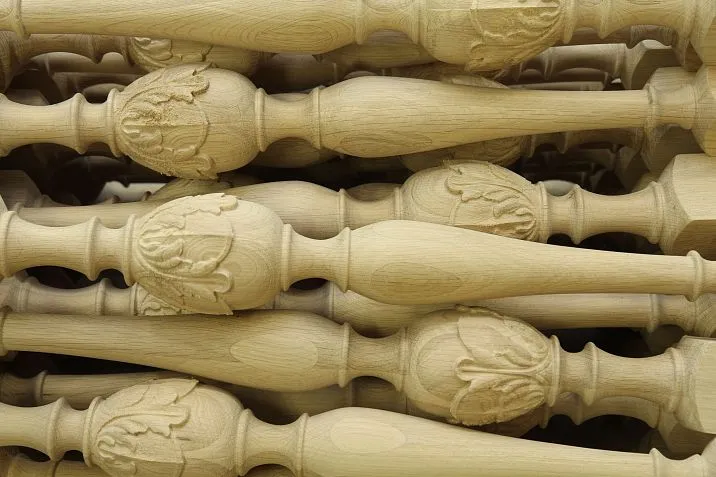
A staircase without quality hardware is like a car without brakes or a ship without an anchor. Can you imagine a more critical element in a home that daily endures such loads and yet must remain absolutely reliable? Staircase Hardware It is not merely a set of fasteners and decorative details. It is a complex engineering system whose reliability depends on the safety of people, the durability of the structure, and the aesthetic perception of the entire interior.
Over half a century of professional activity in architecture and design, I have repeatedly observed how improperly selected or low-quality hardware turns an exquisite staircase into a source of constant anxiety. Creaking steps, loose railings, peeling balusters — all are results of neglecting hardware selection. Conversely, properly chosen elements can even transform a modest staircase into an architectural masterpiece.
The modern market of staircase hardware is astonishing in its variety of offerings, yet this very diversity often becomes a problem for consumers. How to choose the optimal solution among thousands of options? How to avoid overpaying for unnecessary features while not compromising on safety? We will answer these and many other questions in this article.


Engineering Classification: Each Element in Its Place
A professional approach to staircase hardware begins with understanding its classification. Each element performs a strictly defined function and must meet specific technical requirements.




Load-Bearing Elements: Foundation of Safety
Stringers and treads are the main load-bearing elements of a staircase structure. Their hardware must meet the strictest requirements for strength and reliability. Modern stringer mounting systems include adjustable supports that compensate for uneven foundations and ensure precise geometry of the entire structure.
Metal brackets for mounting stringers must withstand a distributed load of up to 300 kg per linear meter with a safety factor of no less than 3. This means the actual load-bearing capacity must be at least 900 kg/m.
Step fasteners vary from simple screws to complex adjustable systems. Hidden fasteners provide aesthetic appeal but require more precise manufacturing and installation. Open systems are easier to install and maintain but may disrupt the visual integrity of the staircase.
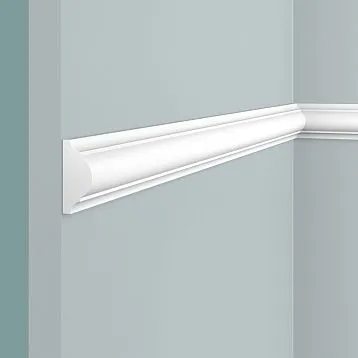
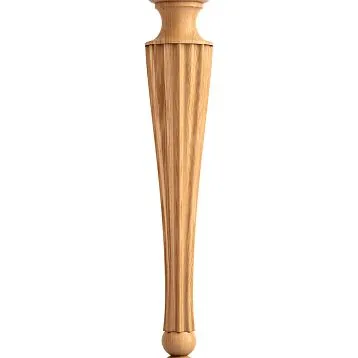
Our factory also produces:


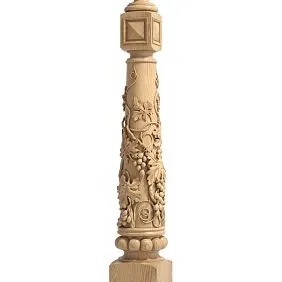

Guardrails: barrier between safety and disaster
Stair railings are not decoration, but a vital safety system. The height of the handrails should be at least 900 mm for residential buildings and 1200 mm for public buildings. The distance between balusters should not exceed 120 mm to prevent a child from slipping through.
Handrails experience the greatest loads among railing elements. They must withstand horizontal loads up to 100 kg/m without deformation. The handrail material should be pleasant to the touch, non-slip, and resistant to wear.
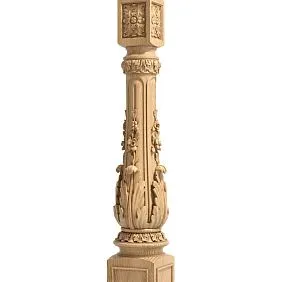
Balusters serve a dual function — load-bearing and decorative. Modern baluster mounting systems allow for a completely rigid connection without visible fasteners. The quality of the lower mounting is especially important, as it concentrates the main loads.
Get Consultation
Decorative elements: beauty in details
Receptacles, caps, covers, decorative inserts — all these elements may seem secondary, but it is precisely they that create the finished look of the staircase. High-quality decorative hardware is manufactured with the same precision as functional elements.
Start and end elements of handrails require special attention to ergonomics. They must provide a smooth grip and exclude injury from sharp edges.
Hardware materials: from wood to nanocomposites
The choice of material for stair hardware is determined not only by aesthetic preferences, but also by technical requirements, operating conditions, and budget constraints.
Metal hardware: strength proven over time
Stainless steel remains the benchmark of reliability for stair hardware. Grades AISI 304 and AISI 316 provide excellent corrosion resistance and mechanical strength. Modern surface finishing technologies allow for various surface textures — from mirror finish to matte satin.
A key feature of stainless steel is maintaining its properties at temperatures ranging from -40°C to +400°C, making it a universal material for any operating conditions.
Brass is traditionally used for manufacturing decorative elements. Modern brass alloys have high corrosion resistance and are well-suited for various treatments — polishing, patination, and electroplating.
Aluminum alloys are attractive for their lightness and corrosion resistance. Anodized aluminum profiles require virtually no maintenance and retain their original appearance for decades.
Wooden hardware: living warmth of nature
Wood in stair hardware is a classic that never goes out of style. But modern wooden hardware differs significantly from traditional solutions.
Hardwoods — oak, beech, ash — provide the necessary strength and durability. Modern wood drying and stabilization technologies allow obtaining material with moisture content of 6–8%, which eliminates deformation during operation.
Exotic woods — merbau, teak, wenge — add a special elegance to interiors. High natural oil and resin content provides inherent protection against moisture and biological damage.
Laminated wood surpasses solid wood in many parameters. Special lamination technology eliminates internal stresses, ensuring dimensional stability and absence of cracks.
Composite materials: technologies of the future
Modern composites open new possibilities for stair hardware. Carbon fiber composites provide phenomenal strength at minimal weight. Glass fiber composites combine metal strength with polymer corrosion resistance.
Wood-plastic composites (WPC) combine the beauty of wood with the practicality of plastic. Modern WPCs consist of 70–80% wood flour, ensuring natural texture and the ability to machine-process like natural wood.
Standards and regulations: safety above all
Stair hardware falls under the scope of multiple regulatory documents, knowledge of which is essential for a professional approach to design and installation.
Russian Construction Codes
SNiP 2.08.01-89 and the updated edition SP 54.13330.2016 define the basic requirements for stair structures in residential buildings. The height of railings, passage dimensions, loads — all these parameters are strictly regulated.
Special attention is given to children’s safety. The distance between balusters should not exceed 120 mm, and the railings must prevent climbing over.
European standards
EN 1991-1-1 (Eurocode 1) establishes design loads for structural constructions. For stair railings, the normative horizontal load is 1.0 kN/m for residential buildings and 3.0 kN/m for public buildings.
EN 1090 regulates requirements for manufacturing and installation of steel and aluminum structures, including stair hardware.
International safety standards
ISO 14122 — a series of standards defining requirements for industrial fixed staircases. Despite their specific application, many requirements of these standards are relevant for civil construction as well.
ASTM E985 establishes test methods for the strength and durability of stair railings. The standard includes testing under static load of 890 N (90 kg) and impact load of 1335 N (135 kg).
Design and calculation: mathematics of safety
Proper design of stair hardware requires comprehensive engineering calculation of all loads and impacts.
Static loads
The self-weight of the structure, permanent loads from equipment, pressure from handrails — all these factors must be considered when selecting hardware. Distributed load on the handrail is 100 kg/m, concentrated — 100 kg at any point.
Dynamic impacts
Stairs constantly experience dynamic loads from pedestrian movement. The dynamic coefficient for pedestrian loads is taken as 1.4, meaning an increase in calculated loads by 40%.
It is especially important to consider resonant phenomena. The natural frequency of the stair structure must differ from the human walking frequency (1.8–2.2 Hz) by at least 20%.
Thermal Deformations
Different materials have different coefficients of thermal expansion. This may lead to significant stresses at junctions of dissimilar materials. Compensatory elements in the hardware allow avoiding this issue.
Manufacturing processes: from sketch to finished product
Modern production of stair hardware is a high-tech process combining traditional craftsmanship with innovative technologies.
Design and 3D modeling
Each hardware component is designed in specialized CAD systems, taking into account all technical requirements and loads. 3D modeling allows identifying potential issues during the design phase and optimizing the structure.
Modern software allows conducting virtual hardware tests using finite element methods, significantly reducing development time and increasing product reliability.
Metalworking
CNC turning and milling ensure the highest precision in part manufacturing. Tolerances are ±0.1 mm for critical surfaces.
Laser cutting allows obtaining complex contours with minimal thermal influence zone. Waterjet cutting ensures perfect edge perpendicularity and absence of thermal deformations.
Woodworking
Modern CNC woodworking centers can perform the most complex 3D profiles with accuracy to tenths of a millimeter. Multi-spindle heads allow processing multiple surfaces simultaneously.
Vacuum drying of wood at 60–80°C allows reducing moisture content to 6–8% without cracking or deformation. This is critically important for load-bearing components.
Final finishing
Modern coatings not only protect the material but can also alter its properties. Wear-resistant polyurethane coatings extend the service life of wooden handrails several times over.
Powder coating of metal parts provides uniform coverage of 60–120 microns with excellent adhesion and corrosion resistance.
Installation of stair hardware: precision work
The quality of stair hardware installation is no less important than the quality of the components themselves. Minor deviations may lead to premature wear, play, and reduced safety.
Preparatory Work
Precise marking is the foundation of quality installation. Modern laser plane builders allow marking with error less than 1 mm per 10 meters of length.
Preparing mounting holes requires special precision. Fastener holes must have exact dimensions and correct geometry. Using fixtures and templates guarantees repeatability of results.
Connection technology
Modern Staircase Hardware Uses various types of connections depending on materials and loads.
Threaded connections provide high strength and disassemblability. Using anaerobic sealants prevents self-loosening due to vibrations.
Adhesive connections are used for joining wooden elements. Modern polyurethane adhesives provide joint strength exceeding wood strength.
Welded connections are used for metal structures. TIG welding ensures high-quality welds without pores or cracks.
Installation Quality Control
After completion of installation, a comprehensive inspection of all connections is performed. Visual inspection, dimensional checks, load testing — all this ensures safe operation.
Special attention is given to checking the tightness of threaded connections. Using torque wrenches ensures the required tightening force without damaging the threads.
Operation and Maintenance: Extending the Lifespan of the Staircase
Proper operation and timely maintenance of staircase hardware are the key to the longevity and safety of the entire structure.
Regular Inspections
Periodic inspections allow problems to be identified early, when their resolution does not require significant expenses. Special attention should be paid to:
- Condition of threaded connections
- Wear of moving elements
- Integrity of protective coatings
- Appearance of cracks and deformations
Preventive maintenance
Lubrication of moving elements, tightening of threaded connections, updating of protective coatings — these simple operations significantly extend the service life of the hardware.
For wooden elements, it is important to maintain optimal air humidity (40-60%) and timely renewal of protective coatings.
Repair and Replacement
When wear or damage occurs, immediate measures must be taken to address it. Quality hardware allows replacing individual components without dismantling the entire structure.
Innovations and Future Development: Looking Ahead
The staircase hardware industry is constantly evolving, offering new materials, technologies, and solutions.
Smart technologies
Integrating sensors into staircase hardware opens new possibilities. Load sensors allow real-time monitoring of the structure's condition. Motion-sensor lighting systems enhance safety during nighttime use of the staircase.
New materials
Nanocomposites, biodegradable polymers, shape-memory metals — all these materials are gradually finding application in staircase hardware.
Graphene coatings provide a unique combination of strength, electrical conductivity, and corrosion resistance. Self-healing polymers can "repair" minor damage without human intervention.
Individualization and Mass Customization
Modern manufacturing technologies allow producing unique hardware according to individual sketches without significant cost increase. Metal 3D printing opens opportunities for creating complex geometric forms.
Economic aspects: Investment in quality
The cost of staircase hardware may range from 10 to 50% of the total staircase cost, depending on complexity and materials. However, this is an investment that pays off through longevity, safety, and aesthetic qualities.
Initial costs
Quality hardware costs more, but this price difference is offset by longevity and reliability. Cutting costs on hardware often leads to the need for full staircase replacement after several years of use.
Operating expenses
Quality hardware practically requires no maintenance throughout its entire service life. Inexpensive alternatives require constant repair and replacement of components.
Impact on property value
A quality staircase with reliable hardware increases property value and makes it more attractive to buyers.
Regional Characteristics: Climate and Traditions
Selection of staircase hardware should take into account regional climatic conditions and local traditions.
Northern Regions
Extremely low temperatures require the use of materials with enhanced frost resistance. Metallic hardware must retain plasticity at temperatures down to -40°C.
Humid Climate
High humidity requires the use of corrosion-resistant materials and special protective coatings. Wooden elements must be treated with moisture protection.
Seismically active zones
In seismically active regions, hardware must provide additional plasticity in connections to compensate for building structure deformations.
Ecological aspects: responsibility toward nature
Modern stair hardware production must consider ecological requirements and principles of sustainable development.
Material Selection
Preference is given to renewable materials — wood from sustainably managed forests, recycled metals, biodegradable polymers.
Production Processes
Modern production facilities implement waste-free technologies, emission cleaning systems, energy-efficient equipment.
Waste Management
At the end of its service life, the hardware must be recyclable or safely disposed of. The design of products must allow for easy disassembly into components.
STAVROS: The Quality Benchmark in the World of Stair Hardware
In the dynamically evolving world of stair technology, there are follower companies and leader companies that define the direction of the entire industry. STAVROS undoubtedly belongs to the second category — it is a company that, for many years, has set standards of quality, innovation, and reliability in the field of stair hardware.
What makes STAVROS unique? Primarily — a comprehensive approach to solving client challenges. The company does not merely produce individual hardware components, but creates complete engineering systems where each component perfectly complements the others, ensuring maximum reliability and functionality.
The STAVROS production facility is a modern, high-tech complex where traditional craftsmanship combines with innovative technologies. CNC machines, robotic lines, and automated quality control systems — all of this ensures the production of world-class hardware.
The STAVROS engineering and technical center continuously develops new solutions, studies global best practices, implements innovative materials and technologies. Each product undergoes comprehensive tests for strength, durability, and safety.
The company pays special attention to environmental responsibility. All materials undergo strict selection based on ecological safety criteria, and production processes are optimized to minimize environmental impact.
STAVROS's quality control system includes multi-level inspections at every stage of production. From incoming raw material inspection to final testing of finished products — each hardware component undergoes comprehensive checks for compliance with technical requirements and safety standards.
STAVROS's customer service goes far beyond simple product sales. It includes comprehensive project support from the design stage to the completion of installation. Qualified engineering consultants help select optimal solutions, calculate material requirements, and resolve complex technical issues.
Choosing STAVROS products means investing not only in high-quality hardware, but also in safety, reliability, and prestige. This is a choice made by professionals who do not compromise on quality and safety. It is an investment in the future, which pays off through years of flawless service and complete confidence in the reliability of every stair component.