Article Contents:
- Symphony of functions: each element in its place
- Load-bearing elements: the structure's skeleton
- Enclosing structures: safety barrier
- Fastening systems: invisible heroes of reliability
- Material science: choosing the foundation of longevity
- Species classification: from economy to luxury
- Exotic solutions: when the ordinary is not enough
- Engineered wood: technologies serving quality
- Ergonomics and safety: the human at the center
- Anthropometric foundations of design
- Psychology of Perceiving Stair Space
- Adaptation for people with disabilities
- Production technologies: from sketch to finished product
- Raw material preparation: the foundation of quality
- Mechanical processing: precision down to the micron
- Quality control systems
- Assembly: where theory meets practice
- Preparatory work: planning for success
- Assembly technology: sequence of operations
- Finishing operations: perfecting to perfection
- Operation and maintenance: preserving beauty for decades
- Climate control: stability — the key to longevity
- Regular care: simple rules for great efficiency
- Preventive maintenance: prevention is better than cure
- Innovations in the world of wooden staircases
- Modified wood: enhancing nature
- Nanotechnology in finishing
- Smart technologies
- Economic Aspects: Investment in Quality
- Initial costs
- Operational costs
- Impact on property value
- STAVROS: Where Craftsmanship Meets Innovation
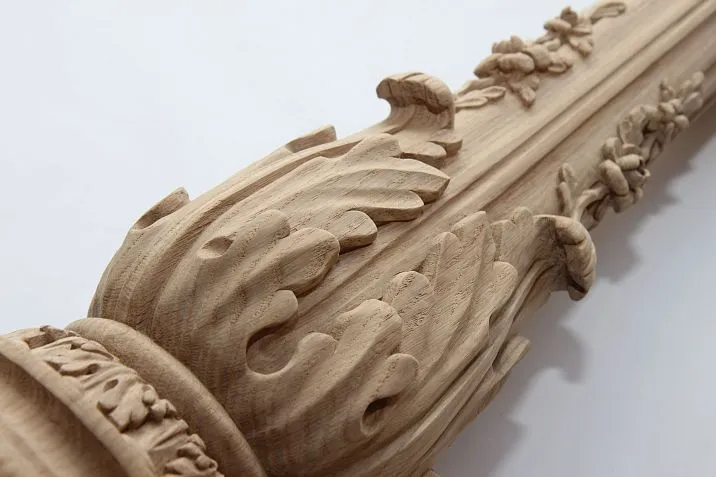
When we talk about the beauty and functionality of wooden staircases, we think of majestic oak staircases in old mansions, elegant birch constructions in Scandinavian homes, noble beech steps in European castles. But what turns a simple wooden structure into a work of architectural art? The answer lies in the details — in that very hardware for wooden staircaseswhich not only determines the external appearance, but also the reliability, durability, and safety of the entire structure.
Imagine a symphony orchestra without a conductor, a painting without a frame, a clock mechanism without a spring. That is exactly how a wooden staircase looks unfinished without quality hardware. Each bolt, each baluster, each bracket plays its unique role in this complex engineering composition, where any false note can turn into a catastrophe.
But why does wood continue to remain the number one material for staircase construction in the age of metal, plastic, and composites? Because wood is not just a material — it is a philosophy. It is a connection with nature, it is warmth underfoot on a winter evening, it is an aroma that cannot be faked, it is a texture that one wants to touch again and again.


Symphony of functions: each element in its place
The world of stair hardware resembles a Swiss watch mechanism — here there are no random details, each element performs a strictly defined function and interacts with other system components. Understanding this interrelation is the key to creating truly high-quality and safe stairs.




Load-bearing elements: the structure's skeleton
Let's start with the basics — load-bearing elements that form the frame of the stair structure. Solid Wood Items Stairs require a special approach to material selection and processing technologies.
Stringers and treads — this is the spine of the stairs, bearing the entire load from the weight of steps, people, and temporary loads. Modern wooden stringers are made from glued laminated timber or solid hardwoods with moisture content not exceeding 10%. This is critically important — exceeding moisture content leads to deformation, cracking, and consequently, reduced load-bearing capacity.
Hardware for attaching stringers includes metal support elements, height-adjustable brackets, stainless steel anchor bolts. Each support node must withstand a load of no less than 300 kg with a safety factor of 1.5. This means a practical load-bearing capacity of 450 kg per support.
Steps and risers — elements directly experiencing operational loads. The thickness of wooden steps should be at least 40 mm for spans up to 1000 mm and 50 mm for larger spans. Steps are attached to stringers via steel angles, self-tapping screws, and adhesive compounds ensuring a monolithic connection.
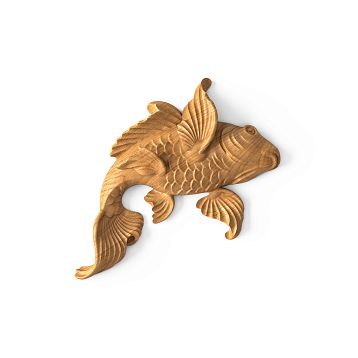
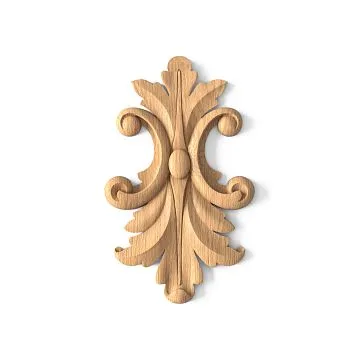
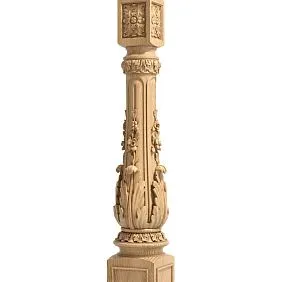
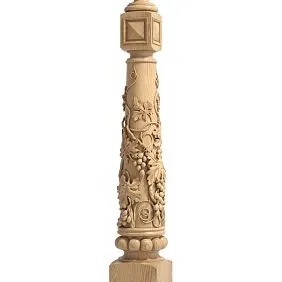
Our factory also produces:



Guardrail structures: safety barrier
If load-bearing elements are responsible for the strength of the stairs, guardrail structures are responsible for the safety of people. Here, every millimeter matters, and every standard must be strictly followed.
Balusters — vertical elements of the guardrail, creating a barrier and supporting the handrail. The distance between balusters is regulated by building codes and must not exceed 120 mm center-to-center. This requirement is dictated by child safety — a child's head must not pass between the guardrail elements.
Baluster mounting — one of the most critical joints in stair construction. The lower attachment to the tread is done via a metal anchor embedded into the body of the baluster and tread. The upper attachment to the handrail is traditionally done with a tenon joint, with additional fixation using screws or dowels.
Handrails — the stair element that most often comes into contact with users' hands. Ergonomics of the handrail is critically important: the diameter should be 40–50 mm for round cross-section or 50×30 mm for rectangular profile. The surface must be perfectly smooth, without burrs or irregularities.
Support posts (newels) — load-bearing elements of the guardrail, installed at the beginning and end of the stair run, as well as at turns. The cross-section of support posts significantly exceeds that of balusters — typically 100×100 mm or 120×120 mm. Attachment to the base is done via M12–M16 anchor bolts to a depth of at least 100 mm.
Get Consultation
Fastening systems: invisible heroes of reliability
The quality of stairs is determined not only by visible elements but also by hidden fastening systems. Modern hardware offers numerous innovative solutions for creating strong and aesthetically pleasing connections.
Hidden fastening systems allow achieving an ideal appearance without visible screw heads or bolts. Special stainless steel anchors are embedded into wooden elements and provide connection strength up to 1500 kg in tension.
Adjustable supports compensate for uneven foundations and allow precise setting of the stair geometry. The adjustment range is typically ±20 mm, which is sufficient for most construction situations.
Thermal expansion compensators prevent the formation of cracks and gaps due to changes in temperature and humidity. They are especially important for stairs located in unheated rooms or exposed to significant temperature fluctuations.
Material science: choosing the foundation of durability
The success of any stair construction depends 80% on the correct choice of materials. It’s not only about wood species — moisture content, drying method, grain direction, presence of defects, and surface treatment quality are also crucial.
Wood species classification: from economy to luxury
Coniferous species occupy the niche of economical solutions, but this does not mean low quality. Common pine with density 500 kg/m³, properly processed, serves for decades. Main advantages of coniferous species — dimensional stability, natural resinous protection against moisture and insects, affordable price.
Larch deserves special attention — a coniferous species with deciduous characteristics. Density up to 660 kg/m³, exceptional biostability, beautiful texture make larch an ideal material for heavily loaded stair elements.
Hardwood species — this is the premium segment of the stair industry. Oak, with its legendary strength and durability, remains the benchmark of quality. Oak wood density 650–750 kg/m³ ensures high mechanical properties, and tannins provide natural protection against biological damage.
Beech attracts with its uniform structure and ability to precise mechanical processing. This is an ideal material for complex profiled elements — balusters, handrails, decorative details.
Ash demonstrates a unique combination of strength and flexibility. Its fibrous structure excellently absorbs impact loads, which is especially important for steps of heavily used stairs.
Exotic solutions: when the ordinary is not enough
Tropical species open new possibilities for designers and architects. Merbau, with its natural moisture resistance, is ideal for stairs in spa complexes and pools. Wenge, with its chocolate-black color, creates dramatic interior accents. Teak, used for centuries in shipbuilding, brings a maritime atmosphere into the home.
But exotic species require a special approach. Many tropical species have high oil and extractive content, which may cause problems during gluing and coating. Special surface preparation and use of compatible adhesives and varnishes are required.
Engineered Wood: Technologies Serving Quality
Glued wood largely surpasses solid wood in operational characteristics. The lamination technology allows obtaining material with specified properties: eliminating internal stresses, creating elements of large dimensions, and using wood of different grades in a single product.
Modern polyurethane or melamine-formaldehyde based adhesives provide joint strength exceeding the strength of the wood itself. This enables creating reliable load-bearing structures from glued wood.
LVL beam (Laminated Veneer Lumber) is manufactured from thin veneer sheets glued with parallel grain orientation. This structure ensures exceptional strength and dimensional stability — ideal characteristics for stringers and treads.
Cross-laminated timber (CLT) — material of the future, where veneer layers are glued with perpendicular grain orientation. This ensures uniform mechanical properties in all directions and minimal deformations.
Ergonomics and safety: the human at the center of attention
The staircase is designed for people, and all its parameters must correspond to anatomical features and biomechanics of human movement. Hardware for wooden staircases It should not only perform its functions but also ensure comfort and safety for users.
Anthropometric design fundamentals
The human body has certain proportions, and the staircase must correspond to them. The length of an adult’s step is 600–650 mm horizontally. This determines the optimal formula for staircase dimensions: 2h + b = 630 mm, where h is the step height and b is the tread width.
The handrail height should be at the level of the human’s center of gravity — 900–1000 mm from the tread surface. This height ensures optimal force application during loss of balance.
The width of the staircase run is determined by the intensity of movement. For an individual house, 900 mm is sufficient, but 1200 mm is considered optimal, allowing two people to comfortably pass each other.
Psychology of staircase space perception
Humans subconsciously evaluate the safety of a staircase based on multiple visual cues. Heavy handrails create a sense of reliability, while thin ones convey lightness and elegance. Frequent baluster installation creates a sense of security, while sparse installation conveys openness.
Color plays an important role in perceived safety. Contrasting treads are more distinguishable in dim light, while uniform coloring creates a sense of calm and unity. Glossy surfaces appear more slippery, while matte surfaces appear safer.
Adaptation for people with disabilities
Modern standards require consideration of the needs of people with disabilities. Handrails must be easy to grasp for people with limited hand mobility. Contrast markings on treads assist visually impaired individuals. Dual-height handrails accommodate people of different heights and ages.
Production technologies: from sketch to finished product
Modern production of staircase hardware is a high-tech process where traditional carpentry craftsmanship combines with innovative processing and quality control technologies.
Raw material preparation: the foundation of quality
The quality of finished products is established already at the log preparation stage. Trees must be felled during a specific season — preferably winter, when sap movement is minimal. This ensures better wood stability and reduced tendency to crack.
Primary processing includes sawing logs into blanks while considering grain direction. Radial sawing provides the most stable material, but requires greater raw material consumption. Tangential sawing is more economical, but the material is more prone to deformation.
Drying is a critically important technological process. Kiln drying under controlled parameters allows reducing wood moisture to the required 8–12% without cracking or deformation. Modern drying complexes automatically maintain the optimal regime for each wood species.
Mechanical processing: precision to the micron
Modern CNC woodworking centers provide processing accuracy of ±0.1 mm. This allows creating elements of complex profiles with ideal surface quality.
Routing is the primary method for creating profiled elements. Diamond tools ensure clean cutting, eliminating the need for additional sanding. Cutting speed reaches 18,000 rpm, guaranteeing no chipping even on end surfaces.
Turning is used to create balusters and other rotary bodies. Modern turning machines can reproduce complex profiles with a repeatability accuracy of ±0.05 mm. This ensures absolute uniformity of all elements in a batch.
Quality control systems
Each production stage is controlled by automated measurement systems. Laser scanners check the geometric parameters of products, moisture meters monitor wood moisture, and defectoscopes detect internal defects.
Statistical quality control allows monitoring the stability of technological processes and making timely adjustments. The database contains information about each product, ensuring full traceability of the product.
Installation: where theory meets practice
Even the highest quality materials and hardware can be ruined by poor installation. Installing a wooden staircase is not merely assembling pre-fabricated components, but a complex engineering process requiring knowledge, experience, and precise adherence to technology.
Preparation work: planning for success
Installation begins even during the building's design phase. The openings for the staircase must be executed with precision ±5 mm, requiring high-quality geodetic layout and construction control.
Control of room humidity is critically important. The relative humidity of air must not exceed 60%, and the temperature must be stable. Sudden changes in microclimate may cause deformation of wooden elements even after installation.
Material acclimatization is a mandatory procedure. All wooden elements must remain in the installation room for at least 72 hours to equalize moisture with the surrounding environment.
Assembly technology: sequence of operations
Staircase installation begins with mounting load-bearing elements — stringers or treads. Their position is controlled using laser instruments with precision ±1 mm. Temporary fasteners allow adjusting the position until final fixation.
Installing steps requires special precision. Each step must be horizontal with deviation no more than 1 mm per meter of width. Fastening is done through hidden elements ensuring strong connections without visible fasteners.
Installing railing structures is the most critical part of the work. Each baluster must be strictly vertical, distances between elements must be uniform, and the handrail must be perfectly straight or precisely follow the specified curvature.
Finishing operations: perfecting to perfection
After completing assembly, the staircase undergoes final finishing. All joints are carefully fitted, irregularities are removed, and surfaces are prepared for coating application.
Quality control includes checking all dimensions, testing joint strength, and evaluating appearance. Only after passing all inspections is the staircase handed over to the client with warranty obligations.
Operation and maintenance: preserving beauty for decades
A wooden staircase with quality hardware can last for centuries, but only under proper operation and timely maintenance. Understanding the characteristics of wood as a living material is key to the structure's longevity.
Climate control: stability is the key to longevity
Wood constantly interacts with its environment, changing its dimensions depending on temperature and humidity. Optimal conditions for wooden structures: temperature 18-22°C, relative humidity 45-55%.
Sudden changes in microclimate are especially dangerous. Turning on heating in autumn or turning it off in spring may cause significant deformations. It is recommended to gradually change the temperature regime while monitoring air humidity.
Air conditioning systems must exclude direct airflow impact on wooden structures. Local drying or humidifying may cause uneven deformations and cracking.
Regular care: simple rules with great efficiency
Daily cleaning should be done with a soft dry cloth or special anti-static cloths. Dust not only damages appearance but may contain abrasive particles that gradually wear the surface.
Wet cleaning is performed using special wood surface cleaners. Ordinary cleaning agents may contain aggressive components that damage protective coatings.
Fastener condition control is performed monthly. Loosening of threaded connections is a natural process linked to wood shrinkage. Timely tightening prevents development of play and structural loosening.
Preventive maintenance: prevention is better than cure
Annual technical inspection allows identifying problems at an early stage. Special attention is given to protective coatings' condition — appearance of scratches, clouding, or color changes signals the need for renewal.
Coating renewal is performed every 3-5 years depending on usage intensity. Modern one-component polyurethane varnishes allow renewing the coating without full surface sanding.
Deep maintenance every 10-15 years includes full sanding and reapplication of protective-decorative coatings. This fully restores the staircase's original appearance and extends its service life.
Innovations in the world of wooden staircases
Traditional materials and technologies are constantly improving. Modern science offers innovative solutions that significantly enhance the characteristics of wooden staircase structures.
Modified wood: enhancing nature
Thermal modification of wood at 160-220°C in steam environment dramatically improves its properties. Equilibrium moisture is reduced by half, practically eliminating deformations. Biostability increases to tropical wood levels.
Acetylation of wood is a chemical modification process in which hydroxyl groups of cellulose are replaced by acetyl groups. This makes wood practically impervious to moisture and biological damage.
Impregnation with polymer compositions allows creating a material with unique properties. The polymer fills the pores of wood, increasing density and strength while preserving all the positive qualities of natural material.
Nanotechnology in finishing
Nanostuctured coatings provide self-cleaning surface due to the lotus effect. Titanium dioxide nanoparticles create a photocatalytic effect that breaks down organic contaminants under light.
Nanocrystalline cellulose — a material of the future for wood protection. Tensile strength reaches 500 MPa while maintaining transparency and eco-friendliness. Nanocrystalline cellulose-based coatings can self-repair minor damage.
Smart technologies
Integrating sensors into stair structures opens new possibilities. Load sensors monitor the condition of load-bearing elements, humidity sensors warn of unfavorable conditions, motion sensors control lighting systems.
Monitoring systems allow remote control of stair structures via the internet. Artificial intelligence analyzes sensor data and predicts maintenance needs.
Economic aspects: Investment in quality
A wooden staircase with quality hardware is a serious investment that requires a careful approach to budget planning. However, properly executed calculations show the economic justification for choosing quality solutions.
Initial costs
Cost Hardware for wooden staircases May constitute 15% to 40% of the total construction cost depending on complexity and materials. Saving on hardware is a false economy that will result in much higher costs in the future.
Quality stainless steel hardware costs 3-5 times more than galvanized hardware, but lasts 10-15 times longer. The economic effect is obvious, especially considering the cost of dismantling and replacing components.
Operating expenses
A wooden staircase with quality hardware practically requires no maintenance costs during the first 10-15 years of operation. Inexpensive structures require constant repairs and replacement of components.
Maintenance costs include not only material expenses but also inconveniences associated with repair work. Replacing staircase components may require temporary access restrictions, which is especially critical in residential homes.
Impact on property value
A quality staircase is one of the factors shaping the prestige of real estate. When selling a home, a beautiful and reliable staircase can add 3-5% to the property's value.
Buyers pay special attention to the quality of staircase space finishing. This is one of the first details that catch the eye during a home inspection, and it forms the first impression of the overall property quality.
STAVROS: where craftsmanship meets innovation
In the world of staircase manufacturing, there are artisans, industrial producers, and true masters of their craft. STAVROS belongs to the last category — it is a company where centuries-old woodworking traditions combine with the most advanced modern technologies, where every product is considered a work of art.
STAVROS philosophy is built on the understanding that Hardware for wooden staircases — it is not just a set of technical elements, but the soul of the entire structure. Each baluster, each handrail, each fastening element is created with an understanding of its role in the overall symphony of beauty and functionality.
STAVROS production base is a modern technopark, where traditional carpentry workbenches coexist with robotic lines, where the experience of master woodworkers is complemented by the precision of computer technologies. Each machine is set with jewel-like precision, and every technological process is fine-tuned to perfection.
STAVROS R&D department is a creative laboratory where innovative solutions for the staircase industry are born. Here, not only engineers and technologists work, but also designers, artists, and ergonomists — all those who understand that a staircase must be not only strong and safe, but also beautiful, comfortable, and inspiring.
STAVROS quality control system exceeds the strictest international standards. Each product undergoes multiple inspections — from moisture control of raw materials to final assessment of appearance. Technical tests for strength, durability, and safety guarantee compliance with the highest requirements.
STAVROS service department is a team of professionals ready to support clients at every stage of cooperation. From initial consultation on choosing optimal solutions to post-sales service — each client receives individual attention and professional support.
Choosing STAVROS means choosing not just a material supplier, but a partner in creating your dream staircase. It is an investment in quality that will delight you and your loved ones for many years, a guarantee of safety and beauty, and confidence for tomorrow.