Article Contents:
- Evolution of Digital Trade in the Architectural Industry
- Technological Revolution in Product Presentation
- Personalization of User Experience
- Anatomy of a Professional Facade Decoration Website
- Catalog Structure and Navigation
- Technical Documentation and Specifications
- Criteria for Assessing Supplier Reliability
- Production Capacity and Certification
- Portfolio of completed projects
- Warranty and After-Sales Service System
- Innovative Tools for Selection and Design
- Configurators and Automated Design Systems
- Virtual and Augmented Reality Technologies
- Artificial Intelligence for the Designer
- Logistics and supply chain management
- Order Tracking Systems
- Specialized Packaging and Insurance
- Regional Warehouses and Express Delivery
- Pricing and Financial Tools
- Dynamic Pricing
- Financing and Installment Plans
- Electronic Document Flow
- Ecological and Social Aspects
- Ecological certification
- Waste disposal and recycling programs
- Security of Online Transactions
- Cryptographic Protection
- Monitoring and Prevention of Fraud
- Mobile Technologies and Applications
- Adaptive Design and Mobile Applications
- Machine Vision Technologies
- Analytics and Big Data
- Behavioral Analytics
- Demand Forecasting
- Integration with Professional Communities
- Educational Resources
- Professional Communities
- The Future of Digital Trade in Decorative Elements
- Blockchain and Decentralization
- Internet of Things and Smart Materials
- Quantum Computing and AI
- Practical recommendations for choosing a supplier
- Website Evaluation Checklist
- Customer Service Testing
- Price Proposition Analysis
- Frequently Asked Questions
- Conclusion

How to find the perfect decorative element among thousands of offers? Where to buy high-quality facade decoration without leaving home?Facade decoration siteshave become digital showcases of architectural art, where each click opens new possibilities for realizing the boldest design ideas.
The era of digital commerce has fundamentally changed approaches to selecting and purchasing building materials. ModernFacade decoration sitesare comprehensive platforms integrating product catalogs, technical documentation, design tools, and ordering systems. They have become indispensable assistants for architects, designers, and private developers.
What distinguishes a professional online platform from a regular online store? How to recognize a reliable supplier among numerous offers? Which technologies make the selection and purchase process as convenient and secure as possible? In this comprehensive guide, we explore the modern landscape of digital trade in decorative elements, reveal the secrets of successful purchases, and share professional recommendations for navigating the virtual world of architectural decoration.
Evolution of Digital Trade in the Architectural Industry
The path from traditional exhibition halls to modern digital platforms reflects the general trend of digitization in the construction industry. The first specialized websites appeared at the beginning of the 2000s as simple catalogs with basic product information. Today, they have transformed into complex ecosystems integrating virtual reality, artificial intelligence, and cloud computing technologies.




Technological Revolution in Product Presentation
ModernFacade decoration sitesuse advanced technologies for the most realistic product presentation. 3D visualization allows viewing each element from any angle, assessing surface detail, understanding proportions, and evaluating compatibility with other components of architectural composition.
Augmented Reality (AR) technology takes product presentation to a new level. Special mobile applications allow users to "try on" decorative elements on photos of existing buildings, seeing how they will look in real conditions. This revolutionary solution practically eliminates errors in choosing size and style.
Interactive configurators allow creating unique compositions from standard elements. Users can experiment with various combination options, instantly receiving information on the cost and manufacturing timelines for custom orders.
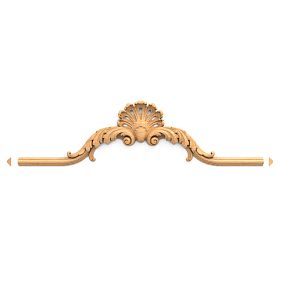
Our factory also produces:


Personalization of User Experience
Artificial intelligence analyzes visitor behavior, forming personalized recommendations based on preferences and browsing history. Machine learning algorithms consider stylistic preferences, budget constraints, and regional climatic characteristics, creating an individual selection of the most suitable solutions.
Customer Relationship Management (CRM) systems integrated into web platforms ensure continuous communication at all stages — from initial product exposure to post-sales service. Personal accounts preserve order history, technical documentation, and warranty obligations.
Get Consultation
Anatomy of a Professional Facade Decoration Website
A quality online platform must combine the functionality of a professional tool with ease of use. The architecture of a modern website is built around the needs of various user categories — from private developers to large architectural firms.
Catalog Structure and Navigation
Logical catalog organization is the foundation of successful navigation. Products should be structured by multiple criteria simultaneously: functional purpose (cornices, columns, door casings), material of manufacture, stylistic affiliation, size groups. A multi-level filter system allows quickly finding required elements among thousands of positions.
Professionalpolyurethane productsRequire detailed technical descriptions. Each item must contain comprehensive information: exact dimensions, weight, physical and mechanical properties, application recommendations, mounting methods, compatibility with other materials.
Intelligent search with auto-completion and error correction helps users quickly find the desired products even with imprecise queries. Image search allows uploading a photo of a preferred item and finding similar or comparable products in the catalog.
Technical Documentation and Specifications
A quality website provides a complete set of technical documentation in digital format. Vector-based drawings can be scaled without loss of quality, which is critically important for design projects. Material specifications must include not only basic characteristics but also test results confirming compliance with construction standards.
Installation instructions with step-by-step illustrations help correctly install decorative elements. Video guides demonstrate nuances of working with different types of fasteners, surface preparation specifics, and operational sequences.
Material requirement calculators automatically calculate the necessary quantities of elements, fasteners, and adhesive compositions based on the object's parameters. This eliminates planning errors and helps accurately determine the project budget.
Criteria for evaluating supplier reliability
Supplier selectionarchitectural decorationOnline shopping requires special caution. Product quality can only be assessed indirectly, based on the provided information and the company's reputation.
Production capacity and certification
The presence of its own production is an important indicator of supplier reliability. Photos of production facilities, descriptions of technological processes, and information about equipment used provide insight into the company's technical capabilities. Modern manufacturers do not hide technological details, as this highlights their professionalism.
Quality and compliance certificates with construction standards must be accessible for review in electronic format. ISO 9001, GOST, technical certificates — these documents confirm that the product meets established quality and safety standards.
Licenses and permits for production activities demonstrate the business's legal compliance. Serious manufacturers make information about their legal status publicly available.
Portfolio of completed projects
A gallery of completed projects is the best proof of product quality and team professionalism. Photos should be high-quality, taken from various angles, at different times of year and day. This allows evaluating how elements appear under real-world usage conditions.
Project descriptions must include technical information: implementation timelines, delivery volumes, specifics of solving non-standard tasks. Customer reviews with contact details add credibility to the presentation.
Participation in prestigious projects — restoration of historical buildings, construction of landmark structures — demonstrates a high level of trust from the professional community.
Warranty and after-sales service system
Transparent warranty obligations protect buyer interests. Warranty terms must be clearly defined: what is covered, duration, procedures for making claims. Extended warranty on premium products demonstrates the manufacturer's confidence in the quality of its products.
Technical support service provides consultative support at all stages — from product selection to completion of installation. The ability to receive professional consultation via phone, email, or online chat is especially important for complex technical questions.
Service centers in the supplier's regions ensure prompt resolution of warranty issues and technical maintenance. The geographic coverage of the service network characterizes the scale and stability of the supplier's business.
Innovative selection and design tools
ModernFacade decoration sitesThese tools offer users a suite of digital tools that transform the process of selecting decorative elements into an engaging creative journey.
Configurators and automated design systems
Interactive configurators allow creating unique architectural compositions by combining various decorative elements. Users can experiment with dimensions, proportions, combinations, instantly seeing the result on screen. The system automatically checks element compatibility and warns of potential issues.
Integration with CAD systems ensures seamless transition from conceptual design to detailed planning. Decorative element models can be imported into professional design systems to create working drawings and specifications.
Cloud-based project synchronization services allow working on design from different devices and sharing results with colleagues. Team collaboration on projects becomes simple and efficient thanks to modern collaborative editing technologies.
Virtual and augmented reality technologies
VR presentations allow users to virtually walk around a building with installed decor, evaluate proportions and visual perception from different viewpoints. This is especially important for large-scale projects, where the overall impression may differ significantly from the perception of individual elements.
AR applications for mobile devices allow "trying on" decorative elements on existing buildings via smartphone or tablet camera. The technology recognizes facade architectural features and correctly positions virtual elements in real space.
Photorealistic renders created using modern visualization engines are practically indistinguishable from photographs. This allows clients to make informed decisions based on a highly realistic representation of the future result.
Artificial intelligence assists the designer
Recommendation systems based on machine learning analyze user preferences and suggest optimal decoration options. Algorithms take into account stylistic preferences, budget constraints, regional climatic features, creating personalized selections.
Automatic generation of design options based on the uploaded facade photo saves designers' time. AI analyzes the architectural features of the building and suggests several conceptually different approaches to decoration.
Cost optimization using algorithms allows finding the optimal price-to-quality ratio. The system may suggest alternative materials or simplified solutions that provide 80% aesthetic effect at 50% cost.
Logistics and supply chain management
Efficient logistics system is an essential part of successful trademoldings and cornicesthrough the internet. Features of decorative elements — variety of sizes, fragility of some items, need to preserve surface quality — require a special approach to delivery organization.
Order tracking systems
Modern order management systems provide full transparency of logistics processes. The customer can track the status of their order in real-time — from confirmation to delivery. Automatic notifications inform about key stages of order execution.
Integration with transportation companies allows selecting the optimal delivery method considering urgency, cost, and cargo specifics. The system automatically calculates delivery costs for various options and offers the customer a choice.
GPS tracking of transport provides accurate information about cargo location and estimated delivery time. This is especially important for coordinating work on construction sites.
Specialized packaging and insurance
Professional packaging of decorative elements requires special materials and technologies. Polyurethane items are packed in multi-layer protective materials preventing mechanical damage during transport.
Individual packaging of complex elements with many parts ensures their preservation. Each element is placed in molded inserts replicating its geometry.
Cargo insurance protects the customer's interests from unforeseen circumstances. Comprehensive insurance covers not only the cost of goods but also transportation expenses, minimizing financial risks.
Regional warehouses and express delivery
A developed network of regional warehouses allows reducing delivery times and lowering transportation costs. Popular items are stored in regional centers ensuring their quick dispatch.
Express delivery of critical elements saves the situation when construction deadlines are tight. Special services ensure delivery within 24-48 hours within major cities.
Consolidated deliveries for large projects optimize logistics costs. The planning system allows synchronizing dispatch of different product groups for simultaneous delivery to the site.
Pricing and financial tools
Transparent pricing policy and flexible financial tools make high-quality facade decoration accessible to a wide range of customers. ModernPolyurethane appliquésare offered with various payment and financing options.
Dynamic pricing
Intelligent pricing systems consider multiple factors: order volume, manufacturing urgency, seasonal demand, production load. Large orders automatically receive progressive discounts, encouraging consolidated purchases.
Personal discounts for regular customers are formed based on cooperation history. Loyalty system encourages long-term partnerships with additional benefits.
Seasonal promotions and special offers help optimize project budgets. Winter discounts on summer deliveries allow significant savings provided advance planning is done.
Financing and installment plans
Installment programs make expensive decorative solutions accessible to private customers. Interest-free installment for up to 12 months reduces financial burden without increasing overall project cost.
Leasing programs for commercial clients optimize tax planning. Leasing payments are fully included in cost of goods, reducing tax burden.
Factoring schemes for subcontracting organizations ensure immediate payment for deliveries when final customers delay payments. This improves working capital turnover.
Electronic document flow
Digital documents speed up order processing and reduce error likelihood. Electronic invoices, acts, and delivery notes are automatically generated based on order data.
Electronic signature ensures legal validity of documents without requiring personal presence. This is especially important for working with remote regions.
Integration with customers' ERP systems automates document flow. Supply data automatically enters accounting systems, eliminating manual data entry.
Environmental and social aspects
Modern online trading of construction materials increasingly focuses on environmental and social issues.Wooden itemsand polymer materials must comply with strict environmental standards.
Ecological Certification
Environmental certifications confirm the safety of materials for human health and the environment. European E1, E0 standards guarantee minimal formaldehyde and other volatile compound emissions.
FSC certificates for wooden products confirm that the wood comes from responsibly managed forests. This is important for projects aiming for green building ratings.
LCA analysis (life cycle assessment) of products provides information on the cumulative environmental impact at all stages — from raw material extraction to product disposal.
Waste management and recycling programs
Take-back programs for recycling reduce environmental impact. Polyurethane elements can be recycled into new products or used as secondary raw material in other industries.
Carbon-neutral delivery offsets CO2 emissions from transportation through investments in environmental projects. This is important for companies striving for carbon neutrality.
Social responsibility programs include supporting educational projects, charity, and developing local communities. This creates additional value for socially responsible customers.
Online transaction security
Payment security and protection of personal data are critically important aspects of modern e-commerce. Purchasing expensive construction materials online requires reliable security systems.
Cryptographic protection
SSL certificates with 256-bit encryption protect the transmission of confidential information. All financial transactions must go through secure communication channels.
PCI DSS certification confirms compliance of payment processing systems with international security standards. This is a mandatory requirement for companies accepting bank card payments.
Two-factor authentication further protects user accounts. SMS codes or push notifications confirm important operations.
Monitoring and prevention of fraud
Anti-fraud systems analyze transactions in real-time, identifying suspicious activity. Machine learning increases the accuracy of detecting fraudulent operations.
Customer verification using government databases confirms the authenticity of documents and the authority of individuals making large purchases.
Cyber risk insurance protects both the seller and the buyer from financial losses in case of successful cyberattacks.
Mobile technologies and applications
Mobile commerce for construction materials responds to modern user needs for access to information and services anytime and anywhere.
Adaptive design and mobile applications
Adaptive website design ensures correct display on devices with any screen size. The mobile version retains full functionality with an optimized interface.
Native mobile applications offer extended functionality: AR visualization, offline catalogs, push notifications about order status. Integration with the camera allows scanning QR codes on material samples.
Geolocation services help find nearby delivery points or service centers. This is especially important for large items requiring self-pickup.
Machine vision technologies
Recognizing architectural styles from photos allows automatically selecting suitable decorative elements. AI analyzes architectural features and suggests stylistically compatible solutions.
Measuring object dimensions on photos using LiDAR sensors in modern smartphones simplifies planning. Accurate measurements can be obtained without visiting the site.
Image search allows finding similar products by photographing a liked decorative element. This is especially useful for restoring historical buildings.
Analytics and big data
Big data analysis helps manufacturers and sellers better understand market needs and optimize offerings.
Behavioral analytics
Analysis of user sessions reveals problematic areas in the interface and paths for optimization. Heatmaps show which page elements attract the most attention.
A/B testing of different design and feature variants allows selecting the most effective solutions. Statistically significant results ensure the rationale behind decisions.
Audience segmentation based on behavioral patterns enables personalized offers. Different user groups receive relevant content and recommendations.
Demand forecasting
Machine learning models analyze historical sales data, seasonal trends, and macroeconomic factors to forecast future demand. This helps optimize inventory levels and production plans.
Analysis of social media and search trends reveals emerging trends in architectural design. Early detection of trends provides competitive advantages.
Regional analytics takes into account climatic, cultural, and economic characteristics of different regions. This ensures localization of product assortments and marketing strategies.
Integration with professional communities
Modern platforms are becoming centers of professional communication, uniting manufacturers, architects, contractors, and clients.
Educational resources
Online courses and webinars enhance the professional qualifications of market participants. Training in new technologies, materials, and design methods contributes to the growth of the entire industry.
Open-access project libraries allow studying best practices in applying decorative elements. Detailed case studies with technical solutions are valuable for professional development.
Certification programs for installers ensure high-quality work. Verified installer qualifications reduce risks for clients.
Professional communities
Forums and chats among professionals facilitate experience sharing and solving technical issues. The collective wisdom of the community helps find unconventional solutions to complex problems.
Rating systems for contractors and suppliers increase market transparency. Reviews and ratings from colleagues help select reliable partners.
Partnership programs stimulate cooperation among different market participants. Win-win collaboration models strengthen the industry ecosystem.
The future of digital trade in decorative elements
Technological development continues to transform the industry, opening new opportunities for all market participants.
Blockchain and decentralization
Blockchain technology can revolutionize product authenticity verification and intellectual property protection. Digital authenticity certificates recorded on the blockchain eliminate the possibility of forgery.
Smart contracts automate agreement execution, reducing transaction costs and risks. Payments are executed automatically upon meeting predefined conditions.
Decentralized marketplaces can reduce dependence on large platform operators, increasing competition and lowering fees.
Internet of Things and smart materials
IoT sensors embedded in decorative elements can monitor their condition in real time. Information about temperature, humidity, and mechanical stress will help prevent damage.
Smart materials with adaptive properties will change their characteristics depending on operating conditions. Self-healing polymers will extend the lifespan of products.
Integration with smart home systems will enable decorative elements to perform additional functions — lighting, climate control, security.
Quantum computing and AI
Quantum computing will dramatically accelerate complex calculations in materials science and design. Optimization of material compositions and structures will become significantly more efficient.
Next-generation AI will generate fundamentally new design solutions unavailable to human imagination. The creative potential of artificial intelligence will complement human creativity.
Neurointerfaces will allow controlling design systems with thought, radically accelerating the creative process and making it more intuitive.
Practical recommendations for selecting a supplier
Choosing a reliable supplier is a key factor in the success of any project. A systematic approach to evaluation will help make the right decision.
Website Evaluation Checklist
Check the completeness of technical information about the product. A quality supplier provides comprehensive specifications, drawings, and material details. Lack of technical details is a red flag.
Evaluate the quality of photographs and visualizations. Professional high-resolution images from various angles indicate serious attention to product presentation.
Check for the presence of company contact information and official details. Transparency in providing company information reflects the reliability of the supplier.
Customer Service Testing
Contact customer support with a technical question and evaluate the quality of the response. Competence of consultants and response speed characterize the level of service.
Request material samples for physical quality assessment. Serious suppliers are willing to provide samples for a nominal fee or free of charge.
Study reviews from real customers on independent platforms. Pay attention not only to ratings but also to detailed comments regarding product quality and service.
Price Offer Analysis
Compare prices with competitors, but remember that the lowest price does not always mean the best offer. Consider all components: shipping cost, warranty obligations, technical support.
Check the possibility of order optimization. Sometimes minor changes to specifications can significantly reduce cost without compromising functionality.
Review payment terms and installment options. Flexible financial policies may become a decisive factor when choosing a supplier.
Frequently asked questions
How to check the reliability of an online store for facade decoration?
Check for legal company information, quality certificates, and production licenses. Study customer reviews on independent platforms. Contact customer support with technical questions — response quality reflects team professionalism. Request product samples for quality assessment.
Can decorative elements be ordered to custom sizes via the internet?
Most serious manufacturers offer custom-sized production services. Modern websites are equipped with configurators allowing setting non-standard parameters and obtaining cost estimates. For complex projects, technical coordination with the manufacturer’s engineers is usually required.
How is the quality of delivery for fragile decorative elements ensured?
Professional suppliers use specialized packaging with shock-absorbing materials. Complex elements are individually packed in molded inserts. Mandatory full-value cargo insurance. Choose transportation companies specializing in construction material delivery.
What guarantees are provided when purchasing online?
The manufacturer’s standard warranty applies regardless of the purchase method. Additionally, online stores often provide a logistics warranty — compensation for damage during transport. Review return and exchange conditions. Keep all documentation until installation is complete.
How to compare offers from different suppliers?
Create a comparison table including not only prices but also delivery terms, warranty obligations, technical support, and production timelines. Consider supplier reputation and customer service quality. Request detailed specifications for accurate product feature comparison.
Is it safe to make large purchases online?
Online purchases are safe when precautions are taken. Check for SSL certificates on the website, use secure payment methods, keep all correspondence and documents. For especially large orders, consider partial prepayment with additional payment upon receipt of goods.
Conclusion
The digital revolution has fundamentally transformed the facade decoration market, turningFacade decoration sitesinto powerful tools for architectural creativity and efficient business. Modern online platforms integrate advanced visualization technologies, intelligent solution selection systems, convenient ordering tools, and reliable logistics into a single ecosystem.
The future of the industry belongs to companies capable of harmoniously combining technological innovations with deep understanding of customer needs. Artificial intelligence, augmented reality, blockchain technologies, and the Internet of Things will continue to transform interaction methods between manufacturers, designers, and end users.
The key to success in the digital environment is creating a cohesive user experience, where every element—from product presentation to after-sales service—contributes to meeting customer needs. Personalization, usability, reliability, and innovation—these qualities define leaders in today's market.
For consumers, digitization opens unprecedented opportunities: access to a global product range, tools for self-design, transparent pricing, and convenient logistics. Choosing the right online partner becomes a strategic decision that impacts the success of the entire project.
STAVROS demonstrates a modern approach to digital trade in facade decoration, combining decades of manufacturing experience with cutting-edge web technologies. The comprehensive STAVROS online platform provides customers with a full spectrum of digital tools—from detailed product catalogs to interactive configurators and technical support systems. Continuous investment in digital services, integration of innovative visualization technologies, and a personalized approach to each client make the STAVROS website a benchmark for modern digital commerce in architectural decoration.