Article Contents:
- Anatomy of a door opening: what creates completeness
- Door frame: the invisible foundation of visible beauty
- Door extensions: how wall thickness affects aesthetics
- Door casings: frame for the door or architectural element
- Thresholds: the boundary between worlds
- Color and texture: how to coordinate doors with furniture
- Profiles and moldings: how repetition creates unity
- Classic furniture: requirements for door framing
- Hardware as a unifying element
- Installation: how installation quality affects perception
- Restoration and renovation: how to restore beauty
- Cost and value: investment in durability
- Frequently Asked Questions
- What is door trim and what does it include?
- How to match door trim color to furniture?
- Can door trim made from different wood species be used in the same room?
- What is the optimal casing width?
- Are extensions always needed or only for thick walls?
- How to care for solid wood door trim?
- Can door trim be repainted?
- How long does quality door trim last?
- What's more important - trim material or installation quality?
- Can door trim and furniture be ordered from the same manufacturer?
- Conclusion: details that create a system

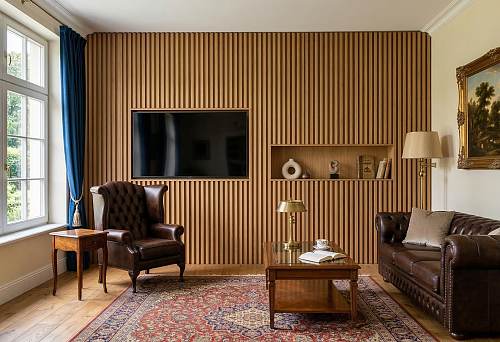
Interior harmony is built from small details. More precisely, from what many mistakenly consider minor details.Door molding— door frames, casings, extensions, thresholds — these elements don't announce their presence loudly, but their absence or incorrect selection instantly ruins the impression of even the most thoughtfully designed space. When the profile of a door frame echoes the profile of a cabinet cornice, whenOak door trimmatches in tone with dining table legs, when all wooden elements of the interior work in unison — that very sense of thoughtfulness emerges, distinguishing true design from a random collection of beautiful objects.
Classic Furniturerequires appropriate architectural framing. It's impossible to imagine a carved chest of drawers in an interior with plastic door frames or a solid oak table combined with laminated casings. Material, color, profile, texture — all these parameters should work together to create a unified system where doors cease to be merely functional elements and become part of an artistic statement.


Anatomy of a door opening: what creates completeness
A door opening is not just a hole in the wall with a door leaf installed. It is a complex architectural structure where each element plays its role. The door frame forms the basic geometry, defining the verticals and horizontals. Extensions widen the frame to the wall thickness, creating visual depth of the opening. Casings frame the structure from the room side, covering the joints and completing the composition. The threshold creates a boundary between rooms, protecting the lower joint from wear.
Each of these elements can be executed simply, utilitarially — and then the door will remain just a door. Or they can become part of the architectural composition — and then the door opening turns into a work of art. The difference is in the details.Door Frame ProfileIt can be strictly rectangular, or it can have a shaped relief with flutes or beads. The casing can be a flat strip, or it can carry a complex profile, repeating the architectural details of the room.
Proportions matter no less than form. The width of the casing relative to the width of the frame, the height of the threshold, the thickness of the extension — all these parameters must be balanced. Too massive casings on an elegant door look crude. Too thin ones get lost, failing to create the necessary framing. Classical architecture has developed proportional systems that work flawlessly. The ratio of casing width to frame width usually ranges from 1:2 to 1:3. This creates a visual balance that is pleasing to the eye.
Symmetry and rhythm are key principles of classical design. Doors in a room should be designed identically, creating a regular rhythm. The height of door openings, the width of casings, the profiles of elements — everything should repeat, creating spatial order. Violating this rhythm is only possible as a conscious design technique, when one door — for example, the entrance to the living room — stands out in size or complexity of design, emphasizing its importance.




Frame: the invisible foundation of visible beauty
The door frame is the hidden hero of the door structure. It is almost invisible when the door is closed, but it determines how the door will stand, how it will open, and how long it will last.trim for interior doorsFrom quality manufacturers, it is made from solid wood or laminated timber, ensuring geometric stability for decades.
The frame profile can vary. The simplest option is a rectangular cross-section with a rebate for the door stop. Such a frame is functional but visually neutral. A shaped profile with relief makes the frame part of the interior's decorative system. A protruding bead on the outer side of the frame can echo the profile of baseboards and cornices, creating visual connections.
The groove for the seal is a technical detail that affects comfort. A soft seal in the frame groove ensures a tight door fit, prevents drafts, and dampens sound when closing. This is especially important in bedrooms and studies, where quiet and privacy are important. Quality frames have milled grooves of precise geometry that reliably hold the seal without glue.
The frame thickness is selected according to the wall thickness. Standard frames are designed for walls 75-100 mm thick. For thicker walls, extensions are used — widening elements that build up the frame to the required size. Correct thickness selection is critical for visual perception — too deep a frame set into the wall creates a tunnel effect, too shallow makes the door look disproportionate.
Our factory also produces:


Extensions: how wall thickness affects aesthetics
Extensions are often perceived as a secondary element, but their role in creating a harmonious door opening is enormous. They create a transition between the door frame and the wall, form visual depth, and influence the perception of proportions. The width of the extension board can range from 50 to 300 mm, depending on the wall thickness.
The color and texture of extensions must exactly match the frame and door. The slightest discrepancy in shade immediately catches the eye, destroying the impression of structural unity. Quality manufacturers make extensions from the same solid wood and with the same finish as the frames, guaranteeing visual unity.
The profile of extensions can be flat or repeat the frame profile. In classical interiors, the second option is preferable — when the shaped relief of the frame continues onto the extensions, creating a continuous line. This requires precise fitting of elements, but the result is worth the effort — the door opening looks like a monolithic structure, not a set of separate parts.
Telescopic extensions are a technical solution that facilitates installation and allows for width adjustment within small limits. Special grooves and tongues provide a rigid connection of the extension to the frame without visible fasteners. This is especially relevant for doors in non-standard thickness walls, where it is difficult to select extensions of exact size.
Get Consultation
Casings: a frame for the door or an architectural element
The casing is the most visible element of door joinery. It determines the first impression of the door, creates visual framing, and connects the door with the room's architecture. Choosing the casing profile is choosing the stylistic direction of the entire door design.
Flat casings are the choice for minimalist interiors. A simple rectangular strip 60-80 mm wide creates a clear, graphic frame around the door. This option works in modern spaces where line purity and absence of decorative excess are important. But even a flat casing can be interesting — it all depends on the material, color, and surface treatment method.
Profiled casings carry relief on their surface — beads, flutes, stepped recesses. This is a classic solution that works in traditional interiors. The profile can be simple — one central bead — or complex, with several levels of relief. The choice depends on the scale of the room and the overall interior concept.
Carved casings are the pinnacle of decorativeness. Floral ornaments, geometric patterns, stylized architectural motifs turn the casing into a work of art. Such elements are appropriate in luxurious classical interiors, where demonstrating craftsmanship and status is important. Carving can be done by machine on CNC machines or by hand — the latter is more expensive but creates unique, lively products.
The width of the casing influences the visual perception of the door. Narrow casings 60-70 mm create a delicate frame suitable for small rooms. Medium 80-100 mm — a universal solution for most interiors. Wide 120-150 mm — for spacious halls with high ceilings, where an appropriate scale of details is needed.
Thresholds: the boundary between worlds
The threshold is an element often ignored, but it performs important functions. Technically, it covers the joint of floor coverings in the door opening, protects against wear, and compensates for level differences. Aesthetically, it creates a boundary between rooms, completing the composition from below.
The material of the threshold should correspond to the overall concept. In classical interiors with wooden doors, it is logical to use wooden or brass thresholds. Wood creates unity with the door and furniture, brass adds a noble shine, emphasizing the traditional style.
The shape of the threshold can vary. A flat strip is the simplest solution, suitable for minimalist interiors. A profiled threshold with rounded edges is more convenient in use and visually interesting. The height of the threshold is usually 15-25 mm, which is sufficient to compensate for small floor level differences.
Hidden thresholds are a modern solution where a metal profile is recessed into the floor, remaining almost invisible. This works in interiors where the continuity of the floor covering and visual unity of space are important. But in classical interiors, a visible threshold is preferable — it emphasizes the boundary, creates compositional completeness.
Color and texture: how to link doors with furniture
The visual connection between door joinery and furniture is created through color, wood texture, and surface treatment method. When these parameters match or harmoniously combine, a sense of a thoughtful, holistic interior arises.
Solid oak is a material that unites. If doors, frames, and casings are made of oak, it is logical to use oak furniture. Not necessarily in the exact same shade — tonal variations add depth. Light oak on doors can combine with darker oak in countertops and fronts, creating an interesting play of shades within the same wood species.
Beech is an alternative for those who appreciate a calmer, more uniform texture. Its pinkish-cream hue creates a warm atmosphere and works well in Scandinavian and eco-interiors. Beech doors harmonize with beech furniture but also pair nicely with birch, maple, and other light wood species.
Painting unifies different materials. When doors, frames, and trim are painted white or cream, they visually become part of the room's architecture—a neutral backdrop for furniture. This approach works in classic interiors where solid wood furniture contrasts with painted architectural elements.
Toning allows you to change the wood's color while preserving the visibility of its grain. Oak can be toned to resemble walnut, beech to cherry, achieving the desired shade while maintaining the natural pattern. This enables precise color matching of door casing with furniture, even if made from different wood species.
Profiles and moldings: how repetition creates unity
Repeating a single profile across different interior elements is a classic technique for creating stylistic unity. When the bead on a door frame echoes the bead on baseboards, or when trim profiles resonate with cabinet cornice profiles, visual harmony emerges—perceived by the eye as order and thoughtfulness.
trim for interior doorsDoor and furniture profiles can be manufactured using the same router bits, ensuring identical shapes. This is especially important in custom interiors where door casing and furniture are produced by the same company under a unified design. Consistent forms create a sense of the interior being designed as a cohesive whole, not assembled from disparate elements.
Profile scale must match the element's size. A large, ornate profile on narrow trim looks excessive; a small profile on a wide cabinet cornice gets lost. A simple rule: the larger the element, the more pronounced the profile can be. Trim typically has moderate relief of 3–5 mm depth, while furniture cornices are more pronounced, up to 10–15 mm.
Rhythm in repeating profiles creates visual order. If a room features built-in cabinets with profiled cornices, doors with similar profiles on trim, and baseboards with the same motif, the eye glides across these repeating elements, finding a pattern that soothes and delights.
Classic Furniture: Requirements for Door Framing
Classic FurnitureClassic furniture has its own language—paneled fronts, carved details, turned legs, complex-profile cornices. Door casing in such an interior should speak the same language, supporting the style rather than clashing with it.
Paneled doors are a natural choice for classic interiors. The frame-and-panel construction with expressive frame profiles resonates with paneled furniture fronts. Aligning profiles is key—if furniture fronts use a specific frame shape, it's best to apply a similar profile on doors.
Carved elements on doors should match furniture carvings in style and scale. Floral motifs on door trim can echo patterns on furniture cornices. Geometric carvings on doors pair with similar elements on table and chair legs. Avoid overdoing it—excessive carving can overwhelm the interior.
Doorway proportions should relate to furniture proportions. Tall doors with elongated proportions pair well with tall cabinets and shelves. Wide double doors harmonize with massive dressers and sideboards. Scale mismatch creates visual dissonance—small doors get lost with large furniture, while oversized doors overpower delicate furniture.
Hardware as a unifying element
Door handles, hinges, furniture knobs—these small details can become the link between doors and furniture. A unified hardware style creates visual harmony and emphasizes the interior's thoughtfulness.
Hardware material is chosen according to style. Brass is a classic choice for traditional interiors—its warm golden sheen pairs well with natural wood, conveying nobility. Patinated bronze suits interiors with an aged effect. Matte nickel or chrome works for more modern interpretations of classic style.
Handle shapes should match the style of furniture and doors. Traditional classic handles with floral motifs work in Baroque and Empire interiors. Simple knobs and levers suit more restrained English classics. Modern minimalist handles fit neoclassical spaces.
Repeating the same handle model on doors and furniture is a simple yet effective way to create unity. When all doors have identical handles and furniture fronts feature knobs from the same series (slightly smaller), it establishes a visual rhythm, linking different interior elements into a cohesive system.
Installation: how quality affects perception
Even the highest-quality door casing will look poor if installed incorrectly. Crooked lines, uneven joints, visible gaps—all these ruin the impression and devalue the material. Professional installation is essential for a worthy result.
Vertical and horizontal alignment are basic requirements. Door frames must be installed perfectly vertical, thresholds perfectly horizontal. Even a few millimeters of deviation are noticeable, creating a sense of crookedness or error. Professional installers use laser levels to ensure precision.
Trim joints at corners are the moment of truth. A 45° miter with precise cutting creates clean, neat corners where the eye glides smoothly. Even a slight cutting error produces a noticeable gap. Quality carpenters use miter saws with precise angle settings and fine-toothed blades for clean, chip-free cuts.
Trim attachment can be visible or concealed. Finish nails with countersunk heads, filled and painted to match the trim, are nearly invisible. Adhesive mounting creates a completely clean surface with no fastener marks. Concealed fasteners are trickier to install but yield aesthetically flawless results.
Restoration and renewal: how to restore beauty
Solid wood door casing has a key advantage—restorability. Scratches, wear, and color changes over time are not a death sentence but an opportunity for renewal. Proper restoration returns items to their original state or even improves them.
Sanding removes old finishes and the wood's surface layer, revealing fresh, clean material. Minor scratches and dents disappear; color evens out. Avoid over-sanding—excessive removal can distort profiles or flatten relief. Professionals use sanders with adjustable pressure, working carefully in layers.
Re-toning allows color changes without replacing elements. If your preferences evolve over time, or if you've updated furniture and need to coordinate doors, toning agents make this possible. Modern water-based stains are safe, odorless, quick-drying, and provide even coverage.
A new finish protects the renewed surface and gives it the desired look. Oil creates a natural, matte effect that highlights wood grain. Varnish offers a more durable, wear-resistant coating with varying gloss levels. Wax imparts a silky feel and pleasant tactility. The choice depends on interior style and usage conditions.
Cost and value: an investment in longevity
Quality solid wood door casing costs more than MDF or plastic alternatives. But this is not an expense—it's an investment. Solid wood's lifespan with proper installation and care is 50–100 years. MDF requires replacement in 15–20 years, plastic even sooner. Calculating cost of ownership rather than purchase price makes solid wood economically advantageous.
The possibility of restoration repeatedly extends the lifespan of products. Wooden architraves can be refreshed every 10-15 years, adapting to interior changes. MDF and plastic, once their protective layer is damaged, can only be discarded and replaced with new ones. Over 50 years of use, you will replace MDF three times, spending more than a quality solid wood set costs.
Impact on property value is a factor considered during resale. Buyers pay attention to the quality of finishes. Doors with professionally crafted solid wood door casing enhance the property's appeal, allowing for a higher asking price. The difference can amount to 5-10% of the apartment's value, which repeatedly recoups the investment in quality casing.
Frequently asked questions
What is door casing and what does it include?
Door casing is a set of long-length products for finishing a door opening: door frames, architraves, door extensions, and thresholds. These elements ensure proper door installation, cover mounting gaps, and create a complete, aesthetic appearance for the door structure.
How to match the color of door casing to furniture?
The ideal solution is to use the same wood species and similar finishing. If the furniture is oak with natural oil, the doors should also be oak with oil. Tonal variations within the same species are acceptable. If an exact match is impossible, use a contrasting solution—painted doors and natural wood furniture.
Can door casing made from different wood species be used in the same room?
It is not advisable. Different species have different colors, textures, and sheens. Even with similar finishing, the difference will be noticeable and create a sense of being poorly thought out. An exception is a deliberate contrasting solution, where doors are made from one species, furniture from another, and this is emphasized, not concealed.
What is the optimal width of a casing?
For standard interior doors, a width of 70-90 mm is optimal. This creates sufficient framing without excessive bulkiness. In rooms with high ceilings (3.5 m and above), architraves 100-120 mm wide can be used. In small rooms, it's better to limit to 60-70 mm.
Are door extensions always needed or only for thick walls?
Door extensions are used when the wall thickness exceeds the width of the door frame. Standard frames are designed for walls 75-100 mm thick. If the wall is thicker, extensions are essential. They cover the distance between the frame and the wall surface, creating the correct framing for the architraves.
How to care for solid wood door casing?
Weekly dry cleaning with a soft cloth, monthly wiping with a slightly damp cloth. Avoid aggressive cleaning agents and abrasives. For oiled finishes, use wood oil care products once a year. For lacquered surfaces, wipe with special polishes every 3-6 months.
Can door casing be repainted?
Yes, solid wood can be sanded and repainted multiple times. The old finish is removed by sanding, the surface is primed, and new paint or stain and a topcoat are applied. This allows updating the interior without changing the doors. Repainting MDF is more difficult, and plastic cannot be repainted at all.
How long does quality door casing last?
Solid oak or beech, with proper installation and care, lasts 50-100 years. Glued laminated timber lasts 40-70 years. MDF lasts 15-25 years. Plastic lasts 10-15 years. The difference in durability explains the price difference and makes solid wood an economically advantageous solution in the long term.
What is more important—the casing material or the quality of installation?
Both factors are critical. Quality casing with poor installation will look bad. Cheap material won't save even perfect installation. To achieve a worthy result, you need to invest in both the material and professional work. Saving on either factor leads to unsatisfactory results.
Can door casing and furniture be ordered from the same manufacturer?
This is the optimal solution. The manufacturer uses the same raw materials, the same processing technologies, and the same finishes. This guarantees a perfect match in color, texture, and sheen. STAVROS produces both door casing and classic furniture, ensuring complete coordination of interior elements.
Conclusion: Details that create a system
An interior is not a collection of separate elements, but a system of interrelationships.Door moldingDoor casing and furniture are parts of this system, and their coordination determines whether the space will be perceived as thoughtful, harmonious, or as a random combination of disparate items. The correct selection of material, color, and profiles creates a visual unity that the eye perceives as beauty and order.
Classic style requires special attention to detail. Here, it's impossible to cut corners, to replace quality with cheap, natural with artificial. Every element must meet a high standard, otherwise the entire composition falls apart.Oak door trim, Door Frame ProfileSolid wood door casing, extensions with precise fitting—these elements create the foundation on which the door casingClassic Furnitureand the entire interior are built.
For over twenty-three years, STAVROS has specialized in manufacturing door casing and classic furniture from solid wood. Its own production, equipped with modern European machinery, allows for quality control at all stages—from wood selection to final finishing. Using oak and beech from the same forestry units, drying in the same chambers, processing on the same equipment, and coating with the same compounds guarantees a perfect match in color and texture between the casing and furniture.
STAVROS's range includes architraves of various profiles and widths, door frames with shaped sections, door extensions in standard and non-standard sizes, and thresholds made of wood and brass. Each element is manufactured with precision to tenths of a millimeter, ensuring a perfect fit during installation. The possibility of manufacturing elements according to individual drawings allows for the realization of any designer's vision.
STAVROS's comprehensive approach allows ordering door casing and furniture within a single project. The company's designers coordinate profiles, select colors, and develop a unified concept where doors and furniture work together to create a harmonious interior. Manufacturing casing and furniture at the same site guarantees identical materials and processing.
STAVROS provides a full cycle of services — from consultation on selection to delivery and professional installation. Experienced specialists will help select optimal solutions for specific projects, calculate the required quantity of materials, and organize delivery to any region of Russia. In-house installation teams will perform the installation of door joinery and furniture with a guarantee of work quality.
By choosing door joinery and classic furniture from STAVROS, you are choosing not just materials and products, but a system for creating a harmonious interior where every detail is in its place, and everything works toward a unified idea — creating a space of beauty, quality, and durability.