Article Contents:
- Alchemy of choice: uncovering the secrets of wood species
- Oak — king of the forest realm
- Ash — embodiment of flexible elegance
- Walnut — aristocracy of woodworking
- Spruce — northern beauty of accessibility
- CNC Machines: Precision Serving Beauty
- Kiln drying: scientific approach to ancient wisdom
- Carpentry joints: art tested over centuries
- Coatings of the new generation: protection and aesthetics
- Design Concepts: From Classicism to Avant-Garde
- Classic tradition: timeless values
- Scandinavian Minimalism: Beauty of Simplicity
- Modern: synthesis of traditions and innovations
- Ergonomic aspects: comfort in details
- Standard sizes and individual solutions
- Opening systems and hardware
- Sound insulation and thermal protection
- Ecological advantages: responsible choice
- Renewable resources and carbon footprint
- Biodegradability and secondary recycling
- Certification and Responsible Forestry
- Production process: from wood to masterpiece
- Raw material selection and preparation
- Mechanical processing and assembly
- Final Finishing and Quality Control
- Installation and operation: maximizing benefits
- Professional Installation
- Rules of Operation and Maintenance
- Diagnosis and repair
- Economic aspects: investment in quality
- Initial costs and long-term benefits
- Pricing factors
- Impact on property value
- Psychological aspects: impact on well-being
- Biophilia and connection with nature
- Tactile sensations and emotional comfort
- Acoustic comfort
- Trends and Innovations: Looking to the Future
- Smart technologies in traditional materials
- Personalization and Mass Customization
- Ecological innovations
- Conclusion: a choice that changes life
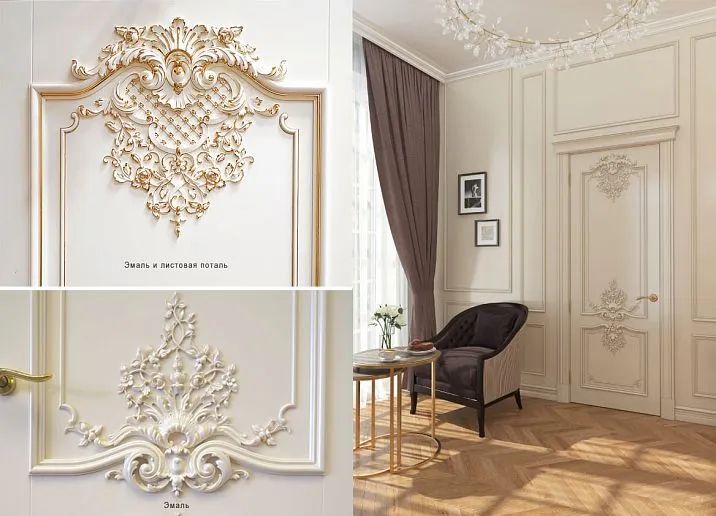
Feel the noble texture of natural wood awaken under your fingertips. Every touch of a wooden door is a dialogue with nature that lasts for centuries. When you decide buy natural wood doorsyou choose not just a functional interior element, but living art capable of transforming any space.
The modern world offers countless synthetic alternatives, but none can compare to the magic of natural solid wood. Wood breathes, lives, tells its stories through unique fiber patterns. Every door made of natural wood is a time imprint, captured in material that remembers the sound of wind and warmth of sunlight.


Alchemy of choice: uncovering the secrets of wood species




Oak — king of the forest kingdom
Imagine a mighty oak that took root in fertile soil centuries ago. Its wood is concentrated natural power, embodied in a density of 700 kg per cubic meter. Oak doors do not merely decorate interiors; they become its foundation, creating an atmosphere of stability and respectability.
Tannins contained in oak transform every door into a natural fortress against time. These natural preservatives protect the wood from moisture, insects, and fungal damage, guaranteeing longevity measured in decades. The color palette of oak ranges from honey gold to rich chocolate, allowing you to choose the perfect solution for any interior.
Our factory also produces:


Ash — embodiment of flexible elegance
Ash wood possesses a unique ability to combine strength with visual lightness. Light tones with contrasting dark streaks create a dynamic texture that enlivens even the most restrained interiors. Ash's exceptional impact resistance makes it an ideal material for creating doors with complex geometric shapes.
This wood species is renowned for its ability to accept various finishes, from transparent varnishes to deep stains. Oak is the choice for those who appreciate modern aesthetics without compromising traditional quality.
Get Consultation
Walnut — the aristocracy of woodworking
Walnut wood is a true gem among building materials. Its rich color palette, ranging from light brown to deep chocolate, creates an atmosphere of luxury and elegance. Characteristic wavy patterns make every walnut solid door a unique work of art.
The dense structure of walnut provides excellent insulating properties, which is especially important for interior doors. This species is highly suitable for artistic processing, allowing the creation of intricate carved elements and decorative inserts.
Spruce — Northern beauty of accessibility
Do not underestimate the noble simplicity of spruce. This coniferous species has its own character and indisputable advantages. High resin content provides natural protection against pests and creates a unique aroma that many associate with the coziness of a country house.
Spruce's light tones visually expand space, making it more open and airy. The softness of the wood allows craftsmen to create delicate decorative elements, carvings, and profiles that are inaccessible when working with harder species.
Technological innovations in traditional craftsmanship
Kiln drying: a scientific approach to ancient wisdom
The quality of a wooden door is established during the raw material preparation stage. Modern kiln drying is a high-tech process that precisely controls temperature, humidity, and air circulation. The optimal moisture content of finished wood is 8-10%, which eliminates subsequent deformations and ensures the stability of the product's geometry.
The drying process includes several stages with different modes, allowing moisture to be gradually removed without creating internal stresses. Modern drying complexes are equipped with computer control that adapts the mode to the specific wood species and its initial characteristics.
Joinery: an art proven over centuries
The strength and durability of a wooden door largely depend on the quality of joinery. Traditional methods — mortise and tenon, dovetail, and lap joints — provide maximum structural reliability without using metal fasteners.
Modern production uses high-precision CNC routers to create perfectly matched joints. The accuracy of processing reaches hundredths of a millimeter, ensuring tight fitting of elements and eliminating gaps over time.
New-generation finishes: protection and aesthetics
The final finish of a wooden door performs two key functions: protects the wood from external influences and highlights its natural beauty. Modern technologies offer a wide range of solutions, from natural oils and waxes to high-tech polyurethane systems.
Natural finishes preserve the wood's ability to 'breathe,' regulating humidity and maintaining a healthy microclimate in the room. Synthetic finishes create a more durable protective film, resistant to mechanical damage and moisture.
Design Concepts: From Classic to Avant-Garde
Classic tradition: timeless values
Classic style in wooden doors implies the use of time-tested proportions, symmetrical compositions, and traditional decorative elements. Panel constructions with raised profiles create play of light and shadow, adding depth and character to the interior.
Hand-carved elements, crafted by experienced masters, transform every door into a work of art. Patination, gilding, inlays — these techniques convey the spirit of aristocratic interiors of past eras.
Scandinavian minimalism: beauty of simplicity
Northern aesthetics values functionality, naturalness, and restrained forms. Scandinavian doors made of natural wood are characterized by clean lines, absence of excessive decoration, and emphasis on the natural beauty of the material.
Light wood species — birch, spruce, oak — are processed minimally, preserving their natural texture and color. Matte finishes highlight the tactile qualities of wood and create a sense of closeness to nature.
Modern: synthesis of traditions and innovations
Modern style allows experimenting with forms, combining different materials, and integrating technological novelties. Wooden doors in the modern style may include glass inserts, metal elements, LED lighting, and even smart home systems.
Asymmetric compositions, non-standard proportions, contrast play — all this expands designers' possibilities and allows creating unique interior solutions.
Ergonomic aspects: comfort in details
Standard sizes and individual solutions
Standard sizes of interior doors have been established over decades and take into account ergonomic requirements and characteristics of living spaces. A height of 2000-2100 mm ensures comfortable passage for people of any height, while a width of 600-900 mm allows free movement and carrying furniture.
However, modern construction often requires non-standard solutions. Manufacturers offer custom-made doors to individual sizes, which is especially relevant for rooms with high ceilings, wide doorways, or specific layouts.
Opening systems and hardware
The choice of opening system affects not only the functionality of the door but also the room layout. Hinged doors — a classic option — provide reliability and simplicity of construction. Sliding systems save space and are suitable for small rooms.
The quality of hardware is critically important for comfortable operation of a wooden door. Hinges must ensure smooth and silent movement, handles — comfortable grip and secure locking. Using hardware made of stainless steel or brass guarantees longevity and corrosion resistance.
Sound insulation and thermal protection
Solid wooden doors possess natural insulating properties due to the porous structure of wood. A door thickness of 40-60 mm ensures effective sound insulation, which is especially important for bedrooms, offices, and children's rooms.
Additional insulation can be achieved through special seals around the door panel perimeter. Modern materials provide airtightness without compromising the door's aesthetics and functionality.
Ecological advantages: responsible choice
Renewable Resources and Carbon Footprint
Wood is the only building material that is fully renewable in nature. Properly managed forests not only provide raw material for production but also actively absorb carbon dioxide from the atmosphere. Choosing solid wood doors, you contribute to the fight against climate change.
Transporting wood requires significantly less energy compared to metals or plastics. Local wood species have minimal carbon footprint and support regional economies.
Biodegradability and secondary recycling
Unlike synthetic materials, wood is fully biodegradable. At the end of its life cycle, a wooden door does not produce toxic waste and can be safely disposed of or recycled.
The FSC (Forest Stewardship Council) certification system guarantees that wood is sourced from forests managed according to ecological standards. Certified products carry special labeling and documentation confirming the legality of the material's origin.
Certification and responsible forestry
Choosing certified materials supports responsible forestry and contributes to biodiversity conservation. This is especially important when using exotic wood species.
Production process: from wood to masterpiece
Quality of the finished product begins with the proper selection of raw materials. Experienced specialists evaluate each piece according to multiple criteria: wood density, absence of defects, correct sawing, compliance with dimensional requirements.
Raw material selection and preparation
Pre-processing includes bark removal, end-grain treatment, initial sorting by size and quality. At this stage, material is divided by intended use: the best pieces go to visible elements, while lower-quality pieces are used for hidden structures.
Mechanical processing and assembly
Modern woodworking machines allow achieving the highest level of processing accuracy. Profiling, drilling holes for hardware, creating grooves and tenons — all operations are performed with precision down to fractions of a millimeter.
Assembling a wooden door requires high skill from the craftsman. Proper glue application, precise installation of parts, geometric control — each stage affects the quality of the finished product. Modern adhesives provide connection strength often exceeding the strength of the wood itself.
Surface sanding is an art requiring patience and skill. Gradually reducing the grit of the abrasive allows achieving perfect smoothness without damaging the wood fibers. Quality sanding is the foundation for applying the final finish.
Final Processing and Quality Control
Quality control includes checking geometric dimensions, hardware functionality, and finish quality. Each door undergoes several stages of control, ensuring compliance with high standards.
Installation and operation: maximizing benefits
Quality installation is no less important than the quality of the door itself. Proper box alignment, accurate gap adjustment, secure wall mounting — all these factors affect the functionality and longevity of the product.
Professional installation
Professional installers use specialized tools and materials: laser levels for precise alignment, adjustable anchors for mounting to various wall types, mounting foams with controlled expansion.
Solid wood doors require careful handling, but with proper care, they serve for decades. Regular cleaning with mild cleaners, avoiding drastic temperature and humidity changes, timely hardware maintenance — simple rules that extend the life of the product.
Rules for operation and maintenance
Periodic renewal of protective coating helps preserve the original beauty of the wood. Modern materials allow restoration without complete reworking, which is both economically and environmentally responsible.
Diagnosis and repair
One of the main advantages of wooden doors is the ability to repair almost any damage. Scratches are removed by local sanding and repainting, minor chips — with specialized wood putty, deformations — by adjusting hinges and locks.
Serious damage requires professional intervention, but even in such cases, a wooden door can be fully restored. This is fundamentally different from composite material doors, which cannot be effectively repaired.
Serious damage requires professional intervention, but even in such cases, a wooden door can be fully restored. This is fundamentally different from composite material doors, which cannot be effectively repaired.
Economic Aspects: Investment in Quality
Initial costs and long-term benefits
The cost of quality wooden doors may seem high compared to budget alternatives, but such a comparison is incorrect. The correct approach is to analyze the total cost of ownership over the entire product life cycle.
The cost of a wooden door depends on many factors: wood species, construction complexity, hardware quality, finish type, production technology. Premium species (oak, walnut, exotic types) cost more but offer superior performance.
Pricing Factors
Handcrafted work, individual design, complex decorative elements increase the cost, but create a unique product that cannot be found in mass production.
Quality wooden doors increase the overall property value. Potential buyers value natural materials, quality finishes, and thoughtful design solutions. Investments in quality doors pay off when selling the property.
Impact on property value
Quality wooden doors increase the overall property value. Potential buyers value natural materials, quality finishes, and thoughtful design solutions. Investments in quality doors pay off when selling the property.
Premium interiors with natural wood elements attract higher-paying tenants, which is important for commercial real estate.
Psychological aspects: impact on well-being
Biophilia and connection with nature
Humans are genetically linked to nature, and the presence of natural materials in living spaces positively affects mental state. Wooden surfaces activate ancient instincts, creating a sense of safety and comfort.
Scientific studies confirm that people living in environments with natural materials experience less stress, sleep better, and demonstrate higher productivity. Solution Buy doors made of natural wood — is an investment in your own well-being.
Tactile sensations and emotional comfort
Touching a natural wooden surface activates tactile receptors and evokes positive emotions. The warmth of wood, its natural texture, creates a feeling of coziness and security.
Unlike cold synthetic materials, wood 'responds' to touch, slightly warming up from the heat of the hand. This effect is especially noticeable in children's rooms, where tactile sensations play an important role in development.
Acoustic Comfort
Wooden doors create a unique acoustic environment. They not only provide sound insulation but also influence the character of sounds in a room. Natural wood absorbs sharp sounds and creates a softer acoustics.
The sound of a closing wooden door is associated with reliability and quality. This subconsciously influences the perception of the entire interior and creates a sense of prestige in the space.
Trends and Innovations: Looking to the Future
Smart technologies in traditional materials
Integrating modern technologies with traditional materials opens new possibilities. Wooden doors can include smart home systems: electronic locks, motion sensors, access control systems.
Hidden integration of technologies allows preserving the aesthetics of natural wood while adding modern functionality. LED lighting built into profiles creates dramatic illumination without visible light sources.
Personalization and mass customization
Modern manufacturing technologies allow combining the advantages of mass production with individualized approaches. Digital design, CNC automated machines make it possible to produce unique items without significant cost increases.
The buyer can choose the type of wood, finish, hardware, decorative elements, creating a door that fully matches their preferences and interior.
Ecological Innovations
The development of eco-friendly technologies also affects the production of wooden doors. Water-based coatings without volatile organic compounds, plant-based adhesives, energy-saving drying technologies — all of this makes the product more environmentally friendly.
Closed production cycles, where waste from one process becomes raw material for another, minimize environmental impact. Sawdust is used to produce fuel pellets, offcuts are used to make small items.
Conclusion: a choice that changes life
The decision to buy doors made of natural wood goes far beyond simple interior renovation. It is a choice of a life philosophy based on respect for nature, appreciation of quality, and understanding of true beauty.
Each solid wood door is unique, like a fingerprint. Natural wood grain patterns, formed over years of growth, cannot be artificially reproduced. This makes each item an exclusive work of art capable of transforming any space.
Modern production technologies allow fully unlocking the potential of natural materials. Precise processing, high-quality finishes, reliable hardware transform wooden doors into high-tech products that combine traditional beauty with modern functionality.
The ecological advantages of natural wood are becoming increasingly relevant in the era of climate change. Choosing renewable materials contributes to preserving the planet for future generations.
The psychological impact of natural materials on humans is confirmed by scientific research. Wooden surfaces create an atmosphere of coziness, reduce stress, and improve quality of life. This is especially important in today's urban world, where people lack contact with nature.
The economic justification for purchasing high-quality wooden doors is evident in long-term planning. High initial costs are offset by durability, repairability, restorability, and positive impact on property value.
STAVROS embodies the best traditions of wood processing in modern realities. Decades of master experience, use of premium materials, advanced production technologies, and individual approach to each project make STAVROS a reliable partner in creating an ideal living space.
STAVROS philosophy is based on deep understanding of wood nature and respect for craftsmanship traditions. Each door is created with the understanding that it will become part of a family's life for many years, witnessing important events and preserving family memories.
Choosing STAVROS, you get not just a door, but a work of art crafted from noble natural wood using centuries-old traditions and modern technologies. This is the choice of people who understand the true value of quality and are willing to invest in beauty and longevity.