Article Contents:
- Panels: Art on the Wall
- Rack Walls: Rhythm and Texture
- Accents: Highlights and Compositions
- Wood Texture: Choosing Species and Finishes
- Oil Finishes: Revealing Beauty
- Warm Palette: Color Solutions
- Acoustics: Beauty and Function
- Installing Wall Decor: Technology and Nuances
- Interior Styles and Wooden Decor
- Maintenance and Durability
- Conclusion: wall as a work of art

A wall is not just a vertical surface limiting space. It is a canvas on which the visual story of the interior unfolds. A bare painted or wallpapered wall is one-dimensional, static, lacking depth.Wooden wall decorIt transforms the plane, creates relief, adds tactile quality, fills space with the organic energy of living material. Carved panels become the visual focal point of the living room, around which the entire composition is built. Rack walls structure space, create rhythm, improve acoustics. Decorative accents set highlights, transforming a neutral surface into an architectural composition.
Wood as a material for wall decor possesses unique properties inaccessible to artificial analogs. Wood texture is a living pattern of growth rings, a complex play of fibers, transitions of tones from light gold to deep brown. This texture is never repeated; each board is unique, carrying the memory of the tree from which it was carved. Oil finishes highlight natural beauty, penetrate the structure, creating a matte silk-like surface, warm to the touch. The warm palette of natural wood—from light beech to dark walnut—creates an atmosphere of coziness impossible to achieve with cold materials.




Panels: Art on the Wall
Carved wooden panels represent the transition from decor to art. A large-scale composition, one meter by one and a half or two by three meters, becomes the dominant feature of the interior, a piece that is viewed, discussed, and admired. Narrative panels may depict landscapes, still lifes, or abstract compositions. The depth of carving creates volume, multiplanarity, and play of light and shadow. Under side lighting, panels come alive, each element casting a shadow, creating an illusion of three-dimensionality.
Abstract compositions are based on the play of forms, lines, textures. Wavy reliefs create a sense of movement, as if a frozen wave or fabric folds. Geometric compositions of rectangles, circles, and polygons of varying depths create architectural graphics. Organic forms resembling natural structures—trunk cross-sections, leaves, bark—bring a connection to nature. Abstraction allows each viewer to see their own interpretation, creating the multiplicity of meaning in the image.
Plant motifs are a tradition dating back to classic decor. Stylized trees, branches, leaves, and flowers are carved with varying degrees of realism. Realistic carving meticulously reproduces the plant, each leaf and petal carefully detailed. Stylized treatment decoratively simplifies forms into symbols, creating ornamentality. Plant panels bring nature into the interior, evoking associations with gardens, forests, and organic growth.
Modular panels are assembled from individual sections, offering flexibility in size and configuration. Three vertical panels form a triptych, five horizontal panels form a pentaptych. Modules may be identical, creating rhythmic repetition, or varied, developing the narrative. Gaps between modules add air, preventing the composition from being monolithic. This solution is convenient for transportation and installation, allowing adaptation to the specific wall dimensions.
Relief maps — an original direction of wooden panels. A topographic map of the terrain, where elevations are conveyed through layers of varying thickness, creating a three-dimensional model. A world map, whose continents protrude above the ocean surface — an eye-catching decoration for an office or library. A city plan with relief buildings and streets — a memory of a place you live in or love. Such panels are manufactured on CNC laser or milling machines using digital relief models.
Placing panels requires attention to proportions and surroundings. A large panel two by three meters requires a corresponding wall—minimum three by four meters, to allow space around it. Panels should not abut the edges of the wall; minimum thirty to forty centimeters of clearance are needed. Placement height—center of the panel at eye level for a standing person, approximately one hundred fifty to one hundred sixty centimeters from the floor. Lighting is critical—directional lights from above or the side highlight the relief, creating drama.




Rack Walls: Rhythm and Texture
Wooden racks on the wall—a modern trend combining aesthetics and functionality.wooden planks on the wallThey create vertical or horizontal rhythm, structure the plane, add volume. Vertical racks visually raise the ceiling, creating an upward orientation. Horizontal racks expand space, create calmness, stability. Diagonal racks add dynamism, breaking staticness.
Rack widths vary widely. Narrow racks (twenty to thirty millimeters) create a graphic, dense structure, almost textile-like effect. Medium-width racks (forty to sixty millimeters) offer a balance between visibility and airiness. Wide racks (eighty to one hundred twenty millimeters) are massive, creating monumentality. Rack thickness determines relief depth—thin racks (ten to fifteen millimeters) cast a light shadow, thick racks (thirty to fifty millimeters) create pronounced volume.
The spacing between racks affects perception. Dense spacing, where the rack equals the gap or the gap is smaller, creates almost a solid surface with regular gaps. Medium spacing, where the gap is one and a half to two times the rack width, provides balanced rhythm. Sparse spacing, where gaps are three to five times the rack width, creates a light structure with more air than mass. Variable spacing, where distances change according to a pattern, adds complexity and breaks monotony.
Mounting methods determine the appearance. Hidden mounting provides a clean front surface—racks are attached to the back using clips or adhesive. Visible mounting with screws can be recessed and sanded for invisibility or left intentionally visible as a design element in an industrial style. Racks can be mounted on a frame of beams, creating a ventilated gap between the wall and decor, or directly on the wall if it is flat.
Combined solutions combine racks of different widths, thicknesses, and colors. Alternating thin and thick racks creates complex rhythm. Vertical racks intersected by horizontal ones form a grid. Racks extending beyond the main plane create three-dimensional structures. Built-in lighting between racks transforms the wall into a light object, where each rack is illuminated along its edge.
Acoustic properties of rack walls are important in home theaters, music rooms, studios. Racks with gaps partially absorb sound, reduce reverberation, improve acoustics. To enhance the effect, sound-absorbing material—mineral wool, acoustic foam—is placed behind the racks. This results in decorative acoustic panels that are both beautiful and functional. Calculating rack spacing and thickness for specific sound frequencies allows creating acoustic systems tuned to the desired range.
Our factory also produces:


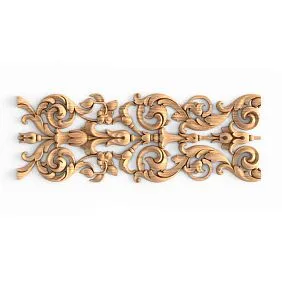


Overlays: Accents and Compositions
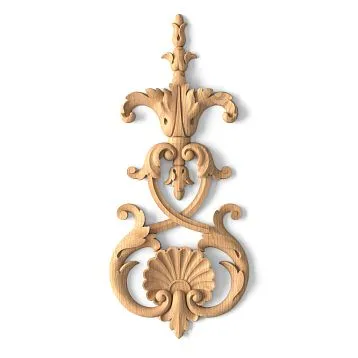
Wall-mounted decorative panels serve as accents that organize space.Decorative InsertsThey are placed at key points — above the sofa, behind the headboard, between windows, on an empty wall needing an accent. One large panel becomes a visual focal point, while several smaller ones grouped together create a composition.
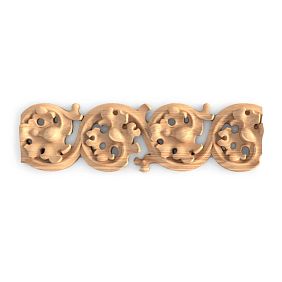
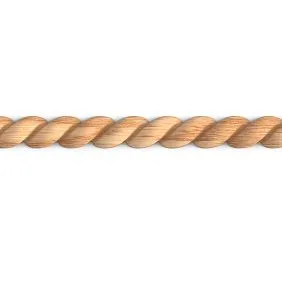
Frame compositions useMoldingsto create rectangular frames on the wall, within which panels, contrasting wallpaper, or another tone of paint are placed. This is a classic boiserie technique, where the wall is divided into panels. The lower third — framed decorative panels, the middle — smooth or wallpapered, the upper third — crown molding.decorative rosetteCompletes the composition at the center of the panel.
Vertical compositions of panels create a sense of upward movement. Three panels placed one above the other with equal spacing direct the gaze upward. Panels can be identical, creating a repeating rhythm, or decrease in size from bottom to top, enhancing perspective. Vertical elements visually raise the ceiling, making the room appear taller.
Horizontal compositions expand space. A row of panels at the same height creates a frieze — a decorative band encircling the room or running along one wall. Traditionally, the frieze is placed at the upper part of the wall, under the ceiling, but variations are possible — at the height of chair backs or table level. Horizontal lines calm the space, creating a sense of openness.
Free compositions do not adhere to strict geometry. Panels of different sizes and shapes are placed asymmetrically, creating visual dynamism. This requires artistic intuition — it is important that asymmetry appears intentional, not random. The overall mass of elements should be balanced, and the composition should have a visual center to which other elements gravitate.
Panel backlighting transforms them into three-dimensional objects. An LED strip placed behind the panel along its perimeter creates a glowing outline. Directional spotlights from above cast shadows, emphasizing relief. Colored backlighting alters perception — warm light enhances the warmth of wood, cool light creates contrast, colored lighting adds drama. Dimmable backlighting allows adjusting intensity according to time of day and mood.
Get Consultation
Wood texture: selection of species and finish
Oak — classic wooden decor. Distinctive texture with clear growth rings, hardness allowing fine carving details, noble tone ranging from light gold to dark brown. An oak panel or board wall creates a sense of solidity and connection to tradition. Oak texture is self-sufficient — even without carving, simply sawn and sanded boards are beautiful. Brushing emphasizes structure, making it tactile.
Ash is lighter than oak, with less pronounced but beautiful striped texture. Ash decor creates a sense of freshness and air, suitable for Scandinavian and modern interiors. The wood is elastic, strong, and holds its shape well. Ash is easy to stain, allowing any shade from whitewashed to dark gray while preserving visible texture.
Walnut — an elite species with deep dark tone and beautiful texture. Walnut paneling — luxury, status, sophistication. Color ranges from light brown to nearly black with purple and reddish hues. Texture is complex, with wavy lines and knotty patterns. Walnut does not require staining — its natural beauty is self-sufficient. Transparent oil or varnish finish enhances the depth of color.
Pine — affordable material with distinct texture and resinous aroma. Light wood with contrasting growth rings creates a warm, homey atmosphere. Shortcoming — softness, pine easily scratches and dents. For wall decor not subject to direct contact, this is not critical. Pine boards — budget-friendly solution for creating board walls, especially if planning to paint.
Larch is harder than pine, with high natural resin content making it resistant to moisture and rot. Color ranges from light yellow to reddish-brown. Texture is distinctly visible, with contrasting stripes. Larch is ideal for rooms with high humidity or temperature fluctuations — bathrooms, kitchens, balconies. Over time, the wood darkens, acquiring a noble gray-brown tone.
Exotic species — teak, meranti, wenge — possess unique tones and textures. Teak is golden-brown with oily texture, naturally moisture-resistant. Meranti is reddish-brown with uniform texture. Wenge is dark, almost black with distinct pores. Exotic woods are expensive but create a unique atmosphere, especially in ethnic, colonial, or eclectic interiors.
Combining species creates contrast and depth. Light ash with dark walnut, reddish larch with light pine — combinations enhance each other. Inlay — inserting one species into another — creates refined patterns. Marquetry — mosaic of thin slats of different species — transforms panels into painted canvases, where wood tones replace paint colors.
Oil finishes: revealing beauty
Wood oil penetrates the structure without forming a surface film. This preserves tactile quality, keeping the wood warm to the touch and breathable. Oil enhances texture, deepens and enriches color. Growth rings become more contrasting, color play more expressive. Oil finish creates a matte silk-like surface, pleasing to both eye and hand.
Natural oils — linseed, tung, carnauba — are eco-friendly and safe, but require time to dry and polymerize. Linseed oil has been used for centuries to protect wood, but dries slowly — several days between layers. Tung oil from Chinese tung tree creates water-resistant finish, dries faster. Carnauba wax from Brazilian palm adds hardness and gloss.
Modern oils with drying accelerators and hard waxes combine naturalness with practicality. They dry in twelve to twenty-four hours, creating a more durable finish. Oils with UV filters protect against fading, especially important for walls near windows. Colored oils contain pigments allowing wood staining while preserving visible texture — from light shades to deep tones.
Applying oil requires preparation — surface is sanded with 180-240 grit abrasive, thoroughly cleaned of dust. Oil is applied with brush, roller, or cloth in thin layers. After ten to fifteen minutes, excess oil not absorbed by wood is wiped off with dry cloth. It is important not to leave oil on the surface — this creates a sticky film. After the first layer dries, in twelve to twenty-four hours, surface is lightly sanded with fine sandpaper, and second layer is applied. Two to three layers provide sufficient protection and beauty.
Refreshing oil finish is simple — surface is cleaned, lightly sanded if needed, and fresh oil is applied. No need to remove old finish — new oil bonds with old, renewing protection. This can be done every two to three years to maintain appearance and protective properties.
Comparison with varnish shows pros and cons. Varnish creates a hard film, more resistant to abrasion and moisture, and provides gloss. But varnish hides wood’s tactile quality, making surface cold, smooth, and artificial. Oil preserves naturalness but is less durable, requiring more frequent refreshment. For wall decor not subject to hand rubbing or washing, oil is preferable — it preserves wood’s beauty.
Warm palette: color solutions
Natural wood tones form a warm palette from light cream to dark chocolate. This palette harmonizes with nature, creates coziness, and does not strain the eye. Light tones — whitewashed oak, light ash, birch — expand space, reflect light, create airiness. They are ideal for small rooms, northern rooms, Scandinavian interiors.
Mid-tones — natural oak, beech, cherry — are versatile, suitable for most interiors. They are warm enough to create coziness and neutral enough to avoid dominance. This is the golden middle, easy to pair with furniture, textiles, and other materials.
Dark tones — dark walnut, wenge, stained oak — create drama, depth, luxury. They visually narrow space, absorb light, require sufficient lighting and area. A dark board wall in a small room may feel oppressive, while in a spacious living room — it creates intimacy and coziness.
Staining with oils and stains allows changing tone while preserving texture. Light pine can be stained to resemble walnut, saving cost and achieving desired color. Oak can be lightened or darkened to match existing furniture. Colored stains — gray, green, blue — create unusual effects while preserving wood structure. This is popular in modern interiors where wood is used as texture, but color is chosen independently.
Contrasting combinations of dark and light create graphic effects. A board wall with alternating dark and light boards creates a striped pattern. A panel with light background and dark carving creates contrast, emphasizing shape. The reverse — dark background, light carving — creates silhouette, almost a negative image.
Gradients from light to dark create transition, movement. A lath wall, where the laths gradually darken from bottom to top or from center to edges, creates visual depth. A panel with a gradient from edges to center focuses attention on the center of the composition.
Whitewashed wood — a trend of recent years. White paint or oil is applied and partially worn away, filling pores but leaving the texture visible. This results in a surface where the wood grain peeks through the whiteness. It creates lightness and airiness, suitable for Provence, Scandinavian, and shabby chic styles. A whitewashed lath wall visually expands space more than natural wood.
Acoustics: beauty and function
Wooden panels on walls affect room acoustics. Bare hard walls reflect sound, creating echo and reverberation, making speech less intelligible and music louder. Wood partially absorbs sound, softening acoustics. Recessed surfaces — laths, carving, texture — scatter sound waves, preventing echo.
Lath walls with gaps between laths create an acoustic effect. Sound partially passes through the gaps, partially reflects off the laths, partially is absorbed by the wood. This reduces reverberation, making acoustics drier and more controlled. For home theaters, where clarity of dialogue and sound effects is crucial, lath walls are an aesthetic acoustic solution.
Acoustic panels are specialized products optimized for sound absorption. A wooden front surface with perforations or laths, behind which lies sound-absorbing material — mineral wool, acoustic foam. Perforation may be regular — rows of round holes, or designer — patterns, images created by holes. Such panels absorb up to seventy percent of incident sound within a specific frequency range.
Acoustic calculation takes into account room size, finishing materials, and purpose. In a recording studio, maximum sound insulation and controlled acoustics are needed. In a living room, it’s sufficient to reduce echo and make sound more comfortable. The acoustician calculates the area of sound-absorbing surfaces, their distribution, and frequency characteristics. Wooden elements are part of this system, creating acoustic comfort.
Resonant acoustics — a special effect where wooden panels create resonance at certain frequencies, amplifying them. This was used in concert halls of the past — wooden cladding on walls and ceilings resonated with music, enriching the sound. In home settings, resonance may be undesirable, creating humming. Proper calculation and installation prevent negative effects, preserving positive ones.
Silence — also an acoustic characteristic. Wooden walls absorb external noise, making the room quieter. This is important for bedrooms, offices, children’s rooms. Wood combined with sound-insulating materials — mineral wool in a frame — creates an effective noise barrier.
Wall decor installation: technology and nuances
Wall preparation — the first stage. The surface must be flat, especially for laths and panels mounted directly to the wall. Height differences exceeding five millimeters are leveled with plaster or drywall. The wall must be dry — moisture in the substrate will cause wood deformation. Painted walls are tested for coating strength — if paint peels, it is removed or reinforced with primer.
A frame made of wooden beams or metal profiles creates a flat surface for mounting decor. Beams with a cross-section of thirty by forty or forty by fifty millimeters are mounted horizontally or vertically depending on the orientation of the finish. A beam spacing of forty to sixty centimeters ensures rigidity. The frame is leveled, forming an ideally vertical or horizontal plane.
A ventilation gap between the wall and wood prevents condensation buildup. The frame naturally creates this gap — air circulates behind the cladding. If decor is mounted directly to the wall, two- to three-millimeter spacers are needed at mounting points, creating a microgap for ventilation.
Mounting depends on weight and element type. Lightweight overlays are mounted with adhesive — construction, polyurethane, or epoxy. Adhesive is applied in dots or a zigzag pattern, the element is pressed and held until it sets. Heavy panels require mechanical mounting — screws, anchors, French mounting system, where the panel hangs on a rail like a picture. Laths are mounted with cleats — hidden mounting, or with nails and screws on the front side — visible mounting.
Jointing elements requires precision. Laths are cut to size with millimeter accuracy to ensure uniform gaps. Large-format panels are joined with tongue-and-groove or butt joints with a two- to three-millimeter gap to compensate for expansion. Overlays are placed according to layout, checked with a level, and secured. Any inaccuracy is visible, especially in rhythmic compositions.
Final finishing after installation includes sealing joints if necessary, touch-up of mounting areas, applying protective coating to exposed ends. If elements were installed unfinished, they are coated with oil or varnish on-site. This creates a unified surface, conceals joints, but requires care — protecting walls and ceilings from coating splatter.
Interior styles and wooden decor
Scandinavian style uses light wood — ash, birch, whitewashed oak.Wooden boards in interiorVertical, with even spacing, painted white or natural light tones. Minimal carving, emphasis on texture and clean lines. Combined with white walls, light textiles, simple furniture, it creates airiness characteristic of Scandinavian interiors.
Loft and industrial styles use rough wood with emphasized texture. Old boards, possibly with remnants of paint, scratches, cracks. Laths from untrimmed boards with bark. Contrast of warm wood with cold concrete, brick, metal. Visible fastening, deliberate functionality. Wood in lofts — history, memory of the building’s industrial past.
Japanese minimalism values the naturalness of wood, its inherent beauty. Panels from cedar, cryptomeria with minimal processing. Horizontal laths, creating calm, connection with nature. Asymmetric compositions based on balance, not mirrored symmetry. Combination with paper, stone, bamboo. Restraint, absence of excess.
Classic style uses carved wood —Decorative Inserts— panels with plant motifs —Moldings— with decorative profiles. Boiserie — wall panels with framed structure. Dark wood — oak, walnut, painted in noble tones. Gold accents, combined with moldings, heavy drapes. Classic style requires space and high ceilings.
Eco-style maximally preserves naturalness. Wood with bark, tree trunk cuts on walls, panels from branches. Unprocessed or minimally processed wood. Irregular edges, knots, cracks — not defects, but values emphasizing natural origin. Combined with live plants, natural textiles, stone.
Modern style uses wood as texture and form. Geometric panels, abstract compositions, clean lines. Light species or painted in neutral tones. Combined with smooth surfaces — glass, metal, plastic. Wood adds warmth to modern interiors, preventing them from feeling cold and alienating.
Care and longevity
Wooden wall decor requires no complex maintenance, but needs attention. Dust is removed with a dry soft cloth or brush once a week or two. For textured surfaces — laths, carving — a vacuum cleaner with a soft attachment is used. Wet cleaning with excess water is not allowed — wood absorbs moisture and may deform.
Oil finish is renewed every two to three years. The surface is cleaned with a special wood cleaner, lightly sanded with fine sandpaper, and a fresh layer of oil is applied. This restores protection and refreshes color. The procedure is simple, takes several hours, and the result is like new.
Protection from humidity is critical. Wooden decor in humid rooms — kitchens, bathrooms — must have moisture-resistant coating and good ventilation. Exhaust fans and airing after water procedures reduce humidity. A humidity sensor helps monitor — if the level regularly exceeds seventy percent, measures are needed — dehumidifier, improved ventilation.
Protection from sunlight prevents fading. Direct sunlight changes wood color — light species yellow, dark species fade. Curtains, blinds, window tinting reduce exposure. Oils and varnishes with UV filters provide additional protection, but not absolute. Panels opposite windows are better made from fade-resistant species, or accept color change as natural aging.
Damage repair — scratches, dents, chips — is performed using restoration materials. Minor defects are filled with wax pencils. Deep defects are filled with wood putty, sanded, toned, and covered with a protective finish. Broken elements are replaced or restored by gluing.
The durability of wooden decor, with proper care, is measured in decades.Solid wood productsThey last fifty to a hundred years, passed down through generations. They do not become outdated morally, as the naturalness of wood is never out of fashion. They age gracefully, acquiring a patina that adds value.
Conclusion: wall as artwork
Wooden wall decor— it is an investment in quality of life, in a space filled with warmth, texture, organic energy. Carved panels transform the wall into an art object around which the interior is arranged. Rafter walls create rhythm, structure, improve acoustics, making the room comfortable for living. Decorative appliqués set accents, organize space, add depth.
The texture of wood — a unique pattern created by nature, non-repeating, alive. Oil finishes reveal this beauty, preserve tactility, create a surface that is warm to the touch and to the eye. The warm palette of natural wood, from light ash to dark walnut, offers endless possibilities for creating an atmosphere — from airy Scandinavian lightness to deep classical luxury.
Acoustic properties of wooden walls make the room comfortable, reduce echo, improve sound of music and speech. This is not just decoration, but a functional solution, especially valuable in home theaters, music rooms, offices, where silence and sound purity are important.
STAVROS company — specialist in the production of wooden decor.Solid wood decorative elements, rafter walls for wallscarved panels,Moldings, Outlets— a wide range for realizing any ideas. Production on modern equipment with quality control, kiln-dried wood, precise processing, possibility of individual orders.
Twenty-three years on the market, thousands of implemented projects, satisfied clients throughout Russia — STAVROS builds its reputation on reliability, quality, sincere pursuit of perfection. Consultations from specialists, assistance in selection, calculation of quantities, delivery from one piece — service making the purchase comfortable.Furniture, staircase components, Polyurethane moldings— everything for creating a cohesive interior from one supplier.
Wooden wall decor is not just finishing — it is creating an environment where you want to live. Environments where natural materials, warm tones, tactile surfaces create coziness, tranquility, harmony. Invest in quality, beauty, durability — choose wood, choose STAVROS, create a space worthy of your life.