Article Contents:
- Unique nature of round wooden trim
- Technological features of production
- Wood species for round trim
- Applications of round wooden trim
- Modern trends in interior design
- Technical specifications and quality standards
- Innovative Manufacturing Technologies
- Features of installing round trim
- Final Finishing and Protective Coatings
- Environmental Aspects and Certification
- Economic aspects of purchase
- Market development trends
- Rules of care and operation
- Supplier selection and quality criteria
- Integration into various interior styles
- Innovative solutions and the future of the industry
- Frequently Asked Questions
- Conclusion

When it comes to creating a truly unique interior, where every detail matters, professional designers turn to special materials. Among them, round wooden trim holds a special place — an element capable of transforming an ordinary space into a work of art.Round wooden trim to buyToday, it means investing in beauty that will delight the eye for decades.
In the world of modern design, where straight lines and geometric forms dominate, round profiles made of natural wood create a striking contrast, adding softness, warmth, and organic character to interiors. These items embody the harmony of natural forms and human craftsmanship, creating a unique atmosphere of comfort and elegance.


Unique nature of round wooden trim
What makes round wooden trim so special in the world of finishing materials? Unlike traditional rectangular profiles, round sections possess a unique aesthetic based on natural forms. Each element of such trim is the result of a complex technological process, where modern CNC machines create perfectly smooth cylindrical surfaces.
Round profiles made of natural wood find application in the most diverse areas of interior design. They can serve as decorative elements for framing mirrors, creating wall panels, crafting unique furniture, or architectural details. The special texture of round sections creates a play of light and shadow that changes throughout the day, giving interiors liveliness and dynamism.
Producing high-quality round trim requires special craftsmanship and modern equipment. The process begins with careful selection of wood — each blank must have a uniform structure without knots, cracks, or other defects. Modern CNC lathes allow creating profiles with diameters ranging from several millimeters to dozens of centimeters with precision down to tenths of a millimeter.




Technological Features of Production
Creating round wooden trim is a high-tech process combining traditional woodworking methods with innovative solutions of modern industry. Each stage of production is critically important for obtaining a high-quality final product capable of serving for decades.
Raw material selection is a fundamental stage determining the quality of future products. For producing round profiles, wood of the highest grades is used, harvested at the optimal time of year when moisture content and sap movement in the trunk are minimal. Each log undergoes careful inspection for the absence of hidden defects that may manifest during processing.
Kiln drying of wood for round trim requires special regimes, as cylindrical blanks are more susceptible to internal stresses and deformations. The moisture content of the finished material must be strictly 8-12%, ensuring the geometric stability of finished products. Modern drying chambers with automatic parameter control allow achieving uniform moisture throughout the entire cross-section of the blank.
Turning is the heart of the production process. Modern CNC machines can create round profiles of any diameter with micron-level precision. Special control programs allow creating not only simple cylinders but also complex profiles with variable cross-sections, decorative grooves, and bevels. The quality of cutting tools and proper equipment setup determine surface finish and dimensional accuracy.
Final processing includes grinding with special abrasive materials that follow the curvature of the surface, ensuring uniform roughness along the entire length of the product. Quality control is performed at every stage using precision measuring tools.
Our factory also produces:


Wood species for round trim
The choice of wood species for manufacturing round trim is determined not only by aesthetic preferences but also by technical requirements for the products. Each species possesses unique properties affecting workability, shape stability, and longevity of finished items.
Coniferous species are traditionally widely used due to the combination of accessibility, good technical characteristics, and attractive appearance. Common pine features a beautiful texture with clearly defined annual rings, creating a decorative effect on round surfaces. The resinous nature of pine requires special technological approaches during processing, but finished products possess natural protection against biological damage.
Spruce is attracted by its more uniform structure and light color. Spruce wood is easier to turn, creating smooth surfaces with minimal roughness. The absence of a pronounced texture makes spruce an ideal base for various types of final finishes.
Wooden profilesHardwood species from deciduous trees represent the premium segment of the market. Oak is an undisputed leader among hardwoods for manufacturing round trim. Its wood possesses exceptional strength, beautiful texture, and a wide range of natural shades. Oak round profiles can serve for centuries, acquiring an even more noble appearance with age.
Beech is valued for its uniform dense structure and beautiful pinkish hue. Beech wood is exceptionally suitable for turning, allowing the creation of items with mirror-smooth surfaces. The high hardness of beech ensures the wear resistance of finished products.
Ash is attracted by its contrasting texture and high strength characteristics. Ash round profiles are especially popular in Scandinavian design due to their light color and distinctive wood grain pattern.
Birch is distinguished by light, almost white wood with a fine-grained structure. The absence of a pronounced texture makes birch ideal for painting in any color, allowing the realization of the most daring design solutions.
Get Consultation
Applications of round wooden trim
The sphere of application of round profiles made of natural wood in modern design is impressive in its diversity. From classic architectural elements to avant-garde design solutions — round trim finds application everywhere where it is necessary to create a special atmosphere of elegance and refinement.
Round wooden elements are used in architectural decoration to create columns, pilasters, and balusters for stair railings. Classical interiors especially benefit from the use of turned elements, which emphasize a connection to historical traditions and lend the space a sense of grandeur.
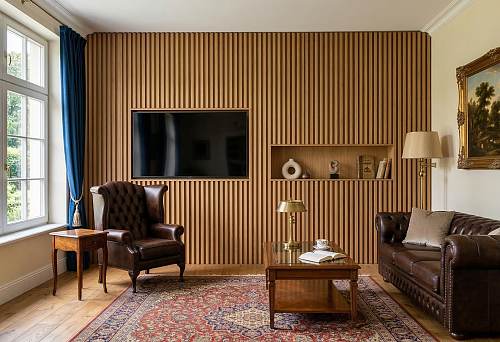
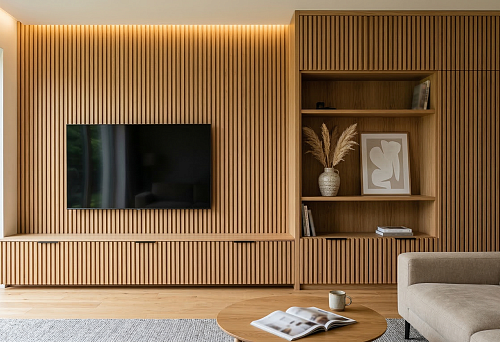
Wooden moldingsRound-section elements create unique decorative compositions on walls and ceilings. They can be used to frame paintings and mirrors, create panels, or geometric patterns. The play of light on curved surfaces creates three-dimensional effects, adding depth and expressiveness to the interior.
In the furniture industry, round molding is widely used in manufacturing exclusive furniture. Turned legs for tables and chairs, decorative inlays on facades, and furniture handles—all these elements are made from round molding of various diameters. Modern designers use round wooden elements to create contrast with the straight-line geometry of standard furniture.
Ceiling structures using round molding allow for unique architectural solutions. Wooden beams with round cross-sections imitate vintage ceiling structures in country or loft styles, adding authenticity and character to the interior.
Modern Trends in Interior Design
Modern interior design demonstrates growing interest in organic forms and natural materials. Round wooden molding fits perfectly into this trend, offering an alternative to the strict geometry of minimalism.
Biophilic design, gaining popularity in recent years, actively uses natural forms and materials to create a connection between people and nature. Round wooden elements in interiors evoke associations with tree trunks, creating forest-like associations and contributing to the psychological comfort of home inhabitants.
Scandinavian style, with its emphasis on natural materials and functionality, widely uses round wooden molding of light-colored species. Birch and pine round elements create the characteristic atmosphere of northern nature and coziness.
Eco-style requires materials with minimal processing, preserving the natural beauty of wood. Round profiles with natural texture, coated with transparent eco-friendly finishes, perfectly align with the principles of this direction.
Modern classicism uses round molding to create refined interiors, where traditional forms are interpreted in a contemporary context. Simplified profiles, minimalist shapes, and noble wood species create timeless interiors.
Technical Specifications and Quality Standards
High-quality round wooden molding must meet strict technical requirements that ensure its durability, functionality, and aesthetic properties. Understanding these parameters will help make the right choice when purchasing.
Geometric accuracy is a critical parameter for round molding. Deviations from nominal diameter should not exceed ±0.3 mm for items up to 50 mm in diameter and ±0.5 mm for larger profiles. Ovality of the cross-section should not exceed 0.5 mm to ensure quality jointing of elements.
The moisture content of wood for internal use should be 8±2%. This parameter is critically important for the dimensional stability of finished products. Exceeding the allowable moisture content may lead to cracking and deformation during use.
Surface quality is determined by roughness, which for items intended for transparent finishing should not exceed Ra 3.2 micrometers. The surface should be uniformly processed along the entire length without scratches, nicks, or tool marks.
Wood grade affects the appearance and cost of products. Grade 'Extra' implies the complete absence of visible wood defects. Grade 'A' allows small healthy knots up to 3 mm in diameter. Grade 'B' may contain larger knots and small resin pockets.
Strength characteristics depend on wood species and grain direction. For structural applications, bending and compression strength are important indicators. Oak and beech have the highest strength characteristics among traditional species.
Innovative Production Technologies
The modern woodworking industry continuously introduces new technologies, enabling higher product quality and expanded design possibilities.Round wooden trim to buyToday, this means gaining access to the most advanced achievements in the industry.
CNC technologies have revolutionized the production of round molding. Modern CNC lathes can create profiles of incredible complexity with reproducible precision. Programmable systems allow manufacturing items according to the customer's individual drawings without additional fixtures.
Laser processing is used to create decorative elements on round surfaces. Laser engraving allows applying delicate ornaments, text, and logos without mechanical impact on the material. This technology is especially in demand for manufacturing exclusive items.
Thermal modification of wood improves its service properties. Processing at high temperatures in an oxygen-free environment increases dimensional stability, reduces hygroscopicity, and enhances wood's resistance to biological degradation.
Composite technologies allow creating round profiles with improved properties. Reinforcing wood with fiberglass or carbon fibers increases the strength of products, which is especially important for structural elements.
Nanotechnologies in protective coatings provide round molding with additional resistance to external influences. Nanocomposite varnishes create super-strong coatings with water- and dirt-repellent properties.
Features of installing round molding
Installing round wooden molding requires special skills and tools, as curved surfaces create additional difficulties in fastening and joining elements. Quality installation is the guarantee of the longevity and aesthetic appeal of the finished structure.
Surface preparation for installing round elements should consider the specifics of their fastening. Unlike flat profiles, round elements have a smaller contact area with the base, requiring more careful surface preparation and selection of fastening methods.
Marking locations for installing round molding is performed using special templates and measuring tools. Laser levels and plumb bobs are used to ensure element parallelism. Accuracy of marking is critically important for achieving a quality result.
Cutting round elements requires special tools. Circular saws must be equipped with clamping devices to prevent rotation of the round blank during cutting. For clean cuts, saw blades with a large number of teeth are used.
Joining round elements at corners presents a special challenge. Simple 45-degree beveling does not always ensure quality connection due to differences in diameter or ovality of profiles. Often, individual fitting of each joint is required.
Fastening of round molding can be done in various ways depending on its purpose and load. Decorative elements are often fastened with adhesive or hidden fasteners. Structural elements require more secure fastening using screws or bolted connections.
Final finishing and protective coatings
The choice of finish for round wooden molding depends on usage conditions, wood species, and design requirements. The right finish not only protects wood from external influences but also highlights its natural beauty.
Transparent finishes preserve the natural appearance of wood, highlighting its texture and color. Modern water-based varnishes are virtually odorless, dry quickly, and create a durable protective film. For curved surfaces, especially important is even distribution of the finish, achieved using special application methods.
Oil-based finishes create a matte surface with pleasant tactile sensations. They emphasize the naturalness of wood and are easily repairable for localized damage. Oil-based finishes are especially popular for interiors in an ecological style.
Wax-based finishes provide a soft silk-like sheen and pleasant aroma. They are suitable for items not subjected to intense mechanical stress. Wax finishes require regular renewal but create a unique atmosphere in interiors.
Staining finishes allow changing the color of wood while preserving its texture. Water-based stains ensure even coloring of curved surfaces. For achieving intense shades, multi-layer staining is applied.
Opaque finishes completely hide the wood's texture, allowing any desired color to be achieved. Enamels create a strong glossy surface resistant to mechanical impacts and moisture. They are especially popular for painting elements white in Scandinavian interiors.
Ecological Aspects and Certification
In an era of growing ecological awareness, choosing materials for interiors becomes an important ethical question. Round wooden trim made from certified wood represents an ecologically responsible choice for modern consumers.
FSC (Forest Stewardship Council) certification guarantees that the wood comes from forests managed according to sustainable forestry principles. This means not only preserving forest resources for future generations but also adhering to social and economic standards.
The carbon footprint of wooden products is significantly lower than that of synthetic analogs. Wood absorbs carbon dioxide from the atmosphere during tree growth, and this carbon remains bound within the products throughout their service life. Thus, using wooden trim contributes to reducing greenhouse gas concentrations in the atmosphere.
The biodegradability of wood allows it to return to the natural cycle of substances after its service life. Unlike plastic materials, wooden products do not pollute the environment and can be disposed of in an ecologically safe manner.
Local production of round wooden trim reduces transportation costs and associated carbon dioxide emissions. Using regional wood species supports local economies and reduces environmental impact.
The absence of toxic emissions makes natural wood safe for human health. Unlike composite materials, natural wood does not contain formaldehyde, phenols, or other harmful substances.
Economic aspects of purchasing
The cost of round wooden trim is influenced by multiple factors; understanding them helps make an economically sound decision when purchasing. Price reflects not only production cost but also long-term value of investing in quality material.
Wood species is the primary pricing factor. Coniferous species offer the most affordable prices with decent quality. Hardwood species are more expensive but offer superior aesthetic and performance characteristics. Exotic species have premium pricing justified by their unique properties.
The diameter of the product affects production complexity and material consumption. Thin profiles up to 20 mm in diameter are relatively inexpensive to produce. Larger diameter items require high-quality, defect-free raw materials and more complex equipment, which affects the price.
The quality of processing directly affects the cost of the product. Profiles with mirror-like surfaces made from premium-grade wood are significantly more expensive than standard products. However, cutting corners on quality often results in additional costs for repairs or premature replacement.
Order volume significantly affects the cost per linear meter. Manufacturers offer substantial discounts for large orders. However, storage costs and the risk of material spoilage during long-term storage should be considered.
Seasonal demand affects prices. Traditionally, the lowest prices occur during winter months when construction activity is minimal. Planning purchases with seasonal fluctuations in mind can result in significant savings.
Market Development Trends
The market for round wooden trim shows steady growth, driven by increasing interest in natural materials and individual design solutions. Understanding market trends helps make choices that remain relevant in the long term.
Product customization is becoming a key trend. Consumers increasingly demand items in custom sizes and specifications. Modern CNC technologies make such customization economically feasible even for small batches.
Ecological certification is becoming a mandatory requirement for premium products. Consumers are willing to pay a premium for products made from certified wood sourced from sustainably managed forests.
Digital sales transformation changes the way customers interact. Online catalogs with 3D visualization allow customers to see how products will look in interiors. Digital technologies simplify the ordering and tracking process.
Production automation improves quality and reduces product cost. Robotic systems ensure stable parameters and eliminate human factor influence on product quality.
Development of wood-based composite materials expands design possibilities. New materials combine the beauty of natural wood with improved performance characteristics.
Care and Operation Rules
Proper care of round wooden trim ensures its attractive appearance and functional properties for many years. Natural wood requires more careful attention than synthetic materials, but with simple rules, it can serve for decades.
Regular cleaning of curved surfaces has specific features. Dust and dirt are removed with soft dry cloths or special brushes following the surface curvature. Wet cleaning is allowed only with slightly damp cloths; excess moisture may penetrate the wood and cause deformation.
Climate control is especially important for round wooden elements, as they are more susceptible to deformation with humidity changes. Optimal relative air humidity is 45-65%. Sudden temperature and humidity fluctuations may cause cracking or warping.
Protection against mechanical damage includes careful handling of round elements during cleaning and furniture rearrangement. Scratches on curved surfaces are more noticeable than on flat surfaces, requiring extra care.
Restoring finishes on curved surfaces requires special skills and tools. When scratches or damage to the varnish finish appear, local restoration using appropriate materials and techniques is necessary.
Preventive inspections allow identifying problems at an early stage. Special attention should be paid to joints, fastening points, and areas subjected to high loads or moisture exposure.
Supplier selection and quality criteria
Choosing a reliable supplier of round wooden trim is a critical decision affecting the final product quality. The market offers numerous manufacturers providing products of varying quality and price levels.
The manufacturer's reputation is an important indicator of product quality. Companies with a long history, positive customer reviews, and a portfolio of successful projects deserve greater trust. Recommendations from professional designers and builders are also a valuable source of information.
Production capacity and technological level determine a supplier's ability to manufacture quality products. The presence of modern equipment, automated lines, and quality control systems indicates a serious approach to production.
Certification and compliance with standards confirm product quality. The presence of ISO 9001, FSC, and other recognized standards guarantees adherence to established requirements for quality and environmental safety.
Product assortment and customization options are important for solving specific tasks. A wide range of diameters, wood species, and product lengths allows finding the optimal solution for any project.
Service support includes consultations on product selection, technical support during design, and assistance in calculating material requirements. Qualified specialists can significantly simplify the selection and procurement process.
Logistical capabilities affect delivery time and cost. Own transport, an extensive dealer network, and streamlined logistics processes ensure timely delivery of products in good condition.
Integration into various interior styles
The versatility of round wooden trim is demonstrated by its ability to seamlessly integrate into interiors of various styles. From classic to ultra-modern design directions — round wooden elements find application and create unique accents.
Classic interiors traditionally use round trim to create architectural elements. Turned columns, stair balusters, decorative moldings emphasize a connection to historical traditions. Using valuable wood species with rich texture enhances the impression of luxury and respectability.
Scandinavian style values round wooden elements for their naturalness and connection to nature. Light-colored species — birch, pine, beech — create a characteristic atmosphere of northern coziness. Simple forms, minimal processing, and natural colors highlight the philosophy of the style.
Modern interiors use round trim as a contrasting element against dominant straight lines. Wooden round profiles soften the rigidity of minimalism, adding warmth and organic feel. The contrast between natural wood and modern materials creates expressive compositions.
Loft interiors find in round wooden trim a way to add naturalness to industrial aesthetics. Roughly processed beams, weathered surfaces, and the contrast of wood and metal create the characteristic atmosphere of repurposed industrial spaces.
Eco-style maximally utilizes the potential of natural wood. Round elements with preserved natural texture and minimal processing create a connection to nature. Using local wood species highlights ecological responsibility.
Innovative solutions and the future of the industry
The wood processing industry is constantly developing, adopting new technologies and materials. The future of round wooden trim is linked to innovative solutions that expand application possibilities and improve performance characteristics.
Hybrid materials combine wood with other components to achieve unique properties. Reinforcement with carbon fibers increases strength, adding polymers improves moisture resistance. Such composites expand the application range of round trim.
Smart materials with changing properties open new possibilities. Wood treated with special compounds can change color depending on temperature or humidity, creating dynamic interiors.
3D printing with wooden composites allows creating complex shapes impossible with traditional processing. Additive manufacturing technology opens new horizons for designers and architects.
The Internet of Things is penetrating into wood processing. Smart sensors can monitor the condition of wooden structures, warning of the need for maintenance or repair.
Biotechnology changes wood properties at the cellular level. Genetically modified wood may have improved strength, pest resistance, and growth rate.
Frequently asked questions
What diameters of round wooden trim are most popular?
The most in-demand diameters are from 10 to 50 mm. Thin profiles of 10-20 mm are used for decorative elements, inlays, and edging. Diameters of 20-30 mm are popular for making furniture handles and decorative strips. Large profiles of 40-50 mm are used for architectural elements, balusters, and support structures. Custom-made items of any diameter are possible upon request.
How to correctly calculate the amount of material?
Calculating the amount of round trim begins with detailed measurement of all structural elements. An additional 10-15% is added to the result for trim waste and possible installation errors. When using standard lengths (usually 2-3 meters), the number of joints is taken into account. For complex structures, it is recommended to create a detailed layout scheme of elements.
Can round wooden trim be used in rooms with high humidity?
Use in high-humidity conditions is possible under certain conditions. It is necessary to choose moisture-resistant wood species (larch, oak, teak), provide quality protective treatment with special compounds, and organize effective room ventilation. In areas of direct contact with water, alternative materials are recommended.
How to ensure quality joints of round elements?
Quality joints require precise cutting at required angles using special fixtures. For straight-line connections, ends must be perfectly perpendicular to the product's axis. Angular connections require complex fitting considering the profile's geometry. It is recommended to use special connecting elements or consult professional installers.
What tools are needed to work with round trim?
Basic tools include: a circular saw with a clamping device for round blanks, a drill with adjustable speed, grinding machines with appropriate attachments, measuring tools (calipers, square), fasteners. Specialized fixtures may be required for professional work.
How does wood species affect performance properties?
Wood species significantly affects product properties. Coniferous species are characterized by availability and good workability, but are less strong. Hard deciduous species (oak, beech, maple) have high strength and durability, but require more complex processing. Each species has a unique texture and color, influencing the aesthetic qualities of the product.
What types of finishing are most suitable for round wooden trim?
The choice of finish depends on usage conditions and design requirements. Lacquers provide strong protection and highlight wood texture. Oil-based coatings create a natural matte finish and are easy to restore. Enamels allow any color but hide the texture. For outdoor use, special weather-resistant coatings are required.
How to ensure the longevity of round wooden trim?
Longevity is ensured by selecting the right wood species for specific conditions, quality protective treatment, professional installation, and regular maintenance. It is important to maintain a stable microclimate indoors, avoid sudden temperature and humidity changes, and promptly renew protective coatings.
Is it worth ordering custom-made sizes?
Custom manufacturing is justified for non-standard requirements regarding size, wood species, or profile. Modern CNC technologies make such orders economically feasible even for small batches. The cost increases by 20-40%, but in return, you get precise compliance with project specifications. The minimum order is usually 50-100 linear meters.
How to check the quality of round wooden trim upon receipt?
Upon receipt, check several key parameters. Wood moisture should be 8-12%, which can be verified with a moisture meter. Geometry is checked with a caliper — diameter deviations should not exceed ±0.3 mm. The surface should be smooth, without scratches or chips. Ends should be flat and perpendicular to the axis of the product. Marking with species, moisture level, and manufacturing date is mandatory.
What errors are most commonly made when working with round trim?
Main errors include incorrect diameter selection for specific applications, using material with excessive moisture, inaccurate end cutting, poor fastening without considering the characteristics of round cross-sections. Often, the necessity of material acclimatization before installation is underestimated. Another common mistake is attempting to use standard fasteners not designed for round surfaces.
Conclusion
Round wooden trim is a unique material combining functionality and aesthetic appeal. Its organic forms and natural beauty make it an indispensable element in interiors where naturalness, eco-friendliness, and individuality are valued.
Modern manufacturing technologies have raised the quality of round wooden trim to a fundamentally new level. Precision machining on CNC machines, strict parameter control, and use of high-quality raw materials ensure consistent characteristics and longevity of finished products.
Growing interest in natural materials and eco-friendly solutions makes round wooden trim increasingly popular. Designers appreciate its ability to create soft, organic forms in contrast to the rigid geometry of modern interiors. Consumers choose it for its eco-friendliness, durability, and the unique beauty of natural wood.
Choosingbuy round wooden trimtoday means investing in a material that will remain relevant for many years. Natural wood is not subject to fashion trends; its beauty is timeless, and its performance characteristics have been proven over centuries.
Correct supplier selection, understanding technical specifications, following installation and maintenance rules will ensure maximum value from this exceptional material. Round wooden trim can transform an ordinary space into a cozy, warm, and harmonious environment filled with nature's beauty.
The company STAVROS deserves special attention as a producer of high-quality wooden trim. Years of experience, modern equipment, and strict quality control at every production stage make STAVROS a reliable partner for those who value quality and professionalism. STAVROS products embody the best traditions of woodworking, enriched by modern technologies and innovative solutions. Choosing STAVROS means you are not just purchasing material, but guaranteeing quality, durability, and beauty that will delight you for many years. STAVROS is synonymous with excellence in the world of wooden trim, where every product is crafted with love for wood and respect for craftsmanship traditions.