Article Contents:
- Psychology of perception: how a frame affects the impression of a painting
- The invisible power of framing
- Historical traditions and modern trends
- Technological advantages of unfinished wood
- Material quality as the basis of durability
- Wood species and their characteristics
- Economic aspect of selection
- Analysis of total cost of ownership
- Investment attractiveness
- Processing and surface preparation technologies
- Preparation operations
- Priming as the basis of quality
- Decorative Finishing Techniques
- Classic painting techniques
- Special Effects and Techniques
- Modern materials and technologies
- Choosing a frame to match the style of the artwork
- Classical painting
- Contemporary art
- Practical aspects of purchasing and selection
- Determining dimensions and calculating material
- Material quality criteria
- Logistical aspects
- Tools and consumables
- Basic toolset
- Consumables
- Frame assembly technology
- Element Preparation
- Joining elements
- Final Connection Finishing
- Working with different formats
- Small formats
- Medium and large formats
- Non-standard formats
- Conclusion
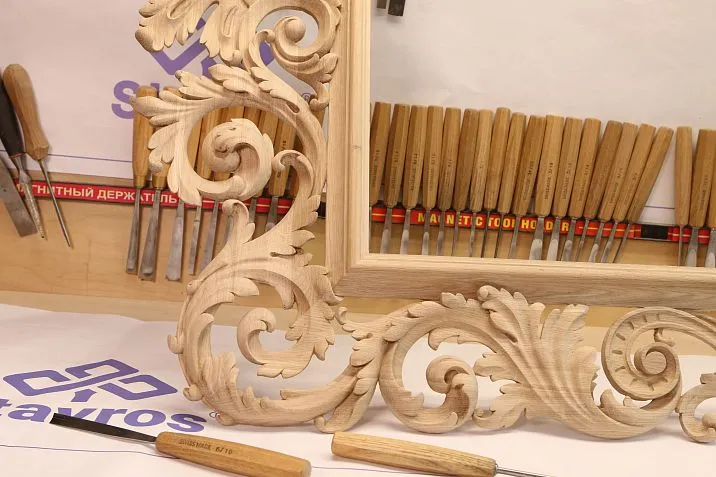
Have you ever stood before a work of art in a gallery and wondered: what makes one painting unforgettable, while another is merely passing? The secret often lies not only in the artist's skill, but also in how the artwork is presented to the viewer. Unfinished wooden frames for paintings for sale — is the first step toward creating an ideal frame that not only protects the canvas but also becomes an inseparable part of the artistic expression.
An unfinished wooden frame is a blank canvas for the designer's creativity. It allows creating a frame that will perfectly harmonize with the artwork, highlight its strengths, and conceal its flaws. But most importantly, it serves as the foundation for implementing any design concept, from classic gilding to ultra-modern minimalist solutions.


Psychology of perception: how a frame affects the impression of a painting




The invisible power of framing
The human brain is structured such that we perceive objects not in isolation, but within the context of the surrounding space. The frame creates a boundary between the artwork and the surrounding world, focusing the viewer's attention on the content of the painting. A properly chosen frame can enhance the emotional impact of the artwork by 40-60%.
The color of the frame affects the perception of colors in the painting. A dark frame makes light areas of the artwork appear brighter, creating a contrast effect. Conversely, a light frame softens transitions and creates a sense of airiness. An unfinished wooden base allows selecting the exact shade that best highlights the specific features of the artwork.
The profile width also plays a psychological role. Narrow frames create a sense of modernity and minimalism, while wide frames convey solidity and classicism. Solid wood frames allow varying these parameters over a wide range, creating exactly the effect intended by the designer.
Our factory also produces:


Historical traditions and modern trends
The history of framing artworks spans several centuries. In the Renaissance, frames were an inseparable part of a painting, often created by the artists themselves or under their direct supervision. Baroque frames amazed with their ornate carving and gilding, romantic frames with their elegant lines, and modernist frames aimed for simplicity and functionality.
Modern trends in art framing exhibit remarkable diversity. Classical techniques coexist with avant-garde solutions, minimalism with eclecticism. An uncolored wooden frame becomes a universal base adaptable to any style or direction.
Museum practice demonstrates the importance of an individual approach to each artwork. What looks great on one painting may not suit another. That is why professional galleries and museums prefer working with uncolored frames, creating a unique frame for each exhibit.
Get Consultation
Technological advantages of uncolored wood
Material quality as the basis of durability
Wood is a living material with unique properties. Unlike synthetic materials, wood 'breathes,' reacting to changes in humidity and temperature. This quality can be an advantage or a disadvantage, depending on how properly the material is prepared and processed.
Wood moisture is a critically important parameter for frames. The optimal value is 8-12% for indoor use. Exceeding these values will cause frame deformation after painting, while insufficient moisture may lead to cracking. Quality manufacturers control this parameter at all production stages.
The geometric stability of the frame depends not only on humidity but also on the proper drying of the wood. Chamber drying with controlled temperature and humidity regimes removes internal stresses in the material. This prevents warping and cracking during use.
Wood species and their characteristics
The choice of wood species determines not only the appearance of the future frame but also its performance characteristics. Each species has its own features that must be considered when selecting the material.
Spruce is the most accessible and widely used material for making frames. Softwood is easy to process, holds fasteners well, and has a pleasant pine aroma. However, the presence of resin pockets may cause problems during painting — resin seeps through the paint, creating dark spots. This issue is resolved by special surface preparation.
Larch has a more uniform structure and less resin content compared to spruce. Light-colored wood with fine grain is ideal for creating frames for light finishes. Larch accepts stain and paint well, providing even coverage.
Oak is a premium material with exceptional strength and durability characteristics. Hardwood with pronounced grain creates frames capable of serving for centuries. The natural beauty of oak grain often requires only a transparent protective finish, highlighting the natural fiber pattern.
Beech has a dense, uniform structure, ideal for creating smooth painted surfaces. The absence of pronounced grain allows for museum-quality finishes. Beech stains well, enabling imitation of more expensive wood species.
Economic aspect of selection
Total Cost of Ownership Analysis
When choosing between a pre-painted frame and an uncolored blank, it is important to consider not only the initial cost but also the total cost of ownership over the product's lifecycle.
The initial savings when purchasing an uncolored frame amount to 30-50% of the cost of a ready-made equivalent. This amount must be added to the cost of finishing materials — primer, paint, varnish — as well as tools, if not already available. When performing work independently, total savings are usually 20-30%.
However, the true value of an uncolored frame becomes apparent in the long term. The ability to renew the finish without replacing the base allows adapting the frame to a changed interior or personal preferences. A quality wooden base can serve for decades, requiring only periodic refreshment of the finish.
Professional artwork framing is an expensive service, often costing several times more than the frame itself. Mastering the skills of self-framing opens opportunities for significant savings when working with an art collection.
Investment Appeal
A well-made and professionally framed frame can be considered an investment. Handcrafted unique frames are valued by collectors and may increase the artwork's value.
Antique frames from the 18th-19th centuries today cost thousands of dollars, and their value continues to rise. Creating a frame in a historical style using traditional techniques and materials can be not only a way to frame a painting but also an investment in the future.
Solid wood products are particularly valuable to collectors. Unlike composite or synthetic materials, solid wood develops a noble patina over time, increasing its aesthetic and material value.
Surface processing and preparation technologies
Preparation operations
The quality of the final finish depends 80% on proper surface preparation. Even the highest-quality uncolored frame requires additional treatment before applying the finish.
Sanding is the first and most important stage of preparation. The process begins with coarse grinding using P120-P150 grit to remove marks from mechanical processing and level the surface. Gradually, finer grits are used, ending with P220-P320 grit to create a perfectly smooth surface.
The direction of sanding is critically important. All movements must be performed along the grain of the wood. Crosswise scratches will be visible through any finish and spoil the appearance of the finished frame. Special attention is paid to corners and joints.
Surface dusting is performed after each sanding stage. Dust remaining in the wood pores may cause defects in the finish. Dust is removed using special brushes, vacuum cleaners, or compressed air blowing.
Priming as the Foundation of Quality
Priming performs several critically important functions: it equalizes the absorbency of the surface, blocks tannins and resins from penetrating into the finish, and ensures reliable adhesion between the wood and paint.
The choice of primer depends on the type of wood and the intended finish. For coniferous species with high resin content, isolating primers based on shellac or synthetic resins are recommended. Deciduous species can be primed with universal compositions.
The technique of applying primer requires special attention to the uniformity of coverage. The brush should move along the grain, blending the material without creating drips. The thickness of the layer is controlled by the pressure on the brush and the speed of movement.
The interlayer drying time is critically important for the quality of the finish. Applying the next layer on an insufficiently dry surface may result in defects — bubbles, peeling, or uneven gloss.
Decorative finishing techniques
Classic painting methods
Oil paints are a traditional material for framing, providing deep, saturated color and high coverage. The slow drying time allows for correcting defects during application, but requires patience and adherence to technological pauses.
Preparing oil paint includes thorough mixing and, if necessary, thinning to the working consistency. Too thick paint creates visible brush strokes; too thin paint causes drips and uneven coverage.
The technique of applying oil paint requires using high-quality brushes with natural bristles. Synthetic brushes may leave streaks and do not provide adequate blending. Each stroke should slightly overlap the previous one to create an even finish.
Acrylic paints are characterized by fast drying and lack of odor, making them preferable for use in residential spaces. Modern acrylic compositions match oil paints in finish quality and often surpass them in certain parameters.
Special effects and techniques
Patination is the art of creating an aged effect, transforming a new frame into a piece with history. The technique includes applying a base color, allowing it to dry completely, then applying a patina composition and partially removing it.
The base color is chosen based on the desired final effect. For imitating old gold, warm yellow or ochre tones are used; for aged silver, cool gray or bluish shades. The patina composition is usually several tones darker than the base.
The technique of removing patina determines the character of the final finish. A soft cloth creates smooth transitions, while a stiff brush produces more contrasting effects. Partial removal of patina mimics natural wear in areas of frequent contact.
Gilding is the pinnacle of decorative craftsmanship, requiring special skills and materials. Traditional gilding with gold leaf involves applying a special adhesive (mordant), waiting a specific time to achieve the desired tackiness, then carefully laying down gold leaf sheets.
Modern Materials and Technologies
Metallic paints are a modern alternative to traditional gilding, providing a similar effect with significantly less labor. High-quality compositions contain real metallic particles, creating a convincing imitation of precious metals.
Surface preparation for metallic paints requires special care. Any defects will be especially noticeable on a glossy surface. The primer must be perfectly smooth, without brush or roller marks.
The technique of applying metallic paints differs from regular painting. The material is applied in thin layers with intermediate drying. The direction of brush strokes should be uniform to create a consistent gloss.
Crackle finishes allow creating an effect of aged, cracked paint. A special composition is applied between paint layers and, upon drying, forms a characteristic network of cracks. The size and character of the cracks are controlled by the thickness of application and drying conditions.
Choosing a frame to match the style of the artwork
Classical painting
Works by old masters require appropriate framing that highlights their historical value and artistic significance. Classical furniture and interior items serve as a guide for selecting the frame style.
Portraits from the Renaissance and Baroque periods look best in wide frames with elaborate carving and gilding. Such framing does not compete with the painting but complements it, creating a unified artistic whole. An uncolored wooden base allows recreating authentic gilding techniques.
Landscape paintings from the 18th-19th centuries require a more restrained approach. Wide frames with a classic profile, matte gilding, or dark finish emphasize the depth of the image without distracting from the painting’s content.
Dutch masters' still lifes look excellent in dark frames made of oak or other hardwoods. The natural wood texture harmonizes with the realism of the image, creating a sense of unity between the material world of the painting and its frame.
Contemporary art
Works by contemporary artists require a different approach to framing. Here, it is less about following historical canons and more about emphasizing the individuality of the artistic expression.
Abstract painting often benefits from minimalist framing. Narrow frames in neutral colors do not compete with the artist’s color and compositional choices. Modern Furniture can serve as an inspiration for choosing a color palette.
Graphic works — drawings, engravings, lithographs — require delicate framing. Thin frames in light tones highlight the elegance of lines without overwhelming the composition. It is important to consider the passe-partout size — graphic works almost always require 'air' around the image.
Photography as an art form develops its own framing traditions. Black-and-white works often benefit from contrasting frames — white frames for dark images, black for light ones. Color photography requires a more nuanced approach to the frame’s color scheme.
Practical aspects of purchasing and selection
Determining sizes and calculating material
Accurate determination of dimensions is the first step toward successfully framing a painting. The frame size must correspond not only to the size of the artwork itself but also account for the thickness of the mat board, glass, passe-partout, and backing.
Standard frame sizes correspond to international canvas and paper formats. However, many artworks have non-standard dimensions, especially works by contemporary artists. In this case Unfinished wooden frames for paintings for sale ordering custom sizes becomes the optimal solution.
Calculating material requirements includes not only the frame perimeter but also a margin for trimming corners. The standard allowance is 10–15% of the total length. For complex geometries or decorative elements, the allowance may be increased to 20–25%.
The depth of the frame miter should correspond to the thickness of the "package" — the total thickness of all elements to be inserted into the frame. Insufficient depth will make installation impossible, while excessive depth will create an unattractive appearance from the back side.
Material quality criteria
Wood moisture is a critically important parameter that must be controlled at all stages. The optimal moisture level for indoor use is 8–12%. Exceeding these values will cause frame deformation after painting.
Wood grade determines the number of allowable natural defects. Extra-class wood has no visible knots or other defects; first-grade wood allows a small number of healthy, light-colored knots; second-grade wood may contain more noticeable defects.
Geometric accuracy of the profile affects the quality of frame assembly. Dimensional deviations must not exceed ±0.5 mm; straightness is visually checked when laying the profile on a flat surface.
Surface finish quality determines the volume of preparatory work. A smooth, uniform surface requires minimal additional processing. Mechanical processing marks and unevenness increase preparation labor costs.
Transportation of oak balusters requires special precautions due to their weight and value. Special packaging is used to prevent mechanical damage.
Transporting wooden frames requires special attention to protection against mechanical damage. Profile corners are especially vulnerable to chipping and dents. Quality packaging should provide reliable protection at a reasonable cost.
Storage conditions affect material preservation until processing. Sudden changes in humidity may cause profile deformation. Optimal conditions: temperature 18–22°C, humidity 40–60%.
Supply planning must account for seasonal demand fluctuations and possible production delays. Ordering materials in advance helps avoid project schedule disruptions and allows obtaining more favorable prices.
Tools and consumables
Basic tool set
Miter saw — the primary tool for preparing frame elements. Accuracy of 45-degree cuts is critically important for quality corner joints. The blade must be specifically designed for fine wood cutting.
Stop saw — an alternative to the miter saw for small-scale work. A quality stop saw provides cutting accuracy sufficient for most applications. It is important to monitor blade sharpness and material alignment.
Sanding equipment accelerates surface preparation. Eccentric sanders provide high-quality finishing without risk of cross-grain scratches. For small jobs, handheld sanding blocks are sufficient.
Brushes of various sizes and types — the primary tools for applying coatings. Natural bristles are better suited for oil and alkyd compositions, while synthetic brushes are optimal for acrylics.
Consumables
Abrasive materials come in various types — sandpaper, sanding screens, abrasive pads. Each type has its advantages and optimal applications. Abrasive quality affects processing efficiency and surface cleanliness.
Primers vary by composition and purpose. Universal primers are suitable for most applications, while specialized primers provide better results under specific conditions. Isolating primers block penetration of resins and tannins.
Finish materials — paints, varnishes, oils — are selected based on requirements for appearance and performance characteristics. Material quality directly affects coating durability and appearance.
Auxiliary materials — solvents, hardeners, additives — allow modification of base composition properties. Proper use of additives can significantly improve coating characteristics.
Frame assembly technology
Element preparation
Accurate marking of frame elements is the foundation of quality assembly. Dimensions must account not only for external dimensions but also for profile characteristics, miter depth, and wall thickness. Errors in marking may make quality assembly impossible.
45-degree corner cuts require special precision. Even minor deviations from the angle will result in visible gaps at joints. Cut quality affects joint strength and the final appearance of the frame.
Element fitting is performed before final assembly. All joints must be tight, with no gaps or steps. Additional end surface processing may be required if necessary.
Dry assembly allows identifying and correcting defects before applying adhesive. Frame geometry, joint tightness, and dimensional accuracy are checked. Correcting errors at this stage is significantly easier.
Connection elements
PVA wood glue is the main material for joining frame elements. It provides a strong bond when applied correctly and is safe for health. The open time is 5-10 minutes, which is sufficient for precise fitting of parts.
The application technique of glue affects the strength of the joint. A thin, even layer provides better adhesion than a thick, uneven one. Excess glue squeezed out during pressing must be immediately wiped away with a damp cloth.
Clamping devices provide even pressure during gluing. Special corner clamps allow simultaneous clamping of all four corners of the frame. The pressure must be sufficient for a tight joint but not excessive to avoid deforming the profile.
The holding time under pressure depends on the type of glue and environmental conditions. The standard holding time for PVA glue is 2-4 hours at 20°C. Full joint strength is achieved after 24 hours.
Final connection treatment
Cleaning excess glue is performed after the joint is fully dry. Using a sharp knife, carefully trim off excess glue, trying not to damage the wood. Remaining glue is removed by sanding with fine abrasive.
Filling small defects — chips, scratches, loose joints — is done with special wood putties. The putty color should match the wood or the future finish.
Final sanding of the entire frame surface levels minor defects and prepares the surface for finishing. Use fine abrasive grit P220-P320. Pay special attention to joint areas.
Quality control includes checking the frame’s geometry, joint strength, and surface quality. The diagonals of a rectangular frame must be equal, and angles must be exactly 90 degrees. Any defects must be corrected before applying the finish.
Working with Different Formats
Small Formats
Small paintings and graphic works require a special approach to framing. Thin frames emphasize the intimacy of the artwork without overwhelming the composition. Moldings and Decorative Elements of small cross-section are ideal for such work.
Accuracy in processing small formats is especially important. Any defects will be particularly noticeable on a small frame. Quality of corner cuts, surface smoothness, and coating uniformity require heightened attention.
Mounting small-format frames can be done in various ways. Traditional hinges are suitable for works weighing up to 1-2 kg; heavier frames require special mounting hardware. It is important to consider the wall material and load distribution.
Medium and Large Formats
Frames for medium and large-format artworks require increased attention to structural strength. The significant weight of the glass and artwork itself creates substantial loads on joints. The frame profile must be sufficiently robust to ensure rigidity.
Transporting large-format frames presents certain challenges. Large dimensions make it difficult to pass through doorways and carry up stairs. Sometimes, it is necessary to plan for disassembling the frame for transport.
Glazing large frames requires special glass or alternative materials. Ordinary 2-3 mm glass may not support its own weight over large areas. Tempered glass or acrylic materials provide the necessary strength.
Non-standard Formats
Circular and oval frames require special manufacturing techniques. Wood bending is a complex process requiring specialized equipment and skills. An alternative method is gluing segments followed by mechanical processing.
Polygonal frames complicate the process of cutting corners. Each angle has its own size, requiring precise calculations and careful marking. Errors in angles accumulate and may make high-quality assembly impossible.
Frames with complex configurations — arched, with protrusions, multi-tiered — require an individual approach to each element. Standard techniques may not be applicable, requiring the development of special methods and fixtures.
Conclusion
Choosing unfinished wooden frames is a choice of professionals who understand the value of an individual approach to each artwork. In a world of standardized solutions, such frames remain a bastion of creativity and craftsmanship, allowing the creation of frames perfectly aligned with the artistic vision.
Economic advantages are obvious — the possibility of significant savings while maintaining high-quality results. However, the true value of unfinished frames lies in the creative freedom they provide. From classic gilding to avant-garde color solutions — everything becomes possible with a quality wooden base.
Technological progress in materials and tools makes working with wood increasingly accessible to a broad range of art enthusiasts. Modern paints and varnishes provide museum-quality finishes for home use. Quality tools allow achieving professional results without specialized training.
The importance of choosing a reliable supplier of materials cannot be overstated. The quality of the initial stock determines all subsequent stages of work. Saving on materials may result in significant additional costs in time and money for correcting defects.
Market prospects for wooden frames are linked to growing interest in art and interior design. The younger generation increasingly values uniqueness and individuality, creating demand for non-standard solutions in framing artworks.
Ecological trends also favor natural materials. Wood is a renewable resource, and its production causes minimal harm to the environment. Unlike synthetic alternatives, wooden frames are fully recyclable at the end of their life cycle.
STAVROS continues the traditions of high-quality woodworking production, offering a wide range of unfinished frames and related materials for both professional and amateur use. Years of experience, modern equipment, and unwavering commitment to quality make STAVROS a reliable partner for anyone who appreciates the beauty of natural wood and strives for perfection in framing artworks. STAVROS understands that each frame is not just a border, but an essential part of the artistic expression, requiring special attention to detail and execution quality.