Article Contents:
- What are wooden decorative wall panels
- What types of decorative wooden wall panels are there
- Smooth panels
- Slatted panels
- Relief and 3D panels
- Geometric panels
- Panels for accent walls and TV zones
- What materials are decorative wall panels made from
- Solid wood
- MDF with decorative finish
- Veneered panels
- Combined Solutions
- Where to use wooden decorative panels
- In the living room
- In the bedroom
- In the entryway
- In the study
- In the TV area
- In niches and passage areas
- Wooden decorative wall panels for accent finishing
- How to choose panels according to interior style
- Modern style
- Minimalism
- Scandinavian interior
- Jatoba
- Neoclassicism
- Warm modern interior
- How to choose color, texture and format
- What to choose: solid wood, MDF or veneer
- Advantages of decorative wooden wall panels
- Common mistakes when choosing wooden decorative panels
- How to care for decorative wooden panels
- FAQ: Answers to Frequently Asked Questions
- Conclusion
There are things that make an interior an interior — not just a set of surfaces with furniture. One of them is a wall you want to look at. Not because there's a painting or TV hanging on it, but because the surface itself carries meaning, texture and visual temperature. Wooden decorative wall panels are exactly that kind of story.
They don't imitate the material. They are the material. The living texture of the grain, natural warmth, tactile weight — all of this cannot be reproduced with paint, wallpaper or decorative plaster. Wooden decorative wall panels work at the level of material sensation, which is instantly perceived and remains in memory for a long time.
That's why wooden panels for decorative wall finishing are everywhere today: in minimalist Scandinavian living rooms, in Japanese Japandi studios, in classic offices with oak patina, in open restaurant spaces with acoustic requirements. They solve several issues at once: create an accent, manage visual rhythm, improve acoustics, zone space and turn an ordinary room into an architecturally substantial place.
This article is a detailed breakdown: what decorative wooden wall panels are, what formats exist, what they're made from, where and how they're used, how to choose them for your interior, style and space.

What are wooden decorative wall panels?
Wooden decorative wall panels are a class of interior finishing products whose primary function is not protective or structural, but decorative. That is, their task is to create a visually expressive, textured, natural surface that works as an independent design element.
What distinguishes a 'decorative' panel from a regular wall panel? Several fundamental things. A decorative panel is designed with a visual effect in mind: relief, slat rhythm, natural wood grain pattern, geometric surface division—all of this is done so that the wall becomes an object. A regular wall panel solves problems of protection and background cladding. A decorative one creates architectural character.
Which areas are most often decorated with decorative wooden panels? An accent wall in the living room or bedroom. A TV area with a wooden frame. The area behind the headboard. A decorative niche. A study wall. An entrance hall—as the first impression of the house. A dining area. And, increasingly, partitions for zoning in open-plan layouts.
An important detail: a decorative wooden wall panel is not always a full cladding of the surface. One module, one fragment of a wall, one architectural point—is already enough to change the feeling of the entire space. It is precisely in this pinpoint decorative effectiveness that the value of such solutions lies.Solid oak and MDF productsfrom STAVROS cover over 4,000 models in 39 product groups—from slatted panels and moldings to decorative overlays and mirror frames.




What types of decorative wooden wall panels are there?
Our factory also produces:


Smooth Panels
Smooth wooden wall panel—flat, without relief, with an even planed or sanded surface. At first glance, it seems the simplest format—and that is precisely its strength. The decorative effect here is created not by relief, but by the material itself: the living pattern of the wood, the natural tone, the tactile warmth.
Smooth panels in a boiserie or wall molding division system are a professional technique of neoclassical and architectural interiors. Geometric fields defined by moldings are filled with a smooth solid wood or veneer panel. The surface does not shout—it speaks quietly, confidently, with the dignity of the wood species.
For smooth panels, the cutting of the material is especially important. Radial cutting of oak reveals the medullary pattern—shimmering, variable, alive. Tangential cutting is broader, flame-like, naturally expressive. The choice of cut influences the character of the decorative statement no less than toning or panel format.
Get Consultation
Rack panels
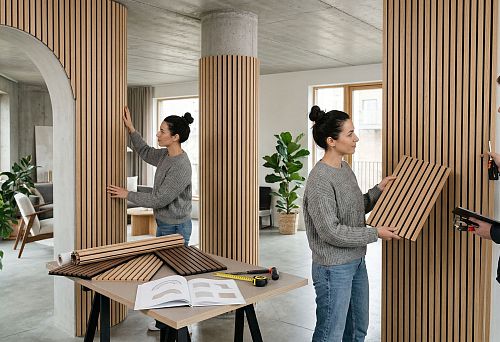
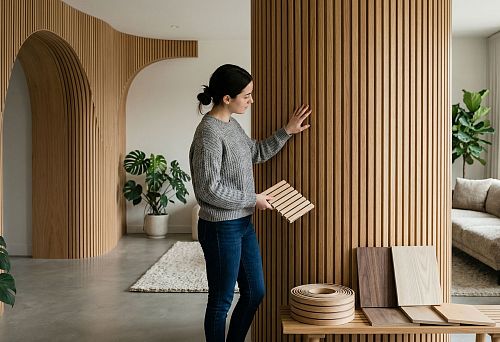
slatted panels made of MDF and solid oak— the most in-demand format in modern interiors since the early 2020s. A system of parallel slats with uniform spacing creates a linear graphic rhythm that transforms with any change in lighting. In the morning, with side light from the window—a soft play of light and shadow. In the evening, with directed accent lighting—a contrasting sculptural relief.
Wooden slat wall panels solve three tasks simultaneously: they create a decorative architectural surface, visually transform the space (vertical slats raise the ceiling, horizontal ones widen the wall), and improve acoustics—the slats scatter sound waves, reducing reverberation. This is especially valuable in living rooms and restaurant areas with open layouts.
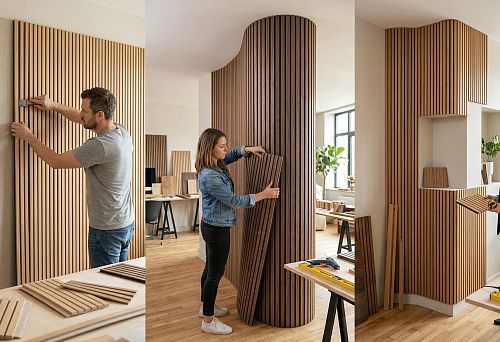
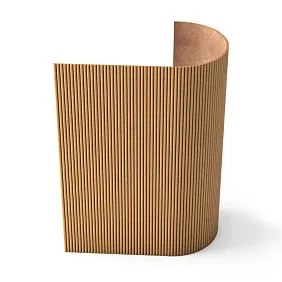
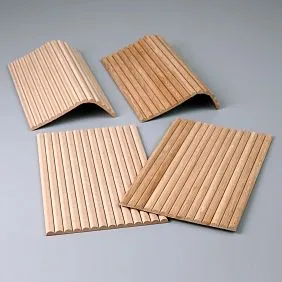
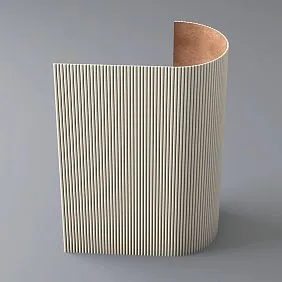
The STAVROS catalog presents several structural options: rigid panels on an MDF backing for flat walls, flexible ones on a fabric base for curved surfaces, columns, and arches, as well as panels made of semi-round molding—with an especially soft and lively play of light and shadow in any lighting.
Relief and volumetric panels
Relief decorative wood panels—a surface with a three-dimensional pattern: milled geometric patterns, carved ornaments, volumetric wave-like structures. This is a format with maximum decorative impact: the relief speaks loudly, actively interacts with light, and requires spatial context.
Relief panels are a tool for a pinpoint accent, not for cladding all walls. A decorative niche with relief inserts, a fireplace area with carved modules, a portal frame made of solid wood with a volumetric ornament—these are correct applications. Relief as a systematic finish on all four walls in a small room creates visual overload. One object on a neutral background—works flawlessly.
Decorative overlays and carved elements made of solid oak— a separate category that complements smooth and slatted panels, creating a systematic decorative surface with multiple levels of depth.
Geometric panels
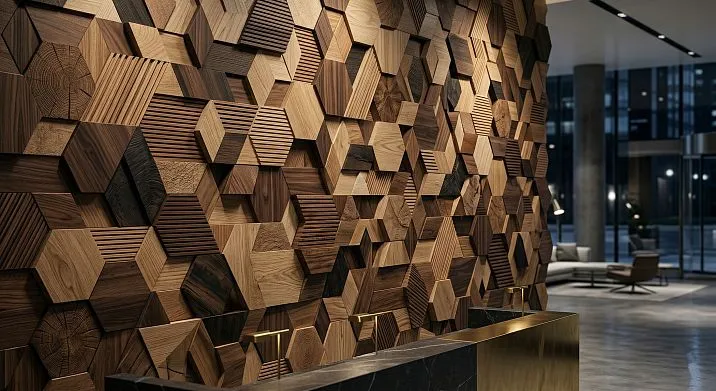
Geometric wooden decorative panels are modular objects with clear angular forms: hexagons, triangular grids, rhombic patterns, rectangular 3D constructions. This category lies at the intersection of decor and architectural installation. The visual effect is maximized with properly designed side lighting: each module casts its own shadow, and the wall transforms into a living volume.
Panels for accent walls and TV zones
We highlight this format separately because it has its own design logic. An accent wall panel is not just a material on the surface. It is an architectural solution that creates the focal point of a space: an axis around which the perception of the room is organized. Behind a sofa, behind a bed, around a TV—each of these scenarios requires its own format, its own scale, its own tone.
TV zone frames made of solid oak— a systematic solution for TV accent: wooden framing hides the bracket and cables, creates a natural warm background for the screen, and turns a technical element into a designer object.
What materials are decorative wall panels made from
Solid wood
Solid wood is a living material with all its natural properties: the unique grain of each board, natural tone, tactile warmth, scent, uniqueness. No engineered material reproduces these characteristics—only solid wood.
Oak. The primary wood species for decorative wall panels in interiors. Density 700–750 kg/m³, expressive large grain pattern, high hardness and durability. Oak finishes cover the entire possible spectrum: from light amber natural tone to cool Scandinavian gray, warm cognac, deep tobacco, and almost black graphite. Oil coating preserves the matte finish and living tactile surface. Varnish adds depth and richness of tone.
Ash. Lighter than oak, with a more straightforward, uniform grain. Easily tinted into neutral Scandinavian tones: whitewashed, gray-beige, sandy. Ash creates a more 'light,' airy image compared to the heaviness of dark oak.
Beech. Warm pinkish tone, uniform fine grain. Often used in the production of wooden wall panels for kitchen areas with moderately high humidity—the natural density of beech makes it an appropriate choice.
Alder. A softwood species with a delicate grain pattern, creating a cozy home atmosphere. In decorative panels, it is a pleasant, warm, non-monumental material that works well in bedrooms and private living spaces.
For massive decorative wall panels, material moisture content is critical — no higher than 8–10% for interior applications. STAVROS manufactures solid oak products in a controlled microclimate (temperature 20–24°C, humidity at least 40%), guaranteeing geometric stability and absence of deformation after installation.
MDF with decorative finish
MDF is a fine-particle fiberboard with a density of 750–850 kg/m³. A homogeneous structure without natural defects, an ideal surface for painting, precise machinability for any relief patterns and profile shapes. In the category of decorative wall panels, MDF holds a special place: it does not claim the natural aesthetics of solid wood, but offers complete freedom in color and geometric form.
MDF under white matte enamel in a boiserie molding system is an archetypal neoclassical solution. MDF in the wall color with slatted relief is a modern minimalist technique, where only the geometry is visible, not the material. MDF in a contrasting accent color (dark blue, terracotta, deep green) is a modern decorative concept that works as a color accent without a natural grain pattern.
A technical point when painting MDF panels: the panel edges absorb paint material significantly more intensively than the face — the edges must be covered with wooden molding or carefully primed with a special edge primer to achieve an even coating.
Veneered panels
Veneered panel — an MDF base with a face layer of natural wood veneer 0.6–3 mm thick. The natural grain and tone of a real wood species combined with the technological stability of an engineered material. The golden mean between solid wood and pure MDF.
A feature of veneered decorative wall panels is the possibility of 'book-matching' the veneer: a mirror-symmetrical natural pattern that unfolds across the entire surface of an accent wall. This is an artistic technique impossible when laying individual solid wood boards. For a large, uniform surface in a living room or bedroom, veneered panels are the technically optimal choice.
Combined Solutions
Professional design works with combinations — this creates a material complexity unattainable with a single material. An oak slatted panel in a frame of painted MDF — natural texture in a geometric frame. A veneered central panel with a molding system made of solid wood — a natural insert in an architectural frame.Moldings, cornices, and baseboards made of solid oak and MDFcombined with slatted or smooth wall panels create a systemically finished surface.
Where to use wooden decorative panels
In the living room
The living room is the main space of the house, and it is here that decorative wooden wall panels work with maximum efficiency. An accent wall behind the sofa with oak slatted panels under side lighting is an architectural axis that sets the character of the entire interior.
In living rooms with an area of 25–40 m² and ceilings of 2.7 m, full-height vertical slatted panels are optimal: they visually raise the ceiling and create a sense of airiness. In high rooms from 3 meters, a two-tier system is possible: a lower tier with smooth or veneered panels, an upper tier with slatted modules. Such a layout creates architectural monumentality without construction work.
The acoustic argument in favor of wooden slatted panels in the living room: parquet, glass surfaces, and a high ceiling create a harsh acoustic environment with long echo. One slatted wall reduces reverberation, making speech, music, and movies more comfortable.
In the bedroom
In the bedroom, a decorative wooden wall panel should be intimate, warm, natural. Not dominate — create. The main focal point: the wall behind the headboard.
Correct tones for the bedroom: natural oak, bleached ash, warm beige, neutral gray-brown. Dark tones require compensating directional light — bedside sconces or accent ceiling spots that illuminate the panel at an angle. Without quality lighting, dark decorative panels in the bedroom will create heaviness instead of depth.
Panel size behind the headboard: width equal to the bed plus 200–400 mm on each side, height from 80 cm to the ceiling. For a 180 cm bed — a panel 2000–2600 mm wide. In a full-height format (from floor to ceiling), vertical slats work especially expressively, creating a natural 'screen' behind the bed.
In the hallway
The hallway is a space of first impression and maximum physical load on the walls. Decorative wooden panels here solve both tasks: they create a stylish image of the entrance area and protect surfaces from mechanical damage.
A classic technique for a narrow hallway: vertical slatted panels on a long wall, 1.5–2 meters high. Visual effect: the wall 'goes upward,' the corridor is perceived as more spacious and taller. For a hallway with storage:Wall Panelscombined with wall-mounted cabinets of the same wood species and finish create a systematic natural look.
Choosing material for the hallway: MDF with a hard semi-gloss enamel finish or solid oak with a lacquer coating — both options are resistant to mechanical loads and humidity from wet umbrellas and outerwear.
In the study
A study requires decor that speaks of seriousness, taste, and professional weight. Wooden decorative wall panels for the study are precisely such a tool. Dark oak, a dense slatted rhythm, directed task lighting — an image that is unambiguously understood.
The work wall behind the desk or behind the office chair is the main application point in the study. Slatted panels made of solid oak in 'tobacco' or 'anthracite' finishes, illuminated by built-in LED profiles in the grooves between the slats, create a professional visual backdrop for both work and video calls. This is an implicit but effective professional message.
In the TV area
The TV zone in a modern living room is one of the most common tasks for decorative wooden wall panels. Three problems are solved simultaneously: cables and the mounting bracket are hidden by the wooden structure, the dark screen gets a natural warm background instead of a cold white or gray wall, and the living room gains an architectural axis.
A wooden frame for the TV, wider than the screen by 200–400 mm on each side, with slatted or veneered infill — this is a solution that turns a technical object into a design one. Inside the frame, technological cutouts are provided for cables and, if necessary, built-in sockets.
In niches and passage zones
A wall niche with a decorative wooden panel inside — this is the transformation of a construction 'flaw' into an interior accent. A niche lined with wood works as a frame, accentuating the object inside: lighting, a vase, a sculpture, a book collection. Wooden window reveal finishing matching the wall panels creates a natural connection for the entire space.
Wooden decorative wall panels for accent finishing
An accent wall is an intentionally highlighted surface that receives the main visual attention in a room. It is not just a 'beautiful wall' — it is an architectural solution that organizes the perception of space and creates its semantic center.
When is one accent wall needed? Always when the other surfaces are neutral and when there is a functional axis (sofa, bed, TV, fireplace) that needs architectural support. Wood on an accent wall creates a natural warm pole in a neutral space — it is precisely this contrast that creates a 'living' interior image.
Where does a wooden accent wall work best? Where there is a functional axis and good side lighting. An oak slat panel without proper lighting is just material. The same slat panel with a directional side spotlight at a 30–45° angle is an architectural object with a full chiaroscuro life.
How to avoid overloading the interior? One accent wooden wall is enough. If you add wood to the second and third surfaces, the natural image will start to shift into rustic heaviness. Rule: one decorative wooden panel per wall is an accent. Three wooden walls is a concept that must be very deliberate and supported by a professional design solution.
Combination with furniture: a wooden accent wall does not require the furniture to be made of the same material. On the contrary: the contrast of the natural wood texture with a matte lacquered table, gray sofa cushions, or brass lighting details creates a more interesting visual ensemble than complete tonal matching.
How to choose panels based on interior style
Modern style
Modern interior is a balance of natural and geometric. Wooden decorative wall panels: vertical oak slats in a natural finish on a neutral background of white or light gray walls. Shape is straight, without decorative profiles. Installation is hidden. Lighting is directional accent.
Minimalism
Minimalist interior is perfection of form and complete absence of randomness. Decorative wooden wall panels in minimalism: MDF painted to match the surface tone (monochromatic architectural relief without color contrast) or smooth ash with a neutral oil finish without visible fasteners. Only form. Only shadow from the frame or slat. Only material—without decorations.
Scandinavian interior
Scandinavian style—light tones, natural materials, minimal decor, maximum natural coziness. Wooden wall panels: light oak or ash without tinting, white oil, neutral gray-beige tone. Horizontal installation is a traditional Scandinavian solution. Overall background is white. Textiles are natural linen and cotton in neutral tones.
Japandi
Japandi—Japanese principle of empty space plus Scandinavian natural warmth. Narrow slats 10–15 mm with even spacing, warm gray or light beige oil tone. No moldings, no reliefs, no decor on top of decor. Only rhythm, only the space between the rhythm—and silence. If there is Japandi in the interior, the decorative wooden wall panel should be quiet—this is one of the rare cases where less literally means more.
Neoclassicism
Neoclassicism—architectural logic, symmetry, profile complexity.Wall panels in a boiserie systemwith molding framing—the main tool of this style. Geometric divisions of a smooth surface in architectural frames, ceiling cornice from the same wood species, floor baseboard—all this forms a complete architectural ensemble. Tone: creamy white enamel or natural oak with a golden tint.
Warm contemporary interior
Warm contemporary — naturalness, earthy tones, soft light, visual comfort with current geometry. Oak decorative panels in 'cognac', 'warm walnut', or 'tobacco' finishes — a perfect match for this request. It is warm wood that creates an interior you want to live in, not just photograph.
How to choose color, texture, and format
Choosing these parameters is not a matter of taste, but a system. Several specific rules.
Light or dark wood? Light finishes (natural ash, whitewashed oak, gray-beige) work in any room and under any lighting. Dark finishes (wenge, anthracite, dark walnut) require: either a large room volume (from 20 m² and above), or directed quality lighting that compensates for the visual heaviness of the tone. Dark wood panels on a small wall with a single window — a risk of getting a oppressive corner instead of a luxurious accent.
Smooth, slatted, or textured? Smooth — a quiet natural background. Slatted — an active visual rhythm with volume and acoustics. Textured — a decorative accent with maximum expressiveness. Usage rule: one format in one key zone, the rest neutral.
Narrow or wide slats? Slats 10–20 mm — dense, expensive, rich rhythm. Slats 40–80 mm — airy, concise rhythm. For rooms up to 15 m²: wide slats with large spacing — otherwise a narrow rhythm creates a feeling of overload.
Vertically or horizontally? Vertical — growth in height. Horizontal — expansion in width. Choose the direction depending on the task: in a low room — vertical, in a narrow corridor — horizontal.
Three points of color reference: flooring, doors, key furniture. A decorative wood panel for the wall should either support their natural theme or consciously contrast. Random tone conflict — the most common and costly mistake when choosing without reference to the interior.
What is better to choose: solid wood, MDF, or veneer
| Parameter | Solid wood | MDF with finish | Veneered panels |
|---|---|---|---|
| Natural aesthetics | Maximum — live fiber | Absent | Is — a cut of natural wood |
| Freedom in color | Limited to finishes | Maximum (any enamel) | Limited by veneer tone |
| Geometric Stability | Medium (sensitive to humidity) | High | High |
| Decorativeness | Live natural pattern | Geometric and color | Natural pattern with stability |
| Durability | 20–30+ years | 15–25 years | 15–25 years |
| Cost | High | Low–medium | Medium |
| Best scenario | Accent zones, expensive interior | Monochrome systems, boiserie | Large homogeneous surfaces |
Professional advice: don't choose between these materials—combine them. A solid oak frame with MDF infill for painting—a natural frame with a precise geometric panel. A solid wood slatted panel in an MDF molding frame—natural texture within a geometric architectural system.
Advantages of decorative wooden wall panels
Listing specifically—what exactly changes in the interior with the appearance of wooden decorative panels:
-
Natural expressive texture. No synthetic or mineral material reproduces the living pattern of wood, its tactile warmth, and natural diversity.
-
Visual warmth. A wall with wood changes the perceived temperature of a room—it becomes warmer, more natural, more human.
-
Accent without overload. One wooden wall completely transforms the look of an interior with minimal intervention on other surfaces.
-
Acoustics. Slatted panels scatter sound waves, reduce reverberation, and improve the acoustic comfort of a space.
-
Wide range of formats. Smooth, slatted, relief, geometric—there is a solution for every task.
-
Universal styling. Wood fits organically in contemporary style, minimalism, Scandinavian, Japandi, neoclassical, loft, and warm contemporary.
-
Durability. With proper care and a stable microclimate—20–30 years without loss of appearance.
-
Systemic completeness. Wooden wall panels combined with moldings, cornices, and baseboards made from the same wood species create a professional architectural look, often referred to as a 'luxury interior'.
Common mistakes when choosing wooden decorative panels
-
Too dark panels in a small room without compensating lighting. Dark oak in a 12–14 m² room with one small window creates oppressive heaviness instead of luxury.
-
Relief or active slatted rhythm on all walls. One expressive surface in a neutral context is an accent. Four expressive surfaces are noise.
-
Incorrect module scale for the room. A wide, heavy frame with large slats in a 10 m² room creates monumentality that overwhelms rather than decorates.
-
Lack of color coordination with the floor and furniture. A wooden panel is part of a system, not an independent object. An uncoordinated tone between the panel and the floor ruins the design result.
-
Choosing based only on a photo without considering the interior. A panel in a photo of a spacious studio with high ceilings and perfect lighting is a different object in a different context. Order samples and view them under the actual conditions of your space.
-
Ignoring lighting. A slatted decorative wooden wall panel without proper side lighting reveals less than 30% of its potential.
How to care for decorative wooden panels
Regular dry cleaning. Use a soft brush with natural bristles or an anti-static microfiber cloth. For slatted panels, a brush removes dust from the grooves between the slats. Once a week is sufficient in living areas.
Wet cleaning — only for stains. Slightly damp microfiber cloth, immediate drying. No standing water on wooden surfaces — especially on ends and in joint areas.
Room humidity control. Optimal conditions: 18–22 °C, relative humidity 40–60%. During the heating season, if air dryness drops below 30%, micro-cracks appear in wooden elements. An air humidifier in winter is a mandatory interior element with natural wood.
Coating renewal. Oil coating on solid wood is renewed every 3–5 years by local application without dismantling panels. Lacquer coatings are restored by spot restoration when the composition matches. MDF under enamel — local repainting with exact color match.
Protection in risk zones. In the hallway, corridor, and children's areas — solid oak with a hard lacquer coating (3H and above) or MDF under semi-gloss enamel — the most resistant options to mechanical wear.
FAQ: Answers to Frequently Asked Questions
What are wooden decorative wall panels?
These are interior products made of natural wood or wood-based materials (MDF, veneer), designed to create a decorative, textured, and architecturally expressive surface on the wall. Unlike protective or background cladding — they primarily function as a design object.
Which panels are better to choose for an accent wall?
Slatted panels made of solid oak with side accent lighting — maximum architectural effect. For a calmer accent — veneered panels with molding framing. In monochrome concepts — MDF under enamel in a contrasting color.
What is better for interior: solid wood, MDF, or veneer?
Depends on the task. Solid wood — natural aesthetics of the maximum level for accent zones with a high budget. MDF — freedom in color and geometry for monochrome systems. Veneer — natural appearance with the stability of an engineered material for large homogeneous surfaces. Optimally — combine.
Are wooden panels suitable for the living room and bedroom?
Yes. In the living room — a slatted accent wall behind the sofa. In the bedroom — a natural decorative module behind the bed headboard in a warm tint.
Can decorative panels be used in the hallway?
Yes — and this is one of the most practical applications. Wooden panels in the hallway are both decorative and protective. Vertical slats in a narrow corridor visually raise the ceiling.
Which panels are better for a TV zone?
Slatted or veneered oak panels across the width of the TV zone plus a wooden frame: they hide cables and brackets, creating a natural warm background for the screen.
Which interior styles do wooden panels go with?
With most current ones: contemporary, minimalism, Scandinavian, Japandi, neoclassical, warm contemporary, loft, art deco. Wood is a stylistically universal material.
Can relief panels be used on an entire wall?
Not recommended for small spaces — it creates visual overload. Relief is effective as a focal accent: one wall or one fragment in a neutral context.
Is it difficult to care for decorative wooden panels?
No. Regular dry cleaning, humidity control, oil coating renewal every few years. Minimal care — long-term result.
What's better: smooth, slatted, or textured panels?
Smooth — a natural, quiet background. Slatted — active visual rhythm, volume, acoustics. Textured — maximum decorative expressiveness for a focal accent. The choice is determined by the task: background, accent, or dominant.
Conclusion
Wooden decorative wall panels are not a finishing material in the usual sense. They are a design tool that, when applied correctly, completely changes the feel of a space. One slatted oak wall with side lighting in a neutral living room — and the interior gains character. A wooden panel behind the headboard — and the bedroom transforms from 'normal' into one you want to wake up in.
For an accent wall — slatted or veneered oak panels with accent lighting. For a calm decorative background — smooth ash panels in a neutral tint. For a TV zone — a wooden frame with slatted or veneered infill, concealing cables and the bracket. For the hallway — solid oak or MDF with hard enamel on the lower part of the walls.
The main rule: think systematically. A decorative wooden wall panel reveals its full potential in an ensemble with moldings, cornices, baseboards, and lighting. Only within this system does the wall become not just a surface — but an architectural statement.
If you are looking for decorative wooden wall panels with manufacturing precision and a systematic assortment — the company STAVROS has been working in this direction since 2002. STAVROS producesSlatted panels made of solid oak and MDF, moldings, cornices, baseboards, decorative overlays, frames for TV zones and mirrors — everything needed to create systematic decorative finishing from natural wood. Over 4,000 models, 20,000 modifications, chamber drying, geometry control, showrooms in Moscow and St. Petersburg. STAVROS — wooden decorative wall panels that make an interior memorable.