Article Contents:
- Historical and Cultural Context of Wooden Framing
- Functionality and Aesthetics of Wooden Framing
- Materials and Forms for the Ideal Frame
- Window Frame Styles: From Classic to Contemporary
- How to Choose the Ideal Wooden Window Frame
- Common Mistakes and Their Solutions
- Professional Approach to Wooden Framing
- Conclusion: Framing as a Key Element of Architectural Composition
Window openings are not merely functional holes in building walls. They are special architectural elements, somewhat like the 'eyes of the house,' through which the interior interacts with the outside world. Their design plays a key role in creating a cohesive image of the room and facade. wooden window frame serves not merely as a decorative element, but as a carrier of cultural code, architectural tradition, and aesthetic concept of space.
Wood as a material possesses unique properties that make it ideal for framing window openings. It brings natural warmth, organic texture, and eco-friendliness into the interior, creating visual and tactile comfort. Wooden elements can soften the geometry of a room, add depth to flat surfaces, and emphasize the architectural style of the space.
In today's world, where mass production often displaces unique items, companies preserving the traditions of wooden decor and incorporating modern technologies and design solutions become particularly valuable. Professional wooden window frame becomes not merely a finishing element, but a kind of artwork capable of transforming space.


Historical and Cultural Context of Wooden Framing
The history of window framing spans millennia. The earliest references to wooden windows date back to ancient Mesopotamian and Egyptian civilizations, approximately 3000 BCE1In those times, windows were small openings framed with wooden structures, primarily serving for ventilation.
In various cultures and architectural traditions, window framing acquired its unique characteristics. Russian window casings, appearing in the 17th-18th centuries, were distinguished by rich carving and had not only decorative but also functional significance, protecting the house from cold and moisture2The tradition of decorating window casings spread throughout Russia thanks to shipwrights, who, with the advent of metal in shipbuilding, found a new niche for their talents — decorating wooden houses.
French architectural tradition placed special emphasis on symmetry and elegance of forms. Window frames were often complemented by moldings with plant motifs and intricate carving. The English style, in contrast, was characterized by restraint and classical proportionality. Wooden windows in the English style with a pivoting mechanism made of solid pine represent an ideal balance of style, quality, and price3.
has continued to preserve its cultural significance while simultaneously enriching itself with new stylistic solutions and technological possibilities. Modern manufacturers, relying on centuries-old traditions, create products that seamlessly integrate into any architectural style — from traditional to avant-garde.
Today wooden window frame Continues to preserve its cultural significance while enriching itself with new stylistic solutions and technological possibilities. Modern manufacturers, relying on centuries-old traditions, create items that seamlessly fit into any architectural style—from traditional to avant-garde.




Functionality and Aesthetics of Wooden Framing
wooden window frame performs a complex set of functions far beyond simple decoration. Primarily, it plays an important role in insulating the room. Wood has low thermal conductivity, making it a natural barrier against cold air. Properly installed wooden framing elements prevent the formation of cold bridges at the junction of the window and wall.
In the context of the overall interior composition, the window frame acts as a structuring element. It creates a visual frame for the natural landscape outside the window, transforming it into a kind of living picture. This technique is known in architecture as 'framing the view' and is actively used by designers to enhance the emotional impact of the interior.
Wooden framing elements contribute to the stylistic unity of the room. They can harmonize with other wooden interior details — furniture, doors, decorative beams — creating a cohesive image. This unity is especially important in open-plan spaces, where the window frame serves as a unifying motif for various functional zones.
From a psychological perception standpoint, clearly defined window openings create a sense of spatial structure and order. The human brain positively responds to clear boundaries and defined forms. wooden window frame forms clear visual landmarks, contributing to the psychological comfort of people within the space.
The grain of wood brings tactile variety into the interior, enriching the sensory experience of being in the space. Unlike smooth synthetic materials, wood has its own 'character,' manifested in its unique wood grain pattern, warmth to the touch, and even a barely perceptible natural aroma.
In addition, wooden framing has the ability to soften the geometry of a room. In modern interiors, with their straight lines and large surfaces, wooden details introduce an element of living natural plasticity, creating a balance between technology and organic elements.
Our factory also produces:


Materials and forms for ideal framing
Choosing a material for window framing is not only an aesthetic issue but also a practical one. Solid wood remains the optimal solution due to the combination of durability, eco-friendliness, and aesthetic appeal. Unlike composite materials, solid wood has a natural texture and the ability to 'breathe,' regulating humidity in the room.
Among the most popular wood species for making window framing, oak, beech, and ash stand out. Each species has its own unique properties and aesthetic characteristics.
Oak is characterized by exceptional strength and durability. Its dense structure is resistant to mechanical damage, and its pronounced annual ring pattern creates a noble texture. Oak products harmonize beautifully with classic interiors, giving them solidity and dignity. This material symbolizes reliability and tradition.
Beech has a more uniform and fine texture with a light pinkish hue. It is easy to work with and paint, allowing for the creation of complex-shaped items with detailed carving. Beech is ideal for Provence and neoclassical interiors, where elegance and refinement of details are valued.
Ash has elasticity and strength with a relatively light wood tone. Its structure with pronounced annual rings creates a dynamic, lively pattern. Ash harmonizes well with modern interiors, bringing natural organic elements without excessive ornamentation.
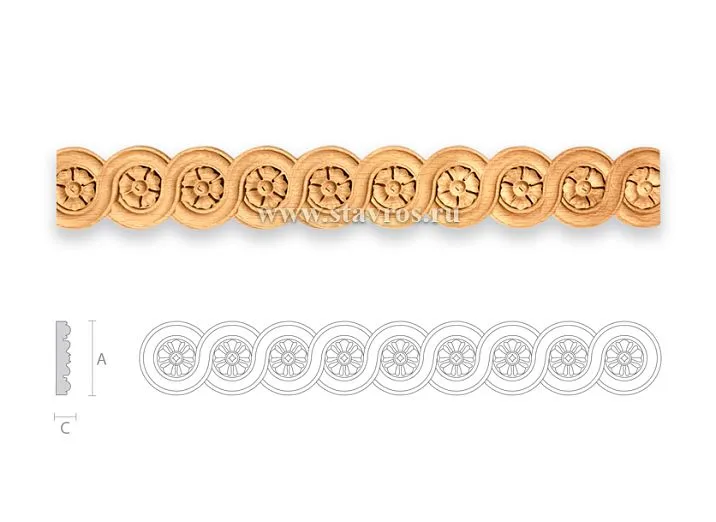
wooden window frame It can take various forms depending on the architectural style of the room and the overall design concept. Mouldings are profiled strips that can have either simple or complex cross-sections. They form the basis of window framing, creating a clear geometric structure.
Crown mouldings are used for the upper part of the window opening, visually completing the composition. They can be supplemented with decorative elements — medallions, carved inserts, which is especially characteristic of classical interiors.
Decorative trim items include various profiles used for detailing the framing. These may be half-rounds, cornices, coving strips, and applied carved elements.
Premium-class manufacturers offer a wide range of solutions for wooden window framing. Collections include both traditional profiles and original designs, allowing you to select the optimal solution for any interior style.
Get Consultation
Window styling styles: from classic to modern
The choice of window opening styling is determined by the overall architectural concept of the space. In a classical style wooden window frame it is characterized by strict symmetry, proportionality, and detailed carving. Columns or pilasters are often used on the sides of the opening, pediments above the window, and ornamental or carved decorative elements. Richly profiled cornices and complex mouldings prevail, sometimes enhanced with gold leaf or patina.
Classic framing creates a sense of solidity and respectability. It harmonizes beautifully with heavy drapes, velvet valances, and other elements of traditional textile window treatment.
The Provence style implies a lighter, more understated framing. Here, light, soft profiles with subtle carving or painting are used. Characteristic features include rounded corners, pastel tones, and an aged effect. Provence window framing creates an atmosphere of relaxed comfort and rustic coziness, while maintaining elegance and romance.
The modern style is characterized by simplicity of form and clarity of geometry. wooden window frame In a modern interior, it usually has a simple profile with minimal decorative elements. The emphasis is placed on material quality and manufacturing precision. Hidden constructions are popular, where the framing is visually integrated into the wall, creating a 'clean' opening effect.
An eclectic approach to window styling implies combining different materials and textures. Wood can be combined with stone in the form of sills or decorative elements. The combination of wood and textiles is one of the most traditional methods: wooden framing serves as a base for attaching cornices and drapery.
An interesting solution is the combination of wood and plaster. Wooden profiles can serve as separators for different textures on the wall around the window, which looks especially effective in Mediterranean or colonial-style interiors.
In recent years, eco-minimalism is gaining popularity, where wooden window frame it serves as a natural accent in a restrained, minimalist space. Here, the natural texture is important, and the absence of artificial coatings that highlight the material's naturalness.
Regardless of the chosen style, it is important to remember the overall architectural solution. Window framing should harmonize with other wooden elements in the interior — skirting boards, door casings, decorative beams — creating a unified visual language of the space.
How to choose the ideal wooden window framing
Choosing the optimal solution for window opening framing requires considering many factors. First and foremost, you should orient yourself toward the overall style of the room. For classic interiors, complex profiles with decorative elements are suitable, while for modern interiors, simple forms with clean lines are preferred.
The window's dimensions play a decisive role in choosing the scale of the framing. Large panoramic windows require proportionally substantial framing, while for small openings, overly bulky framing may look inappropriate. There is a rule of proportionality: the width of framing elements should correspond to the size of the opening, creating a visual balance.
It is also important to consider the level of lighting in the room. In rooms with insufficient natural light, it is better to use light-colored woods and lighter profiles to avoid 'weighing down' the space. In well-lit rooms, you can afford darker tones and more substantial forms.
wooden window frame Framing elements can significantly influence the perception of room proportions. Vertical framing elements visually increase ceiling height, which is especially relevant for rooms with low ceilings. Horizontal details, on the other hand, create the impression of greater room width. The depth of the profile affects the perception of wall thickness: a relief framing gives walls a visual sense of solidity.
When choosing a color solution, it is important to consider both the tone of the walls and the shade of the flooring and furniture. Wooden elements can serve as a connecting element between different color planes in the interior. To create a harmonious image, it is recommended that the tone of the framing correspond with other wooden elements — floor, doors, furniture.
Finishing wooden framing also requires careful attention. The natural wood texture with a transparent protective coating will highlight the authenticity of the material. Staining allows the framing to integrate into the interior color scheme. Techniques such as patination and brushing give items character and individuality.
It is also important to consider practical aspects. The framing should be deep enough to conceal possible defects at the junction between the window and the wall. It is also important to consider the mounting features of curtains or blinds — the framing should not interfere with the functionality of window systems.
Common mistakes and their solutions
When designing window framing, typical errors occur that can negatively affect the overall perception of the interior. One of the most common is choosing mismatched framing. Too wide or bulky elements may visually "eat up" the window opening, reducing the amount of natural light in the room. On the other hand, overly narrow framing looks unfinished and fails to fulfill its architectural function.
Stylistic mismatch is another common problem. wooden window frame It must harmonize with the overall style of the room. Ornate carved framing will look out of place in a minimalist interior, just as strict, minimalist profiles will not fit into a classical space.
Using rough or inappropriate textures can also disrupt the harmony of the interior. It is important that the wood texture matches the overall character of the space. For example, in refined classical interiors, a smooth, polished surface is appropriate, while rustic styles suit a more pronounced texture with visible signs of processing.
To "ground" the framing in the interior, it is necessary to create visual connections with other elements. These may include repeating profiles on furniture, similar color solutions, or echoing decorative motifs. It is important that the framing is not perceived as a separate, isolated element, but is integrated into the overall composition.
For non-standard window openings, a special approach to framing design is required. For arched windows, a cornice must be created that precisely matches the geometry of the opening. In the case of windows with complex shapes, the "frame-like" framing principle is often applied, where a profile of uniform width follows the perimeter of the opening.
A common problem is framing windows located in the corners of a room. In such cases, it is important to plan the connection of profiles without visually emphasizing the corner. One solution is to use corner elements specifically designed for such situations.
Another challenge is framing windows located close to the ceiling. Here, it is important to consider the junction with ceiling cornices or moldings to avoid visual conflict.
When installing wooden window framing It is important to ensure proper moisture insulation and ventilation. Wood is a natural material that reacts to changes in humidity. Poor installation may lead to deformation of framing elements during operation.
Professional approach to wooden framing
Creating quality window framing requires not only design vision but also a high level of craftsmanship in wood processing. wooden window frame From premium manufacturers — this is not just a decorative element, but a sign of a certain level of quality and attention to detail.
Ecological production is becoming an increasingly important factor when choosing finishing materials. Responsible manufacturers use wood from certified sources, apply safe finishing materials and processing technologies with minimal environmental impact.
Hand processing of wood, despite the development of automated technologies, retains its value, especially when creating decorative elements. Experienced craftsmen can give items a unique character unattainable through machine processing. This is especially important for carved elements, where fine detailing is required.
Architectural precision is another characteristic of a professional approach. It is manifested in flawless connections of elements, ideal proportions, adherence to classical canons (in the case of traditional styles) or modern design standards.
The premium category in wooden window framing is determined not only by the quality of materials and manufacturing, but also by the level of service. Individual approach to each project, possibility of creating non-standard solutions, professional consultations at all stages — from design to installation — all these are components of premium service.
The reputation of the manufacturer plays a decisive role when choosing a supplier of wooden framing. Companies with long experience, completed projects, and positive customer reviews deserve special trust. They offer not only products but also expert support that helps avoid mistakes and achieve optimal results.
In modern conditions, timely order execution and the ability to deliver to various regions are also important factors. This is especially relevant for projects with tight implementation schedules or for remote sites.
Conclusion: framing as a key element of architectural composition
wooden window frame It is much more than just a decorative element. It is an architectural accent defining the character of the space, a stylistic focal point around which the visual language of the interior is built. Like a picture frame, window framing highlights and emphasizes the view outside, transforming it into part of the interior composition.
In the context of modern design, striving for individualization of space and authenticity, wooden elements acquire special value. They resist uniformity and blandness, introducing the warmth of natural material and the craftsmanship of handwork into the technologically advanced world of contemporary architecture.
A window with properly designed framing becomes a kind of "boundary marker" between interior and exterior space. It does not simply separate the interior from the exterior, but also creates a transitional zone where these two worlds interact and influence each other. Natural light passing through such an architecturally designed opening acquires a special quality, forming the lighting scenario of the room.
In an era when individual approaches and unique solutions are increasingly valued, choosing high-quality, ecological, and aesthetically perfect materials becomes a fundamental position. wooden window frame From trusted manufacturers — this is an investment not only in the beauty and comfort of your home, but also in its longevity and ecological safety.
Every window is a potential architectural masterpiece requiring appropriate framing. Choosing the best from nature, you create not just an interior, but a space for life filled with meaning, beauty, and harmony. It is precisely this approach to design that makes a home truly cozy and reflecting the individuality of its owners.