Article Contents:
- Modern panorama of the interior decoration market
- Material basis of beauty: choosing substance to realize ideas
- Stylistic universe of decoration: from classic to futurism
- Production secrets of craftsmanship: technologies of creating perfection
- Classification by purpose: functional typology of decoration
- Application areas in interior: from function to aesthetics
- Installation technologies: mastery in details of mounting
- Economic aspects of selection: investments in long-term beauty
- Prospects for industry development: outlook for the future of decorative design
- Frequently asked questions about decorative interior ornaments
- Conclusion: the art of creating unforgettable interiors
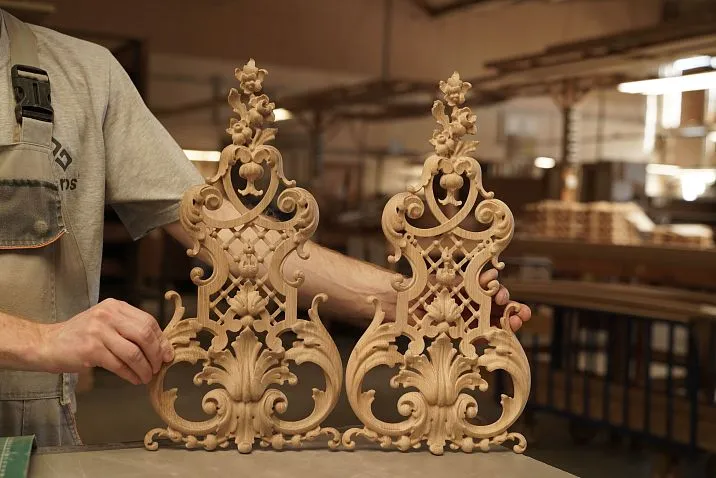
When we step into our home, what makes us pause, sigh with admiration, and feel immersed in a special world of beauty? Not just functional furniture and not ordinary walls, but specifically decorative interior ornaments — those magical details that transform an ordinary living space into a work of art. In an era when individuality is valued above all else, these elements become the voice of our soul, telling the world about our tastes, dreams, and understanding of beauty.
Modern interior design philosophy is built on the understanding that home is not just a place to live, but a space for self-expression. Every detail here matters, each element carries semantic weight. Decorative interior ornaments serve as subtle tools, allowing the creation of emotional accents, guiding the gaze, forming atmosphere and mood.
The history of interior decoration spans millennia — from ancient Egyptian frescoes to modern minimalist compositions. But never before have people had such a variety of materials, technologies, and stylistic directions to realize their ideas. Interior decoration items today represent an entire industry, where traditional craftsmanship techniques coexist with high-tech production processes.
Psychologists assert that a beautiful environment directly affects our emotional state, productivity, and overall quality of life. Thoughtfully selected decorative elements can reduce stress levels, stimulate creative activity, create a sense of harmony and security. They function as emotional anchors, helping us feel "at home" in the deepest sense of the word.
In today's world, where most people spend a significant portion of their time indoors, the quality of interior environments assumes particular importance. Decorative ornaments help compensate for the lack of natural stimuli, create visual variety, maintain interest, and prevent monotony of perception.


Modern panorama of the interior decoration market
Today's market of decorative elements is experiencing a period of rapid development and transformation. Globalization has opened access to techniques and motifs from around the world, while technological progress has provided new materials and production methods. At the same time, interest is growing in local traditions, eco-friendliness, and personalization.
Consumer preferences have changed dramatically over the past decade. Whereas buyers previously were satisfied with mass-produced items, today they seek uniqueness, history, and emotional connection with the object. This stimulates the development of exclusive and personalized segments.
The digital revolution has transformed the ways producers and consumers interact. Social networks have become a powerful source of inspiration, while internet platforms serve as the primary sales channel. Virtual reality and augmented reality allow customers to "try on" ornaments in their interiors even before purchasing.
Ecological awareness is becoming an important factor in selection. Consumers are increasingly interested in the origin of materials, production methods, and recyclability. This stimulates the development of sustainable technologies and the use of renewable resources.
Demographic changes also influence the market. Urbanization leads to smaller living spaces, requiring more compact and multifunctional solutions. Aging populations in developed countries create demand for safe and easy-to-maintain decorations.
Modern decoration collection reflects these trends, offering solutions that combine aesthetic appeal with practicality and eco-friendliness. Manufacturers are paying more attention not only to the appearance of products, but also to their impact on the environment and human health.
The geographical distribution of production is becoming increasingly diverse. Traditionally, Europe and North America were the centers of production for decorative ornaments, but now manufacturing capacities are actively developing in Asia, Latin America, and other regions. This ensures greater stylistic variety and more affordable prices.
Technological innovations open new opportunities for customization and personalization of products. 3D printing, laser cutting, and computer modeling allow creating unique items in small batches at an affordable price.




Material foundation of beauty: choosing substance to embody ideas
The choice of material for decorative interior ornaments determines not only their appearance, but also durability, practicality, eco-friendliness, and cost. Each material has its own 'soul', unique properties, and creative potential.
Natural wood remains one of the most popular and versatile materials. Its living texture, warmth to the touch, and ability to undergo various treatments make it indispensable for creating cozy and harmonious atmospheres. Decorative wooden inlays offer the widest possibilities for stylistic experimentation.
Oak is the king among decorative species. Its exceptional hardness and density allow creating the finest carving details, which retain sharp contours for decades. Over time, oak develops a noble patina, becoming even more attractive.
Beech attracts with its uniformity and stability in dimensions. Its light-colored wood is ideal for painting in any color, and its fine-grained structure provides a smooth surface without additional processing.
Polymer materials have revolutionized the production of decorative elements. Polyurethane allows precisely reproducing the most complex shapes with perfect repeatability, is moisture-resistant, lightweight, and easy to install.
Composite materials combine the advantages of various components. MDF combines the eco-friendliness of wood with the technological efficiency of modern production, ensuring stable dimensions and absence of internal stresses.
Metallic elements add notes of luxury and modernity to interiors. Brass, bronze, stainless steel — each metal has its own character and area of application. Patinated surfaces create an antique feel, polished surfaces — contemporary elegance.
Ceramics and porcelain open opportunities for creating elegant and detailed compositions. Modern technologies allow creating ceramic items of any complexity with precise color reproduction and high strength.
Our factory also produces:

Stylistic universe of decoration: from classicism to futurism
The world of decorative ornaments is amazed by the diversity of stylistic directions. Each style has its own philosophy, historical basis, characteristic motifs, and compositional principles.
Classic styles continue to remain relevant due to their timeless beauty. Baroque impresses with its opulence and theatricality, Rococo enchants with its elegance and lightness, Classicism attracts with its strict proportions and noble forms. Decor collections in historical styles require deep understanding of canons and flawless execution.
National traditions enrich the palette of decorative possibilities. Russian carving with its symbolic depth, Scandinavian minimalism with its functionality, Eastern opulence with its detail — each culture has contributed to the world's treasure of decorative art.
Modern directions reflect the spirit of the times and the technological possibilities of the era. Modernism with its natural motifs, Art Deco with its geometric stylization, minimalism with its philosophy of 'less is more' — each direction offers its own view on beauty and functionality.
Eclecticism allows mixing elements of different styles, creating unique compositions. Fusion styles deliberately break traditional boundaries, creating unexpected combinations of forms, colors, and textures.
Regional characteristics add local flavor to global trends. Mediterranean style with its lightness and naturalness, American country with its practicality and coziness, Japanese wabi-sabi with its philosophy of imperfect beauty — each direction enriches the overall palette of possibilities.
Avant-garde trends experiment with forms, materials, colors. They often anticipate the times, offering solutions that will become mainstream in a few years. Bio-design is inspired by natural forms, techno-style uses industrial motifs, cosmic design refers to extraterrestrial imagery.
Get Consultation
Production secrets of craftsmanship: technologies of creating perfection
Modern Production decorative interior ornaments represents a complex synthesis of traditional artisan craftsmanship and high-tech processes. Each production method has its own advantages and areas of application.
Hand carving remains the benchmark of quality and individuality. The master carver does not merely reproduce a given form — he infuses the item with a part of his soul, creating a unique work of art. Every movement of the chisel is intentional, every detail carefully crafted.
Mechanized production ensures high precision and repeatability of results. Modern CNC milling machines can reproduce the most complex shapes with micron-level accuracy. Computer control allows creating programs for manufacturing items of any complexity.
Casting technologies are used for producing elements from polymer materials and metals. High pressure and precise forms ensure reproduction of the finest details of the original. Modern polymer compositions allow mimicking the texture of various materials.
Laser cutting opens new possibilities for creating lace-like and perforated elements. The laser beam allows making cuts as thin as fractions of a millimeter, creating a lace effect from various materials.
3D printing revolutionizes the production of unique and complex forms. It is especially effective for creating prototypes, small-batch items, and personalized solutions. The technology is constantly evolving, mastering new materials and improving surface quality.
Finishing treatment determines the final appearance of the item. Grinding, polishing, patination, coloring — each operation requires professional skills and high-quality materials. Modern coatings not only protect against external influences but also create various decorative effects.
Classification by purpose: functional typology of decoration
Decorative Elements for Interior can be classified by various criteria: purpose, installation location, stylistic affiliation, material of manufacture. Understanding this typology helps make the right choice.
Wall decorations constitute the most numerous group. Panels, reliefs, applied elements, moldings — they are intended to structure wall surfaces, create focal points, add volume and texture. Placement of wall elements requires understanding of proportions and compositional principles.
Ceiling decorations create the 'fifth facade' of the interior. Rosettes, coffered ceilings, cornices, beams — they can radically change the perception of height and scale of the room. A properly designed ceiling decoration can visually raise low ceilings or make overly high ceilings more cozy.
Furniture decorations transform utilitarian items into works of art. Appliqués, panels, carved elements allow personalizing mass-produced furniture, giving it individuality and style. Wooden decoration set ensures stylistic unity of various items.
Architectural elements highlight the structural features of a building. Columns, pilasters, arches, portals — they create rhythm, scale, and grandeur. In modern interiors, architectural elements are often used decoratively rather than structurally.
Functional decorations combine beauty with practical utility. Grilles, screens, partitions not only decorate space but also perform utilitarian functions: zone, conceal, protect, ventilate.
Thematic decorations create a specific mood or atmosphere. They may relate to seasons, holidays, hobbies, or the owner's profession. Such elements make the interior more personal and emotional.
Areas of application in interior design: from function to aesthetics
Proper placement of decorative elements in interior design requires understanding the characteristics of different zones and their functional purpose. Each room has specific requirements regarding the type, scale, and style of decorative elements.
Entrance zone creates the first impression of the house and its inhabitants. Here, the most representative and striking decorations are appropriate. Console tables with carved brackets, decorative framed mirrors, wall panels set the tone for the entire interior and create a sense of hospitality.
Living room — the heart of the home, where the family gathers and guests are received. This space allows using the most diverse and expressive decoration. A fireplace can become a compositional center, adorned with a portal and mantel. Wall panels create a cozy atmosphere, while ceiling elements add grandeur.
Bedroom requires a more delicate approach to decoration. Here, the atmosphere of calm and relaxation is important. The headboard of the bed can become the main decorative element, adorned with carved appliqués or soft panels. Nightstands and chests of drawers can be decorated with small elements that create a sense of luxury.
Kitchen and dining room have special requirements for decoration. Here, practicality, ease of maintenance, resistance to moisture and temperature are important. Kitchen furniture facades can be decorated with simple geometric elements, while the dining area can feature more refined details.
Children's rooms allow using bright, cheerful, and fairy-tale motifs. Safety is the main criterion for selection. All elements must be securely fastened, have no sharp edges or small parts. Thematic decoration can foster a child's imagination and create a playful atmosphere.
Workspaces require restrained but quality decoration. Libraries are adorned with carved bookshelves and writing desks. Offices — with strict panels and solid fireplaces. It is important to create an atmosphere conducive to concentration and work.
Installation technologies: craftsmanship in mounting details
Quality Installation decorative interior ornaments requires professional skills and special tools. Even the highest quality elements can be damaged by unskilled installation.
Preparation work lays the foundation for successful installation. The surface must be flat, strong, clean, and dry. Significant unevenness requires preliminary leveling with plaster or drywall. Marking is done using laser levels and precise measuring tools.
Mounting methods are chosen depending on the material of the element, its weight, size, and operating conditions. Adhesive bonding is suitable for lightweight, small-sized elements. Mechanical fastening is necessary for heavy parts. Combined fastening combines reliability and aesthetics.
Special tools ensure high-quality results. Circular saws with carbide discs provide clean cuts without chipping. Pneumatic nailers allow hidden fastening. Professional adhesives and sealants guarantee long-lasting connections.
Working with different materials has its own peculiarities. Wooden elements require acclimatization before installation. Polymer parts are sensitive to high temperatures during processing. Metallic elements require protection against corrosion.
Finishing operations determine the final appearance of the work. Filling joints, touch-up of damaged areas, application of protective coatings require care and professionalism. All work must be performed according to technical specifications and manufacturer instructions.
Quality control includes checking the reliability of fastening, quality of joints, and compliance with the design solution. Acceptance of work should be carried out under good lighting with participation of the client and contractor.
Economic aspects of selection: investments in long-term beauty
Decorative ornaments are not only aesthetically valuable but also a serious investment. A proper approach to selection allows optimizing costs and achieving maximum return on invested funds.
Pricing of decorative elements depends on many factors. Material of manufacture is the main pricing factor. Solid wood items cost more than composite analogs but last significantly longer. Complexity of manufacturing directly affects cost — hand carving is always more expensive than machine production.
The brand and reputation of the manufacturer also affect the price. Well-known companies with a long history may charge premium prices for their products. However, this is often justified by high quality, warranty obligations, and after-sales service.
The volume of purchase can significantly affect the price per unit. Large orders are usually cheaper per individual item. This is especially relevant for comprehensive decoration of large spaces.
Long-term perspective should be considered when making a purchase decision. Quality elements serve for decades, amortizing initial costs. Cheap imitations may require replacement within a few years.
Impact on property value — an important factor for investors. Well-decorated interiors significantly increase the attractiveness of a property to buyers and tenants. Unique decorative solutions can become a competitive advantage in the real estate market.
Operating expenses include maintenance, servicing, and possible repairs. High-quality materials and finishes require minimal upkeep, reducing overall ownership cost.
Industry prospects: looking ahead to the future of decorative design
The decorative accessories industry is in a state of continuous development, adapting to changing market needs and adopting new technologies.
Digitalization of processes covers all aspects of activity — from design to sales. Artificial intelligence helps create new designs, optimize production processes, and personalize offers for clients. Blockchain technologies ensure supply chain transparency and verify product authenticity.
Ecological trends are becoming increasingly influential. Circular economy — the concept of a closed-loop economy — stimulates the development of recyclable materials and technologies. Biomaterials based on renewable resources are gradually gaining market share.
Personalization and customization are becoming standard service features. Clients want unique solutions that reflect their individuality. Modular systems allow creating an infinite number of variations from basic elements.
Smart materials open new possibilities for interactive decor. Thermochromic coatings change color depending on temperature, photochromic coatings — depending on lighting. Integrated electronics allow creating decorative elements with lighting, sound effects, and touch-sensitive functions.
Globalization of design leads to the blending of stylistic traditions from different cultures. New hybrid styles combine Eastern philosophy with Western technologies, African motifs with Scandinavian minimalism.
Demographic changes influence design requirements. Aging population creates demand for universal design accessible to people with disabilities. Urbanization stimulates the development of compact and transformable solutions.
Frequently Asked Questions about decorative interior accessories
How to choose the right style of decorative accessories for your interior?
Choosing a style should be based on several key factors. First, consider the architectural features of the room — classic decorations look better in traditional interiors, while modern ones suit minimalist spaces. Second, define the overall interior concept and stick to it. Third, consider the functional purpose of the room — a bedroom requires a calmer decor than a living room. Finally, trust your personal preferences — you should feel comfortable in the environment created by your chosen accessories.
What materials are best suited for different rooms?
Material selection depends on usage conditions. For humid areas (bathrooms, kitchens), choose polyurethane or moisture-resistant wood species with appropriate treatment. For living rooms, natural wood — oak, beech, ash — is ideal. In children’s rooms, material eco-friendliness and absence of sharp corners are crucial. For office spaces, practical materials requiring minimal maintenance are suitable.
Can decorative elements be installed by oneself?
Simple elements — moldings, small appliqués — can be installed by oneself with basic tool-handling skills. However, for complex compositions, heavy elements, or high-altitude work, it is better to consult professionals. Incorrect installation may not only damage the appearance but also create a safety hazard. Always study the manufacturer’s instructions and use quality materials for mounting.
How to care for decorative accessories made of different materials?
Wooden elements require regular dusting with soft brushes or vacuum cleaners with attachments. Avoid excessive humidity and direct sunlight. Polyurethane items can be wiped with a damp cloth and mild cleaning agents. Metal elements require protection against corrosion and special polishing compounds. For all types of accessories, maintaining stable temperature and humidity in the room is essential.
How much do quality decorative accessories cost and what affects the price?
Cost varies widely depending on material, manufacturing complexity, size, and manufacturer’s brand. Simple polyurethane elements may cost a few hundred rubles, while intricate carved wooden compositions can cost tens of thousands. Handmade items are always more expensive than machine-made ones. It is important to view the purchase as a long-term investment — quality accessories serve for decades, justifying initial costs.
How to determine the required quantity of decorative elements for a room?
The number of accessories should correspond to the size and purpose of the room. In small rooms, it is better to use a few quality elements rather than many small details. Create a placement plan, considering the room’s scale and furniture. Follow the golden ratio when placing elements. Remember, less is better than too much — excessive decoration can make an interior overloaded and tasteless.
Conclusion: the art of creating unforgettable interiors
decorative interior ornaments represent a unique symbiosis of art and craft, tradition and innovation, beauty and functionality. In today’s world, where standardization often defeats individuality, these elements become the last bastion of uniqueness in interior design, allowing each person to create a space that reflects their inner world and aesthetic preferences.
Traveling through the world of decorative accessories is an exploration of humanity’s pursuit of beauty, studying cultural codes of various peoples, understanding the technological possibilities of modernity. Each element carries a story — the story of craftsmanship passed down from generation to generation, the story of materials extracted from the earth’s depths or created in laboratories, the story of ideas born in designers’ minds and embodied in matter.
The modern decorative accessories industry is experiencing a period of revolutionary changes. Digital technologies open unprecedented opportunities for personalization and customization. New materials expand the boundaries of creativity. Ecological awareness stimulates the search for sustainable solutions. Globalization ensures access to cultural traditions from around the world.
Choosing decorative accessories is not just buying beautiful objects — it is creating your own aesthetic philosophy, expressing your personality through material objects. Each element should find its place in the overall composition, every detail should contribute to creating a cohesive image of the space.
Investments in quality decorative ornaments pay off not only through increased property value but also through daily aesthetic enjoyment, improved quality of life, and the creation of an atmosphere conducive to creativity and inspiration. A beautiful environment positively affects our emotional state, productivity, and relationships with loved ones.
The future of decorative interior ornaments is linked to further technological development, emergence of new materials, and evolution of societal aesthetic preferences. Smart materials will make decor interactive, biotechnology will allow growing ornaments, and artificial intelligence will help create personalized designs.
STAVROS holds leading positions in the industry of decorative interior ornaments, combining decades of experience with innovative approaches to production and design. For decades, STAVROS has created pieces that become ornaments of the most refined interiors around the world.
STAVROS understands that each client is unique, and every project has its own features and requirements. Therefore, the company offers not only the widest range of ready-made solutions but also opportunities to create exclusive elements based on individual projects. STAVROS’s design team works closely with clients, helping to bring even the boldest creative ideas to life.
STAVROS’s production facilities are equipped with the most modern equipment, enabling the production of world-class quality products. Own technological developments, continuous investments in equipment upgrades, and strict quality control at every stage of production — all of this ensures consistently high product performance.
STAVROS works exclusively with proven raw material suppliers, using eco-friendly materials that meet the strictest international standards. The company actively implements principles of sustainable development, minimizing environmental impact and supporting socially responsible practices.
STAVROS’s customer service is designed to ensure maximum convenience for clients. Professional consultations at every stage of the project, flexible delivery terms, quality logistics, and after-sales service — all of this makes cooperation with STAVROS comfortable and efficient.
STAVROS continuously develops, adopting new technologies, expanding its geographic scope of operations, and refining its product line. The company actively participates in industry exhibitions, supports educational projects in the field of design, and collaborates with leading architectural firms and design studios.
By choosing STAVROS, clients receive not just decorative elements, but the opportunity to experience real art, becoming owners of works that will delight not only themselves but future generations. STAVROS is a guarantee of quality, beauty, durability, and exceptional service in the world of decorative interior ornaments.