Article Contents:
- What is included in decorative wood carving
- Carved Inlays
- Cornices, moldings, and linear elements
- Capitals, brackets, rosettes, and panels
- Applied and openwork carving: what's the difference for the buyer
- Where decorative wood carving is used in interiors
- For furniture and facades
- For doors and portals
- For walls, panels, and ceilings
- For classical and neoclassical interiors
- How to choose decorative wood carving
- By material — oak, beech, solid wood
- By element type — overlay, cornice, panel, capital
- By scale and size
- By interior style
- By degree of decorativeness — accent or restrained decor
- What to choose for different tasks
- For kitchen facades and cabinets
- For dressers and classic furniture
- For wall panels and doors
- For accent interior zones
- Buy decorative wood carving in Moscow: what to check before ordering
- Where the element will be used
- Ready-made decor or custom project order?
- What dimensions and proportions are needed?
- Which material is best suited?
- How to combine carved decor with other interior elements?
- How to combine wood carving with other decorative materials?
- Wood and polyurethane
- Wood and stone
- Wood and metal
- Common mistakes when choosing decorative carving
- Choosing only by picture
- Not considering the scale of furniture or wall
- Mixing different ornament styles
- They choose overly complex decor for a small space
- They don't consider the combination with cornices, moldings, and overlays
- FAQ: answers to popular questions about decorative wood carving
- What is considered decorative wood carving?
- Where to buy decorative wood carving in Moscow?
- What is better for interior: ready-made elements or custom order for the project?
- What materials are most often used for carved decor?
- Is decorative carving suitable for modern furniture?
- Can carved elements be used for walls and doors?
- How does overlay carving differ from openwork carving?
- How to choose the size of a carved element?
- What is better for classic style: overlays, cornices, or capitals?
- How to avoid overloading the interior with wooden carved decor?
- About the manufacturer

There are things that are difficult to explain but easy to feel. Enter a room and immediately sense: something is different here. Deeper. More alive. More substantial. Most often, this 'something' is wood. More precisely —Carved woodworkthat is present on furniture, doors, walls, ceiling beams. A solid wood ornament is not a decoration on top of the interior. It is its language.
If you are looking for decorative wood carving in Moscow — it means you have a specific task: furniture that needs to be transformed; a door lacking character; a wall without a focal point; a classic interior missing systematic decor. This article is not an excursion into the history of the craft. It is a practical guide: what types of carved decor exist, how to correctly choose them for the task, what material to select, and how to avoid typical mistakes when ordering.

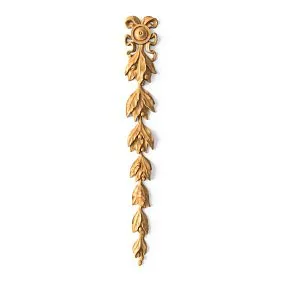
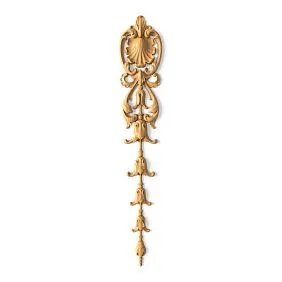

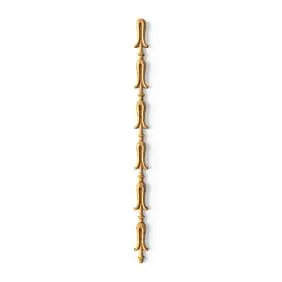
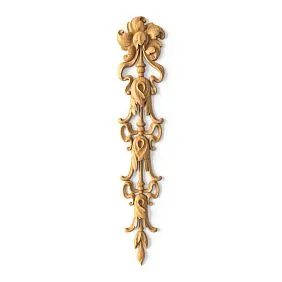

What is considered decorative wood carving
Decorative wood carving in the interior is a broad concept. It encompasses both a compact rosette with an 80 mm diameter and a three-meter-long cornice, as well as a large wall panel. It is important to understand the typology: each type of product works in its own way, in its own place, and in its own scale zone.




Carved Appliqués
Decorative wooden inlays— the foundation of furniture carved decor. These are three-dimensional ornamental elements that are attached to a surface: a cabinet facade, a door leaf, a wall panel, a dresser side. They can be horizontal, vertical, central, corner — depending on the task and installation location.
Solid oak and beech overlays are the most in-demand type of decorative carving for furniture. Over 400 models in the STAVROS catalog allow selecting an element by shape, size, and ornament for any furniture and any style. Fastening — structural adhesive or PVA-D3; after attachment, the overlay is painted together with the surface or coated with clear varnish to preserve the wood texture.
What's important to understand: an overlay is not a 'glued-on decoration.' A properly chosen overlay looks like an organic part of the piece—as if the furniture was created with it, not 'decorated' post factum.
Our factory also produces:


Cornices, moldings, and trim elements
wooden moldings, cornices, and baseboards— linear carved decor that works in length. On furniture, moldings create framed fields: they turn a smooth facade into a framed construction without physically changing its structure. On walls—they divide the plane into horizontal zones, creating panel systems. On the ceiling—they form a transition zone between the wall and the ceiling plane.
Molding is a line. And like any line in a visual system, it organizes space: it delineates, maintains proportions, creates rhythm. Without moldings, even the most beautiful point overlays can get lost on a facade—they need a 'frame' in which to live.
A wooden cornice for furniture is a special element. It finishes the cabinet from the top, gives it a 'head,' and makes the piece architecturally complete. A cornice with a carved profile is a level that is immediately read as quality.
Get Consultation
Capitals, brackets, rosettes, and panels
Brackets and capitals are architectural elements transferred to the scale of the interior.Wooden Brackets— are used in places where something needs to be 'supported'—visually or structurally: under a shelf, under a beam, under a cornice. They add vertical movement to horizontal elements and create a sense of tectonics—the structural meaningfulness of the interior.
Rosettes are centrally symmetrical ornamental elements. On the ceiling—the center of the composition, the point from which other decorative lines radiate. On a furniture facade—the accent center of a door or drawer. A panel is a large-format carved element that works as an independent decorative object on a wall or facade.
Overlay and openwork carving: what's the difference for the buyer
This distinction is fundamental to understanding exactly what you are choosing.
Applied wood carving— a relief ornament on a solid plane. The background is preserved, and the carving rises above it as a relief. This is a dense, 'heavy' in a good sense, decor that is clearly visible in both bright and subdued lighting. Overlay carving is the most common type of furniture and interior overlays.
Openwork (pierced) carving— an ornament in which the background is completely removed. Only the pattern remains — thin interweavings of lines, curls, leaves, floral motifs. The effect is lightness, lace-like quality, airiness. Openwork carving is especially beautiful when backlit or against a contrasting background: light lace on a dark door is a fundamentally different decorative story compared to a relief overlay.
For the buyer, the difference is as follows: overlay carving is for accentuating a surface, while openwork carving is for creating lightness and an optical effect of depth.
Where decorative wood carving is used in the interior
The place of application is the first and main selection criterion. The same product works completely differently on a furniture facade and on a wall. Understanding 'where' precedes understanding 'what'.
For furniture and facades
Furniture is the classic environment forof carved wooden decor. Cabinets, chests of drawers, sideboards, kitchen sets, libraries — all these products become fundamentally different when their facades feature ornamented decor made of natural wood.
Why is furniture especially grateful for carved decor? Because furniture is an object of contemplation. A person spends time near it: sits at a table, opens drawers, walks past it in the mornings. Wood with an ornament is perceived anew each time depending on the lighting — morning light casts one set of shadows, evening light another. It is a living material that does not become tiresome.
For furniture applications, the most important aspects are: dimensional conformity of the decor to the scale of the facade, stylistic consistency of the ornament, and compatibility with the finish.
For doors and portals
Interior doors with carved decor make a statement. Not loud, but clear: attention to detail is evident here. The central overlay on the upper panel, corner elements at the corners of the leaf, carved molding along the perimeter—each of these solutions changes the perception of the door as an object.
The door portal—the frame around the opening—has historically been one of the main places for decorative carving. Pilasters on the sides, a cornice on top, carved capitals at the transition point—this architectural solution transforms an ordinary doorway into an architectural event.
For doors and portals, accurate scale is crucial: an overlay for a door 2100 mm high should be designed for viewing from a distance of 1–2 meters. The ornament must be clear and legible precisely at this distance.
For walls, panels, and ceilings
Walls are the largest surface area in an interior. And it is precisely here that decorative carving can function as a system, not just as a point accent. Wall wooden panels with molding divisions and carved overlays in the fields—this is a classic interior scheme that has been effective for several centuries. It works because it is correct: rhythm, proportion, an ornamented accent in each field.
On the ceiling, carved wooden elements are used in coffered systems, as decor at beam intersections, and as central ceiling rosettes. On the ceiling, increased scale is important: an element visible from the floor must be significantly larger than the same element at eye level.
For classic and neoclassical interiors
If the interior is defined by a classic or neoclassical language,decorative wood carving for interiors— not an option, but a necessity. Classic without carved decor is an unfinished classic. Ornamented cornices, rosettes, overlays, moldings — all this constitutes the decorative alphabet of the style.
For a classic interior, carving must be systematic. This means: the cornice is coordinated with the moldings, the moldings — with the overlays on the furniture, the overlays — with the ornament of the door portals. Everything belongs to a single decorative program. A random set of uncoordinated elements of different styles creates decorative noise, not harmony.
How to choose decorative wood carving
Choice is the most responsible part. And the most interesting one. Here logic is more important than taste, although taste also matters.
By material — oak, beech, solid wood
The material determines the tactile value, behavior under the finish, and the durability of the product.
Oak — pronounced texture, large grain, warm golden-brown tone. Under a transparent finish (oil, varnish) it gives a lively, unique pattern. Oak is for natural, 'warm' interiors, for dark stains, for studies and libraries. Mechanically, it is the most durable choice.
Beech — a homogeneous species with fine grain. It best accepts enamel painting: under an opaque finish, it gives a smooth, flawless surface. For fine, detailed carving, beech is preferable to oak — small elements of the ornament come out more precisely. For white, light, and neutral interiors under painting — beech is the first choice.
MDF — a board, not solid wood. It works well under painting. But it is a different material: without texture, without the tactile value of natural wood. For budget projects under opaque painting — an acceptable choice. For a quality interior designed for a long life — solid wood is preferable.
By element type — overlay, cornice, panel, capital
Each element type serves a specific purpose. An overlay accentuates a point. Molding creates a line. A rosette forms a center. A cornice completes the upper zone. A capital transitions from a vertical support to a horizontal load. A panel creates an independent decorative object.
The mistake is choosing an element without understanding its functional role: buying a 'cornice' for its 'beautiful profile' without realizing that a cornice completes, not accentuates. Start with the task: what exactly needs to be done with this space? Complete it? Accentuate it? Demarcate it? Enliven it?
By scale and size
Scale is a critical parameter. An overlay that looks 'moderate' on a website may turn out to be either too large or barely noticeable in reality. The rule: the width of a point element should be no more than one-third the width of the installation field. Height should be no more than half the height of the field.
Always work with real measurements. Write down the width and height of the installation zone, open the product card, and compare the dimensions. This takes three minutes and prevents disappointment.
For ceiling elements, the scale increases: what looks 'large' on a furniture facade will 'get lost' on a four-meter-high ceiling. Ceiling decor must 'work' from a distance of 3–4 meters—meaning the ornament must be large and distinct.
By interior style
Style is a system, and decor must belong to the same system as everything else in the interior.
| Style | Type of ornament | Scale | Finish |
|---|---|---|---|
| Classic | Acanthus, flora, scrolls, symmetry | Large, saturated | Toning, patina, gilding |
| Neoclassical | Simplified flora, Greek meander, clean relief | Medium, restrained | White or neutral enamel |
| Eclectic | Mixing motifs, contrasting accents | Diverse | Transparent or contrasting |
| Modern Classic | Concise geometric motifs, soft ornament | Small, pinpoint | Enamel or oil |
| Country / Russian style | Floral motifs, openwork, geometric grids | Medium and large | Natural oil, stain |
By level of decorativeness — accent or restrained decor
Not every interior requires rich ornamentation. Sometimes one small rosette in the center of a furniture facade is all that's needed. Sometimes — a full system of overlays, moldings, and cornices.
Principle: decor should be proportionate to the scale and 'voice' of the space. In a small room, heavy classical carving can 'overwhelm' the space. In a tall formal hall, a restrained single overlay will get lost. Feel the scale — and the decor will reciprocate.
What to choose for different tasks
Let's consider specific scenarios — this is how professional selection of carved decor works.
For kitchen fronts and cabinets
The kitchen is a demanding space. Here, decor must be not only beautiful but also practical: it should paint well, clean easily, and not collect grease in the deep grooves of the pattern.
For kitchen fronts, overlays with a large, uncluttered pattern and sufficient space between design elements are optimal. Beech under white or colored enamel is the correct material choice. Size: compact central overlays for upper fronts, possibly corner elements on lower cabinets.
A useful resource for visual planning is the section decor ideas for STAVROS furniture fronts with ready-made design solutions and element combinations.
For dressers and classic furniture
A dresser is a horizontal object with repeating horizontal drawers. Decor for a dresser works best on the top large drawers, where it is most visible from a normal viewing angle. Horizontal overlays along the drawer or compact rosettes in the center are the two main scenarios.
For classic furniture — cabinets with framed fronts, sideboards, secretaries — the overlay integrates into the existing decorative program of the piece. It does not introduce a new style but continues the existing one. The pattern should belong to the same decorative language as the frame moldings, cornice profiles, and leg shapes.
For wall panels and doors
For walls — a systematic approach: molding division into panels + overlays in each panel + coordinated cornice at the top. This is the classic scheme of a wall paneling system, which organizes a large plane and makes it 'architectural,' not just painted.
For doors - overlays on the upper and lower fields of the panel, possibly a rosette in the center of the upper panel. The size of the door overlay is calculated for viewing from a distance of 1-2 meters. Clarity of the ornament is important: a dense small pattern from this distance 'merges' into a dark spot.
For accent interior zones
Fireplace, niche, architectural portal, built-in shelving, dining area - each of these places is a potential 'stage' for carved decor. Here, decorative carving works as a directorial technique: it highlights the zone, gives it visual weight, and makes it a focal point in the space.
For accent zones, larger and more expressive decor is permissible than in background zones. Contrast in the scale of the decor helps the space have hierarchy - primary and secondary.
Buy decorative wood carving in Moscow: what to check before ordering
Buying is a serious matter. Especially when it comes to decorative elements that will live in the interior for years. A few professional rules before placing an order.
Where the element will be used
The first question is always 'where'. Furniture? Door? Wall? Ceiling? Each place dictates its own requirements for shape, size, type of ornament, and even the method of attachment. Do not choose an element in isolation from its future home.
Is ready-made decor needed or a custom order for the project
For most tasks, the serial catalog fully meets the need. More than 400 models of STAVROS overlays in oak and beech cover almost all stylistic and dimensional tasks of furniture and interior decor. Serial products are shipped quickly and cost less than custom ones.
A custom order is justified when a non-standard shape for a specific dimension or a unique pattern for an author's project is needed. In this case, it is important to plan the timeline in advance.
What dimensions and proportions are needed?
Measure the installation area before opening the catalog. The width and height of the field are the basic data. The depth of the overlay relief is an important parameter for facades with narrow frames. The thickness of the element affects the mounting method.
When reviewing a product card, pay attention to all three dimensions: width × height × thickness. Especially thickness — it determines how much the element 'protrudes' above the surface.
Which material is more suitable?
Let's repeat the key rule: transparent coating — oak or beech, choose based on texture and tone. Opaque enamel — beech is preferable for detailed carving, MDF is acceptable for economical projects. Wet rooms — only treated solid wood with a moisture-resistant finish.
How to combine carved decor with other interior elements?
Carving does not exist in a vacuum. It lives alongside moldings, cornices, handles, textiles, and wall colors. Before ordering, answer the question: what exactly will the new decorative element be adjacent to? Is the pattern coordinated with the molding profile? Does the style of the overlay match the shape of the door handles?
Elements of decorative carvingwork within a system. A system is not a random collection of beautiful details. It is a well-thought-out decorative program in which each element knows its place.
How to combine wood carving with other decorative materials
Interior design is a symphony, not a solo performance. Carved wood is magnificent on its own, but when combined with other materials, it truly comes to life.
Wood and polyurethane
In modern interiors, a combination of wooden carved overlays on furniture andpolyurethane decoron walls and ceilings is often used. This is a practical and beautiful solution: polyurethane is lightweight, moisture-resistant, and takes paint well—ideal for ceiling cornices and wall moldings. Solid wood is for furniture and doors, where tactile value is important.
With such a combination, it is important to coordinate the patterns: if there is a floral classical cornice on the ceiling, the carved overlays on the furniture should belong to the same decorative register.
Wood and stone
Natural stone (or its imitations) paired with wooden carved decor creates a sense of organic natural luxury. A classic example is a stone fireplace portal with wooden carved pilasters and cornice. Or a stone tabletop on a chest of drawers with carved wooden overlays on the facades.
Wood and metal
Wrought iron elements, bronze handles, brass profiles—paired with carved wood, they create a 'warm metallic' accent. Bronze and dark oak are a classic combination for a study style. Matte brass and light beech under white enamel—for modern neoclassicism.
Common mistakes when choosing decorative carving
Knowing typical mistakes prevents disappointment. Let's examine each of them.
They choose only by the picture
The photo in the catalog is taken from a specific distance, under specific lighting, against a specific background. This creates an illusion of size that does not match reality. An overlay that looks 'moderate' on screen may turn out to be significantly larger or smaller than expected. Always read the technical specifications: width, height, thickness, relief projection.
They don't consider the scale of the furniture or wall
An 80×120 mm overlay on a 600×900 mm front panel is correct proportions. The same overlay on a 250×350 mm front panel is overload. A 200×300 mm overlay on a small drawer is another mistake. Scale is the proportion relative to the surface, not the absolute size of the product.
They mix different ornament styles
A lush Baroque overlay next to a laconic geometric molding in a neoclassical interior is a stylistic conflict. Each ornament belongs to its own decorative tradition. Mixing without conscious design intent creates visual noise.
They choose overly complex decor for a small room
In a small space, rich, multi-level decor 'compresses' the room. The smaller the room, the more restrained the decor should be. One accent element in the right place makes a greater impact in a small room than ten elements placed chaotically.
They don't think through the combination with cornices, moldings, and overlays
A carved overlay is not a standalone object, but part of a system. If overlays appear on furniture while moldings and cornices remain neutral, the decor looks 'inserted,' not organic. Before ordering overlays, always evaluate what is already nearby.
FAQ: Answers to Popular Questions About Decorative Wood Carving
What is considered decorative wood carving?
Overlays, rosettes, panels, cornices, moldings, brackets, capitals, balusters, pilasters, carved inserts — all these solid wood products with ornamental surface treatment are considered decorative wood carving in the broad sense.
Where to buy decorative wood carving in Moscow?
STAVROS is a Russian manufacturer with its own production and a Moscow warehouse. Over 400 models of carved overlays and decorative elements made of oak and beech in the serial catalog. Order and delivery in Moscow — on the websitestavros.ru.
What is better for interior design: ready-made elements or custom orders for a project?
For most tasks, the serial catalog fully meets the need. Custom orders are justified for non-standard sizes or unique ornaments. Ready-made products are faster, more affordable, and can be visually assessed before purchase.
What materials are most often used for carved decor?
Solid oak and beech are the main materials for quality decor. Oak is for natural finishes and dark toning. Beech is for enamel painting and fine carving. MDF is for budget projects under opaque painting.
Is decorative carving suitable for modern furniture?
Yes, with a conscious selection of concise elements with a soft ornament. A small overlay with a clean pattern as an intentional accent on a modern white facade is a design technique, not a stylistic error.
Can carved elements be used for walls and doors?
Yes. On walls—as a component of a panel system or a point accent. On doors—overlays in the fields of the leaf, carved decor of the portal. For walls and doors, calculated scaling for the actual viewing distance is important.
How does applied carving differ from openwork?
Applied—a relief ornament on a preserved background. Openwork—a through pattern without a background. Applied is visually 'heavier,' openwork is light and lacy. Different decorative effects for different tasks and places of application.
How to choose the size of a carved element?
Measure the installation field. The width of the decor—up to 1/3 of the field width, height—up to 1/2 of the field height. For corner elements—proportionate to the corner without intruding into the center. Always check against the actual dimensions from the product card.
What is better for classic style: overlays, cornices, or capitals?
All three types work together as a system. The cornice completes the upper zone. Overlays accentuate the facades. Capitals transition from columns to beams or cornices. For a full-fledged classic interior, a system of all types of elements is needed.
How not to overload the interior with wooden carved decor?
One main element is the dominant. The rest are auxiliary, smaller in scale. The ornament style is unified for all elements. The decor is proportionate to the scale of the room. A small room — restrained, pinpoint decor; a large ceremonial space — a rich classical program.
About the manufacturer
When it comes to where to purchasedecorative wood carving in Moscowwith confirmed quality and a wide range — the name STAVROS sounds logical.
STAVROS is a Russian manufacturer of decorative products from solid wood and polyurethane with 24 years of experience. Own production, Moscow warehouse, full product line: carved overlays, moldings, cornices, rosettes, brackets, capitals, trim. Over 400 models of carved decor from oak and beech in the serial catalog.
STAVROS clients are private buyers, interior designers, architectural bureaus, furniture manufacturers, and carpentry workshops across Russia. 24 years is not a formal figure; it is experience reflected in every product.
Go tocatalog of decorative carved wooden elements, explorearticles about types of wood carvingor immediately submit a request forSTAVROS main page— specialists will help you select decor to match your project, style, and budget.