Article Contents:
- Psychology of a unified space: why decor harmony matters
- Vertical and horizontal: architecture of interaction
- Classic approach: moldings on walls and ceilings
- Living room in neoclassical style
- Bedroom in classical style
- Modern minimalism: simplicity and continuity
- Living room in minimalist style
- Bedroom in minimalist style
- Scandinavian style: bright unity
- Living room in Scandinavian style
- Loft: industrial integrity
- Studio living room in loft style
- Bedroom with wooden ceiling
- Eclecticism: managed chaos
- Living room in eclectic style
- Materials and textures: creating dialogue
- Wood on walls and ceilings
- Plaster: unified texture
- Stone and tile: monumentality
- Metal: industrial accent
- Textile: softness and acoustics
- Color schemes: three approaches to harmony
- Monochrome: walls and ceiling of one color
- Contrast: dark walls, light ceiling
- Accent on ceiling: colored or textured
- Moldings and cornices: connecting elements
- Classic cornice
- Modern concealed cornice
- Contrasting Cornice
- Multi-layered Cornices
- Ceiling Rosettes and Medallions: Central Accent
- Classic Rosette
- Modern Geometric Rosette
- Rosette with Lighting
- Beams and Coffered Ceilings: Volumetric Structure
- Wooden Beams
- Coffered Ceiling
- Linear Structures: Modern Graphics
- Transition from Wall to Ceiling
- Linear Ceiling
- Lighting: Architectural Lighting
- Hidden Contour Lighting
- Lighting for Moldings and Decorative Elements
- Lighting for Linear Structures
- Spotlights in Coffered Ceilings
- Painting and Frescoes: Artistic Unity
- Classic Fresco Painting
- Modern Artistic Painting
- Stencil Painting and Ornamentation
- Space Zoning Through Decoration
- Different Finishes for Zones
- Multi-level Ceiling as Zoning
- Single Element Through the Entire Space
- Practical Aspects: Installation and Compatibility
- Sequence of work
- Material Joints
- Weight of Structures
- Humidity and Temperature
- Budget: From Economy to Luxury
- Complex Decoration Errors
- FAQ: Answers to Questions
- Conclusion: Fifth and Sixth Walls

Most people think of walls and ceilings as separate entities. Walls are what’s at eye level, important, requiring attention. The ceiling is the 'white background' that goes unnoticed. This is a fatal error. The ceiling occupies the fifth wall of the room, and when ignored, the interior loses completeness, harmony, and volume. Decorative finishing of walls and ceilings is not two separate projects, but a unified composition where each element enhances the other.
What happens when walls and ceiling work together? The space gains coherence. The gaze flows smoothly, without stumbling over dissonances. Verticals blend into horizontals. Colors, textures, and forms engage in dialogue, not conflict. Complex wall and ceiling decoration transforms a set of surfaces into an architectural ensemble, where every detail is in its proper place.




Psychology of Unified Space: Why Decor Harmony Matters
The human brain seeks order, patterns, and connections. When an interior is harmonious, the brain relaxes — everything is in its place, everything is understandable. When elements conflict — walls luxurious, ceiling plain, or vice versa — cognitive dissonance arises. Something is wrong, something irritates, though it’s hard to articulate.
Harmony is created through repetitions and contrasts. Repetitions occur when an element from the wall continues onto the ceiling. Molding, color, texture, material. Contrasts arise when walls are dark and the ceiling is light, but there is a connection through shape or details.Unity of Wall and Ceiling FinishingAchieved through intentional design, where every decision considers the whole.




Vertical and Horizontal: Architecture of Interaction
Walls are vertical, active space, where furniture and decor are placed, where attention is focused. The ceiling is horizontal, passive space, perceived peripherally. But it is precisely the ceiling that defines the room’s scale, height, and airiness.
When vertical wall elements (molding, rails, panels) flow onto the ceiling or reflect in it, visual unity is created. The room appears higher, more voluminous, more complex. When walls and ceiling are not connected, the space appears flat, one-dimensional.
Our factory also produces:


Classic Approach: Moldings on Walls and Ceiling
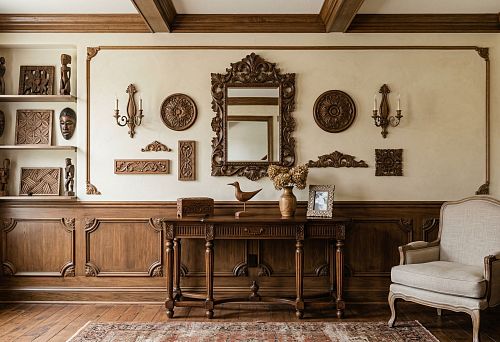
Classic interiors are built on architectural details — moldings, cornices, rosettes, panels. Here, the connection between walls and ceiling is obvious and mandatory. Moldings create structure, divide planes into sections, add relief and volume.
Traditional scheme: walls framed by moldings creating frames (boiserie). Ceiling bordered by cornice (gallet), with a rosette around the chandelier in the center. Corners can be accentuated with corner elements. Together, they create an architectural composition where walls and ceiling are parts of a single concept.
Moldings on Walls and CeilingsWorks as a visual code of classicism. Even in a small room, properly chosen proportions create a sense of significance, grandeur.
Get Consultation
Living Room in Neoclassical Style
Walls: from floor up 1.2 meters — dark oak wooden panels with dados, framed by moldings. Above — walls painted light gray, framed by vertical moldings creating symmetrical rectangles. In the center of rectangles — wallpaper with a delicate classical pattern.
Ceiling: painted the same light gray as the upper part of the walls. Around the perimeter — wide cornice with ornament repeating wall molding motifs. In the center — large rosette with botanical decor, from which a crystal chandelier hangs. Corners of the ceiling are accentuated with corner elements.
Connection: ceiling color matches the upper wall section color. Cornice ornament corresponds to wall moldings. Central ceiling rosette is proportional to wall panels. Result is a harmonious ensemble where each element is connected to another.
Bedroom in Classic Style
Walls: fully covered with boiserie — wooden frames with dados, painted cream-white. Moldings are thin and elegant. Dados are slightly recessed, creating a soft relief. Height of boiserie from floor to ceiling.
Ceiling: coffered — divided by beams and crossbars into square sections. Beams painted the same cream-white as boiserie. Sections between beams slightly darker — light beige. Small rosette in center of each section. Chandelier in central section.
Connection: color of boiserie on walls and beams on ceiling is identical. Rhythm of squares on ceiling corresponds to rhythm of dados on walls. Bedroom appears as a single architectural volume, a box with thoughtfully proportioned dimensions.Classic Ceiling and Wall FinishingCreates an atmosphere of eternity, timeless elegance.
Modern Minimalism: Simplicity and Continuity
Minimalism rejects ornamentation but demands flawless proportions and details. Here, the connection between walls and ceiling is achieved through color, material, and geometry.
Popular techniques: walls and ceiling painted the same color, erasing the boundary between them. Or material from the wall 'extends' onto the ceiling — wooden rails, panels, plaster. Or hidden cornices create a floating effect, visually separating the ceiling from walls with a thin light line.
Wall and ceiling decoration in minimalism — it's not about adding details, but about their thoughtful removal. Keep only what is necessary, but do it perfectly.
Living room in minimalist style
Walls: three walls are painted with light gray matte paint. The fourth — accent wall — is clad with vertical oak planks in natural color. The planks rise from floor to ceiling and continue onto the ceiling, covering it with parallel lines.
Ceiling: the same plank structure continues from the accent wall, covering one-third of the ceiling above the sofa. The rest of the ceiling is painted the same light gray as the walls. Between ceiling and walls — a hidden cornice with LED lighting, creating a floating effect.
Connection: the planks continuously transition from wall to ceiling, creating a dynamic line. The color of gray walls and gray ceiling is identical. Lighting highlights the boundary but softens it, making it non-sharp. The space is perceived as unified, flowing.Wall and ceiling paneling— one of the main trends in modern design.
Bedroom in minimalist style
Walls: all walls are painted in warm beige-gray. The wall behind the bed headboard is clad with veneered MDF panels in walnut. Panels are smooth with thin horizontal seams. Panels rise from floor to 2.5 meters and continue onto the ceiling, covering a 1.5-meter-wide strip above the bed.
Ceiling: the main part is painted the same beige-gray as the walls. The wooden panel strip above the bed creates an accent. Recessed spotlights and hidden lighting along the edges are built into this strip.
Connection: wooden panels form a continuous surface running along the wall and ceiling. The color of the other walls and ceiling matches. Lighting within the wooden strip makes it appear to float. The bedroom gains coziness through wood and volume through the play of planes.
Scandinavian style: light unity
Scandinavia loves light, air, simplicity. Walls and ceilings are often white or very light, creating a sense of infinite space. But to avoid monotony, textures, wooden elements, and thin moldings are added.
Typical solutions: walls and ceiling are white, but the ceiling has wooden beams or planks. Or the ceiling cornice is painted in a contrasting color (black, gray), adding graphic elements. Or textured plaster on walls is repeated on the ceiling, creating tactile unity.
Harmony of decoration in Scandinavian style is achieved through the balance of white background and natural accents, evenly distributed across walls and ceiling.
Living Room in Scandinavian Style
Walls: painted with white matte paint. One accent wall is clad with vertical light beech boarding, covered with white lacquer (wood texture is visible).
Ceiling: white, with three decorative beams made of the same beech as the wall boarding. Beams run parallel to the accent wall, painted the same white with visible texture. Around the perimeter of the ceiling — a thin cornice painted in medium gray, adding graphic elements.
Connection: the material of the wall boarding and ceiling beams is identical. The finish is the same — white lacquer. The gray cornice matches the gray elements in the furniture. The living room is bright, airy, but not empty due to the texture of wood and the graphic cornice.
Loft: industrial integrity
Loft plays with rough textures — concrete, brick, metal, old wood. Here, walls and ceilings are often made of the same material or contrast, but intentionally.
Typical schemes: brick walls, concrete ceiling with exposed utilities (pipes, ventilation). Or concrete walls, ceiling with wooden beams. Or walls clad with old boards, ceiling painted black or graphite.
Decorative finishing in loft styleBuilt on contrasts of textures, but these contrasts are thoughtfully designed. Rough wood softens cold concrete. Warm brick balances the black ceiling.
Studio living room in loft style
Walls: one wall — exposed brickwork, left without plaster, covered with transparent protective coating. Brick color — warm reddish-brown. Other walls — concrete, smooth, gray, with light formwork marks.
Ceiling: concrete, with exposed black metal beams running parallel to the brick wall. Ventilation pipes are chrome-plated and not hidden. Ceiling is high — 3.5 meters.
Connection: industrial aesthetics unites walls and ceiling. Brick, concrete, metal — materials of one philosophy. Ceiling color (gray concrete) matches concrete walls. Black beams contrast, but logically — they are structural elements. The space is brutal, but unified.
Bedroom with wooden ceiling
Walls: painted with graphite matte paint. Wall behind the headboard is clad with old barn boards laid horizontally. Boards are gray-brown, with visible cracks and wear.
Ceiling: fully clad with the same old boards, but laid in a different direction (diagonally or in a herringbone pattern). Boards are coated with matte varnish, preserving texture and color.
Connection: the material of the walls and ceiling is the same — old boards. But the laying direction differs, creating dynamism. The graphite-colored walls contrast with the warm gray-brown wood, yet harmonize in tone. The bedroom is cozy and intimate, despite the dark colors.
Eclecticism: controlled chaos
Eclectic interiors mix styles, eras, materials. Here, it's important not to overdo it, not to turn the mix into chaos. The connection between walls and ceiling in eclecticism is achieved through a common element — color, shape, motif.
Possible combinations: classical moldings on the ceiling, modern wallpaper on the walls, but the colors match. Or wooden panels on the walls in a country style, and a ceiling with moldings in baroque style, but everything is painted in one color, creating unity.
Complex decoration of walls and ceiling in eclecticism — it's the art of balance. Each element is individual, but together they create harmony through repetition of color, scale, and mood.
Living room in eclectic style
Walls: three walls are covered with large-scale botanical pattern wallpaper in blue-green tones on a white background. The fourth wall is painted in deep blue. On the blue wall — moldings creating rectangular frames, painted gold.
Ceiling: white, with classical moldings along the perimeter (cornice with ornament) and a rosette in the center. The moldings are painted gold, like the moldings on the blue wall.
Connection: the gold color unites the ceiling moldings and wall moldings. The blue on the wall echoes the blue in the wallpaper pattern. The white ceiling balances the vibrant walls. The living room is eclectic but not chaotic, thanks to color repetitions and the classic structure of the moldings.
Materials and textures: creating dialogue
Wood on walls and ceiling
Wood is a universal material that works in any style. When wood is used both on walls and ceiling, it's important to vary the direction, plank width, and finish to avoid the "wooden box" effect.
Examples: walls — horizontal planks, ceiling — vertical boards with gaps. Or walls — dark wood, ceiling — light. Or walls — smooth panels, ceiling — beams with pronounced texture.Wooden wall and ceiling finishcreates a warm, cozy atmosphere.
Plaster: unified texture
Decorative plaster can cover both walls and ceiling, creating a seamless space. Venetian plaster, textured, microcement — any type works on both surfaces.
Effect: the room is perceived as a single volume, without a clear boundary between vertical and horizontal. Especially impressive in bathrooms, where tadelakt plaster covers both walls and ceiling, creating the feeling of a cave or hammam.
Stone and tile: monumentality
Natural or artificial stone, ceramic granite — materials traditionally used on walls, but increasingly appearing on ceilings in accent zones.
Application: in the bathroom, walls are clad in marble, and the ceiling — the same marble in the central part, creating a dome effect. Or in the kitchen, the wall and ceiling above the island are clad in large-format concrete-effect tiles.
Metal: industrial accent
Metal panels, boards, perforated sheets on walls and ceiling create a modern, technological look. More common in commercial interiors, but also effective in residential (lofts, high-tech).
Textile: softness and acoustics
Textile panels on walls and textile suspended ceilings create a cozy, intimate atmosphere. Suitable for bedrooms, home theaters. Fabric absorbs sound, softens acoustics, adds tactile quality.
Color schemes: three approaches to harmony
Monochrome: walls and ceiling of one color
The simplest way to create unity — paint everything in one color. White, gray, beige. Boundaries fade, the space seems larger, airier.
Nuance: use different textures in monochrome to avoid flatness. Smooth walls, textured ceiling. Or matte walls, ceiling with slight gloss.
Contrast: dark walls, light ceiling
Classic scheme. Dark walls create intimacy, while a light ceiling does not press down, preserving the sense of height. Connection through details — moldings, cornices, transitional colors.
Example: dark blue walls, white ceiling, but the cornice at the junction is painted gold, creating a transition. Or white moldings on dark walls, echoing the ceiling.
Accent on the ceiling: colored or textured
Bold solution — make the ceiling the accent. Walls are neutral (white, gray), ceiling is bright (terracotta, emerald) or textured (wooden, with stucco).
Effect: the ceiling becomes the fifth wall, a full participant in the interior. This adds surprise, individuality.Colored ceiling in interior— trend of recent years.
Moldings and cornices: connecting elements
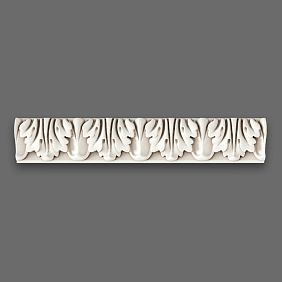
Moldings are not just decoration, but a tool for connecting walls and ceiling. The ceiling cornice (crown molding) forms a transition, softens the angle, and creates a sense of completion.
Classic cornice
Wide cornice with ornament, running around the room's perimeter. It can be painted in the ceiling color, wall color, or contrasting (often white on colored walls or gold in classic styles).
The cornice visually lifts the ceiling, adding architectural character. In classic interiors, this is a mandatory element.Ceiling cornices and moldingscreate the structure of space.
Modern hidden cornice
Niche cornice between wall and ceiling, with built-in LED lighting. Light goes upward, illuminating the ceiling, creating a floating effect. The ceiling visually separates from walls, appearing lighter and higher.
This technique is popular in minimalism, high-tech, and modern styles. Hidden lighting can be warm (cozy) or cool (technological), colored (RGB strips for mood changes).
Contrasting cornice
Cornice painted in contrasting color to walls and ceiling. A black cornice on white walls and ceiling — graphic, modern solution. Or a dark gray cornice on light gray surfaces — subtle contrast, adding depth.
Multi-layered cornices
Several moldings installed at different levels, creating a complex, multi-layered composition. This is Baroque, Empire, luxurious classic. Each layer can be painted in its own shade, creating a play of tones.
Ceiling rose and medallions: central accent
Rose on the ceiling — decorative element around the chandelier. In classic style, this is a mandatory attribute; in modern styles — a returning trend.
Classic rose
Round or oval, with floral ornament, petals, scrolls. Diameter from 30 cm to 1.5 meters depending on room size. Painted white, cream, gold, or patinated.
The rose creates a central composition on the ceiling, from which rays (in the form of moldings, beams) radiate or toward which elements converge. It is proportionate to the chandelier and room scale.
Modern geometric rose
Strict geometric shapes — squares, octagons, concentric circles. Minimal ornament, maximum graphics. Suitable for modern classic, art deco, transitional styles.
Rose with lighting
Hidden lighting is built into the rose, creating glow along the contour or from the center. This adds volume, making the ceiling alive and changing depending on time of day.
Beams and coffers: volumetric structure
Wooden beams
Real (load-bearing) or decorative (hollow, polyurethane, stained to resemble wood). Beams divide the ceiling into sections, create rhythm, and add architectural character.
Beams can run parallel, forming stripes. Or they can intersect, creating a grid. Color — natural wood, painted white, black, or contrasting with the ceiling.
Connection to walls: beams can rest on pilasters or moldings on walls, creating a logical structure. Or the beam material matches the wall panel material (same oak, same finish).
Coffered ceiling
Ceiling divided by beams and crossbars into square or rectangular sections (coffers). This is classic Renaissance and Baroque, but works in modern interiors with a minimalist execution.
Coffers can be single-level or multi-level (recessed). They are painted one color or play with contrast (dark beams, light sections). Inside coffers, there can be outlets, frescoes, or lighting.
Connection: the rhythm of coffers on the ceiling corresponds with the rhythm of wall panels, windows, and moldings. Beam color matches the color of wooden wall elements or moldings.
Slatted constructions: modern graphics
Slats — vertical or horizontal boards with gaps — are a popular trend. They can run only along walls, but are more effective when they extend onto the ceiling.
Transition from wall to ceiling
Vertical slats rise along the wall and smoothly transition onto the ceiling, forming a continuous line. This creates dynamism, visually increases height, and unifies space.
Example: in the living room, an accent wall behind the sofa is clad with vertical oak slats. The slats do not stop at the wall-ceiling junction but continue, covering the ceiling with a 1.5–2 meter wide strip above the sofa. Lighting is visible between the slats, creating a glowing effect.
Slatted ceiling
The entire ceiling is clad with slats (usually with gaps). Slats can be wooden, metal, or plastic. Color is natural or painted.
Connection to walls: the color of the slatted ceiling matches the color of one of the walls or contrasts logically (dark ceiling, light walls). Or the ceiling material repeats the material of the accent wall (same slats, but vertical on walls, horizontal on ceiling).
Lighting: architectural lighting
Light is a powerful tool for connecting walls and ceiling. Proper lighting enhances architectural details, creates volume, and changes the perception of space.
Hidden contour lighting
LED strips hidden in niches, cornices, behind moldings. Light goes upward (illuminating the ceiling), downward (illuminating walls), or both directions.
Contour lighting highlights boundaries, creates a floating effect, and adds depth. Light color can be warm (cozy), cool (modern), or colored (accent, mood).
Lighting of moldings and cornices
Light is directed at cornices, moldings, outlets, emphasizing relief. This creates play of light and shadow, making moldings volumetric and alive.
Especially effective in classical interiors: gold moldings under side lighting cast shadows, creating drama.
Lighting of slatted constructions
LED strips between slats create a glow penetrating through gaps. Slats appear to float, glowing from within. This is modern, technological, and dramatic.
Spotlights in coffers
A built-in spotlight or small chandelier in the center of each coffer. This creates even lighting and emphasizes the ceiling structure.
Painting and frescoes: artistic unity
Wall and ceiling painting is a classic of palace interiors, but returning in modern projects.
Classic fresco painting
The ceiling is painted with a scene (sky with clouds, mythological scenes, angels). Walls are either thematic inserts or framed by moldings that echo the painting's ornamentation.
This is expensive, requires a professional artist, but the result is unique. Such interiors create a museum or palace atmosphere.
Modern artistic painting
Abstract painting, graphics, minimalist motifs. Painting on one wall continues onto the ceiling, creating a unified composition.
Example: in a bedroom, the wall behind the bed and the ceiling above it are painted with a gradient from dark blue (at the bottom of the wall) to light blue (on the ceiling), simulating the sky transitioning from night to dawn.
Stencil painting and ornaments
Repeating ornament by stencil on walls and ceiling. This is cheaper than original painting, but creates a decorative effect. The ornament may run along the perimeter of the ceiling, echoing the moldings on the walls.
Zoning through decoration
In studios and open floor plans, wall and ceiling decoration is used for zoning without partitions.
Different finishes for zones
Living room zone: light-colored walls, ceiling with wooden beams. Kitchen zone: walls with tiles, smooth painted ceiling. Transition is soft, through color or one repeating element (beams in the living room match the color of the kitchen countertop).
Multi-level ceiling as zoning
Above the living room — higher ceiling with moldings. Above the dining room — lower ceiling with beam construction. The difference in height and decoration creates visual boundaries for zones.
Single element throughout the entire space
Wooden beams run across the ceiling throughout the studio, unifying zones. But each zone has its own walls: living room — wallpaper, bedroom — wooden panels, kitchen — tiles. Beams create unity, walls — distinction.
Practical aspects: installation and compatibility
Work sequence
First, the ceiling (plastering, painting, installing moldings), then the walls. Or vice versa, if the ceiling material is mounted on finished walls. It's important to plan ahead to ensure neat joints.
Material junctions
Transitions from wall to ceiling require precise angle calculations so that boards or panels fit together without gaps. Moldings help conceal uneven joints.
Weight of structures
Heavy materials (gypsum moldings, stone) on ceilings require a strong base and secure mounting. Lightweight polyurethane is easier to install.
Humidity and temperature
In rooms with height variations (kitchens, bathrooms), wall and ceiling materials must be moisture-resistant. Wood requires treatment, gypsum is unsuitable, polyurethane is ideal.
Budget: from economical to luxurious
Economical (up to 2000 rubles/m² for walls and ceiling combined):
-
Painting walls and ceiling in one color
-
Simple polyurethane cornices
-
Wallpaper on walls, painted ceiling
Medium (2000–5000 rubles/m²):
-
Decorative plaster on walls, textured ceiling paint
-
Moldings and cornices with ornament
-
Wooden paneling on walls, lath or painted ceiling
Premium (5000-15000 rub/m²):
-
Venetian plaster on walls and ceiling
-
Wooden panels on walls, coffered ceiling
-
Handmade stucco
-
Natural stone on accents
Luxury (from 15000 rub/m²):
-
Handmade boiserie
-
Coffered ceiling with painting
-
Marble on walls and ceiling
-
Author's artistic painting
Errors in comprehensive decoration
Overloading with details. Complex stucco on walls plus coffered ceiling plus painting — too much. Enough 1-2 accents.
Mismatched scale. Large stucco in a small room or small moldings in a huge hall look disproportionate.
Style conflict. Classical stucco on ceiling and minimalist walls without connecting elements look foreign.
Ignoring proportions. The ceiling cornice should match the ceiling height. Too wide in a low room visually lowers the ceiling.
Lack of repetition. If walls have moldings but the ceiling is completely smooth without cornice — no connection, no completion.
FAQ: Answers to questions
Is it necessary to use the same material on walls and ceiling?
No, but there should be a connection through color, shape, style.
How to make a low ceiling appear higher?
Vertical elements on walls, reaching upward. Light ceiling. Hidden perimeter lighting.
Can a dark ceiling be done?
Yes, if the room is spacious and high. In small rooms, a dark ceiling feels heavy.
How to choose cornice width?
The higher the ceiling, the wider the cornice. For 2.7 m — 5-10 cm, for 3.5 m — 15-25 cm, for 4+ m — up to 40 cm.
Is stucco only suitable for classic style?
No, modern minimalist stucco works well in minimalism and modern classic styles.
From 2000 (budget) to 50000+ rubles per square meter (lux) depending on materials and complexity.
From 2000 (budget) to 50000+ rubles per square meter (lux) depending on materials and complexity.
Can it be done yourself?
Painting, wallpapering, installing light cornices — yes. Stucco, coffered ceilings, complex structures — better left to professionals.
Conclusion: fifth and sixth walls
Decorative wall and ceiling finishing— it is not two projects, but a single symphony, where each instrument plays its part, yet together creates harmony. The ceiling is not a plain background, but a full-fledged participant in the interior. Walls are not isolated planes, but parts of an architectural ensemble.
Comprehensive decoration of walls and ceiling— requires vision of the whole, understanding of connections, sense of proportion. When everything is done correctly, the space acquires wholeness, completeness, character. When elements conflict — discomfort arises, even if each element individually is beautiful.
Moldings on Walls and CeilingsWooden structures, plaster, paint, lighting — tools that, in skilled hands, create masterpieces. The key is to understand the laws of harmony, respect proportions, not fear experimenting, but know when to stop.
Company STAVROS offers everything necessary to create a unified ensemble of walls and ceilings. The assortment includesCeiling cornices and moldings— polyurethane, sockets, coffered ceilings, corner elements.wall moldings— panels, bouclé.Wooden elements— cornices, skirting boards, rails from different species. All materials are high quality, with precise geometry, easy to install. Professional consultants will help select compatible elements for walls and ceilings, create a unified composition, calculate quantities. Delivery throughout Russia. Here you can find everything — from simple cornices to complex architectural systems, from budget solutions to exclusive handmade elements.
Create spaces where every surface plays its part, yet together they sing. Where walls and ceilings are not neighbors, but partners. Where decorative harmony creates comfort, beauty, joy of being. Your home deserves wholeness.