Article Contents:
- What is decorative wall molding and how does it differ from ceiling decor
- Wall is not ceiling: different tasks, different logic
- When wall molding is appropriate and when it is not
- Complete breakdown: which elements belong to decorative wall molding
- Moldings: the backbone of any wall composition
- Decorative frames: modern classic
- Appliqués: point accents with big character
- Rosettes: not just for ceilings
- Ornaments and Friezes
- Pilasters and Capitals
- Wall Panels and Boiserie Systems
- Decorative Molding Materials: Honest and Detailed Comparison
- Gypsum: Substantial Classic
- Polyurethane: Universal Standard of Modern Decor
- Polystyrene: Economy with Caveats
- MDF and Solid Wood: For Panels and Moldings with Texture
- Decorative Molding in Different Interior Styles
- Classic: Complete Architectural System
- Neoclassicism: architectural logic without excess
- Modern classic: freedom within boundaries
- Minimalism with decorative accents
- Modern interior with geometric decor
- Where to best use wall molding: room-by-room breakdown
- Living room: the main stage
- Bedroom: intimacy instead of grandeur
- Entryway: interior from the first step
- Study: decor as a status attribute
- TV area, niches, and doorways
- Popular wall molding design scenarios
- Scenario 1: Accent wall with a frame system
- Scenario 2: Horizontal wall division
- Scenario 3: Symmetrical composition with a central accent
- Scenario 4: Molding combined with panels
- Scenario 5: Fireplace area design
- How to choose the size, rhythm, and pattern of decorative molding
- Scale — the first and main criterion
- Rhythm and proportions of frames
- Recommendations for small rooms
- Recommendations for high-ceilinged rooms
- What to combine decorative wall molding with
- Paint: Monochrome or Contrast
- Decorative Plaster
- Wallpaper
- Mirrors and sconces
- Furniture and Textiles
- Common Mistakes When Choosing Decorative Wall Molding
- Mistake 1: Complex Ornament in a Small Room
- Mistake 2: Violation of Scale
- Mistake 3: Overloading with Details
- Mistake 4: Incorrect material choice
- Mistake 5: Choosing Based on Photos Without Considering the Actual Room
- Mistake 6: Ignoring Lighting
- What to Choose for Different Tasks: Practical Table
- Conclusion: Algorithm for Choosing Decorative Molding in 6 Steps
- FAQ: Answers to Popular Questions About Decorative Wall Molding
- About the Company STAVROS
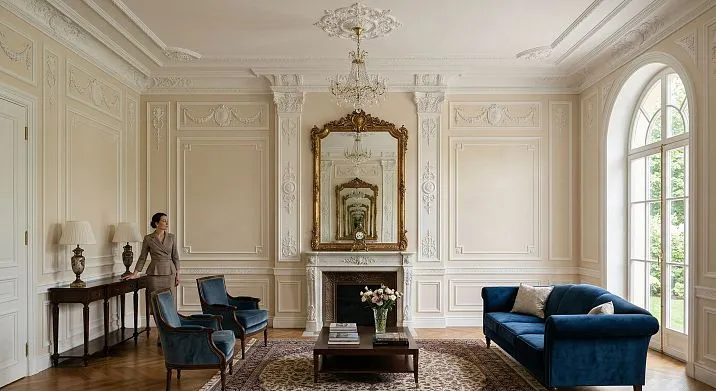
There are things that need no explanation—they simply work. You enter a room, and something subtly shifts in perception: the walls don't just look painted, but lived-in, considered, constructed. Almost always behind this feeling lies decorative wall molding—disciplined, precisely placed, unobtrusive or solemn, depending on what the space demands.
Today, decorative wall molding is not an archival tool of classical palaces. It is a living, in-demand, and surprisingly flexible way to give walls architectural dimension. Moldings, frames, overlays, ornaments, pilasters—each of these elements solves a specific visual task. And in this practical guide, we'll cover everything: from the nature of the decor itself to the precise algorithm for choosing it for your room.


What is decorative wall molding and how does it differ from ceiling decor




A wall is not a ceiling: different tasks, different logic
The first and fundamental point to clarify right away: wall and ceiling moldings are not the same thing, although they are made from the same materials. On the ceiling, decor is perceived from a distance, from below upwards, under uniform or directional lighting from above. On a wall—directly in front of the eyes, up close, with side lighting. This means the relief on the wall is more 'readable,' and errors in scale or proportion are more noticeable.
Decorative wall molding is a collection of architectural and ornamental elements mounted specifically on a vertical plane: moldings, frames, overlays, pilasters, ornamental inserts. Its task is not just to decorate, but to structure the wall: to give it rhythm, hierarchy, scale, and character.
Our factory also produces:


When is wall molding appropriate and when is it not
Appropriate—almost always, if the right element is chosen for the specific space. Inappropriate—when the decor contradicts the furniture style, overwhelms a small room, or is chosen without considering proportions. But that's already a question of choice, not fundamental incompatibility. Skillfully appliedSculptural wall decorationtoday is found in both strict modern interiors and luxurious neoclassical projects.
Get Consultation
Complete breakdown: which elements belong to decorative wall molding
This is perhaps the most important section for practical application. Many buyers get confused by the names—and end up buying the wrong thing. Let's break down each category.
Moldings: the backbone of any wall composition
A molding is an extended profile with a shaped cross-section that runs along a wall horizontally, vertically, or along a contour. It is moldings that form frames, divide walls into tiers, frame niches and openings, and create transitions between functional zones.
STAVROS wooden moldingsare made from solid oak and beech—this is the choice for those who value natural material with a living texture. Polyurethane moldings from the STAVROS assortment—over 40 profiles with widths from 30 to 100 mm—are intended for walls and can be covered with any paint. The selection principle: for wooden panels and furniture framing, choose wooden moldings; for accent walls to be painted, choose polyurethane ones.
Volumetric wall design usingdecorative moldings, layouts, and contour profilesis built on the principle of layering: a base molding sets the large structure—rectangular or square frames—and within each panel, a thinner profile is mounted, creating additional division. This transforms a flat wall into a multi-layered architectural solution.
Decorative frames: modern classic
Frames made from moldings are one of the most popular and accessible scenarios for wall plaster decor. Essentially, these are several pieces of molding joined into a rectangular or square contour. The frame system divides the wall into sections, giving it an English panel aesthetic and a sense of architectural thoughtfulness.
Key parameters when creating frames:
-
Quantity — even for symmetrical walls, odd for accent solutions with a central element;
-
Proportions — the height of the frame should be greater than the width (ratio 3:2 or 2:1);
-
Margins — from the edges of the wall and between frames should be equal and constitute 20–30% of the frame width.
Appliqués: Point accents with strong character
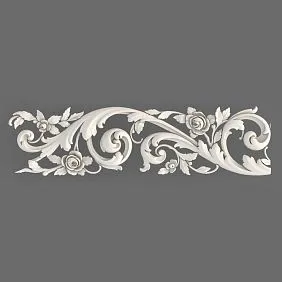
Polyurethane decorative appliques— these are individual three-dimensional elements with ornamentation, mounted pointwise. By shape — corner (for frame corners), central (medallions, cartouches for the middle of a panel), linear (friezes, borders for filling molding strips).
The variety of shapes and ornaments is impressive: acanthus leaves, scrolls, floral rosettes, geometric figures, mascaron, cartouches with a smooth central part. Size varies from compact 5×5 cm (corner elements) to large 40×60 cm (central panels). It is the appliqués that transform a simple molding frame system into a classical or neoclassical wall composition.
Rosettes: Not just for ceilings
Most people think rosettes are exclusively a ceiling element. This is incorrect.STAVROS polyurethane rosettesare also used on walls: in the center of framed panels, above doorways, as a focal point of a symmetrical composition. Round or oval, with classical or Gothic ornamentation — they create a visual center where the wall demands it.
Ornaments and Friezes
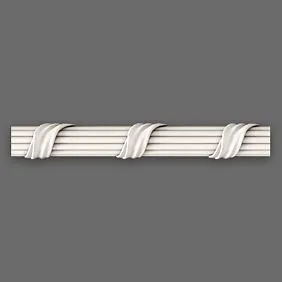
Linear ornaments — horizontal strips with a repeating pattern — are used as borders at the level of horizontal molding, as framing for the area above a radiator, or along the top part of a wall. This is one of the most elegant ways to add a decorative touch without large-scale architectural changes.
Pilasters and Capitals
Pilasters are flat vertical projections that mimic classical columns.STAVROS Brackets and Capitalscap off pilasters from above, creating a complete architectural detail. In interiors, pilasters are installed on the sides of a fireplace, around the TV area, by the entrance group, and in openings between rooms. They instantly elevate the visual status of the space.
Wall Panels and Boiserie Systems
The most complex and prestigious format is full-fledgedSTAVROS boiserie wall panels. This is a ready-made system of wooden panels, moldings, pilasters, and cornice, creating a complete architectural wall cladding. The panels are made from solid oak, beech, or MDF with enamel — suitable for any concept: from palatial classicism to restrained modern classicism.
Decorative Molding Materials: An Honest and Detailed Comparison
The choice of material is one of the first and most practical decisions. We will answer it with genuine honesty.
Plaster: The Substantial Classic
Plaster molding is historically the first and to this day the most 'authentic' material. Plaster has high density, conveys the finest carving details, and looks monumental. In restoration projects and high-end classic interiors, it has no equal.
But the list of limitations is serious:
-
Weight — large plaster elements require reliable fastening, often with mechanical anchors;
-
Fragility — breaks during transportation and installation;
-
Sensitivity to moisture — not applicable in bathrooms, kitchens, hallways without additional protection;
-
Installation complexity — requires a professional;
-
Price — significantly more expensive than polyurethane.
Plaster is the right choice for those restoring a historic mansion or building a formal living room with a ceiling of 4+ meters. For an ordinary apartment, it's an excessive solution.
Polyurethane: the universal standard of modern decor
Polyurethane molding STAVROS— today it is the main material for decorative molding in residential and commercial projects. The reasons are simple and substantial:
-
Lightweight — large profiles can be installed alone without special equipment;
-
Moisture resistance — works in kitchens, hallways, bathrooms;
-
Impact resistance — does not crumble during transportation and daily use;
-
Installation ease — cuts with a regular knife or saw, attaches with mounting adhesive;
-
Environmental safety — polyurethane is inert and does not emit toxic substances;
-
Versatility in painting — primed white surface accepts any paint, from water-based to decorative compounds.
The latter is especially important for working with color. Molding matching the wall color, contrasting white, or tinted to resemble bronze — all of this is achievable without limitations specifically with polyurethane.
STAVROS produces polyurethane products from European raw materials. This is not cheap, porous material from a construction hypermarket — it is dense, meticulously crafted decor with clear relief and a long service life.
Polystyrene: Savings with Caveats
Polystyrene moldings and skirting boards are present in the budget segment of the market. For simple tasks — for example, to conceal the joint between the wall and ceiling in rental housing — they serve their function. But for serious decorative wall molding, polystyrene is not considered: it is brittle, with unclear relief, holds paint poorly, and does not create the impression of an architectural detail.
MDF and solid wood: for panels and moldings with texture
STAVROS wooden moldingsmade of oak, beech, and veneer of valuable wood species — a choice for projects where the natural texture of the material is important. Wood provides warmth, 'liveliness,' and a sense of genuine craftsmanship. Painted MDF is an affordable alternative with a white painted surface and a clear profile. For wooden wall panels (boiserie), furniture framing, and fireplace portals — this is the first choice.
Decorative molding in different interior styles
Classic: A complete architectural system
In a classic interior, wall molding is not a decoration, it is a structure. The wall is divided into three mandatory zones: a high baseboard skirting or lower panels, the main field with frames and pilasters, and a cornice completing the transition to the ceiling. The ornament is rich: acanthus leaves, rocaille, garlands, volutes, mascaron. The color palette is white on white, cream with gilding, gray on ivory.
For classic style, richly ornamented overlays, large cornice profiles, full pilasters with capitals are needed.Decorative elements for wall finishingin the Empire style — laurel wreaths, eagles, symmetrical overlays — create a monumental character for the space.
Neoclassical: architectural logic without excess
Neoclassical is the most relevant style for working with moldings today. It retains the structural principles of classicism (symmetry, tiering, rhythm), but the decor becomes more restrained. Profiles have moderate cross-sections, ornaments are simplified or absent altogether. Color is often monochromatic: the entire wall, including the molded decor, is painted in one tone. Volume exists but doesn't shout—it's felt.
STAVROS wall panels in boiserie style— a ready-made system for a neoclassical interior. Pilasters set proportions, panels create rhythm, moldings build up detailing.
Modern classic: freedom within frames
Modern classic is a more flexible interpretation. Mixing materials (wood and moldings, concrete plaster and moldings), neutral tones, large, laconic profiles without ornament. Moldings here are a structural element, not decorative richness. It is precisely for modern classic that polyurethane moldings with clean, smooth cross-sections are most often chosen.
Minimalism with decorative accents
Paradoxically, even in a minimalist interior, decorative wall moldings can be appropriate. One horizontal molding at a height of 90–100 cm (analogous to chair rail from English décor), several geometric frames without overlays on an accent wall, a clean contour profile around a niche—all of this fits into the minimalist code. The main conditions are profile simplicity, monochrome, and precise proportionality.
Modern interior with geometric decor
A growing trend is geometric wall solutions: regular frames made of smooth moldings, horizontal dividers, vertical rhythms without any ornaments. This is the 'new molding' for those who appreciate architecturality without historical references. Such polyurethane wall decor looks fresh and modern—and at the same time gives the wall that very depth and structure.
Where to best use wall moldings: breakdown by rooms
Living room: the main stage
The living room is a space with maximum viewing distance. Here, walls are visible from the opposite end of the room, so the decor should be expressive and legible. Popular scenarios:
-
Accent wall behind the sofa — a system of frames, a central overlay, or a symmetrical panel composition;
-
TV area — moldings frame the television, integrating it into the wall architecture, with symmetrical niches or vertical profiles on the sides;
-
Fireplace area — a portal with pilasters on the sides and a cornice above the fireplace;
-
Full panel finishing — wall boiserie panels from floor to ceiling or up to the cornice level.
Polyurethane stucco decor: overlays, rosettes, and compositions on walls— a practical guide to assembling ready-made wall solutions from individual elements.
Bedroom: intimacy instead of grandeur
In the bedroom, stucco works differently. Pomposity is not needed here — a sense of coziness and thoughtfulness is required. The optimal scenario is an accent wall behind the bed headboard: frames in the wall color, a central overlay, or a clean vertical rhythm of moldings. A monochrome solution is preferable to a contrasting one: the relief is felt but not overwhelming.
For the bedroom, narrow moldings with a simple profile, frames of elongated proportions, and a minimum of individual pieces are ideal. Wall stucco here is like a well-tailored suit: it doesn't shout but is noticed.
Hallway: Interior from the First Step
The hallway may be small, but it forms the first impression of the entire home. Moldings and frames on the hallway walls create a sense of architectural literacy right from the threshold. Vertical divisions are especially effective—they visually elongate the space and add nobility where the wall width is limited.
Tip: In a narrow hallway, one or two vertical strips of molding work better than a system of frames. They don't overload the space and give the wall the right rhythm.
Study: Decor as a Status Attribute
In a home study or meeting room, decorative wall molding is a tool for creating a work atmosphere. Book niches with molding frames, framed wall design behind the desk, pilasters on the sides of an arched opening—all of this creates that very feeling of a serious, well-structured space.
TV Area, Niches, and Doorways
Molding around the TV turns the electronic device into an architectural element—the TV stops 'hanging' and starts 'fitting in.' A wall niche framed with a profile along the contour becomes a purposeful decorative solution, not just a recess. A doorway with molding trim looks finished and expensive—regardless of the renovation budget.
Popular Scenarios for Wall Decoration with Molding
Scenario 1: Accent Wall with a System of Frames
One wall is chosen—the one visible upon entry or serving as a background for the main piece of furniture. A system of rectangular frames made from moldings—identical or different in size—is applied to it. The entire structure is painted to match the wall color. The result is an exquisite relief decor that works from a distance.
Enhanced version: a corner overlay is added at the intersection of moldings in the center of each frame, and a medallion or decorative inlay is placed in the central frame.
Scenario 2: Horizontal wall division
A horizontal molding at a height of 90–120 cm from the floor divides the wall into a base section and the main field. The lower third can be painted in a darker shade, covered with contrasting wallpaper, or receive textured plaster. The upper part remains in a neutral color. This is a classic technique with French roots that works perfectly in a modern interpretation.
Scenario 3: Symmetrical composition with a central accent
A central decorative element—a large overlay, medallion, or cartouche—occupies the focal point of the wall. Smaller frames are symmetrically arranged on either side. This scheme creates a solemn character for the space and is typical for classic and neoclassical living rooms.
Scenario 4: Molding combined with panels
Wooden or MDF panels are framed with moldings and complemented with corner and central overlays—this creates a boiserie system. This is the most complex and prestigious option.polyurethane wall decorIt organically combines with wooden panels: the contrast of materials (polyurethane + natural wood) creates depth and richness, characteristic of high-end projects.
Scenario 5: Fireplace area design
The fireplace is the architectural focal point of a classic interior. The portal, pilasters on the sides, a horizontal cornice above it, and decorative overlays at key points—this forms a complete architectural group that turns the fireplace area into the centerpiece of the entire space.
How to choose the size, rhythm, and pattern of stucco decor
Scale is the first and main criterion
The rule for scaling stucco based on ceiling height works flawlessly:
| Ceiling Height | Recommended molding width |
|---|---|
| up to 2.7 m | 25–35 mm |
| 2.7–3.2 m | 35–55 mm |
| 3.2–4.0 m | 55–80 mm |
| over 4.0 m | 80 mm and more |
This is not a strict rule, but a reliable guideline. A small profile in a high hall gets lost and looks random. A large cornice in a standard city apartment feels oppressive and reduces space.
Rhythm and proportions of frames
The rhythm of frames on a wall is the visual music of the interior. The distance between frames and from frames to the edges of the wall should be the same and be about 20–25% of the frame's width. Frames taller than wide (proportion 3:2 or 4:3) visually raise the ceiling. Square frames give the wall a calm, static quality.
Recommendations for small rooms
-
Only simple profiles without ornament;
-
Frames with elongated proportions, not square;
-
Decor in the same color as the wall — no contrast;
-
Minimal individual overlays;
-
Better two frames in the right places than six chaotic ones.
Recommendations for high ceilings
-
Three-part wall division — plinth, main field, frieze;
-
Large-section moldings with expressive profiles;
-
Full pilasters with capitals;
-
Rich ornamental overlays are appropriate on a large scale.
What to combine decorative wall moldings with
Paint: Monochrome or Contrast
The most common combination is molding on a painted wall. Two principles:
Monochrome: molding and wall in the same color. Effect: relief works through light and shadow, the decor is delicate and refined. Suitable for any style, especially effective in grayish, warm beige, and deep anthracite tones.
Contrast: white molding on a colored wall (or vice versa—toned moldings on a white wall). Effect: expressive, graphically clear. Requires confidence in the color solution.
Decorative plaster
Venetian plaster, concrete effect, microcement—these textured finishes combined with moldings and frames create an especially rich space. The texture of the plaster is visible within the frames, moldings give them shape and boundaries—resulting in a combination of natural and architectural.
Wallpaper
A classic decorative solution is wallpaper framed by moldings. Wallpaper—textured, patterned, or in a contrasting color—is pasted inside the frames. The molding serves as a frame. This allows the use of expensive or expressive wallpaper on a small area without overloading the entire wall.
Mirrors and sconces
A mirror built into a molding frame is one of the most effective techniques. Sconces on the sides of the mirror or at symmetrical points of the frame composition enhance the effect: side light reveals the relief of the molding, creating a lively play of shadows.
Furniture and textiles
Molding decor and furniture should engage in a unified stylistic dialogue. Rich classical molding requires furniture with curved legs, velvet, silk. Geometric modern molding—straight-line forms, natural fabrics, neutral color palette. Stylistic conflict between molding and furniture is one of the most common and painful design mistakes.
Typical mistakes when choosing decorative wall molding
Mistake 1: Complex ornament in a small room
Rich classical molding with scrolls and garlands in a 12–16 sq. m room creates a sense of oppressive space. A small room requires delicate decor with a simple profile.
Mistake 2: Scale violation
An 80 mm wide molding with a 2.6 m ceiling looks ridiculous — it literally 'eats up' the height. A massive cornice under a low ceiling is a classic beginner's mistake.
Mistake 3: Overloading with details
One wall should not simultaneously have moldings, overlays, sconces, paintings, wallpaper, and an ornamental frieze. Decor is about rhythm and pauses. More pauses — more air — more elegance.
Mistake 4: Incorrect material choice
Plaster in the bathroom, polystyrene in an expensive classic interior, heavy decorative panels where easy installation is necessary — all these are problems of incorrect material choice.Polyurethane Decorsolves most practical limitations: lightweight, moisture-resistant, impact-resistant, easy to paint.
Mistake 5: Choosing based on photos without considering the actual room
A beautiful photo on the internet is an interior with specific proportions, lighting, and ceiling height. Blind copying without considering your own room almost always yields disappointing results. Always assess the scale relative to your own space.
Mistake 6: Ignoring lighting
Molding lives in light. Diffused overhead light 'flattens' the relief. Directed side lighting reveals every shadow and gives the decor volume. Lighting should be planned together with the plaster decor, not after.
What to choose for different tasks: a practical table
| Task | Recommended elements | Material |
|---|---|---|
| Delicate decor in a modern interior | Smooth moldings, frames without overlays | Polyurethane for painting |
| Accent wall in the living room | Frames + corner and center overlays | Polyurethane |
| Classical or neoclassical interior | Frames + pilasters + cornices + ornamental overlays | Polyurethane, plaster |
| Wall panels with texture | Boiserie from solid wood or MDF | Oak, beech, MDF with enamel |
| Budget wall update | One horizontal molding + corner blocks | Polyurethane |
| TV zone and niche decor | Framing moldings along the contour | Polyurethane |
| Fireplace area | Portal + pilasters + cornice | Polyurethane, wood |
Conclusion: algorithm for choosing decorative molding in 6 steps
So, let's summarize with a clear sequence of actions—follow it, and the probability of error approaches zero.
Step 1. Determine the interior style. Classic, neoclassical, modern classic, or minimalism—this defines the type of ornament: rich, moderate, or completely smooth.
Step 2. Assess the room proportions. Ceiling height → scale of profiles. Wall length → number of frames. Presence of niches and openings → additional points for applying decor.
Step 3. Choose the material. For most tasks—polyurethane. For natural texture and panel solutions—wood or MDF.
Step 4. Define the scenario. Accent wall? Full panel cladding? Horizontal division? Framing a niche? The scenario determines the set of needed elements.
Step 5. Decide on the color. Monochrome—for a delicate, refined effect. Contrast—for graphic expressiveness.
Step 6. Plan the lighting. Sconces, directional spotlights, or floor lamps that emphasize the relief—without this, the decor loses half its charm.
The most universal elements to start working with wall molding are smooth moldings of medium cross-section and corner overlays. Moldings create structure, overlays add detailing. This pair is sufficient for most tasks—from delicate modern to full-fledged classic decor.
FAQ: answers to popular questions about decorative wall molding
What is included in decorative wall molding?
Moldings, decorative frames, overlays, ornaments, friezes, pilasters, corner blocks, wall panels with architectural decor. Any three-dimensional decorative element mounted on the vertical plane of a wall.
How does decorative molding differ from regular moldings?
Molding is one type of decorative molding: an extended profile. 'Decorative molding' is a broader concept that includes all types of elements: both moldings and individual overlays, panels, and pilasters.
Which wall molding is better: plaster or polyurethane?
For most residential projects — polyurethane. It is lightweight, moisture-resistant, easy to paint, and can be installed without a specialist. Plaster — for restorations and high-end historical interiors with an unlimited budget.
Is molding suitable for a modern interior?
Yes. Smooth moldings, geometric frames, clean profiles without ornamentation are absolutely organic in modern spaces. The main thing is to choose the right type of element.
Can molding be used on only one wall?
Not only can it be used — this is the most common modern scenario. An accent wall with molding frames looks more expressive and restrained than decorating all four walls.
What molding is best for a living room?
A system of molding frames on an accent wall is the most universal solution. For a more formal option — add pilasters and a central overlay. For maximum effect — boiserie wall panels.
Is decorative molding suitable for a bedroom?
Perfectly suitable. An accent wall behind the bed headboard with frames in the wall color is one of the most effective and delicate application scenarios.
How to avoid overloading the interior with stucco decor?
Elements should not occupy more than 60–70% of the wall plane. Pauses are important. Fewer details are better, but each one should be precisely in its place. Monochrome is always more delicate than contrast.
Can molding be painted the same color as the walls?
Not only can it be done — it is one of the most refined modern applications. Monochrome molding works exclusively through relief, creating volume without visual noise.
Which elements are the most universal to start with?
Smooth moldings of medium cross-section and corner overlays. They are sufficient to create a complete framing system in any style — from minimalism to neoclassicism.
About the company STAVROS
Behind any good decor, there is always a manufacturer you can trust.
STAVROS is a St. Petersburg-based company with a history dating back to 2002 and a production facility of 6,000 sq. m. Over more than two decades, STAVROS has grown into one of Russia's leading manufacturers of premium-level polyurethane molding decor, wooden products, and interior systems. The standard range includes over 4,000 models: moldings of all formats, pilasters, overlays, ornaments, cornices, rosettes, boiserie wall panels, and furniture decor. Production is carried out on 19 CNC machines with manual finishing — this guarantees precision of relief and detailing characteristic of handcrafted products.
STAVROS products are used in residential and commercial projects in Russia and are also exported to the USA, Canada, the UK, France, and other countries. The company has been awarded the title of 'Industry Leader of Russia' and is a recognized partner of designers and architects in creating interiors of any level of complexity.
Choosingdecorative wall molding STAVROS, you get not just a decorative element — you get an architectural solution, refined in material, relief, and durability. From delicate frames in a modern living room to solemn paneled walls in a classic interior — STAVROS brings any concept to life.