Article Contents:
- Chemical miracle of the 21st century: science creates beauty
- Molecular magic of the polymer revolution
- Secrets of longevity: additives that change everything
- Production alchemy: from idea to masterpiece
- Stylistic universe: a journey through epochs
- Ancient heritage in polyurethane embodiment
- Medieval mysticism and gothic aspiration
- Revival of harmony: Renaissance motifs
- Technological processes: precision serving beauty
- Injection molding: birth of perfection
- Quality control: perfectionists' requirements
- Final finishing: the master’s last touches
- Architectural possibilities: from details to ensembles
- Cornices and moldings: rhythm and structure of space
- Rosettes and medallions: accents and focal points
- Pilasters and Columns: Vertical Dominants
- Practical Aspects of Application
- Preparing the Base: The Foundation of Quality
- Adhesive systems: chemistry of reliable connection
- Installation technology: step-by-step algorithm
- Operational advantages: practicality and durability
- Climate resistance
- Mechanical strength
- Ease of maintenance and care
- Economic efficiency: beauty without bankruptcy
- Initial costs
- Operational costs
- Impact on property value
- Ecological Aspects and Safety
- Ecological purity of the material
- Fire safety
- Secondary recycling
- Innovative solutions: technologies of the future
- Integration of lighting systems
- Smart materials and nanotechnologies
- Personalization and customization
- Conclusion: choice for admirers of beauty
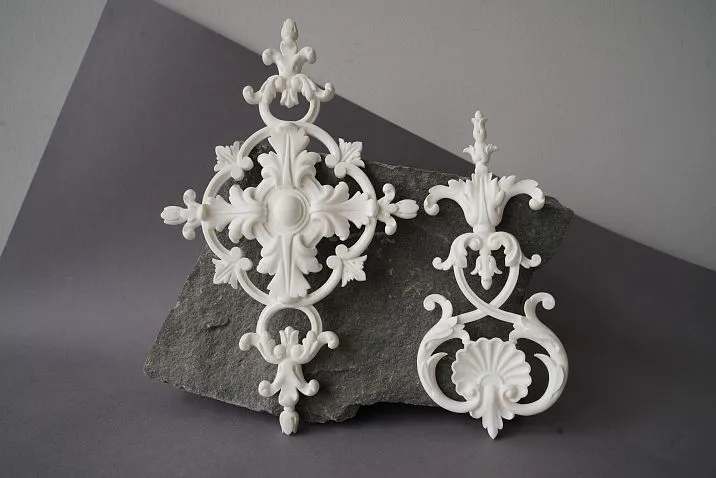
Stop! Pause for a moment and look at your walls. What do you see? Flat, lifeless surfaces that silently speak of beauty? But every wall can become a canvas for creating a masterpiece! Decorative polyurethane molding This is not just a decorative element, it is a revolution in interior design, transforming ordinary rooms into palaces and standard apartments into masterpieces of architectural art.
Forget everything you knew about heavy plaster constructions that required wall reinforcement and a crew of laborers. The modern era has gifted us a material that combines the lightness of a feather with the strength of steel, the simplicity of installation with the elegance of classical forms. This is a material that democratized luxury, making it accessible to anyone who dreams of beauty.
We live in an incredible time when technology allows us to realize the boldest design fantasies without compromising on quality or durability. And if you still think classical beauty is a privilege of palaces and museums, this article will overturn your perception of the possibilities of modern interiors.


Chemical miracle of the 21st century: science creates beauty




Molecular magic of the polymer revolution
What happens when modern chemistry meets ancient art? A material is born that fundamentally changes the rules of the game in the world of architectural decoration. Polyurethane is not just plastic, as many think. It is a high-tech thermosetting polymer with a unique three-dimensional molecular structure.
Imagine a web woven at the molecular level from countless polymer threads. Each molecule is connected to its neighbors by multiple cross-links, creating a material with extraordinary properties. The density of polyurethane is only 600-800 kg/m³ — three times lighter than plaster! At the same time, its compressive strength reaches 70 MPa, comparable to high-quality concrete.
But the most remarkable feature is the material's elasticity. The coefficient of elasticity allows decorative stucco made of polyurethane to deform under load and fully restore its original shape. This means that even under severe mechanical stress, elements do not crack or break like their plaster or stone counterparts.
Our factory also produces:


Secrets of longevity: additives that change everything
Behind the simple appearance of the finished product lies a complex formula including dozens of components. Each additive performs its unique function within the overall symphony of quality.
UV stabilizers based on benzotriazoles and HALS protect the material from destructive effects of sunlight. These molecular shields absorb ultraviolet rays, converting them into harmless heat. Thanks to them, the stucco retains its original color even under intense lighting.
Antioxidants prevent chain oxidation reactions that could lead to polymer degradation. Phenolic and amine stabilizers act as molecular bodyguards, neutralizing free radicals even at the stage of their formation.
Biocides create an unfavorable environment for microbial growth. Silver ions embedded in the polymer matrix provide antibacterial activity throughout the product's lifespan. This is especially important in humid areas — bathrooms, kitchens, swimming pools.
Get Consultation
Production alchemy: from idea to masterpiece
Creating quality stucco begins long before mixing chemical components. It all starts with art — creating a master model that will serve as the standard for thousands of future items.
Modern master models are created in two ways. The first is classical, when an experienced sculptor manually carves or molds the original from wood, clay, or another material. Every detail is refined with jewel-like precision, considering not only aesthetic requirements but also the technological specifics of future production.
The second path is digital. 3D modeling allows creating forms of any complexity, inaccessible to traditional methods. Computer algorithms calculate optimal angles of inclination, radii of curves, wall thickness. The result — mathematically perfect forms, which are then materialized using 3D printing or milling.
The silicone mold is the heart of the entire production process. It is made from special two-component compounds with unique properties. Shore A hardness should be 28-35 units — soft enough for easy removal of finished items, yet firm enough to preserve the clarity of the finest details.
Stylistic universe: a journey through epochs
Ancient heritage in polyurethane embodiment
When we speak of classical beauty, images of ancient temples with their majestic columns and refined capitals immediately come to mind. The Corinthian order with lush acanthus leaves, Doric fluting, Ionic volutes — all these elements have received new life in the modern material.
The mathematical precision of ancient proportions is fully preserved in decorative stucco made of polyurethane. The golden ratio, lying at the foundation of classical compositions, is naturally perceived by the human eye as ideal harmony. This is not coincidence — it is the result of millennia of evolution of aesthetic sense.
Ancient plant motifs carry deep symbolic meaning. The grapevine symbolizes abundance and vitality, oak leaves — strength and endurance, laurel branches — victory and glory. Modern technologies allow reproducing these symbols with botanical accuracy while preserving their artistic expressiveness.
Medieval mysticism and Gothic aspiration
The Gothic style impresses with its ability to unite the earthly with the heavenly, the material with the spiritual. Pointed arches reaching upward, delicate roses, intricate stone carvings — all this creates a sense of weightlessness and transcendence.
The particular complexity of Gothic forms for a long time made them inaccessible for mass reproduction. Each element required the work of a master of the highest qualification. Polyurethane technologies for the first time allowed recreating the entire complexity of Gothic plastic with industrial precision.
The symbolism of Gothic decoration is multi-layered and rich. Trefoils symbolize the Trinity, four-leaf motifs — the four evangelists, interlacing arcades — the unity of earthly and heavenly. Each element carries not only decorative, but also didactic function, telling biblical stories to the illiterate population.
The rebirth of harmony: Renaissance motifs
The Renaissance era returned ancient harmony to architecture, enriching it with Christian symbolism and humanist ideals. Cartouches with coats of arms and mottos, medallions with portraits, garlands of flowers and fruits — all this created an atmosphere of education and refinement.
Anthropomorphic elements of Renaissance decoration — putti, mascarons, caryatids — introduce a human dimension into interiors. They remind us that architecture is created by humans and for humans. Modern stucco preserves this humanist tradition, making space more alive and emotionally resonant.
The sfumato technique, developed by Leonardo da Vinci, found its reflection in polyurethane decoration. Smooth transitions of light and shadow, subtle gradations of relief create a sense of painting and volume even in small elements.
Technological processes: precision serving beauty
Injection molding: the birth of perfection
The production process begins with careful preparation of equipment and materials. The silicone mold is installed in the injection machine, where it is secured with micron-level precision. Any displacement may result in defects in the finished product.
Polyurethane system components are dosed automatically with precision down to the gram. Polyol and isocyanate are mixed in a strictly defined ratio at controlled temperature. Mixing time is only 8-12 seconds — during this time, the reactive mixture must be injected into the mold.
Injection occurs under a pressure of 3-5 atmospheres. This ensures complete filling of all mold recesses and eliminates air inclusions. Pressure is maintained until the gelation phase begins, which occurs 3-5 minutes after mixing the components.
Quality Control: Requirements of Perfectionists
Each item undergoes a strict multi-stage inspection. Visual inspection reveals the slightest surface defects — pores, inclusions, color unevenness. Any item with visible defects is rejected and cannot be corrected.
Dimensional control is performed using coordinate measuring machines with accuracy to 0.01 mm. Not only overall dimensions, but also complex spatial characteristics — curvature radii, angles of inclination, relief depth — are checked.
Laboratory tests include determining density, strength, hardness, elasticity, and other physical and mechanical properties. Samples are subjected to accelerated aging in climate chambers simulating decades of real service.
Final Processing: The Master’s Final Touches
After removal from the mold, the item undergoes final processing. Flash and gates are removed, and the areas of removal are sanded. The surface is treated with fine abrasive material to create optimal roughness for painting.
Priming is performed with special compositions that improve adhesion of finish coatings. Primer is applied in two layers with intermediate drying. Thickness of each layer is controlled using thickness gauges.
Packaging of finished items is done in special protective materials. Each element is individually packaged using cushioning inserts. This guarantees the preservation of even the most delicate details during transportation.
Architectural Possibilities: From Details to Ensembles
Crown Molds and Moldings: Rhythm and Structure of Space
Crown molds serve a dual function — practical and aesthetic. They conceal the junction between wall and ceiling, may contain hidden utilities or lighting. But their main purpose — creating architectural rhythm and spatial scale.
Crown mold dimensions must correspond to room height according to specific proportional laws. For standard ceilings 2.7 m high, optimal crown height is 120-150 mm. In rooms with high ceilings, these dimensions are proportionally increased.
Moldings create visual wall structure, dividing them into zones of different purpose. The classical three-part scheme includes base (lower third), main part, and frieze (upper part). This division corresponds to natural human perception and creates a sense of stability and harmony.
Rosettes and Medallions: Accents and Focal Points
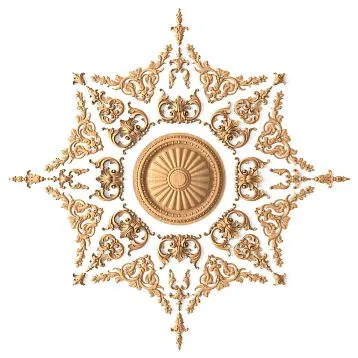
Ceiling rosettes under chandeliers must correspond to room dimensions. Rosette diameter is calculated as 1/7-1/9 of room width for square rooms and 1/10-1/12 of the longer side for rectangular rooms. Too large a rosette overwhelms the space, too small a rosette disappears against the ceiling plane.
Wall medallions are used for placing artworks, mirrors, and lighting fixtures. Their placement follows classical composition rules. The center of the medallion should be at eye level of a standing person — approximately 160 cm from the floor.
Corner elements solve the complex task of connecting different planes. They must ensure smooth transition between horizontal and vertical elements, creating visual integrity of the entire composition.
Pilasters and Columns: Vertical Dominants
Pilasters create vertical wall structure and define the scale of the entire space. Distance between their axes should be 1.5-2.5 times the pilaster diameter to create a harmonious rhythm. More frequent placement creates a sense of fragmentation, less frequent — loss of unity.
Pilaster base should be 0.8-1.0 of its diameter in height and 1.2-1.4 in width. Capital has height 1.0-1.2 of diameter and width 1.4-1.6 of diameter. These proportions have been developed over millennia of architectural evolution and are perceived as natural.
Flutes — vertical grooves on column shafts — create play of light and shadow, enlivening the surface. Number of flutes should be even for Doric order (usually 20) and may vary for other styles.
Practical Aspects of Application
Foundation preparation: the foundation of quality
Quality Installation Decorative polyurethane moldings 80% depends on proper preparation of the base. Surface must be flat, dry, strong, and free of contaminants.
Permissible unevenness should not exceed 2 mm per linear meter for large elements and 1 mm for small details. More significant deviations must be corrected using leveling compounds followed by sanding.
Base moisture should not exceed 4% by mass. Excessive moisture may cause adhesive bond failure and subsequent element detachment. Moisture control is performed using electronic moisture meters.
Adhesive Systems: Chemistry of Reliable Connection
Choice of adhesive composition depends on base material, element size, and operating conditions. For interior use, acrylic or polyurethane adhesives are used; for exterior use — silicone or MS-polymer compositions.
Polyurethane adhesives provide maximum bond strength and chemical compatibility with moldings. The open time is 10-15 minutes, sufficient for adjusting the position of the element.
Acrylic dispersions have a longer setting time, which is convenient for installing large elements. They exhibit good adhesion to most construction materials and contain no solvents.
Installation technology: step-by-step algorithm
Marking begins with determining the main axes of the room and key composition points. Laser plane builders are used, ensuring accuracy of up to 1 mm per 10 meters.
Adhesive is applied using a notched trowel with a tooth height of 4-6 mm. The adhesive must be evenly distributed over the entire contact surface of the element. Uneven distribution may lead to deformation or void formation.
The element must be pressed against the base uniformly and sufficiently to squeeze out excess adhesive. The pressing time depends on the adhesive type and is 30-60 seconds for fast-setting compositions.
Operational advantages: practicality and durability
Climate Resistance
The operating temperature range for polyurethane moldings is from -50°C to +80°C, significantly exceeding possible fluctuations in residential spaces. The linear expansion coefficient is extremely low, preventing crack formation due to thermal deformation.
Freeze resistance is confirmed by 500 freeze-thaw cycles without loss of mechanical properties. This allows using elements in unheated rooms and on building facades.
The material's moisture resistance prevents its destruction under high humidity conditions. Water absorption is less than 1% by volume, which is dozens of times lower than that of plaster or wood.
Mechanical strength
The impact toughness of polyurethane is 5-7 times higher than similar indicators of plaster. The material absorbs impact energy through elastic deformation without breaking under accidental mechanical impacts.
Bending strength allows creating elements of large length without intermediate fastenings. This is especially important for cornices and moldings, which must maintain geometry over significant spans.
Fatigue strength ensures longevity under cyclic loads. Vibrations from traffic, wind loads, and building thermal deformations do not affect the integrity of decorative elements.
Ease of maintenance and care
Polyurethane's smooth surface does not accumulate dust and contaminants. Antistatic additives prevent surface electrification, which is especially important for ceiling elements.
Chemical resistance allows using ordinary household cleaning agents for cleaning. The material does not absorb fats, does not stain from food products, and is not damaged by weak acids and alkalis.
The ability to repaint multiple times allows updating the interior without replacing decorative elements. Modern water-based paints provide excellent adhesion to polyurethane.
Economic efficiency: beauty without bankruptcy
Initial costs
Cost Decorative polyurethane moldings 3-5 times lower than comparable high-quality plaster products. At the same time, polyurethane elements surpass plaster ones in most operational characteristics.
Transportation costs are minimal due to the low weight of the items. Elements are packaged compactly, allowing transportation of large volumes using standard passenger vehicles.
Lower installation costs due to ease of installation. No need to involve highly skilled craftsmen, reinforce load-bearing structures, or use special equipment.
Operating Costs
The absence of need for special maintenance makes polyurethane moldings economically advantageous in the long term. The material does not require periodic impregnation, painting, or restoration.
Repairability eliminates the need to replace entire elements in case of localized damage. Scratches and chips can be easily repaired using special repair compounds.
Service life is 30-50 years under proper use. During this period, alternative materials may require multiple replacements or major repairs.
Impact on property value
Quality decorative finishing increases the market value of real estate by 15-30% depending on the market segment. This is especially noticeable in the premium segment, where attention to detail is critically important.
The rental attractiveness of spaces with individual design is significantly higher. Landlords can set rental rates 20-40% above market rates for uniquely designed properties.
Properties with quality decor sell 2-3 times faster than average market rates. Buyers are more willing to make a purchase decision when a ready-made design solution is already in place.
Ecological aspects and safety
Ecological purity of the material
Modern polyurethane compositions do not contain formaldehyde, heavy metals, or volatile organic compounds. Environmental safety certificates confirm the suitability for use in children's and medical facilities.
The biologically inert nature of the material prevents microbial decomposition. Polyurethane is not a nutrient medium for bacteria, fungi, or mold even under high humidity conditions.
The absence of odor makes the material comfortable for people with heightened sensitivity. Even freshly manufactured items do not have a characteristic 'chemical' odor.
Fire safety
Group G1 (low flammability) allows using polyurethane elements in residential and public buildings without restrictions. The material does not support combustion and self-extinguishes when the source of fire is removed.
Smoke emission corresponds to group D2 (moderate), which is significantly better than the performance of many traditional decorative materials. When burning, it does not release particularly hazardous toxic substances.
Ignition temperature exceeds 400°C, which excludes accidental ignition under normal operating conditions.
Recycling
Advancements in chemical recycling allow using used polyurethane items for producing new materials. Glycolysis breaks down the polymer into original polyols and diamines.
Energy utilization ensures obtaining 25-30 MJ/kg of heat upon combustion in special installations. This is comparable to the calorific value of coal.
Long service life reduces the total volume of waste. By replacing decorative elements less frequently, we conserve natural resources and reduce environmental impact.
Innovative solutions: technologies of the future
Integration of lighting systems
Built-in LED lighting turns decorative elements into additional light sources. Cornices with integrated LED strips create an eye-catching ceiling contour lighting effect.
Lighting control systems allow creating various lighting scenarios. Morning mode with bright cool light, daytime with neutral lighting, evening with warm cozy light.
RGB lighting opens up possibilities for color effects. Festive programs, synchronization with music, imitation of natural phenomena — all of this becomes accessible.
Smart materials and nanotechnologies
Photocatalytic coatings based on titanium dioxide provide self-cleaning of surfaces under light exposure. Organic contaminants are broken down into safe products.
Antibacterial additives based on nano-silver create a sterile surface. This is especially important in medical facilities and children's rooms.
Thermochromic pigments allow creating surfaces that change color depending on temperature. Interior can react to changes in room microclimate.
Personalization and Customization
3D scanning of existing interiors allows creating elements perfectly suited to a specific room. All architectural features and client preferences are taken into account.
Digital printing on decorative molding surfaces opens up opportunities for unique decoration. Any images, logos, or text can be applied with high quality.
Modular systems allow creating unique compositions from standard elements. Combining different modules yields endless variety of options.
Conclusion: choice for lovers of beauty
In a world where technological progress moves at unprecedented speed and human capabilities expand daily, the need for beauty remains an unchanging constant of our existence. Polyurethane decorative molding has become the key that opens doors to a world of limitless possibilities for creating unique interiors.
We live in a remarkable era of democratization of beauty, when high art of architectural decoration is no longer a privilege of the chosen few. Modern technologies have made classical beauty accessible to anyone willing to invest in the quality of their life.
Choosing high-quality decorative materials is a choice made by those who understand the true value of beauty and are ready to create a space worthy of their dreams. It is the choice of those who refuse to accept the dullness and standardization of mass construction.
Every day spent surrounded by beauty is an investment in emotional well-being, creative development, and that intangible sense of home which makes a space truly alive. Beauty knows no inflation, does not become outdated morally, and brings dividends in the form of aesthetic enjoyment at every moment of life.
Innovative materials and technologies have opened up possibilities that past architects could only dream of. Today, we can create interiors of any complexity, realize the boldest design ideas, and harmoniously combine traditions from different eras.
STAVROS stands at the forefront of this beauty revolution, offering the Russian market products that combine the best European quality traditions with a deep understanding of Russian consumer needs. Years of experience, continuous technological improvement, strict quality control at every production stage — all this makes STAVROS synonymous with reliability and perfection. Every STAVROS product is created with an understanding of its role in the overall interior symphony, where every detail, every element, every stroke matters. Choosing STAVROS means choosing not just materials — you choose a philosophy of beauty that transforms ordinary space into art, and home into a place where you want to live, create, and be inspired every day.