Article Contents:
- Philosophy of a Decor Master: Where Tradition Meets Innovation
- Wooden Stairs: A Structure That Lives and Breathes
- Choosing Wood Species: From Pine to Exotic Options
- Anatomy of a Staircase Structure: Elements You Need to Know
- Installing Wooden Balusters: The Art of Secure Fastening
- Preparation stage: marking and calculation
- Methods of Fastening Balusters: Choosing the Optimal One
- Installing Handrails: The Final Touch
- Machines for Making Balusters: When Technology Serves Beauty
- Lathes: The Classic Turning
- CNC Milling Machines: New Horizons
- Hand-finishing: soul of the piece
- Handmade Interior Decor: More Than Just Details
- Carved Panels and Overlays: Accents That Speak
- Moldings and Cornices: Framing the Space
- Furniture Decor: When Every Detail Matters
- Protection and Finishing: Preserving Beauty for Years
- Sanding: The Foundation of Everything
- Stains and Impregnations: Emphasizing Texture
- Varnishes and Oils: Final Protection
- Stylistic directions: from classic to high-tech
- Classical Style: The Triumph of Symmetry
- Baroque and Rococo: When More Is Never Too Much
- Art Nouveau: Natural Motifs and Flowing Lines
- Scandinavian Minimalism: Beauty of Simplicity
- Loft: industrial aesthetics
- Practical Tips: How to Choose a Master and Not Make a Mistake
- What to pay attention to when choosing
- Typical Customer Mistakes
- Modern Technologies in Traditional Craft
- 3D Modeling: See the Result Before Work Begins
- Laser Cutting and Engraving: New Possibilities for Decor
- Innovative Protective Compounds: Durability Without Compromises
- Frequently Asked Questions: The Master Answers
- Company STAVROS: Where Craftsmanship Meets Technology

Have you ever wondered why some interiors are remembered for a lifetime, while others fade from memory after just a few minutes? It's not just about expensive furniture or trendy styles. True magic is born when the master's soul is invested in the space, when every element is measured down to the millimeter, when the wood "speaks" to those who understand its language. This is exactly what we'll talk about today — about howdecor master interior decorcreates unique compositions that transform living spaces and make them truly vibrant.
The mastery of working with wood and the ability to properly install stair structures is not just a set of technical skills. It is a philosophy that has been shaped over centuries, absorbing the experience of generations, the traditions of various cultures, and modern technologies. When it comes tohandcrafted interior decor, we are talking about unique pieces that cannot be reproduced on an assembly line. Each baluster, each carved element, each detail of the handrail carries within it a piece of the master's character and his vision of beauty.



The philosophy of a decor master: where tradition meets innovation
Who is a decor master? This is not just a craftsman who knows how to hold a chisel and a plane. This is an artist, engineer, psychologist, and a bit of a magician all in one. He feels the material, understands how the wood will behave over the years, knows the secrets of proper element joining, anticipates how light will play on the carved details at different times of the day.
When we talk about high-level interior decor, it is important to understand that we are talking about a comprehensive approach. You cannot simply buy beautiful details and place them chaotically in a space. You need a concept, an understanding of style, knowledge of proportions, and, of course, impeccable mastery of installation technique. This is especially true for stair structures, where the correctness of installation affects not only aesthetics but also the safety of the residents.
A modern interior decor master works at the intersection of eras. On one hand, he preserves ancient wood carving traditions, knows how to create classical ornaments, and masters techniques that are hundreds of years old. On the other hand, he is not averse to innovations—using modern materials like polyurethane to create lightweight and durable elements, employing high-precision machines for perfect part geometry, and being familiar with the latest methods of wood fastening and protection.




Wooden stairs: a structure that lives and breathes
A staircase in a house is not just a way to get to the second floor. It is an architectural dominant that sets the tone for the entire interior, it is the first thing guests see when entering the house, it is an element that connects spaces and creates a special atmosphere. That is whyInstalling wooden balustersrequires special attention and professionalism.
Why does wood remain a favorite among materials for stairs, despite the abundance of modern alternatives? The answer is simple: wood is alive. It is warm to the touch, it breathes, changes with the house, and acquires a noble patina of time. Properly treated wood can serve for decades without losing its beauty, only gaining additional charm.
Our factory also produces:



Choosing the wood species: from pine to exotic options
The first question that arises before the master and the client is which wood species to choose? There is no universal answer here, because the choice depends on many factors: budget, interior style, intensity of use, climatic conditions.
Oak is the undisputed champion in strength and durability. Its dense structure withstands colossal loads, and its expressive texture makes each piece unique. Oak staircases are an investment for centuries, the choice of those who value solidity and respectability. However, oak demands respect: working with it is not easy due to its high density, but the result exceeds all expectations.
Ash is almost as strong as oak, but has a lighter shade and an elastic structure. This makes it ideal for modern interiors where conciseness and naturalness are valued. Ash staircases hold their shape perfectly, do not deform over time, and have a pleasant velvety surface after proper sanding.
Beech is the golden mean between price and quality. This species is distinguished by a uniform structure, which facilitates processing and allows for creating elements with complex geometry. Beech balusters turn out elegant and strong at the same time, and the delicate pinkish hue of the wood adds warmth to the interior.
Pine is the choice of practical people. It is affordable, easy to work with, and has a pleasant resinous aroma. Of course, pine is inferior in strength to hardwoods, but with proper treatment and protection, it can last a very long time. Pine is especially good for country house staircases, verandas, and gazebos.
Larch deserves special mention as a species ideally suited for outdoor structures. It contains natural resins that make it resistant to rot, moisture, and insects. Many masters choose larch for creating elements that will be used in challenging conditions.
Get Consultation
Anatomy of a stair structure: elements you need to know
Before talking about installation, it is important to understand the terminology and know what elements a classic wooden staircase consists of. This knowledge will help better understand the creation process and evaluate the quality of the master's work.
Stringers and stringers are the load-bearing elements of the staircase, its 'skeleton'. Stringers are inclined beams with cutouts for steps, which remain visible from the sides. Stringers are the same load-bearing beams, but the steps are inserted into grooves inside them, creating a more enclosed structure. The choice between stringers and stringers is determined not only by aesthetic preferences but also by the structural features of the room.
Treads are the horizontal elements we step on. The quality of the treads is critically important, as they bear the main load. The tread thickness should be sufficient (usually from 40 mm) to prevent sagging and squeaking. The surface should be perfectly smooth but not slippery—this is achieved through proper sanding and choice of finish.
Risers are the vertical elements between the steps. They not only give the staircase a finished look but also increase the rigidity of the structure, preventing deformations.
Balusters are vertical posts that support the handrail and form the staircase railing. It is the balusters that most often become the decorative accent, showcasing the skill of the wood carver. They can be turned, carved, combined—the options are endless.
Newel posts (or newels) are more massive support elements that are installed at the beginning and end of a flight of stairs, as well as at turns. Newel posts bear significant loads and must be securely fastened.
Handrails are the upper part of the railing, which is held onto when ascending and descending.a round wooden handrailis a classic option that is convenient to use and pleasant to the touch. Handrails must be perfectly sanded, without a single roughness, to prevent splinters.
Finials are decorative elements that crown the newel posts. They can have the shape of balls, pyramids, acorns, carved figures—everything depends on the interior style and the master's imagination.
Installation of Wooden Balusters: The Art of Secure Fastening
Now let's move on to one of the most critical stages of staircase creation —installing balusters on a wooden staircase. It might seem simple — just screw the posts to the steps? But as they say, the devil is in the details, and it's precisely the quality of baluster installation that determines whether your staircase will serve for decades or start to wobble in a couple of years.
Preparation Stage: Marking and Calculation
Before starting the physical installation, the craftsman performs thorough marking. It's important to determine the correct distance between balusters — it must comply with building safety codes (usually no more than 15 cm between baluster axes) while also looking harmonious.
There are several approaches to baluster placement. The classic option is one baluster per step. This solution is reliable and aesthetically pleasing, creating a rhythmic visual pattern. An alternative option is two to three balusters per step, which provides additional safety, especially if there are children in the house, and gives the staircase a more elegant, lace-like appearance.
Marking begins with installing the end posts — top and bottom. A string is stretched between them, which sets the line for the upper ends of the balusters. This ensures that the handrail will lie flat without height variations.
Methods of Fastening Balusters: Choosing the Optimal One
There are several proven methods for fastening balusters to steps, each with its own advantages and application features.
Fastening with dowels — a traditional joinery method that has been used for centuries. Holes are drilled in the lower part of the baluster and in the step, into which a wooden rod — a dowel — is inserted with glue. This method provides a strong and invisible connection, preserving the aesthetics of the structure. The main condition for success is drilling accuracy and using high-quality wood glue. The joint must dry completely (usually 24 hours) before the staircase is put into operation.
Fastening with threaded rods — a more modern and reliable method. A metal threaded rod is screwed with one end into the step, and the baluster is mounted on the other end. The advantage of this method is the ability to adjust height and additional joint strength. Metal fasteners don't dry out over time and aren't afraid of loads and vibrations.
Fastening with screws — the simplest and fastest method, which however requires care. Screws are driven at an angle through the baluster into the step, then the fastening points are covered with decorative plugs or filled. When executed properly, the fasteners become almost invisible.
Fastening with a baluster rail — an elegant solution for staircases with stringers. A baluster rail is an additional strip that is mounted on top of the stringer and serves as a base for balusters. This allows creating a straight horizontal line for baluster installation even on an inclined surface.
ProfessionalInstalling balusters and handrails from woodrequires not only technical knowledge but also understanding which method suits a specific situation. The craftsman considers the wood species, staircase design, expected loads, and aesthetic requirements.
Handrail Installation: Final Touch
After all balusters are installed and leveled, it's time to mount the handrail. This is the final touch that unites the entire structure into a single whole. The handrail must lie tightly on the balusters without play or gaps.
The upper ends of the balusters are cut at an angle corresponding to the staircase slope. Then the handrail is placed on them and fixed using glue and fasteners that are screwed from inside the balusters. This provides an invisible connection and preserves the aesthetics of the structure.
At handrail joints (for example, at staircase turns), special connecting elements — fittings — are used, which ensure smooth transitions and reliable fixation. A quality fitting becomes almost invisible after finishing.
Machines for Manufacturing Balusters: When Technology Serves Beauty
Many think that carved balusters can only be created by hand, painstakingly selecting wood with a chisel. This is beautiful, romantic, but in modern realities extremely inefficient. Today craftsmen use specialized equipment —lathe for making wooden balustersallows creating elements with perfect geometry and repeatability.
Lathes: The Classic of Turning
A lathe is the main tool for creating turned balusters. The workpiece is clamped between the centers of the machine and rotates, while the craftsman forms the desired profile using cutting tools. Modern lathes are equipped with digital control, allowing programming of complex profiles and reproducing them with millimeter precision.
The advantage of turning is the ability to create symmetrical elements with smooth transitions, balls, balusters, vases. Turned balusters fit perfectly into classic interiors, emphasizing tradition and quality.
CNC Milling Machines: New Horizons
CNC milling machines have opened completely new possibilities for craftsmen. Now it's possible to create balusters with complex asymmetric carving, three-dimensional ornaments, twisted elements — everything that previously required weeks of manual work, the machine can complete in hours.
This doesn't mean craftsmanship has been devalued. On the contrary — there's now an opportunity to implement the boldest design ideas, create unique elements that were previously simply unavailable due to cost. The craftsman is now more of a designer and artist than just a carver.
Hand-finishing: the soul of the piece
Even when using the most modern equipment, final processing is always done by hand. The craftsman goes over the product with sanding materials of various grits, removes the smallest defects, brings the surface to perfect smoothness. It's this manual work that gives balusters that very soul which distinguishes a work of art from a stamped part.
Handmade Interior Decor: More Than Just Details
When We Sayhandmade interior decor, we're talking not only about staircases. This is a whole world of wooden elements that transform space, adding character and individuality to it.
Carved Panels and Overlays: Accents That Speak
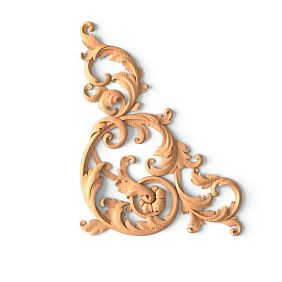
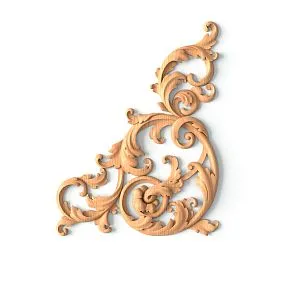
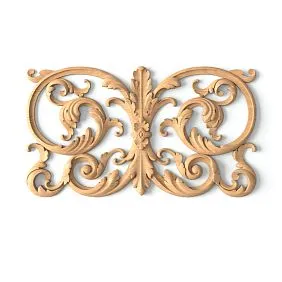
Wooden carved panels can completely transform the perception of an interior. They can decorate walls, doorways, arches, and fireplace portals. A carved overlay on an ordinary door turns it into a work of art. A panel above a bed's headboard creates a sense of palatial luxury.
A master of interior decor knows how to work with various carving styles. This can include plant-based ornamentation with grapevines and acanthus leaves, geometric patterns, Eastern motifs, Slavic symbols, or modern abstract compositions. The key is a sense of proportion and understanding that decor should complement the interior, not overwhelm it.
Moldings and cornices: framing space
Wooden moldings and cornices are subtle tools in the hands of a master. They allow for visually altering the proportions of a room, making ceilings appear higher or lower, and breaking up large wall planes into harmonious segments. A correctly chosen molding can tie disparate interior elements together, creating stylistic unity.
Cornices with carved elements look especially impressive, creating a play of light and shadow, adding volume and depth. They can frame door and window openings, separate walls from ceilings, and create decorative panels on walls.
Furniture decor: when every detail matters
Carved decor on furniture is the highest level of skill for a master. Here, not only beauty is important but also precision in execution, as decorative elements must fit perfectly in size, be symmetrical, and harmonize with the furniture's form.
Carved legs for tables and chairs, decorative overlays on cabinet fronts, carved cornices for buffets and sideboards—all these are examples of furniture decor that turns ordinary furniture into unique pieces. Decor executed in a unified style with other interior elements is especially valued—for example, when the carving on furniture echoes the ornamentation of staircase balusters.
Protection and finishing: preserving beauty for years
Even the most skillful carving and perfect installation can be ruined by improper finishing. Wood protection is a critically important stage that determines how long a product will retain its original appearance.
Sanding: the foundation of everything
Quality sanding is a multi-stage process that begins with coarse abrasives (grit 80-120) and ends with fine ones (320-400 and above). The master sequentially works over the product, removing tool marks, leveling the surface, and preparing it for the application of protective compounds.
Special attention is paid to hard-to-reach places—recesses in the carving, joints of elements. Here, manual work with special sanding sponges and brushes is indispensable. A poorly sanded product cannot be coated properly—all defects will show and be glaringly obvious.
Stains and impregnations: emphasizing the texture
Stain allows changing the color of the wood, emphasizing its texture, and imitating more expensive species. An experienced master knows how to create complex color effects using multiple layers of stains in different shades, patination techniques, and brushing.
Impregnations protect wood from moisture, mold, and insects. They are especially important for elements used in challenging conditions—outdoors, in damp rooms. Modern impregnations penetrate deep into the wood's structure without altering its appearance but significantly extending its service life.
Varnishes and oils: final protection
Varnish creates a protective film on the wood's surface, shielding it from mechanical damage, moisture, and dirt. Varnishes come in glossy, semi-matte, and matte finishes—the choice depends on the desired visual effect. For staircases, polyurethane varnishes with increased wear resistance are typically used.
Oils and oil-waxes are an alternative to varnish that is becoming increasingly popular. They do not create a surface film but are absorbed into the wood, emphasizing its natural texture and preserving pleasant tactile sensations. Oiled wood looks more natural, and if necessary, local repair of the coating is much easier than with varnish.
Stylistic directions: from classic to high-tech
The master's interior decor must correspond to the overall style of the space. Let's consider the main directions and features of working with wood in each of them.
Classical style: the triumph of symmetry
Classicism is about strict proportions, symmetry, and elegant lines. Staircases in the classical style are adorned with turned balusters with clear forms, carved posts with fluting (vertical grooves), and exquisite finials. The handrail is necessarily smooth, rounded, and pleasant to the touch.
Decorative elements in classical interiors include moldings with plant-based ornaments, rosettes, pilasters, and capitals. The carving is fine, detailed, but not overloaded. The color palette is usually restrained—natural wood tones, white, ivory, noble dark shades.
Baroque and Rococo: when more is never enough
If classicism is about restraint, then Baroque is about an exuberance of forms and decor. Here, twisted balusters, abundant carving with scrolls and volutes, gilding, and patination are appropriate. A master of interior decor in the Baroque style is a virtuoso of carving, capable of creating the most complex compositions with cherubs, garlands, and masks.
Rococo adds lightness and playfulness to Baroque opulence. Asymmetrical compositions, whimsical curves, fine detailing—all of this requires incredible patience and impeccable taste from the master.
Art Nouveau: natural motifs and flowing lines
Art Nouveau (or Art Nouveau) is a style that draws inspiration from natural forms. Staircases in this style can have balusters resembling plant stems, handrails with sculptural elements, and carved panels depicting flowers, birds, and butterflies.
The peculiarity of working in the Art Nouveau style is the rejection of straight lines and angles. Everything flows smoothly from one form to another, creating a sense of organicity and naturalness. This requires a special approach from the master in designing and manufacturing elements.
Scandinavian minimalism: beauty of simplicity
Scandinavian style is the opposite of Baroque. Here, simplicity, functionality, and the naturalness of materials are valued. Staircases are laconic, with simple balusters of rectangular or round cross-section, light wood, and minimal decor.
But don't think it's primitive. Scandinavian minimalism is the highest mastery of working with proportions, textures, and negative space. Every detail matters here, every joint must be perfect because there is no abundant decoration to hide flaws behind.
Loft: industrial aesthetics
Loft style involves combining rough industrial elements with natural materials. Wooden balusters and handrails coexist with metal structures, creating an interesting contrast. Wood is often left in its most natural state, emphasizing its texture and knots, which in other styles would be considered defects.
A craftsman working in the loft style must be able to combine materials, creating deliberately rough yet safe and reliable structures.
Practical advice: how to choose a craftsman and avoid mistakes
So, you've decided to order a wooden staircase or interior decor elements. How do you find a real craftsman, not an amateur with a beautiful portfolio of others' work?
What to pay attention to when choosing
Portfolio of real work. Ask to see not only photos but also addresses of sites where you can visit and see the work in person. A true craftsman is always proud of their projects and will gladly show them.
Understanding of technology. Ask questions about the work process, materials, and fastening methods. A professional will always be able to clearly explain why they do things a certain way, what alternatives exist, and their pros and cons.
Availability of equipment. A good craftsman has their own workshop with the necessary equipment. This guarantees quality and work deadlines.
Contract and guarantees. A professional always works under a contract that specifies deadlines, cost, and warranty obligations. This protects both parties and indicates a serious approach.
Typical customer mistakes
Choosing based on the lowest price. Quality woodwork cannot be cheap. Good material, professional equipment, and the craftsman's experience all have their price. Saving at the manufacturing stage risks getting a structure that will start to creak, loosen, and lose its appearance within a year or two.
Rushing decisions. Designing and manufacturing a quality staircase or decorative elements takes time. Don't rush the craftsman—it can affect quality.
Ignoring care recommendations. Wood is a living material that requires certain care. The craftsman will definitely provide recommendations for operating and maintaining the products. Following these tips will significantly extend their lifespan.
Modern Technologies in Traditional Craft
It might seem that working with wood is something archaic, unchanged for centuries. But that's not the case. Modern technologies are actively penetrating this field, making the craftsman's work more efficient and the results higher quality.
3D modeling: see the result before work begins
Today, many craftsmen use 3D modeling software to design staircases and decorative elements. This allows the customer to see how the finished product will look in the interior, make adjustments, choose optimal sizes and proportions. You can experiment with various carving options, baluster shapes, finish colors—all before the first board is used.
Laser cutting and engraving: new decorative possibilities
Laser technologies have opened new horizons for craftsmen. Now it's possible to create incredibly thin and detailed patterns that were previously unattainable. Laser engraving allows applying the most complex drawings, inscriptions, and ornaments onto wood with photographic precision.
Of course, this doesn't completely replace traditional carving, but it provides additional tools for realizing creative ideas.
Innovative protective compounds: durability without compromise
Modern varnishes, oils, and impregnations are orders of magnitude superior to those used even 20-30 years ago. Nanocomposite coatings create super-strong protection, UV filters prevent fading, antibacterial additives protect against mold and fungus.
This is especially important for elements used in challenging conditions—outdoors, in damp rooms, in high-traffic areas.
Frequently asked questions: answered by a craftsman
Can a wooden staircase be installed in a house with underfloor heating?
Yes, it can, but some specifics need to be considered. Wood reacts to temperature and humidity fluctuations, so it's important to use well-dried material (moisture content no more than 8-10%) and ensure gradual heating of the underfloor heating system. It's also recommended to use wood species less prone to deformation—oak, ash, larch.
How often should staircase coating be renewed?
This depends on the intensity of use and the type of coating. Varnished staircases in residential homes usually require refinishing every 5-7 years. Oiled surfaces need periodic maintenance (applying oil) about once a year, but local repairs are much easier to perform.
Is it true that wooden staircases always creak?
No, that's a myth. A well-designed and properly installed staircase should not creak. Creaking occurs due to friction between elements when connections are insufficiently rigid. A professional craftsman knows how to avoid this—by correctly calculating the structure, using reliable fasteners, and applying special spacers at contact points between wooden elements.
Can wood be combined with other materials in a staircase?
Not only can it be, but sometimes it's necessary. Combinations of wood with glass (glass railings with a wooden handrail), with metal (metal balusters or frame with wooden steps), and with stone (stone steps with wooden railings) are very popular. Such combinations allow creating unique, stylish, and functional structures.
What type of wood is best for a staircase in a country house with intermittent heating?
For houses with unstable temperature and humidity conditions, it's better to choose larch or oak. These species are less prone to deformation when humidity changes. Quality protective coating that prevents moisture from penetrating the wood structure is also important.
How to care for carved wooden elements?
Carved elements require delicate care. Dust should be removed with a soft brush or cloth; a vacuum with an attachment can be used. Periodically (every 2-3 months), it's recommended to wipe the carvings with special wood care products that both clean and nourish the wood. Avoid using harsh chemicals and abrasive materials.
How long does it take to manufacture and install a wooden staircase?
Timelines depend on project complexity. A simple straight staircase can be manufactured and installed in 2-3 weeks. A complex spiral or turning staircase with carved balusters and decorative elements may require 1.5-2 months of work. This includes only production and installation, excluding design and approval time.
Can an old wooden staircase be restored?
In most cases - yes. Restoration may include replacing worn steps, strengthening the structure, restoring or replacing balusters and handrails, and renewing the finish. Sometimes restoration costs less than making a new staircase, plus you preserve an element that has historical or emotional value.
STAVROS Company: where craftsmanship meets technology
When it comes to creating truly high-quality interior decor and staircase structures, it's impossible not to mention STAVROS Company, which has been setting standards in this field for many years.
STAVROS is not just a manufacturer of decorative elements made of wood and polyurethane; it's an entire philosophy of approach to interior creation. The company combines traditions of carpentry craftsmanship with advanced production technologies, allowing for the creation of exceptional quality products.
STAVROS offers a complete range of elements for creating and decorating staircases: from classic turned balusters to complex carved compositions, from simple round handrails to exclusive shaped options, from traditional posts to modern minimalist stands. Every element undergoes strict quality control at all production stages.
STAVROS pays special attention to materials. Only selected wood that has undergone proper drying and processing is used. This guarantees stability of product geometry, absence of deformation during operation, and durability of structures.
The company offers not only ready-made solutions but also the possibility of manufacturing elements according to customer's individual sketches. Their own production facility, equipped with modern equipment, allows for implementing projects of any complexity within reasonable timeframes.
In addition to wooden elements, STAVROS produces molded decor from polyurethane - a lightweight, durable, and easy-to-install material. Polyurethane products perfectly complement wooden structures, allowing for creating harmonious interior compositions.
STAVROS specialists are ready to consult on element selection, help calculate required material quantities, and provide recommendations for installation and care. This is not just product sales; it's a comprehensive approach to creating beautiful and functional interiors.
By turning to STAVROS, you receive not only quality products but also confidence that your home will be adorned with elements created by true masters of their craft, who put not only professionalism but also a piece of their soul into every product.