












































































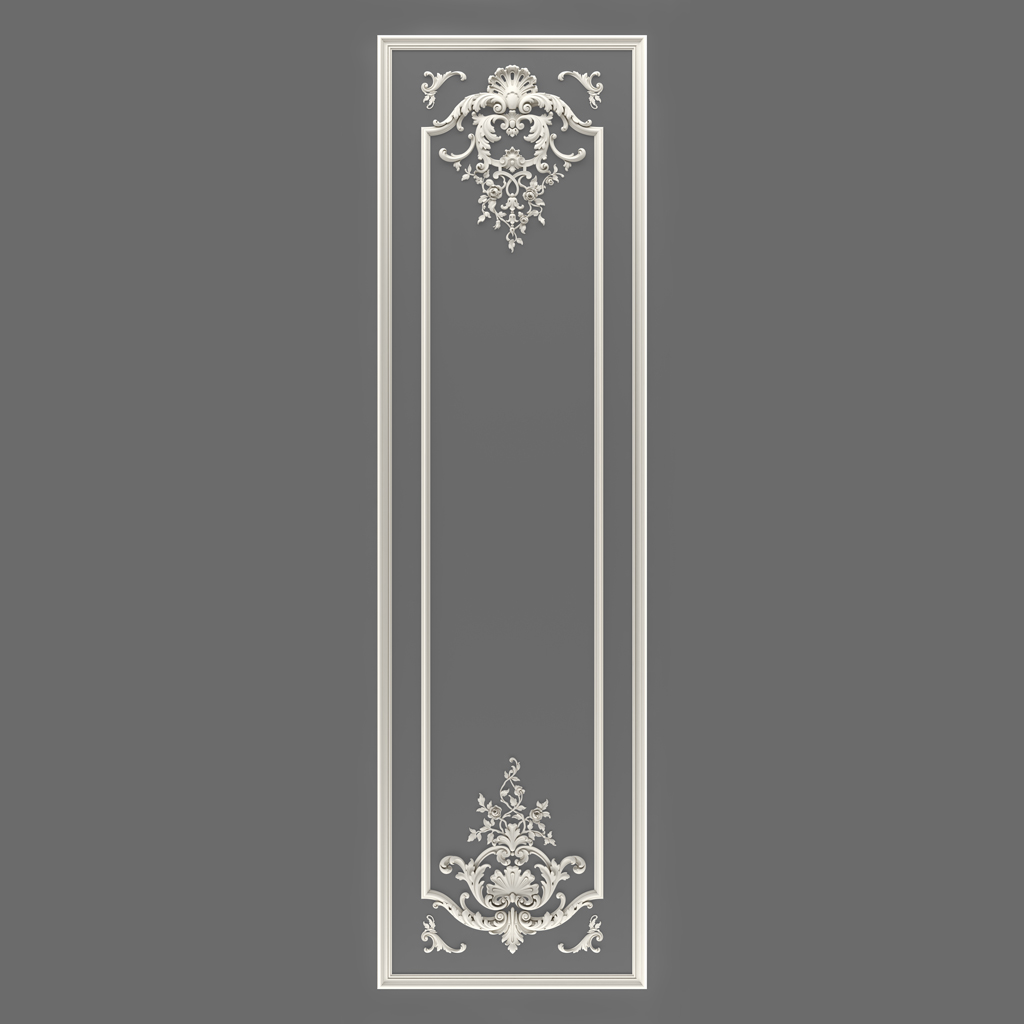

CPU-5-3 Molding Decor Kit
Dimensions and Options
Set Composition


Have questions?
Customers also buy


Marina D.
February 15, 2026
The company ordered the pens for us when we ordered furniture. But I decided to write a review personally because they are amazing! Stylish, expensive, high-quality!
Polina Sh.
February 4, 2026
Went on a tour. To say I'm delighted is an understatement. The largest production facility in Russia, impressive in its scale and dedication to the craft! It was very interesting and informative. You can immediately see - true masters of their trade! We were welcomed in the best possible way, were polite...
Svetlana A.
January 30, 2026
It's great that you can almost always find the necessary elements for the project. The products match the description, with prompt feedback and delivery!
More than 20 years on the market
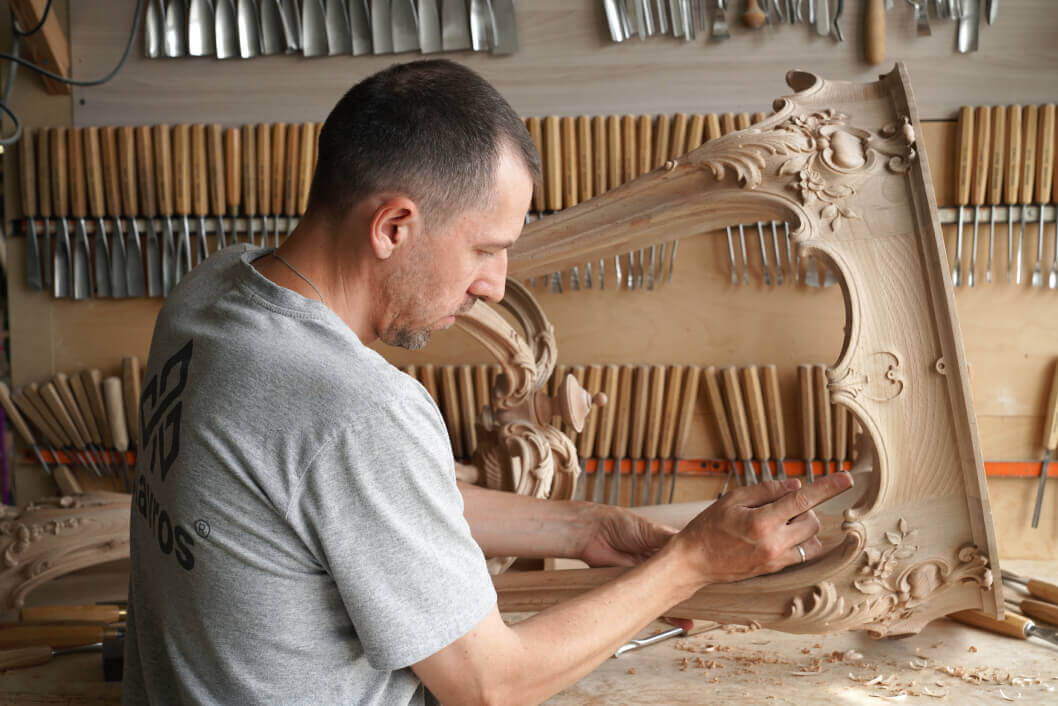
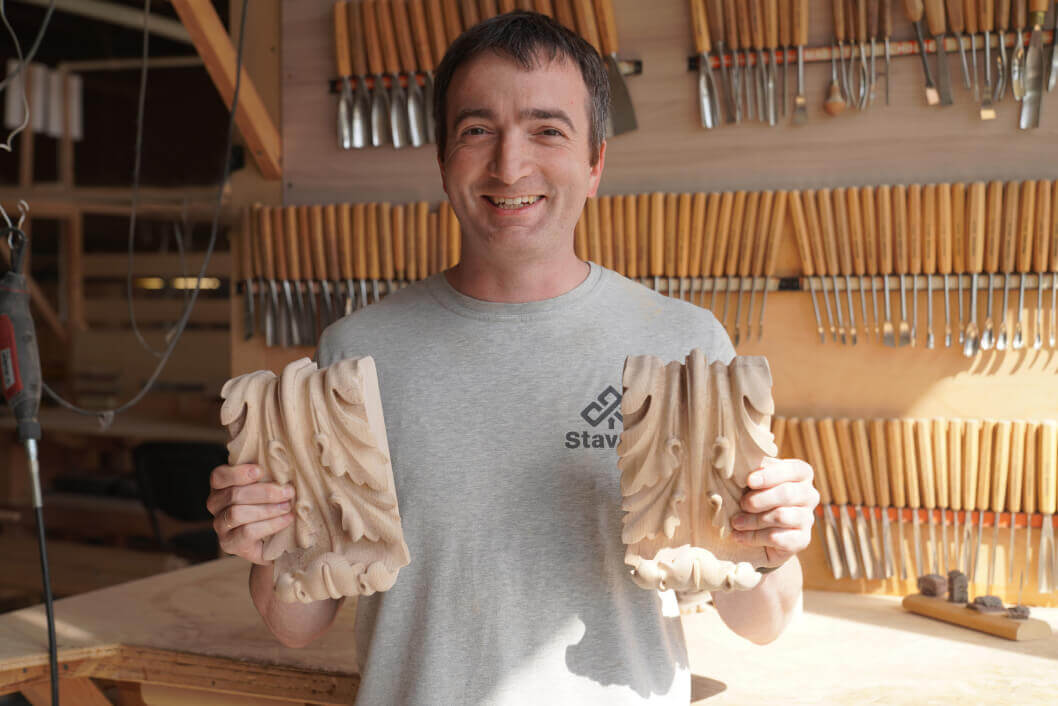
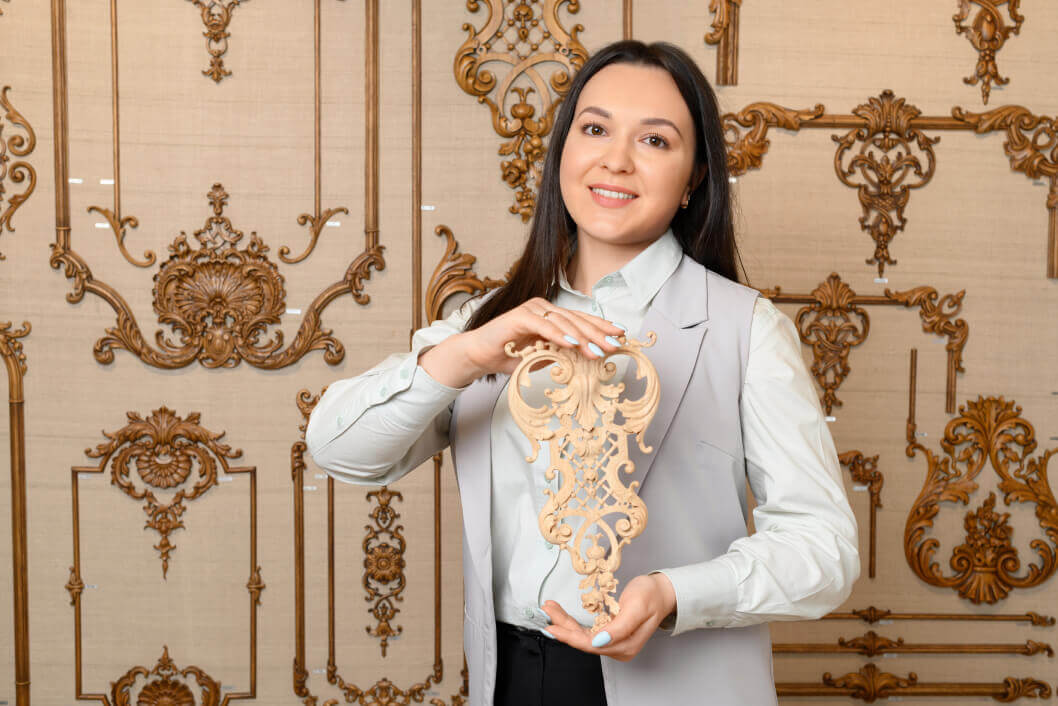
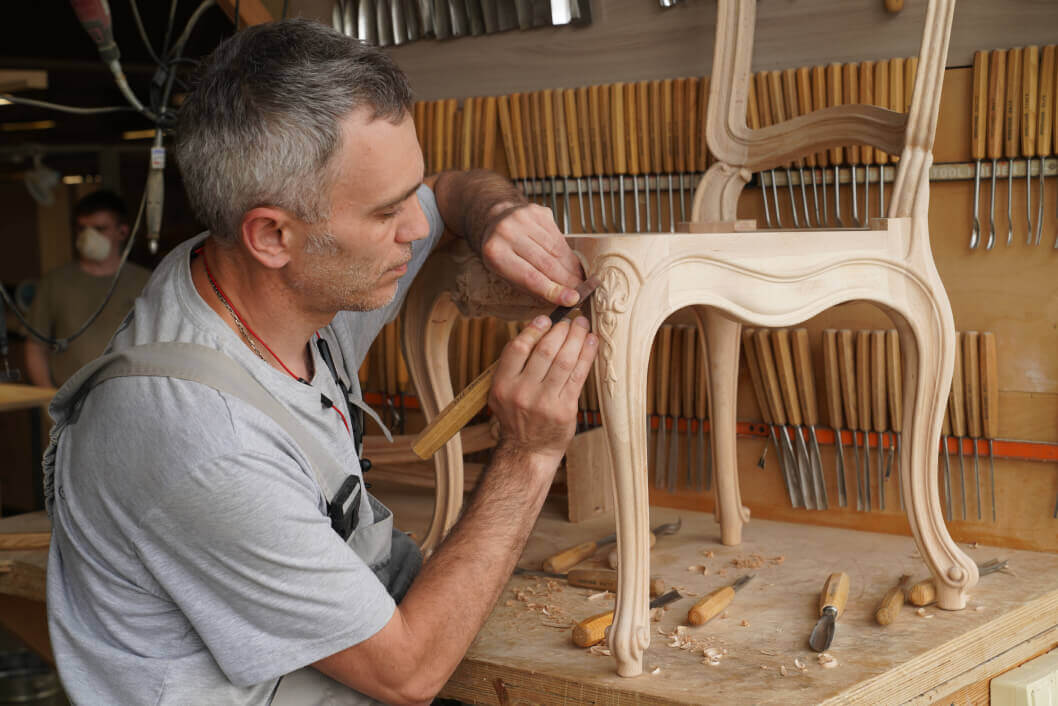
The company's success began in 2002, when two artists — Andrey Ragozin and Evgeny Tsapko — created a small creative workshop for producing wooden carved items. The masters' work was quickly noticed, and within a year they were invited to participate in the reconstruction of the Konstantinovskiy Palace in Strelna.
After the success of this project, the company focused on recreating palace interiors, furniture, church furnishings, and carved decorations in various artistic styles. They worked with cultural heritage sites: The Hermitage, the Alexandrovsky Palace, the Troitsko-Izmaylovsky Cathedral, the Sheremetyevsky Mansion, and many others.
The masters' task — and still is — to create wooden items with the highest level of detail and understanding of every element, based on impeccable knowledge of artistic laws and interior styles.
STAVROS Guarantees
Quality of products without complaints
We save your time, peace of mind, and budget
Large warehouse program
We solve your tasks with maximum speed
Adherence to production deadlines
Streamlined process reduces all risks
Delivery from 1 piece throughout Russia
Quality service regardless of order volume
Your positive business reputation
Reliable partner — the foundation of your business
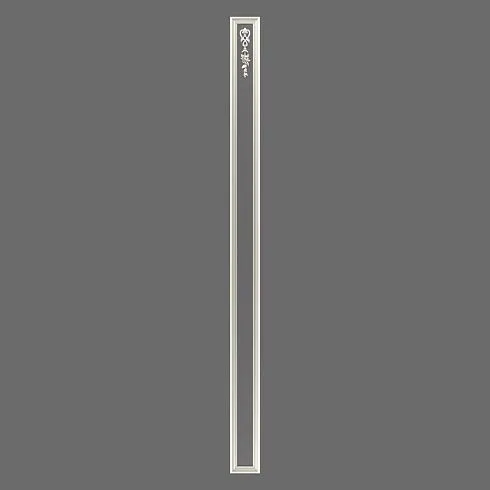
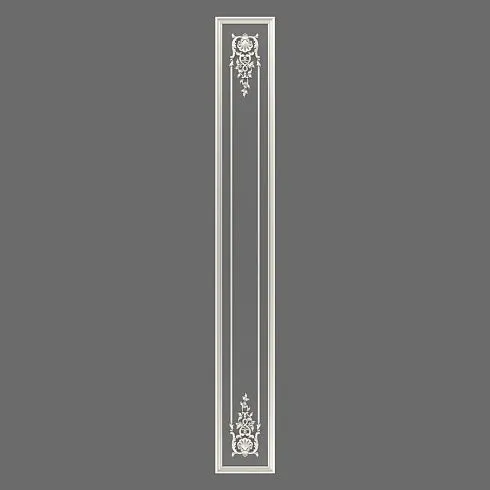
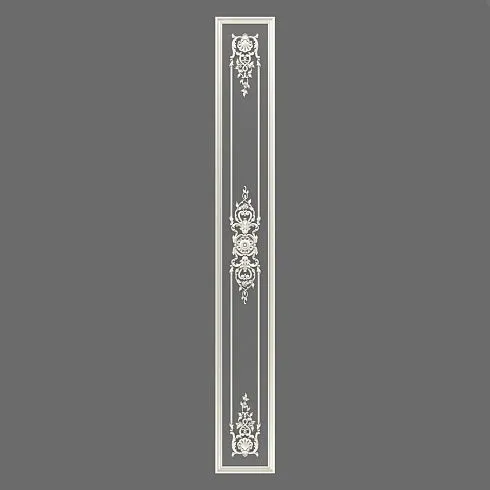
More products from the "Versailles" collection


Frequently asked questions
Our showrooms are located in Saint Petersburg and Moscow. Production is located in Saint Petersburg.
Moscow contacts: https://www.stavros.ru/contacts_all/?tab=msk
Contacts of Saint Petersburg: https://www.stavros.ru/contacts_all/?tab=spb
- Send request by email [email protected]
- Write to us at Telegram
- Write to us at WhatsApp
- Order by phone +7 (800) 555-46-75
- Visit our showroom in Saint Petersburg and Moscow
Yes, we ship orders throughout Russia and to CIS countries.
We cooperate with transportation companies such as СДЭК and DPD.
You can also arrange pickup of your order through any convenient transportation company for you.
Delivery cost depends on the size, weight of the item, and delivery address.
When placing an order, the delivery cost is calculated automatically and displayed as a separate line on our website.
Prices and availability of items on the website are always current. Data is updated daily.
Note: items in stock are stored on the warehouse in unpolished form and shipped within 3 working days.
If the item is not in stock, average production time: 5–10 working days.
This is the quality of polishing of the items.
Standard — machine polishing, at a more attractive price.
Prestige — detailed hand polishing, items do not require further work.
More details: https://www.stavros.ru/information/kachestvo/
This is the type of veneer of the items.
Under enamel: produced by gluing wooden laminates without color and texture matching. Contrast tonal and textural differences are noticeable. This blank should be chosen if the item is intended for opaque coating.
Under tinting: produced by gluing wooden laminates with color and texture matching. Tonal and textural differences may occur. This blank should be chosen if the item is intended for semi-transparent finish.
More details: https://www.stavros.ru/information/kachestvo/
Beech — dense, non-porous wood, most often used for items covered with enamel.
Oak — dense, porous wood with clearly visible natural grain. Due to its strength and decorative properties, it is often used in items with semi-transparent coating, highlighting the wood pattern.
Custom-made, if non-standard items are required, we can produce products from other types of wood, including blanks provided by the customer, manufactured according to our technical specifications.
All our furniture legs can withstand a vertical load of at least 100 kg.
Average production time for custom-made items: 5–10 working days.
Most items are stored on the warehouse in unpolished form. We need time to polish and pack orders.
Yes, we manufacture non-standard items according to individual projects, but we only accept orders with a minimum quantity.
We can manufacture items of the desired size, but we only work with bulk orders. For details, please consult the sales department manager.
Yes, some of our products can be used outdoors. For example, polyurethane items, as well as carved door casings made of pine.
Other items are produced to order using PUR glue, if minimum quantity is available. No warranty is provided for such products, as outdoor conditions are considered aggressive.
Yes, we paint items when ordering products for a total amount of 150,000 rubles or more.
- Dust removal. After sanding, the surface must be dusted.
- Priming. Apply primer in an even layer.
- Matting. After the primer has fully dried, the surface should be matted (lightly sanded for better adhesion).
- Finish coating. Apply finish coating: lacquer or enamel, in 2 layers, with interlayer drying.
More details: https://www.stavros.ru/information/sovety/
Apply adhesive to the decor. Place it on the surface and press briefly. Then, lift the decor from the surface and leave it open for 3–5 minutes. Press the decor firmly onto the surface and hold for 5–10 seconds.
More details: https://www.stavros.ru/information/sovety/
Ideally, you should prepare a design project before placing an order.
You can do this yourself by downloading drawings of our products from our website, or you can order a project from us.
If the number of decorative elements and fittings is small, our company's manager can assist you with selection.
Unfortunately, this service is not provided.
The packaging method depends on the type of items, but in each case, we ensure sufficient protection for safe transportation.
We most often use corrugated cardboard and stretch film. Fragile items are additionally secured on a rigid base to prevent damage during transport.
We ship all items starting from 1 piece.
Room measurements and item installation can be performed by our partners — carpentry companies represented in most regions of Russia.
Often searched in category Wall Decor
CPU-5-3 Molding Decor Kit — an extended version of the 'Versailles' panel with eight elements of ornamental decoration
When a single panel is enough to create a palace interior
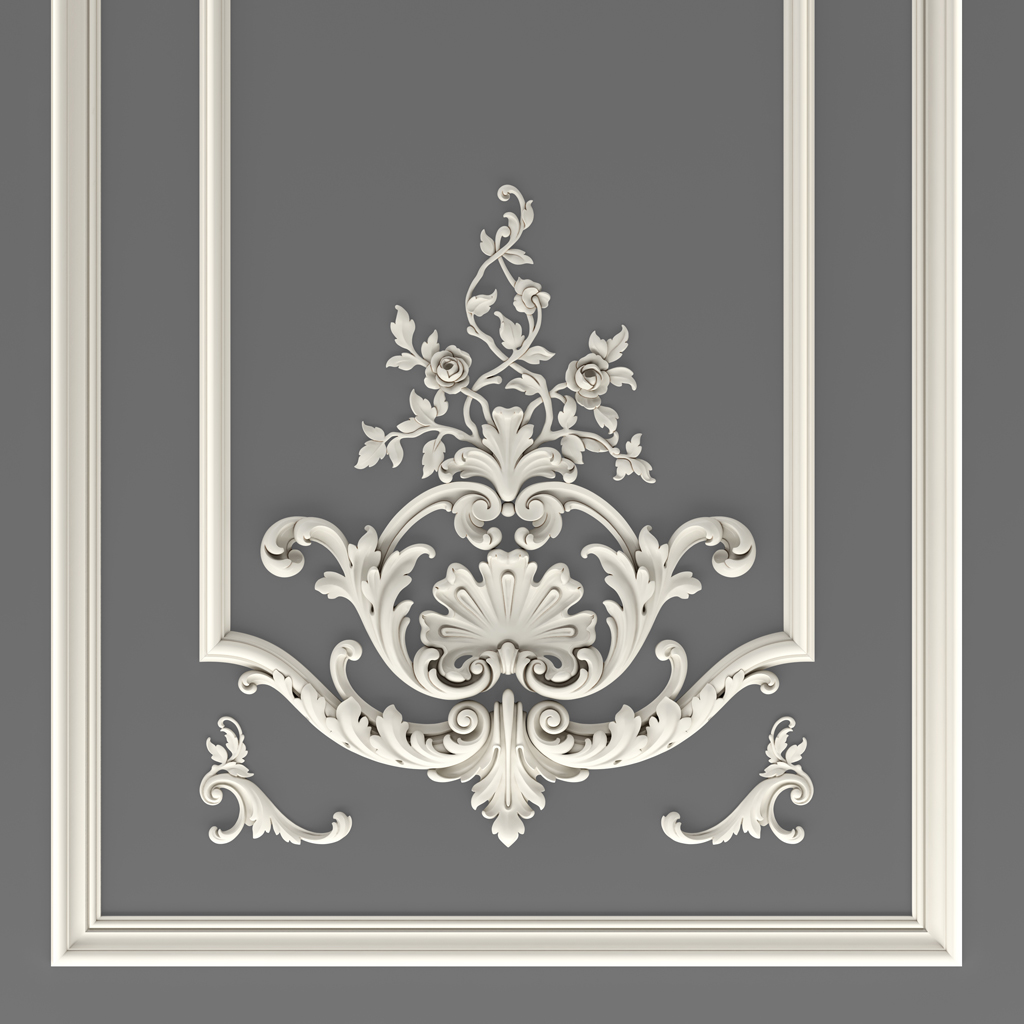
The CPU-5-3 Molding Decor Kit from the 'Versailles' collection is the most richly equipped version of a 650 × 2300 mm vertical wall panel, combining eight carefully selected decorative elements that together reproduce the ornamental program of authentic French boiserie with maximum completeness and architectural richness. This is not just a frame with decor — it is a complete architectural statement, in which each of the eight components plays its strictly defined role: the load-bearing MDF moldings form the geometric skeleton of the structure, the horizontal ornamental belts define the internal structure of the panel, the two central medallions create a layered ornamental accent, and the small corner overlays add a final level of decorative detailing that distinguishes truly rich boiserie from simplified versions. If the CPU-5-2 kit is a complete and expressive solution, then CPU-5-3 is its extended version with three additional ornamental elements: a second central medallion NPU.VRS-002 and a pair of small corner overlays NPU.VRS-002-4L and NPU.VRS-002-4R. It is this addition that elevates the system from the category of 'classical decor' to that of 'palace decoration,' creating the ornamental richness and plastic density associated with Versailles — the grandest monument of French interior culture. The 'Versailles' collection is not a marketing name but a direct declaration of the product's stylistic and historical affiliation: every ornamental motif, every scroll, every acanthus leaf in the kit traces back to decorative programs developed for the Palace of Versailles during the reigns of Louis XIV and Louis XV.
The 'Versailles' Collection: Historical Context That Lives in the Ornament
The name 'Versailles' collection carries specific architectural and historical content that must be understood to properly evaluate the CPU-5-3 products. The Palace of Versailles, built and rebuilt from 1661 to 1710 under the direction of architects Louis Le Vau, Jules Hardouin-Mansart, and decorator Charles Le Brun, became the first and absolute benchmark of what we call French classical interior culture. It was here that the system of total architectural interior treatment was developed: ceilings, walls, floors, furniture, lighting — everything was subordinated to a unified ornamental program with a clear hierarchy of elements, proportional correspondence of details, and an unwavering priority of symmetry and rhythm. Boiserie — wooden ornamental wall paneling — was one of the main tools of this program. In the Hall of Mirrors, in the King's Apartments, in Marie Antoinette's chambers, wall panels with molded frames, gilded moldings, and ornamental medallions created that very sense of architectural perfection that three centuries later remains synonymous with the highest interior style. The ornamental language of the 'Versailles' collection reproduces precisely this visual vocabulary: acanthus leaves from Versailles capitals, floral garlands from Versailles ceilings, shell-palmette motifs from Versailles medallions, S-shaped scrolls from Versailles panels — all are direct quotations from a source that for three hundred years has remained an inexhaustible reservoir of inspiration for architects and decorators worldwide.
Kit Composition: Eight Elements Working as a Single Organism
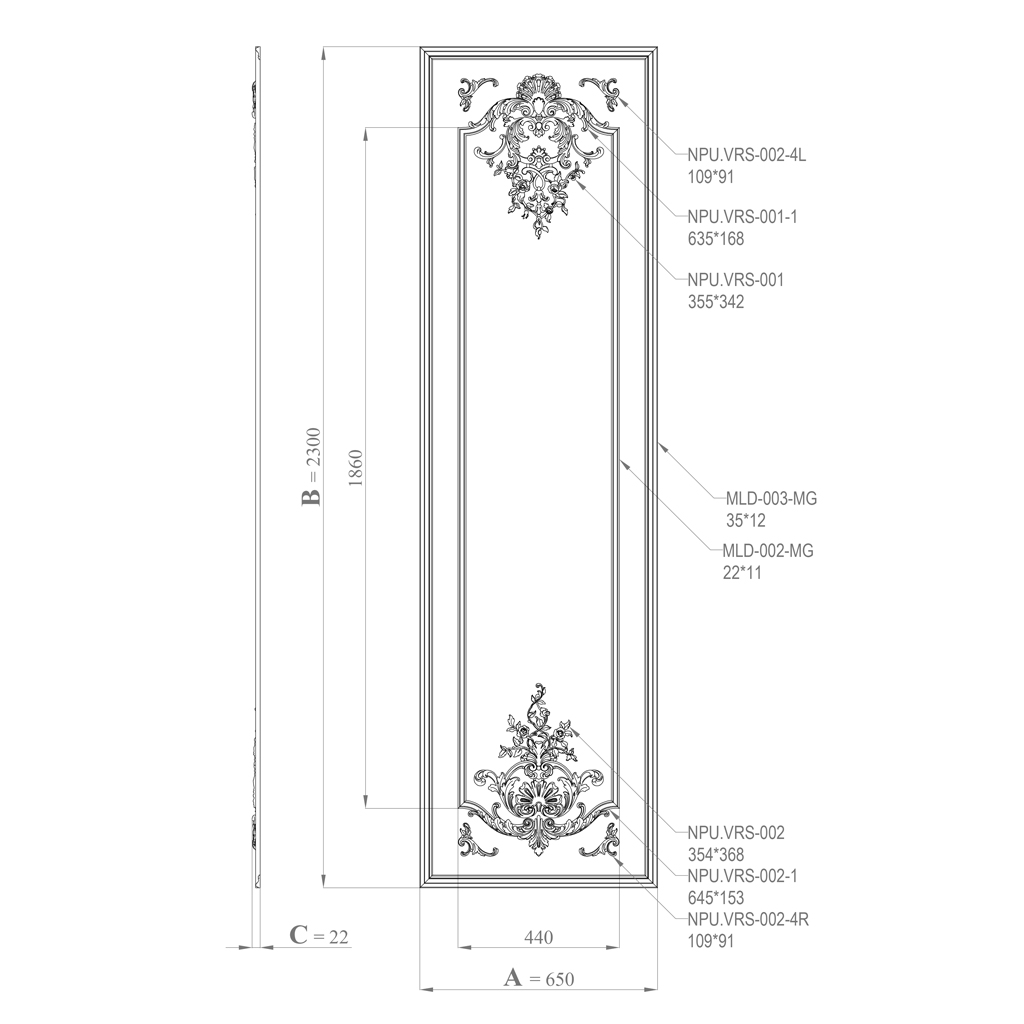
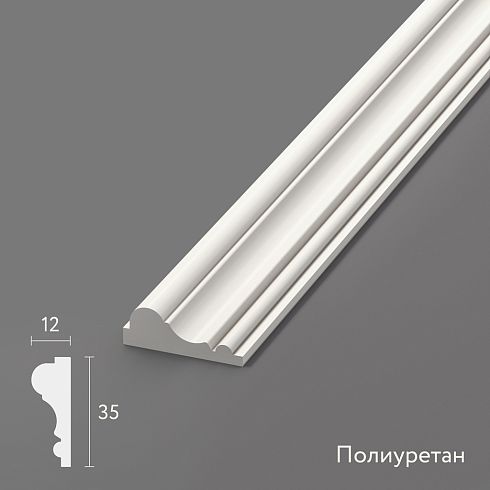
A complete understanding of the architectural logic of the CPU-5-3 kit requires a sequential examination of each of its eight elements and their interaction within a unified system. The MLD-003-MG molding with a 35 × 12 mm profile and a length of 2600 mm forms the external load-bearing contour of the entire panel — the main architectural line that sets the geometric boundaries and visual scale. The MLD-002-MG molding with a 22 × 11 mm profile and the same length creates an internal parallel outline — thinner and subordinate, adding layering and depth to the system. The NPU.VRS-001-1 molding decor measuring 635 × 168 × 22 mm occupies the upper horizontal belt of the panel — an ornamental strip that the eye catches first upon entering the room. The NPU.VRS-002-1 molding decor measuring 645 × 153 × 22 mm is the lower horizontal belt, symmetrically responding to the upper one and completing the ornamental frame for the central elements. The NPU.VRS-001 molding decor measuring 355 × 342 × 17 mm — the first central medallion — is located in the upper part of the panel's inner field, between the upper horizontal belt and the second medallion, and serves as the first level of the central ornamental axis. The NPU.VRS-002 molding decor measuring 354 × 368 × 19 mm — the second central medallion — is positioned directly below the first, forming with it a vertical ornamental column at the heart of the panel: two medallions, slightly differing in height and relief, create a dialogue that imparts dynamism and vertical rhythm to the panel's central field. The NPU.VRS-002-4L molding decor measuring 109 × 91 × 9 mm is the left small corner overlay — a small but extremely important element installed in the corner zones of the panel's inner field, detailing the transitions between horizontal belts and vertical moldings. The NPU.VRS-002-4R molding decor measuring 109 × 91 × 9 mm is its mirror-image right counterpart.
MLD-003-MG and MLD-002-MG Moldings: The Architectural Skeleton of the System
The two types of MDF moldings included in the CPU-5-3 kit form the load-bearing geometric foundation of the entire decorative system — its 'skeleton,' without which the ornamental elements would be a set of disparate decorations rather than a system. The MLD-003-MG molding with a 35 × 12 mm profile is the main contour line, possessing sufficient architectural weight to set the panel's scale and create a clear visual boundary between the decorated section and the unfilled wall space. The 35 mm profile width with a 2600 mm length ensures the confident presence of the external molding in the overall composition without overload or competition with ornamental details — it plays the role of a picture frame: itself laconic, but without it, the frame's content loses its architectural context. The MLD-002-MG molding with a 22 × 11 mm profile serves as an internal outline, creating a double-molding space known in architectural practice as an 'inter-molding belt' — a narrow horizontal or vertical strip between two parallel profiles. This belt is perceived as an independent architectural detail — a recess, a chamfer, a transition zone — and its presence is precisely what distinguishes a high-class boiserie system from a simplified single-profile frame. Both moldings are made of medium-density MDF with factory white primer: MDF ensures absolute straightness of the profile along its entire length, geometric stability under normal operating conditions, a perfectly smooth surface for final painting, and reliable performance with fasteners — screws and dowels — throughout the system's service life.
Upper and Lower Ornamental Belts: The Horizontal Structure of the Panel
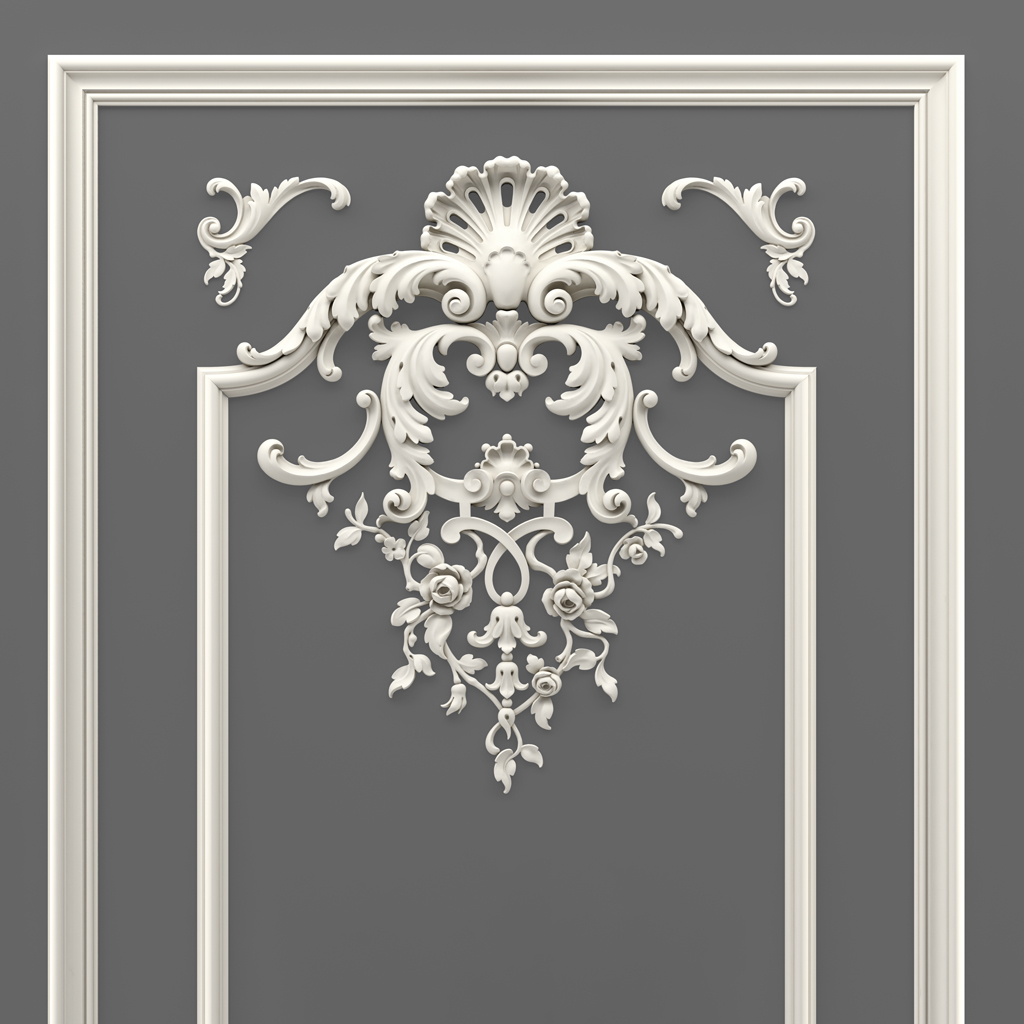
The horizontal decors NPU.VRS-001-1 and NPU.VRS-002-1 included in the CPU-5-3 kit create the internal horizontal structure of the panel, dividing it into functional zones and imparting architectural order to the inner space of the frame. The upper belt NPU.VRS-001-1 measuring 635 × 168 × 22 mm is installed in the upper third of the inner field and forms the ornamental 'crown' of the panel — its placement in the upper zone is architecturally justified by the psychology of perception: the eye of a person entering the room first fixes on the upper part of the wall decoration, and it is here that the ornamental statement must be most expressive. The 635 mm width precisely corresponds to the internal frame opening — the element fits without gaps or trimming. The 22 mm relief depth is the maximum in the system and provides a rich play of shadows, especially noticeable under side or top-down lighting. The horizontal arabesque with symmetrically unfurled acanthus leaves, floral garlands, and Baroque scrolls unfolds across the entire width of the belt, creating a rich ornamental strip in the spirit of Versailles friezes. The lower belt NPU.VRS-002-1 measuring 645 × 153 × 22 mm is installed symmetrically in the lower third of the panel and creates an ornamental 'base' for the central medallions. Its 153 mm height is slightly less than that of the upper belt — an intentional proportional correction that creates a sense of greater support and stability in the lower part of the panel. The ornamental language of the lower belt echoes the upper one, creating a decorative rhyme, but is not a mirror copy — each element has its own ornamental intonation, characteristic of authentic high-class boiserie.
Double Central Medallion: The Main Ornamental Event of the Panel
The most fundamental difference between the CPU-5-3 kit and the previous CPU-5-2 version is the presence of two central medallions instead of one. This decision radically changes the decorative density and visual character of the panel's central field, elevating its ornamental content to a fundamentally different level. The NPU.VRS-001 molding decor measuring 355 × 342 × 17 mm is located in the upper part of the central field, directly below the upper horizontal belt. The nearly square proportion of 355 × 342 mm creates a balanced centrifugal composition: the ornament unfolds from a central point in all directions with radial symmetry characteristic of Versailles rosettes and medallions. The 17 mm relief depth provides distinct volume without excessive convexity — the medallion is perceived as a sculptural relief, not a flat sticker. The NPU.VRS-002 molding decor measuring 354 × 368 × 19 mm is positioned directly below the first medallion, forming with it a vertical ornamental axis that runs through the panel's central field from top to bottom between the two horizontal belts. The 368 mm height makes this medallion slightly more elongated vertically compared to the first — this creates a smooth transition from the square proportion of the upper medallion to the more elongated lower form, visually enhancing the sense of vertical dynamics. The 19 mm relief depth — two millimeters greater than the first medallion — gives the lower element slightly more volume, which, when viewed from below, compensates for perspective reduction and maintains visual equality between the two medallions at normal viewing distance. Together, the two medallions create a unique effect unattainable with a single one: their juxtaposition generates an internal rhythm in the central field, an ornamental dialogue in which each element responds to and enhances the expressiveness of the other. It is this multi-layered ornamental filling of the central field that is the main distinguishing feature of the CPU-5-3 kit and its affiliation with the Versailles tradition of maximally saturated decorative decoration.
Small Corner Overlays NPU.VRS-002-4L and NPU.VRS-002-4R: The Master's Final Touch
The pair of small corner overlays NPU.VRS-002-4L and NPU.VRS-002-4R measuring 109 × 91 × 9 mm is the third addition to the CPU-5-3 kit compared to CPU-5-2, and it is this addition — despite its apparent insignificance — that is the most eloquent testimony to the product's class. In architectural practice, it is said that the quality of an interior is determined not by large, eye-catching elements, but by small details noticed only upon close inspection — precisely those that create a sense of thoroughness, completeness, and professionalism. The small corner overlays perform exactly this function in the CPU-5-3 system: they are installed in the internal corner zones of the panel — at the junctions where the horizontal belts NPU.VRS-001-1 and NPU.VRS-002-1 meet the vertical moldings — and decorate these transitional nodes with small ornamental accents featuring Baroque scrolls or acanthus leaves. Without the overlays, the corner zones remain geometrically clean, which is acceptable in good boiserie. With the overlays, they acquire sculptural filling that elevates the system's ornamental detailing to a level characteristic of the work of Louis XIV's court masters. The 109 × 91 mm size provides sufficient area for a readable ornament without overloading the corner nodes. The 9 mm relief depth — the smallest in the system — creates a delicate, unobtrusive accent that supports the ornamental rhythm without competing with the main decorative elements. The L and R elements are mirror reflections — left and right versions of the same ornamental motif — and are installed in pairs in symmetrical positions, ensuring flawless mirror symmetry of the entire system.
Technical Specifications: Precise Data for Architects and Designers
The CPU-5-3 kit creates a vertical wall panel with overall dimensions of 650 × 2300 mm and a maximum relief depth of 22 mm. Component composition: MLD-003-MG molding, profile 35 × 12 mm, length 2600 mm, primed MDF; MLD-002-MG molding, profile 22 × 11 mm, length 2600 mm, primed MDF; NPU.VRS-001-1 decor, 635 × 168 × 22 mm, polyurethane; NPU.VRS-002-1 decor, 645 × 153 × 22 mm, polyurethane; NPU.VRS-001 decor, 355 × 342 × 17 mm, polyurethane; NPU.VRS-002 decor, 354 × 368 × 19 mm, polyurethane; NPU.VRS-002-4L decor, 109 × 91 × 9 mm, polyurethane; NPU.VRS-002-4R decor, 109 × 91 × 9 mm, polyurethane. All elements are supplied with factory white acrylic primer, ready for application of final paint coatings without additional processing. The 650 mm panel width is calculated for the standard spacing between windows and door openings. The 2300 mm height ensures coverage of the full wall height in rooms with standard 2.5–2.6 m ceilings, accounting for baseboard and cornice.
High-Density Polyurethane: A Material Equal to Plaster in Beauty and Superior in Durability
All six ornamental elements of the CPU-5-3 kit — the NPU.VRS-001-1, NPU.VRS-002-1, NPU.VRS-001, NPU.VRS-002, NPU.VRS-002-4L, and NPU.VRS-002-4R decors — are made of rigid high-density polyurethane, which rightfully stands as the global standard today for producing architectural decor for interiors of all classes. The main advantage of polyurethane in the role of molding decor is the absolute precision in reproducing sculptural relief: the pressure casting method captures the finest details of the original master model with an accuracy unattainable by any other industrial production method. Every acanthus leaf in the NPU.VRS-002 medallion, every scroll in the NPU.VRS-001-1 belt ornament, every detail of the NPU.VRS-002-4L small corner overlay is reproduced with the same clarity as in the handiwork of a sculptor-modeler — only with industrial reproducibility and without the price tag of manual labor. The water absorption coefficient of polyurethane is less than one percent: all ornamental elements of the kit are completely insensitive to moisture, do not swell, do not lose shape, and do not create a breeding ground for mold and fungus even with constant contact with a humid environment. This makes the CPU-5-3 kit applicable in bathrooms, saunas, swimming pools, and kitchens — where plaster moldings inevitably degrade. The temperature stability of polyurethane components covers a range from −60°C to +100°C: no seasonal temperature fluctuations, no shrinkage of building structures will deform the ornamental elements or create cracks at wall junctions. The impact resistance of polyurethane significantly exceeds that of plaster — the product withstands accidental mechanical impacts without chipping or breaking. The estimated service life of polyurethane components under normal operating conditions is at least thirty to fifty years without degradation of relief, geometry, or adhesion to the final paint.
A Space Worthy of Versailles: Where This Kit Is Installed
The eight elements of the CPU-5-3 kit together create a decorative density characteristic of ceremonial interiors at the palace level — and it is precisely in such spaces that this product reaches its maximum potential. In a representative-class living room, a system of CPU-5-3 vertical panels, rhythmically placed along all walls, forms a full-fledged Versailles decoration: double moldings create a strict geometric rhythm, horizontal belts structure the vertical field, paired central medallions fill it with ornamental content, and small corner overlays detail the transitional nodes to a level characteristic of palace work. In a formal dining room with high ceilings, CPU-5-3 panels create an architectural environment worthy of the most solemn feasts — it is here, surrounded by Versailles-style ornamental decoration, that a long dining table, crystal chandeliers, and silver service find their historically accurate context. In a premium-class bedroom, a CPU-5-3 vertical panel at the head of the bed creates a decorative 'headboard' of palace scale — two central medallions combined with horizontal belts form an ornamental canopy above the bed, transforming the resting place into a space with the character of royal chambers. In a study or library, the rich ornamental wall decoration of CPU-5-3 creates an atmosphere where intellectual work and surrounding beauty enhance each other — this is exactly how the personal studies of Louis XV and his courtiers were arranged, where thousands of volumes of rare books were placed alongside Versailles panels. In top-tier commercial interiors — five-star boutique hotels, restaurants with history and ambition, private clubs, and galleries — the CPU-5-3 panel system creates an unmistakably recognizable atmosphere of a Grande Maison, which becomes part of the reputation and product.
Color Solutions of the 'Versailles' Collection: From the White Hall to the Golden Apartment
The Palace of Versailles is famous for its wealth of color and material solutions: the white and gold halls of the Grand Trianon, the pink-and-gold apartments of Marie Antoinette, the deep green-and-gold panels of the War Room, the dark red-and-gold chambers of the King — each room had its own color program, but all featured gold as an unchanging marker of the highest status. The CPU-5-3 kit in factory white primer opens the full range of these Versailles solutions. The White Hall with monochrome painting of all system elements in a single white color reproduces the ascetic beauty of the white-and-gold halls of the Petit Trianon — the 17–19 mm relief depth of the medallions and the 22 mm depth of the horizontal belts in this solution are read exclusively through shadows and create an exquisite sculptural effect. Golden Decoration — a system in a creamy white color with gold patina on all ornamental polyurethane elements — is a direct reproduction of the Versailles gilding technique, where the ornament was covered with gold leaf while the molding background remained white or colored: the two central medallions with gold patina under evening lighting produce the effect of authentically palace decoration. The Colored Hall in the spirit of Marie Antoinette's apartments — a system against a background of soft blue, lavender, or powder color with white moldings and golden ornaments — creates a romantic, feminine image characteristic of Versailles chambers of the Rococo era. The Empire variant — a dark green or dark blue background with white moldings and bronze patina on the ornaments — reproduces the palette of the Palace of Fontainebleau from the Napoleonic era, combining the strictness of geometry with the luxury of ornamental details.
Installation of the Eight-Element System: Sequence and Precision
Installation of the CPU-5-3 kit of eight elements requires strict adherence to the technological sequence, which is key to achieving precise geometric results and system durability. The preparatory stage begins with detailed wall marking: the vertical axes on both sides of the panel are verified with a laser level, the horizontal lines of the top and bottom edges are verified with a bubble or laser level, with checks at multiple points along the length. Additionally, the axes for the upper belt NPU.VRS-001-1, the axes for the lower belt NPU.VRS-002-1 are marked on the wall, indicating the exact distance from the panel edges, the center point for medallion NPU.VRS-001, the center point for medallion NPU.VRS-002, and the positions of corner overlays NPU.VRS-002-4L/R. The accuracy of marking the central medallions is critical: with two vertically placed medallions, any deviation from the true central axis will be noticeable when viewing the panel from a distance. The wall surface is leveled if necessary and primed. The first components to be installed are moldings MLD-003-MG and MLD-002-MG: they are cut to size with precise 45° miter cuts, glued with polymer adhesive and mechanically fixed with screws every 40–50 cm. After the moldings set, the horizontal belts NPU.VRS-001-1 and NPU.VRS-002-1 are installed — using adhesive and held under pressure. Then — the central medallions NPU.VRS-001 and NPU.VRS-002, strictly according to the markings. Finally, the small corner overlays NPU.VRS-002-4L/R are installed — they cover the joints between the horizontal belts and vertical moldings and complete the system. All seams are filled, sanded, and painted with a unified finishing coat.
Rhythm, proportion, and system: how a Versailles-style hall is created from panels
The authentic architectural effect of the 'Versailles' collection arises not from a single panel, but from a rhythmic system encompassing all walls of the room. With a standard living room width of 5.0 m and a CPU-5-3 panel width of 650 mm, four to five kits are placed on one wall with inter-panel gaps of 100–150 mm — the distance between panels creates a rhythmic 'breath' that makes the system lively and airy, rather than monolithically heavy. Three walls of the room will require on average twelve to fifteen CPU-5-3 kits — with such coverage, the interior acquires a total Versailles character, with no untreated surfaces. The fourth wall with windows does not require panels — the role of architectural framing here is performed by window casings, developed in the same ornamental style. For corner transitions between walls, corner moldings are used, allowing the system to continuously encompass the room's perimeter. Combined with a ceiling cornice of the appropriate profile, a ceiling rosette, herringbone parquet or French pattern flooring, and Louis XV style furniture, the CPU-5-3 panel system forms that complete architectural image associated with Versailles in the popular imagination — an image of ultimate beauty, ultimate craftsmanship, and ultimate respect for tradition.
System care: simplicity of maintenance with maximum decorative richness
Despite the ornamental complexity and decorative richness of the CPU-5-3 kit with its eight elements of varying relief, the system does not require special technical maintenance throughout its service life. Daily surface cleaning involves a soft brush with natural bristles to remove dust from the relief recesses — special attention should be paid to the richly detailed medallions NPU.VRS-001 and NPU.VRS-002, where dust can accumulate in the deep elements of the ornament. Wet cleaning is performed with a soft cloth and a neutral soap solution without abrasive components. The small corner overlays NPU.VRS-002-4L/R, with a relief of only 9 mm, are cleaned with a soft brush. In case of mechanical damage to any element — chip, scratch — repair is performed with acrylic filler, followed by sanding and spot painting to match the main coating. Renewal of the system's finishing coating is done by repainting without dismantling — with professional application of a thin layer by spray gun, the relief of all eight elements retains maximum detail regardless of the number of renewals. The estimated service life of the entire system under normal operating conditions is from thirty to fifty years without loss of ornamental qualities, molding geometry, or adhesion of the finishing coating. The Versailles style is a style for the ages, and the materials of the CPU-5-3 kit fully meet this requirement.
Your request has been sent!
Our manager will contact you within 5 minutes