













































































CPU-5-2 Molding Decor Kit
Set Composition


Have questions?
Customers also buy



Yulia Kh.
March 24, 2026
I was satisfied with the quality of the products; we purchased furniture legs. I would especially like to highlight the professionalism of manager Oksana—very client-oriented, competent, and precise specialist. She even arranged additional trimming of some elements as an extra service for us. Huge thanks!
Incognito 7.
March 24, 2026
One of the few firms that is pleasant to interact with on renovation matters. Adequate, responsive managers. Adherence to deadlines. Execution of even complex projects. Bravo! May there be more such firms!!
Marina D.
February 15, 2026
The company ordered the pens for us when we ordered furniture. But I decided to write a review personally because they are amazing! Stylish, expensive, high-quality!
More than 20 years on the market
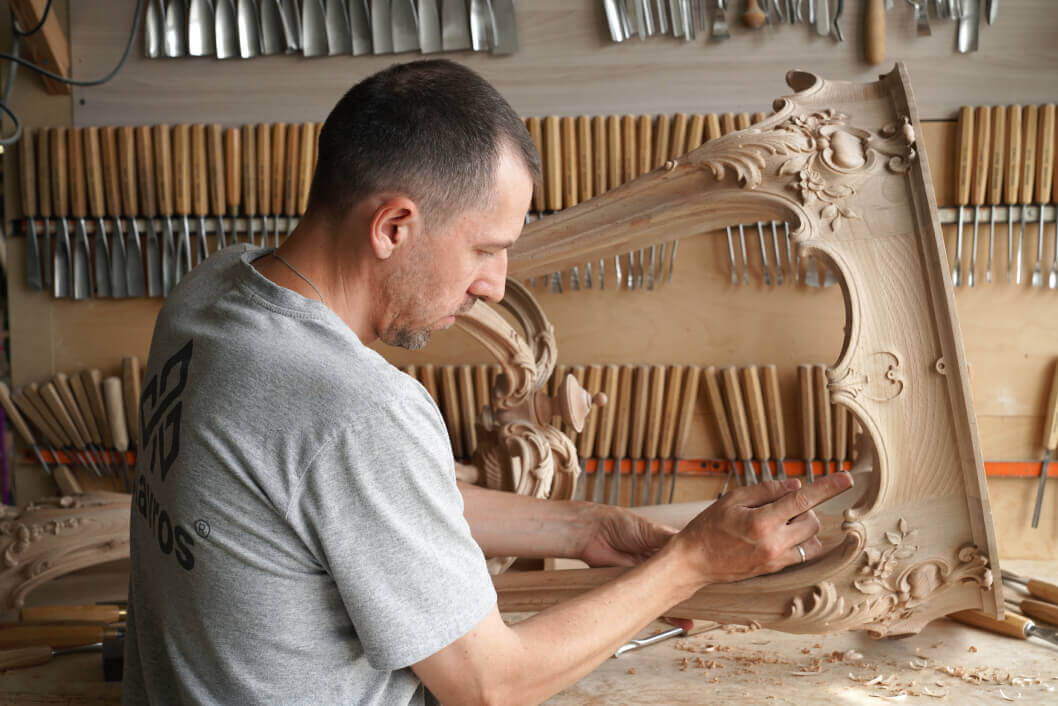
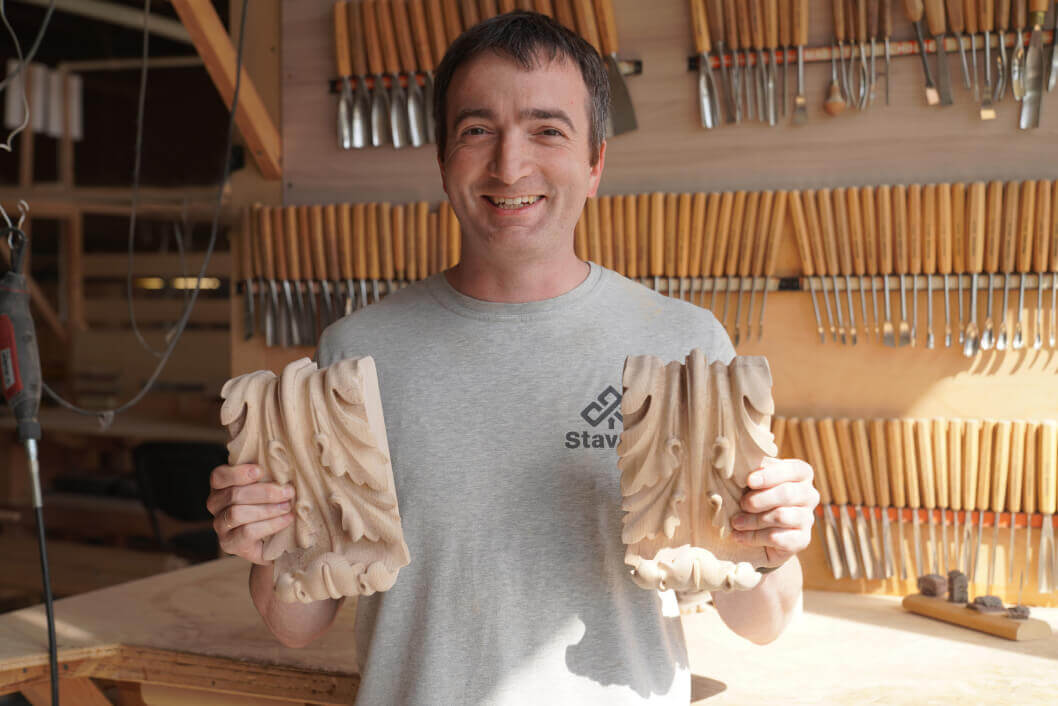
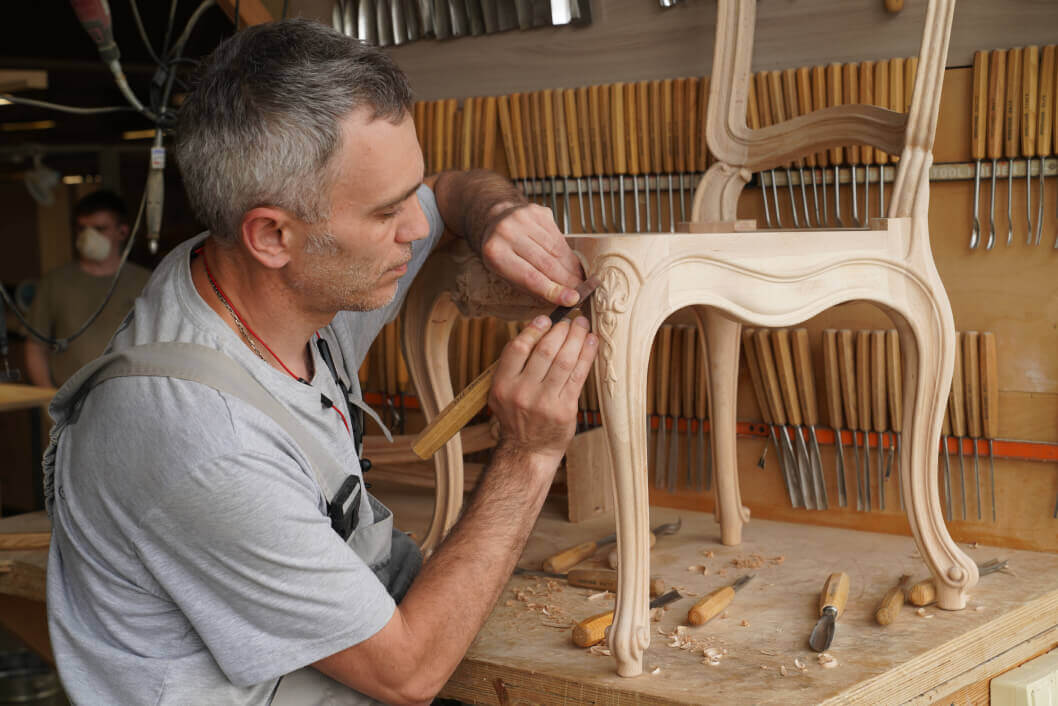
The company's success began in 2002, when two artists — Andrey Ragozin and Evgeny Tsapko — created a small creative workshop for producing wooden carved items. The masters' work was quickly noticed, and within a year they were invited to participate in the reconstruction of the Konstantinovskiy Palace in Strelna.
After the success of this project, the company focused on recreating palace interiors, furniture, church furnishings, and carved decorations in various artistic styles. They worked with cultural heritage sites: The Hermitage, the Alexandrovsky Palace, the Troitsko-Izmaylovsky Cathedral, the Sheremetyevsky Mansion, and many others.
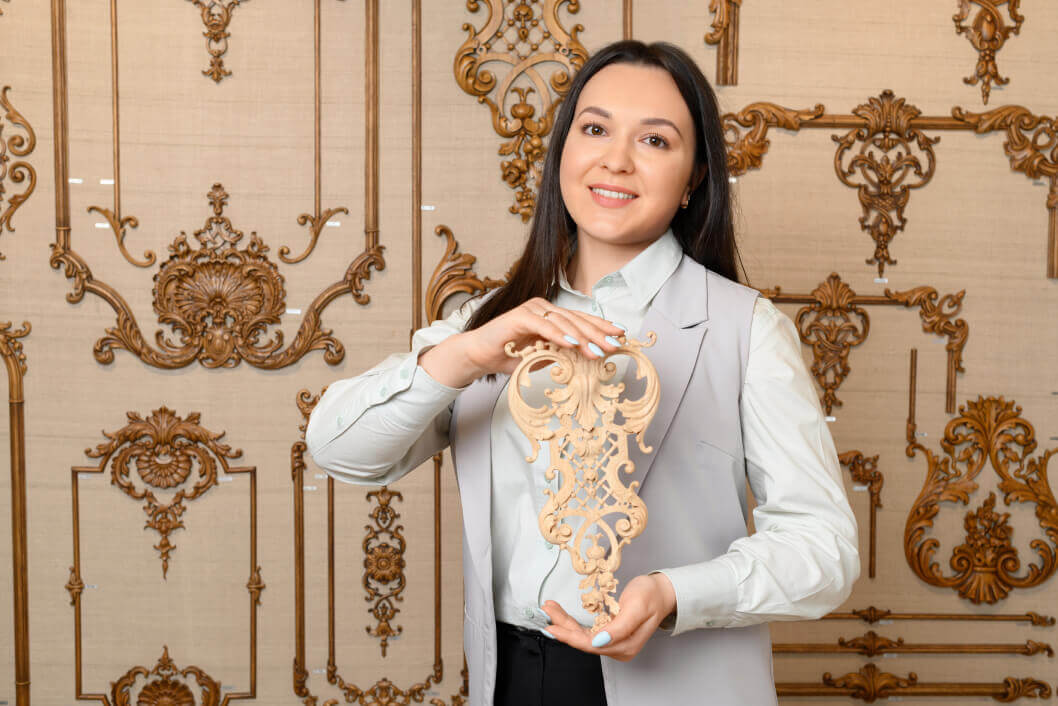
The masters' task — and still is — to create wooden items with the highest level of detail and understanding of every element, based on impeccable knowledge of artistic laws and interior styles.
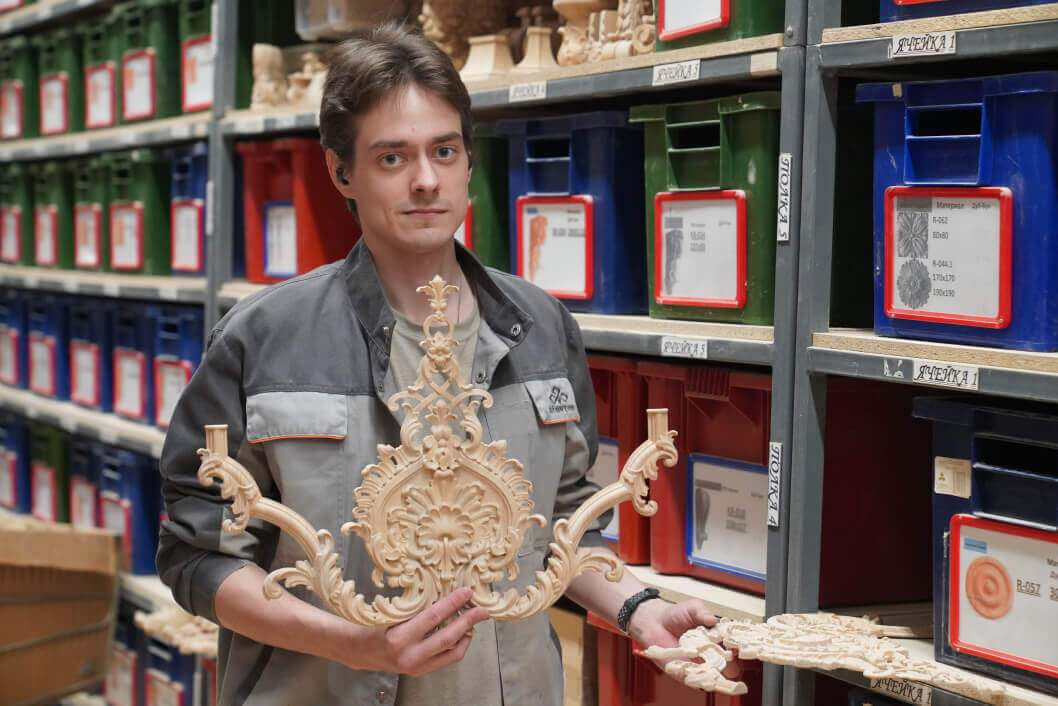
STAVROS Guarantees
Quality of products without complaints
We save your time, peace of mind, and budget
Large warehouse program
We solve your tasks with maximum speed
Adherence to production deadlines
Streamlined process reduces all risks
Delivery from 1 piece throughout Russia
Quality service regardless of order volume
Your positive business reputation
Reliable partner — the foundation of your business
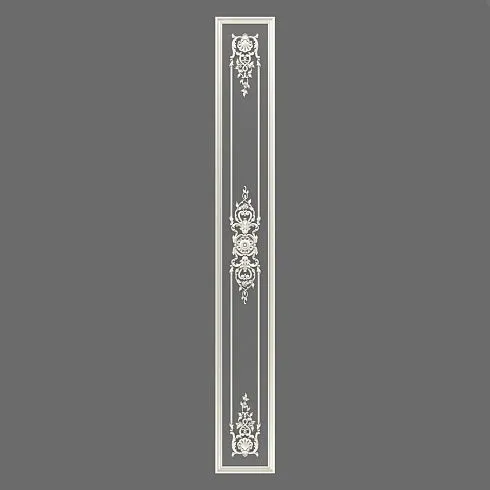
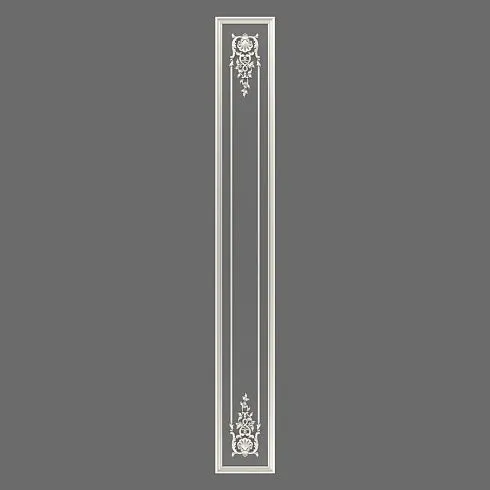
More products from the "Versailles" collection

Frequently asked questions
Our showrooms are located in Saint Petersburg and Moscow. Production is located in Saint Petersburg.
Moscow contacts: https://www.stavros.ru/contacts_all/?tab=msk
Contacts of Saint Petersburg: https://www.stavros.ru/contacts_all/?tab=spb
- Send request by email [email protected]
- Write to us at Telegram
- Write to us at WhatsApp
- Order by phone +7 (800) 555-46-75
- Visit our showroom in Saint Petersburg and Moscow
Yes, we ship orders throughout Russia and to CIS countries.
We cooperate with transportation companies such as СДЭК and DPD.
You can also arrange pickup of your order through any convenient transportation company for you.
Delivery cost depends on the size, weight of the item, and delivery address.
When placing an order, the delivery cost is calculated automatically and displayed as a separate line on our website.
Prices and availability of items on the website are always current. Data is updated daily.
Note: items in stock are stored on the warehouse in unpolished form and shipped within 3 working days.
If the item is not in stock, average production time: 5–10 working days.
This is the quality of polishing of the items.
Standard — machine polishing, at a more attractive price.
Prestige — detailed hand polishing, items do not require further work.
More details: https://www.stavros.ru/information/kachestvo/
This is the type of veneer of the items.
Under enamel: produced by gluing wooden laminates without color and texture matching. Contrast tonal and textural differences are noticeable. This blank should be chosen if the item is intended for opaque coating.
Under tinting: produced by gluing wooden laminates with color and texture matching. Tonal and textural differences may occur. This blank should be chosen if the item is intended for semi-transparent finish.
More details: https://www.stavros.ru/information/kachestvo/
Beech — dense, non-porous wood, most often used for items covered with enamel.
Oak — dense, porous wood with clearly visible natural grain. Due to its strength and decorative properties, it is often used in items with semi-transparent coating, highlighting the wood pattern.
Custom-made, if non-standard items are required, we can produce products from other types of wood, including blanks provided by the customer, manufactured according to our technical specifications.
All our furniture legs can withstand a vertical load of at least 100 kg.
Average production time for custom-made items: 5–10 working days.
Most items are stored on the warehouse in unpolished form. We need time to polish and pack orders.
Yes, we manufacture non-standard items according to individual projects, but we only accept orders with a minimum quantity.
We can manufacture items of the desired size, but we only work with bulk orders. For details, please consult the sales department manager.
Yes, some of our products can be used outdoors. For example, polyurethane items, as well as carved door casings made of pine.
Other items are produced to order using PUR glue, if minimum quantity is available. No warranty is provided for such products, as outdoor conditions are considered aggressive.
Yes, we paint items when ordering products for a total amount of 150,000 rubles or more.
- Dust removal. After sanding, the surface must be dusted.
- Priming. Apply primer in an even layer.
- Matting. After the primer has fully dried, the surface should be matted (lightly sanded for better adhesion).
- Finish coating. Apply finish coating: lacquer or enamel, in 2 layers, with interlayer drying.
More details: https://www.stavros.ru/information/sovety/
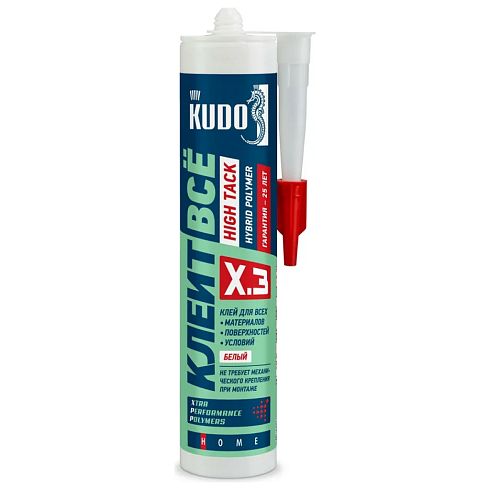
Apply adhesive to the decor. Place it on the surface and press briefly. Then, lift the decor from the surface and leave it open for 3–5 minutes. Press the decor firmly onto the surface and hold for 5–10 seconds.
More details: https://www.stavros.ru/information/sovety/
Ideally, you should prepare a design project before placing an order.
You can do this yourself by downloading drawings of our products from our website, or you can order a project from us.
If the number of decorative elements and fittings is small, our company's manager can assist you with selection.
Unfortunately, this service is not provided.
The packaging method depends on the type of items, but in each case, we ensure sufficient protection for safe transportation.
We most often use corrugated cardboard and stretch film. Fragile items are additionally secured on a rigid base to prevent damage during transport.
We ship all items starting from 1 piece.
Room measurements and item installation can be performed by our partners — carpentry companies represented in most regions of Russia.
Often searched in category Wall Decor
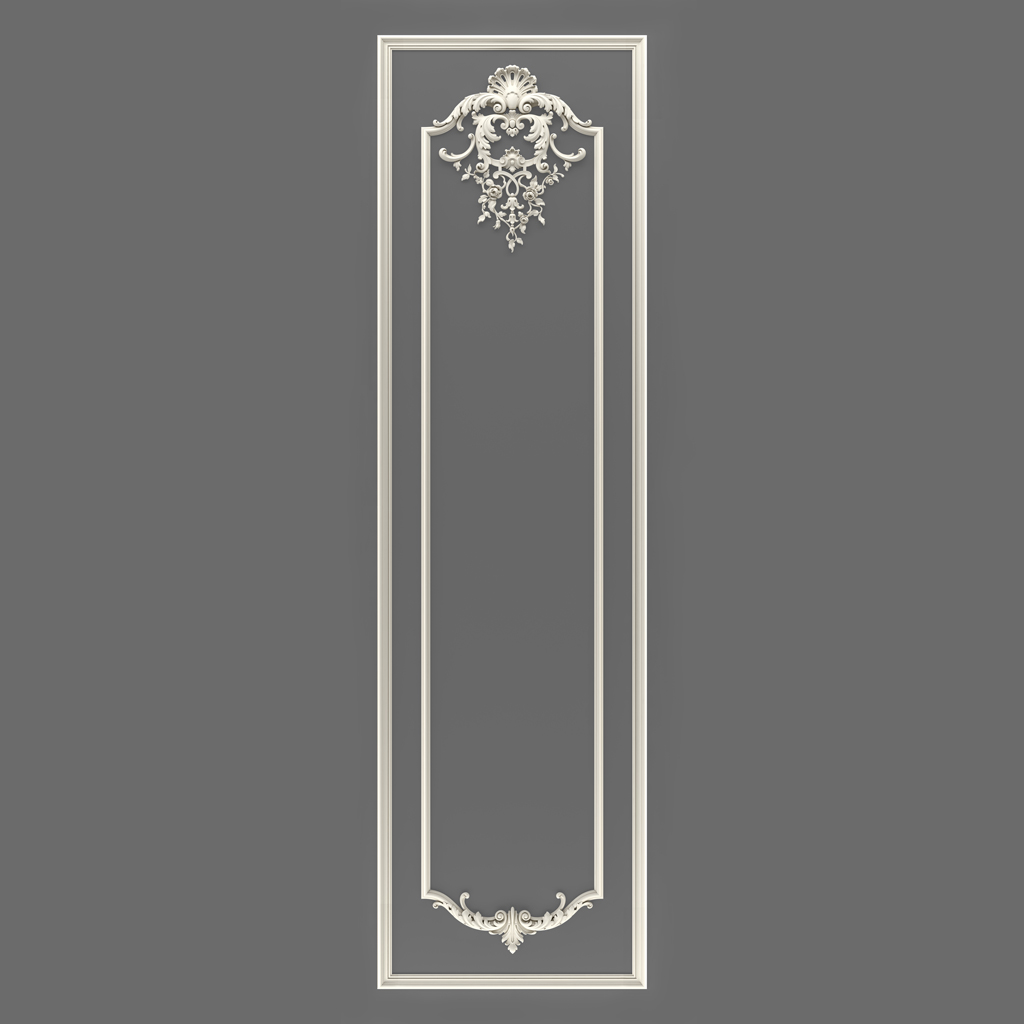
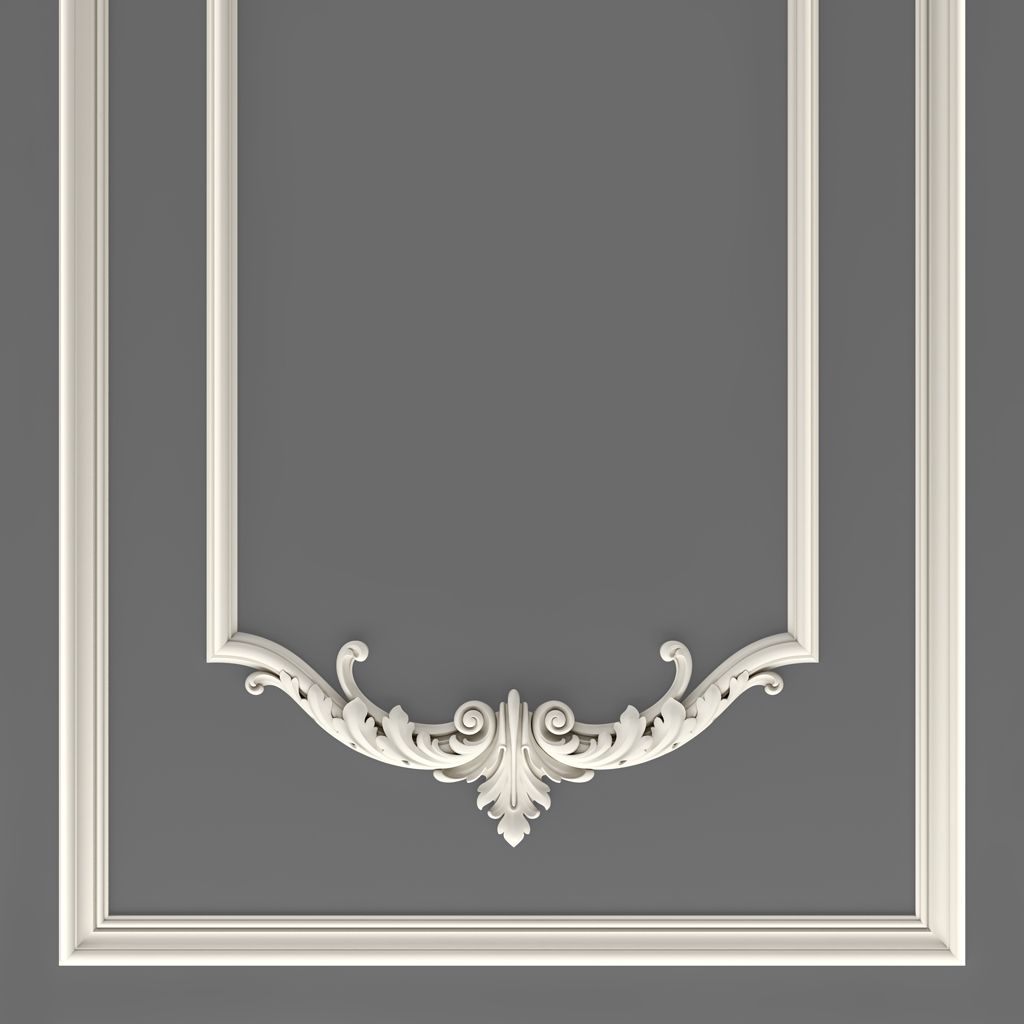
CPU-5-2 Molding Decor Kit — a vertical boiserie panel with rich ornamental decoration
A system where geometry and sculpture work as a single whole
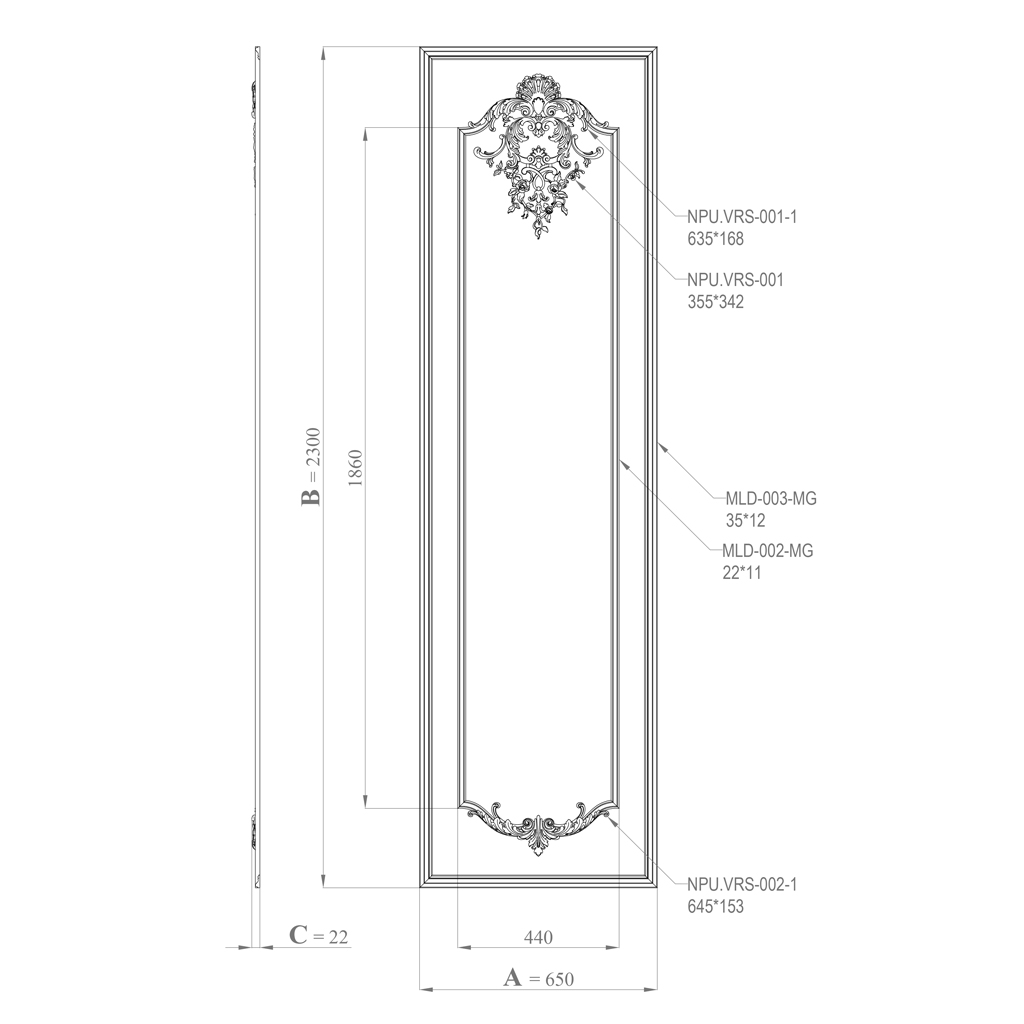
The CPU-5-2 Molding Decor Kit is a professionally assembled system of decorative elements for creating a vertical wall panel measuring 650 × 2300 × 22 mm. It combines load-bearing MDF moldings of two types and three independent ornamental decorations made of high-density polyurethane. This is not just a molding frame — it is a full-fledged architectural program for a single wall section, where each of the five components performs its clearly defined function: the moldings create a strict geometric outline, the horizontal decorative bands define the internal structure of the panel, and the central ornament becomes the semantic heart of the entire composition. The panel width of 650 mm makes the CPU-5-2 kit one of the most versatile formats in the line: this is the typical width of a wall section between a window and a door opening, the distance between pilasters, or an inter-window span in a standard room. With a height of 2300 mm, the panel covers almost the full height of a wall in a room with a standard ceiling — from the baseboard level to the cornice — creating the feeling of a fully 'dressed' wall in the tradition of authentic French boiserie. The maximum relief depth in the system is 22 mm, ensuring convincing three-dimensionality and a rich play of shadows under any directional lighting. All elements come with factory primer and are fully ready for final painting without additional preparation.
Five Elements — One Architectural Story
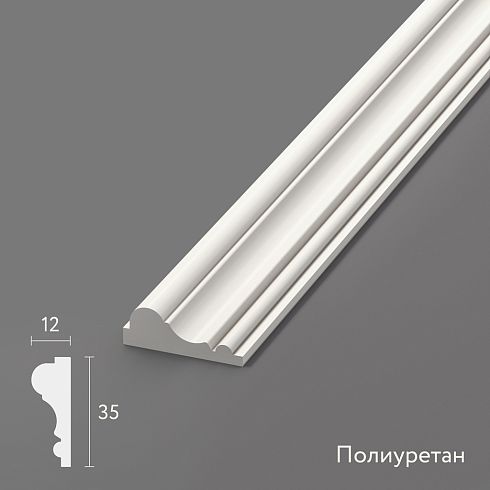
Understanding the logic of the CPU-5-2 kit begins with realizing how exactly the five elements included in it interact within a single decorative system. The external molding MLD-003-MG with a 35 × 12 mm profile forms the main visible contour of the entire panel — this is its architectural 'skeleton,' setting the geometric boundaries and scale. The internal molding MLD-002-MG with a 22 × 11 mm profile creates a second, finer contour outline, parallel to the external one and set back from it by a small distance — a classic double molding technique that adds depth and layering to the panel. The molding decor NPU.VRS-001-1, measuring 635 × 168 × 22 mm, is the upper horizontal ornamental band — it is installed in the upper part of the panel between the moldings and divides its internal space into zones, adding ornamental richness to the area that the human eye registers first upon entering a room. The molding decor NPU.VRS-002-1, measuring 645 × 153 × 22 mm, is the lower horizontal band, mirroring the upper one and creating a symmetrical frame for the central ornament. Finally, the molding decor NPU.VRS-001, measuring 355 × 342 × 17 mm, is the central rosette or medallion, occupying the internal field of the panel between the two horizontal bands and carrying the main semantic and decorative load of the entire system. It is precisely this five-part structure — external frame, internal outline, upper band, lower band, and central accent — that reproduces the canonical scheme of French boiserie with the greatest architectural completeness.
Molding MLD-003-MG: The Main Line Defining the Scale
The MLD-003-MG molding with a 35 × 12 mm profile and a length of 2600 mm is the load-bearing external contour of the entire CPU-5-2 system and serves as the main architectural line from which all other decorative embellishments of the panel are measured. The profile width of 35 mm with a depth of 12 mm creates a molding with confident visual presence — it is wide enough to set the scale and architectural weight, yet thin enough not to compete with the ornamental elements. With a length of 2600 mm, this molding covers the full height of the panel with a margin for trimming to the exact size without the need for lengthwise joints — lengthwise joints in load-bearing moldings are always the most vulnerable point in terms of visual quality and connection durability. The material — MDF with factory white primer — ensures exceptional profile accuracy along the entire length: the cross-sectional geometry does not change by a single millimeter from the beginning to the end of the molding, which is a prerequisite for creating correct rectilinear frame contours. MDF does not have the internal stresses characteristic of wood and does not warp under normal operating conditions in residential spaces — an installed molding retains its specified geometry throughout its service life. The MDF surface is perfectly sanded and primed: after final painting, it yields an even, smooth result without pinholes, fibrousness, or variations typical of natural wood.
Molding MLD-002-MG: A Fine Internal Outline with the Function of Ornamental Detailing
The MLD-002-MG molding with a 22 × 11 mm profile and a length of 2600 mm is the second framing element of the system, installed parallel to the external molding with an offset determined by the design solution. The presence of an internal molding in a boiserie system is not merely an aesthetic addition but an architectural technique with deep logic: the space between two parallel moldings of different profiles creates a visual 'corridor' that is perceived as an architectural detail in itself — like a recess, a quirk, a transition zone between the external contour and the internal field of the panel. This technique of double molding with different profiles was actively used by boiserie masters of the 16th–18th centuries and is one of the sure signs of high-class decorative wall treatment. The profile width of 22 mm makes the internal molding visually subordinate to the external MLD-003-MG — the hierarchy of 'large external, fine internal' creates the correct order of elements, where the eye moves from larger to smaller and ultimately focuses on the internal field of the panel with its ornamental content. The profile depth of 11 mm provides sufficient relief for good shadow play under lighting, without exceeding the height of the external molding and maintaining proper visual subordination. The material and characteristics are the same as for MLD-003-MG: MDF with factory primer, length 2600 mm, precise profile geometry along the entire length.
Upper Horizontal Band NPU.VRS-001-1: The Ornamental Crown of the Panel
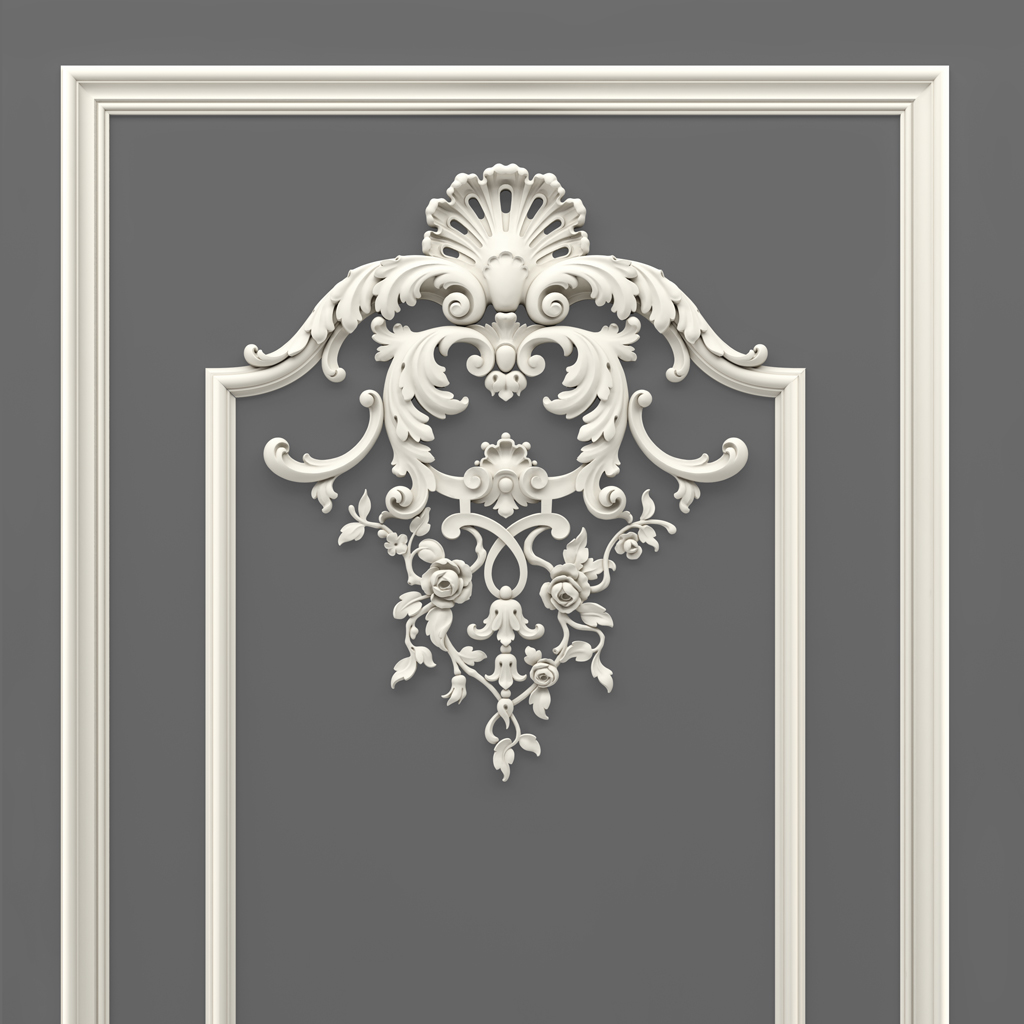
The molding decor NPU.VRS-001-1, measuring 635 × 168 × 22 mm, is the upper horizontal ornamental band of the system and occupies a key position in the panel's structure — its upper third, which is the first area the eye registers when perceiving an interior. The width of 635 mm precisely corresponds to the internal clear width of the 650 mm frame, accounting for the molding profiles — the piece is installed flush with the internal edges of the moldings and completely fills the horizontal band without gaps or protrusions. The height of 168 mm creates an ornamental strip wide enough to accommodate a developed horizontal ornament, but not so high as to visually overload the upper zone of the panel. The relief depth of 22 mm is the maximum in the system — it is the horizontal bands that bear the greatest ornamental load and therefore require the most expressive, voluminous relief. The ornamental language of this decor belongs to the tradition of French Baroque and Rococo: a horizontally unfolded arabesque with symmetrically diverging tendrils, acanthus leaves, floral motifs, and scrolls creates a rich decorative strip where natural forms are subordinated to strict ornamental logic. The relief of the upper band, under side lighting, casts rich shadows that make the surface lively and dynamic — this is especially important in the upper zone of the panel, which receives natural light from windows and light from ceiling fixtures.
Lower Horizontal Band NPU.VRS-002-1: The Symmetrical Response and Completion of the Composition
The molding decor NPU.VRS-002-1, measuring 645 × 153 × 22 mm, is the lower horizontal band of the system and forms, together with the upper band NPU.VRS-001-1, a symmetrical frame for the central ornament. The width of 645 mm, like that of the upper band, corresponds to the internal clear width of the frame — the piece fits precisely into the lower zone of the panel between the moldings. The height of 153 mm is somewhat less than that of the upper band — this is not accidental but a deliberate architectural decision: in the classical system of boiserie proportions, the lower band is traditionally made slightly smaller than the upper one, creating a barely noticeable yet perceptible feeling of a 'weighted bottom' and a 'light top' — the visual stability and balance that any good architectural composition strives for. The ornament of the lower band stylistically echoes the upper one, creating a decorative rhyme, but is not an exact copy — this is an important distinction characteristic of authentic boiserie, where each element has its own voice while belonging to a common theme. The lower band is also made of high-density polyurethane with a 22 mm relief and factory primer — the technical specifications are identical to the upper element. When installed, the two horizontal bands form the upper and lower boundaries of the central ornamental field, creating the proper architectural context for the central decor NPU.VRS-001 — it is perceived not as a randomly glued decoration but as a thoughtfully integrated semantic accent within the system.
Central Decor NPU.VRS-001: The Heart of the Panel and the Culmination of Ornament
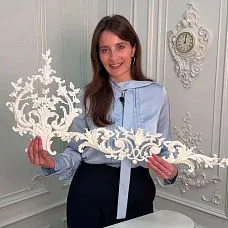
The molding decor NPU.VRS-001, measuring 355 × 342 × 17 mm, is the central ornamental element of the CPU-5-2 system and carries the main semantic load of the entire panel. The dimensions of 355 × 342 mm create an almost square proportion — characteristic of central rosettes and medallions in classical boiserie, which are traditionally located in the geometric center of the panel's internal field and create a point of maximum ornamental concentration. This decorative element is an independent artistic unit: its ornamental program unfolds centrifugally — from the central point in all directions, creating a symmetrical, balanced composition with a clear structure and rich content. Acanthus leaves, scrolls, floral motifs, shell elements — the entire vocabulary of Baroque-Rococo plasticity is presented here in full and with high-quality sculptural detailing. The relief depth of 17 mm is somewhat less than that of the horizontal bands — this is also a deliberate decision: the central medallion should be the main element in meaning but does not have to be the most voluminous in relief, as its dominance is achieved through its central location and the scale of its ornamental content, not the depth of projection. When looking at the installed panel, the central decor immediately attracts attention — it is where the eye travels after following the frame contour through the horizontal bands, and it remains in memory as the visual image of the entire wall section.
High-Density Polyurethane: Every Ornamental Detail in Perfect Preservation
All three ornamental elements of the CPU-5-2 kit — NPU.VRS-001-1, NPU.VRS-002-1, and NPU.VRS-001 — are made of rigid high-density polyurethane, which is today's global standard for producing architectural molding decor for residential and commercial interiors. The choice of this material is due to a combination of properties that no traditional material — neither plaster, wood, nor expanded polystyrene — can provide in combination. The water absorption coefficient of polyurethane is less than one percent — the material practically does not react to moisture, does not swell, does not lose shape, and does not create conditions for mold and fungus development. This means that the ornamental elements of the CPU-5-2 kit can be used not only in living rooms, bedrooms, and studies but also in bathrooms, kitchens, saunas, and other spaces with high humidity — where plaster moldings deteriorate within a few years, polyurethane decor maintains impeccable condition for decades. The temperature stability of polyurethane covers a range from −60°C to +100°C: the product does not deform under seasonal fluctuations, does not crack due to structural shrinkage, and does not react to temperature changes between the heating season and summer months. The impact resistance of polyurethane significantly exceeds that of plaster — decorative elements withstand accidental mechanical impacts without chipping or breaking. The estimated service life of polyurethane components under normal operating conditions is at least thirty to fifty years without loss of relief, geometry, or adhesion to the final paint coating.
MDF as the Foundation of Precision: Why Load-Bearing Moldings Are Made from This Material
The choice of MDF for the load-bearing moldings MLD-003-MG and MLD-002-MG in the CPU-5-2 kit reflects a clear understanding of the functional requirements for different components of the decorative system. Medium-density fiberboard (MDF) is an engineered technical material optimized for the precise reproduction of linear profiles of great length. Its key advantage over polyurethane in the role of a long load-bearing molding is absolute straightness and geometric stability along the entire length of two and a half meters. MDF does not have the internal stresses characteristic of natural wood and does not deform under normal humidity levels in residential spaces. The MDF surface is homogeneous in structure without pronounced fibrousness — this means that after priming and final painting, the molding yields a perfectly smooth, uniform surface without any textural interference that could disrupt the purity of the contour lines. MDF is well processed with standard woodworking tools — saw, router, sander — allowing for precise trimming of moldings to the required size and performing miter cuts at 45° for corner joints with high accuracy. Fastening elements — screws, dowels, staples — work with MDF predictably and reliably, ensuring stable mechanical attachment for the entire service life of the system.
Interior Contexts: Where the CPU-5-2 Kit Performs at Its Fullest
The vertical wall panel measuring 650 × 2300 mm, created from the elements of the CPU-5-2 kit, is one of the most versatile formats in the field of classical wall decor and fits organically into a wide spectrum of interior contexts. In residential spaces, the most natural area of application is the living room, where a system of such panels, rhythmically placed along the walls, forms a full-fledged architectural adornment in the tradition of French classicism. The width of 650 mm perfectly matches the typical spacing of wall sections between windows in residential buildings constructed in the 20th century — with such alignment, each wall section receives its own panel, and the system looks as if it were conceived by the architect during the building's design. In a bedroom, the vertical panel is installed at the head of the bed as a decorative 'headboard' — with a width of 650 mm, it corresponds to a standard single bed and creates an architectural frame above it, characteristic of bedrooms in French classic and Empire styles. In a study or library, CPU-5-2 panels form a backdrop for bookshelves and a writing desk, creating the feeling of a study in English or French style — strict, filled with an intellectual atmosphere and respect for form. In corridors and halls, a rhythmic row of vertical panels transforms a transit space into a gallery with architectural dignity, unmistakably read as a sign of a thoughtful, high-quality interior. In commercial spaces — boutique hotels, fine-dining restaurants, private clubs, spa areas — the system of CPU-5-2 panels creates an atmosphere that is part of the brand and product, giving guests a sense of touching something genuinely significant.
Classic, Provencal, Empire, Neoclassical: The Stylistic Range of the System
The ornamental language of the CPU-5-2 decor — acanthus leaves, floral garlands, Baroque scrolls, symmetrical arabesques — is a universal architectural vocabulary that sounds organic in several key stylistic directions. In a classic interior and neoclassicism, the system of CPU-5-2 panels forms a complete architectural program together with ceiling cornices, baseboards, pilasters, and central molding rosettes on the ceiling — the interior acquires the integrity and completeness characteristic of palace-class interiors. In the French Provencal style, panels with an aged milky-white or cream finish and light patina create a romantic atmosphere of a provincial château with a history of several generations — the floral motifs of the horizontal bands and central medallion fit absolutely organically into the natural character of this style. In the Empire style, the entire system acquires a solemn, monumental character with the right color solution: a dark olive, deep blue, or rich terracotta wall background with white or gilded moldings and ornaments creates the image of ceremonial architecture characteristic of Empire. In modern classic and transitional style, the system of vertical panels serves as the main architectural statement in an otherwise laconic and restrained interior: it saturates the space with cultural content and historical depth without disrupting the modern character of the overall solution. In Art Deco interiors, the geometric strictness of the framing molding contour combined with ornamental details creates the dialogue between geometry and decor, between strictness and luxury, characteristic of this style.
Coloristics and Finishing Techniques: From Monochrome to Gold Patina
The factory white primer on all elements of the CPU-5-2 kit opens complete freedom in choosing the final color solution. The professional arsenal of finishing techniques applicable to this system covers several fundamentally different approaches, each creating its own interior image. Monochrome painting of the entire system in a single color is the most sophisticated and aristocratic technique: the moldings, horizontal decors, and central medallion are painted in the same tone as the panel field and wall, with the relief read exclusively through shadows. Under intense side lighting, the 22 mm relief creates a richest play of light and shadow, making the surface lively and plastically saturated without the slightest color contrast — this is the highest level of interior finishing, characteristic of the work of luxury-class professional decorators. White moldings and decor on a colored field create a light color contrast and bring the architectural system to the foreground — this technique works equally well on neutral gray-beige, warm taupe, and cool gray-blue wall tones. Gold patina on the protruding parts of the ornamental elements' relief over a white or cream base reproduces the technique of partial gilding characteristic of Versailles interiors: the ornament shimmers with gold, while the moldings remain white, creating a clear visual hierarchy. Double toning with dark umber or burnt sienna in the recesses of the relief over a light base color imitates the effect of natural aging of moldings and creates the illusion of authentic historical pieces with centuries-old biography.
Installation of the Vertical Panel: Precision as the Main Principle
Installing the CPU-5-2 system with a full height of 2300 mm requires careful adherence to the technological sequence, which ensures an accurate geometric result, invisible joints, and durable fastening. The first and defining stage is detailed wall marking. The vertical axes of the left and right sides of the panel are verified with a plumb bob or laser level: at a height of 2300 mm, even a slight deviation from vertical will be noticeable to the naked eye. The horizontal lines of the panel's upper and lower edges are verified with a laser level. Additionally, the axes of the horizontal decors NPU.VRS-001-1 and NPU.VRS-002-1 are marked — indicating the exact distance from the upper and lower edge of the panel, respectively — and the central point for the medallion NPU.VRS-001. If the wall surface has irregularities exceeding 2 mm, it is leveled with finishing putty and, after drying, sanded, then primed with an acrylic deep-penetration primer. The moldings MLD-003-MG and MLD-002-MG are cut to size with precise miter cuts at 45° for corner zones using a miter saw — the accuracy of miter cuts is critical, as gaps in joints become sharply noticeable after painting. The moldings are glued to the wall with polymer mounting adhesive with mandatory additional fixation using screws every 40–50 cm. The horizontal decors NPU.VRS-001-1 and NPU.VRS-002-1 are mounted after installing the moldings, using polymer adhesive with a hold under pressure for 30–45 seconds. The central medallion NPU.VRS-001 is installed last — precisely at the marked center. All joints are filled with acrylic sealant, sanded, and painted with a unified final coat.
Panel Rhythm and a Complete Boiserie System: How an Interior Grows from One Kit
A single CPU-5-2 panel with a width of 650 mm is already a complete decorative element, but the true architectural effect of boiserie emerges only through the rhythmic repetition of the system along the wall. With a standard living room wall width of 4.5–5.0 m, four to five CPU-5-2 sets are installed on one wall with equal inter-panel gaps of 100–150 mm. A rhythmic row of vertical panels with a uniform pitch creates a sense of architectural order—a structured, rhythmically organized system where each panel is part of a whole, not an independent object. Inter-panel gaps can be finished with additional vertical moldings to create a pilaster effect or left plain—the first option creates a richer, more palatial impression, while the second is more restrained and modern. When finishing corner areas of a room, panels transition from one wall to another using corner moldings, encompassing the entire perimeter of the room—this creates a fully immersive sense of 'dressed' walls, characteristic of authentic French classicism interiors. Combining CPU-5-2 sets of different widths in one system—for example, main panels of 650 mm plus narrower wall sections—allows the system to adapt to any room layout with arbitrary placement of windows, doors, and protrusions.
Long-term service without worries: operation and care
The CPU-5-2 set is designed for long-term use with minimal maintenance requirements. Daily surface cleaning involves wiping with a soft, slightly damp cloth or a soft brush with natural bristles—dust settling in the recesses of the ornamental relief elements is removed effortlessly. For more noticeable stains, the surface is wiped with a neutral soap solution followed by rinsing with a clean, damp cloth. Abrasive sponges, steel brushes, and aggressive solvents are contraindicated—they damage the final paint coating but not the materials of the product itself. Polyurethane components are completely insensitive to accidental water exposure—they do not swell or deform. MDF components should be protected from direct, prolonged contact with water—their protection is provided by the final paint coating, which reliably isolates the surface under normal operating conditions. For mechanical damage—chip, scratch, small crack—local repair is performed with acrylic putty followed by sanding and spot painting to match the main coating. Renewing the finish coating of the entire system is done by repainting without dismantling—the product accepts a new layer of paint with the same adhesion as the first. With professional application of paint in a thin layer using a spray gun, the relief of ornamental elements retains maximum detail through any number of coating renewals over the entire estimated service life of the system, from thirty to fifty years.
Your request has been sent!
Our manager will contact you within 5 minutes