Article Contents:
- History: mirror as a symbol and interior element
- Role of mirror in interior design
- Why wood?
- Mirror frame styles
- Where and how to use a mirror in a wooden frame
- Common mistakes when choosing and placing mirrors
- Advantages of mirrors from STAVROS
- Case studies and visualizations
- Conclusion
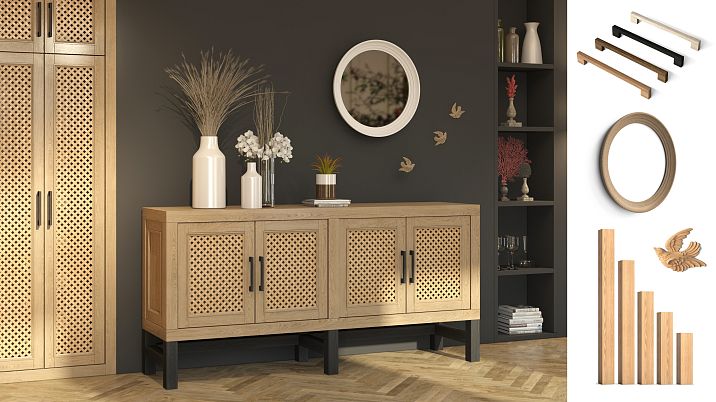
Mirror — a wonderful object possessing magical powers to transform space, fill it with light, and create an illusion of infinity. It is not merely a functional interior element, but a powerful design tool capable of radically altering the perception of a room. However, the true power of a mirror is only revealed in a worthy frame, which highlights its character and integrates it into the overall interior concept.
Mirror in wooden frame It is more than just a piece of furniture. It is a true personality within the space, capable of setting the tone for the entire interior, becoming its conceptual and visual center. A wooden frame imparts warmth and depth to the mirror, qualities absent in modern minimalist solutions. It transforms a functional object into a work of art, where the craftsmanship of the woodcarver and the magic of the reflective surface come together.
STAVROS company creates frames in which wood becomes an inseparable part of the mirror’s architecture. Each item is the result of meticulous work by masters who understand the nature of the material and know how to reveal its beauty. In their hands, a solid block becomes an elegant frame that not only surrounds the mirror surface but also engages in a visual dialogue with it, creating a harmonious unity of form and content.


History: mirror as a symbol and interior element
The history of mirrors and their frames spans millennia. From polished metal plates of antiquity to modern glass surfaces with amalgam — mirrors have always been not only household items, but also symbols imbued with deep cultural and mystical significance.
In the ancient world, mirrors were made of polished bronze and silver, their frames often adorned with mythological scenes and ornaments. These items were accessible only to the elite of society and were considered symbols of wealth and status. The Middle Ages, with its religious restrictions, temporarily halted the development of mirror art, but the Renaissance restored mirrors' significance and added a new dimension — they became not only personal items but also important elements of interior design.
The true golden age of mirror framing art came during the Baroque and Rococo periods. It was then that luxurious mirrors with carved gilded frames appeared, placed in palace halls and creating an illusion of infinite space. The mirror became an architectural element capable of visually expanding a room and amplifying the effect of other decorative interior details.
Wood has always been an ideal material for framing mirrors. Its pliability allowed for the creation of intricate carved forms, while its natural warmth softened the coldness of the glass surface. Moreover, a wooden frame provided reliable protection for the fragile mirror, extending its service life.
The style of mirror framing always reflected the aesthetic preferences of the era. Baroque frames, with their lavish carving, putti imagery, and botanical motifs, embodied ideals of luxury and excess. Classicism brought more rigorous and symmetrical forms based on ancient models. Modernism of the early 20th century introduced flowing, fluid lines and asymmetry into mirror frame design, while Art Deco added geometric clarity and exotic motifs.
Today, in the era of minimalism and functionality, wooden mirror framing is experiencing a new renaissance. Designers and consumers are once again drawn to the warmth and authenticity of natural wood, appreciating handcrafted work and the uniqueness of each piece. A mirror in a wooden frame becomes not merely an interior object, but a link between past and present, tradition and modernity.




Role of mirror in interior design
Mirror is one of the most powerful tools in the interior designer’s arsenal. Its ability to visually expand space, multiply light sources, and create unexpected perspectives makes it an indispensable element in decorating spaces of any size and purpose.
The spatial magic of mirrors is based on their ability to create an illusion of depth where there is none physically. A properly placed mirror can visually double the size of a room, make a low ceiling appear higher, and widen a narrow corridor. Large mirrors in substantial frames work especially effectively, perceived as additional windows or passageways to other rooms.
Equally important is the mirror’s ability to work with light. They reflect and multiply both natural and artificial lighting, making the space brighter and more airy. A mirror placed opposite a window can direct sunlight into the darkest corners of the room. In the evening, it enhances the effect of lamps, creating a richer, more layered lighting environment.
The psychology of mirror perception in interior design is a separate and fascinating topic. We do not merely see a reflection of space in the mirror — we see ourselves within that space, creating a special emotional connection with the interior. The mirror makes us participants in the visual composition of the room, integrating us into its architectural context. That is why it is so important that the mirror frame matches the overall interior style and highlights its strengths.
The frame of a mirror plays a key role in how we perceive not only the mirror itself, but also the entire space around it. It sets visual boundaries, focuses attention, and defines stylistic affiliation. A heavy carved frame made of dark wood creates a sense of solidity and tradition, while a slender, minimalist frame conveys lightness and modernity. The frame can serve as a neutral element, accentuating other interior components, or, conversely, as a bold accent, setting the tone for the entire space.
Mirrors in wooden frames are often used as standalone art objects in modern design, capable of becoming the conceptual center of an interior composition. Antique or historically styled mirrors in carved frames particularly effectively introduce a sense of history and continuity of cultural traditions into contemporary spaces.
Our factory also produces:


Why wood?
In the world of modern materials, where plastic, metal, and composites offer endless variety of forms and textures, wood retains its special place as a material for framing mirrors. This is explained not only by tradition, but also by the unique qualities of wood that cannot be fully replicated artificially.
Above all, wood possesses natural warmth that softens the coldness of the mirror’s glass surface. This contrast creates an interesting visual and tactile effect, making the mirror a more cozy and organic element of the interior. The wooden frame seems to embrace the mirror’s surface, creating a transition between the reflective surface and the surrounding space.
The wood grain is another indisputable advantage of the frame. Each species has its unique fiber pattern, which cannot be exactly replicated. This natural pattern makes every frame unique, even if it is made according to a standard design. Moreover, the wood grain creates an interesting play of light and shadow, adding depth and dimension to the flat surface of the frame.
Authenticity is a quality especially valued in today's mass-production world. A wooden frame, particularly handcrafted, carries the energy of living material and the craftsmanship of its creator. It becomes not just a functional element, but a carrier of cultural code, connecting us to the traditions of artisanal art.
STAVROS company uses various types of wood for frame production, each with its own characteristics and applications. Beech is prized for its uniform structure and pleasant light pink hue, which complements modern interiors well. Oak, with its pronounced texture and warm golden color, is ideal for classic and traditional styles. Ash, combining strength with an elegant light tone, is versatile and suitable for a wide range of design solutions.
Solid wood is a living material that changes its color and texture over time, gaining even greater depth and character. Unlike artificial materials that lose their appeal over time, a quality wooden frame becomes more beautiful with age, acquiring a noble patina of age.
The color, texture, and profile of the frame significantly influence how the mirror is perceived in the interior. Dark wood species (wenge, walnut) create a sense of solidity and tradition, while light ones (maple, birch) convey lightness and modernity. A pronounced texture draws attention to the frame itself, making it a standalone decorative element, whereas a uniform surface allows the frame to remain a neutral border for the mirror.
The frame profile determines its plastic expressiveness and stylistic affiliation. Complex multi-level profiles with carving are characteristic of classical styles, while simple geometric profiles belong to modern styles. The width of the profile affects the visual weight of the frame: wide frames create a sense of monumentality, while narrow ones convey lightness and elegance.
Get Consultation
Mirror Frame Styles
Choosing a mirror frame style is not merely an aesthetic preference but an important design decision that must consider the overall interior concept, architectural features of the room, and the functional purpose of the mirror.
Classic mirror frame style is characterized by symmetry, proportionality, and the use of traditional ornamental motifs. Carved forms based on architectural order elements — columns, pilasters, cornices — create a sense of solidity and historical continuity. Classic frames often have complex profiles with multiple levels, creating an interesting interplay of light and shadow.
The color palette of classic frames usually includes noble wood tones — from golden oak to dark redwood, often with patina or gilding. Such frames are ideal for traditional interiors with antique furniture, but can also serve as an interesting accent in modern spaces, creating a striking contrast with minimalist surroundings.
Modernism as a style of frame art is characterized by plasticity of lines, asymmetry, and use of natural motifs. Frames in the modern style often have smooth, flowing forms reminiscent of plant scrolls or waves. Carving is more free and organic, without the strict geometry of classical samples.
The color palette of modernism includes both natural wood tones and tinted, patinated surfaces that create an effect of antiquity or, conversely, bright, saturated colors. Mirrors in modern-style frames become not just functional items, but expressive art objects capable of setting the tone for the entire interior.
Scandinavian style in mirror decoration is characterized by simple forms, minimalistic decor, and emphasis on the natural beauty of wood. Frames usually have clear geometric shapes, often with rounded corners, and a minimalist profile without excessive ornamentation.
Light-colored wood species — birch, pine, ash — are typically used in Scandinavian style with minimal processing, highlighting the natural texture of the material. Such frames create a sense of lightness, freshness, and natural purity, perfectly fitting into modern interiors that strive for ecological and functional design.
Loft as an interior style implies the use of rough, unprocessed materials and industrial aesthetics. Mirror frames in loft style are often made from thick boards with pronounced texture, sometimes with elements of aging — cracks, chips, tool marks.
The color palette of loft frames includes natural wood tones, often with a whitewashed effect or, conversely, darkened tones that create the impression of old, weathered boards. Such frames become a striking accent in the interior, adding character and individuality.
Modern eclecticism in mirror frame design implies free mixing of various styles and eras, creating unique, non-standard solutions. A frame may combine elements of classicism and modernism, traditional techniques and modern materials.
In eclectic style, the frame becomes an independent artistic statement reflecting the owner's individuality and their attitude toward tradition and innovation. Such frames are especially suitable for interiors where originality and a non-standard approach to design are valued.
Where and how to use a mirror in a wooden frame
Placing a mirror in the interior is an art requiring understanding not only of aesthetic but also functional aspects. Each room has its own specificity that must be considered when choosing the type of mirror and its frame.
The hallway is the first space we encounter upon entering the house and the last we see when leaving it. Here, the mirror serves not only a practical function, allowing us to check our appearance before leaving, but also an energetic one, reflecting and seemingly welcoming incoming energy.
Vertical mirrors in solid frames are ideal for hallways, creating a sense of solidity and stability. The wooden frame should match the style of the entrance door and other hallway furniture, creating a unified ensemble. In small hallways, mirrors with shelves or hooks effectively combine functionality with aesthetics.
The living room — a space for receiving guests and family gatherings — requires a special approach to mirror placement. Here, the mirror often serves as a decorative element capable of optically expanding the space and creating interesting visual effects.
A large mirror in a decorative frame placed above a fireplace or console becomes the focal point of the interior, attracting attention and setting the tone for the entire room. In modern living rooms, compositions of multiple mirrors in similar frames create a dynamic visual rhythm.
The bedroom — a place for rest and solitude — requires special delicacy in mirror usage. Here, the mirror must not only serve a practical function but also create an atmosphere of coziness and tranquility.
Traditionally, a dressing table with a mirror in an elegant frame is placed in the bedroom, becoming part of the ritual of preparing for sleep and waking up. Large floor-standing mirrors full-length allow you to assess your appearance as a whole, while wall-mounted mirrors in decorative frames add depth and expressiveness to the space.
The wardrobe, bathroom, and office — each of these rooms has its own characteristics that must be considered when choosing a mirror and its frame. The versatility of STAVROS frames allows selecting the optimal solution for any space, taking into account its functional purpose, stylistic approach, and dimensions.
When choosing a frame, it is important to consider not only the interior style but also the color palette of the room, the size and proportions of the mirror, and the lighting conditions. The frame color can harmonize with the main tones of the interior or, conversely, create a striking contrast. The frame width should correspond to the mirror size and room scale: wide, solid frames suit large mirrors in spacious rooms, while thinner, more minimalist frames are better for small mirrors in compact spaces.
Carving and decorative elements on the frame should harmonize with other interior details — furniture hardware, moldings, textile patterns. This creates a sense of thoughtful design and overall coherence, where each element is in its proper place and contributes to the overall concept.
Common mistakes in choosing and placing mirrors
Even the most beautiful mirror in an elegant frame may fail to make the desired impression if errors were made during its selection and placement. Let's consider the most common ones and how to avoid them.
Mismatch with the room's style is one of the most frequent mistakes. A mirror in a classical carved frame will look out of place in a minimalist modern interior, just as a simple, unadorned mirror will disappear among the opulence of baroque decor. It is important that the frame's style harmonizes with the overall style of the room, supporting and emphasizing its character.
However, there is no need to fear eclecticism and contrasting combinations, provided they are thoughtfully designed and conceptually justified. An antique mirror in a carved frame can become a striking accent in a modern interior, creating an interesting tension between tradition and innovation. The key is that such a contrast should be an intentional design decision, not a random mismatch.
Incorrect hanging height is another common mistake that can negate all the merits of even the most beautiful mirror. The optimal height depends on the mirror's intended function and the users' height. For a mirror intended for viewing oneself full-length, the bottom edge should be at a distance of 30-40 cm from the floor. For a mirror above a console or chest of drawers, it should be at a height of 10-15 cm above the furniture surface.
In living rooms and dining rooms, decorative mirrors are usually placed at eye level for a seated person, which corresponds to approximately 120-130 cm from the floor to the center of the mirror. In hallways and bathrooms — at eye level for a standing person of average height, i.e., around 160-170 cm from the floor.
Choosing an inappropriate frame thickness is an error that can disrupt the visual balance of the interior. A too thin frame for a large mirror will appear unconvincing and will not adequately 'hold' the reflective surface. Conversely, an overly heavy frame for a small mirror may visually overpower it, making it a secondary element in the composition.
The width of the frame should be proportional to the size of the mirror and the scale of the room. In small rooms, it is better to use mirrors with thin or medium-width frames to avoid overloading the space. In spacious rooms, more substantial, expressive frames are appropriate, which can become a standalone decorative accent.
Visual noise is a problem arising from improper combination of the mirror with other decorative elements. If the mirror reflects too many disparate objects, bright colors, contrasting textures, it creates a sense of chaos and disharmony.
To avoid visual noise, it is necessary to carefully consider what will be reflected in the mirror. Ideally, it should be a beautiful view from the window, a piece of art on the opposite wall, an eye-catching lamp, or a composition of plants. Avoid placing mirrors opposite cluttered shelves, household appliances, or unattractive structural elements.
Advantages of STAVROS mirrors
When choosing a mirror for your home, you are choosing not just a piece of interior decor, but also a certain aesthetic concept, philosophy of relationship to space and materials. Mirrors in wooden frames from STAVROS are not just functional objects, but architectural replicas capable of setting the tone for the entire interior.
The main advantage of STAVROS products is the use of only high-quality solid wood. Unlike many manufacturers using MDF or other composite materials with wood grain imitation, STAVROS works exclusively with real wood, preserving its natural beauty and energy.
Ecological safety is another important quality of STAVROS products. All materials used in production are safe for health and the environment. The wood comes from responsibly managed forests, and non-toxic varnishes and paints are used for finishing, which do not emit harmful substances.
Structural reliability is ensured by using traditional joinery techniques combined with modern wood processing methods. Each frame undergoes a multi-stage quality control, guaranteeing its durability and preservation of aesthetic properties for many years.
Handcrafted quality is what distinguishes premium products from mass-produced ones. STAVROS masters pay special attention to details often overlooked in machine production: perfect surface polishing, precise carving, quality finishing. It is precisely these nuances that create a sense of luxury and exclusivity impossible to achieve in mass production.
Delivery throughout Russia makes STAVROS products accessible to customers from any region of the country. The company ensures reliable packaging protecting items from damage during transport and prompt delivery, which is especially important when implementing projects with tight deadlines.
Individual approach to each client allows creating unique solutions tailored to specific needs and preferences. STAVROS offers not only standard frame models but also the possibility of manufacturing items according to individual sketches, taking into account the specifics of the interior and the client's preferences.
The collection's variety of models allows selecting the ideal solution for any interior — from classic to ultra-modern. STAVROS offers both traditional frames with carved decoration and minimalist modern models that meet current design trends.
Cases and visualizations
Let's consider several specific examples of how a mirror in a wooden frame can transform an interior and become its key element.
First scenario — a classic living room in a country house. Before transformation, this was a spacious but somewhat impersonal room with neutral walls and standard furniture. The central element of the interior became a large rectangular mirror in a heavy frame of dark oak with carved floral ornamentation, placed above the fireplace.
The frame, executed in a classical style with elegant proportions and finely detailed craftsmanship, instantly gave the space character and depth. The warm golden hue of the wood effectively contrasted with the neutral background of the walls, creating a striking accent. The reflective surface of the mirror visually expanded the space and enhanced the effect of the fireplace and windows opposite it, filling the room with light and movement.
Additional touches were two small mirrors in similar frames, symmetrically placed on the side walls. They reinforced the main motif and created a rhythmic structure unifying the entire space. As a result, the living room acquired coherence and expressiveness, becoming a true center of the house.
Second scenario — a modern bedroom in an urban apartment. Initially, this was a functional but lacking individuality space with minimalist furniture and neutral color palette. The transformation began with installing an oval mirror in a light beech frame with a minimalist profile, placed above the vanity table.
The smooth shape of the mirror softened the room's geometry, while the warm tone of the wooden frame added coziness and naturalness. Despite its simplicity, the frame featured refined details — a subtle relief highlighting the natural wood texture, and an elegant profile creating an interesting interplay of light and shadow.
The mirror became not just a functional element, but also the center of composition, around which the entire interior was arranged. Its reflective surface visually expanded the space and added depth, while the wooden frame introduced a note of warmth and natural organic quality into the minimalist interior.
Third scenario — an eclectic home office interior. Before transformation, this was a formal, somewhat rigid space with dark furniture and neutral walls. The key element of the new design became a rectangular mirror in a wide beech frame with modern-style carving, placed on the wall opposite the work desk.
The frame, combining classical proportions with smooth, flowing lines of modernism, created an interesting contrast with the geometric rigidity of the rest of the interior. The light, warm tone of beech softened the overall color palette of the room, adding lightness and airiness.
The mirror not only served a decorative function but also played an important role in organizing the space, visually expanding it and creating the effect of an additional window. The reflection of the work desk and bookshelves created an interesting compositional play, adding depth and layering to the interior.
Conclusion
The mirror is a remarkable object, combining practical functionality with deep symbolism. For centuries, it has been not merely a household item, but also a metaphor for self-knowledge, a window into other dimensions, a tool of magic and art. In modern interiors, the mirror retains this duality, remaining simultaneously practical and mysterious.
The mirror frame is not just decorative trim, but an artistic form through which the symbolic meaning of the reflective surface is expressed. The wooden frame, with its warmth and natural beauty, creates an ideal contrast with the cold gleam of glass, softening it and making it a more organic element of the interior.
Choosing a mirror with a wooden frame means choosing not just a decorative item, but a specific relationship to space and time. We are not only decorating the wall on which it will hang, but adding a new dimension and depth to the entire room. The mirror becomes a portal through which the interior acquires depth and multidimensionality, transcending its physical boundaries.
In the world of modern design, where individuality and authenticity are so highly valued, a mirror with a wooden frame from STAVROS becomes not just a functional item, but an expression of personal taste, understanding of traditions, and a desire for harmony between the past and present, nature and technology, practicality and beauty.
Each Mirror in wooden frame It is not just a reflective surface, but a window into the world of your interior, through which you look at your space and at yourself within it. Choose this window with love and care, and it will delight you with its beauty and functionality for many years.