Article Contents:
- What Are Interior Wooden Wall Panels
- Types of Interior Wooden Wall Panels
- Smooth panels
- Slatted panels
- Relief decorative panels
- Panels for accent walls
- Panels for Zoning and Partitions
- What Materials Are Used for Interior Wall Panels
- Solid wood
- MDF with decorative finish
- Veneered panels
- Combined Solutions
- Where to Use Interior Wooden Wall Panels
- In the living room
- In the bedroom
- In the entryway
- In the study
- In the dining room
- In the TV area
- In niches and passage areas
- How to choose panels according to interior style
- Modern style
- Minimalism
- Scandinavian interior
- Jatoba
- Neoclassicism
- Warm modern interior
- How to choose color, texture and format
- What to choose: solid wood, MDF or veneer
- Advantages of Interior Wooden Wall Panels
- Common Mistakes When Choosing Wooden Wall Panels
- How to care for wooden panels indoors
- FAQ: Answers to Frequently Asked Questions
- Conclusion
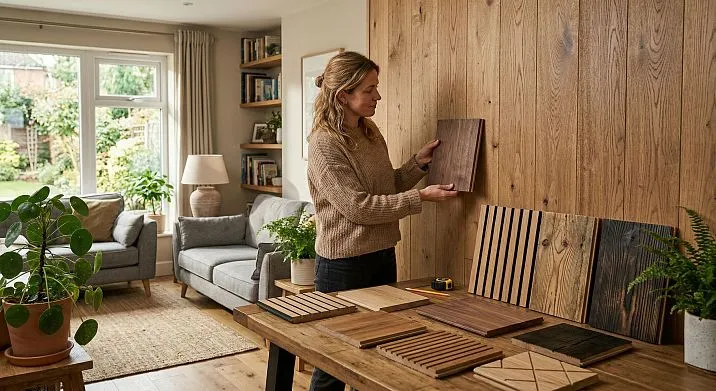
Walls are not a background. They are part of the architecture of space that works constantly: shaping the atmosphere, setting the scale, defining the feeling of a room even before the gaze settles on furniture or decor. Painted walls are neutral—this is normal and often correct. But neutrality does not equal character. It is precisely wooden wall panels for interior finishing that provide what neither paint, nor plaster, nor even expensive wallpaper can offer: a living surface with natural texture, tactile warmth, and genuine material weight.
Interior wooden wall panels today are no longer a niche story for country houses and rustic interiors. They are one of the key materials in modern residential design: they are present in minimalist apartments with a Japanese spirit, in Scandinavian living rooms, in neoclassical studies, and in open-plan studios with a natural concept. Wood on the wall is adaptive and versatile—this is precisely why it continues to be chosen.
This article is a detailed guide to the types, materials, styles, and application scenarios of wooden wall panels for interiors. From technical classification to practical advice on choosing color and format.

What are interior wooden wall panels?
Interior wooden wall panels are decorative and structural wall cladding elements designed exclusively for use inside buildings: in residential, office, commercial, and public spaces. This is a fundamental clarification that immediately distinguishes them from facade and exterior solutions: the operating conditions are fundamentally different, and the material for interior walls works in a stable microclimate without ultraviolet light, precipitation, and freeze-thaw cycles.
How do wooden wall panels for interiors differ from other wall finishing methods? Three key differences:
First, material authenticity. Paint and plaster create a surface. Wallpaper imitates a surface. A wooden panel is the material itself, present in the space with all its natural properties: the living grain pattern, thermal conductivity, tactile feel, and scent. It is impossible to replicate this in any other way.
Second, architectural volume. A wooden wall panel adds depth to a wall. A smooth surface is no longer just a plane: it is a material layer in space. A slatted surface creates three layers simultaneously: the substrate, the slats, and the shadows between them. This visual enrichment works in any room size.
Third, functionality. Panels protect walls from mechanical damage (especially relevant in hallways and corridors), improve room acoustics (slats scatter sound), create visual axes, and divide zones in open-plan layouts.
What is included in the concept of wooden wall panels? A wide range of products: from solid wood planks to assembled MDF systems with molding frames. They are united by one thing: they are attached to the wall and form the final decorative and functional surface.Solid oak and MDF products for wall finishing— is a broad category encompassing slatted panels, moldings, cornices, baseboards, and decorative overlays as a unified system.




What types of interior wooden wall panels are there?
Our factory also produces:


Smooth Panels
Smooth wooden wall panel — flat, without relief, with an even sawn or planed surface. This is the most subdued solution: the surface speaks only through the natural grain pattern, without additional decorative techniques. It is precisely smooth panels that work as a quiet, delicate background in modern minimalist and Scandinavian interiors — when it's important for the material to be present but not dominant.
Smooth panels are installed vertically, horizontally, and diagonally — the installation direction changes the visual character of the wall. Vertical installation stretches the room upward. Horizontal adds width. Diagonal creates movement and dynamism — a rare technique, but very expressive in the right context.
For smooth panels made of solid oak with radial cut, the 'living mirror' effect is particularly characteristic: the shimmering medullary pattern changes with the viewing angle. This is not imitated by third-grade veneer or MDF with film — only quality solid wood with the correct cut.
Get Consultation
Rack panels
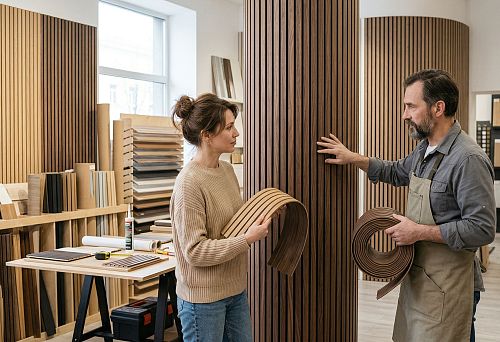
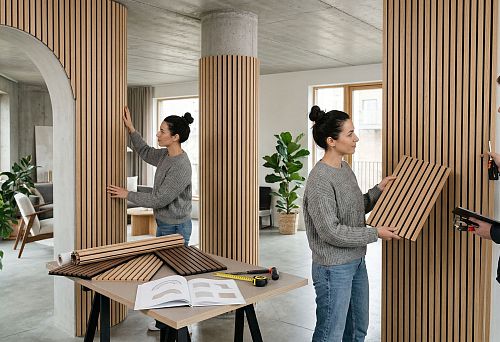
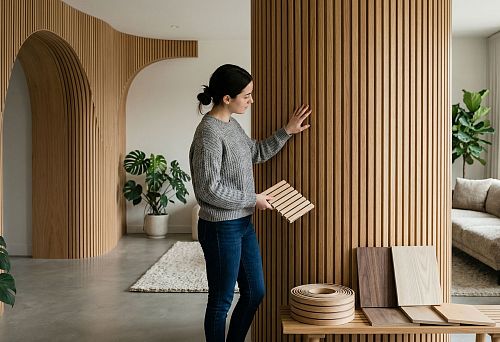
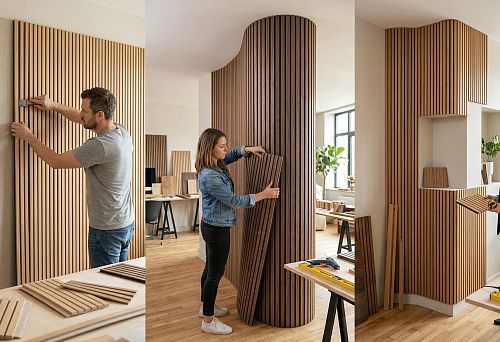
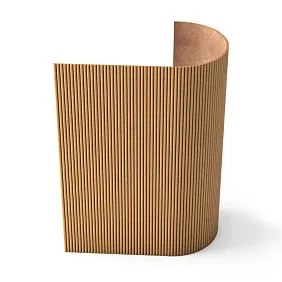
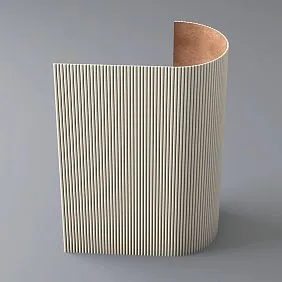
Wooden slatted wall panels — a system of parallel slats with uniform spacing, creating a linear graphic rhythm with a pronounced play of shadows. This is the most 'active' format visually: a slatted wall lives completely differently in different lighting. In the morning with side window light — soft shadows emphasize the relief. In the evening with directed side lighting — contrasting sculptural volume.
Slatted panels are especially expressive with side lighting: built-in wall spotlights or a floor lamp with directed light turn a slatted wall into an architectural object.slatted panels made of MDF and solid oak— is a modular format that is mounted as a single unit and ensures production precision of spacing without manual marking of each slat.
Relief Decorative Panels
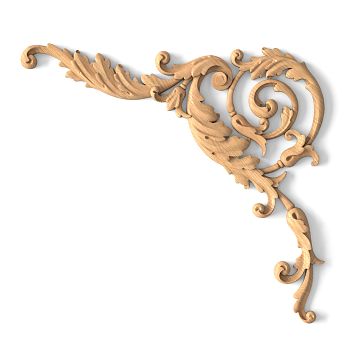
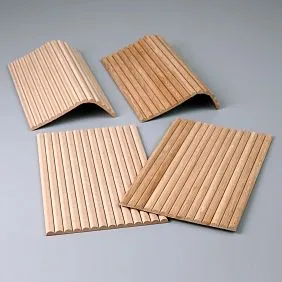
Relief panels — a surface with a three-dimensional pattern, milled or formed into the material. Geometric milled patterns on MDF, relief inserts with natural floral ornamentation from solid oak, three-dimensional geometric modules — this is a category where the decorative function comes to the fore.
Relief panels are a tool for accent zones. The fireplace area, a section of wall behind the sofa, a decorative niche, portal framing — these are their proper places. Fully cladding all walls with relief panels, as a rule, overloads the interior. One three-dimensional decorative element in a neutral space — works most expressively.
Panels for accent walls
An accent wall is an intentionally highlighted surface that draws the main visual attention in a room. Wooden wall panels for interior decoration are most often used in an accent function precisely here: behind the sofa in the living room, behind the bed in the bedroom, around the TV, in the fireplace area.
An accent wooden wall is built on the principle of contrast: it differs from other surfaces in material, tone, or texture. Neutral walls plus one slatted or solid oak wall is a classic modern formula. It is this contrast that creates a 'focal point,' which structures the perception of the entire room.
Panels for zoning and partitions
Wooden wall panels in a zoning function are structural elements installed not against a load-bearing wall, but as independent partitions or visual barriers within a space. Slatted structures with open spacing, frame modules, decorative screens — the formats vary, but the task is the same: to divide the space without enclosing it.
What materials are interior wall panels made from
Solid wood
Solid wood is the most natural and visually rich material for interior wall panels. No glue, no composite constructions — only wood, processed to the desired geometry and coated with a finish.
Oak. The main species for solid wood interior panels. Density 700–750 kg/m³, expressive large grain pattern, high hardness, durability. Oak finishes: from natural amber-ochre to graphite-gray and almost black. Oil reveals the natural texture while maintaining a matte finish. Lacquer creates a deep, rich gloss.
Ash. Lighter than oak, with a more linear, uniform grain pattern. Density 650–700 kg/m³. Takes finishes well for Scandinavian gray, beige, whitewashed looks. For modern and Scandinavian interiors — an excellent natural material.
Beech. Warm pinkish tone, fine uniform grain pattern. Often used in the production of solid wood wall panels for bathrooms and areas with moderately high humidity — its natural density and resistance make it a suitable choice.
Alder. A soft wood species with a delicate grain pattern and warm tone. Traditionally used in saunas and baths, but in interior panels it creates a cozy, homely atmosphere. Softer than oak and ash — requires more careful handling in high-traffic areas.
For massive wall panels, material humidity is fundamentally important: no higher than 8–10% for interior application. At higher humidity, drying and geometric deformation of the panels will begin after installation.Products made from solid oak with controlled humidity— this is a guarantee of geometric stability throughout the entire service life.
MDF with decorative finish
MDF is a fine-dispersion wood fiber board. A base of pressed wood fibers, uniform density throughout the cross-section, absence of natural defects — an ideal surface for painting, milling, and decorative finishing.
MDF wall panels possess a number of undeniable advantages over solid wood. Geometrically, they are more stable under variable humidity conditions — they do not 'warp', crack, or buckle. They are milled with high precision — any relief patterns, profiled edges, and geometric shapes are reproduced without limitations. For painting, MDF provides a perfectly smooth surface with proper priming.
The downside of MDF is the absence of natural wood grain. It is not an imitation, but an engineered material. This is precisely why MDF panels for painting are often used in architectural systems (boiserie, paneled walls), where geometry, color, and shape are important — not the natural fiber pattern.
Veneered panels
Veneered panel — an MDF base with a face layer of natural veneer 0.6–3 mm thick. The result: the natural pattern and tone of real wood with the technological stability of an engineered material. This is the golden mean between solid wood and pure MDF.
Veneered panels for interior wall finishing are especially valuable in large formats: when it is necessary to decorate a significant surface with visual unity of texture. The 'book-matching' veneer selection technology creates a mirror-symmetrical natural pattern — an artistic technique unreproducible when installing individual boards.
Combined Solutions
A professional designer interior almost always works with combinations. Solid oak in an MDF molding frame under enamel — a natural insert in a geometric frame. A slatted ash panel on an MDF substrate in a massive oak frame — a contrast of the natural and the technological in one construction.Moldings and cornices made of MDF and solid woodfunction as framing elements in the wall panel system, creating an architecturally finished surface with ceiling and floor transitions.
Where to use interior wooden wall panels
In the living room
The living room is the main room of the house. This is where interior wooden wall panels work most effectively: they shape the atmosphere, set the stylistic tone, and create the central visual axis of the space.
An accent wall behind the sofa is a classic scenario. Full-height oak slatted panels in a natural finish, side spotlights at a 30–45° angle to the surface, a neutral light ceiling and floor — this is a formula that works in any living room size. In living rooms of 30–45 m² with 2.7 m ceilings, a more complex system is possible: a two-tier layout with a horizontal molding transition, geometric surface divisions,solid oak ceiling cornicesas the finishing element of the wall system.
An important acoustic argument: a living room with a parquet floor and glass surfaces is an acoustically 'hard' space with high echo. Wooden slatted panels on one or two walls reduce reverberation, improving sound quality during conversation, music, and movie watching.
In the bedroom
The bedroom is an intimate, private space with special requirements for atmosphere. Here, interior wooden wall panels work quietly and delicately: they don't shout or dominate, but create a warm, natural cocoon.
The main application point is the wall behind the bed headboard. A panel of light oak or ash in a neutral oil finish, floor-to-ceiling height, width equal to or slightly wider than the bed — this is an archetypal bedroom solution that is both functional (protecting the wall from mechanical damage) and aesthetically impeccable.
Panels with acoustic properties are especially relevant in the bedroom. A soft insert in a wooden frame, a slatted panel on a fabric backing — formats that reduce sound pressure in the bedroom and create a more comfortable acoustic environment for rest.
In the hallway
The hallway is a testing ground for any finishing material: impact loads, humidity fluctuations from outdoor clothing, high traffic intensity. Wooden panels here serve a dual function: decorative and protective.
The lower zone of hallway walls (up to a height of 90–120 cm) is the most 'affected' by bags, umbrellas, children's toys, and furniture. A wooden wall panel in the lower part of the corridor is both protection and decor. Solid oak or MDF panel with hard enamel in this area will withstand everything a family with children and lots of belongings can throw at it.
Vertical slatted panels in a narrow corridor are a classic technique for visually stretching the space upward. Slats 20–30 mm wide with a 30–40 mm spacing on a dark backing, when oriented vertically, visually raise the ceiling by 20–30 centimeters without any construction work.
In the study
The study is a space for concentration, productivity, and professional self-presentation. Wooden wall panels here speak of seriousness, taste, and an understanding of quality. Dark oak, a dense slatted rhythm, directed task lighting — the image of a home office where one wants to think and work.
The work wall (behind the desk or monitor) is the main point of application. Frame panels with slatted infill, illuminated by LED profiles built into the slats, create a professional visual background for video calls. Business partners and clients see natural wood on the wall — and it works silently but effectively.
In the dining room
The dining room is a ritual space for shared meals. Acoustics and atmosphere are equally important here. A wooden wall panel in the dining table area reduces the acoustic harshness of the room (parquet floor + glass table + high ceiling = an acoustic problem) and creates a natural, warm image that matches the spirit of a place where people eat together.
The optimal choice for the dining room: slatted oak panels in a 'warm walnut' or 'tobacco' finish on an accent wall by the dining table. Full height from floor to ceiling. Directional light from pendant lamps above the table + side lighting for the panel.
In the TV area
The TV zone is a separate task that wooden panels solve elegantly and systematically. Three problems simultaneously: cable clutter, a bland mounting bracket, a dark screen on a white or gray wall. A wooden wall panel behind the TV hides the first two problems and turns the third into an advantage: dark wood creates a natural 'warm' background for the screen.
TV zone frames made of solid oak— a ready-made architectural solution that turns a technical element into a design object. Slats, veneered board, or smooth oak panel — the choice of format is determined by the overall concept of the living room.
In niches and passage zones
Niches, reveals, window sill areas, decorative arches, corridor transitions — places where wooden panels work as accents and focal points. Cladding the interior of a niche with wood turns it from a 'recess in the wall' into an architectural object. Wooden window reveals matching the floor finish create a natural connection between horizontal and vertical surfaces.
How to choose panels based on interior style
Modern style
Modern interior design is a balance of natural and geometric, warm and neutral. Wooden wall panels here serve as a natural 'warm' accent within a neutral concept. Vertical oak slat panels on one wall against white or light gray surfaces in the rest of the room — a precise, flawless modern formula.
Minimalism
Minimalism requires discipline and flawless execution. Wooden panels for interior wall finishing in a minimalist interior: MDF matching the wall color (a monochrome background without color contrast), or smooth ash with a neutral oil tint, free of visible deformations and defects. Installation is concealed. No visible fasteners, no moldings with excessive profile.
Scandinavian interior
Scandinavian style — light tones, natural materials, natural coziness. Wooden wall panels: light oak, birch, or ash without tinting or with a light whitewashed oil finish. Horizontal installation — traditional Scandinavian layout. Overall background — white or light gray. No dark tints, no complex relief — only the living natural texture.
Japandi
Japandi — the Japanese principle of 'ma' (empty space) plus Scandinavian natural warmth. Wooden panels in Japandi: narrow slats 10–15 mm with uniform spacing, warm gray or beige oil tint, no relief, no extra elements. The silence of the surface — that is Japandi.
Neoclassicism
Neoclassicism — architectural logic, symmetry, profile complexity. Wooden wall panels here are the foundation of the boiserie system: geometric wall divisions within molding frames, ceiling cornice, floor baseboard made from the same material.System wall panels for boiseriemade from solid oak or MDF for enamel — a professional tool for creating a neoclassical interior with correct architectural logic.
Warm contemporary interior
Warm modern — naturalness, earthy tones, soft light, and visual comfort with contemporary geometry. Wooden wall panels made of oak in 'cognac,' 'warm walnut,' or 'tobacco' tints — a precise match for this request. It is this combination that creates an interior where you want to stay.
How to choose color, texture, and format
Choosing the color and format of wooden wall panels is not intuition or chance. It is a system of parameters you need to know.
Light or dark wood? Light tints (whitewashed oak, natural ash, gray-beige) visually expand the space, add airiness, and work in any lighting conditions. Dark tints (wenge, anthracite, dark walnut, graphite) create visual weight and depth — but require either a large room volume or quality directional lighting. In a small room with a single window, dark panels without compensating light will create a feeling of crampedness, not luxury.
Smooth or textured surface? Smooth panel is a delicate natural background, attention is focused on the tone and grain pattern. Slatted surface is an active visual rhythm with play of light and shadow. Textured surface is a decorative accent. Rule: one type of surface in the main accent zone, the others are neutral backgrounds.
Narrow or wide slats? Slats 10–20 mm create a dense, rich, 'expensive' rhythm. Slats 40–80 mm are laconic, airy. In small rooms up to 15–18 m², narrow slats with minimal spacing overload the surface. Wide slats with larger spacing are more harmonious.
Vertical or horizontal? Vertical orientation adds height, slenderness, upward aspiration. Horizontal orientation expands width, creates groundedness, calm. Diagonal orientation adds dynamism and movement, a bold contemporary technique.
Three points of color reference: floor, doors, key furniture. The wooden wall panel should engage in a conscious dialogue with them: either support the theme (natural ensemble) or create a thoughtful contrast. Random tonal conflict is the most common mistake in interior selection.
What is better to choose: solid wood, MDF, or veneer
Honest comparative analysis — no declarations, only facts.
| Parameter | Solid wood | MDF with finish | Veneered panels |
|---|---|---|---|
| Natural grain | Maximum — live grain | Absent (only coating texture) | Is — a cut of natural wood |
| Geometric Stability | Medium (depends on humidity) | High | High |
| Freedom in color | Limited to natural tone and tints | Maximum (any enamel) | Limited to the natural tone of the veneer |
| Durability | 20–30 years with proper care | 15–25 years | 15–25 years |
| Tactile | Natural — warm, matte | Smooth engineered surface | Close to solid wood |
| Cost | High | Low–medium | Medium |
| Best scenario | Accent zones, office, high budget | Boiserie, monochrome interiors, paintable MDF | Large surfaces, texture uniformity |
Conclusion. For maximum natural aesthetics in accent zones — solid oak. For color freedom and geometric stability in systematic wall solutions — MDF. For large surfaces with uniform natural texture at a reasonable budget — veneered panels.
Advantages of interior wooden wall panels
Let's list not abstractly, but specifically — what exactly the owner gets by choosing wooden panels instead of paint, wallpaper, or plaster:
-
Natural texture. The living pattern of wood grain, natural tone, tactile warmth — these qualities are absent in any synthetic or mineral material.
-
Acoustic comfort. Slatted panels diffuse sound waves, reducing echo and improving the quality of the acoustic environment in a room.
-
Visual warmth. Wood on a wall changes the perception of a room: it feels cozier, more intimate, and natural — regardless of its size.
-
Wide range of formats. Smooth, slatted, textured, veneered — wooden panels adapt to any design task.
-
Architectural accent. One wooden wall completely transforms the perception of a room — it's minimal intervention with maximum design impact.
-
Zoning without construction. Wooden partitions and decorative screens divide space without the need for construction work.
-
Durability. Properly treated wooden wall panels for interiors, under stable microclimate conditions, last 20–30 years without losing their appearance.
-
A sense of a cohesive interior. Wooden panels, combined with moldings, cornices, and baseboards made from the same wood species, create a systematic space — this is what is called a 'luxury interior'.
Common mistakes when choosing wooden wall panels
Knowing others' mistakes is practically a ready-made plan for avoiding them.
-
Too dark panels in a small room. Dark oak or wenge in a room up to 14 m² without sufficient lighting creates visual heaviness, not luxury. For small spaces — light tints or dark wood with compensating directional lighting.
-
Overloaded texture. Relief or slatted panels on three or four walls in one small room is visual noise. One accent is enough.
-
Incorrect scale for the room size. Large wide slats and a massive frame in a 10 m² room create a feeling of a cage. The panel scale must match the room scale.
-
Selection without reference to the floor and furniture. A wooden panel in an interior is not a separate object, but part of a system. The panel tone must dialogue with the tone of the floor, doors, and key furniture. Random color conflict destroys the design result.
-
Confusion between accent and background finishing. An accent panel should stand out. A background one should recede. An attempt to combine both intentions in one solution does not work.
-
Ignoring the system. A panel without a ceiling cornice, without a floor skirting board, and without molding transitions looks unfinished. Think of the wall as a whole system.
How to care for wooden panels indoors
Care rules are simple, but breaking them is costly.
Dry cleaning is the basis of regular care. A soft brush with natural bristles or an anti-static microfiber cloth. For slatted panels — a soft brush reaches dust from the grooves. Frequency: once a week is enough for living spaces.
Wet cleaning — only for stubborn stains. A barely damp microfiber cloth, immediate drying after wiping. No standing water on the wooden surface — especially in end zones and joints.
Control of room humidity. The optimal regime for wooden interior panels: temperature 18–22 °C, relative air humidity 40–60%. In winter with active central heating, humidity drops to 20–25% — and micro-cracks appear in wooden elements. An air humidifier during the heating season is a mandatory attribute of an interior with natural wood.
Coating renewal. Oil coating on solid wood is renewed every 3–5 years. Applied to the existing surface without removing panels — a few hours of work and complete restoration of appearance. Varnish coatings for scratches are restored by spot restoration. MDF under enamel — local repainting when compositions match.
Protection in risk zones. In the hallway and corridor, the lower part of panels is subjected to the greatest load. Panels with hard varnish coating (hardness 3H and above) or solid oak — the most resistant options for high-traffic areas.
FAQ: Answers to Frequently Asked Questions
What are interior wooden wall panels?
Decorative and functional wall cladding elements made of natural wood or wood-based materials (MDF, veneer), designed for interior use. Create natural texture, improve acoustics, protect walls and form the architectural image of the interior.
Which panels are better to choose for an apartment?
Depends on the task: MDF for painting — for monochrome architectural concepts. Solid oak — for natural accent zones. Veneered panels — for large homogeneous surfaces. Slat panels — for visual rhythm and acoustics.
What is better for interior: solid wood, MDF, or veneer?
Each material has its niche. Solid wood — maximum natural aesthetics. MDF — color freedom and geometric stability. Veneer — natural appearance with engineering stability. Optimal — combine: solid wood frame plus MDF or veneered infill.
Are wooden panels suitable for the bedroom and living room?
Perfectly suitable. In the living room — slat accent wall behind the sofa with side lighting. In the bedroom — smooth or slat panel made of light oak behind the bed headboard.
Can wall panels be used in the hallway?
Yes — and this is one of the most practical applications. Wooden panels on the lower part of hallway walls protect against mechanical damage and create a stylish image of the entrance area.
Which panels are better for an accent wall?
Oak solid wood slatted panels with side lighting — maximum architectural effect. For a more subdued accent — veneered board with molding framing.
Are wooden panels suitable for zoning space?
Yes. Slatted structures with an open step divide space without blocking light. Frame partition panels are installed as standalone structures without construction work.
What styles do such panels pair with?
With most current ones: contemporary, minimalism, Scandinavian, Japandi, neoclassical, warm contemporary, loft, natural. Wood is a universal stylistic material.
Is it difficult to care for wooden wall panels?
No. Regular dry cleaning, controlling indoor humidity (humidifier in winter), refreshing the oil finish every few years — minimal care for long-term results.
What's better: smooth or slatted panels?
Smooth — for a calm natural background and monolithic architectural solutions. Slatted — for visual volume, light-shadow rhythm, and acoustic comfort. In modern interiors, the slatted format is more common as more expressive.
Conclusion
Wooden wall panels for interior finishing are not a trend that will pass in two seasons. It's a material with a millennia-long history of use in interiors, which each generation reinterprets anew — and each time finds a relevant form for it. Solid oak in Japanese minimalism, bleached ash in a Scandinavian living room, dark walnut in a contemporary study, slatted panels in an open studio — wood adapts to any architectural idea.
For an accent wall behind a sofa or bed — slatted or veneered oak panels with side lighting. For calm background finishing — smooth ash panels in a neutral tint. For zoning — frame slatted structures with an open step. For neoclassicism — a boiserie system with MDF panels and oak moldings. For warm contemporary — oak in 'cognac' or 'tobacco' tint in any format.
The main principle is systematicity. A wooden wall panel combined with skirting boards, moldings, and cornices made from the same material creates an architecturally complete space. This is precisely what distinguishes a professional interior from merely a beautiful one.
If you are looking for wooden wall panels for interiors with professional-level quality and a full range for systematic solutions — STAVROS has been operating in this field since 2002. STAVROS produces slatted panels from solid oak and MDF, moldings, cornices, skirting boards, decorative overlays, and frames — everything needed to create systematic wall finishes from natural wood. Over 4,000 models, 20,000 modifications, production with chamber drying, precise geometric control, showrooms in Moscow and St. Petersburg. STAVROS — wooden wall panels for interiors that remain beautiful for decades.View STAVROS wall panel catalog