Article Contents:
- Wooden skirting boards: between tradition and modernity
- Wood as art
- Wide wooden skirting boards: grandeur and elegance
- Narrow wooden skirting boards: minimalism in details
- Decorative wooden skirting boards: attention to details
- Room size
- Interior style
- Material
- Color and finish
- Functionality
- Care for wooden skirting boards: extending the life of natural materials
- Regular Cleaning
- Moisture Protection
- Re-decoration
- Features of caring for decorative skirting boards
- Skirting boards and doors
- Skirting boards and furniture
- Skirting boards and floor coverings
- Advantages of wooden ceiling skirting boards
- Ceiling decoration in classic style
- Modern solutions for ceiling decoration
- Using skirting boards as decorative panels
- Using skirting boards as frames for mirrors and paintings
- Using skirting boards for niche decoration
- Skirting boards as decorative dividers
- Wooden skirting boards for podiums
- Conclusion: wooden skirting boards as a symbol of quality and style
Every home is a living canvas, and interior details are like brushstrokes on it. In this canvas, wooden skirting boards for floor and ceiling play an important role, serving as an element that unites all other parts of the interior into a cohesive whole. Decoration that may seem insignificant at first glance can carry a great semantic and aesthetic load. Wooden skirting boards serve as a finishing touch for the interior, adding elegance and status.
Today we will discuss the variety of wooden skirting boards, paying attention to their shape, style, material, and selection process. Additionally, we will consider how wide, narrow, and decorative skirting boards can change your perception of your home, adding comfort, harmony, and aesthetic completeness. This article will be useful for both private home owners and professional interior designers.


Wooden skirting boards: between tradition and modernity
When it comes to wooden skirting boards, it is impossible not to refer to history. The use of wooden skirting boards for floors and ceilings dates back to ancient times, when they were used to decorate palaces and noble residences. These elements not only protected walls from damage but also emphasized the status of the home's owner. In Europe, especially during the Renaissance and Baroque periods, ornate wooden skirting boards adorned aristocrats' homes, creating a sense of grandeur and luxury.
Today, skirting boards are once again gaining popularity, but their role has changed somewhat. With the development of technology, materials such as plastic and MDF have emerged, but the wooden skirting board remains a symbol of naturalness, eco-friendliness, and tradition. People still value wooden skirting boards for floors and ceilings for their durability, longevity, and visual appeal.




Wood as Art
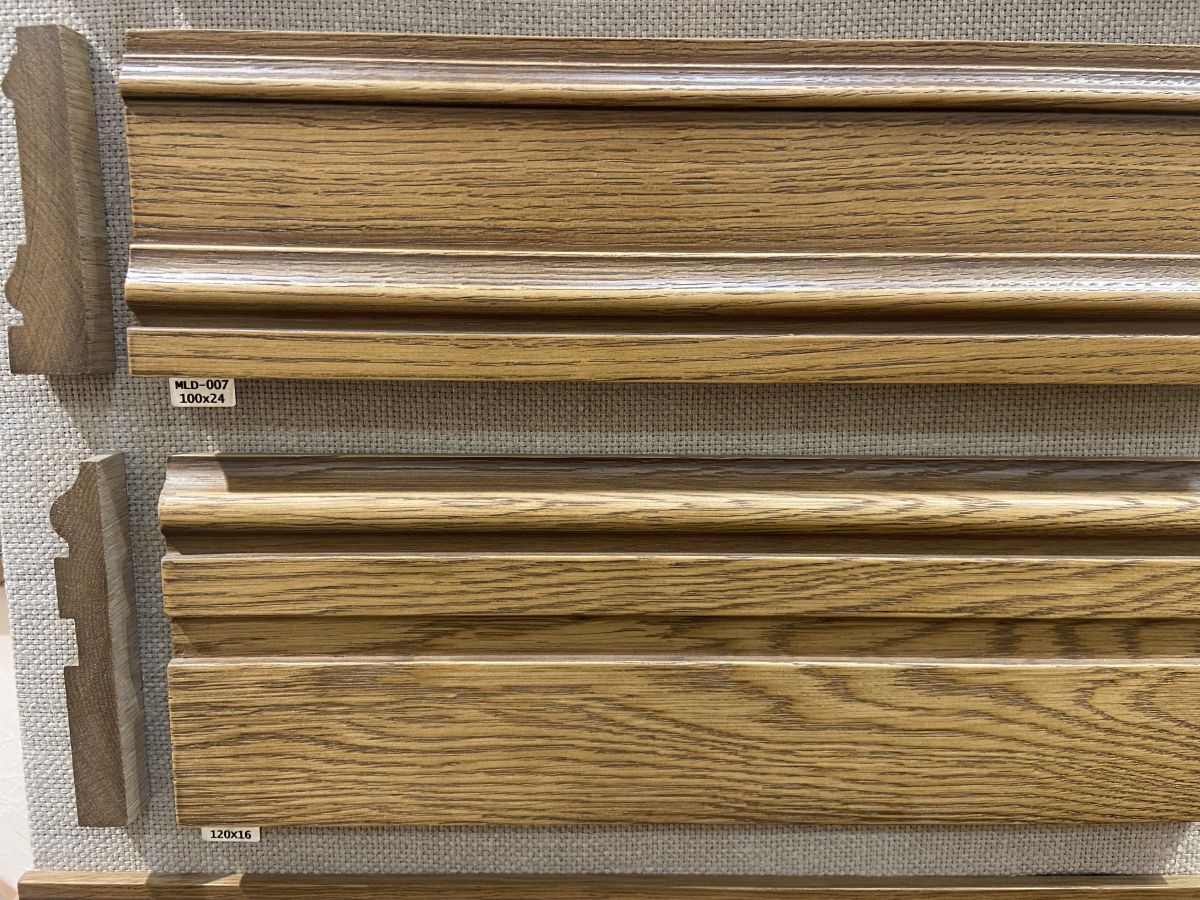
No other material can match wood in its ability to give interiors warmth and coziness. Unlike plastic or MDF materials, wood is a living material that 'breathes,' adapting to changes in temperature and humidity. A wooden skirting board for the floor is made from hardwoods such as oak, beech, or ash — species that have been used for centuries in construction and home decoration.
These species are not only beautiful to look at, but also practical. For example, oak skirting boards are renowned for their resistance to moisture and mechanical damage, while beech skirting boards feature a dense texture and elegant wood grain pattern.
solid wood skirting boards They are also easily workable, making them ideal for creating intricate decorative elements. This aspect is especially important when dealing with decorative styles such as Baroque or Renaissance, where every detail matters.
Our factory also produces:
Types of wooden skirting boards
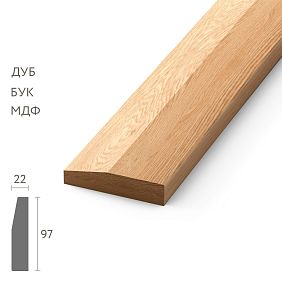
Now let's consider the main types of wooden skirting boards used in modern finishing. Each has its own features and is suitable for different interior styles.
Get Consultation
Wide Wooden Skirting Boards: Grandeur and Elegance
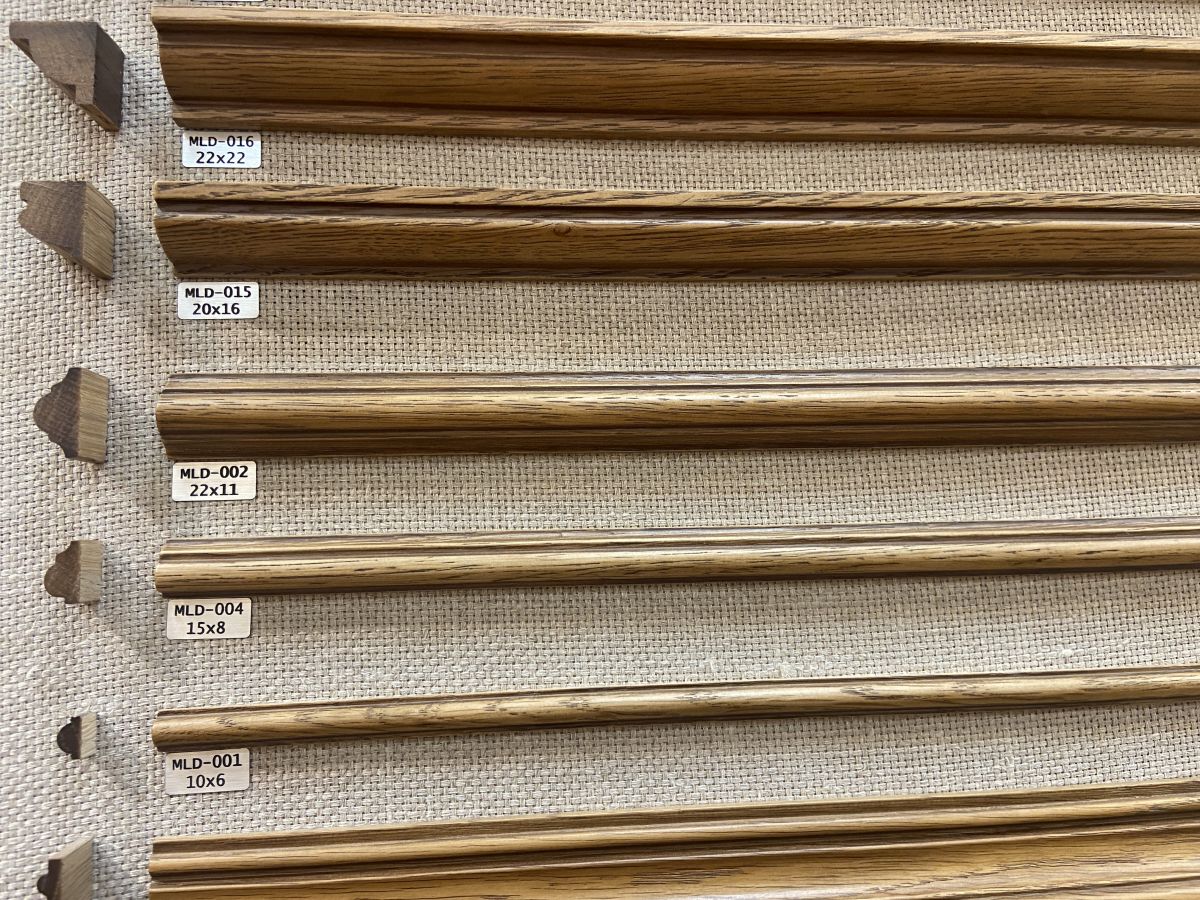
Wide wooden skirting boards are a symbol of grandeur and status. They are ideal for large rooms with high ceilings, where it is important to emphasize the scale of the space. These skirting boards can reach a height of 15–20 cm, allowing them not only to conceal wall imperfections but also to serve as a standalone decorative element.
Wide skirting boards are often used in classical interiors such as Empire, Baroque, or Neoclassicism. They can be made from oak or beech and adorned with intricate carving or ornamentation, highlighting the luxury of the interior. Such a skirting board becomes a true work of art, adding refinement and completeness to the space.
Advantages of wide skirting boards include their ability to visually increase wall height and give the room a more majestic appearance. They are also ideal for decorating doorways and window frames, creating a harmonious architectural line.
Pro tip from the expert: When choosing wide skirting boards for the floor, pay attention to their finish. A smooth, lacquered surface will better match a modern interior, while a matte texture will emphasize the naturalness and beauty of the wood.
Wide wooden skirting boards for floor and ceiling — a choice for those who appreciate grandeur and durability.
Narrow Wooden Skirting Boards: Minimalism in Details
If your interior is designed in a modern style, narrow wooden skirting boards will be an ideal choice. They represent a minimalist and elegant element that does not draw unnecessary attention but performs its function perfectly. Narrow skirting boards are most often used in small rooms, where it is important to preserve the feeling of space and light.
They are also popular in loft, minimalist, and high-tech styles, where emphasis is placed on clean lines and simple forms. Narrow wooden skirting boards can be made from various types of wood, but oak and ash are the most popular due to their strength and durability.
Advantages of narrow skirting boards:
- Lightness and minimalism, not overwhelming the interior.
- Ideal for small rooms and modern styles.
- Easy installation and compatibility with various finishing materials.
Pro tip from the expert: Narrow skirting boards look best in contrast with a dark floor or light walls, creating a clear line. Don't be afraid to experiment with color — modern finishes allow you to paint skirting boards any shade while preserving the wood texture.
Narrow wooden skirting boards — the ideal choice for modern interiors.
Decorative Wooden Skirting Boards: Attention to Details
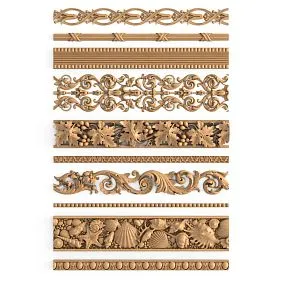
For those who want to add individuality to their interior, decorative wooden skirting boards will be an excellent choice. These skirting boards can be adorned with intricate carving, ornamentation, or even relief, making them true works of art. Decorative skirting boards are most often used in classical styles such as Baroque, Rococo, or Empire, where every detail matters.
These skirting boards can be made from oak, beech, or ash and coated with lacquer or wax for additional protection and shine. Decorative skirting boards are ideal for decorating grand halls, living rooms, or dining rooms, where every decorative element is important.
Advantages of decorative skirting boards:
- Unique design that highlights the status and taste of the owner.
- Ability to create accents in the interior.
- Durability and resistance to mechanical damage.
Master's tip: When choosing decorative skirting boards, pay attention to their harmonious combination with furniture and other decorative elements. If your interior is in a classic style, choose skirting boards with carved elements and decorative ornaments.
View collection decorative wooden skirting boards can be found on the Stavros website, where high-quality products made from premium wood species are presented.
Features of choosing wooden skirting boards
When choosing wooden skirting boards for floors or ceilings, it is important to consider not only their appearance but also their functional features. Let's consider the main selection criteria that will help you make the right decision.
Room size
Room size plays a key role in choosing skirting boards. Wide wooden skirting boards are ideal for large rooms with high ceilings, such as living rooms or dining rooms. In such spaces, they emphasize the scale of the space and create a sense of luxury. Conversely, narrow skirting boards will be appropriate in small rooms or apartments where it is important to maintain balance and avoid overloading the interior.
Master's tip: If you are decorating a small room, choose narrow skirting boards with simple lines. This will create a sense of lightness and visually enlarge the space.
Interior style
Interior style is an important aspect when choosing skirting boards. For example, decorative skirting boards are suitable for classic interiors, adding elegance and refinement to the space. Meanwhile, for modern interiors, it is better to choose narrow skirting boards with a minimalist design.
Material
The material from which wooden skirting boards are made is important. The most popular wood species for skirting boards are oak, beech, and ash. These species are distinguished by high strength, resistance to wear and moisture, as well as aesthetic appeal.
Oak skirting boards are renowned for their durability and resistance to deformation, making them ideal for rooms with high humidity, such as kitchens or bathrooms. Beech skirting boards have a dense texture and elegant grain, making them an excellent choice for living rooms and bedrooms. Ash skirting boards are perfectly suited for Scandinavian-style interiors due to their light texture and resistance to mechanical damage.
Choose skirting boards made of oak, beech, and ash can be found on the Stavros website, where solid wood products distinguished by high quality and durability are presented.
Color and finish of handles should harmonize with the color of furniture and the overall room design. Wooden handles can be painted in various colors or have a natural finish that highlights the beauty of the original material. When choosing
The color of skirting boards should harmonize with other interior elements. If you want to create a contrast, choose wooden skirting boards that differ in color from walls and floors. For example, dark skirting boards will look great in interiors with light walls and floors, creating a clear line and drawing attention to the boundaries of the space.
Skirting board finish also plays an important role. Skirting boards can be coated with varnish, wax, or oil, providing them with additional protection and gloss. A varnished surface is best suited for modern interiors, while a matte finish highlights the natural wood texture and adds warmth and coziness to the room.
Functionality
Wooden skirting boards not only serve a decorative function but can also be used to conceal wires or cables. Some skirting board models have special cable channels that allow wires to be neatly concealed and maintain the interior's aesthetics.
Installing wooden skirting boards: master's tips
Installing wooden skirting boards requires careful attention and adherence to certain rules. Here are several tips that will help you install skirting boards correctly and without unnecessary hassle:
-
Surface preparation: Before installation, ensure that walls and floors are level. If there are imperfections, they must be corrected using putty or sanding.
-
Choosing fasteners: Wooden skirting boards can be secured using adhesive, self-tapping screws, or nails. Adhesive is best suited for small and lightweight skirting boards, while for heavier models, self-tapping screws are recommended.
-
Finishing work: After installation, skirting boards can be coated with varnish or paint for protection and added gloss.
Care for wooden skirting boards: extending the life of natural materials
After installing wooden skirting boards, it is important to take proper care of them. Wood is a living material that requires protection from moisture, temperature fluctuations, and mechanical damage. Proper care of skirting boards helps extend their service life and maintain their attractive appearance.
Regular cleaning
Dust and dirt can accumulate on the surface of skirting boards, which over time may deteriorate their appearance. To maintain cleanliness, it is sufficient to regularly wipe wooden skirting boards with a soft dry cloth. If necessary, a damp cloth can be used, but excessive moisture should be avoided, as it may cause wood deformation.
Protection from moisture
One of the main enemies of wooden products is moisture. Wood can absorb moisture, which over time leads to swelling, warping, and cracking. To protect wooden skirting boards for floors and ceilings from moisture, it is recommended to coat them with protective compositions such as varnish, oil, or wax.
Master's Tip: If the baseboards are installed in a room with high humidity (bathroom or kitchen), choose baseboards with additional moisture protection. You can also use silicone sealant at the joints between the baseboard and floor or wall to prevent moisture ingress.
Recoating
Over time, wooden baseboards may lose their luster and original appearance due to exposure to sunlight or mechanical damage. In such cases, it is recommended to reapply surface treatment. This may involve reapplying varnish or oil to restore the protective layer and give the baseboards a fresh look.
If the baseboards have minor scratches or scuffs, they can be gently sanded with sandpaper, and then a protective finish can be applied to restore the surface.
Care of decorative baseboards
Decorative wooden baseboards with carving or intricate patterns require special care. It is important to regularly remove dust from carved elements, as it can accumulate in recesses and become difficult to remove over time. For this, you can use a soft brush or brush.
In addition, such baseboards are better covered with special compositions that prevent dust accumulation and simplify their maintenance. This is especially important if the baseboards are installed in rooms with high traffic or near doorways, where dirt may appear more frequently.
Decorative combination of wooden baseboards with interior elements
Choosing wooden baseboards for floors and ceilings is not only a matter of functionality, but also an opportunity to emphasize the style and character of your interior. Baseboards can become a connecting element between different decorative elements, creating a harmonious and finished space.
Baseboards and doors
One of the key factors when choosing baseboards is their coordination with door openings and door casings. Wooden baseboards can be used to create a unified line that visually connects the floor with door frames. This is especially relevant for classic interiors, where every detail plays an important role.
Wooden baseboards and door casings can be made in a unified style, with identical decorative elements and carving. This creates a cohesive perception of the interior, adding elegance and refinement.
Master's Tip: When choosing baseboards, pay attention to their height relative to the door opening. Baseboards should harmonize with door casings in height and style to avoid visual dissonance in the interior.
Baseboards and furniture
It is equally important to consider the coordination of baseboards with furniture. For example, if your interior features furniture made of dark wood, it is logical to choose wooden baseboards in the same tone. This creates a visual balance and highlights the elegance of the furniture.
For light interiors, you can choose baseboards in a contrasting color—for example, white baseboards with carved elements will harmonize with furniture in the Provence or classic Scandinavian style. The contrast between baseboards and furniture can also add depth and structure to the space.
Baseboards and floor coverings
Choosing baseboards for the floor should take into account the material and color of the floor covering. For example, wooden floors are best suited with baseboards made of the same wood species as the floor. This creates a unified, harmonious space where each element complements the other.
For tiled or stone floors, you can choose wooden baseboards that contrast with the floor covering and highlight the texture of the stone. It is also important to consider the height of the baseboards: for large rooms with high ceilings, wider baseboards are preferable, while narrow models are suitable for small rooms.
Master's Tip: Do not be afraid to experiment with color and texture. Modern technologies allow creating wooden baseboards that can be painted in any color while preserving the wood grain texture.
Decorating ceilings with wooden baseboards
One of the most elegant and refined ways to finish ceiling decoration is by using wooden ceiling baseboards. Unlike floor baseboards, which are often chosen for practical reasons, ceiling baseboards serve a decorative purpose, adding elegance and architectural completeness to the interior.
Advantages of wooden ceiling baseboards
Wooden ceiling baseboards are not only aesthetically pleasing but also have several practical advantages:
-
Ecological: Unlike plastic or MDF materials, wood is a natural material that does not emit harmful substances.
-
Durability and longevity: Wooden baseboards can serve for decades, maintaining their shape and beauty.
-
Versatility: Ceiling baseboards can be used in any interior—from classic to modern. They can be adorned with carving or have a smooth texture, allowing them to be adapted to any style.
Ceiling decoration in classic style
Classic interiors always require attention to detail, and wooden ceiling baseboards are an ideal addition for creating harmony. In classic interiors, baseboards are often combined with moldings and cornices, creating refined architectural lines.
Wooden baseboards can be adorned with intricate carving, adding elegance to the space. Such baseboards are often used in living rooms, dining rooms, and offices, where every interior detail should emphasize the owner's status.
Modern solutions for ceiling decoration
If your interior is designed in a modern style, ceiling baseboards can become an important design element. In minimalist interiors, baseboards with clean lines and simple shapes help create clear spatial boundaries. They can be painted white or light colors, adding freshness and lightness to the interior.
For high-tech interiors, use baseboards with a glossy finish, which will create a reflective effect and visually enlarge the space. Such solutions are especially relevant for small apartments, where it is important to maintain a sense of spaciousness.
Expert tip: Do not be afraid to use wooden baseboards for ceilings in combination with modern materials such as glass or metal. This will create an interesting contrast and highlight the originality of the interior.
wooden ceiling baseboards — is a choice for those who want to create a unique and refined interior, where every detail matters.
Original approach to using wooden baseboards
In modern interior design, wooden baseboards have long ceased to be merely a functional detail, limited to the task of covering joints between the floor or ceiling and the wall. Today, they are a tool for creating unique and original solutions that can distinguish your interior from millions of others. Unconventional use of baseboards opens new horizons for creativity, allowing you to combine tradition and innovation.
Using baseboards as decorative panels
One unusual way to use wooden baseboards is not only along the floor and ceiling, but also as decorative panels on walls. Tall baseboards, usually installed around the perimeter of a room, can be confidently mounted in the central part of the wall, creating elegant panels reminiscent of classical architectural elements. This solution is especially suitable for classical and neoclassical interiors, adding depth and texture.
Using baseboards as panels can also be a successful option for decorating bedrooms or living rooms, where it is important to create an atmosphere of luxury and comfort. Combined with moldings and cornices, they create striking compositions that emphasize the architectural lines of the room.
Expert tip: To create a more complex decorative effect, use ornamental wooden baseboards with carved elements. This will add a touch of aristocracy to the interior and highlight your unique taste.
Explore the selection of ornamental wooden baseboards, to select the appropriate option for creating unique decorative solutions.
Baseboards as frames for mirrors and pictures
Another original way to use wooden baseboards is to use them as frames for mirrors and pictures. Ornamental baseboards with carved elements can become an excellent base for creating unique frames that perfectly suit classical interiors. They can be used in living rooms or bedrooms, adding individuality to the room.
This solution allows combining several functions in the interior: a wooden baseboard serves both as a decorative element and a useful detail. For example, a baseboard framing a mirror in the hallway can become an accent that attracts guests' attention from the first glance.
Expert tip: Try using baseboards of contrasting colors to create frames. A white baseboard as a frame for a dark mirror will create a striking accent that will become a decoration for any interior.
Using baseboards for decorating niches
Modern interiors often include architectural elements such as niches, which can be used to place decorative objects such as vases, sculptures, or books. Wooden baseboards can be used to decorate these niches, creating decorative frames or borders. This solution will give niches a finished look and make them the center of attention.
Baseboards can also be used to decorate fireplaces, emphasizing their architectural lines and creating a unified style of the room. This is especially relevant for classical and neoclassical interiors, where every detail matters.
Expert tip: When decorating niches, choose wooden baseboards with a smooth texture and simple lines, so they do not overload the interior and allow decorative objects to stand out.
Baseboards as decorative dividers
In large spaces, zoning may sometimes be necessary, especially in studios or lofts. One interesting way to zone is to use wooden baseboards as decorative dividers. Installing a baseboard at a height of about 1 meter from the floor can create a visual boundary that divides the space into zones while maintaining its overall integrity.
This solution is ideal for decorating dining areas, kitchens, or living rooms in a minimalist or loft style. At the same time, baseboards can be combined with other finishing materials such as plaster, decorative panels, or wallpaper.
Expert tip: Try using contrasting colors for baseboards and walls to enhance the zoning effect. For example, a dark baseboard on a light wall will create a clear line that will draw attention to the architectural features of the room.
Wooden baseboards for podiums
If your interior includes podiums or multi-level spaces, wooden baseboards can be an excellent decorative element for finishing transitions between levels. Podiums in bedrooms or living rooms can be decorated with baseboards, creating smooth lines and emphasizing the geometry of the space. This will give the interior a finished look and create a sense of luxury.
Baseboards can also be used to finish staircases or balconies, making them more expressive and protecting corners from damage.
Expert tip: When finishing podiums, choose wide wooden baseboards that will harmonize with the overall style of the room and highlight its architectural features.
Choose wooden skirting boards for decorative solutions available on the Stavros website, where a wide range of products for any design task is presented.
Conclusion: wooden skirting boards as a symbol of quality and style
Choosing wooden skirting boards for floors and ceilings is an important decision that directly affects how your home is perceived. Regardless of the interior style you prefer — classic, minimalist, or modern — wooden skirting boards will always be an excellent choice due to their durability, aesthetic appeal, and functionality.
In this article, we have thoroughly examined all aspects of choosing and using wooden skirting boards, paying attention to their types — wide, narrow, and decorative — as well as installation and maintenance features. Wooden skirting boards are not just a finishing element, but an important detail that completes the interior and gives it harmony.
Do not forget to review the full assortment of wooden skirting boards from Stavroswhere high-quality solid wood products for any room and style are presented.