












































































Article Contents:
- Traditions and meaning of patterns on the lintels of wooden houses
- Varieties of patterns on the lintels of wooden houses


Traditions and meaning of patterns on the lintels of wooden houses
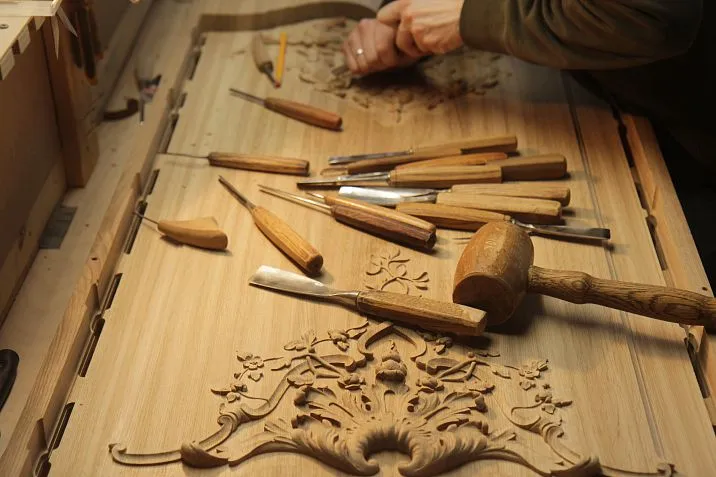
Since ancient times patterns on wooden house mouldings were considered not only decorative architectural elements but also important symbols of folk art, passed down from generation to generation. In traditional Russian culture, lintels played a special role – they did not merely decorate windows but also performed a sacred function. It was believed that a properly chosen pattern on a lintel protected the house from evil forces, safeguarded its inhabitants from misfortunes, and brought good luck. That is why each element of the pattern carried deep meaning. For example, the sun symbolized warmth, light, and prosperity, birds were associated with good news, and scrolls and geometric shapes were used as protective symbols, guarding the house from evil eye.
Today patterns on wooden house mouldings remain popular, especially among owners of wooden structures who wish to emphasize the traditional style of their homes. At the same time, lintels with carved patterns are gaining increasing popularity among modern designers, who use them as decorative elements to add expressiveness to the house. Thanks to technological advancements, it has become possible to recreate ancient ornaments with high precision while preserving their artistic value. Nevertheless, regardless of the style of execution, carved lintels remain an indispensable part of Russian architecture, creating a unique appearance for houses and reminding us of a rich cultural heritage.




Varieties of patterns on the lintels of wooden houses
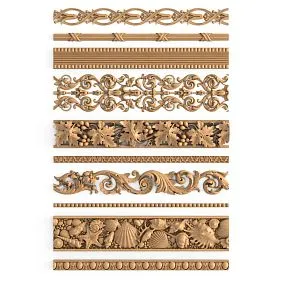
There are many varieties of patterns on the lintels of wooden houses, each of which differs in style, complexity of execution, and symbolic meaning. These patterns range from simple geometric motifs to complex ornaments incorporating plant and mythological elements. The choice of pattern depends on the architectural style of the house, region, and individual preferences of the owner.
1. Traditional Russian ornaments – one of the most common types carved casings. They include rich plant motifs, the sun, birds, and other symbolic elements. These patterns are characteristic of old Russian izbas and teremov, as well as wooden houses built in the traditional style. Classical ornaments convey the atmosphere of Russian antiquity and highlight the richness of folk decorative art.
2. Geometric patterns – strict, concise, and symmetrical. Such patterns on wooden house mouldings consist of rhombuses, squares, zigzags, and other geometric shapes, creating ordered compositions. This style of lintels is ideal for modern interiors, where minimalism and clear lines are valued.
3. Floral motifs – carved images of flowers, leaves, and grapevines. Decorative lintels with floral patterns give the house lightness and elegance, creating a sense of natural harmony. They are especially popular in country houses and dachas, where architecture blends with the surrounding natural landscape.
4. Ethnic patterns – ornaments borrowed from the cultures of various peoples. In different regions of Russia, one can encounter Carved Mouldings with Eastern, Scandinavian, and Slavic motifs, creating a unique architectural style.
5. Abstract and artistic patterns – modern variations of carved ornaments, where traditional motifs are combined with original solutions. Such lintels allow creating an original facade that stands out among other buildings.
How to properly use patterns on the lintels of wooden houses?
Carved Mouldings play an important role in the architectural appearance of a wooden house, so they must be chosen and placed correctly. Proper use of lintels can significantly improve the appearance of the building, giving it individuality and expressiveness.
1. Window opening decoration – the most popular way of application of patterns on the lintels of wooden houses. Lintels make windows expressive, create a sense of completeness of the facade, and emphasize the style of the house.
2. Entrance door decoration – carved Casings help create a harmonious ensemble, making the entrance area more solemn.
3. Combining with other decorative elements – lintels can be supplemented with carved cornices, corner ornaments, and wooden balusters, creating a unified architectural style.
4. Color scheme selection – traditionally, lintels are painted white, but modern designers experiment with various shades, creating interesting contrasting solutions.
5. Use of modern technologies – today, casings can be manufactured using laser cutting, allowing even the most complex ornaments to be recreated with high precision.
Where to buy patterns for wooden house casings?
STAVROS company offers a wide range of carved casings, made of natural wood.
✅ High-quality wood – high strength and durability.
✅ Variety of patterns – a rich selection of traditional and modern motifs.
✅ Easy installation – convenient mounting on any surface.
✅ Eco-friendliness – natural materials without harmful additives.
You can view the assortment at official website.
Conclusion
patterns on wooden house mouldings – it is not just decoration, but a whole culture reflecting the traditions, style, and uniqueness of each house.





