Article Contents:
- Philosophy of secure fastening
- Evolution of fastening technologies
- Preparation stage: foundation of quality
- Tooling and Equipment
- Fastening Technologies to Various Substrates
- Working with concrete foundations
- Methods of installing support posts
- Features of fastening to stringers
- Technology of installing row balusters
- Comparative Economic Analysis
- Quality control and defect correction
- Typical defects and ways to eliminate them
- Modern innovations in installation technology
- Digital technologies in installation
- Working with different wood species: characteristics and techniques
- Working with exotic wood species
- Safety During Work
- Prevention of injuries
- Economic aspects of installation
- Pricing factors
- Conclusion
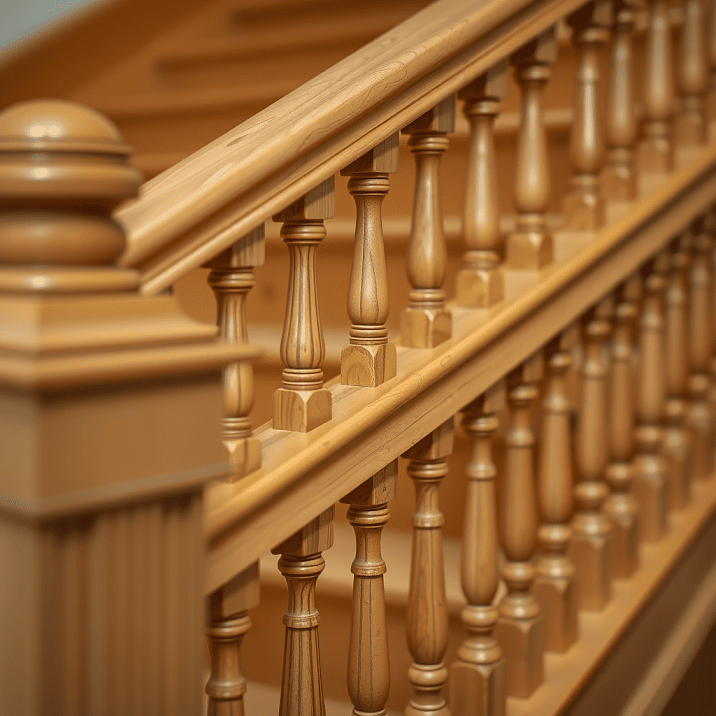
Transforming an ordinary staircase into an architectural masterpiece — a task that requires not only artistic taste but also flawless mastery of installation techniques. Installing baluster posts Represents a key stage in creating a stair railing, where every detail affects the safety, durability, and aesthetics of the entire structure. In the world of modern construction, this process has evolved from simple wooden post fastening to a high-tech art form that combines traditional methods with innovative solutions.
Why is the quality of installation the determining factor for the fate of the entire staircase ensemble? The answer lies in understanding that balusters and posts are not merely decorative elements, but critical components of the safety system that must withstand significant loads and serve for decades. Every connection, every fastening joint becomes a critically important link in the chain of reliability.
Modern installation technologies open up unprecedented opportunities for craftsmen. From traditional mortise-and-tenon joints to innovative concealed fastening systems — the arsenal of methods continues to expand. But what truly distinguishes a professional approach? It is a deep understanding of materials, precise calculations, and flawless execution of every operation.


Philosophy of secure fastening
The foundation of successful installation lies in understanding fundamental principles of load distribution and material interaction. Each post and baluster operates within a complex system of forces, where vertical loads combine with horizontal forces, and static stresses are supplemented by dynamic ones.
The principle of multi-point fastening ensures even load distribution across the entire structure. Instead of concentrating stresses at a single point, modern installation methods create a network of interconnected joints, each contributing to the overall strength of the system.
The concept of adaptive installation takes into account the natural properties of wood — its ability to change dimensions with fluctuations in humidity and temperature. Professional installation includes compensatory gaps and flexible joints, allowing the structure to 'breathe' without losing strength.
A systemic approach to fastening considers each element not in isolation, but as part of a single organism. Posts, balusters, handrails, and staircase foundations must work in harmony, creating a rigid spatial structure.




Evolution of fastening technologies
The history of development of installation methods reflects the constant striving of craftsmen for perfection. From primitive nailed connections to modern precision systems — each era has contributed its innovations.
Traditional joinery connections were based on a deep understanding of wood properties. Dowels and mortises, birdsmouth joints, and lap joints — these methods have been tested over centuries and remain the standard of reliability for certain types of structures.
Mechanical fasteners revolutionized installation speed. Bolts, studs, and screws allowed creating strong connections without complex fitting of parts. However, their use requires understanding the principles of fastener operation in wood.
Modern composite solutions combine the advantages of different materials. Metal components provide strength, polymer components offer elasticity, and special adhesives create monolithic connections.
Our factory also produces:


Preparation stage: foundation of quality
The success of installation is determined by 70% of the quality of preparatory work. This stage requires maximum attention to detail and does not tolerate haste or compromises.
Analysis of the staircase structure begins with studying the design documentation and assessing the actual condition of the foundation. The type of staircase — stringer, balustrade, spiral — determines the selection of fastening methods and the sequence of operations.
Special attention is paid to the load-bearing capacity of the foundation. Wooden treads must have sufficient thickness for secure fastening, concrete surfaces — required strength, metal structures — appropriate material properties.
Precise marking becomes the basis for the geometric accuracy of the entire structure. Modern laser levels and measuring instruments allow achieving millimeter accuracy, which is critically important for creating perfectly level railing lines.
Get Consultation
Measuring tools — the foundation of precise work. A laser level ensures perfect marking of horizontal and vertical lines. A protractor allows accurately determining angles of inclination. A tape measure must have clear markings and a reliable lock.
Specialized tools ensure quality and speed of work. Professional drills with adjustable speed and torque, precise measuring instruments, high-quality drill bits and screws — each element affects the final result.
Jigs and templates guarantee repeatability of operations. Homemade or factory-made fixtures for drilling holes at a specific angle eliminate errors and significantly speed up work.
Fixation systems ensure immobility of components during processing. Clamps, vises, and stops — proper use of these fixtures prevents displacement and damage.
Fastening technologies to various bases
Each type of foundation requires a specific approach to installation. Understanding the characteristics of different materials allows selecting the optimal technology and ensuring maximum connection reliability.
Fastening to wooden treads represents a classic case of connecting homogeneous materials. Here, the entire carpentry toolkit — from traditional mortises to modern dowels — can be used.
Mortise joints provide maximum strength and aesthetics. The mortise is cut on the end of the baluster, and the corresponding slot — in the tread. The mortise dimensions should be approximately one-third of the baluster’s cross-section, and the slot depth — no less than 20 mm.
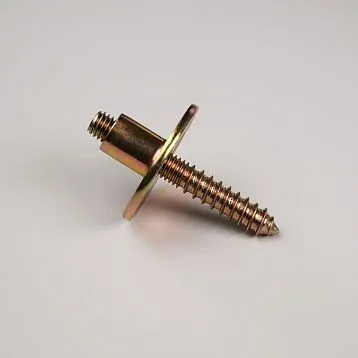
Threaded connections using bolts create a high-strength disassemblable structure. A metal bolt with a diameter of 8–12 mm is screwed into the tread to a depth of 40–60 mm, and a corresponding hole is drilled in the baluster.
Work with concrete foundations
Chemical anchors provide unparalleled strength of connection with concrete. Special epoxy or polyester-based compounds create a monolithic connection capable of withstanding extreme loads.
Installation technology of chemical anchors requires strict adherence to the manufacturer's instructions. The concrete hole must be carefully cleaned of dust, the compound — properly mixed, and the polymerization time — strictly observed.
Mechanical anchors offer a fast and reliable solution for most tasks. Expansion anchors, wedge systems, and driven dowels — each type has its advantages and areas of application.
Methods of installing support posts
Support posts carry the main load from the entire railing system, so their installation requires special attention and the use of the most reliable fastening methods.
Starting posts are installed at the beginning of the staircase run and must withstand not only vertical loads but also significant horizontal forces from railing tension. Their cross-section is usually 80x80 mm or 100x100 mm.
Starting posts are often secured using a combined method — the primary connection via a strong threaded bolt is supplemented by side fasteners that prevent the post from rotating around the vertical axis.
Intermediate posts at turns and landings also require reinforced fastening. They bear loads from two directions and must ensure a smooth transition between straight sections of the railing.
Features of fastening to stringers
Installing baluster posts On inclined surfaces, stringers create additional complexities related to the need to ensure verticality of elements when fastening to an inclined surface.
Beveling at an angle is a mandatory operation when installing on stringers. The bottom end of each baluster must be cut at an angle corresponding to the staircase’s slope. The accuracy of this operation is critically important for tight fitting to the foundation.
Using a baluster support simplifies installation and increases fastening reliability. A horizontal plank attached to the stringer creates a flat surface for baluster installation and evenly distributes loads.
Technology of installing intermediate balusters
Intermediate balusters constitute the main mass of the railing and determine its appearance. Their installation requires ensuring ideal geometry and even distribution along the entire length of the staircase.
The spacing calculation is based on safety requirements and aesthetic considerations. The distance between baluster centers should not exceed 150 mm for residential buildings and 100 mm for children’s facilities.
When calculating spacing, it is important to consider not only normative requirements but also visual perception. Too frequent balusters create a "grid" appearance, while sparse ones may look unstable.
Methods to ensure verticality include using plumb bobs, levels, and laser instruments. Each baluster must be installed strictly vertically, regardless of the foundation’s slope.
Integrated mounting systems
Modern fastening systems allow creating connections without visible fastening elements. This is especially important in interiors where clean lines and absence of technical details are valued.
Magnetic fasteners use powerful neodymium magnets embedded in balusters and the foundation. Such systems provide quick assembly and disassembly, which is convenient for maintenance or configuration changes.
Bayonet connections are borrowed from military technology and adapted for construction purposes. The baluster is inserted into a special socket and turned a quarter turn to secure it.
Quality control and defect correction
Professional Installing baluster posts Includes a multi-stage quality control system that allows identifying and eliminating defects at an early stage.
Intermediate control is performed after each stage of work. Accuracy of marking, quality of drilling holes, and correct installation of fasteners are checked. Any deviations must be corrected before proceeding to the next stage.
Final inspection includes checking the geometry of the entire structure, strength of connections, absence of play and deformations. Both visual methods and instrumental measurements are used.
Load tests are conducted to check the strength of the installed railing. Standard load is applied to the railings, and deformation or weakening of connections is monitored.
Typical defects and methods of correction
Inaccuracies in marking lead to disruption of the railing's geometry. Minor deviations can be compensated during installation, but serious errors require re-marking.
Poor drilling creates weak points in the structure. Holes with uneven edges, deviations from vertical, incorrect diameter — all of this reduces connection strength.
Weakened connections may arise due to improper selection of fasteners or violation of installation technology. Such defects require immediate correction to ensure safety.
Modern innovations in installation technology
The construction industry is constantly evolving, offering new materials and technologies for installing stair railings. Understanding current trends helps select the most effective solutions.
Composite fasteners combine the strength of metal with the corrosion resistance of polymers. Such fasteners are especially effective in high-humidity or aggressive environments.
Self-tapping anchors simplify installation into concrete bases. They do not require pre-drilling holes and create a reliable connection due to their special thread shape.
Adjustable fasteners allow adjusting the position of balusters after installation. This is especially important when working with non-ideal bases or when precise fitting is required.
Digital technologies in installation
Laser marking systems provide ideal positioning accuracy for elements. Modern devices create visible lines and points for marking without additional measurements.
Digital levels with angle memory function simplify work on inclined surfaces. They automatically calculate required cutting angles and control correct installation.
Mobile applications for calculating installation parameters help quickly determine optimal baluster spacing, cutting angles, and number of fasteners.
Features of working with different wood species
Each wood species has its own characteristics that must be considered when selecting fastening methods and installation technology.
Hardwoods — oak, beech, ash — require pre-drilling holes for any fastener. Attempting to screw in a self-tapping screw without preparation may cause wood cracking.
For hardwoods, it is recommended to use drills 1-2 mm smaller than the fastener diameter. This ensures tight fit and reliable connection. Drilling speed should be moderate to avoid overheating and burning of the wood.
Softwoods — pine, spruce, linden — are easier to work with, but require caution when tightening fasteners. Excessive force may cause wood compression and weakening of the connection.
Working with Exotic Breeds
Tropical woods often contain oils and resins that may affect adhesive and coating adhesion. Before installation, such surfaces are recommended to be cleaned with special solvents.
Thermally treated wood has altered structure and requires special fastening approach. Standard methods may prove ineffective due to changes in material density and strength.
Safety During Work
Installing stair railings involves working at height and using power tools, which requires strict adherence to safety rules.
Personal protective equipment includes safety glasses, gloves, non-slip footwear. When working at height, safety harnesses or reliable scaffolding must be used.
The work area organization must ensure safety and convenience of operations. Adequate lighting, stable supports, and order on the work site — all of these affect the quality and safety of work.
Electrical safety is especially important when using powerful electric tools. Grounding, moisture protection, and proper wiring are mandatory conditions for safe operation.
Prevention of injuries
Correct tool operation technique reduces the risk of injury and improves the quality of the result. Each tool has its own specific usage features that must be studied and followed.
Tool condition control includes regular inspection of cutting elements, mechanism integrity, and fastener reliability. A faulty tool is a source of increased danger.
Economic aspects of installation
Cost Installation of balusters posts depends on many factors: construction complexity, selected materials, qualifications of installers, regional market characteristics.
Budget planning must consider not only direct costs for materials and labor, but also associated expenses: delivery, preparatory work, possible modifications.
Cost optimization is possible through proper selection of technologies and materials. Not always the most expensive solutions are optimal for specific conditions.
Long-term economic efficiency of quality installation is reflected in minimal operating costs and long service life without repairs.
Pricing Factors
The complexity of the staircase geometry directly affects labor costs. Straight runs are installed faster than spiral or winding structures.
The type of fastening also affects the cost. Simple screws are cheaper than special anchor systems, but may not provide the required reliability.
Installer qualifications determine the quality of the result and the speed of work. Experienced masters work faster and make fewer mistakes.
Conclusion
Art Installation of balusters posts Combines technical skill, understanding of materials, and a pursuit of perfection. Each stage of this process — from planning to final inspection — requires a professional approach and attention to detail.
Modern technologies open new possibilities for creating reliable and beautiful stair railings. However, the foundation remains a deep understanding of structural principles and material properties. It is precisely this combination of traditional knowledge and modern methods that ensures the creation of railings that serve for decades, preserving their functionality and beauty.
Quality installation is an investment in safety, comfort, and aesthetics of living space. Properly executed work pays off through the longevity of the structure, absence of operational problems, and satisfaction from admiring the result of one's labor.
In a world where speed is often prioritized over quality, a professional approach to installation of wooden balusters becomes especially valuable. Masters who master all modern technologies while carefully preserving craft traditions create works that will delight not just one generation.
STAVROS, recognized as a leading company in the production of wooden architectural elements, not only creates high-quality balusters and posts but also develops advanced installation methods. Years of experience, deep understanding of wood properties, and continuous improvement of technologies enable STAVROS to offer comprehensive solutions — from manufacturing elements to their professional installation. Choosing STAVROS products and services guarantees that your staircase will not only be beautiful but absolutely reliable, and the installation process will be executed with maximum professionalism and attention to every detail.