Article Contents:
- The philosophy of self-installation: why you should take on the project personally
- Psychological aspects of self-creative work
- The master's toolkit: arsenal for flawless work
- Main toolset
- Specialized fixtures
- Material science: choosing wood for lasting beauty
- Wood species: characteristics and applications
- Technical requirements for the material
- Designing stair railings: calculations and planning
- Normative requirements and limitations
- Calculating Quantity and Placement of Balusters
- Creating working drawings
- Technological methods of mounting: from simple to complex
- Mounting on metal bolts: the standard of reliability
- Dowel Connections: Traditional Elegance
- Self-tapping screws: the balance of simplicity and efficiency
- Step-by-step installation technology: from marking to finishing
- Preparation stage: creating a foundation for precision
- Marking: mathematical precision in carpentry
- Processing balusters: preparation for installation
- Mounting: bringing the concept to reality
- Mounting handrails: the final note of the symphony
- Preparing handrails for installation
- Technology of mounting handrails
- Finishing and protection: preserving beauty for decades
- Preparing the surface for finishing
- Choosing and applying protective-decorative coatings
- Quality Control and Work Acceptance
- Visual inspection
- Functional tests
- Operation and maintenance: preserving original beauty
- Regular maintenance
- Repair and Restoration
- Conclusion
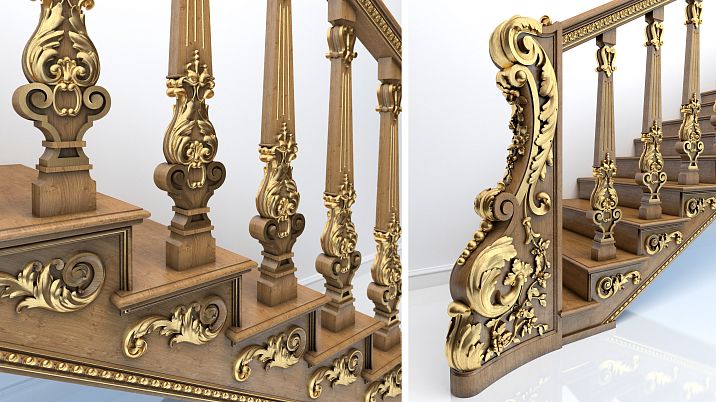
Dreaming of transforming an ordinary staircase into a work of architectural art? Want every ascent to feel grand and secure? Installing balusters yourself is not only a way to save significant funds, but also to bring your own design fantasies to life, creating a unique stair railing that will become the pride of your home.
Imagine: you ascend the stairs, touching perfectly smooth handrails supported by elegant balusters, each installed with jewel-like precision. This is not just a functional element — it is a symphony of wood and metal, born from your own hands. But behind this beauty lies a complex engineering task requiring deep knowledge, patience, and skill.


The philosophy of self-installation: why you should take on the project personally
Why do thousands of homeowners choose to install balusters themselves, opting out of professional crew services? The answer lies not only in economic savings, although it is indeed significant—the cost of labor can account for up to 60% of total stair railing expenses.
The main motivation is the ability to have full control over the process. When you install balusters yourself, each connection is personally checked, and every millimeter is carefully adjusted. No one is more invested in the quality of the result than you are.
Installing balusters yourself allows working at a comfortable pace, without adjusting to a construction crew’s schedule. You can pause at any moment to think through a complex decision, or, conversely, work late into the night when inspiration won’t let you rest.




Psychological aspects of self-creation
There is a special magic in creating something beautiful with your own hands. Each installed element becomes part of your story, a testament to your personal craftsmanship. Guests ascending the stairs will admire not only the beauty of the structure but also your ability to bring your vision to life.
Working with wood has a therapeutic effect. The scent of fresh sawdust, the feel of smooth surfaces under your fingers, the sound of precisely fitted joints—all of this creates a unique atmosphere of creativity and calm.
Our factory also produces:


The craftsman’s toolkit: arsenal for flawless work
A quality result is impossible without properly selected tools. Installing balusters yourself requires not only a basic set of carpentry tools but also specialized equipment that ensures a professional level of execution.
Get Consultation
Main toolset
Measuring instruments form the foundation of precise work. A laser level allows creating an ideally flat marking line at any distance. A digital protractor ensures angular measurements accurate to fractions of a degree. A magnetic tape measure and a 1000 mm steel ruler are indispensable for transferring dimensions.
Cutting tools determine the quality of detail processing. A miter saw with a laser guide guarantees perfectly straight cuts at any angle. An electric jigsaw with a set of wood blades handles intricate cuts. A hand hacksaw with fine teeth is useful for precise fitting.
Drilling equipment must ensure high precision. A drill press turns an ordinary drill into a machine-like tool, guaranteeing perpendicular holes. A set of wood drill bits ranging from 3 to 12 mm covers all mounting needs. A countersink creates neat recesses for screw heads.
Specialized Tools
Drilling guides are either homemade or purchased fixtures that ensure perfect alignment of holes in connected parts. A simple guide can be made from a wooden block with a hole drilled to the required diameter.
Clamps of various sizes are necessary to secure parts during processing and gluing. Quick-release clamps speed up work, while screw clamps provide maximum clamping force.
Templates for marking save time and eliminate errors. A stair angle template allows quickly marking baluster ends for trimming. A baluster spacing template ensures even placement.
Wood Science: Choosing Wood for Long-Lasting Beauty
Success of the project depends on 70% on the quality of initial materials. Wood for balusters must combine strength, geometric stability, and aesthetic appeal.
Wood species: characteristics and application
Oak—the king of stair constructions. Its density of 700–800 kg/m³ ensures exceptional strength and longevity. Beautiful grain with prominent growth rings creates an elegant appearance. However, its high hardness requires pre-drilling all holes for fasteners.
Ash matches oak in strength but has a lighter tone and less pronounced grain. This species is ideal for modern minimalist interiors. Ash is easily stained, allowing you to achieve any desired shade.
Beech has a uniform structure and a pinkish hue. It is easier to process than oak but requires mandatory moisture protection. Beech balusters are often used in children’s rooms due to the warm, cozy color of the wood.
Spruce is the most accessible option for beginner craftsmen. Softwood is easy to process but prone to dents and scratches. Spruce resin can cause problems during finishing—resin seeps through the paint or varnish layer.
Technical Requirements for the Material
Wood moisture should not exceed 12–15%. More humid material will deform after installation, leading to weakened joints and gaps. Moisture control is performed using an electronic moisture meter.
The absence of wood defects is critically important for load-bearing elements. Knots larger than 10 mm weaken the structure and may fall out over time. Cracks, even small ones, tend to grow under load.
Geometric stability of blanks is checked on a flat surface. Deflections exceeding 2 mm per meter length are unacceptable—such balusters cannot be installed perfectly vertically.
Designing stair railings: calculations and planning
Before beginning physical work, a detailed project of the future railing must be created. Installing balusters yourself begins precisely with this stage, which determines the success of the entire project.
Normative requirements and limitations
Building codes establish strict requirements for stair railings. Handrail height must be at least 900 mm for residential buildings and 1200 mm for public buildings. The clear distance between balusters must not exceed 150 mm—this prevents a child’s head from getting stuck.
The railing’s load-bearing capacity is regulated by a horizontal load of 100 kg/m applied to the handrail. This means an adult can lean on the handrail with force without fearing its destruction.
The handrail’s slope angle must match the stair’s incline. Deviations exceeding 2–3 degrees create discomfort when using the stairs and disrupt the structure’s aesthetics.
Calculating Quantity and Placement of Balusters
Determining the number of balusters begins with measuring the total length of the railing. For straight staircases, this distance is between the first and last steps along the baluster installation line. For spiral staircases, measurements are taken separately for each section.
The standard distance between baluster centers is 120-150 mm. A smaller spacing makes the railing appear too dense, while a larger spacing violates safety requirements. The exact spacing is calculated by dividing the total length by the number of intervals.
Installing balusters independently requires considering the specific characteristics of the staircase. On winder steps, the distance between balusters along the inner edge may be less than the standard, compensated by increasing the spacing along the outer edge.
Creating working drawings
Detail drawings are a map for installation. On the staircase plan, the position of each baluster is marked with distances from key points. This prevents errors during marking.
Profile drawings show the height of balusters and the angles of their beveling. For inclined sections of the staircase, the lower ends of balusters are beveled at an angle matching the step incline. The upper ends may be beveled at the handrail’s incline angle or left horizontal.
Detail drawings specify methods of attaching balusters to steps and handrails. They indicate fastener dimensions, drilling depths, and adhesive types used.
Technological mounting methods: from simple to complex
There are many ways to connect balusters to the staircase’s load-bearing elements. The choice of method depends on the step material, strength requirements, aesthetic preferences, and the installer’s skill level.
Mounting on metal bolts: the standard of reliability
Threaded bolts with a 6-8 mm diameter provide the strongest and most durable connection. This method is especially effective for heavy oak or ash balusters, which exert significant load on fasteners.
The process begins with precise marking of hole centers. On the baluster’s end and at the point of installation on the step, points are marked to align perfectly after mounting. Even the slightest misalignment will cause the baluster to be crooked.
Drilling holes requires special care. In the baluster, the hole is drilled to a depth of 50-70 mm, ensuring secure bolt fixation. The hole diameter must exactly match the bolt’s threaded section—no clearance is allowed.
In the step, the hole is drilled through if the structure allows, or to a depth of 30-40 mm for blind mounting. A washer and nut are installed on the step’s underside to create the required tightening force.
Dowel Connections: Traditional Elegance
Wooden dowels with a 8-12 mm diameter represent a classic carpentry solution. This method is valued for its ecological safety, aesthetics, and ability to create removable joints.
Manufacturing dowels is a separate art. The wood for them must be absolutely dry, with moisture not exceeding 8%. The fibers must be aligned strictly along the dowel’s axis, ensuring maximum strength against shear and bending.
The dowel length is calculated so that it extends into the baluster by 30-40 mm and into the step by 20-30 mm. A dowel that is too long may cause wood cracking, while one that is too short will not provide a secure connection.
Adhesive bonding plays a key role in the durability of dowel connections. Modern polyurethane adhesives create a water-resistant bond that does not degrade with changes in wood moisture.
Self-tapping screws: a balance of simplicity and efficiency
Construction screws with a 6-8 mm diameter allow creating a sufficiently strong connection with minimal labor. This method is especially popular among beginners due to its simplicity.
The key point is selecting the correct screw length. To attach a baluster to a 40 mm thick step, a 80-90 mm screw is required. It is important to avoid the screw tip protruding to the opposite side of the step.
Pre-drilling is necessary for hardwoods. The hole diameter should be 1-2 mm smaller than the screw diameter, ensuring a tight fit without risk of cracking.
The screw entry angle is 30-45 degrees from vertical. This angle ensures maximum connection strength and prevents fastener pull-out under load.
Step-by-step installation technology: from marking to finish
Installing balusters yourself is a sequence of precisely executed operations, each affecting the final result’s quality. Violating the technology at any stage may require redoing the entire work.
Preparation stage: creating a foundation for precision
Preparing the work area begins with ensuring adequate lighting. Installing balusters requires working with small details and precise measurements, so illumination should be at least 500 lux. Additional lights are positioned to eliminate shadows in the work zone.
Organizing storage of materials and tools saves time and prevents damage. Balusters are laid on soft padding to avoid dents and scratches. Fasteners are sorted by size and type into separate containers.
Checking the staircase geometry is a mandatory procedure before starting installation. Distances between steps are measured, their levelness is checked, and stringer parallelism is verified. Detected deviations are accounted for during baluster positioning marking.
Marking: mathematical precision in carpentry
Marking begins with installing support posts — main balusters that define the entire railing’s geometry. These elements are installed at the start and end of the staircase run, as well as at turning points.
A control string is stretched between support posts, serving as the baseline for marking intermediate balusters. The string height must correspond to the handrail installation height, accounting for its thickness.
Dividing the distance between support posts into equal parts is done using a proportional compass or mathematical calculation. It is important to achieve equal spacing with precision to 1 mm.
Marking is transferred to the steps using a plumb bob or laser level. Each baluster installation point is marked with a center punch or awl to prevent drill bit displacement during drilling.
Baluster Processing: Preparation for Installation
Balusters are mitered on a miter saw with a fine-toothed blade. The cut quality must be perfect — without chips, scratches, or deviations from perpendicularity. A square with accuracy of at least 0.1 mm is used for control.
Trimming ends at an angle matching the staircase slope requires special precision. The angle is measured with a digital protractor and transferred to the miter saw fence. All balusters on the same flight must have the same trimming angle.
Drilling holes for fasteners is done on a drill press or using guide fixtures. Drill depth is controlled by a stop or marking on the drill. Holes must be strictly perpendicular to the end surface.
Baluster sanding is performed in several stages with gradually decreasing abrasive grit. Initial sanding is done with 120-150 grit paper, final sanding with 220-320 grit. Special attention is given to future connection areas.
Installation: Bringing the Design to Reality
Installation begins with support posts, which define the geometry of the entire structure. These elements are secured to the staircase’s load-bearing structures using strong bolted connections or anchors.
Intermediate balusters are installed step by step with continuous verticality control. Each element is checked with a level in two planes — along and across the staircase flight. Deviations exceeding 1 mm are not permitted.
Installing balusters by hand requires special attention to the sequence of operations. First, the fastener is installed in the step, then the baluster is placed on it. Final fixation is performed only after verifying the position of all elements in the section.
Connection quality control includes checking for absence of play, secure fastening, and alignment with the design. Each baluster must withstand a horizontal load of 30-50 kg without deformation.
Handrail Installation: The Final Note of the Symphony
Handrail installation is the final stage of creating a staircase railing, requiring no less skill than baluster installation. The quality of this work determines not only the appearance of the structure but also its usability.
Handrail Preparation for Installation
Handrails are supplied as straight blanks that must be fitted to the specific staircase. Length is measured from the top ends of installed balusters, accounting for overhangs beyond the end supports.
Handrail ends are mitered at angles ensuring tight fit against support posts or walls. Complex angled joints may be required for spiral staircases.
Milling the groove for the handrail support strip is a critical operation requiring precision and care. The groove depth should be 8-12 mm, width should match the strip thickness with a 0.5 mm clearance.
Handrail Mounting Technology
The handrail support strip serves as an intermediate element between balusters and the handrail. It is made from the same wood species as the main elements and has a thickness of 8-10 mm.
The strip is fastened to balusters using 25-30 mm self-tapping screws driven into the baluster ends. Screw heads are countersunk 2-3 mm and covered with wooden plugs.
The handrail is mounted onto the support strip using carpenter’s glue and screws driven from below the strip. This connection is concealed and provides high strength.
Final connection finishing includes sanding plug installation areas, removing excess glue, and preparing the surface for applying protective-decorative coating.
Finishing and Protection: Preserving Beauty for Decades
Proper finishing of the staircase railing not only highlights the beauty of the wood but also protects it from moisture, UV exposure, and mechanical damage. Installing balusters by hand is incomplete without quality finishing treatment.
Surface Preparation for Finishing
All railing elements are sanded in several stages with gradually decreasing abrasive grit. Initial sanding removes tool marks and levels the surface. Intermediate sanding eliminates minor defects. Final sanding creates a perfectly smooth surface.
Dust removal after sanding is a critically important operation. Residual abrasive dust can cause coating defects and reduce adhesion. A vacuum cleaner with a soft brush and sticky cloths is used.
Wood priming ensures even absorption of the final coating and improves its adhesion. For coniferous species, isolating primers are mandatory to prevent resin bleed-through.
Choosing and applying protective-decorative coatings
Varnish coatings provide maximum wood protection while preserving its natural beauty. Polyurethane varnishes offer high wear resistance and are suitable for heavily used staircases.
Oil finishes create a more natural appearance, highlighting the wood's texture. They are easy to refresh but require more frequent maintenance. Oils with hard wax combine the advantages of both types of finishes.
Staining products allow you to change the color of wood while preserving its texture. Water-based stains provide even coloring, alcohol-based stains dry quickly, and oil-based stains penetrate deeply into the wood.
Application techniques require adherence to temperature and humidity conditions. The optimal temperature is 18-22°C with air humidity at 50-60%. Each layer must be fully dry before applying the next.
Quality control and acceptance of work
Completion of installation does not mean the end of work. Careful quality control allows identifying and eliminating possible defects before the staircase begins operation.
Visual inspection
All railing elements are inspected under good lighting using magnifying glass to detect minor defects. Inspection includes checking for chips, scratches, stains, and uneven coating.
Geometric control includes checking the verticality of balusters, the horizontal alignment of handrails, and the uniformity of distances between elements. Tools such as levels, squares, and measuring rulers are used.
Connection quality is assessed by absence of gaps, play, or squeaking under load. All fasteners must be securely tightened but not over-tightened.
Functional tests
Load tests are performed by applying a horizontal force of 100 kg per linear meter to the handrail. The structure must not exhibit any residual deformations after the load is removed.
Vibration tests are conducted by applying rhythmic impacts to various elements of the railing. The absence of resonant vibrations indicates correct installation.
Usability assessment includes evaluating handrail height, profile, absence of sharp edges or burrs. The handrail should be comfortably graspable by an adult’s hand.
Operation and maintenance: preserving original beauty
Proper care of the staircase railing extends its service life and preserves its original appearance. Self-installation of balusters implies self-maintenance of the structure.
Regular Maintenance
Daily cleaning includes removing dust with a dry, soft cloth or special wood wipes. Wet cleaning is performed with a well-wrung cloth using specialized wood care products.
Weekly treatment with polishing compounds maintains the finish's gloss and creates an additional protective layer. Polishes are applied in a thin layer and rubbed in until fully absorbed.
Seasonal maintenance includes inspecting all joints, tightening loose fasteners, and renewing protective coatings in areas of heavy wear.
Repair and restoration
Minor coating damage is repaired by local sanding and applying a repair compound. It is important to precisely match the color and texture of the coating to ensure the repair is not noticeable.
Replacement of individual components may be required for severe damage. Due to the thoughtful design of the mounting system, balusters can be replaced individually without dismantling the entire railing.
Complete coating renewal is performed every 5-7 years depending on usage intensity. The old coating is removed by sanding, after which a new coating is applied in full volume.
Conclusion
Installing balusters yourself is an exciting journey into the world of carpentry craftsmanship, requiring patience, precision, and a creative approach. Each stage of work, from material selection to final finishing, affects the quality of the final result and the durability of the structure.
Performing this task yourself not only provides economic benefits but also invaluable experience and pride in the work created by your own hands. A staircase railing installed according to all technological requirements will serve for decades, delighting the eye and ensuring safety.
Remember, the quality of work depends not only on the skill of the executor but also on the correctness of the chosen technology. Detailed instructions on installing balusters yourself will help avoid typical mistakes and achieve a professional result.
Modern technologies and materials open up boundless opportunities for creativity in staircase design. The key is not to be afraid to take on complex tasks and continuously improve your skills. Each new project brings experience and confidence in your abilities.
For more than two decades, STAVROS has helped self-taught craftsmen and professionals create unique staircase structures. Our experience and knowledge are always at your service to bring your most daring architectural visions to life.