Article Contents:
- Psychology of space: why balusters matter more than they seem
- Anatomy of perfection: what makes an ideal baluster
- Base of the baluster: foundation of reliability
- Body of the baluster: carrier of style
- Upper part: point of connection with handrails
- Material selection: soul of the future staircase
- Oak: aristocrat among species
- Ash: strength and beauty
- Beech: European classic
- Coniferous species: accessibility and practicality
- Tool arsenal: master's weapon
- Measuring instruments: precision above all
- Cutting tools: sharpness and precision
- Drilling equipment: foundation of quality connections
- Fastening technologies: from simple to complex
- Spindle connections: reliability proven over time
- Shank connections: eco-friendliness and traditions
- Oblique screws: simplicity and speed
- Step-by-step technology: from concept to realization
- Stage one: preparation and planning
- Stage two: marking and preparation
- Stage three: drilling and preparing connections
- Stage four: final assembly
- Features of mounting to various bases
- Mounting to treads: classic option
- Installation on stringers: space-saving
- Installation on stringers: maximum reliability
- Installing handrails: final touch
- Preparing handrail support blocks
- Installing Handrails
- Quality Control: Criteria of Excellence
- Geometric parameters
- Strength characteristics
- Final Processing: Beauty and Protection
- Sanding and Preparation
- Protective Treatment
- Economic Aspects of the Project
- Budget Planning
- Long-Term Savings
- Conclusion

When it comes to installing balusters on a wooden staircaseMany homeowners experience mixed feelings. On the one hand — the desire to create something beautiful with their own hands, on the other — fear of the complexity of the process. But what if I told you that installing balusters is not just a technical operation, but a true art accessible to anyone willing to immerse themselves in the world of carpentry craftsmanship?
A wooden staircase without balusters resembles a book without a cover — functional, but lacking completeness. It is precisely the balusters that transform a simple structure into an elegant architectural solution that becomes the focal point of the interior. Each post is not merely a support for the handrail, but also a carrier of the style and character of the entire house.


Psychology of Space: Why Balusters Are More Important Than It Seems
Human perception is structured in a remarkable way. We instinctively seek support, safety, harmony. A staircase with properly installed balusters provides a sense of reliability on a subconscious level. Every time you ascend the steps, your hand reaches for the handrail, and your gaze glides along the rhythmic row of posts.
Visual rhythm creates a sense of order and stability. Evenly spaced balusters form a kind of music of space — each post is a note in the architectural symphony.
Tactile sensations are equally important. The touch of a smoothly sanded handrail, supported by reliable balusters, creates a sense of comfort and confidence.
The emotional component is manifested in pride for a well-executed job. When guests admire the elegance of the staircase, the homeowner experiences a special satisfaction.




Anatomy of Perfection: What Makes an Ideal Baluster
Before beginning installation, it is important to understand what a modern baluster represents. It is not simply a turned stick, but a complex engineering element, each part of which performs a specific function.
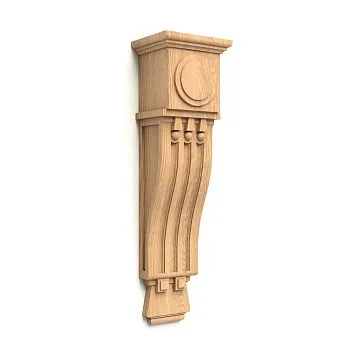
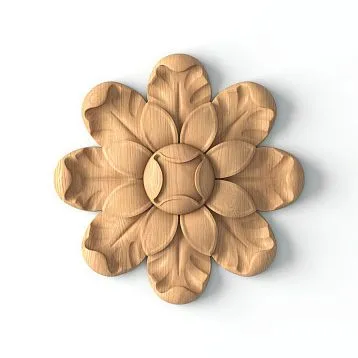
Our factory also produces:


Base of the Baluster: Foundation of Reliability
The lower part of the baluster is its foundation, the quality of which determines the strength of the entire structure. Modern balusters have an expanded base that ensures maximum contact area with the step or stringer.
The size of the base varies from 60×60 mm for light structures to 100×100 mm for heavy staircases. The larger the base area, the more secure the mounting and the greater the resistance to lateral loads.
The shape of the base can be square, round, or decorative. A square base is easier to install and provides maximum strength. Round — more elegant, but requires precise marking. Decorative — creates a unique decorative effect.
Get Consultation
Body of the Baluster: Carrier of Style
The central part of the baluster determines the style of the entire staircase. Here, the skill of the turner and the designer's vision of the architect are manifested.
Classic profiles include traditional elements — moldings, flutes, capitals. Such balusters fit perfectly into interiors in the styles of Empire, Baroque, Classicism.
Modern solutions lean toward simplicity of form. Simple geometric profiles, minimal decoration, emphasis on material quality and finish.
Custom variants allow creating a unique design. Carved elements, combining different types of wood, inlays — possibilities are limited only by the master's imagination.
Upper Part: Connection Point with Handrail
The top end of the baluster must ensure a secure connection with the handrail. The quality of this connection determines the rigidity of the entire railing structure.
Flat end — the simplest option, suitable for mounting through a handrail support plate. Requires precise processing for tight fit.
Tongue-and-groove — a traditional carpentry joint providing maximum strength. Requires high skill from the craftsman and precise manufacturing of the corresponding groove in the handrail.
Threaded connection — a modern solution that allows easy disassembly of the structure for repair or replacement of components.
Material selection: the soul of the future staircase
The wood species determines not only the appearance of balusters, but also their operational characteristics. Each species has its own character, specific processing and installation features.
Oak: the aristocrat among species
Oak is rightfully considered the king of materials for staircase structures. Its density of 650-750 kg/m³ ensures exceptional strength and durability. Oak balusters can withstand colossal loads without any signs of deformation.
Oak's texture is unique — expressive growth rings create an elegant pattern, accentuated by proper finishing. Each baluster becomes unique, with its own distinctive pattern.
Oak's color palette ranges from light yellow to dark brown. Young oak has light tones, mature oak — rich brown shades. Steamed oak acquires a noble black color.
Installation features of oak balusters are related to the material's high hardness. All holes for fasteners must be pre-drilled with quality drill bits. Attempting to screw in a self-tapping screw without preparation will cause the wood to crack.
Ash: strength and beauty
Ash combines the strength of oak with a more expressive texture. Contrasting growth rings create an eye-catching striped pattern, especially beautiful on radial cuts.
Ash's mechanical properties surpass many species. High impact toughness makes it an ideal material for elements subjected to dynamic loads.
Ash is highly workable. The wood sands, mills, and polishes well. Its fibrous structure ensures excellent fastener retention.
Ash has high dimensional stability, but requires proper drying. Undried material may deform after installation.
Beech: European classic
Beech is a traditional material for European craftsmen. Its uniform fine-grained structure ensures ideal surface quality after processing.
Beech color ranges from light pink to reddish-brown. Steaming imparts a rich red hue to the wood.
Beech hardness is comparable to oak, but the material is easier to process. Beech balusters become perfectly smooth with minimal effort.
Hygroscopicity is the only drawback of beech. The material actively reacts to humidity changes, therefore it requires quality protective treatment.
Coniferous species: accessibility and practicality
Spruce and pine remain the most popular materials due to their accessibility and ease of processing. Modern technologies allow creating balusters from coniferous species that do not fall short in beauty compared to hardwoods.
Pine features an expressive texture with contrasting growth rings. Resin provides natural protection against rot, but may cause issues during finishing.
Larch has a more uniform structure and lighter color. Less resin simplifies coating application.
Larch stands out among coniferous species for exceptional resistance to rot and high density. Its strength approaches that of hardwoods.
Tool arsenal: the master's weapon
Quality baluster installation is impossible without appropriate tools. Each item in the arsenal plays its role in achieving the ideal result.
Measuring instruments: precision above all
Laser level — the foundation of modern marking. Multi-beam systems create perfectly flat surfaces, eliminating marking errors. Modern instruments achieve accuracy of ±0.2 mm per 10 meters.
The tape measure must be of quality, with clear markings and a reliable lock. Prefer models with a magnetic tip.
A square is necessary to control right angles and mark perpendicular lines. A quality square is made of hardened steel with accuracy to 0.1 degrees.
A caliper is indispensable for precise measurements of hole and fastener diameters. Digital models provide accuracy to 0.01 mm.
Cutting tools: sharpness and precision
The miter saw provides perfectly smooth cuts at any angle. A high-quality blade with carbide teeth delivers a surface that requires no additional finishing.
A guide rail jigsaw is indispensable for making curved cuts. Using blades with fine teeth minimizes chipping.
Chisels of various sizes remain essential for fine-tuning joints. A sharp blade allows removing shavings as thin as fractions of a millimeter.
Drilling equipment: the foundation of quality joints
A drill with variable speed allows selecting the optimal mode for each material. Low speeds prevent overheating and ensure clean holes.
Wood drill bits of various types are designed for different tasks. Spiral bits are for fast drilling, spade bits for large holes, and twist bits for maximum precision.
Drill guides ensure hole perpendicularity. Homemade guides made of plywood often surpass commercial ones in ease of use.
Fastening technologies: from simple to complex
Modern practice offers several proven methods for installing balusters. The choice of method depends on the material, load requirements, and aesthetic demands.
Screw-type connections: reliability proven over time
Fastening with metal screws is considered the most technologically advanced and reliable method. The process requires precision, but the result exceeds all expectations.
Preparing the baluster begins with drilling a central hole in the base. The diameter must exactly match the screw size — 6 or 8 mm. Depth is 50–60 mm.
Screw installation is performed using thread-locking compound or epoxy glue. The protruding part should be 40–50 mm for secure fixation in the base.
Step marking is done using a laser level and a taut string. Marking accuracy is critically important — an error of several millimeters will cause the entire railing to be misaligned.
Drilling steps is performed with a drill bit 0.5 mm smaller than the screw diameter. This ensures a tight fit without play.
Dowel connections: eco-friendliness and tradition
Wooden dowels create a strong and eco-friendly connection. This method is especially popular among craftsmen who prefer traditional techniques.
It is better to have dowels made by professionals or purchase pre-made ones. High-quality dowels are made from hardwood with moisture content no more than 8%.
Dowel sizes are standardized — diameter 8, 10, or 12 mm, length 40–60 mm. For critical connections, larger diameter dowels are used.
Drilling holes requires special precision. Even the slightest deviation from perpendicularity will cause the baluster to be misaligned.
Assembly is performed using wood glue. The open time is limited, so all operations must be completed quickly and accurately.
Oblique self-tapping screws: simplicity and speed
Fastening with oblique self-tapping screws is the simplest and fastest installation method. Suitable for temporary structures or situations where installation speed is critical.
Pre-drilling holes in soft woods may not be necessary. In hardwoods, pre-drilling is mandatory.
The installation angle of self-tapping screws is 30–40 degrees. This ensures maximum joint strength with minimal risk of cracking.
Number of self-tapping screws per baluster — 4, arranged in a cross pattern. Screw length — 80–90 mm.
Fastener concealment is performed using wooden plugs or putty. With proper execution, fastener locations become virtually invisible.
Step-by-step technology: from concept to realization
The installation process requires methodicalness and attention to detail. Each stage is crucial for achieving the ideal result.
Stage one: preparation and planning
Material acclimatization is a critically important stage. All wooden elements must remain in the installation room for at least 48 hours. This allows the wood to reach equilibrium moisture content.
Moisture control is performed using an electronic hygrometer. Moisture content must not exceed 12% for interior work. Exceeding this value guarantees problems in the future.
Sorting balusters by quality allows optimal material distribution. The best elements are installed in the most visible locations.
The number of balusters is calculated based on the length of the staircase and safety requirements. The distance between posts must not exceed 120 mm.
Stage two: marking and preparation
Installation of support posts — the first step in marking. The outer posts define the geometry of the entire railing and must be installed with maximum precision.
Tensioning a control string between support posts creates a baseline for placing intermediate balusters. The string must be perfectly taut without sagging.
Marking installation locations is done using a tape measure and a square. Each point must be marked with precision to the millimeter.
Marking control using a laser level eliminates the accumulation of errors. All points must lie on a single straight line.
Stage three: drilling and preparing connections
Drilling holes in balusters is done using a drill press or with the help of guiding fixtures. Accuracy is the main requirement.
Preparing holes in steps requires special care. The depth must be sufficient for secure fixation, but not excessive.
Cleaning holes of shavings and dust is done with compressed air. Residual wood dust prevents proper gluing.
Trial assembly allows identifying and eliminating defects before final installation. All connections must be tight with no gaps.
Stage four: final assembly
Adhesive is applied in an even, thin layer. Excess adhesive is immediately removed — dried adhesive spoils the appearance.
Baluster installation is performed in strict sequence from one end to the other. Each post is checked for vertical alignment.
Fixing the position with clamps or temporary supports prevents displacement until the adhesive fully sets.
Quality control includes checking vertical alignment, connection strength, and appearance. Any defects must be corrected immediately.
Features of mounting to different bases
Installation technology depends significantly on the type of base. Each option requires a specific approach.
Mounting to steps: classic option
Installing balusters on steps — the most common method. Ensures maximum strength and ease of use.
Marking steps begins with determining the optimal position of balusters. Posts should be placed 20-30 mm from the front edge of the step.
Drilling steps may be through or blind depending on thickness. Through drilling ensures maximum strength.
Sealing connections prevents moisture and dirt ingress. Special wood sealants are used.
Mounting to stringers: space-saving
Mounting to stringers allows saving usable step area. Particularly relevant for narrow staircases.
Beveling baluster ends to match the staircase slope is mandatory. The angle must be measured with maximum precision.
Stringer marking is done along a taut string, taking into account even baluster distribution.
Mounting can be done directly to the rail or through a baluster-mounted bracket. The second method provides greater rigidity.
Installation on the stringer: maximum reliability
Mounting to the stringer ensures maximum strength, as the load is transferred to the staircase's load-bearing element.
Grooves in the stringer are cut using a router or chisels. Depth should be at least 20 mm.
Baluster fitting into the grooves requires meticulous precision. The connection must be tight with no gaps.
Additional fixation with screws or bolts eliminates pulling out under lateral loads.
Railing Installation: Final Touch
Installing handrails completes the staircase railing. The quality of this stage determines the functionality and appearance of the structure.
Preparation of handrail brackets
Manufacturing brackets from the same material as the balusters ensures structural uniformity. Dimensions must precisely match the groove in the handrail.
Mounting to balusters is done with concealed-head screws. Two screws per baluster ensure reliability.
Leveling the bracket is critically important for correct handrail installation. Any misalignment will be noticeable.
Installing handrails
Handrail length is adjusted to account for protrusion over support posts. Joints must be perfectly fitted.
Handrail mounting to the bracket is done from below with screws or adhesive. Fasteners must be fully concealed.
Joint finishing includes sanding and fitting. Transitions must be smooth and seamless.
Quality control: criteria of perfection
Quality installation must meet strict criteria for strength and aesthetics.
Geometric Parameters
Baluster verticality is checked with a plumb bob in two planes. Deviation must not exceed 2 mm per meter of height.
Uniformity of distances is controlled with a tape measure. Deviations exceeding 3 mm are not permitted.
Baluster height must be uniform to within 2 mm. Larger deviations create visual discomfort.
Strength characteristics
Absence of play is the primary quality criterion. Each baluster is checked by rocking it in different directions.
Pull-out strength is tested by applying a 50-70 kg load. A quality connection must withstand the load without deformation.
Railing stiffness is tested by loading the handrail. Deflections and vibrations are not permitted.
Final finishing: beauty and protection
The final stage determines the appearance and longevity of the structure.
Sanding and preparation
All surfaces are sanded with 220-320 grit abrasive. Coarser abrasive leaves scratches.
Blowing with compressed air removes all dust particles. Coating quality depends on surface cleanliness.
Filling minor defects with wood putty eliminates small imperfections. Putty color must match the wood.
Protective treatment
Priming improves the adhesion of finishing coatings. Primer is applied in a thin, even layer.
Fine abrasive grinding removes raised fibers. The surface must be perfectly smooth.
Applying the coating in multiple layers ensures reliable protection. Each layer must be fully dry.
Economic aspects of the project
Installation cost depends on many factors. Proper planning allows optimizing expenses.
Budget planning
Material costs constitute the main part of the budget. Cutting corners on quality is unacceptable — it's a matter of safety.
Tooling expenses can be optimized by purchasing quality tools that will last for years.
Labor costs depend on the complexity of the structure and the installer's qualifications. Simple staircases require 1-2 days of work.
Long-term savings
Quality installation pays off for years of flawless service. Cheap solutions require constant repairs and replacements.
Properly executed work increases property value. A beautiful staircase is a home's calling card.
Conclusion
Skill installing balusters on a wooden staircase This is more than a technical operation. It is the art of creating beauty that will delight generations. Each properly installed baluster is a contribution to home safety and comfort.
Modern technologies and materials open boundless creative possibilities. Quality tools, proven mounting methods, reliable protective coatings — all serve one purpose: creating a staircase that becomes a source of pride for the home.
Do not be afraid to take on complex projects. Every master began with simple tasks, gradually perfecting their skill. The key is to follow technology, not to cut corners on material and tool quality, and to continuously learn and improve.
Remember: a staircase with properly installed balusters is not just a functional structure, but a work of art that will serve for decades, creating an atmosphere of comfort and safety in your home.
For many years, STAVROS has specialized in creating exclusive staircase structures. Our masters are proficient in all modern baluster installation technologies and are ready to share their experience with those striving for perfection. We do not merely manufacture staircases — we create works of art that become family heirlooms, passed down from generation to generation.