Article Contents:
- Philosophy of the corner: why transitions matter
- Technological revolutions in creating corner elements
- Classification of corner elements by functional purpose
- Stylistic diversity: from classic to avant-garde
- Art of integration into various interior solutions
- Technical aspects of installation: secrets of professionals
- Working with different wood species: characteristics and techniques
- Color solutions and finishing techniques
- Combining with modern technologies
- Economic aspects: investments in beauty and longevity
- Trends and future of molding
- Russian traditions of wooden architecture
- Professional secrets and nuances of craftsmanship
- Conclusion
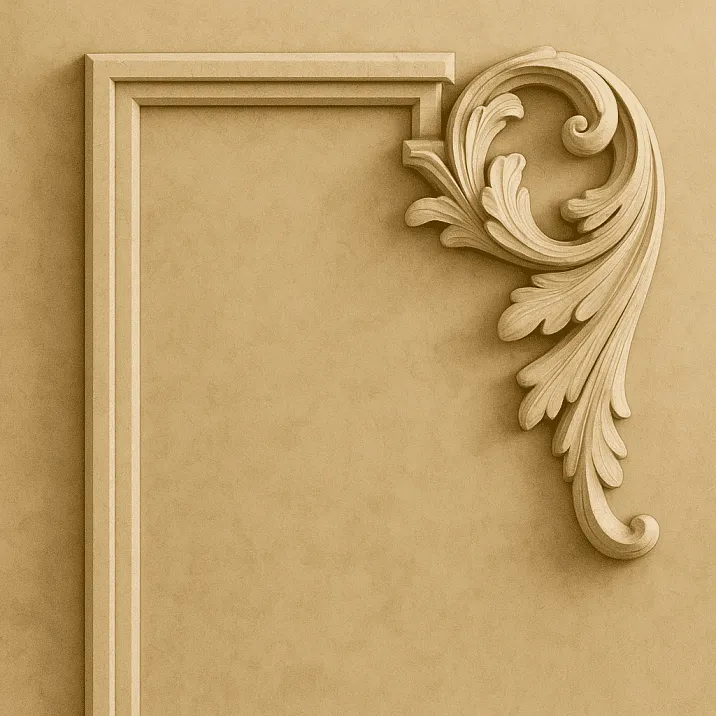
Imagine a symphony orchestra without a conductor, an architectural ensemble without connecting elements, or an exquisite costume without its final, finishing detail. That is precisely the impression an interior creates when it lacks quality corner connections of decorative elements. Mold Corner Element It is that very magical detail that transforms a set of individual moldings into a single architectural poem written in the language of forms and lines.
In the world of design, there is an unshakable truth: the devil is in the details. And if this truth is especially evident anywhere, it is precisely in how decorative elements' corner joints are executed. You can spend colossal sums on exclusive materials, hire fashionable designers, use the most expensive paints — but one poorly executed corner joint can ruin the entire impression of the interior.


Philosophy of the corner: why transitions matter
In architecture, a corner is not merely the intersection of two planes. It is a point of tension, where energies of space converge, where the fate of the entire composition is decided. Ancient architects intuitively understood this, creating special decorative accents at the corners of their works to emphasize the significance of these architectural nodes.
When we talk about molding in interiors, we inevitably encounter the problem of corner joints. Can you imagine a cornice that breaks off at the corner of a room? Or a molding that awkwardly connects with a perpendicular element? Such solutions not only spoil aesthetics but also demonstrate the lack of professionalism of the installers.
Corner decorative elements solve this problem fundamentally, ensuring smooth, elegant transitions between different decorative planes. They effectively bind all components of the decorative system together, creating a sense of monolithic unity and thoughtful design.
The psychology of perceiving corners in space is linked to our basic notions of order and harmony. A perfectly executed corner transition creates a sense of stability and completeness, whereas careless execution of these details causes subconscious discomfort, even if the person cannot precisely articulate the reason for their dissatisfaction with the interior.




Technological revolutions in creating corner elements
The history of molding technology development is an engaging story of humanity's pursuit of perfection in details. From hand-carving in stone and wood to modern casting and milling methods — each stage of this development opened new possibilities for creating more precise and refined corner elements.
Modern wooden corner molding elements represent the pinnacle of joinery craftsmanship. The use of high-tech equipment allows creating details with micron-level precision, where every line and curve is reproduced with mathematical accuracy. At the same time, the warmth and nobility of natural wood — a material that has served humanity for millennia to create beauty — is preserved.
The process of creating a quality corner element begins with careful selection of wood. Only high-quality species with uniform structure and minimal defects are used. Pine, spruce, oak, beech — each species has unique characteristics that determine not only the appearance of the finished product but also its performance properties.
Milling corner elements requires special skill and understanding of how wood behaves under cutting tools. Incorrect feed speed may result in chipping, while improper cutter geometry leads to profile inaccuracies. Experienced masters know all the subtleties of working with different wood species and can create corner elements of any complexity.
Our factory also produces:
Classification of Corner Elements by Functional Purpose
The world of corner molding elements is astonishing in its diversity. Each type of element is designed to solve specific tasks and has its own application characteristics. Understanding this classification is key to creating truly professional interiors.
Internal corner elements are designed for decorating internal corners of rooms — the places where walls meet at a 90-degree angle. These elements usually have a concave shape and allow creating a smooth transition between moldings located on perpendicular surfaces. The quality of manufacturing internal corner elements is especially critical, as any inaccuracies in these areas are immediately noticeable.
External corner elements are used for decorating protruding corners — the places where one surface extends beyond another. These elements have a convex shape and require special attention to structural strength, as they are most often subjected to mechanical stress during operation.
Special corner elements are created for non-standard situations — corners that differ from right angles, complex multi-plane connections, transitions between elements of different heights or profiles. Such elements are often custom-made and require the highest level of craftsmanship from the manufacturer.
Get Consultation
Stylistic diversity: from classic to avant-garde
Each historical era has left its mark on the art of creating corner molding elements. Studying this heritage allows modern designers to create interiors that precisely match the chosen stylistic concept while also meeting the requirements of modern comfort.
Classic corner elements are distinguished by strict symmetry, clear geometric forms, and noble restraint in decoration. They embody the principles of classical architecture — proportionality, harmony, functional beauty. Such elements are ideally suited for creating interiors in the styles of Empire, Classicism, and Neoclassicism.
Baroque corner elements impress with their decorative richness and dynamism of form. Here, complex floral ornaments, scrolls, rosettes, and cartouches dominate. Each element becomes a small work of art, showcasing the master’s virtuosity and the creator’s rich imagination. and frames create a home atmosphere, making it truly cozy and individual. This is an investment in beauty, which pays off every day through aesthetic pleasure from admiring the beautiful. In the Baroque style, they transform interiors into luxurious theatrical decorations.
Modernism brought a completely new understanding of beauty to the design of corner elements. Smooth, flowing lines, stylized natural forms, asymmetrical compositions — all of this creates the feeling of a living, evolving organism. Corner elements in the Modern style seem to have grown naturally, like tree branches or the curves of a sea wave.
Modern styles — minimalism, high-tech, loft — require a completely different approach to corner elements. Here, simplicity, purity of lines, and functionality of each detail are valued. A corner element in a modern interior should be practically unnoticed, performing its function without drawing unnecessary attention to itself.
Art of Integration into Various Interior Solutions
One of the most challenging tasks for a designer is harmoniously integrating cornice corner elements into the overall interior concept. This requires not only technical knowledge but also a developed artistic sense, understanding of compositional laws and color relationships.
Living Rooms Mold Corner Element Often become the focal point, especially in rooms in the classical style. Here, it is important not to overdo decoration — each element should harmoniously complement the overall composition, without creating visual chaos. Properly selected corner elements can visually increase ceiling height, expand space, and create a sense of grandeur and formality.
Bedrooms require a more delicate approach to using cornice. Here, soft, calm forms are appropriate, promoting relaxation and rest. Corner elements in a bedroom should create a sense of coziness and safety, without drawing excessive attention. Pastel tones, smooth transitions, minimal sharp angles — these are the principles of using cornice in rest areas.
Offices and libraries offer wide opportunities for using refined corner elements. Here, complex decorative solutions are appropriate, demonstrating the owner’s status and education. Ceiling molding Combined with quality corner elements, it creates an atmosphere of an old library or aristocratic mansion.
Technical Aspects of Installation: Secrets of Professionals
Even the highest-quality corner elements may not yield the expected result if installed improperly. Installing cornice is an art requiring not only technical skills but also an understanding of the material and its behavior under various conditions.
Surface preparation is the first and one of the most important stages of installation. Walls must be perfectly flat, cleaned of dust, dirt, and remnants of old finishes. Any irregularities, cracks, or protrusions will be visible after installing cornice, so surface preparation must be approached with particular care.
The choice of adhesive depends on the material of the corner elements and the type of surface they are installed on. For wooden elements, specialized carpentry adhesives are best suited, providing strong bonding while allowing adjustment of the element’s position during installation. The setting time of such adhesives is sufficiently long, allowing for achieving ideal positioning of each detail.
Accuracy of measurements and marking is critically important when installing corner elements. Even a small error in calculations may result in elements not fitting properly, rendering the entire work useless. Professional craftsmen use laser levels, high-precision measuring tools, and special templates to ensure absolute accuracy of marking.
Features of Working with Different Wood Species
Each wood species has unique characteristics that must be considered when creating and installing cornice elements. Understanding these features allows achieving the best results and avoiding typical mistakes.
Spruce is one of the most popular materials for creating cornice due to its accessibility and relative ease of processing. However, spruce has a distinct grain and high resin content, which may create certain issues during painting. Corner elements made of spruce require careful surface preparation and the use of special primers that block resin exudation.
Fir has a more uniform structure and lower resin content compared to spruce. This makes it a preferred material for creating elements intended for painting. Fir is easy to process and allows creating complex profiles with high detail.
Oak is a premium-class material, possessing exceptional strength and noble texture. Corner elements made of oak can be used without additional coating, showcasing the beauty of natural wood. However, working with oak requires special skill and specialized tools due to the high hardness of the wood.
Linden is traditionally considered the best material for creating carved elements due to its softness and uniform structure. Corner elements made of linden allow creating the most complex decorative compositions with fine details. Moreover, linden practically does not produce chips or cracks during processing.
Color Solutions and Finishing Techniques
Properly chosen finishing can dramatically change the perception of cornice corner elements. From simple white painting to complex decorative techniques — each solution creates its own unique atmosphere in the interior.
Classic white painting remains the most popular solution for cornice. The white color highlights the shape and relief of elements, creating a sense of purity and elegance. However, to achieve an ideal result, careful surface preparation and the use of high-quality paints with good coverage are required.
Paintable Molding Opens up wide opportunities for creative experimentation. One can create contrasting combinations, use metallic effects, apply artificial aging techniques. It is important to remember that the color of cornice should harmonize with the overall color scheme of the interior, avoiding dissonance.
Patina technique allows creating an effect of noble antiquity. Corner elements acquire the appearance of antique items, which is especially appropriate in classical and vintage interiors. Patina requires certain skills and artistic taste, but the result can exceed all expectations.
Gilding and silvering are the pinnacle of decorative cornice finishing. Such techniques require not only skill but also the use of expensive materials. The result — truly luxurious interiors worthy of palaces and mansions.
Combining with Modern Technologies
Modern interiors increasingly require the integration of classical decorative elements with the latest technological solutions. Corner molding elements can serve not only decorative purposes but also perform practical functions.
Hidden lighting placed behind corner molding elements creates soft, diffused illumination that highlights architectural details and creates a unique atmosphere in the room. For this purpose, corner elements can be manufactured with special grooves for mounting LED strips.
Air conditioning and ventilation systems can also be integrated into decorative elements. Specially designed corner elements with ventilation channels allow for effective air circulation without compromising the interior's aesthetics.
Audio systems are another area where corner molding elements find unexpected application. Special acoustically transparent materials allow placing speakers behind decorative elements, creating a hidden room audio system.
Economic aspects: investment in beauty and longevity
Using high-quality corner molding elements is not merely spending money on beauty, but a wise investment in the long-term value of real estate. Professionally executed decoration significantly enhances the interior's status and market value.
The cost of corner molding elements varies widely depending on the complexity of the profile, wood species, and manufacturing quality. Simple elements made of pine are accessible to almost everyone, while exclusive hand-carved items from precious woods can cost significant sums. It is important to find the optimal balance between cost and quality, considering the overall project budget.
The longevity of high-quality wooden corner molding elements is measured in decades. With proper care and periodic refinishing, they can last practically forever. This makes investing in quality molding economically justified in the long term.
Cutting corners on the quality of corner molding elements often results in additional expenses in the future. Poor-quality items quickly lose their shape, crack, and require replacement. As a result, the illusion of savings turns into additional costs for redoing and repairs.
Trends and the future of molding
Modern interior design trends also influence the development of molding art. door frame trim and other decorative elements become more functional, integrated with modern technologies, and environmentally responsible.
Ecological considerations are becoming an increasingly important factor when selecting finishing materials. Wooden corner molding elements have undeniable advantages in this regard — they are made from renewable resources, do not emit harmful substances, and can be recycled after their service life.
Personalization is another important trend in modern design. Clients increasingly demand unique solutions that reflect their individuality and lifestyle. Corner molding elements crafted according to custom sketches allow creating truly exclusive interiors.
Production technologies continue to improve, opening new possibilities for creating complex and precise items. Computer modeling, CNC machines, new materials, and processing methods — all of this expands the creative horizons of designers and craftsmen.
Regional characteristics and cultural traditions
The art of creating molding has deep historical roots in various cultures and regions. Understanding these traditions allows creating more authentic and culturally significant interiors.
Russian traditions of wooden architecture have made a unique contribution to the art of creating decorative elements. Decorative door frame trim in the Russian style is distinguished by particular warmth and coziness, characteristic plant motifs, and harmonious combination of functionality and beauty.
European molding traditions were shaped under the influence of various architectural styles — from Gothic to Modernism. Each period left its mark on the forms and decoration of corner elements. Studying this heritage allows modern craftsmen to create items that precisely match historical styles.
Eastern interior decoration traditions also influence modern molding art. Eastern ornaments, geometric patterns, and specific color solutions are reflected in modern corner elements designed for interiors in an Eastern style.
Professional secrets and nuances of craftsmanship
Over many centuries of molding art development, a vast amount of experience has accumulated, passed down from master to master. Knowledge of these professional secrets allows creating truly high-quality items.
Choosing the right tool is the foundation of quality work. Creating various profile elements requires specialized cutters that allow achieving ideal precision and surface cleanliness. Tool sharpening, feed rate, direction of movement — all these factors affect the quality of the finished product.
Understanding how wood behaves during various processing operations comes only with experience. Each species has its own characteristics — grain direction, density, moisture content. An experienced craftsman can predict how the material will behave during milling and accordingly adjust the equipment.
Assembling complex corner elements from multiple parts requires special skills and understanding of the principles of joining parts. The properly executed glue joint should be not only strong but also invisible — the finished element should look like a single piece.
Quality sanding and preparation for final finishing — the final stage of creating corner elements. The quality of this operation determines how the finished product will look after painting or other finishing treatments.
Conclusion
In today's world, where technologies develop at an incredible speed and interior trends change every season, Mold Corner Element remains timeless classic, a symbol of refined taste and attention to detail. These seemingly small decorative components can dramatically transform the perception of space, turning an ordinary room into a work of architectural art.
Journey into the world of cornice corner elements reveals a wonderful universe where every detail has its own story, purpose, and aesthetic and functional value. From modest minimalist elements to luxurious baroque compositions — everyone will find a solution that suits their taste and needs.
Technological progress not only does not diminish the value of traditional decorative elements, but also opens up new possibilities for their application. Integration with modern lighting, climate control, and acoustic systems transforms classical cornice into a multifunctional element of contemporary interior design.
The economic rationale for using high-quality cornice corner elements is obvious for those who think in long-term terms. Investments in beauty and quality pay off not only through aesthetic pleasure, but also through increased property market value, creating a comfortable and prestigious living environment.
The mastery of creating and installing cornice corner elements is an art that requires not only technical skills, but also artistic taste, understanding of styles and traditions, sense of proportion and harmony. In the hands of a true master, a simple piece of wood transforms into an element capable of infusing life into the most mundane interior.
The future of cornice lies in the harmonious combination of traditional values and modern technologies, in creating elements that are not only beautiful but also functional, eco-friendly, and durable. Cornice corner elements will continue to play an important role in creating interiors that are not merely beautiful, but also imbued with meaning, history, and soul.
The company STAVROS, with its long-standing experience in creating high-quality decorative elements, continues the traditions of craftsmanship, adapting them to modern realities and needs. Each corner element created by STAVROS masters is not just an interior detail, but a fragment of soul invested in the creation of beauty that will delight the eye and warm the heart for many years.