Article Contents:
- Philosophy of independent creativity
- Advantages of handmade production
- Psychological aspects of handicraft
- Material selection: the foundation of success
- Wood species for beginners
- Hardwoods for experienced craftsmen
- Master's toolset
- Basic set for beginners
- Power tools for increased efficiency
- Technology of making classical forms
- Preparation of blanks
- Creating turned elements
- Carving decorative elements
- Artistic carving: from simple to complex
- Basics of wood carving
- Tools for artistic carving
- Assembly and installation of homemade elements
- Preparation for Installation
- Mounting methods
- Final finishing
- Design solutions and stylistic directions
- Classical styles
- Modern directions
- Economic aspects of independent manufacturing
- Cost calculation
- Long-term perspective
- Safety when working with tools
- Basic rules
- Working with power tools
- Typical mistakes of beginners
- Planning mistakes
- Technological mistakes
- Modern technologies in home workshop
- CNC machines
- Laser cutting and engraving
- Conclusion
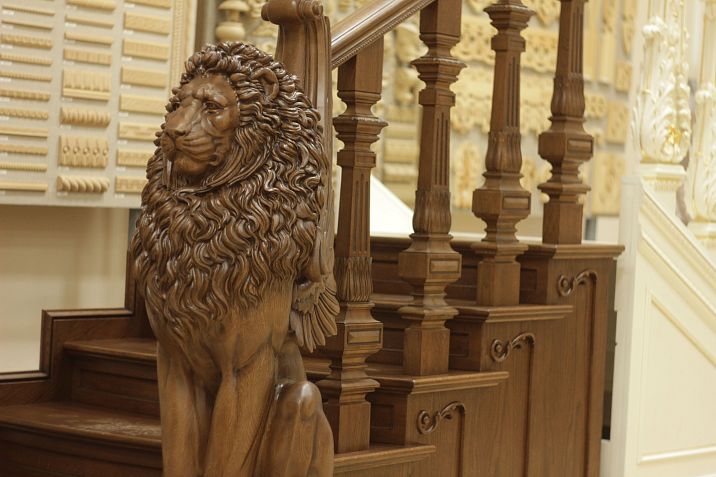
Dreaming of turning an ordinary staircase into an architectural masterpiece? Want every guest ascending the steps to admire the elegance and craftsmanship? Then it's time to master the art of creating balusters for stairs by your own handsThis engaging activity not only allows you to significantly save your family budget, but also brings unique pleasure from creating beauty with your own hands.
Creating staircase supports independently is not just about saving money. It's an opportunity to realize unique design ideas that will perfectly fit into the interior of your home. Every detail will carry the imprint of your individuality, turning the staircase into a true work of art.




Philosophy of independent creativity




Advantages of handmade production
When you take hold of a tool and begin working with wood, something magical happens. The material seems to come alive under your hands, taking on the intended forms. Independent manufacturing of staircase elements gives you complete creative freedom—you can create exactly what you envision.
The economic benefit is obvious: the cost of ready-made items is several times higher than the price of materials needed to make them. At the same time, the quality of handmade elements often surpasses factory-made analogs, since you invest your soul into the work and carefully control every stage.
Uniqueness is another indisputable plus. Your support elements will be one-of-a-kind, giving the interior a special elegance and individuality. No one will be able to replicate such a design exactly.
Our factory also produces:




Psychological aspects of handicraft
Working with wood has a remarkable therapeutic effect. The monotonous movements of the plane, the scent of fresh shavings, the gradual transformation of a rough blank into an elegant detail—all this calms the nerves and brings deep satisfaction.
The process of creation develops patience, attention to detail, and neatness. Every mistake becomes a lesson, every successful detail becomes a source of pride. This meditative activity helps you detach from everyday worries and fully immerse yourself in the creative process.
Family projects are especially valuable. Involving children in simple operations not only develops their skills but also creates warm memories of joint creativity. Such moments remain in memory for life.
Get Consultation
Material selection: the foundation of success
Wood species for beginners
Pine is the perfect choice for first experiments. This soft wood is easy to work with, forgives minor mistakes, and is affordable. Its light shade and expressive grain make pine products attractive even with minimal finishing.
Birch has a uniform structure and lacks a pronounced grain. This makes it ideal for painting in any color. Its medium hardness allows creating fairly detailed elements without excessive effort.
Linden is a traditional material for carving. Its softness and pliability allow even beginners to create complex decorative elements. However, linden requires mandatory protective treatment against moisture and pests.
Hardwoods for experienced craftsmen
Oak is the king among materials for staircase elements. Its hardness and durability are unmatched, and its noble grain gives products a special respectability. However, working with oak requires powerful tools and significant experience.
Ash combines the strength of oak with a lighter shade. Its contrasting grain creates striking visual accents. Ash is well-suited for toning, allowing for interesting color solutions.
Beech has a pinkish hue and fine, uniform grain. This species is ideal for creating elements of complex shapes, as it holds fine details well and is not prone to chipping.
Master's toolset
Basic set for beginners
Hand plane is the main tool for shaping blanks. A quality plane with a sharp blade allows you to achieve perfectly smooth surfaces without additional sanding. Beginners are advised to purchase a medium-sized plane with an adjustable blade.
Chisels of various widths are necessary for creating decorative elements and precise fitting of parts. A set of 6-8 chisels with widths from 6 to 25 millimeters will cover most needs of a home craftsman.
A saw with fine teeth ensures precise and clean cuts. For working with hardwoods, it is better to choose saws with hardened teeth, which retain their sharpness longer.
Power tools for increased efficiency
Electric plane significantly speeds up the processing of blanks. Modern models allow removing shavings up to 3 millimeters thick in one pass, which is much faster than manual processing.
Circular saw provides accurate longitudinal and cross cuts. A quality saw with a guide rail allows you to get perfectly straight edges without additional processing.
Router opens up boundless possibilities for creating decorative elements. Using various bits, you can create grooves, rounded edges, complex profiles, and even simple carved patterns.
Technology of making classical forms
Preparation of blanks
Proper preparation of blanks is the key to the success of the entire project. The wood must be dried to a moisture content of 8-12% and left in the room for at least a week to acclimate. This prevents deformation of finished products.
Marking is done using a ruler, set square, and pencil. All dimensions must be carefully checked, as correcting errors in later stages will be difficult or impossible. Special attention is paid to the symmetry of elements.
Rough processing includes cutting blanks to size with a small allowance for final processing. All surfaces must be flat and mutually perpendicular.
Turning of elements
Turning allows creating elements with round cross-sections and smooth diameter transitions. A small woodworking lathe with 500-750 W power is suitable for a home workshop.
The blank is secured between the lathe centers and rotated. Using various cutters, the desired profile is formed. Beginners are recommended to start with simple cylindrical shapes, gradually increasing the profile complexity.
Final processing is done with fine sandpaper directly on the rotating blank. This ensures a perfectly smooth surface without tool marks.
Milling decorative elements
Hand milling allows creating complex profiles and decorative grooves. Work is performed using templates or with the help of guiding fixtures to ensure accuracy.
Simple grooves are created using a straight cutter of the required diameter. The milling depth is adjusted by setting the machine. For uniform depth grooves, stops and guides are used.
Complex profiles require the use of patterned cutters. Each type of cutter creates a specific groove or protrusion shape. Combining different cutters allows creating unique decorative elements.
Artistic carving: from simple to complex
Basics of wood carving
Geometric carving is an ideal starting point for beginners. Simple triangles, rhombuses, and lines create striking patterns with minimal skills. The main tool is a gouge (carving knife) with a sharp blade.
Contour carving allows creating images of plants, animals, and ornaments. The design is drawn on the blank surface and cut along the contour to a shallow depth. This type of carving is accessible even to children under adult supervision.
Relief carving creates three-dimensional images with elements of varying height. This is a more complex type of work requiring a good understanding of proportions and perspective.
Tools for artistic carving
Gouges of various widths are the main carving tools. The blade must be perfectly sharp and properly sharpened. The sharpening angle depends on the hardness of the wood being processed.
Gouges with curved blades allow creating concave surfaces. Different curvature radii enable forming elements of any complexity.
Carving knives are miniature gouges for detailing small elements. Their width ranges from 1 to 5 millimeters, allowing creation of fine lines and textures.
Assembly and installation of homemade elements
Preparation for Installation
Precise fitting of dimensions is critically important for quality installation. All elements must be manufactured with high accuracy, as correcting errors after installation will be extremely difficult.
Dry assembly allows identifying and correcting defects before final installation. All joints must be tight, without gaps or misalignment.
Marking installation locations is done using templates and measuring tools. The accuracy of marking determines the quality of the entire structure.
Methods of mounting
Traditional mortise-and-tenon joints provide maximum strength and durability. The tenon is cut on the end of the baluster, and the corresponding mortise is made in the step or handrail. The joint is reinforced with woodworking glue.
Modern fastening systems use metal elements to increase reliability. Threaded rods, anchors, and special fasteners provide strong connections while preserving aesthetics.
Combined methods combine traditional and modern approaches. For example, a mortise-and-tenon joint can be further reinforced with hidden metal fasteners.
Final finishing
Sanding is a mandatory step before final finishing. Start with coarse sandpaper (grit 120-150), gradually moving to finer grit (320-400). All surfaces must be perfectly smooth.
Priming ensures better adhesion of the final finish and equalizes the wood’s absorption capacity. A primer appropriate for each type of finish is used.
Final finish protects wood from moisture, dirt, and mechanical damage. The choice of finish depends on usage conditions and aesthetic preferences.
Design Solutions and Stylistic Directions
Classic styles
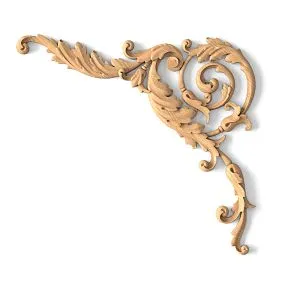
Baroque is characterized by opulence and abundance of decorative elements. Making balusters for stairs by hand This style requires creating complex carved patterns with plant motifs.
Neoclassicism implies strict proportions and restrained decoration. The basis is ancient orders with clear division into base, shaft, and capital. Decoration is minimal, with emphasis on perfection of proportions.
Empire is distinguished by grandeur and monumentality. Characteristic elements include military insignia, laurel wreaths, and eagles. Carving is done in low relief with clear outlines.
Modern interior styles also use oak skirting boards, but in a different interpretation. Minimalism prefers simple rectangular profiles without decorative elements. Smooth surfaces with matte finish create a sense of strictness and elegance.
Minimalism requires extreme simplicity of forms. Balusters are simple geometric elements without decoration. Beauty is achieved through perfection of proportions and quality of surface finishing.
High-tech allows combining wood with metal and glass. Wooden elements have clear geometric shapes, often with metal inserts or fasteners.
Eco-style emphasizes the natural beauty of wood. Minimal processing, preservation of natural texture and color. Elements with bark or natural defects are allowed as decorative accents.
Economic aspects of self-manufacturing
Cost calculation
Material cost accounts for only 20-30% of the price of ready-made items. Main expenses are for wood, fasteners, and consumables. With large-scale work, savings can reach tens of thousands of rubles.
Tools are a long-term investment. Quality tools last for decades and pay for themselves even on the first major project. Moreover, having tools opens up opportunities for other carpentry work.
Time is the only resource you cannot buy. Self-manufacturing requires significant time investment, but for many, it is more of a pleasure than a burden.
Long-term perspective
Carpentry skills remain with you forever. Mastering the basics allows you to create not only stair elements, but also furniture, decorative items, and toys for children.
Handmade items often surpass factory analogs in quality. You control every stage of production, use the best materials, and do not cut corners on time.
Uniqueness is priceless. Your items will be one-of-a-kind, giving your interior a special individuality and charm.
Safety when working with tools
Basic rules
Protective equipment is a mandatory condition for safe work. Safety glasses protect eyes from shavings and dust, gloves protect hands from cuts, respirators prevent dust from entering the lungs.
Proper organization of the workspace minimizes the risk of injury. Adequate lighting, sturdy workbench, and order at the workstation are the foundation of safety.
Knowledge of tools and adherence to operating instructions prevent most accidents. Never disregard safety devices or remove them 'for convenience'.
Working with power tools
Checking for proper condition before each use is mandatory. A damaged cable, faulty switch, or dull tool can cause serious injury.
Correct feed rate ensures quality processing and operator safety. Never force feed or attempt to process very small parts without special fixtures.
Turning off the tool when changing settings or cleaning is a basic safety rule, which is unfortunately often violated.
Typical mistakes of beginners
Planning errors
Underestimating project complexity is the most common mistake among beginners. Start with simple shapes, gradually increasing complexity as experience accumulates.
Incorrect material selection can nullify all efforts. Too hard wood for first attempts or poor-quality material with defects will create unnecessary difficulties.
Lack of detailed planning leads to errors in dimensions and proportions. All elements must be carefully designed and calculated before starting work.
Technological errors
Haste is the enemy of quality. The desire to finish work faster leads to defects and the need for rework. Each operation must be performed carefully and without rushing.
Neglecting preparatory operations affects the quality of the finished product. Poorly prepared blanks cannot become quality items.
Incorrect sequence of operations may make it impossible to perform subsequent stages. The work plan must be thought out in detail.
Modern technologies in a home workshop
CNC Machines
Affordable CNC milling machines open up new possibilities for home workshops. They allow creating complex three-dimensional elements with high precision and repeatability.
Design software makes creating control programs accessible even for beginners. Many programs have libraries of ready-made elements and templates.
Equipment costs are constantly decreasing, making it accessible for home workshops. The simplest models cost as much as a good hand tool, but offer incomparably more capabilities.
Laser cutting and engraving
Laser machines allow creating complex ornamental elements and precise engraving. The cutting thickness is fractions of a millimeter, ensuring high detail.
Vector graphics are the basis for creating control programs. Any drawing can be converted into a laser movement trajectory and realized in material.
Working with lasers requires special attention to safety. Protective glasses, ventilation, and adherence to fire safety rules are mandatory.
Conclusion
Creation balusters for stairs by your own hands It is an exciting journey into the world of carpentry craftsmanship. Each stage of work brings new knowledge and skills, and the result surpasses the most daring expectations. Unique items created by your own hands will become a source of pride and admiration for many years.
The path of a master begins with the first movement of the plane across the blank. Do not fear making mistakes — they are inevitable and beneficial for learning. Each unsuccessful element brings you closer to perfection, and each successful detail inspires new achievements.
Modern technologies and traditional methods complement each other beautifully. Electric tools speed up routine operations, leaving more time for creative work. But the foundation of craftsmanship remains unchanged — understanding the material, precision of execution, and love for your craft.
Investments in quality tools and materials pay off many times over. Good tools serve for decades, and skills remain with you forever. Starting with simple projects, you gradually master all the subtleties of carpentry craftsmanship.
When selecting materials and tools for your project, consult trusted suppliers with a long-standing reputation. STAVROS offers a wide range of quality wood, professional tools, and fastening systems for creating stair constructions. Our specialists are always ready to provide consultations on material selection and processing technologies. Choosing STAVROS, you get not only quality materials but also support from experienced professionals at every stage of your creative project.