Article Contents:
- 1. What is a «center of furniture materials» and why is it needed
- 2. Main materials offered at the center
- 2.1. Laminated chipboard (MDF)
- 2.2. MDF (fine particle board)
- 2.3. Plywood
- 2.4. Solid wood
- 2.5. Finishes and surface treatments
- 5.1. Time and effort savings
- 5.2. Consultation support
- 5.3. Quality equipment
- 5.4. Discount and wholesale offers system
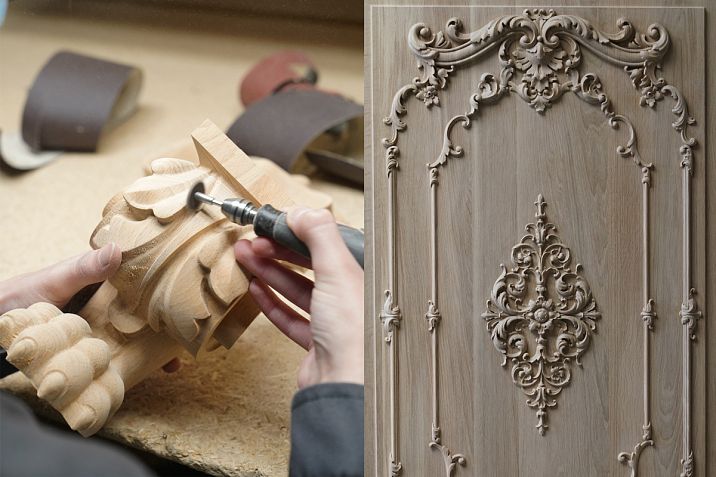
In the field of furniture production and sales, the quality of raw materials plays a decisive role. It is precisely from the type of material and how the cabinet, table, or chair is made that their reliability, aesthetics, service life, and even safety for health depend. Demand for quality panels (MDF, HDF, plywood), solid wood, veneer, as well as durable hardware and upholstery fabrics is growing every year, as more people realize: it is better to spend a little more to obtain a truly durable product. But where to find all this wealth in one place? This task is solved bycenter of furniture materials — essentially a universal supplier offering a full range of products for furniture production and repair.
Why are such «centers» so in demand? How are they structured, what can be purchased there, and how do they differ from regular construction hypermarkets or local furniture bases? In this article, we will thoroughly examine the advantages of using a center of furniture materials, factors affecting the quality and cost of raw materials, and the services typically offered by such companies.


1. What is a «center of furniture materials» and why is it needed
A center of furniture materials is an organization (warehouse or large store) specializing not only in selling sheet materials (HDF, MDF, plywood, solid wood), but also in related products: edge banding, hardware (hinges, guides, furniture handles, lifting mechanisms), upholstery, and decorative elements. It differs from ordinary stores in that it concentrates almost everything needed for furniture production, modernization, or repair in one place:
- Wide assortment. From the economy segment (simple HDF without complex decor) to premium products (veneer of valuable species, solid oak, designer films).
- Specialized services (cutting sheets, edge banding, consultations on hardware selection).
- Technical support (clarifying emission classes, color combination selection, milling capabilities, etc.).
If you are a professional furniture maker or simply a DIY enthusiast, visiting such a center allows you to resolve all questions regarding raw materials and components at once.




2. Main materials presented at the center
Our factory also produces:


2.1. Particleboard (laminate particleboard)
● Characteristics: base made of wood chips bonded with resins, surface layer — laminated film (melamine, laminate).
● Advantages: budget price, variety of finishes (wood, stone, solid color), easy maintenance.
● Variants: different thicknesses (16, 18, 25 mm), emission class (E0, E1), manufacturers (Egger, Kronospan, SwissKrono, etc.).
● Where used: cabinet carcasses, drawers, tables, office furniture.
Get Consultation
2.2. MDF (fine particle board)
● What it is: a panel made of fine wood fibers pressed with minimal addition of binding resins.
● Why: for facades (including routed, PVC film, acrylic), doors, decorative panels.
● Advantages: dense structure, ability to form complex shapes, good moisture resistance (with finish coating).
2.3. Plywood
● Description: layers of veneer glued perpendicularly. Can be birch or coniferous, moisture-resistant or standard.
● Pros: strength with low weight, eco-friendliness (when standards are met).
● Usage: Scandinavian style, eco-projects, children’s furniture, frames.
2.4. Solid Wood
● Essence: solid boards (oak, beech, ash, pine, etc.).
● Pros: naturalness, prestige, durability.
● Cons: high price, sensitivity to proper drying.
● Where used: classic furniture, high aesthetic details, decorative panels, countertops.
2.5. Finishes and Coatings
In the center of furniture materials, decorative categories are usually included: veneer (natural, multi-veneer), acrylic and enamel facades, plastic coatings (HPL, CPL) for increased durability.
3. Hardware and its role in furniture quality
In addition to panels, solid wood, and plywood, the center of furniture materials supplies hinges, guides, lifting and transformation mechanisms, furniture handles, locks, and other components:
- Hinges (Blum, Hettich, Hafele, etc.): determine how softly and quietly doors will close.
- Guides (ball-bearing, roller, telescopic): determine smoothness, load capacity, and drawer extension.
- Lifts (gas-lifts, electromechanical): relevant for vertically opening doors (kitchens, cabinets).
- Handles: visual accent; can be metal, wood, ceramic.
- Transformation systems for sofas and beds (bookcase, euro-bookcase, pull-out mechanisms) — all of these are also included in the assortment, allowing furniture manufacturers to select "turnkey" options.
4. Services offered by the "Center of Furniture Materials"
- Cutting Sheet Materials
Often, this is an automated machine that cuts MDF, particleboard, and plywood to specified dimensions with precision and minimal chipping. - Edge Banding
Applying PVC/ABS edge trim to ends to protect the panel from moisture and mechanical damage. Machines allow selecting edge trim thickness (0.4–2 mm). - Routing
If a MDF facade with classic relief or rounded corners is needed, many centers can perform such work. - Enamel or Film Coating
Some large suppliers may offer services such as painting MDF or vacuum pressing PVC film. - Hardware Selection
Consultants help determine hinges (surface-mounted, inset), guides, mechanisms for sliding doors, door closers, etc. - Delivery
Sheet materials (especially large formats) are difficult to transport alone, so centers usually organize logistics.
5. Advantages of using a specialized center
5.1. Time and effort savings
Instead of visiting separate stores (a hardware hypermarket for MDF, a furniture base for hardware, another place for handles), everything can be found in one location. This speeds up the process and allows immediate checking of compatibility between finishes, edges, and fasteners.
5.2. Consultation support
Specialists at furniture material centers are oriented toward working with both professionals and DIY enthusiasts. They will help advise on which panels are better for kitchens, what emission class is needed for children’s rooms, and how to calculate material consumption for sliding wardrobes.
5.3. High-quality equipment
If you order cutting and edge banding, specialized machines ensure geometric accuracy and clean cuts. Achieving such quality with home tools is difficult.
5.4. Discount and wholesale offers
For furniture workshops, interior designers, and other professionals, centers often offer discount programs, significantly reducing costs for large volumes.
6. How to evaluate the quality of a 'furniture materials center'
- Brand assortment: presence of well-known panel brands (Egger, Kronospan, Swiss Krono, Pfleiderer), hardware (Blum, Hettich, Hafele) — a sign of a serious partner.
- Certifications: emission class, GOST/EN. If the center supplies plywood, MDF, or MDF, ask if they have confirming documents.
- Customer reviews: it’s useful to read opinions from furniture makers and DIY bloggers — how stable is the quality of delivered materials, are there frequent complaints?
- Technical services: if they offer cutting and edge banding with precision down to fractions of a millimeter, this indicates modern equipment.
- Consultations: good 'centers' have specialists who are knowledgeable about different finishes, emission classes, hardware types, and color combinations.
7. What the price of materials in the center includes
- Panel type: MDF is more affordable than MDF, plywood has its own range (higher grades cost more).
- Thickness: a 16 mm sheet is cheaper than 18 and 25 mm.
- Collection (decor): exclusive textures such as concrete, metal, exotic wood cost more than standard 'white' or 'beech/oak'.
- Brand: imported well-known manufacturers may set higher prices than domestic equivalents.
- Finishing services (cutting, edge banding): each operation increases the final bill, but saves time and reduces the risk of 'on-the-spot' defects.
8. Examples of situations when a 'furniture materials center' is needed
- Custom kitchen: designer/master selects MDF to match enamel, edge banding, Blum hardware, chooses countertop decor (HPL plastic). Everything is purchased at once.
- Sliding wardrobe in hallway: need MDF for carcass, mirrors, guides for sliding doors, profiles, handles — it’s more convenient to get everything in one place.
- Office furniture: large volumes of MDF, hardware for assembling tables and partitions, logistics from supplier 'turnkey'.
- DIY children’s construction: high-grade plywood, quality paint, reliable hinges. Consultants will help select emission class E0/E1 and safe finishes.
9. What the buyer should pay attention to
- Certification and emission class
If furniture for the home, especially for the bedroom or children's room, is very important, ensure that the panels have E1 (or E0), confirming minimal harmful emissions. - Thickness and grade
Plywood — what grade is it (E, I, II)? Laminated board — what thickness (16, 18 mm)? MDF — density, thickness, manufacturer. - Hardware
It affects the smoothness of opening, absence of squeaks, and overall "usability". If purchasing from one place, ask for advice on compatibility with the material (e.g., heavy MDF fronts require reinforced hinges). - Cutting services
Ask about format-cutting machines, accuracy, and whether they can mark parts (simplifies assembly). - Edge banding
Crucial for preventing swelling and providing protective appearance. A good center offers PVC or ABS edge banding of various thicknesses.
10. Advantages of working withcenter of furniture materials STAVROS (example)
If considering specific brands or companies, you may mentioncenter of furniture materials STAVROS as a typical example of an organization where:
- Wide selection: Laminated board, MDF, plywood, veneer, upholstery fabrics, hardware — all under one roof.
- Quality: cooperation with verified manufacturers, presence of certificates, emission classes E0/E1.
- Services: professional cutting, edge banding, consultations on color palette selection and decor compatibility.
- Flexible logistics: delivery, self-pickup option, availability of warehouse stock.
Thus, STAVROS or any similar company saves time for furniture makers and clients while guaranteeing final quality.
11. Summary and recommendations
Quality of furniture materials — the foundation for long-lasting, beautiful, and safe furniture. When choosing Laminated board, MDF, plywood, solid wood, or combined solutions, pay attention to:
● Certification and emission level (E0/E1).
● Manufacturer (brand).
● Thickness and grade.
● Finishing (edge banding, veneer, PVC film, enamel, acrylic).
Then don't forget about quality hardware: hinges, guides, lift mechanisms, furniture handles. It is precisely the combination of a solid base and reliable mechanisms that ensures 90% comfort and long service life.
If you want to avoid "running around" different stores, a "furniture materials center" will be the optimal choice: it provides everything in one place, from panels to handles and cutting services. Meanwhile, knowledgeable consultants will help you select the right items according to your budget, design requirements, and usage conditions. Thus, you will receive furniture that not only decorates your interior but also lasts for many years without annoying breakdowns or loss of appearance.