Article Contents:
- Anatomy of pricing: what affects the cost
- Wood species as the main pricing factor
- Complexity of processing and design
- Regional pricing characteristics
- Moscow market: the pricing center
- Regional price differences
- Seasonal Fluctuations and Market Conditions
- Impact of construction season
- Impact of currency rates and raw material costs
- Comparative analysis of price segments
- Economic segment: optimal price-to-quality ratio
- Premium segment: quality and durability
- Elite segment: exclusivity and prestige
- Hidden factors affecting cost
- Quality of drying and material preparation
- Grading and material selection
- Additional services and their impact on price
- Treatment with Protective Compounds
- Custom Manufacturing
- Logistical aspects and their impact on price
- Transportation costs
- Storage costs
- Comparison with alternative materials
- Metallic alternatives
- Composite materials
- Economic efficiency of investments
- Long-term perspective
- Maintenance costs
- Recommendations for cost optimization
- The Selection Process
- Compromise solutions
- Conclusion
When it comes to creating the dream staircase, many homeowners face one of the most important questions: how much do quality support elements cost? Price of wooden balusters may vary from several hundred to several thousand rubles per piece, and understanding the factors that influence this cost will help you make an informed decision.
In the world of staircase construction, wooden support elements play not only a functional but also an aesthetic role. They define the character of the entire staircase, create an atmosphere in the home, and influence the overall impression of the interior. But what exactly forms their cost? Let's examine this question in detail.


Anatomy of pricing: what affects the cost




Wood species as the main pricing factor
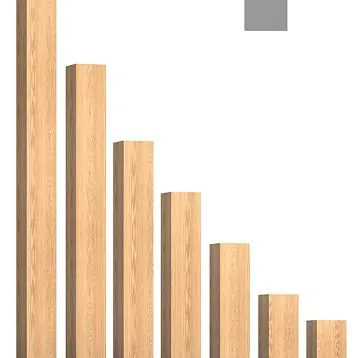
Choosing the wood species significantly affects the final cost of the product. Coniferous species are traditionally considered the most affordable. Pine elements measuring 50×50×900 millimeters can be purchased for 250-300 rubles per piece. This species is easy to process, has a pleasant aroma, and is sufficiently strong for most applications.
Larch occupies a middle position in the price range. Its cost is approximately 2.5-3 times higher than pine, due to its exceptional performance characteristics. Larch elements are practically immune to rot and deformation, making them an ideal choice for humid areas and outdoor structures.
The premium segment is represented by products made of oak, ash, and beech. Oak elements can cost 4-5 times more than pine, but their longevity and elegant appearance justify the high price. Oak can serve for centuries, acquiring a noble patina over time.
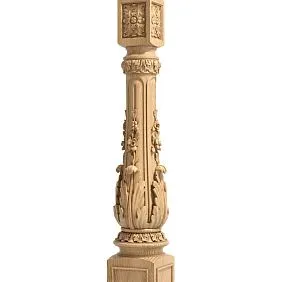
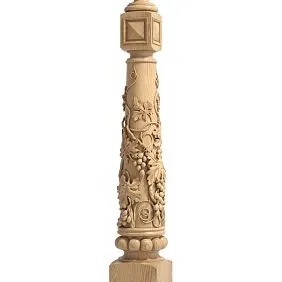
Our factory also produces:



Processing and Design Complexity
Simple turned profiles with minimal decorative elements are significantly cheaper than complex carved items. Basic cylindrical profiles are manufactured using automated equipment, reducing labor costs and final price.
Milled elements with grooves, protrusions, and complex diameter transitions require additional processing operations. Each additional detail increases manufacturing time and, consequently, the item's cost.
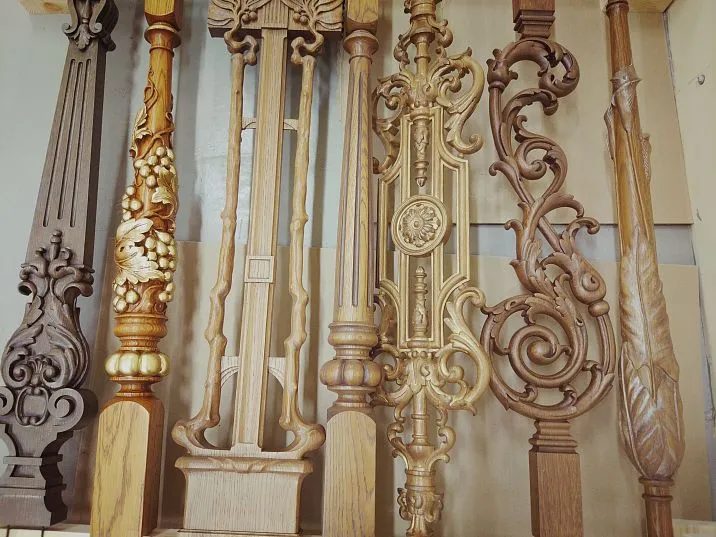
Hand-carved elements represent the top of the price pyramid. Creating complex ornaments, floral motifs, or geometric patterns requires the highest level of master craftsmanship and significant time investment. Such items may cost 10-15 times more than simple turned equivalents.
Get Consultation
Regional pricing features
Moscow Market: Pricing Center
The Moscow region traditionally sets the tone for pricing on construction materials. Here, the largest manufacturers and suppliers are concentrated, creating a competitive environment and relatively stable prices. Basic pine elements measuring 50×50×900 millimeters can be purchased for 250-350 rubles each.
The logistical advantages of the capital region allow maintaining competitive prices due to developed transportation infrastructure and proximity to major production centers.
The logistical advantages of the capital region allow maintaining competitive prices due to well-developed transportation infrastructure and proximity to major production centers.
Regional Price Differences
In regions distant from the center cost of wooden balusters may be 15-25% higher due to transportation costs. This is especially true for premium wood species, which are often produced in specialized centers.
Siberian regions, rich in forest resources, may offer more favorable prices on products made from local species—larch, cedar, pine. Savings here can be 20-30% compared to central regions.
Southern regions, where furniture and wood processing industries are developed, also demonstrate competitive prices due to the presence of skilled labor and production facilities.
Seasonal Fluctuations and Market Conditions
Impact of Construction Season
Peak demand for stair elements traditionally occurs during the spring-summer period, when private construction activity intensifies. During this time, prices may rise by 10-15% due to increased demand and limited production capacity.
Winter months are characterized by reduced activity on the construction market, creating favorable conditions for buyers. Many manufacturers offer discounts of up to 20% to stimulate sales during the low season.
Autumn often becomes a time for clearance sales of summer production leftovers. This is an excellent opportunity to acquire quality items at reduced prices, especially if the project does not require urgent implementation.
The influence of currency exchange rates and raw material costs
Fluctuations in the ruble exchange rate affect the cost of imported equipment and consumables used in production. An increase in the dollar and euro exchange rates may lead to a 5-10% price increase over several months.
The cost of timber on exchange markets also affects final prices. Poor harvests, forest fires, or changes in export policy may significantly impact pricing.
Energy tariffs play an important role in forming product cost. Increases in electricity and gas prices inevitably affect the cost of finished goods.
Comparative Analysis of Price Segments
Economy Segment: Optimal Price-to-Quality Ratio
Items made from pine and spruce form the basis of the economy segment. Basic turned elements measuring 50×50×900 millimeters cost 250-400 rubles each. These items offer sufficient quality for most applications and are affordably priced.
Simple milled profiles with minimal decoration increase the price to 350-500 rubles each. These elements already possess a certain aesthetic appeal while remaining affordable.
Initial and final posts in the economy segment cost 900-1500 rubles each, depending on size and processing complexity. The 80×80×1200 millimeter size is the most popular for private construction.
Premium Segment: Quality and Durability
Larch, ash, and beech form the premium segment of the market. Basic larch elements measuring 50×50×900 millimeters cost 650-900 rubles each. This price is justified by the exceptional performance characteristics of the material.
Ash and beech items demonstrate a similar price range with minor variations depending on the delivery region and specific manufacturer. Their light-colored wood with distinctive grain is ideal for modern interiors.
Premium-class posts cost 2500-4500 rubles each. These items feature flawless processing quality and can serve for decades without losing their original characteristics.
Elite Segment: Exclusivity and Prestige
Oak products represent the premium segment of the market. Basic elements measuring 50×50×900 millimeters cost from 950 to 1400 rubles each. This high price is due to the prestige of the material and its exceptional durability.
Hand-carved elements may cost 3000–8000 rubles each, depending on the complexity of the ornament and the craftsman’s skill. These items are made individually and are true works of art.
Exclusive oak columns with carved decoration may cost from 8000 to 15000 rubles each. These items are intended for the most prestigious projects and are made to individual orders.
Hidden factors affecting cost
Quality of drying and material preparation
Proper drying of wood to 8–12% moisture requires significant time and energy expenditure. Well-dried material costs 15–20% more but guarantees no deformation during use.
Kiln drying with controlled temperature and humidity parameters ensures even moisture removal without internal stresses. This process may take several weeks, which affects the final cost of the items.
Natural drying outdoors takes months or even years, but allows obtaining material with optimal characteristics. Such wood is valued higher, especially for premium items.
Grade and selection of material
Top-grade wood without knots, cracks, or other defects costs significantly more than standard grades. Only selected material is used to manufacture high-quality stair elements, which affects pricing.
Radial sawing, ensuring maximum dimensional stability, costs more than tangential sawing. Such wood is less prone to warping and cracking, which is especially important for critical structures.
Special selection by texture and color to create uniform batches also increases material cost. This is especially relevant for large projects where visual consistency is crucial.
Additional services and their impact on price
Protection with protective compounds
Antiseptic treatment protects wood from fungi, mold, and insects. High-quality imported compounds may increase item cost by 10–15%, but significantly extend service life.
Fire-retardant treatment is especially important for public buildings and may be mandatory per fire safety requirements. Special compounds increase cost by 15–20%, but ensure compliance with regulatory standards.
Staining and painting allow achieving desired color, but require additional technological operations. Cost may increase by 20–30% depending on coating complexity.
Custom manufacturing
Non-standard sizes require individual equipment setup and may increase cost by 25–40%. This is especially relevant for restoration projects or unique design solutions.
Manufacturing according to custom sketches requires creating special fixtures and may increase cost 2–3 times compared to standard items. However, the result fully matches the client’s vision.
Urgent manufacturing with shortened delivery times usually increases cost by 30–50%. Manufacturers are forced to adjust production schedules and work in accelerated mode.
Logistical aspects and their impact on price
Transportation costs
Delivery to the site may constitute a significant portion of total cost, especially for remote regions. Delivery cost depends on distance, cargo volume, and urgency.
Special packaging requirements to prevent damage during transport also affect total cost. Quality packaging may increase price by 3–5%, but guarantees item preservation.
Cargo insurance for long-distance shipments adds another 1–2% to cost, but ensures compensation in case of damage or loss.
Warehouse expenses
Storing finished items under controlled humidity and temperature conditions requires additional expenses. These costs are included in product pricing and may amount to 5–8% of item price.
Insurance of warehouse stock against fire, flooding, and other risks also affects final cost. Manufacturers are required to include these expenses in product pricing.
Comparison with alternative materials
Metallic analogs
Hand-forged metal elements may cost significantly more than wooden analogs. Simple metal posts cost comparably to mid-range wooden items, but require additional corrosion protection.
Stainless steel ensures durability but costs 2-3 times more than quality wooden items. The aesthetic qualities of metal also fall short of natural wood in most interior solutions.
Aluminum structures are lighter and resistant to corrosion, but their cost is comparable to premium wooden items with significantly worse tactile and aesthetic qualities.
Composite materials
Wood-plastic composites cost 20-30% more than natural wood but offer increased resistance to moisture and biological damage. However, they lag behind natural wood in aesthetic qualities.
Fiberglass elements can mimic wood texture but cost 1.5-2 times more than natural analogs. Their main advantage is absolute resistance to external influences.
Investment economic efficiency
Long-term perspective
Quality wooden elements from hardwood species can last 50-100 years with proper care. This makes them economically advantageous despite their high initial cost.
Cheap items made from inferior materials may require replacement within 5-10 years, making them less cost-effective in the long term. Prices for wooden balusters Premium segment prices are justified by their longevity.
The impact on property value should also be considered when choosing. Quality stair constructions increase the attractiveness of the property and may increase its market value by 3-5%.
Maintenance costs
Quality items require minimal maintenance — periodic cleaning and renewal of protective coating every 3-5 years. Cheap analogs may require annual repairs and replacement of individual elements.
Maintenance costs for premium items amount to 2-3% of the initial cost annually. For budget options, this figure may reach 10-15% due to frequent repairs.
Cost optimization recommendations
Purchase Planning
Advance planning allows you to take advantage of seasonal discounts and special offers. Purchasing during winter may save up to 20% compared to regular prices.
Combining orders with neighbors or acquaintances can provide bulk discounts. Many manufacturers offer significant discounts for orders above a certain volume.
Choosing standard sizes and profiles significantly reduces cost compared to custom solutions. Standard items are produced in large batches, reducing production cost.
Compromise solutions
Combining different wood species allows reducing overall cost without compromising quality. For example, using oak posts with pine intermediate elements.
Choosing items with minimal decoration and subsequent self-customization can provide significant savings. Simple elements can be enhanced with decorative overlays or carving.
Buying raw materials for subsequent processing by local craftsmen is often more cost-effective than purchasing ready-made items. This is especially relevant for regions with developed folk crafts.
Conclusion
Understanding factors influencing the cost of wooden balustersThis will help you make an informed decision when selecting stair elements. Investing in quality items pays off through long service life, aesthetic appeal, and increased property value.
The market for wooden stair elements offers solutions for any budget — from affordable pine items to exclusive handcrafted oak masterpieces. The key is to find the optimal balance of price, quality, and aesthetic requirements for a specific project.
Modern wood production and processing technologies allow creating high-quality items at reasonable costs. Choosing the right supplier and proper purchase planning will help significantly optimize costs without compromising quality.
When selecting stair element suppliers, it is important to choose proven manufacturers with long-standing reputations. STAVROS combines traditional craftsmanship with modern production technologies, offering a wide range of quality items at competitive prices. Our experience and professionalism guarantee the optimal price-to-quality ratio for any project. Choosing STAVROS means investing in the beauty, reliability, and longevity of your staircase.