Article Contents:
- Ancient Roots of Modern Craftsmanship
- Origins of Artisanal Art
- Philosophy of the Craft Approach
- Revolution in Industrial Production
- The Mindset Shift
- Standardization and Quality
- Modern Technologies: The Art of Precision
- Computer-Aided Design – A New Era of Design
- Computer Numerical Control Machines
- Material Science: The Science of Choosing the Ideal Raw Material
- Wood Selection – The Art on the Edge of Science
- Modern drying and stabilization methods
- Production Stages: From Idea to Masterpiece
- Design – The Birth of Concept
- Material Preparation – The Foundation of Quality
- Detail Processing – Precision and Mastery
- Assembly and Finishing: The Birth of a Masterpiece
- Assembly – The Moment of Truth
- Finishing – The Master’s Final Touch
- Quality Control: Guarantee of Perfection
- Multi-stage quality control system
- Durability tests
- Innovations and the Future of Furniture Production
- Artificial Intelligence in Design
- Ecological innovations
- Additive technologies
- Regional Characteristics and Traditions
- Russian School of Furniture Craftsmanship
- Influence of European Traditions
- Psychology of Perception and Ergonomics
- Furniture as an Extension of the Human Being
- Biomechanics and Comfort
- Economic Aspects of Production
- Optimization of production processes
- Customization and Mass Production
- Art in Every Detail
- Decorative Elements – The Soul of Furniture
- Harmony of Styles
- Conclusion: Art Tested by Time
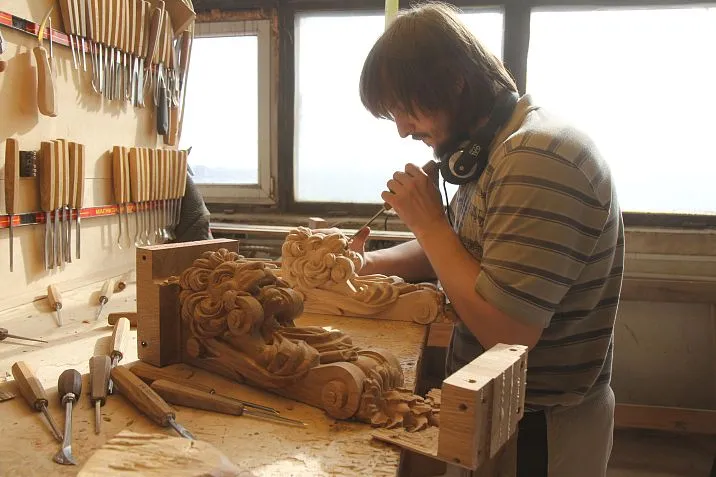
When we pass by a beautifully crafted table or admire the elegant lines of a chair, few consider the long journey the craftsman has taken to create this beauty. how furniture is made – This is a question that unites millennia of traditions and modern innovations, art and precise science, inspiration and mathematical calculation.


Ancient Roots of Modern Craftsmanship




Origins of Craftsmanship
In ancient times, when the first craftsmen took hold of primitive tools, the story began of what we today call furniture production. Every stroke of the chisel, every curve of wood carried not only functionality, but also the soul of the creator. Traditional methods of furniture making were formed over centuries, passed down from grandfather to grandson, accumulating secrets and tricks that made each piece a unique work of art.
Ancient Egyptians already knew the secrets of processing precious black wood, while Roman masters perfected the technique of inlay. Medieval craftsmen in Europe created entire guilds, where knowledge was guarded as state secrets. It was then that the foundations of what how furniture is made and today – with a deep understanding of the material, with respect for the nature of wood, with precise calculation of loads and proportions.
Our factory also produces:


Philosophy of the Craft Approach
What distinguished ancient masters from modern manufacturers? Primarily – the philosophy of approach to work. Each item was created as a living being, to which the master gave a part of his soul. Wood was not simply processed – dialogue was held with it, its mood was felt, its character understood. Technology of Furniture Making from Solid Wood In those times, it was more of an art than a craft.
The master knew that oak felled during a full moon would serve for centuries, while ash prepared in spring would offer an unparalleled texture play. Drying occurred naturally, sometimes for years, until the wood reached an ideal moisture balance. Every knot, every grain was considered in the construction, transforming potential flaws into virtues.
Get Consultation
Revolution of Industrial Production
Mindset Revolution
the 18th-19th century Industrial Revolution fundamentally changed the perception of what how furniture is madeindividual masterpieces gave way to mass production, which was meant to supply growing cities and changing lifestyles. This was a true revolution in mindset – from exclusivity to accessibility, from individuality to standardization.
The first furniture factories resembled more like experimental laboratories, where engineers and craftsmen sought the golden mean between quality and productivity. The first machines appeared, automating basic operations – sawing, planing, drilling. Technology of Solid Wood Furniture Production production received a new impetus for development, enabling the creation of complex structures with high-precision connections.
Standardization and Quality
Mass production required the development of unified quality standards. Previously, each master worked according to his own measurements and notions of beauty; now, clear technical conditions were needed to produce thousands of identical items. This did not mean loss of individuality – on the contrary, standardization allowed focus on refining design and functionality.
The first quality control systems, technological cards, precise drawings appeared. Production from Natural Wood became more predictable and controllable, although it did not lose its creative essence.
Modern Technologies: Art of Precision
Computer-Aided Design – A New Era of Design
The 21st century brought to the furniture industry technologies that seemed like science fiction just half a century ago. Today, the answer to the question how furniture is made includes complex computer programs, 3D modeling, virtual reality, and artificial intelligence.
Modern furniture designers work not with pencil and ruler, but with powerful CAD systems that allow creating virtual prototypes of items with incredible detail. Every structural element is calculated for strength, every connection is tested for reliability before the first prototype is even manufactured. Furniture Manufacturing Technologies Today, these technologies allow us to glimpse into the future of the product, predicting its behavior under various operating conditions.
Computer Numerical Control (CNC) machines
If the soul of modern furniture production is computer-aided design, then its hands have become CNC machines. These amazing machines can process wood with precision down to tenths of a millimeter, creating details of complex geometry that previously required many hours of skilled manual labor.
Laser cutting allows creating incredibly intricate patterns, while multi-axis milling centers can carve three-dimensional sculptures from a single block of wood. At the same time solid wood furniture production did not lose its human dimension – technology merely expanded the craftsman’s capabilities, enabling him to realize the boldest ideas.
Materials Science: The Science of Choosing the Ideal Raw Material
Wood selection – an art on the edge of science
Modern understanding of how furniture is made, unimaginable without deep knowledge of the properties of various wood species. What was once determined by intuition and the master’s experience is now supported by scientific research into the tree’s structure at the molecular level.
Each wood species has its own 'character', its strengths and weaknesses. Oak is renowned for its incredible strength and durability – oak items can last for centuries, becoming family heirlooms. Walnut impresses with the beauty of its texture and noble tones, from which the most exquisite furniture is made. Ash is flexible and resilient, ideally suited for bent elements. Beech is uniform in structure and perfect for fine processing.
Modern drying and stabilization methods
One of the most important stages of wood preparation is drying. If in ancient times masters relied on natural processes that could take years, modern furniture manufacturing offer revolutionary solutions.
Vacuum drying chambers allow achieving results that previously required years in just a few weeks. Microwave drying evenly removes moisture from thick blanks, preventing cracks and deformations. Cryogenic treatment is especially interesting – exposure to ultra-low temperatures increases wood density, enhances its strength, and makes it resistant to pests.
Production stages: from idea to masterpiece
Designing – the birth of a concept
Modern process of how furniture is made, begins long before the craftsman picks up a tool. It all starts with an idea born in the designer’s mind and gradually takes shape in computer programs.
Designing modern furniture is a complex process that takes into account dozens of factors: ergonomics, aesthetics, functionality, strength, manufacturability, material cost. Furniture Components Designed with all features of future use in mind.
Material preparation – the foundation of quality
After project approval, meticulous work begins on preparing materials. Each board undergoes careful selection – checking for wood defects, dimensional accuracy, and drying quality. Solid Wood Items Require especially careful selection of raw materials.
Material cutting – a true art of economy. An experienced technician can cut maximum parts from a single board, minimizing waste. At the same time, the direction of wood grain, knot placement, and texture play – all these factors influence the final result.
Detail processing – precision and craftsmanship
Modern furniture detail processing combines advanced technologies with traditional craftsmanship. CNC machines ensure incredible geometric accuracy, but final finishing still requires the hands and eyes of a master.
Sanding – a special kind of art. The master must feel the wood, understand which abrasive to use at each stage, how to achieve perfect surface smoothness without compromising the natural beauty of the texture. Technology of soft furniture manufacturing requires special skills in working with upholstery materials and fillers.
Assembly and finishing: the birth of a masterpiece
Assembly – the moment of truth
Furniture assembly is the climax of the entire production process. Here, the correctness of all previous operations, precision of part manufacturing, and quality of preparation are verified. Modern assembly methods use high-tech connections – dowels, eccentric bolts, and scarf joints.
But for solid wood furniture traditional methods are often used – mortise and tenon joints, dovetail joints, and 'tailor’s lap' connections. These ancient technologies have been tested by time and provide incredible structural strength.
Finishing – the master’s final touch
Final finishing transforms a mere functional item into a work of art. Modern lacquer and paint materials not only protect wood from external influences but also highlight its natural beauty, creating unique decorative effects.
Patina, brushing, and artificial aging – these techniques allow creating an illusion of the item’s long history. wooden items gain a special charm and individuality due to the skill of finishers.
Quality Control: Guarantee of Perfection
Multi-stage quality control system
Modern furniture production is unthinkable without a strict quality control system. Each production stage is accompanied by inspections – from incoming raw material control to final inspection of the finished product. Furniture Components are carefully checked for compliance with technical requirements.
Modern non-destructive testing methods allow identifying hidden wood defects, checking the strength of joints, and assessing the quality of the lacquer coating. Using specialized equipment – moisture meters, hardness testers, thickness gauges – ensures an objective evaluation of product quality.
Durability tests
Special attention is given to durability tests. Furniture is subjected to cyclic loads simulating long-term use. Resistance to temperature and humidity changes, exposure to ultraviolet radiation, and mechanical damage are checked.
Innovations and the future of furniture production
Artificial intelligence in design
The future of furniture production is closely linked to the development of artificial intelligence. Today, neural networks are capable of analyzing consumer preferences and offering personalized design solutions. furniture manufacturing of the future will allow creating items perfectly suited to a specific individual – not only in size, but also in aesthetic preferences.
Ecological Innovations
Growing consumer environmental awareness stimulates the development of "green" technologies in furniture production. Using renewable energy sources, recycling production waste, and applying eco-friendly finishing materials – all this is becoming not just a fashionable trend, but a necessity.
Additive technologies
3D printing from wood composites opens incredible possibilities for creating furniture of complex shapes. This technology allows producing items impossible to create using traditional methods, while preserving all the advantages of natural wood.
Regional characteristics and traditions
Russian school of furniture craftsmanship
Russia has rich traditions of furniture production, dating back to ancient times. Russian masters have always been renowned for their skill in working with wood, creating not only functional, but also beautiful items. Russian furniture market is currently experiencing an active development period, combining traditional approaches with modern technologies.
A distinctive feature of the Russian furniture school has always been attention to detail, love for carving and inlay, and use of local wood species. Birch, pine, and larch – these species have become the hallmark of Russian furniture production.
Influence of European traditions
European furniture production traditions have significantly influenced the development of world furniture art. Italian elegance, German functionality, French refinement – each country has contributed its own understanding of the concept of how furniture is made high-quality materials are used.
Psychology of perception and ergonomics
Furniture as an extension of the human being
Modern furniture design takes into account not only functional, but also psychological aspects of human interaction with the object. Ergonomics studies how the shape, dimensions, and proportions of furniture affect human comfort and health.
Color scheme, surface texture, even the smell of natural wood – all these factors influence a person’s emotional state. DIY furniture becomes especially valuable precisely because it is created taking into account individual characteristics and preferences.
Biomechanics and comfort
Studying human biomechanics has enabled the creation of furniture that is not only beautiful, but also beneficial to health. Proper spinal support, optimal load distribution, and ease of use – all these factors are considered when designing modern furniture.
Economic Aspects of Production
Production process optimization
Modern furniture production is a complex economic system where each process must be optimized for efficiency. Furniture business requires continuous improvement of technologies, reducing costs while maintaining high product quality.
Lean production, 5S system, kanban – these production management methods help minimize losses, increase productivity, and improve product quality. Automating routine operations allows artisans to focus on creative aspects of their work.
Customization and mass production
Modern consumers increasingly demand individualized approaches and personalized solutions. This creates new challenges for manufacturers – how to combine the advantages of mass production with the ability to create unique items? Manufacturing wooden furniture is increasingly produced to individual orders.
Art in every detail
Decorative elements – the soul of furniture
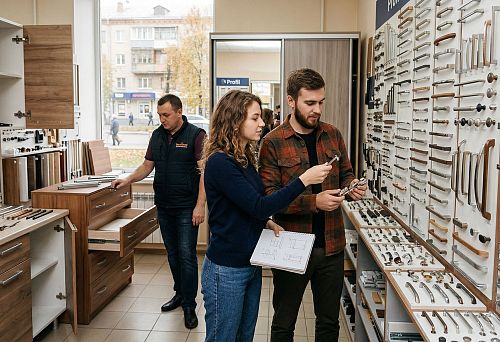
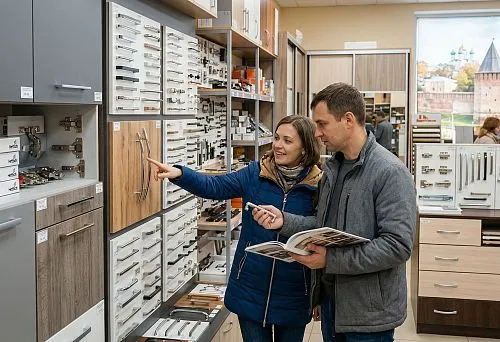
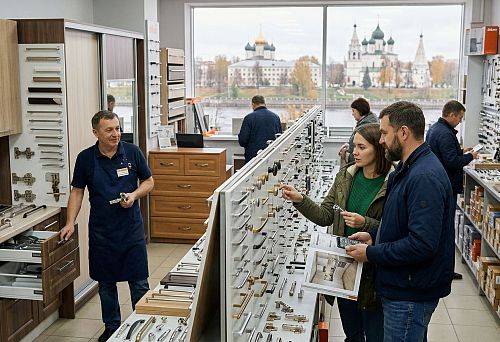
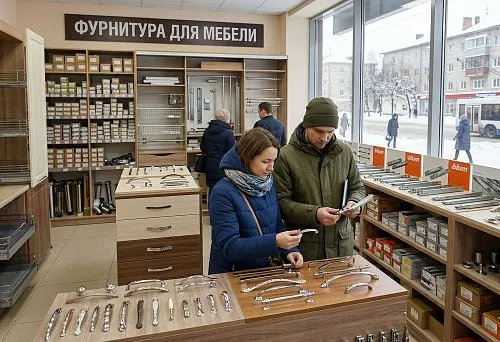
The beauty of furniture often lies in the details – carved elements, hardware, decorative inlays. These, seemingly minor, elements can radically change the perception of the product, turning an ordinary cabinet into a work of art. Decorative Inserts are created with great care, as they are often the first to attract attention.
Wood carving is an ancient art that remains in demand in furniture production today. Modern masters are skilled in both traditional hand-carving techniques and new methods – laser engraving, CNC machining.
Harmony of styles
Modern furniture is not limited to one stylistic direction. Eclecticism, fusion, neoclassicism – designers boldly experiment, creating items that combine elements from different eras and cultures. At the same time, it is important to maintain harmony, not turning furniture into a chaotic accumulation of decorative elements.
Conclusion: art tested by time
Understanding that, how furniture is madeopens an incredible world where ancient traditions harmoniously blend with modern technologies. Each item goes through a long journey from the designer's concept to the finished product, and at every stage of this journey, the work of true masters is essential.
Furniture is not just household items. It is the embodiment of humanity's pursuit of beauty, comfort, and harmony. In every piece, the soul of the craftsman, the traditions of generations, and the innovations of modernity live. That is why quality furniture can serve for decades, passing from parents to children, becoming family heirlooms.
STAVROS Company has long been an example of how traditional craftsmanship can successfully combine with modern technologies. Creating high-quality natural wood furniture, STAVROS continues the best traditions of furniture art while using the most advanced technologies and materials. Every item from the company is the result of meticulous work by masters who understand that furniture is made not for years, but for generations.