Article Contents:
- History and evolution of staircase posts and balusters
- Materials of manufacture: traditions and innovations
- Wood - classic beyond time
- Modern materials and technologies
- Types and styles of posts and balusters
- Classification by shape and design
- Stylistic directions
- Functional features and technical characteristics
- Structural role in staircase systems
- Technical parameters and standards
- Manufacturing and installation process
- Design Possibilities and Stylistic Solutions
- Installation features
- Design solutions and integration into interior
- Compatibility with various interior styles
- Creative ideas and non-standard solutions
- Maintenance and care
- Extending the service life of wooden items
- Restoration and renewal
- Economic Aspects and Investment Appeal
- Price-to-Quality Ratio
- Impact on property value
- Trends and prospects for development
- Modern trends in staircase element design
- Innovative solutions and technologies of the future
- Conclusion: choosing ideal posts and balusters for your home
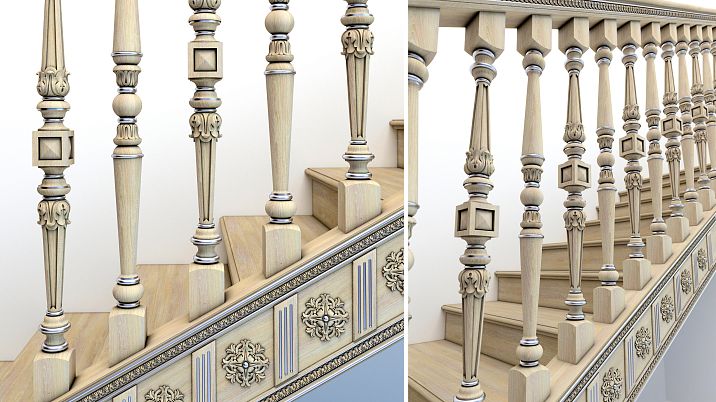
In the world of interior architectural design, there are elements that simultaneously serve a functional role and are key decorative accents. Posts and balusters — precisely such elements that can transform an ordinary staircase into a work of art, imparting a unique charm and elegance to the interior. These architectural details have a rich history and continue to remain popular in modern design, combining traditions of the past with innovations of the present.


History and evolution of staircase posts and balusters
The art of creating decorative support elements for staircases originated in ancient times. Ancient Greeks and Romans used stone balusters to decorate their magnificent buildings. Over time, technologies changed, materials improved, but the core concept remained unchanged — the combination of functionality and aesthetics.
In the Renaissance Posts and balusters became a true symbol of luxury and prosperity. Masters of that time created true masterpieces from marble and precious woods, adorning palaces and mansions of the nobility. Each element of the staircase became a work of art, demonstrating the status and taste of the owner.
Baroque and Rococo brought even more refinement and ornamentation to baluster design. Complex carved patterns, intricate forms, gilding, and inlays appeared. Staircases of that period impress with their grandeur and attention to the smallest details.
Neoclassicism returned balusters to more strict and symmetrical forms, but did not deprive them of elegance. During this period, proportionality and harmony of all elements of the staircase structure were especially valued.
The modern era introduced posts and balusters new technologies and materials, but traditional wooden items remain unmatched when it comes to creating an atmosphere of coziness and nobility in the interior.




Materials for Manufacturing: Traditions and Innovations
Our factory also produces:



Wood - Classic Beyond Time
Wood remains the most popular material for manufacturing balusters and newels, and there are good reasons for this. Natural wood has a unique texture that cannot be exactly replicated artificially. Each solid wood item has its own unique grain pattern, making it truly one-of-a-kind.
Various wood species are used for manufacturing stair elements, each with its own characteristics:
Oak - recognized as the leader among materials for manufacturing stair structures. Its strength, durability, and noble appearance make oak newels and balusters an ideal choice for classic interiors. Oak is excellent for carving, allowing the creation of items with delicate decorative elements.
Beech - distinguished by its uniform structure and pleasant light tone. Beech items look elegant and modern, fitting perfectly into minimalist interiors. This material also has high strength and resistance to mechanical impacts.
Ash - valued for its beautiful grain pattern and high strength. Ash balusters have a characteristic light-yellow hue, which may acquire a deeper tone over time. This material is ideal for creating both classic and modern stair structures.
Walnut - wood of dark noble tones that gives stairs a luxurious and dignified appearance. Walnut newels and balusters become true interior ornaments, bringing an atmosphere of aristocracy and elegance.
Larch - a unique material distinguished by exceptional resistance to moisture and decay. This feature makes larch an ideal choice for stairs in high-humidity rooms or for outdoor structures.
Get Consultation
Modern Materials and Technologies
In addition to traditional wood, modern industry offers alternative materials for manufacturing newels and balusters:
MDF and veneered items - a more affordable alternative to solid wood. These items imitate natural wood but are significantly cheaper. However, in terms of strength and durability, they fall short of solid wood items.
Metal - used to create modern stair structures. Metal balusters can have the most diverse shapes - from strict geometric forms to complex forged elements. They are strong, durable, and require minimal maintenance.
Glass - an ultra-modern material that creates an effect of lightness and airiness. Glass balusters are especially popular in minimalist and high-tech interiors, where space and light are valued.
Composite materials - combining wood with metal, glass, or stone allows creating unique designer solutions that become true highlights of the interior.
Types and Styles of Newels and Balusters
Classification by Shape and Design
Classic balusters - have a characteristic shape with expansion in the middle. Such items are usually adorned with carving and used in traditional interiors. They can be simple or richly decorated, depending on the overall style of the room.
Turned balusters - created on a lathe and have a symmetrical shape with smooth lines. This type of baluster is versatile and suitable for various interior styles, from classic to modern country.
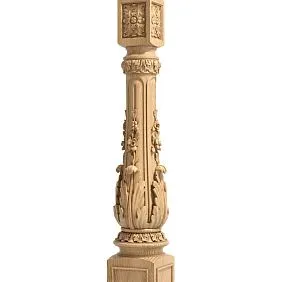
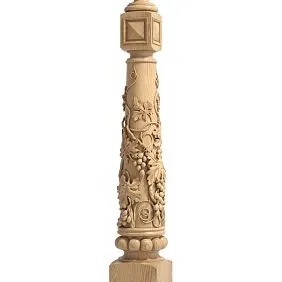
Carved newels - true works of art, adorned with complex patterns and ornaments. Such elements become the central accent of the stair structure, drawing attention and evoking admiration.
Square and rectangular balusters - distinguished by strict geometric forms and minimal decoration. They fit perfectly into modern interiors where simplicity and functionality are valued.
Figurative balusters - have non-standard shapes that may be inspired by various styles and eras. From Gothic motifs to avant-garde solutions, figurative balusters allow creating truly unique stairs.
Stylistic directions
Classicism - characterized by symmetrical forms, proportionality, and moderate decoration. Posts and balusters In the classical style, they usually have flutes (vertical grooves) and capitals (decorative ends).
Baroque and Rococo - distinguished by opulence, abundance of decorative elements, and dynamic forms. Balusters in these styles are often adorned with intricate carving, gilding, and inlays.
Modernism - characterized by smooth, flowing lines and plant motifs. Balusters in the modern style resemble plant stems or waves, creating a sense of movement and life.
Minimalism - implies simple geometric forms, absence of decoration, and clean lines. Minimalist balusters usually have a concise design and are made from modern materials.
High-tech - uses metal, glass, and other modern materials. Balusters in this style often represent thin metal rods or glass panels, creating an effect of weightlessness.
Eco-style - implies the use of natural materials with minimal processing. Balusters in eco-style may be made of untreated wood, preserving their natural texture and shape.
Functional Features and Technical Specifications
Play a constructive role in the staircase system
Posts and balusters They not only serve a decorative but also an important constructive function. They serve as supports for handrails and ensure safety when using the staircase. Therefore, high requirements are placed on their strength and reliability.
Main posts (also called support or load-bearing) are installed at key points of the staircase - at the beginning, end, and turns. They have a larger cross-section than ordinary balusters and are directly attached to the treads or floor. These posts carry the main load and provide rigidity to the entire structure.
Intermediate balusters are placed between support posts and serve to support handrails as well as to prevent falling from the staircase. They are installed at a specified spacing regulated by building codes and regulations. Usually, the distance between balusters should not exceed 15 cm to ensure children's safety.
Technical parameters and standards
The dimensions of posts and balusters may vary depending on the specific staircase construction, but there are certain standards that ensure safety and functionality:
Height - the standard height of balusters is 90-100 cm from the tread level. This is sufficient to ensure safety for an adult person moving along the staircase.
Cross-section - for support posts, a cross-section of 100x100 mm or more is usually used, while intermediate balusters may have a cross-section from 40x40 mm to 60x60 mm for square ones and a diameter of 40-60 mm for round ones.
Installation spacing - the distance between centers of adjacent balusters is usually 15-20 cm. This ensures sufficient support for handrails and prevents the possibility of falling between balusters.
Material - materials with specific strength characteristics are used to manufacture posts and balusters. For example, wood should have a moisture content not exceeding 12% to avoid deformations during operation.
Fastening - there are various ways to fasten balusters to treads and handrails. The most common methods include mortising, using wedges, or special metal fasteners. The choice of method depends on the staircase construction and the baluster material.
Manufacturing and installation process
Production technologies
Manufacturing high-quality posts and balusters is a complex technological process requiring high qualification and specialized equipment. Let's consider the main stages:
Material preparation - wood undergoes careful selection, drying, and treatment. It is important that the material is uniform, free of defects, and has optimal moisture content.
Creating blanks - blanks of the required size are cut from prepared material. At this stage, it is important to consider the direction of wood grain to ensure maximum strength of the finished product.
Turning operations - for creating turned balusters, turning machines are used, which allow giving the blank the required shape. Modern CNC equipment allows creating products with high precision and repeatability.
Carving and decoration - if the design includes carved elements, they are created manually by master carvers or with the help of special milling machines. This stage requires special skill and artistic taste.
Sanding - finished items are carefully sanded to create a smooth surface. This process may include several stages using abrasive materials of different grits.
Final finishing - includes coating the items with protective finishes (varnish, oil, wax) and, if necessary, painting. Properly selected finishing not only highlights the beauty of the wood but also protects it from external influences.
Installation features
Installation of posts and balusters - a responsible stage, the quality of which affects not only the appearance but also the safety of the staircase. The installation process may vary depending on the staircase construction and type of balusters, but general principles remain unchanged:
Marking - before beginning installation, precise marking of post and baluster installation locations is performed. It is important to maintain even spacing and consider the staircase construction features.
Installation of support posts - begins with installing main support posts. They must be securely fastened to the floor or staircase structure. Various methods are used for this, from mortising to fastening with metal plates and anchors.
Installation of handrails - after installing support posts, handrails are mounted. They must be precisely aligned and securely fastened to the posts.
Installation of intermediate balusters - the final stage - installing intermediate balusters. They are installed between support posts and fastened to handrails and treads or the staircase stringer.
Final finishing - after completing installation, final finishing is performed - fitting joints, sanding, and, if necessary, touch-up of fastening areas.
Design solutions and integration into interior
Combination with various interior styles
Posts and balusters can become a key element in creating a specific interior style. Let's consider how they integrate into various design directions:
Classic style - assumes the use of turned balusters made from precious wood species with carved elements. Such items usually have a complex shape with a characteristic expansion in the middle. Color palette - natural wood tones or white with gold accents for especially luxurious interiors.
Provence and country styles - suitable for simple turned balusters made from light-colored wood. They can be painted white or pastel tones and have light wear, creating an aged effect. Such balusters create an atmosphere of coziness and home warmth.
Modern style - characterized by the use of minimalist forms and clean lines. Balusters may be square or rectangular, without excessive decoration. Color palette - from natural wood tones to black and white.
Loft - assumes the use of metal balusters or a combination of metal and wood. Characteristic features - rough texture, visible fasteners, industrial character.
Scandinavian style - distinguished by simplicity and functionality. Balusters usually have minimalist shapes and are made from light-colored wood. They may be painted white or retain the natural wood tone.
Eco-style - assumes the use of natural materials with minimal processing. Balusters may be made from untreated wood, preserving its natural texture and shape.
Creative ideas and unconventional solutions
Modern design is not limited to traditional forms and materials. Here are several creative ideas that can turn a staircase into a true work of art:
Combining materials - combining wood with metal, glass, or stone creates interesting contrasts and textures. For example, wooden posts can be combined with metal or glass balusters.
Using color - painting balusters in bright colors or creating gradient transitions can become a bold design solution that transforms the interior.
Unconventional shapes - balusters do not necessarily have to be traditional in shape. Modern technologies allow creating items of the most unusual configurations - from abstract geometric forms to stylized figures.
Integrating lighting - built-in LED elements can turn an ordinary staircase into a light installation. Especially effective when combined with glass or semi-transparent materials.
Artistic carving - individual carved elements, made according to the client's sketches, can become a true decoration of the interior and a reflection of the homeowner's personality.
Care and Maintenance
Extending the lifespan of wooden items
Proper care of wooden posts and balusters allows preserving their beauty and functionality for many years. Here are some recommendations:
Regular cleaning - wooden staircase elements should be regularly cleaned of dust using a soft cloth or special brushes. For removing dirt, a mild soap solution or specialized wood care products can be used.
Protection from moisture - excessive humidity is the main enemy of wooden items. It is necessary to monitor the humidity level in the room and prevent water from reaching wooden staircase elements.
Protection from sunlight - direct sunlight can cause fading and cracking of wood. If the staircase is located in an area of intense sunlight, it is recommended to use curtains or blinds.
Periodic renewal of protective coating - varnishes, oils, and waxes applied to wooden items wear out over time. It is recommended to periodically (every 3-5 years) renew the protective coating to maintain beauty and protective properties.
Repairing minor damage - scratches, chips, and other minor damages should be addressed immediately after they appear. For this, you can use special wax pencils or furniture markers of the appropriate color.
Restoration and renewal
Even the highest quality items may require restoration over time. Here are the main stages of this process:
Assessment of condition - before starting restoration, it is necessary to assess the condition of the items and determine the scope of work. In some cases, complete replacement of individual elements may be required.
Cleaning off old coating - if the old coating is damaged or faded, it must be removed. Special strippers or mechanical cleaning are used for this purpose.
Repairing defects - cracks, chips, and other defects are repaired using wood putty or inserts made of similar material.
Sanding - after removing defects, the surface is carefully sanded to create a smooth base for the new coating.
Applying new coating - the final stage of restoration - applying a new protective coating. This can be varnish, oil, wax, or paint, depending on the desired result.
Economic Aspects and Investment Attractiveness
Price-to-quality ratio
The cost of posts and balusters can vary significantly depending on the material, complexity of manufacturing, and level of decoration. However, it is important to understand that saving on these elements may lead to problems in the future.
High-quality solid wood items cost more than their MDF or other material counterparts, but they have several advantages:
Durability - solid wood items, with proper care, can last for decades, whereas cheaper alternatives will need to be replaced much more frequently.
Aesthetic qualities - natural wood has a unique texture and warmth that cannot be precisely replicated artificially.
Ecological - products made of natural wood do not emit harmful substances and create a favorable microclimate in the room.
Repairability - in case of damage to solid wood products, they can be restored, whereas products made of MDF or other composite materials usually require complete replacement.
Impact on property value
A quality staircase with beautiful balusters and newels can significantly increase the property's value. This is explained by several factors:
Aesthetic appeal - a beautiful staircase creates a positive first impression on potential buyers and can become a decisive factor when choosing between several properties.
Quality indicator - a well-executed staircase with quality details indicates that other elements of the house are also made to a high standard.
Uniqueness - an individually designed staircase with original newels and balusters makes the house unique, thereby increasing its value in the real estate market.
Functionality and safety - a quality staircase structure ensures comfort and safety, which is an important factor for potential buyers, especially for families with children or elderly people.
Trends and Development Prospects
Modern design trends for staircase elements
The design of newels and balusters, like any other design area, is subject to fashion trends. Here are several current trends:
Minimalism and functionality - modern interiors tend toward simple forms and clean lines. In trend, minimalist balusters with square or rectangular cross-sections without excessive decoration.
Ecological and natural - products made from environmentally friendly materials with minimal processing are gaining increasing popularity. The natural wood texture is becoming a standalone decorative element.
Material combination - combining wood with metal, glass, or stone creates interesting contrasts and textures, allowing the staircase to be integrated into various interior styles.
Individualization - standard solutions are giving way to custom projects that reflect the homeowner's personality and taste. Clients increasingly choose unique designs specifically tailored for their interiors.
Technological advancement - modern technologies enable the creation of complex shapes and structures that were previously inaccessible. Computer modeling and CNC machines open new possibilities for designers and manufacturers.
Innovative solutions and technologies of the future
The development of technologies opens new prospects in the production and use of newels and balusters:
3D printing - allows creating items of complex shapes from various materials, including wood-based composites. This technology makes it possible to realize the most daring design ideas.
Smart materials - materials are being developed that can change their properties depending on environmental conditions. For example, coatings that adapt to humidity or temperature levels.
Integration with smart home - staircase structures can be equipped with motion sensors, lighting systems, and other elements integrated into the overall smart home system.
Biomimicry - design inspired by natural forms and structures is becoming increasingly popular. Balusters can imitate plant stems, tree branches, or other natural elements.
Sustainable development - increasing attention is being paid to ecological aspects of production. Technologies are being developed to use wood more efficiently and reduce environmental impact.
Conclusion: choosing the ideal newels and balusters for your home
Choosing newels and balusters for a staircase is a responsible decision that affects not only the interior's appearance but also the staircase's functionality and safety. When choosing, numerous factors must be considered:
Interior style - Posts and balusters must harmoniously fit into the overall room design. A classic interior requires corresponding elements, as well as modern or ethnic styles.
Material - material selection depends on usage conditions, budget, and aesthetic preferences. Natural wood remains unmatched in its aesthetic and ecological qualities, but requires more careful maintenance.
Functionality - the staircase must be not only beautiful but also convenient and safe. It is important to comply with all technical requirements and standards during design and installation.
Durability – high-quality products made from good materials will last for decades, preserving their beauty and functionality. Compromising on quality may lead to the need for premature replacement.
Individuality - the staircase can and should reflect the homeowner's individuality. Do not be afraid to experiment and create unique solutions that will delight you every day.
STAVROS Company specializes in producing high-quality newels, balusters, and other staircase elements made from solid wood. Years of experience, modern equipment, and skilled craftsmen enable the creation of items that meet the highest standards of quality and aesthetics.
Every STAVROS product is a combination of traditional craftsmanship and modern technology, functionality and beauty, reliability and individuality. Choosing STAVROS products means choosing quality that will delight you for many years and become a true ornament of your home.