Article Contents:
- Historical Legacy of Spiral Forms in Architecture
- Ancient Roots of Twisted Aesthetics
- Renaissance and Baroque: The Peak of Twisted Decor
- Technological Aspects of Creating Twisted Forms
- Traditional Methods of Turning
- Modern manufacturing technologies
- Material Characteristics of Twisted Structures
- Selection of Wood for Spiral Elements
- Features of Processing Coniferous Species
- Design solutions and stylistic directions
- Classical Interpretations of Twisted Forms
- Baroque Opulence in Twisted Elements
- Modern Interpretations of Twisted Forms
- Technical Aspects of Installing Twisted Balusters
- Features of Mounting Spiral Elements
- Ensuring Positioning Accuracy
- Aesthetic principles of composition
- Rhythm and Movement in Twisted Railings
- Play of Light and Shadow on Spiral Surfaces
- Functional Aspects of Twisted Structures
- Strength Characteristics of Spiral Elements
- Ergonomic Features of Twisted Handrails
- Technologies of Protective Treatment
- Features of Applying Coatings to Twisted Surfaces
- Selection of Protective Compounds
- Modern Trends in Development
- Integration of digital technologies
- Ecological aspects of production
- Economic aspects of selection
- Pricing Factors for Twisted Balusters
- Cost of Ownership Analysis
- Conclusion
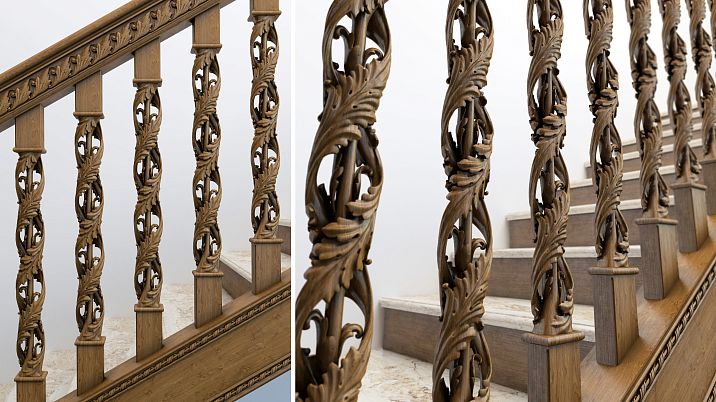
When it comes to transforming an ordinary staircase into a work of architectural art, twisted baluster it becomes a magical element capable of radically transforming the perception of space. These elegant spiral supports, like dancers frozen in motion, bring an unparalleled dynamism and aristocratic refinement to the interior. Each twisted baluster tells a story of craftsmanship, where ancient woodworking traditions meet modern technologies, creating masterpieces capable of adorning both a modest country house and a luxurious residence.
The spiral shape of balusters is not accidental — it embodies one of the most perfect natural patterns, found everywhere from mollusk shells to galactic arms. This form possesses a special magic, drawing the gaze and creating a sense of continuous motion even in a static structure.


Historical legacy of spiral forms in architecture




Ancient roots of twisted aesthetics
The art of creating twisted elements traces its roots to deep antiquity, when masters of ancient Greece and Rome first began experimenting with spiral forms in architecture. Columns with twisted fluting adorned temples and palaces, demonstrating not only the technical skill of builders but also their understanding of harmony and beauty.
Byzantine masters reinterpreted ancient traditions, creating their own interpretation of twisted forms. Their works were distinguished by greater ornamentation and symbolism, where each twist carried deep religious meaning. These traditions later exerted a tremendous influence on the development of European architecture.
Renaissance and Baroque: the golden age of twisted decoration
Our factory also produces:


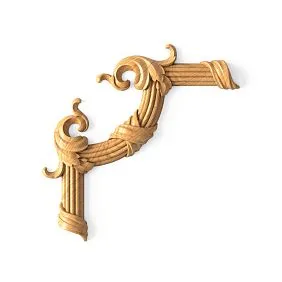
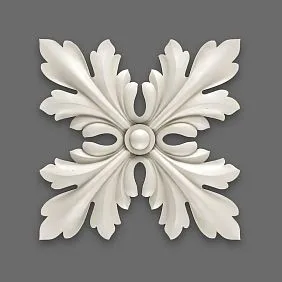


The Renaissance brought a new understanding of the role of decorative elements in architecture. Italian masters of the 15th-16th centuries created twisted balusters of incredible complexity and beauty, where each element was carefully planned and executed with jewel-like precision. The stair railings of the Palazzo in Florence and Venice still astonish with the perfection of their craftsmanship.
Baroque took the art of creating twisted elements to theatrical grandeur. Balusters of this period were distinguished by particular dynamism and expressiveness, as if frozen figures dancing. Baroque masters were skilled at creating the illusion of movement in stone and wood, making their creations alive and emotionally resonant.
French masters of the Louis XIV era created their own style of twisted balusters, distinguished by elegance and refinement. The staircases of Versailles became a standard of elegance that courts across Europe emulated. These traditions exerted a tremendous influence on the development of Russian architecture in the 18th century.
Technological aspects of creating twisted forms
Get Consultation
Traditional methods of turning
Traditional turning methods
Creation twisted balusters requires special skill and deep understanding of wood properties. The traditional process begins with careful selection of blanks — the wood must be completely dry, free of defects and internal stresses that could cause deformation of the finished product.
Turning twisted elements is a complex multi-stage process. First, the blank is turned into a cylindrical shape, then a spiral line is marked, along which the twisted element will run. The depth and pitch of the twist are calculated with mathematical precision, taking into account the proportions of the future baluster and its functional purpose.
Hand carving of twisted elements requires not only technical skills from the craftsman but also artistic intuition. Each twist must smoothly transition into the next, creating a sense of continuous motion. An experienced carver can create a twisted baluster where the spiral appears alive, as if it truly twists before the viewer’s eyes.
Modern manufacturing technologies
Computer numerical control machines revolutionized the production of twisted balusters, enabling the achievement of ideal precision and repeatability of forms. Modern machining centers are capable of creating spiral elements of any complexity, reproducing even the most intricate historical samples with photographic accuracy.
Laser technology has opened new possibilities for creating combined twisted elements. A laser beam can cut delicate lace-like details, which are then integrated into the main spiral structure. This approach allows creating balusters of incredible complexity and beauty.
Three-dimensional modeling allows calculating all nuances of the future product in advance, optimizing the shape to achieve maximum strength with minimal material consumption. Modern programs can simulate the behavior of wood under various loads, which is especially important for twisted elements, where stresses are distributed unevenly.
Material-specific characteristics of twisted structures
Selection of wood for spiral elements
Creating quality twisted balusters begins with the proper selection of wood. Not all species are equally suitable for manufacturing spiral elements — the wood must possess a certain plasticity, allowing the creation of complex forms without the risk of cracking.
Oak remains a classic choice for twisted balusters due to its exceptional strength and stability. The dense structure of oak allows creating thin spiral elements that retain their shape for decades. The natural texture of oak highlights the beauty of twisted forms, creating a play of light and shadow on the surface of the spiral.
Ash attracts craftsmen with its flexibility and contrasting structure. This species allows creating especially elegant twisted elements with delicate transitions between spirals. Ash balusters are distinguished by particular expressiveness due to the clear pattern of annual rings, which accentuates the spiral shape.
Beech is valued for its uniform structure and excellent workability. From beech, one can create twisted balusters with a very complex profile, where the spiral is complemented by numerous small decorative elements. The neutral color of beech allows using any type of staining and decorative finishing.
Special features of processing coniferous species
Spruce, despite its softness, can be used to create twisted balusters provided certain technological requirements are met. The soft structure of spruce allows easy processing of spiral elements, but requires special care when creating thin details.
Siberian larch presents an interesting alternative for creating twisted balusters intended for use in high-humidity conditions. The natural resinous nature of larch provides additional protection against moisture, which is especially important for outdoor structures.
Siberian cedar allows creating twisted balusters with especially thin and elegant elements due to its softness and uniform structure. Cedar balusters have a pleasant aroma and phytoncide properties, making them especially attractive for residential spaces.
Design Solutions and Stylistic Directions
Classic interpretations of twisted forms
The classic style in decorating twisted balusters is based on the principles of ancient architecture, where each element is subject to strict proportional relationships. Twisted baluster Classic style is characterized by smooth, harmonious spirals that create a sense of movement without disrupting the overall static composition.
The foundation of classical twisted balusters is a central spiral, which may be enhanced with decorative elements — acanthus leaves, rosettes, pearl strands. These elements do not merely adorn the spiral but also emphasize its movement, creating a complex interplay of light and shadow.
The proportions of classical twisted balusters are based on the principles of the golden section. The height of the spiral element relates to the total height of the baluster as 1:1.618, creating a visually perfect composition. The base and capital are resolved as simple yet elegant profiled elements, not competing with the central spiral.
Baroque opulence in twisted elements
Baroque twisted balusters are distinguished by their particular expressiveness and dynamism. The spiral here is not merely a decorative element but the main expressive tool, creating a sense of theatricality and grandeur. Baroque masters were skilled at creating an illusion of movement, making the spiral resemble a frozen wave or tongues of flame.
A characteristic feature of baroque twisted balusters is the complexity of the spiral profile. It may have a variable cross-section, expanding and narrowing as it ascends. This technique adds additional dynamism and highlights the craftsman's skill.
Decorative elements of baroque twisted balusters are distinguished by their particular opulence. The spiral may be adorned with garlands of flowers, fruits, ribbons, cartouches. These elements are not merely superimposed on the spiral but organically woven into its structure, creating a unified artistic whole.
Modern interpretations of twisted forms
Modern design reinterprets traditional twisted forms, creating new interpretations of classical motifs. Minimalist twisted balusters are distinguished by clean lines and the absence of decorative excesses. Beauty is achieved through perfect proportions and surface finish quality.
Asymmetric twisted compositions introduce modern dynamism into interiors. The spiral may have a variable pitch, creating a sense of acceleration or deceleration of movement. Such solutions require special skill from the designer and manufacturer.
Combining different materials opens new possibilities for creating twisted balusters. A wooden spiral may be complemented by metallic elements, glass inserts, lighting. This approach allows creating unique compositions reflecting the client's individuality.
Technical aspects of installing twisted balusters
Features of attaching spiral elements
Installing twisted balusters requires a special approach due to the complexity of their geometry. The spiral shape creates uneven load distribution, which must be considered when selecting the attachment method. Traditional attachment methods may be insufficient to ensure a reliable connection.
Attaching twisted balusters to metal spikes remains the most reliable method. However, here it is important to correctly calculate the diameter and length of the spike, taking into account the specific load distribution in the spiral structure. The spike must pass through the center of gravity of the baluster, which does not always coincide with its geometric center.
Adhesive joints play a special role in installing twisted balusters. Modern polyurethane adhesives provide bond strength exceeding the strength of the wood itself. However, using adhesive requires precise fitting of mating surfaces and adherence to curing technological regimes.
Ensuring positioning accuracy
Installing twisted balusters requires special positioning accuracy. Even a slight rotation of the baluster around its axis may disrupt the overall composition of the railing. Special templates and guides are used to control the correct installation.
Marking locations for installing twisted balusters is done considering their orientation. All spirals must be directed in the same direction and have the same angular position relative to the direction of movement along the staircase. This creates a sense of rhythm and harmony throughout the entire composition.
Quality control of installation includes checking not only the verticality of balusters but also their correct angular positioning. Special measuring tools are used to control the rotation of each baluster with precision down to the degree.
Aesthetic Principles of Composition
Rhythm and movement in twisted railings
Twisted balusters create a unique visual rhythm that affects the perception of the entire staircase space. Spiral elements positioned at a certain interval create a sense of musical rhythm, where each baluster plays the role of a note in the overall melody.
The direction of the spirals plays an important role in creating the overall impression. Right-handed spirals create a sense of ascent and upward movement, which psychologically corresponds to the function of a staircase. Left-handed spirals may be used to create special artistic effects.
Combining twisted balusters with straight elements allows creating complex compositions where spiral forms are emphasized by contrast with the geometric rigidity of support columns. This technique is often used in classical interiors to create an element hierarchy.
Play of light and shadow on spiral surfaces
Twisted surfaces possess a unique ability to create complex play of light and shadow, which varies depending on the time of day and position of light sources. This feature makes twisted balusters living interior elements that constantly change their perception.
Proper lighting of twisted balusters can dramatically alter the perception of the staircase space. Side lighting emphasizes the relief of the spiral, creating dramatic shadows. Diffused overhead lighting creates soft transitions of light and shadow, highlighting the smoothness of spiral forms.
Artificial lighting of twisted balusters opens new possibilities for creating artistic effects. LED strips embedded in spiral grooves create a glowing spiral effect. This solution is especially effective in modern interiors.
Functional aspects of twisted structures
Strength characteristics of spiral elements
The helical shape of balusters affects their strength characteristics. The spiral structure can either strengthen or weaken the structure depending on the direction of applied loads. A properly designed helical baluster has high torsional strength, which is important for stair railings.
The stress distribution in helical elements has a complex nature. Maximum stresses occur at the points of greatest curvature of the spiral, which must be considered in design. Modern finite element analysis methods allow accurately calculating the stress-strain state of helical balusters.
The fatigue strength of helical elements depends on the quality of surface treatment. Any defects in the form of scratches or chips can become stress concentrators and lead to failure under cyclic loads. Therefore, special attention is paid to the final surface finishing of helical balusters.
Ergonomic features of helical handrails
Helical handrails require a special approach to design from an ergonomic perspective. The spiral surface may be less convenient to grip by hand compared to a smooth cylindrical surface. However, a properly designed helical handrail can provide even better grip due to additional points of support.
The pitch of the handrail's helix should correspond to the natural movement of the hand when ascending stairs. A too small pitch creates unpleasant sensations, while a too large pitch does not provide sufficient grip. The optimal helix pitch is 150-200 mm for standard staircases.
The thermal characteristics of helical handrails are also important for user comfort. Wooden helical handrails remain warm to the touch even in cold weather, making them more comfortable compared to metallic counterparts.
Protective coating technologies
Features of coating application on helical surfaces
Applying protective coatings on helical surfaces requires a special approach due to the complexity of geometry. Traditional methods such as brush or roller painting may not ensure uniform coverage of all spiral areas. The most effective method is spraying, which allows achieving uniform coverage of all surfaces.
Surface preparation of helical surfaces for coating includes careful sanding of all spiral elements. Special attention is paid to internal angles and transitions between helix turns, where dust and dirt may accumulate. The quality of surface preparation determines the durability of the protective coating.
Priming helical surfaces is performed using special compositions that ensure good adhesion to complex geometric forms. Primer must penetrate all spiral recesses and create a uniform base for the final coating.
Selection of protective compositions
Varnish coatings remain the most popular choice for protecting helical balusters. Modern polyurethane varnishes provide high strength and wear resistance, which is especially important for handrails. Varnish highlights the natural beauty of wood and creates additional light play on helical surfaces.
Oil-based coatings create a more natural appearance for helical balusters, emphasizing the wood grain texture. Oil penetrates deeply into the wood structure, providing protection from within. Such coatings are easily repairable in case of local damage.
Wax-based compositions give helical surfaces a unique tactile appeal. Wax creates a pleasant to-the-touch surface and emphasizes all nuances of the spiral shape. However, wax coatings require more careful maintenance and regular reapplication.
Modern Development Trends
Integration of Digital Technologies
Modern technologies open new possibilities for creating helical balusters. Parametric design allows creating unique spiral shapes optimized for specific operating conditions. Each Twisted baluster can be individually designed according to all customer requirements.
Augmented reality technologies allow customers to see future helical balusters in real interiors even before production begins. This helps make the right design decision and avoid errors in choosing proportions and decorative elements.
Robotized production systems ensure ideal repeatability of complex helical forms. Modern robots can perform turning and grinding operations with precision unattainable by manual labor.
Ecological Aspects of Production
Modern requirements for eco-friendly production influence the technologies used to manufacture helical balusters. Using wood from sustainably managed forests has become a standard of quality. FSC certification guarantees the producer's ecological responsibility.
Zero-waste production technologies allow using almost all wood received for production. Shavings from manufacturing helical elements are used to produce fuel briquettes, while small offcuts are used to make decorative elements.
Water-based varnishes and paints gradually replace traditional compositions with organic solvents. They do not emit harmful substances and ensure safety for both production staff and end users.
Economic aspects of selection
Pricing factors for helical balusters
The cost of helical balusters significantly exceeds the price of simple cylindrical counterparts due to manufacturing complexity. Main factors affecting the price are the complexity of the helical profile, wood species, finish quality, and batch size.
Handmade work always costs more than machine-made, but ensures uniqueness of each item. A master turner can create a helical baluster with individual features that cannot be reproduced on a machine. Such items become true works of art.
Mass production of helical balusters on CNC machines allows reducing cost while maintaining high quality. Modern technologies ensure perfect repeatability of shapes and stable surface quality.
Analysis of ownership cost
When choosing helical balusters, it is important to consider not only the initial cost but also operating expenses. High-quality helical balusters made from hardwood can serve for decades without losing their appearance, making them a cost-effective investment.
The maintenance cost of helical balusters is higher than that of simple cylindrical ones due to the complexity of cleaning spiral surfaces. However, modern protective coatings significantly simplify maintenance and extend the lifespan of the items.
Helical balusters have high residual value due to their artistic qualities. Quality items can be dismantled and reused during reconstruction or relocation.
Conclusion
World twisted balusters It represents a wonderful blend of ancient traditions and modern technologies, where each spiral tells a story of craftsmanship and artistic vision. These elegant elements can transform an ordinary staircase into a work of architectural art, creating a unique atmosphere of elegance and refinement.
Choosing spiral balusters is an investment in the beauty and prestige of your home. Properly selected and well-crafted spiral elements will delight the eye and serve many generations, becoming a family heirloom and a source of pride.
Modern production technologies open up limitless possibilities for creating unique spiral compositions. From classic baroque forms to ultra-modern minimalist solutions — everyone can find spiral balusters perfectly matching their vision of beauty and style.
The future of spiral balusters is linked to the development of personalized production, where each item is created according to an individual project, taking into account all the client's wishes. Digital technologies allow realizing the most daring design ideas, creating spiral elements of unprecedented complexity and beauty.
Investing in quality spiral balusters means choosing not just functional staircase elements, but works of applied art that will adorn your home for many years. Each spiral, created by hand or with modern technologies, carries a piece of the creator's soul and becomes an inseparable part of your home's history.
Company STAVROS embodies the best traditions of creating spiral balusters, enhanced by modern technologies and innovative solutions. Our long-standing experience and deep understanding of wood carving art allow us to create spiral elements that surpass the highest expectations in terms of quality, beauty, and durability. Choosing STAVROS products means you receive a guarantee of craftsmanship and professional support at every stage of your project implementation.