Article Contents:
- 1. What is a furniture materials warehouse and what is its value
- 2. Range of furniture materials warehouses
- 2.1. Panel materials
- 2.2. Solid Wood
- 2.3. Hardware
- 2.4. Upholstery fabrics and leather (for soft furniture)
- 2.5. Fillers
- 3.1. Range and brands
- 3.2. Services (cutting, edge banding, consultations)
- 3.3. Storage quality
- 3.4. Certificates and emission class
- 3.5. Reputation and reviews
- 4.1. Cabinet furniture (cabinets, drawers, shelves)
- 4.2. Soft furniture (sofas, chairs)
- 4.3. Tables and chairs

Furniture production — a process requiring not only assembly and design skills, but also careful selection of raw materials. After all, the durability, aesthetics, and comfort of the finished product directly depend on the materials used in the frame, facades, upholstery, and hardware. Meanwhile, purchasing necessary components can become a difficult task if one has to travel to different locations searching for panels (MDF, plywood, particleboard), solid wood, fillers, upholstery fabrics, and fasteners.
That’s why many professionals and DIY enthusiasts turn to a furniture materials warehouse — a specialized place where you can find almost everything needed for furniture production or repair. In this article (large and detailed, as specified in the prompt) we will examine the advantages of such a warehouse, the typical assortment offered, what to pay attention to when purchasing, and how to determine the quality of the raw materials provided.


1. What is a furniture materials warehouse and what is its value
Furniture materials warehouse — this is not just a storage location, but a full-fledged center that brings together a wide range of products in one space:
- Panel materials (MDF, particleboard, plywood) in various thicknesses, finishes, and emission classes.
- Solid wood (boards, beams), blanks for legs and tabletops.
- Hardware (hinges, guides, lift mechanisms, furniture handles, locks).
- Upholstery fabrics, leathers, faux leathers, decorative elements (trims, cords).
- Fillers (springs, polyurethane foam, latex, sintepol) for soft furniture.
- Finishing materials (varnishes, oils, paints, edge bandings) and cutting/edge banding services.
Unlike a typical construction hypermarket, a warehouse is usually oriented specifically toward furniture makers, designers, carpenters, as well as those who enjoy DIY and want to assemble or repair furniture themselves. Therefore, the assortment and service are more specialized: professional consultations are available, cutting on high-precision equipment, edge banding, as well as a deeper selection of decorative finishes and materials.




2. Assortment of furniture material warehouses
Our factory also produces:


2.1. Panel materials
- Laminated particle board (Laminated Particle Board)
- Most common option for cabinet, drawer, and shelving carcasses.
- Varies by thickness (16–25 mm), emission class (E0/E1/E2), and decor (wood grain, solid color, fantasy).
- Surface flatness, absence of chips, quality protective film on surface. - MDF
- Dense fiberboard. Easily machinable, suitable for fronts and panels.
- Available in thicknesses of 16–22 mm (or other). E0/E1 certification is important for residential spaces.
- Often covered with PVC, acrylic, or veneer film. - Plywood
- Sheets of glued veneer layers, sorted by quality (E, I, II...).
- Durable yet relatively lightweight. Used in frames, Scandinavian and eco styles.
- Often sought moisture-resistant (FC, FSC) for increased reliability. - OSB, HDF, etc.
- OSB (oriented strand board) is used less often for furniture, but may be needed for certain constructions.
- HDF (high density) is sometimes used for back panels and drawer bottoms.
Get Consultation
2.2. Solid wood
● Lumber (boards, beams, blanks) from pine, birch, beech, oak, etc.
● Important: grade, drying level (8–12% moisture), absence of cracks and large knots.
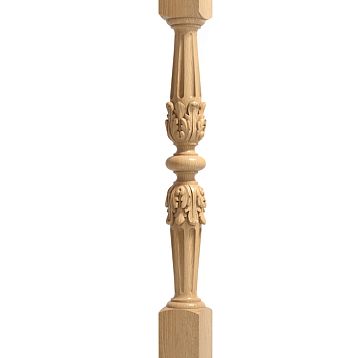
● For classic or expensive furniture, carved elements, armrests, legs.
2.3. Hardware
- Hinges (surface-mounted, inset, semi-inset), often with soft-close mechanisms (Blum, Hettich, Hafele).
- Drawer guides (ball-bearing, roller, with soft-close).
- Lift mechanisms (gas struts, electric) for flip-top doors.
- Furniture handles: knobs, buttons, rails, recessed, push-to-open.
- Locks, legs, casters, dowels, euro screws — everything for assembly.
2.4. Upholstery fabrics and leather (for soft furniture)
● Fabrics (fleece, shenille, jacquard, velvet, rush), eco-leather, natural leather.
● Density (g/m²), wear resistance indicator (Martindale), presence of treatments (Easy Clean, anti-vandal coatings).
2.5. Fillers
● Polyurethane foam (various densities),
Spring blocks (snake, Bonnel, independent),
Latex, hollofiber, sintepon.
For making sofas, chairs, stools, mattresses.
3. Criteria for selection when visiting a warehouse
3.1. Assortment and brands
● Learn which manufacturers of panels (Egger, Kronospan, SwissKrono, Pfleiderer) and fabrics (Italian, Turkish, domestic) are represented. A wide selection is a sign of a serious warehouse.
3.2. Services (cutting, edge banding, consultations)
● Cutting: presence of CNC cutting machines, precision down to the millimeter.
● Edge banding: PVC/ABS edge banding of different thicknesses, smooth and quality adhesive bonding.
● Consultations: presence of knowledgeable specialists who can advise on emission class, foam density, suitable hardware.
3.3. Storage quality
● The warehouse must provide normal conditions (dryness, no sharp temperature fluctuations). Panels and plywood are stored on vertical or horizontal racks, protected from moisture.
3.4. Certificates and emission class
● For panels (MDF, Laminated Board) — E1/E0, especially if this is furniture for bedrooms or children’s rooms.
● For plywood — confirmation of grade, moisture resistance (FC, FSP).
● For fabrics — Martindale wear resistance indicators, care recommendations.
3.5. Reputation and reviews
● Read what furniture makers and DIY enthusiasts say about this warehouse. Professionals often share their experience on forums and social media, naming reliable or problematic points.
4. How to choose materials for different types of furniture
4.1. Cabinet furniture (cabinets, drawers, shelves)
● Laminated Board: optimal solution for cabinets if budget is limited. Look for branded panels, E1 emission class, 2 mm edge banding on visible ends.
● MDF: if you need routed facades (kitchens, decorated cabinets), it is stronger for hinges.
● Plywood: eco-style, scandinavian, loft, DIY. Check the grade and absence of delamination.
● Solid wood: expensive and prestigious, for classic sets.
4.2. Soft furniture (sofas, chairs)
● Frame: plywood or solid wood (oak, beech, birch), pine — more budget-friendly.
● Filling: PU foam (density 25–35 kg/m³), spring block "snake" or independent springs, top layer of wadding or sintepon.
● Upholstery: fabric (fleece, shenille, rush) or leather/ecoleather, check wear resistance and ease of care.
4.3. Tables and chairs
● Tops: MDF with HPL plastic (moisture and heat resistance) or solid wood/veneer (more "warm" appearance).
● Frame: metal, solid wood, particleboard (for seating).
● Upholstery for chairs: if soft, same logic as for sofas (fabrics with sufficient density, preferably 20–25 thousand Martindale cycles).
5. Sample purchase scenario for furniture materials warehouse
- Define the project: what are you planning to make — a wardrobe, a sofa, a shelving unit, a cabinet?
- Prepare a list: what material is needed (Laminate/MDF + edge banding + fronts?), what filler (for sofas), what hardware (hinges, mechanisms).
- Visit the warehouse: inspect decor samples, check texture, color, compare prices of different brands.
- Consult: tell the consultant about your budget, usage conditions (humidity, load). Get advice on thickness, emission classes, foam density.
- Order cutting: if the warehouse provides this service, submit cutting plans (with part dimensions).
- Determine hardware: select required hinges (with closers?), handles, guides, lifting mechanisms, fasteners.
- Arrange delivery: sheet materials can be bulky, and delivery service simplifies logistics.
6. Additional services and benefits
● Edge banding: the warehouse can edge the ends, protecting LAMINATE/MDF from moisture and mechanical damage.
● CNC routing: if MDF front routing is needed, some centers perform it on CNC machines.
● Vacuum lamination: for film-faced fronts (PVC), though this is less common at warehouses, more often found in specialized workshops.
7. Tips for saving money and improving quality
- Compare brands: sometimes domestic equivalents of LAMINATE or particleboard match European quality at a lower price, but it depends on the specific factory.
- Buy extra: during cutting, panels may have defects or errors; a 5–10% reserve will help avoid sudden shortages.
- Don’t cut corners on hardware: cheap hinges quickly loosen, and low-grade transformation mechanisms squeak and break.
- Choose appropriate thickness: for wardrobe doors 16–19 mm, for shelves 18–25 mm (if load is heavy). Thin panels may sag.
- Consider storage conditions: do not store purchased sheets in damp areas, and upholstery in dusty or brightly lit areas (fading).
8. Conclusion
Furniture materials warehouse — this is a place where you can find the entire spectrum of raw materials for furniture production or repair: from panels (LAMINATE, MDF, particleboard) and solid wood to hardware, upholstery fabrics, and fillers. Such a "one-stop shop" simplifies life for craftsmen and DIY enthusiasts, offering a rich assortment, cutting services, and consultation support.
When selecting materials, focus on key characteristics: emission class (for ecology), density (for strength), moisture resistance (for kitchens and bathrooms), durability (for upholstery). Don’t forget about hardware quality — hinges, guides, furniture handles — which largely determine the comfort and longevity of furniture. Proper material combination, adherence to technology, and correct assembly yield results: beautiful, functional, and durable furniture that will serve for many years.