Article Contents:
- Digital Ecosystem of Modern Furniture Hardware
- Evolution of Design Through Element Libraries
- Intelligent Nature of Modern Components
- Variety of Hardware Solutions in Digital Format
- Hinge Systems and Opening Mechanisms
- Guide Rails for Sliding Elements
- Lift Mechanisms and Transformation Systems
- Technological Aspects of Working with Digital Libraries
- Data Formats and System Compatibility
- Organization and Structuring of Library Content
- Specialized Collections for Different Fields
- Kitchen Furniture and Built-in Appliances
- Office and Commercial Furniture
- Children's and Specialized Furniture
- Economic Benefits of Using Ready-made Libraries
- Reduction of Design Time
- Improving Quality and Reducing Errors
- Integration with Production Systems
- Linking Design with Production
- Quality Control and Standardization
- Training and Development of Competencies
- Educational Resources and Support
- User Community and Experience Sharing
- Trends and Future Prospects
- Integration with New Technologies
- Development of Materials and Manufacturing Technologies
- Global Trends and Local Adaptation
- Environmental Requirements and Sustainable Development
- Personalization and Mass Customization
- Practical Recommendations for Work
- Organizing an Efficient Workflow
- Avoiding Common Mistakes
- Frequently Asked Questions
- How to Choose Suitable Hardware Elements for a Project?
- Can You Create Your Own Elements for the Library?
- How Often Are Hardware Libraries Updated?
- Does Library Size Affect Program Performance?
- Are Library Elements Compatible with Different Program Versions?
- Can You Work with Libraries Without an Internet Connection?
- How Are Libraries Protected from Unauthorized Use?

In the world of modern furniture design, time has become the most valuable resource. Every minute spent searching for the right hardware element or creating its model from scratch could cost you a missed opportunity or client dissatisfaction.Download Hardware for Basis Furniture Designer— is the key to efficient design, granting access to professional libraries that transform the complex process of creating furniture into an engaging creative journey.
Imagine a workshop where every tool is in its place, where every detail perfectly fits the intended project. This level of order and efficiency is provided by modern digital hardware libraries for the Basis-Furniture Designer system. They contain thousands of ready-made solutions: from the simplest hinges to the most complex transformation mechanisms, each element having passed the test of time and practice.
What makes these libraries so indispensable? Each hardware model is not just a geometric object, but an intelligent element that knows its purpose, remembers technical specifications, and can interact with other project components. This is a revolution in furniture design, where human creative potential is freed from routine technical tasks.


Digital Ecosystem of Modern Furniture Hardware




Evolution of Design Through Element Libraries
The furniture industry has traveled a long path from artisanal production to highly technological automated processes. Modern manufacturersof solid woodcombine traditional woodworking methods with advanced digital design technologies.
Digital hardware libraries have become the catalyst for this transformation. They accumulate the experience of generations of furniture makers, embodying it in precise mathematical models. Each hinge, each guide, each mechanism receives its digital representation, preserving all nuances of the real product.
Integrating libraries with the Basis-Furniture Designer system creates a synergistic effect, where the capabilities of individual components are multiplied through their interaction. The designer receives not scattered elements, but a cohesive system, where each detail knows its place and function.
Our factory also produces:


Intelligent Nature of Modern Components
Modern hardware for Basis-Furniture Designer possesses its own 'intelligence'.Decorative InsertsIt automatically adapts to panel sizes, hinges check compatibility with door thickness, guides calculate required clearances and mounting holes.
This intelligence is manifested in the parametric nature of elements. One basic component can generate dozens of variations, adapted to specific dimensions and project requirements. The system of connections between elements ensures the integrity and consistency of the entire structure.
Automatic compatibility checking eliminates errors that could be costly during production. The system warns of potential problems and suggests alternative solutions.
Get Consultation
Variety of Hardware Solutions in Digital Format
Hinge Systems and Opening Mechanisms
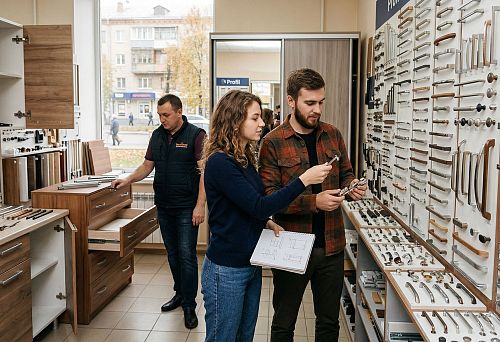
Hinges form the basis of functionality for any furniture with opening elements.Download Hardware for Basis Furniture Designer— means gaining access to an extensive collection of hinge systems from leading global manufacturers.
Surface-mounted hinges provide easy installation and reliable operation. Semi-surface-mounted hinges are optimal for medium sections of multi-door constructions. Internal hinges create a minimalist appearance, hiding the mechanism inside the structure.
Modern hinges are equipped with closers and dampers, ensuring smooth and silent closing. 'Push-to-open' systems allow doors to be opened with a light touch, which is especially relevant for handle-free furniture.
Corner hinges solve specific problems when designing corner cabinets and non-standard configurations. Each hinge in the library contains precise information about load capacity, opening angles, and adjustment methods.
Guide Rails for Sliding Elements
Sliding drawers determine the convenience of use of cabinet furniture. High-quality guides ensure smooth movement, high load capacity, and long service life.Furniture frontsare complemented by appropriate sliding systems, creating functional and aesthetically pleasing solutions.
Roller guides are distinguished by simple construction and affordable cost. Ball-bearing guides provide smoother movement and higher load capacity. Concealed mounting guides create a clean appearance without visible mounting elements.
Full-extension systems allow using the entire drawer depth. Damping mechanisms ensure smooth closing from the last centimeters of movement. 'Push-to-open' systems complement handle-free solutions for drawers.
Special guides for heavy loads are used in technical rooms and industrial furniture. Guides for sliding countertops and keyboard trays have special construction, taking into account specific load characteristics.
Lifting mechanisms and transformation systems
Lifting mechanisms open new possibilities in designing functional furniture. They allow creating compact solutions where every centimeter of space is used as efficiently as possible.
Gas lifters provide smooth opening of heavy doors and support them in the open position. Mechanical lifters use spring systems to compensate for door weight. Hydraulic lifters provide especially smooth and controlled movement.
Lifters for horizontal opening are used in upper sections of kitchen furniture. Lifters for vertical movement are used in desks to raise monitors or keyboards.
Transformation systems allow furniture to change its configuration depending on needs. Folding tables, convertible beds, pull-out elements — all of this becomes possible thanks to specialized mechanisms.
Technological aspects of working with digital libraries
Data formats and system compatibility
Modern furniture libraries use standardized data formats, ensuring compatibility with various versions of the Basis-Mebelshchik program.moldings, cornices, skirting boardsare presented in formats supporting both 2D and 3D display.
The F3D format is the primary format for the Basis-Mebelshchik system and ensures full integration of all parametric capabilities. Neutral formats STEP and IGES ensure compatibility with other CAD systems. The DWG format is used for 2D drawings and schematics.
The automatic conversion system allows using elements in various formats without loss of functionality. Data integrity verification ensures correct import of elements.
File versioning ensures backward compatibility with previous program versions. This is critically important for enterprises working on long-term projects or using different software versions.
Organization and structuring of library content
Effective work with extensive libraries requires a well-thought-out organizational system. Hierarchical directory structure groups elements by functional purpose, manufacturers, and materials used.
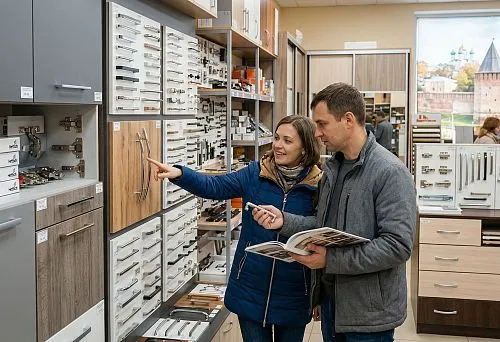
Tag and keyword systems enable quick search for needed elements among thousands of available options. Filters by size, material, color, price category help narrow the search to relevant results.
Custom collections allow creating personalized sets of frequently used elements. This significantly speeds up work on standard projects and ensures stylistic consistency.
Element usage history helps quickly find recently applied components. A recommendation system suggests suitable elements based on analysis of the current project.
Specialized collections for different fields
Kitchen furniture and built-in appliances
Kitchen furniture imposes special requirements on hardware due to specific operating conditions. High humidity, temperature fluctuations, intensive use require corrosion-resistant materials and reinforced structures.
Polyurethane Itemsare widely used in kitchen furniture due to their moisture resistance and ability to imitate various materials. Polyurethane elements do not deform from moisture and are easily cleaned from dirt.
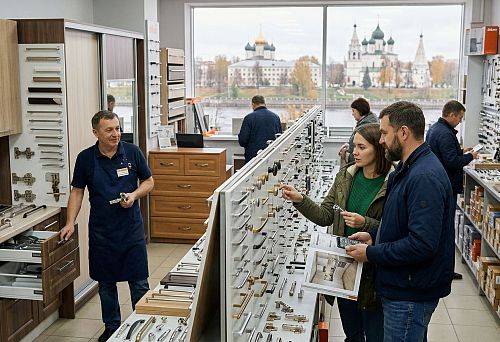
Specialized kitchen hardware includes pull-out systems for storing dishes, spices, and food products. Baskets, trays, dividers optimize the use of internal cabinet space.
Mechanisms for built-in appliances ensure proper installation and ventilation of electrical appliances. Lifters for heavy appliances simplify access to equipment installed in upper cabinets.
Office and commercial furniture
Office furniture requires enhanced functionality and ergonomics. Height adjustment mechanisms, cable management systems, specialized hardware for equipment — all of this is considered in special collections.
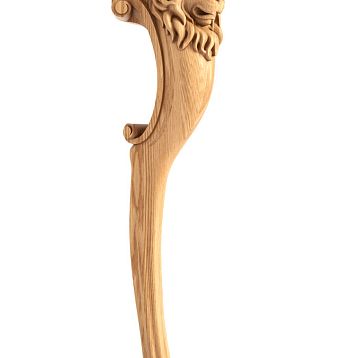
Furniture legsOffice furniture is often equipped with casters, height adjustment, and anti-static properties. Metal constructions ensure reliability and a modern appearance.
Cable management systems are integrated into furniture construction, ensuring neat cable routing and access to connection ports. Pull-out trays for keyboards, monitor stands, and computer tower holders optimize the workspace.
Commercial furniture for stores, restaurants, hotels uses specialized hardware designed for intensive use. Reinforced hinges, high-load capacity guides, anti-vandal solutions ensure longevity under commercial conditions.
Children's and specialized furniture
Children's furniture requires special attention to safety and eco-friendliness of materials.Facade DecorationFor children's furniture, it eliminates sharp edges, small parts, and uses only non-hazardous materials.
Special hardware ensures safety: dampers prevent finger pinching, locks restrict access to hazardous areas, and rounded shapes prevent injuries.
Growth furniture uses adjustment mechanisms that allow adapting products to changing children's needs. Height-adjustable tables and chairs, and convertible beds accompany children for many years.
Medical and laboratory furniture requires specialized hardware resistant to disinfectants and ensuring surface hygiene. Antibacterial coatings, sealed joints, and easily cleanable materials meet medical standards.
Economic advantages of using ready-made libraries
Reduction of design time
Using ready-made libraries drastically reduces the time required to create projects.Download Hardware for Basis Furniture DesignerIt means instant access to solutions that would otherwise require weeks of work by a team of specialists.
Automating routine operations allows designers to focus on creative aspects of design. Standardized solutions speed up work with serial products, leaving time to refine unique elements.
Standardizing design processes ensures predictable order fulfillment times. This is especially important for companies operating under tight deadlines or large production volumes.
Parallel work by multiple specialists on a single project becomes possible thanks to the use of shared library elements. This is critically important for large projects with limited implementation timelines.
Improved quality and reduced errors
Using tested library elements significantly reduces the likelihood of design errors. Each element has undergone thorough testing and optimization, guaranteeing its correct operation within the project.
Automatic compatibility checking prevents the use of incompatible elements. The system warns of potential issues during the design stage, when correcting them incurs minimal costs.
Standardizing elements simplifies staff training and reduces dependence on individual specialists' qualifications. New employees quickly master standard solutions and begin working productively.
Technical documentation for each element contains comprehensive information on application rules, limitations, and recommended combinations. This eliminates errors related to incorrect component usage.
Integration with production systems
Linking design with production
Modern libraries contain not only visual but also technical information.Carved decorative itemsThey include data on processing methods, required tools, and cutting modes for various types of equipment.
CAM modules use library information to automatically generate CNC machine control programs. This significantly reduces production preparation time and eliminates programming errors.
Integration with warehouse management systems allows automatic checking of availability of required materials and components. In case of material shortage, the system can automatically generate purchase orders.
Linking with production planning ensures optimal equipment and personnel loading. The system can suggest alternative technological solutions when certain equipment types are overloaded.
Quality control and standardization
Each library element undergoes multi-level quality checks. Geometric correctness of models is verified by automated algorithms that detect potential visualization or manufacturing issues.
Compliance with technical standards is confirmed by expert assessment of specialists. This is especially important for elements subject to certification or used in critical constructions.
Version control system tracks changes in library elements, enabling return to previous versions if necessary. Change history is documented for analysis and quality improvement.
Standardizing procedures for creating and formatting elements ensures uniformity of libraries from different manufacturers. This simplifies user work and ensures element compatibility.
Training and development of competencies
Educational resources and support
Effective use of furniture library requires appropriate knowledge and skills.Information for designers and architectsIt includes extensive training materials that help master all capabilities of modern design systems.
Video tutorials demonstrate practical techniques for working with various types of hardware. Step-by-step instructions allow users to quickly master complex operations without needing mentors.
Interactive textbooks adapt to the user's level of preparation, offering the appropriate amount of information and task difficulty. The testing system checks material comprehension and identifies knowledge gaps.
Online seminars and webinars provide live interaction with experts and the opportunity to get answers to specific questions. Event recordings form an archive of knowledge accessible for repeated study.
User community and experience exchange
The professional user community of the Basis-Mebelshchik system is a valuable resource for exchanging experience and solving complex tasks. Forums, social media groups, and specialized platforms unite thousands of specialists.
Exchanging user libraries allows access to unique solutions developed by colleagues. Many specialists freely share their work, contributing to the development of the entire community.
Contests and project exhibitions stimulate creative growth and showcase best practices for using the system. Winners receive recognition from the professional community and additional opportunities for career development.
Regional meetings and conferences provide personal interaction among specialists, fostering professional relationships and partnership opportunities.
Trends in development and future prospects
Integration with new technologies
The development of augmented and virtual reality technologies opens new possibilities for working with hardware libraries. VR visualization allows users to "immerse" themselves in projects and evaluate them at real scale.
Artificial intelligence helps in automatically selecting optimal elements for specific tasks. Machine learning analyzes user preferences and offers personalized recommendations.
Cloud technologies ensure access to libraries from any device anywhere in the world. Synchronization between devices allows users to start work on one computer and continue on another.
Mobile applications expand the possibilities of working with libraries, enabling direct consultation with clients on-site or in retail spaces. Augmented reality helps visualize furniture in real interiors.
Development of materials and manufacturing technologies
The emergence of new materials is reflected in the updating of hardware libraries.Architectural decorationThey are supplemented with elements made from composite materials, biopolymers, and smart materials with variable properties.
Additive technologies (3D printing) enable the creation of hardware with complex geometries unattainable through traditional manufacturing methods. Libraries are supplemented with unique solutions for additive manufacturing.
Nanotechnologies provide materials with new properties: self-cleaning surfaces, antibacterial coatings, color changes depending on operating conditions. These innovations are reflected in the characteristics of library elements.
Robotics changes requirements for hardware, creating a need for elements optimized for automated assembly. Standardization of fastening joints simplifies the automation of assembly processes.
Global trends and local adaptation
Environmental requirements and sustainable development
Growing attention to environmental issues influences the development of hardware libraries.Download Hardware for Basis Furniture DesignerThis means gaining access to elements made from recycled materials, biodegradable components, and circular economy solutions.
Certification according to environmental standards is becoming mandatory for many markets. Libraries include information on the environmental characteristics of elements, production carbon footprint, and recyclability.
Material optimization reduces production waste and environmental impact. Cutting algorithms consider environmental criteria alongside economic indicators.
Local production of hardware reduces transportation costs and carbon footprint. Libraries are adapted to local manufacturers' capabilities, stimulating regional economic development.
Personalization and mass customization
The trend toward product personalization requires new approaches to organizing hardware libraries. Parametric elements allow creating unique variants for each client without significant cost increases.
Interactive configurators allow clients to participate in the design process, selecting elements and parameters according to their preferences. This increases client engagement and satisfaction with the results.
Mass customization becomes a reality thanks to flexible production systems and adaptive element libraries. Each product can be unique while maintaining economic efficiency of production.
Big data technologies analyze consumer preferences and forecast trends, enabling the timely development of new library elements.
Practical recommendations for working
Organization of an effective workflow
Effective work with furniture libraries requires proper workflow organization. Creating custom collections of frequently used elements significantly speeds up access to required components.
Setting filters and search queries allows quickly finding elements with required characteristics. Saving frequently used queries saves time during repeated searches.
Regular library updates ensure access to new elements and bug fixes. Automatic notifications inform about available updates without interrupting the workflow.
Backup of user settings and collections protects against data loss due to system failures or software reinstallation.
Avoiding typical errors
Beginners often make characteristic errors when working with libraries. Incorrect selection of detail level may lead to reduced system performance or insufficient design accuracy.
Ignoring technical limitations of elements regarding load, size, and operating conditions may lead to problems in production or operation of finished products. Careful study of specifications eliminates such errors.
Incorrect organization of project file structure complicates searching and managing elements. Adhering to recommended naming and directory structure conventions simplifies work.
Neglecting backups may lead to loss of valuable user work. Regular backup creation should become a mandatory practice.
Frequently asked questions
How to choose appropriate furniture elements for a project?
Furniture selection depends on the functional purpose of the furniture, operating conditions, project budget, and aesthetic requirements. Start by defining the primary functions of each element, then consider loads, usage frequency, and appearance requirements. The system provides detailed information about each element, including technical specifications and application recommendations.
Can you create custom elements for the library?
Yes, the Basis-Furniture Designer system provides powerful tools for creating custom elements. You can create elements from scratch using built-in modeling tools, or modify existing elements to meet specific needs. Custom elements are saved in the user's library and can be shared with other users.
How often are furniture libraries updated?
Update frequency depends on the element manufacturer and development activity for new solutions. Standard libraries from major manufacturers are updated several times per year, including new product models, bug fixes, and functional improvements. The system can automatically notify users about available updates.
Does library size affect program performance?
Modern system versions efficiently operate even with very large libraries thanks to caching, indexing, and level-of-detail technologies. If needed, the system can be configured to work only with required element categories, optimizing resource usage.
Are library elements compatible with different program versions?
Most elements are backward compatible with previous program versions, although new features may not be available in older versions. When updating the program, all library elements are automatically adapted to the new version. It is recommended to use current versions of both the program and libraries to access all available features.
Can you work with libraries without an internet connection?
Yes, after downloading libraries, they operate in offline mode. Internet connection is required only for downloading new elements, updates, and synchronizing with cloud services. All core library functions are available offline.
How are libraries protected against unauthorized use?
Commercial libraries are protected by licensing systems that restrict usage according to the license agreement terms. Some elements may be protected by digital signatures or activation systems. Free elements are typically distributed without restrictions.
Download Hardware for Basis Furniture DesignerRepresents a strategic solution for any furniture production aiming to improve design efficiency and quality. Modern digital libraries have fundamentally changed approaches to furniture creation, transforming a complex technical process into an engaging creative activity.
Investments in quality libraries pay off multiple times through reduced design time, fewer errors, and higher quality of finished products. Companies that have adopted these tools gain significant competitive advantages in the market.
The future of furniture design is linked to further development of intelligent systems, integration with production processes, and product personalization. Modern furniture libraries lay the foundation for this future, providing tools that will remain relevant for many years.
Proper use of digital libraries requires time for learning and practice, but the results are worth the effort. Increased labor productivity, improved project quality, expanded creative possibilities — all of this becomes reality with a professional approach to using modern design tools.
STAVROS remains a reliable partner for professionals in the furniture industry, providing not only high-quality physical components but also supporting the development of digital technologies in the sector. Our products perfectly complement the capabilities of the Basis-Mebelshchik system, ensuring a complete cycle from conceptual design to the final product. Choosing STAVROS means investing in quality, innovation, and reliability that help create world-class furniture in today's competitive market.