Article Contents:
- Lighting and composition
- Chandelier as a compositional center
- Hierarchy of light sources
- Interaction of light and decor
- Psychology of lighting comfort
- Molding under the chandelier as a ceiling center
- Historical roots of ceiling rosettes
- Typology of ceiling rosettes
- Ornamentation and decorative motifs
- Materials and Manufacturing Technologies
- Color solutions
- Doorways and their decorative framing
- Architectural role of the door frame
- Moldings as the basis of framing
- Upper part of the framing
- Pilasters and Columns
- Corner accents and rosettes
- Materials for door framing
- Corner elements in interior design
- Corner elements of molding compositions
- Corner appliqués on furniture
- Protection of architectural corners
- Coffered ceilings and corner elements
- Joints of different materials
- Conclusion: stylistic unity
- Principles of stylistic consistency
- Scale and proportions
- Color Harmony
- Material unity
- Motif Repetition
- Rhythm and Symmetry
- FAQ: Popular questions about interior decor
- What size ceiling rosette is optimal for a room?
- Is it necessary to paint polyurethane molding?
- How to combine modern furniture with classical molding?
- Can a ceiling rosette be installed on a suspended ceiling?
- How to care for molding in interior design?
- Is it necessary to use corner elements in molding compositions?
- What width of door casing is considered optimal?
- Can different styles of molding be combined in one house?
- Conclusion: Mastery in Details

A harmonious interior is not born from a random collection of beautiful things, but from a deep understanding of the architectural unity of space. Each decorative element must be part of the overall composition, whereCeiling molding for chandeliercorresponds withthe door opening frame decorated with molding, andDecorative corner elementsties all details into a single symphony of forms. The secret to a truly expressive interior lies in the delicate balance between functionality and beauty, where every detail contributes to creating a cohesive whole.


Lighting and Composition
Light is the soul of the interior, an invisible architect of space capable of radically altering the perception of a room. Properly organized lighting not only ensures comfortable existence in the space but also reveals the beauty of architectural decoration, emphasizes volume, and creates mood. In classical and neoclassical interiors, the central chandelier traditionally becomes the main source of light and simultaneously the most important decorative element, around which the entire room composition is built.




Chandelier as a compositional center
The central chandelier in a room performs a role comparable to that of the sun in a planetary system — it becomes a point of attraction, organizing all other elements around itself. From it not only physical light, but also visual energy emanates, structuring the space. That is whyCeiling molding for chandelierhas such significance — it enhances this centripetal effect, creating a frame that focuses attention on the light source.
Placing a chandelier requires precise calculation and understanding of the room's geometry. In rectangular rooms, the center is defined by the intersection of diagonals; in complex polygonal spaces, mathematical calculation of the center of mass may be required. Even a deviation of the chandelier from the true center by several centimeters creates a sense of imbalance, which is subconsciously perceived as discomfort. Professional designers use laser levels and precise measuring tools to determine the ideal position of the fixture.
Our factory also produces:


Hierarchy of Light Sources
Modern approaches to lighting imply a multi-level system, where the central chandelier is supplemented by local light sources — wall sconces, floor lamps, recessed lights, hidden backlighting. This lighting hierarchy allows creating different lighting scenarios for various situations — bright light for work, soft light for relaxation, accent lighting for creating atmosphere.Ceiling molding for chandelieremphasizes the dominant role of the central fixture in this hierarchy.
It is important to understand that all light sources must be coordinated in terms of color temperature and brightness. A warm yellow light from the chandelier combined with cool white light from recessed lights creates a visual dissonance that disrupts the interior's harmony. Modern LED technologies allow precise control of the color temperature of all sources, creating a uniform light field.
Get Consultation
Interaction of Light and Decoration
Decorative interior elements reveal their beauty only under proper lighting.Ceiling molding for chandeliercreates a complex interplay of light and shadow on the ceiling — relief ornaments cast soft shadows that enhance the perception of volume and depth. Directed light from the chandelier glides over the surfaces of carved elements, revealing the finest decorative details that would remain unnoticed under uniform lighting.
Molding looks especially expressive under evening lighting, when natural light gives way to artificial. Side light from wall sconces creates dramatic long shadows that emphasize the relief of moldings and cornices. Modern systems with adjustable brightness allow changing the character of lighting throughout the day, creating various visual effects from the same decorative elements.
Psychology of Lighting Comfort
Lighting affects not only the visual perception of space but also the psychological state of people. Studies show that properly organized lighting reduces fatigue, improves mood, and enhances productivity. A central chandelier framed byceiling moldings under the chandelier, creates a sense of completeness, order, and stability — qualities that are subconsciously associated with safety and comfort.
The height of the chandelier's suspension also has psychological significance. A chandelier positioned too low creates a sense of pressure and confinement of space. An excessively high suspension makes the chandelier distant and inaccessible, breaking the connection between the ceiling and the living level of the room. The optimal suspension height in a living room with 3-meter ceilings is 2.1–2.3 meters from the floor to the bottom of the chandelier, ensuring comfortable perception and functionality.
Molding under the chandelier as the ceiling center
Ceiling rose — this is how architects refer to the decorative framing for the central chandelier — is one of the most expressive elements of classical interiors.Ceiling molding for chandelierperforms multiple functions: practical — conceals the electrical wiring outlet and fixture mounting point, visual — creates a proportional frame for the chandelier, compositional — becomes the center of all ceiling decoration.
Historical Roots of Ceiling Roses
The tradition of decorating the center of the ceiling with a decorative rose dates back to antiquity. In ancient Roman homes, the ceilings of coffered rooms were adorned with rosettes made of stucco — a special type of decorative plaster. These rosettes often had complex symbolism — depicting the sun as a source of light and life, stylized flowers as symbols of beauty and prosperity, geometric patterns as embodiments of cosmic order. The Renaissance revived this tradition, enriching it with new motifs and techniques of execution.
inherits this rich historical heritage, adapting it to the requirements of modern design.Ceiling molding for chandeliermay use abstract motifs, geometric patterns, minimalist reliefs, corresponding to the aesthetics of modern design.
Ceiling Rosette Typology
The variety of forms and styles of ceiling rosettes is breathtaking. Round rosettes - the most classic variant, symbolizing perfection and infinity. The diameter may vary from modest 30 centimeters for small rooms to impressive 150-200 centimeters for grand halls. The round shape is universal - it matches equally well with chandeliers of any configuration and fits into rooms of various proportions.
Oval rosettes are used in elongated rectangular rooms, where they visually correct proportions, making the room more harmonious. Square and polygonal rosettes are characteristic of modern neoclassical interiors, where geometric clarity of forms creates strict elegance. Complex composite rosettes, assembled from several elements, allow creating unique compositions that precisely match a specific interior.
Ornamentation and Decorative Motifs
The surface of the rosette may be smooth with minimal relief or covered with rich ornamentation. Classical motifs include acanthus leaves - stylized depiction of the plant acanthus, which since antiquity symbolizes vital force. Palmettes - fan-shaped plant elements - create rhythmic structure, directing the gaze toward the center of the rosette. Roses, laurel wreaths, grape clusters add symbolic meaning - beauty, victory, fertility.
Geometric ornaments - meanders, bead rows, Ionic, ovals - create an orderly decorative system characteristic of classicism. Baroque rosettes are distinguished by dynamism - asymmetrical volutes, shells, cartouches create a sense of movement, rotation around the center. ModernCeiling molding for chandeliermay use abstract motifs, geometric patterns, minimalist reliefs, corresponding to the aesthetics of modern design.
Materials and Manufacturing Technologies
Traditional material for ceiling moldings was plaster - pliable, allowing to create delicate details, easily paintable. Plaster molding requires work of an experienced sculptor, who either casts elements in molds or creates them manually directly on the ceiling. The process is labor-intensive and expensive, but the result possesses unique artistic value.
ModernCeiling molding for chandelierIt is primarily made of polyurethane - lightweight, strong, moisture-resistant material. Polyurethane rosettes reproduce the finest details of historical samples with perfect accuracy, while weighing several times less than plaster analogs. The small weight simplifies installation, reduces requirements for ceiling strength, allows using molding even on suspended and stretch ceilings.
Composite materials - fiberglass, polymer concrete - are used to create especially large or complex rosettes. They combine strength, lightness, and the ability to create delicate details. Wooden carved rosettes - rare in modern interiors due to high cost of handwork, but they possess unique warmth of natural material and tactile appeal.
Color Solutions
Classic solution for ceiling molding - white color, which creates a sense of purity, lightness, airiness. Snow-whiteCeiling molding for chandelieron a light ceiling creates a delicate relief, readable through play of light and shadow. Such a solution visually increases the height of the room, making it brighter and more spacious.
Gilding - traditional way of enriching molded decoration, characteristic of palace interiors. Gold may cover the entire surface of the rosette or be applied only to protruding elements of ornament, creating refined accents. Modern technologies allow using patina - imitation of gold leaf, visually indistinguishable from real gilding, but significantly more affordable.
Painting molding in the tone of the ceiling creates a more restrained effect - decoration is readable only through relief, without color contrast. Such an approach is characteristic of minimalist interiors, where architectural expressiveness is important without decorative opulence. Contrasting solutions - dark molding on a light ceiling or vice versa - create a graphic effect, emphasizing the geometry of decoration.
Doorways and Their Decorative Framing
A doorway is not just a technical element ensuring communication between rooms, it is a key architectural element that can become an interior decoration.Decorative molding for door openingsIt transforms a utilitarian passage into an expressive portal that defines the character of space and unifies different rooms into a single whole.
Architectural Role of the Doorway Portal
A door creates a boundary between spaces, and this boundary can be emphasized or softened using decorative framing. In classical interiors, a doorway portal was often framed as a miniature order composition - with pilasters on either side of the opening, an entablature above, sometimes with a pediment. Such a solution gave even a small door monumentality and significance.
The height and width of the opening determine the scale of framing. A standard doorway of 210 centimeters in height and 80-90 centimeters in width requires jambs 8-12 centimeters wide to create harmonious proportions. Wide double doors leading to grand rooms may have framing up to 20-25 centimeters wide, with rich decoration and complex profile.
Jamb as the Basis of Framing
Jamb - vertical elements on either side of the opening - create an architectural frame for the door.Decorative molding for door openingsThe choice of jamb profile begins precisely with the selection of the jamb profile. A simple flat jamb with a slight bevel creates a minimalist modern framing. Profiled jamb with complex cross-section - flutes, beads, scrolls - is characteristic of classical interiors.
Carved jambs with ornamentation transform the doorway into a work of decorative art. Plant motifs, geometric patterns, stylized ancient ornaments create rich visual texture. It is important that the character of jamb ornamentation corresponds to the decoration of other interior elements - ceiling cornices,moldings under chandeliers and ceilingbaseboards.
Upper Part of Framing
Horizontal element above the door - sash or pediment - completes the portal composition and creates visual connection with ceiling decoration. Simple horizontal molding creates minimalist finish, emphasizing rectangular geometry of the opening. Profiled cornice with overhang creates more expressive finish, casting decorative shadow.
Triangular pediment - classic element borrowed from ancient temple architecture - imparts solemnity and significance to the doorway portal. Pediment may be smooth or ornamented, with acroteria at the corners, with tympanum filled with decorative composition. Curvilinear - semi-circular - pediment creates a softer, baroque composition.
A broken pediment, where the two halves are spread apart, with a decorative vase, cartouche, or coat of arms placed in the central gap — a typical Baroque motif creating a dynamic, dramatic composition.Decorative molding for door openingsWith a broken pediment, it becomes an architectural accent of the entire room.
Pilasters and columns
More complex door frame decoration includes pilasters or half-columns, creating an order-based composition. A pilaster — a flat vertical protrusion imitating a column — consists of a base, shaft, and capital. The proportions of these elements adhere to strict classical orders — Doric, Ionic, Corinthian.
The Doric order, with its powerful proportions and simple forms, creates a sense of strength and stability. The Ionic order, with its characteristic volutes in the capital — is more elegant and light. The Corinthian order, with its ornate capitals of acanthus leaves — is the most decorative and luxurious. The choice of order is determined by the overall interior style and must correspond to the order used in other elements — ceiling cornices, fireplace surrounds, wall panels.
Corner accents and rosettes
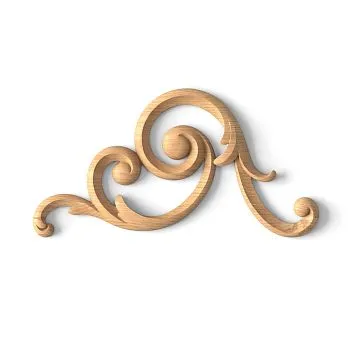
Decorative corner elementsIn the door frame, they create expressive accents at the junctions of vertical and horizontal elements. Corner rosettes — small decorative appliqués in the shape of flowers, rosettes, medallions — are placed in the upper corners of the opening, where the jambs meet the horizontal cornice. They conceal the junction of elements while simultaneously creating a decorative accent.
Carved corner elements can be symmetrical, with identical patterns on the left and right jambs, or asymmetrical, creating a dynamic composition. The size of corner elements must be proportional to the scale of the entire frame — overly large rosettes on narrow jambs look inappropriate, while too small ones on wide frames disappear and fail to create the desired effect.
Materials for door framing
Wood — a traditional and most prestigious material for door framing. Solid oak, beech, ash has a noble texture, can be stained in various tones, lacquered or oiled. WoodenDecorative molding for door openingscreates a sense of warmth, coziness, and connection to nature. Carved wooden elements possess special expressiveness due to the material's lively texture.
MDF with film coating or veneered — a more affordable alternative to solid wood, allowing the creation of complex profiled elements. Modern technologies enable imitation of any wood species, creating visually convincing copies. Polyurethane moldings for door framing are lightweight, moisture-resistant, non-deforming, easy to install and paint in any color.
Gypsum molding for door framing is used in luxurious interiors where special artistic expressiveness is required. Gypsum allows creating the finest details, complex multi-tiered compositions, and unique original elements. Combining materials — wooden jambs with gypsum or polyurethane corner elements — creates a rich textural palette.
Corner elements in interior design
Corners in interior design — are points of tension where planes and directions meet. Properly finishing corners is critically important for creating a finished, professional interior.Decorative corner elementsThey simultaneously solve several tasks: conceal junctions of different materials, protect vulnerable corners from damage, create decorative accents, and link various elements into a unified system.
Corner elements of molding compositions
When moldings are used to create wall panels, mirror frames, or decorative wall divisions, junctions arise at the corners of the composition, requiring elegant finishing.Decorative corner elementsThey are specially designed for these purposes — they have a profile exactly matching the molding, but enhanced with a decorative motif.
The classic way to join moldings — beveled at a 45-degree angle, creating an invisible joint. However, at the corners of the composition, such a joint may appear unfinished. A decorative corner element fills this space with ornament — a rosette, scroll, geometric pattern — transforming a utilitarian joint into a decorative detail. This solution is characteristic of classical and Baroque interiors, where an abundance of decoration creates an atmosphere of luxury.
Corner appliqués on furniture
Furniture corners — the most vulnerable areas, susceptible to chipping and wear.Decorative corner elementsMade from solid wood or metal, they protect these areas while simultaneously becoming decorative accents. Carved wooden appliqués on the corners of cabinets, chests, and buffets transform simple furniture into masterpieces of joinery art.
The stylistic design of corner appliqués should match the overall furniture and interior design. Baroque furniture is adorned with lavish, asymmetrical appliqués featuring volutes and botanical motifs. Neoclassical furniture prefers strict symmetrical rosettes and medallions. Modern-style furniture uses smooth, organic forms reminiscent of plant stems.
Metallic corner appliqués — bronze, brass — create contrast with wooden surfaces, adding elegance and protecting corners from damage. Gilded appliqués are characteristic of luxurious palace interiors, patinated bronze — for classical and neoclassical spaces, polished steel — for modern interiors.
Protection of architectural corners
External wall corners in passageways, corridors, and staircases are subjected to mechanical stress and require protection. Decorative corner appliqués made of wood, polyurethane, or metal protect plaster from chipping while simultaneously decorating the space. Such appliqués can be simple strips or complex profiled elements with ornamentation.
In classical interiors, corners are often finished with rustication — an imitation of stone masonry with deep joints. This creates a sense of monumentality and strength, visually reinforcing the corners. Pilasters placed at the corners perform a similar role, transforming a utilitarian structural element into an architectural ornament.
Coffered ceilings and corner elements
When creating coffered ceilings — ceilings with a regular system of recessed cells — corner elements take on special importance, connecting moldings at intersections.Decorative corner elementsIn coffered ceilings, they create a rhythmic structure organizing the space. In classical coffered ceilings, corner elements may be simple square blocks or complex carved rosettes.
Coffered ceilings with corner elements repeating the motifs of the centralmoldings under chandeliers and ceilingJoints of different materials
Joints of different materials
In modern interiors, combinations of different materials are often used — wood with stone, plaster with wallpaper, tile with parquet. The joints of these materials require elegant finishing, and corner elements play a key role here. Wooden strips, metal profiles, decorative moldings conceal technical seams, creating neat transitions.
Decorative corner elementsAt joints, not only practical tasks are solved, but they also become decorative accents that emphasize the designer's concept. Corner elements contrasting in color or material highlight zone boundaries, creating a visual structure of the space.
Final result: stylistic unity
Creating a harmonious interior requires understanding the interrelation of all decorative elements.Ceiling molding for chandelier, Decorative molding for door openings, Decorative corner elementsAll these details must work together, creating a cohesive visual system. The secret of professional design lies in the ability to see space as a single whole, where each detail occupies its place and fulfills its role.
Principles of stylistic consistency
Choosing a style is the first and most important step in creating a cohesive interior. Classical styles — baroque, rococo, classicism, empire — have clear canons that must be followed in all elements. If a ceiling medallion is executed in the baroque style with lavish scrolls and asymmetrical motifs, then door casings, corner elements, baseboards must also carry baroque characteristics. Mixing styles requires high professionalism and can easily turn into eclectic chaos.
Neoclassical and modern styles offer more freedom for interpretation, but core principles — proportionality, consistency of forms, unity of color palette — remain mandatory. MinimalistCeiling molding for chandelierwith simple geometric forms requires corresponding minimalistDoor opening framingwithout excessive decoration.
Scale and proportions
All decorative elements must be proportionate to each other and to the scale of the room. A large ceiling medallion with a 120 cm diameter in a small room will look inappropriate, just as a miniature medallion in a spacious hall will disappear and fail to create the desired effect. Professional designers use mathematical proportions to calculate optimal element sizes.
The width of door casings should correspond to the width of ceiling cornices and baseboards. Usually, the proportion 1:1.5:2 is observed, where the baseboard has width X, the casing — 1.5X, the ceiling cornice — 2X. This creates a harmonious visual system with gradual scaling from bottom to top.Decorative corner elementsIn size, they must correspond to the scale of the moldings they adorn.
Color Harmony
The color palette of decorative elements creates visual unity in the interior. The traditional solution — white color for all moldings — creates a sense of purity, light, and classic elegance. Painting decor in the tone of walls creates a more restrained effect, where elements are perceived through relief rather than color contrast.
Contrasting solutions — dark moldings on light walls or vice versa — create graphic expressiveness, emphasizing architectural lines. It is important that the colormoldings under chandeliers and ceilingof moldings, door casings, baseboards, cornices is coordinated, creating a unified system. Minor variations in shade are permissible, but radical color differences between decorative elements destroy the overall unity.
Material Unity
The choice of materials affects the overall perception of the interior. Using natural wood for all decorative elements creates a warm, cozy atmosphere characteristic of traditional interiors. Polyurethane molding — a more practical modern solution — allows creating complex forms at lower cost and weight of structures.
Combining materials requires attention to visual consistency. Wooden door casings can be combined with polyurethane ceiling moldings if they are painted in the same color and have comparable levels of detail. Gypsum molding can be combined with wooden elements in classical interiors, where diversity of materials creates a rich tactile palette.
Repetition of Motifs
One of the powerful tools for creating unity is repeating decorative motifs across various elements. The ornament used in the ceiling medallion may be repeated incorner elements of door casings, in the decoration of cornices, in carvings on furniture. Such repetition creates visual connections, uniting disparate elements into a cohesive composition.
Repetition does not mean literal copying — the motif may vary in scale, degree of detail, or material. It is important to preserve the recognizability of the main theme, which becomes the leitmotif of the interior, its unique character, creating a distinctive atmosphere.
Repetition of decorative elements creates rhythm in the interior, unifying scattered items into a single composition. Symmetrical placement gives the interior solemnity and strictness, while asymmetrical placement adds dynamism and modernity.
Classical interiors are built on principles of symmetry and rhythmic repetition of elements. The centralCeiling molding for chandelierbecomes the center of symmetry from which the entire composition is built. Door openings are arranged symmetrically relative to the central axis of the room, their casings mirror each other.
Rhythm is created through the repetition of identical or similar elements at regular intervals. Moldings on walls, creating panels, are arranged in a certain rhythm, which may be simple — uniform repetition — or complex — alternating large and small elements. This rhythm creates the musicality of space, making it dynamic or, conversely, calm, depending on the nature of repetition.
FAQ: Popular questions about interior decor
What size ceiling medallion is optimal for a room?
The diameter of the medallion is calculated by the formula: the sum of the room's length and width in meters, divided by 7. For a 5x4 meter room, the optimal diameter will be approximately 130 centimeters. In rooms with high ceilings — above 3.5 meters — the size can be increased by 10-15 percent.Ceiling molding for chandelierIt should be proportional to the chandelier's size - the socket's diameter is usually 1.5-2 times larger than the light fixture's diameter.
Is it necessary to paint polyurethane molding?
Polyurethane molding can be used without painting - the material has a uniform white color. However, painting creates a more noble matte or satin finish, hides possible minor installation defects, and protects against dirt. Water-based acrylic paint is ideal for polyurethane, creating a breathable coating.
How to combine modern furniture with classical molding?
Neoclassical style successfully combines classical architectural decoration with modern furniture. The key to harmony is choosing simple molding profiles without excessive ornamentation, a neutral color palette, and an emphasis on geometry and proportions.Decorative molding for door openingsIt pairs beautifully with minimalist furniture.
Can a ceiling rose be installed on a stretch ceiling?
Yes, there are special lightweight polyurethane ceiling roses designed for stretch ceilings, which are glued directly onto the fabric. Special adhesives are used that do not damage the film. An alternative option is installing the rose on the base ceiling before mounting the stretch ceiling, with a hole cut in the fabric.
How to care for molding in interior spaces?
Regular dry cleaning with a soft brush or vacuum cleaner with a soft attachment prevents dust accumulation in the relief.Ceiling molding for chandelierAnd other elements can be wiped with a slightly damp soft cloth. Painted molding allows for damp cleaning with mild cleaning agents. Avoid abrasive materials and aggressive chemicals.
Is it necessary to use corner elements in molding compositions?
Corner elements are not mandatory, but they significantly simplify installation and improve appearance. Without them,of decorative corner elementsit requires precise 45-degree miter cuts of the molding, which requires experience and special tools. Decorative corner elements transform a utilitarian joint into an elegant detail.
What width of door casing is considered optimal?
For standard doors 80-90 cm wide, the optimal casing width is 8-12 cm. For wide double doors, it is 15-20 cm. It is important to consider the proportion with the door opening height and the room's scale.Decorative molding for door openingsIt should harmonize with ceiling cornices and baseboards.
Can different molding styles be combined in one house?
It is permissible to use different stylistic solutions in different rooms of a house, especially if the rooms are clearly separated. Entrance areas may have more ornate classical molding, while private rooms may have a more restrained style. However, mixing styles within a single room is undesirable.
Conclusion: Mastery in the Details
Creating a harmonious interior is an art of coordinating many elements into a unified symphony of forms, colors, and textures.Ceiling molding for chandelierIt becomes the center of composition, organizing space around itself.Decorative molding for door openingsIt creates architectural accents that structure the space.Decorative corner elementsIt connects various details, completing the composition.
The secret of professional design lies in the ability to see the relationships between elements, understand the laws of proportion, feel rhythm and scale. Every detail matters, and each element performs its role in the overall composition. Neglecting small details destroys the impression of the most expensive materials and work, while attention to details transforms a modest space into a work of art.
Modern technologies and materials make classical beauty accessible. Polyurethane molding reproduces historical samples with perfect accuracy at significantly lower costs. CNC machines create intricate carvings that previously required months of handwork. New adhesives simplify installation, making it accessible not only to professionals.
However, technology is merely a tool. True value is created by the concept, artistic vision, and ability to sense space. A professional designer or architect helps avoid mistakes and create a truly cohesive composition where all elements work together. Consulting a specialist during the design phase saves time, money, and nerves during implementation.
The path to creating a harmonious interior begins with choosing a style that matches the owner's personality and the space's purpose. Classic style suits those who value tradition and stability. Neoclassicism combines respect for tradition with modern comfort. Minimalism creates a calm, uncluttered environment for focused living.
The next step is developing a decorative concept, where the set of elements, their scale, materials, and color palette are defined. Ceiling roses, cornices, door casings, baseboards, corner elements - all must be coordinated to form a unified system. It is important not to overload the space with decoration and to find a balance between expressiveness and restraint.
Implementation requires quality materials and professional installation. Even the most beautiful elements lose their appeal with careless installation. Smooth joints, neat caulked seams, quality painting - details that distinguish a master's work from amateur craftsmanship.
The result is a space that delights the eye, creates a sense of harmony and completeness. An interior where every detail is in its place, where architectural decoration does not merely adorn but creates the character of the room. A home that reflects the owner's taste and individuality, becoming a source of daily aesthetic enjoyment.
STAVROS Company offers a full range of decorative elements for creating cohesive, harmonious interiors. A wide collection of ceiling moldings includes rosettes of all sizes and styles — from classic round to modern geometric. The assortment of moldings and door casings allows for creating expressive door frames of any complexity. Corner elements, capitals, bases, and decorative appliqués complete the system, providing everything necessary to realize the most ambitious projects.
STAVROS's own production guarantees stable product quality and the ability to fulfill custom orders. Experienced technicians help select optimal solutions, taking into account the specifics of each project. Flexible pricing makes quality decor accessible for projects of any scale — from compact apartments to spacious mansions.
STAVROS's team of professional consultants is always ready to assist in selecting elements, developing decorative concepts, and solving technical installation issues. Years of experience enable anticipating potential problems and proposing proven solutions. Create interiors that become works of art, together with STAVROS.