Article Contents:
- Historical Development of Icon Framing: From Byzantium to the Present Day
- Byzantine Origins
- Ancient Russian Period
- 17th–19th Centuries: The Golden Age of Icon Frames
- Synodal Period
- Soviet Period and Revival of Traditions
- Typology and Symbolism of Icon Framing
- Icon Frame and Its Variants
- Elements of the Frame and Their Symbolism
- Symbolic Meaning of the Frame
- Materials and Techniques for Making Icon Frames
- Traditional Materials
- Traditional Processing Techniques
- Process of Creating an Icon Frame
- Wooden Icon Frames: Racks and Frames
- Rack: Protection and Decoration
- Frames for Icons
- Natural Icon Frame
- Restoration and Care of Icon Frames
- Main Issues of Icon Frame Preservation
- Methods of Restoring Icon Frames
- Rules for Caring for Icon Frames
- Modern Trends in Icon Framing
- Variety of Wooden New Year Decorations
- New materials and technologies
- Individual approach
- Symbolic Meaning of Trim in Various Cultures
- Orthodox Tradition
- Catholic Tradition
- Eastern Christian Traditions
- Practical Aspects of Choosing and Using Icon Frames
- Choosing a Frame Depending on the Type of Icon
- Placement of Icons in Interior Design
- Storage and Transportation of Icons with Frames
- Conclusion
In the world of Orthodox culture, there is a special attitude toward icons — not merely as works of art, but as sacred images, windows into the spiritual world. An inseparable part of this tradition is the icon's frame — an element that not only protects the holy relic but also emphasizes its sacred character, creating a transition between the earthly and divine realms. The icon's frame is not merely a decorative element, but a deeply symbolic detail possessing its own language, history, and spiritual significance.
the multi-century history of the icon's frameits variety of forms and materials, technological specifics of creation and restoration, as well as modern trends in this ancient art. Immersing ourselves in this topic, we will uncover a wonderful world where faith, art, and craftsmanship intertwine.


Historical Development of the Icon's Frame: From Byzantium to Our Days
History the icon's frame is inseparably linked with the history of icon painting itself and traces its roots back to the Byzantine tradition. We will trace the main stages of the development of this art.




Byzantine Origins
The tradition of decorating icons with metallic frames originated in Byzantium, where the icon held a central place in religious life. The first frames appeared as a means of protecting especially venerated images and simultaneously as an expression of the faithful's reverence. Byzantine masters created exquisite frames from precious metals, adorned with enamel, gemstones, and pearls.
In Byzantium, the practice of using metallic frames to protect religious icons acquired a special meaning. Such the icon's frame— also known as a riza — became a symbol of the light and beauty of God's world. It is not surprising that it was usually made of silvered or gilded metal and adorned with precious and semi-precious stones.
Our factory also produces:


Early Russian Period
Upon the adoption of Christianity in Rus', the Byzantine icon-painting tradition and the icon's frame were adopted and creatively transformed. In the early Russian period (11th–16th centuries), frames were primarily made for especially venerated icons and took the form of overlay plates covering the icon's fields, leaving the saints' faces and hands exposed.
During this period, the technique of basma — thin metal plates with embossed ornamentation — gained widespread popularity. Basmennye frames were relatively inexpensive and allowed for decorating a large number of icons. They covered the icon's fields and backgrounds so as to leave the figures of the saints, architectural depictions, and landscapes exposed.
Get Consultation
17th–19th centuries: The Golden Age of Framing Art
The 17th–19th centuries became a period of flourishing the icon's frame in Russia. During this time, frames became increasingly ornate and decorative, reflecting general trends in Baroque and Classicism art.
By the 17th century, icon frames that covered the entire painted surface, leaving only the faces of the depicted saints exposed, became increasingly common. Later, such full-coverage frames became predominant. In place of the strict basmennye works of ancient Rus', more ornate engraved frames in the Baroque style emerged.
Such a frame was created as follows — on a smooth silver sheet, the riza master would create an ornamental frame, meticulously detailing the figures and garments of the saints, and then repeat the complex composition — landscape hills, architecture, and other elements.
Synodal Period
During the synodal period (18th–early 20th centuries), the art the icon's frame reached its peak. Frames from this era are distinguished by the highest level of execution, variety of techniques and materials. Chasing, engraving, enamel, filigree are widely used.
During this period, the tradition of creating full frames, covering the entire surface of the icon except for the faces and hands of the saints, was established. Such frames were often supplemented with crowns, halos, rizas, and other elements.
Soviet Period and Revival of Traditions
The 1917 Revolution and the subsequent persecution of the Church dealt a severe blow to the tradition the icon's frame. Many precious frames were destroyed or melted down, workshops were closed, and traditions were broken.
Interest in icons and their frames began to revive in the second half of the 20th century, first among collectors and art historians, and then, following the collapse of Soviet power, among broader circles of believers. Today we observe the revival of traditions the icon's frame, the emergence of new workshops and schools combining ancient techniques with modern technologies.
The typology and symbolism of icon framing
the icon's frame Represents a complex system of elements, each of which has its own purpose and symbolic meaning. Let us consider the main types and elements of frames.
Icon frame and its varieties
In antiquity, the icon frame was called 'kovanie'. This is a precious image that fully (with cutouts for faces and hands) or partially (a border on the edges) covers the icon's image. The term 'icon frame' does not appear before the 16th century. The frame was executed according to the prevailing style in various decorative techniques, using precious stones, pearls, and other materials.
There are several main types of frames:
- Basemen frame — was made using the basme technique, covering the fields and background of icons so as to leave the figures of saints, architectural images, and landscape open. Made from thin metal plates, decorated with various symbolic ornaments using embossing and engraving techniques.
- Chased frame — executed from a metal sheet using chasing, creating a relief image that repeats the iconographic image.
- Filigree frame — created using the filigree technique, using thin wire to form patterns and ornaments.
- Enamel frame — decorated with enamel inserts, creating bright color accents.
Elements of the frame and their symbolism
the icon's frame may include various elements, each of which has its own symbolic meaning:
- Crown — halo around the head of a saint, symbolizing divine light and sanctity.
- Cata — crescent-shaped ornament suspended from the icon's halo, symbolizing royal dignity.
- Riza — part of the frame covering the saints' garments, symbolizing spiritual purity and grace.
- Ochelie (nachelnyk, nalobnik) — headband, also called parts of ancient headgear covering the forehead. Typically, this term refers to the part of the Virgin Mary's riza covering her forehead and hair. Often, the ochelie is woven using pearl beads and precious stones.
- Fields — border around the perimeter of the icon, symbolizing the boundary between the earthly and heavenly worlds.
- Riasny — pendants attached to the halo, symbolizing spiritual gifts.
Symbolic meaning of framing
the icon's frame Has deep symbolic significance in Orthodox tradition. The purpose of using frames in iconography is primarily to create a symbol of the non-material Light in which the saints dwell, and the basemen floral ornaments, by their eternal blooming, signify the life-giving power of this Divine Light.
Precious metals and stones used in the frame also carry symbolic weight:
- Gold symbolizes divine light and immortality
- Silver — purity and spiritual perfection
- Precious stones — spiritual virtues and gifts of the Holy Spirit
Decorating frames with gemstones, pearls, and colored enamels — 'multivalent beads' — is and remains in modern theology a symbol of the richness of the soul adorned with numerous spiritual gifts.
Materials and techniques for making icon frames
Creation the icon's frame Requires high craftsmanship and knowledge of various materials and techniques. Let us consider the main ones.
Traditional materials
For creating frames, the following materials were traditionally used:
- Precious metals — gold, silver, their alloys
- Base metals — copper, brass, bronze
- Precious and semi-precious stones — rubies, sapphires, emeralds, amethysts, etc.
- Pearl — both river and sea pearl
- Enamels — transparent and opaque, in various colors
- Fabrics — brocade, velvet, silk for inlaid frames
- Wood — for carved frames and ikons
Later, for the manufacture of frames, brass or copper became the primary metal. Brass easily takes the required shape, is well workable, and can later be covered with silver or gold. However, this alloy has negative characteristics. Over time, brass oxidizes, corrodes, and deteriorates, leading to the loss of its original aesthetic appearance.
Traditional processing techniques
Traditional techniques of ancient Russian jewelers were used to create frames:
- Basma — technique of embossing a pattern on a thin metal sheet using a matrix
- Zerny — decorating the metal surface with tiny metallic beads
- Skany (filigree) — creating patterns from thin metal wire
- Chasing — creating a relief image by striking on a metal sheet
- Engraving — applying a design by scratching the metal
- Enamel — applying glass-like mass on a metal base followed by firing
- Cherny — filling engraved designs with black alloy
- Gilding and silvering — applying a thin layer of precious metal on the surface
Frame-making process
Production Process the icon's frame includes several stages:
- Designing — creating a frame sketch considering the size and features of the icon
- Material preparation — cutting metal sheets, preparing wires, stones, and other elements
- Creating the frame base — forming the main shape by chasing, embossing, or casting
- Decorating — applying ornaments, patterns, creating relief
- Finishing — polishing, patination, gilding or silvering
- Inlay — installing precious stones, pearls, enamel inserts
- Assembly — connecting all frame elements
- Mounting on the icon — attaching the frame to the icon using special mounts
Wooden framing of icons: ikons and frames
In addition to metal frames, an important role in icon framing are wooden elements — ikons and frames.
Kyoto: Protection and Decoration
An icon case is a special glass-enclosed box or cabinet for storing and displaying icons. Icon cases serve both a practical function — protecting the icon from dust, moisture, and mechanical damage — and an aesthetic one — providing a dignified frame for the holy relic.
Icon cases can come in various shapes and sizes:
- Wall-mounted — for mounting on a wall
- Floor-standing — large icon cases installed on the floor
- Tabletop — small icon cases for home iconostases
- Portable — foldable icon cases for travel
Traditionally, icon cases are made of wood — oak, linden, cedar, pine. Icon cases may be simple or elaborately decorated with carving, gilding, or inlay.
Icon frames
Icon frames represent a simpler form the icon's frameThey can be wooden, metallic, or combined.
Wooden frames are made from hardwoods, ensuring strength and durability. They may be adorned with carving, gilding, or painting.
A distinctive feature of icon frames is that they often have a recess — an indentation in the central part — where the icon is placed. This is not only a practical solution protecting the painted surface, but also a symbolic element emphasizing the icon’s special status as a window to the spiritual world.
The natural frame of an icon
It is interesting to note that in traditional icon painting, the icon board itself often has a natural frame. On the front side of the board, a recess is usually made, whose edges serve as the icon’s frame. This natural frame of the icon has, on one hand, a practical value, as it reinforces the icon’s resistance to bending and allows one to rest hands on the icon during work without touching the painting.
On the other hand, it corresponds to the meaning of the icon; if the frame of a painting emphasizes the illusionistic aspect, here the edges of the icon, on the contrary, prevent the creation of such an illusionistic impression.
Restoration and care of icon frames
Preservation and restoration of historical icon frames — an important task requiring specialized knowledge and skills.
Main problems of icon frame preservation
Icon frames are susceptible to various types of damage:
- Mechanical damage — deformations, cracks, loss of elements
- Metal corrosion — oxidation, darkening, structural destruction
- Loss of coatings — abrasion of gilding, silvering
- Detachment of stones and other inserts
- Contamination — dust, soot, wax
Often, frames are covered with paint (bronze, silver, oil), as well as wax. There are elements of destruction, cracks, loss of individual ornamental elements, torn frames, and a 'powdery' appearance on the surface of the frame.
Methods of restoring icon frames
Restoration is a complex process requiring specialized knowledge and skills, especially when dealing with historical objects. the icon's frame includes the following stages:
- Research — studying the condition of the frame, determining materials and manufacturing techniques
- Cleaning — removal of contaminants and corrosion products
- Deformation Correction — straightening bent elements
- Restoration of Lost Elements — recreation of lost fragments
- Strengthening — conservation of weakened areas
- Restoration of Coatings — gilding, silvering, patination
- Assembly — assembly and attachment of the frame to the icon
The entire scope of work for restoring frames can be divided into several stages:
- Cleaning the frame — a process in which we reach the "live" metal through processing.
- Restoration of lost elements — this process includes soldering, either laser or with a soldering iron, using special solders. For restoring lost fragments, 3D modeling is performed followed by re-engraving.
- Pre-grinding — special fine-dispersed pastes are used.
- Silvering — often uses the galvanic method. Coating thickness 3–4 micrometers.
- Matting — creation of a matte surface.
- Masking — preparation for gilding individual elements.
- Gilding individual elements — halos, stars on garments, borders, etc.
- Blackening (patination) — for effectively emphasizing the relief image.
- Attachment of the frame to the icon — final stage of work.
Care Instructions for Frames
Proper care of icon framing allows preserving its beauty and preventing damage:
- Regular dust cleaning — with a soft brush or dry soft cloth
- Moisture protection — store in a dry room, avoid sudden temperature and humidity changes
- Careful handling — avoid mechanical impacts, drops
- Professional cleaning — periodic cleaning by specialists using special agents
Many images have frames — metal relief borders around the image, except for hands and faces. Frames are made from noble metals — silver, gold, or gilded — or decorated with common metals.
Storage conditions for icons with frames are identical to wooden and printed ones: protect items from high and low temperatures and humid air. Regularly wipe frames with a soft cloth to remove dust.
Modern Trends in Icon Framing
Modern the icon's frame combines traditional approaches with new materials and technologies.
Revival of traditions
In the last decades, we have observed a revival of interest in traditional techniques the icon's frame. Masters study and recreate ancient technologies, referring to historical examples.
Techniques such as sanc, enamel, blackening, and basma are being revived. Frames are created that stylistically resemble historical examples from various eras — from Byzantine to synodal.
New materials and technologies
Modern technologies allow for creating the icon's frame using new materials and methods:
- Laser cutting and engraving — allows creating complex patterns with high precision
- 3D modeling and printing — used for creating prototypes and restoring lost elements
- Electroplating — provides uniform and durable coating of metals
- Synthetic materials — used as an alternative to expensive natural materials
Individual approach
Modern masters offer an individual approach to creation the icon's frametaking into account the client's wishes, the icon's features, and the interior where it will be placed.
Oklads of various styles are created — from strictly canonical to modern interpretations of traditional forms. This allows selecting an ornamental frame that matches both the icon and the context of its use.
Symbolic meaning of framing in various cultures
the icon's frame has different meanings in various Christian traditions and cultures.
Eastern Orthodox Tradition
In the Orthodox tradition the icon's frame has deep theological significance. The oklad symbolizes the transfigured, glorified body shining with divine light. Precious metals and stones indicate the spiritual richness and beauty of the Heavenly Kingdom.
A distinctive feature of Russian tradition is that the oklad often covers most of the icon, leaving only the faces and hands exposed. This emphasizes that the essence of the icon is not the material image, but the spiritual essence manifested through the saint's face.
Catholic tradition
In the Catholic tradition, the approach to framing icons differs somewhat. Here, frames similar to picture frames are more commonly used, rather than oklads covering part of the image.
Catholic frames are often richly decorated with carving and gilding, but they frame the image rather than overlaying it. This is due to a different theological understanding of the role of the image in Catholicism.
Eastern Christian traditions
In various Eastern Christian traditions (Coptic, Ethiopian, Armenian, Syriac) the icon's frame has its own features reflecting the cultural and theological characteristics of these churches.
For example, in the Coptic tradition, icons often have simple wooden frames decorated with geometric ornamentation. In the Ethiopian tradition, triptychs and polyptychs — foldable icons with carved wooden panels — are common, serving both as protection and framing.
Practical aspects of choosing and using framing
When choosing the icon's frame a number of practical aspects must be considered.
Choosing framing depending on the type of icon
Different types of icons require different approaches to framing:
- Ancient icons — require special care; often, a kiot without an oklad is best to avoid damaging the colorful layer
- Modern hand-painted icons — can be framed with a traditional oklad, a simple frame, or a kiot
- Printed icons — are often placed in simple frames or inexpensive oklads
Icon Placement in Interior
When placing icons in interior spaces, the following factors are important:
- Lighting — the icon should not be placed under direct sunlight
- Humidity — avoid placing icons in rooms with high humidity
- Temperature regulation — avoid sharp temperature fluctuations
- Placement height — the icon should be at eye level or higher
Storage and transportation of icons with ornamental frames
Proper storage and transportation of icons with icon framing require adherence to certain rules:
- Packaging — use soft materials that do not scratch the surface
- Moisture protection — use moisture-resistant materials
- Prevention of mechanical damage — use rigid containers
- Maintaining stable temperature and humidity — avoiding sharp fluctuations
Conclusion
the icon's frame — it is not merely a decorative element, but an important part of Orthodox tradition, possessing deep symbolic meaning. From simple wooden frames to luxurious ornamental frames adorned with precious metals and stones, the frame emphasizes the sacred character of the icon, creating a transition between the earthly and divine realms.
History the icon's frame reflects the development of Christian art and theology, cultural and historical characteristics of various epochs and regions. Today, we observe a revival of interest in this tradition, combining ancient techniques with modern technologies, creating new forms that respond to the spiritual and aesthetic needs of our time.
Understanding symbolism and meaning the icon's frame allows us to delve deeper into the meaning of the icon as a window into the spiritual world, as testimony to the transformation of matter by God's grace.
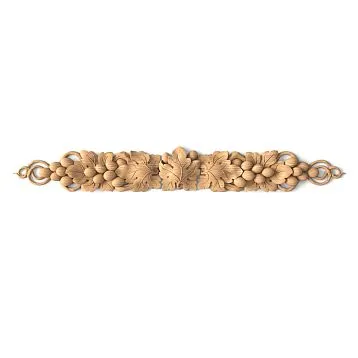
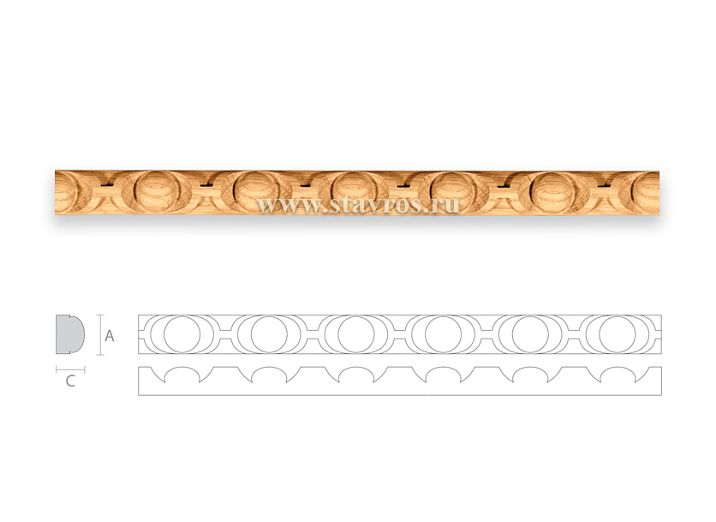
The company 'Stavros' offers a wide range of solid wood products for creating magnificent icon frames — moldings, cornices, baseboards, and other decorative elements. High-quality materials, precision manufacturing, and attention to detail guarantee an outstanding result that will exceed your expectations and become a worthy frame for a holy relic.