Article Contents:
- Introduction
- Furniture Manufacturing Market
- Historical Overview
- Technological Innovations and Automation
- Ecological and Sustainable Technologies
- Product Range and Segmentation
- Design and Functionality
- Quality and Standards
- Analysis Methods and Tools
- Key Trends and Challenges
- Forecasts and Prospects
- Current Events and Trends
- Impact of the Pandemic and Global Economic Processes
- Role of Digital Technologies in Industry News
- Features and Competitive Advantages
- Problems and Challenges
- Prospects and Development Strategies
Furniture manufacturing is a dynamically developing industry where traditions intertwine with innovations, and global trends meet local specifics. Under constant changes in the economy, technology, and consumer preferences, the furniture products market becomes a stage for active research, in-depth analysis, and timely responses to news. In this article, we will examine key aspects of furniture production, analyze the current state of the furniture market, pay attention to fresh industry news, and focus in detail on the specifics of the Russian furniture market.


Introduction
Over the past decades, furniture manufacturing has undergone radical changes. The modern furniture products market is characterized by high competition, diverse product range, and manufacturers' efforts to meet even the most sophisticated consumer demands. Innovative technologies, digitalization of production processes, and growing attention to ecological aspects have become key factors determining success in the industry.
This article will cover the following topics:
● Furniture Manufacturing Market – features of organization and development of the production process.
● Furniture Products Market – product segmentation, design features, and functional characteristics of items.
● Furniture Market Analysis – evaluation methods, statistical data, and key trends.
● Furniture Market News – current events and recent changes affecting the industry.
● Russian Furniture Market – features, challenges, and development prospects under the conditions of the domestic economy.
The purpose of this article is to provide a comprehensive overview of the current state and prospects of furniture manufacturing, identify key trends, and determine directions for further industry development.




Furniture Manufacturing Market
Our factory also produces:


Historical Overview
Furniture manufacturing has a long history rooted in ancient crafts and traditional methods of processing wood, metal, and textiles. Over time, production technologies have significantly evolved: from manual labor to mechanized, and finally to highly automated lines. These changes have not only improved product quality but also substantially increased production volumes.
Under a planned economy, furniture production was often centralized, which affected limited product variety and standardized design. With the transition to a market model, new private enterprises emerged, leading to diversity in styles, materials, and manufacturing technologies. Today, manufacturers combine traditional craftsmanship with modern innovations to create products meeting high quality standards and unique design requirements.
Get Consultation
Technological Innovations and Automation
The modern stage of furniture manufacturing is characterized by active adoption of digital technologies. Automated production lines, robotic systems, and quality control systems allow significantly reducing product costs and minimizing errors associated with human factors.
Digitalization of production covers not only mechanized manufacturing but also planning, inventory management, and logistics. Using modern software solutions for modeling and design enables creating 3D product models, testing various design options, and optimizing the production process even during the design phase.
Ecological and Sustainable Technologies
One of the key priorities of modern furniture manufacturing is transitioning to environmentally friendly technologies. Using natural materials, eco-friendly paints and coatings, and waste recycling technologies have become an essential part of many companies' strategies. This approach not only improves brand image but also meets the growing demand from environmentally conscious consumers.
Furniture Products Market
Product Range and Segmentation
The furniture products market is extremely diverse. It can be divided into several main segments, each targeting a specific target audience:
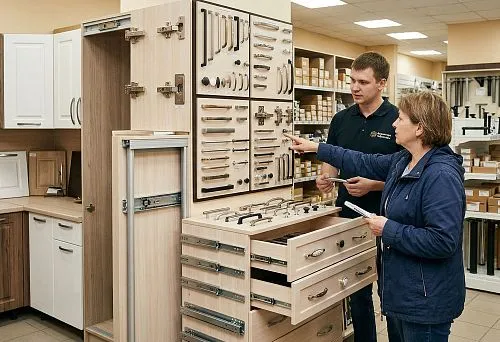
● Home Furniture. This segment includes items for furnishing living spaces – kitchens, living rooms, bedrooms, offices. Here, both functional characteristics and aesthetics are important, combining modern trends with classic solutions.
● Office Furniture. This segment focuses on producing furniture for commercial spaces: offices, conference rooms, meeting rooms. Here, key aspects are ergonomics, modularity, and durability.
● Furniture for Public Spaces. This includes items for cafes, restaurants, hotels, and other public venues. Special attention is paid to design, comfort, and durability.
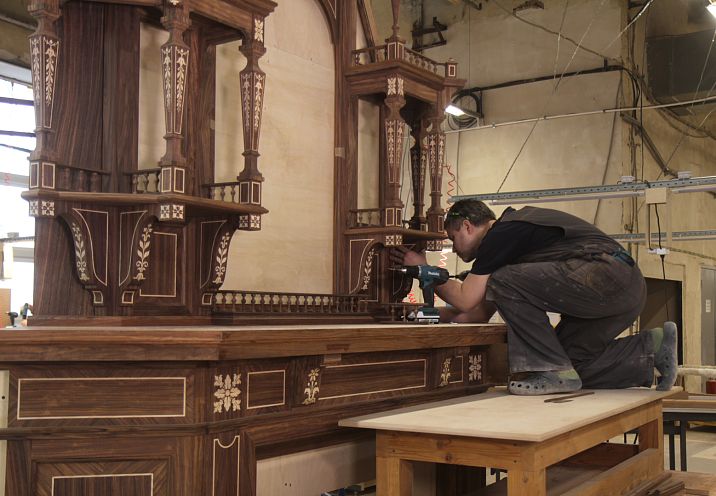
● Exclusive Furniture. This segment includes high-end items made to individual orders. These items are often created with unique design solutions and exclusive materials.
Design and functionality
Modern consumers require furniture not only for practicality but also for aesthetic pleasure. As a result, manufacturers actively work on developing unique design concepts capable of satisfying the most refined tastes. Using modern technologies allows integrating smart home elements, ergonomic solutions, and modular systems into products, significantly expanding furniture functionality.
Quality and Standards
Furniture quality is determined not only by the materials used but also by the level of production technologies, strict adherence to standards, and continuous control at all production stages. Modern international standards and product certification have become mandatory conditions for entering foreign markets, contributing to the increased competitiveness of domestic manufacturers.
Furniture Market Analysis
Analysis Methods and Tools
Furniture market analysis includes a comprehensive approach allowing assessment of its current state, dynamics, and development prospects. The main analysis methods are:
● Statistical Analysis. Collection and processing of data on furniture production, sales, exports, and imports. Analyzing statistical indicators helps identify trends, seasonal fluctuations, and forecast future growth.
● Econometric Modeling. Applying mathematical models to evaluate the impact of various factors – economic, social, and technological – on market volume.
● SWOT Analysis. Identifying the industry's strengths and weaknesses, as well as opportunities and threats faced by manufacturers. This analysis helps develop strategic development directions.
● Comparative Analysis. Comparing the Russian furniture market with foreign analogs to identify competitive advantages and potential growth areas.
Key Trends and Challenges
Today, several key trends can be identified that influence the furniture market:
● Growth of digitalization and automation in production. Implementing modern technologies not only improves product quality but also significantly reduces costs.
● Increased demand for eco-friendly products. Consumers are increasingly oriented toward products manufactured with minimal environmental impact.
Shift towards individual solutions. Demand for exclusive furniture made to order is growing, requiring manufacturers to be flexible and creative.
Increased competition. The emergence of new market participants, along with active development of international trade, presents additional challenges for domestic manufacturers.
Forecasts and prospects
Experts predict that the furniture market will continue to develop dynamically, provided that innovations are actively implemented and adaptation to changing economic conditions occurs. In the coming years, one can expect:
● Increase in investment in technology and eco-friendly production.
● Expansion of assortment through the introduction of modular and multifunctional solutions.
● Strengthening positions in international markets through improved product quality and compliance with international standards.
● Growth in demand for exclusive and designer furniture capable of meeting even the most demanding consumers' needs.
Furniture Market News
Current Events and Trends
Furniture market news reflect its dynamic development and rapid response to global and local changes. Key events of recent months include:
● Launch of innovative production lines. Many leading manufacturers have announced the introduction of robotic systems and automated lines, which significantly increase productivity and product quality.
● Environmental initiatives. Domestic and foreign companies actively implement technologies to reduce environmental impact, switch to natural materials, and recycle waste.
● Expansion of assortment through individual orders. Exclusive furniture made according to custom sketches is gaining popularity, enabling manufacturers to capture new market segments.
● Participation in international exhibitions. Russian and foreign manufacturers actively participate in specialized exhibitions, showcasing the latest developments and establishing business contacts to expand exports.
Impact of the pandemic and global economic processes
The past few years have shown that global crises, such as the COVID-19 pandemic, can significantly alter demand and logistics in the furniture industry. Raw material supply, changing consumer preferences, and growth in online sales have become key topics in news publications. Many companies actively adapted to new conditions, strengthening digital sales channels and optimizing production processes.
Role of digital technologies in industry news
Among furniture market news, attention to digitalization is particularly important. The emergence of online configurators, virtual showroom tours, and active development of e-commerce platforms allow consumers to more thoroughly familiarize themselves with the assortment and choose the optimal solution for interior design. These changes contribute not only to increased sales but also to improved customer service level.
Russian Furniture Market
Features and Competitive Advantages
The Russian furniture market possesses several features distinguishing it from foreign counterparts. Among the key factors are:
● Rich traditions of furniture production. The country has both large factories and small workshops preserving craft traditions and high-quality manufacturing standards.
● Diverse assortment. Russian manufacturers offer a wide range of products—from budget solutions to exclusive designer collections—satisfying the needs of various market segments.
● Active adoption of innovations. Despite certain economic challenges, domestic companies actively invest in production automation and digital technologies, enabling them to compete on the international stage.
● Flexibility and adaptability. In the face of changing economic conditions, Russian manufacturers quickly respond to new trends, adapting their assortment and technologies to current market requirements.
Problems and Challenges
The Russian furniture market faces several challenges, among which are:
● Competition from imported products. The influx of foreign goods, often featuring modern technologies and design, creates additional pressure on domestic manufacturers.
● Need for production modernization. To maintain competitiveness, it is necessary to continuously update equipment and introduce advanced technologies, which requires significant investments.
Logistical and customs barriers. When exporting products to foreign markets, Russian companies must overcome bureaucratic and customs challenges, which may affect product prices.
Prospects and development strategies
Despite existing challenges, the Russian furniture market has significant growth potential. Strategies promoting industry development include:
● Investment in innovative technologies. Automation of production, implementation of digital quality control systems, and development of online sales will help increase efficiency and competitiveness.
● Strengthening branding and marketing campaigns. Developing unique design concepts and actively promoting domestic products on both domestic and foreign markets help strengthen the positions of Russian manufacturers.
● Government support. State support measures aimed at developing industry, investments in innovative projects, and export orientation play an important role in modernizing furniture production.
● Cooperation with foreign partners. Expanding international ties, participating in exhibitions, and exchanging experience with leading global manufacturers will help improve the quality and innovation of domestic products.
Conclusion
Furniture production and the furniture product market are important segments of the economy, reflecting global trends, innovative solutions, and cultural traditions. A deep analysis of the furniture market shows that success in the industry depends on manufacturers' ability to adapt to rapidly changing conditions, implement modern technologies, and meet growing consumer demands.
Furniture market news demonstrate that digitalization, eco-friendly technologies, and personalized approaches are becoming key drivers of development. The Russian furniture market, possessing rich traditions and potential for modernization, faces challenges but also has strong grounds for further growth.
In the context of globalization and intensifying competition, successful companies focus on innovation, sustainable development, and high product quality. Only a comprehensive approach, combining technical, marketing, and strategic solutions, will enable them to win consumer trust and strengthen their position in the global market.
We believe that the future of furniture production depends on the ability to integrate traditional methods with modern technologies, as well as to promptly respond to industry news and changes. Continuous analysis, flexibility, and a pursuit of perfection are the factors that will not only help maintain leadership but also set new quality standards in furniture production.
Read, analyze, and implement innovative solutions — because such an approach is the key to success in the furniture market, where every detail matters and every trend opens new opportunities for development.