Article Contents:
- Philosophy of the New Approach
- Regional Diversification
- Architectural Revolution: Decoration as a Structural Element
- New Role of Traditional Elements
- Large-Scale Adaptation
- Technological Breakthrough: Materials of the Future Serving Traditions
- Polymer Innovations
- Digital Production: Precision and Individuality
- Smart Coatings
- Ornament Personalization
- Virtual Reality in Design
- Ecological Responsibility: Green Technologies in Traditional Design
- Certified Materials
- Durability as an Ecological Principle
- Psychology of Space: Influence of Russian Style on People
- Biophilic Design
- Cultural Identity and Psychological Comfort
- Commercial Application: Russian Style in Public Spaces
- Hospitality Business
- Restaurant Design
- Educational Function: Interior as Cultural Code
- Interactive Elements
- Master Classes and Demonstration Zones
- Regional Adaptation: Russian Style in the Global Context
- Cultural Interpretation
- Climate adaptation
- Future of Style: Trends and Forecasts
- Digital Integration
- Practical Application: Advice for Designers
- Personalization and customization
- Sustainable development
- Practical Application: Advice for Designers
- Avoiding Kitsch
- Working with the Client
- Budgeting
- Regional Features of Modern Russian Design
- North Russian Tradition
- Central Russian Motifs
- Southern Russian Influences
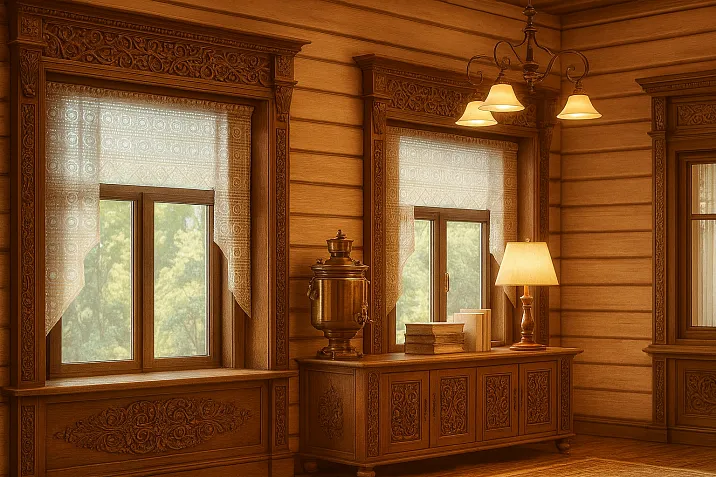
Who said that tradition and modernity cannot go hand in hand? Why? Russian style in modern interior design is experiencing a true renaissance, winning hearts not only among Russians but also among lovers of beauty around the world? In the era of globalization and standardization, many strive to find their unique identity, create a space that tells a story, breathes culture, and remains functional and comfortable for life in the 21st century.
Modern interpretation of Russian style is not a museum reconstruction of historical interiors, but a living, evolving direction that takes the best from a rich cultural heritage and adapts it to the realities of modern life. It is a symbiosis of traditional aesthetics and innovative technologies, where each element has not only historical significance but also practical application.


Metamorphosis of Style: From Terem to Penthouse
Modern Russian design fundamentally differs from stereotypical notions of the 'Russian izba' with its heaviness and archaism. Today's designers create spaces where traditional motifs sound fresh and current, without losing their cultural significance.




Philosophy of the New Approach
The basic philosophy of modern Russian style is built on three pillars: selective authenticity, technological integration, and functional aesthetics. Selective authenticity means a conscious choice of the most expressive elements of traditional culture that can organically fit into modern space. Technological integration implies using advanced materials and manufacturing methods to recreate traditional forms. Functional aesthetics requires that every decorative element carry practical utility.
Decorative Appliqués in Russian Style perfectly illustrate this approach — they not only decorate furniture and architectural elements but also serve a protective function, conceal joints, and create visual accents. Modern manufacturers use high-precision equipment to create complex ornaments that were once possible only for master carvers of the highest qualification.
Our factory also produces:


Regional Diversification
One of the interesting trends in modern Russian design is a return to regional traditions. North Russian motifs, with their restrained elegance, fundamentally differ from the vibrant southern Russian ornaments. Siberian solidity contrasts with the refinement of central Russian traditions. Modern designers explore these regional characteristics, creating unique interior concepts that reflect a specific cultural identity.
This regional specialization allows creating more personalized interiors that correspond not only to the aesthetic preferences of the owner but also to his cultural roots, family history, and geographical affiliation.
Get Consultation
Architectural Revolution: Decoration as a Structural Element
In modern Russian design, decorative elements are no longer just ornaments — they become part of the architectural concept, shape the space, and create its character and atmosphere.
New Role of Traditional Elements
Traditional Russian architectural elements, in modern interpretation, acquire new functions and possibilities of application. Capitals in Russian Style no longer limit themselves to supporting columns — they become independent decorative objects, create visual accents, zone space, and conceal engineering communications.
Modern cornices perform not only decorative but also technical functions — they conceal lighting, ventilation, and automated curtain control systems. Baseboards integrate cable channels, underfloor heating systems, and smart home sensors. Each element gains multiple functionalities while preserving aesthetic value.
Scalable Adaptation
One of the key achievements of modern Russian design is its ability to adapt to various spatial scales. If traditional Russian interiors were designed for large rooms with high ceilings, modern solutions work equally well in compact urban apartments, office spaces, and commercial facilities.
Finishing details in Russian style of modern production can be executed in various sizes and proportions, allowing the creation of harmonious compositions in rooms of any height and area. The modularity of modern decorative systems enables the creation of unique combinations tailored to specific project conditions.
Technological Breakthrough: Materials of the Future in Service of Tradition
The revolution in materials became one of the key factors determining the success of modern Russian style. Innovative composites, high-tech coatings, smart materials have opened up new possibilities for realizing traditional forms.
Polymer Innovations
Polyurethane Inlays in Russian Style Represent a technological breakthrough in the field of decorative materials. Modern polyurethane compositions allow recreating the most intricate carved ornaments with micron-level precision, while finished products possess several advantages over natural wood: they do not deform due to changes in humidity and temperature, are not susceptible to insect damage, are easy to clean, and can be used in environments with any operating conditions.
Modern coloring technologies allow them to imitate any wood species, create patina, gilding, and aging effects. At the same time, polymer materials can be colored in any shade, expanding design possibilities far beyond the traditional palette.
Smart coatings
Nanotechnologies have introduced entirely new properties into decorative materials. Self-cleaning surfaces require no complex maintenance, antibacterial coatings ensure hygiene, photocatalytic compositions purify air from harmful impurities. These innovations are especially valuable in children's rooms, medical facilities, and food production, where aesthetics must combine with heightened sanitary requirements.
Thermoregulating coatings can alter their properties depending on the surrounding temperature, creating additional comfort for users. Light-reflecting compositions enhance natural lighting, which is especially relevant in northern regions with insufficient sunlight.
Digital Production: Precision and Individuality
The introduction of digital technologies into the production of decorative elements has brought about a true revolution in the industry. CNC machines, laser cutting, 3D printing, and robotic lines enable the creation of items previously impossible in terms of complexity and precision.
Ornament Personalization
Digital technologies have opened up opportunities to create personalized ornaments that reflect the client's individual preferences, family history, corporate symbolism. Modern designers can create unique compositions by combining traditional motifs with original elements.
Parametric design allows ornaments to be adapted to any size and proportions, ensuring perfect alignment with the architectural features of a specific object. A basic ornament can be scaled, deformed, and supplemented with new elements without losing its artistic value.
Virtual Reality in Design
VR technologies allow clients to literally immerse themselves in the future interior even at the design stage. This is especially important for Russian style, where every detail matters, and the overall impression is formed by multiple elements. Virtual reality helps understand how different interior components will interact, how light will play on carved surfaces, and how proportions will appear in real scale.
Ecological Responsibility: Green Technologies in Traditional Design
Modern Russian style cannot ignore the ecological challenges of our time. Sustainable development, responsible consumption, and care for the environment have become indispensable components of any contemporary design project.
Certified Materials
All materials used in modern production of decorative elements must meet strict ecological standards. Wood is sourced only from legally managed forests with FSC certification. Polymer materials contain no toxic substances and can be recycled at the end of their service life.
Production processes are optimized to minimize waste and energy consumption. Modern enterprises implement closed-loop production cycles, where waste from one process becomes raw material for another.
Durability as an Ecological Principle
One of the main principles of ecological design is creating products that will last as long as possible, without requiring frequent replacement. Russian style in modern interior design Originally oriented toward durability — traditional Russian items were created 'for centuries,' passed down from generation to generation. Modern technologies allow creating decorative elements that will retain their original appearance for decades.
Psychology of Space: Influence of Russian Style on People
Scientific research confirms that interior design significantly affects a person's psychological state, productivity, mood, and overall quality of life. Russian style, in this context, possesses several unique characteristics.
Biophilic Design
Russian style is inherently close to nature — the use of natural materials, natural forms, and botanical ornaments creates a sense of connection with the natural environment. This is especially important for residents of megacities, who spend most of their time in artificial environments.
Studies show that spending time in interiors with biophilic design elements reduces stress levels, improves cognitive functions, and enhances creativity. Natural materials and traditional ornaments activate brain areas responsible for positive emotions and creative thinking.
Cultural Identity and Psychological Comfort
Spending time in an environment that reflects a person's cultural identity creates a sense of psychological safety and belonging. For Russians, interiors in Russian style can become a means of maintaining connection with cultural roots, especially important in the context of globalization and cultural homogenization.
Traditional decorative elements activate cultural memory, create a sense of generational continuity, stability, and reliability. This is especially important during periods of social change and uncertainty.
Commercial application: Russian style in public spaces
Modern Russian design is applied not only in residential interiors but also in commercial projects — restaurants, hotels, offices, stores, public buildings.
In hotels, hostels, and other hospitality facilities, bar stools are used in lobbies, restaurants, and relaxation areas.
Hotels positioning themselves as carriers of Russian culture actively use elements of traditional design to create a unique atmosphere. At the same time, it is important to find a balance between authenticity and comfort, between traditions and modern service standards.
Modern decorative elements allow creating luxurious interiors that make a strong impression on guests, yet are easy to operate and maintain. Polymer materials are resistant to moisture and cleaning agents, which is critical for commercial use.
Restaurant design
Restaurants serving Russian cuisine traditionally use elements of national style to create the appropriate atmosphere. Modern solutions allow avoiding kitsch and stylization, creating truly refined interiors that highlight the high level of the establishment.
Special attention is paid to acoustic comfort — carved elements and textile panels help control noise levels, creating comfortable conditions for communication.
Educational function: interior as cultural code
Interiors in the Russian style perform an important educational function, especially in preschool institutions, schools, cultural centers. They introduce the younger generation to national traditions, develop aesthetic taste, and foster respect for cultural heritage.
Interactive elements
Modern technologies allow creating interactive decorative elements that not only decorate space but also tell stories, explain ornament symbolism, and introduce visitors to traditional crafts. Touch panels hidden within carved elements can activate multimedia presentations, sound effects, and augmented reality.
Master classes and demonstration zones
Special zones are created in cultural centers and museums where visitors can familiarize themselves with the process of creating decorative elements, try their hand at becoming master carvers, and understand the complexity and beauty of traditional crafts.
Regional adaptation: Russian style in a global context
Interest in Russian design is not only manifested in Russia but also in other countries. Russian cultural centers, restaurants, and hotels abroad use elements of national style to create an authentic atmosphere.
Climate adaptation
Using Russian style in various climatic conditions requires adapting materials and technologies. In tropical countries, special attention is paid to protection against humidity and high temperatures. In northern regions, frost resistance and thermal insulation are crucial.
polyurethane products show excellent results in various climatic conditions, retaining their properties at temperatures from -50 to +80 degrees Celsius and humidity up to 95%.
Cultural interpretation
In different countries, the Russian style is perceived differently, requiring adaptation of design solutions to the local cultural context. In Western Europe, emphasis is placed on elegance and refinement; in the USA — on exoticism and uniqueness; in Asian countries — on spirituality and philosophical content.
Future of style: trends and forecasts
Russian style in modern interior design continues to evolve, adapting to new technologies, social changes, and ecological challenges.
Digital integration
The development of the Internet of Things, artificial intelligence, and augmented reality opens new opportunities for integrating smart technologies into traditional interiors. Decorative elements can become carriers of sensors, displays, and interactive home automation control systems.
Personalization and Customization
The development of technologies for individual production makes it possible to create unique decorative elements for each project. 3D printing, parametric design, and artificial intelligence allow creating ornaments ideally adapted to individual preferences of the client and specific characteristics of the space.
Sustainable development
Ecological requirements will only increase, requiring the development of new materials and technologies. Biodegradable polymers, materials from renewable resources, and energy-efficient production processes will become industry standards.
Practical application: tips for designers
Working with Russian style in modern interiors requires a deep understanding of both traditions and modern possibilities.
Avoiding Kitsch
The main danger when working with national styles is falling into kitsch and stylization. To avoid this, it is necessary:
- Study authentic historical samples
- Understand the symbolic meaning of ornaments
- Use high-quality materials and production
- Observe proportions and scales
- Adapt traditional elements to modern functions
Working with the client
It is important to explain the client the philosophy of modern Russian style, show the possibilities of adapting traditional elements to their needs and lifestyle. Using VR technologies helps the client better understand the project concept and make the right decision.
Budgeting
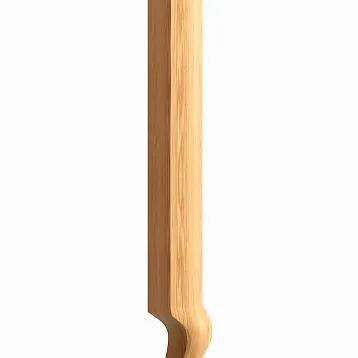
Square decorative elements and other standard forms allow creating quality interiors with a limited budget. The right choice of basic elements and their creative combination can yield results not inferior to expensive individual solutions.
Regional characteristics of modern Russian design
Modern designers increasingly turn to regional features of Russian culture, creating interiors that reflect the specifics of particular territories.
North Russian tradition
The harsh beauty of the Russian North is reflected in restrained color palettes, strict geometric forms, and the use of natural materials in their original state. Special attention is paid to the functionality of each element — in the harsh conditions of the North, there was no room for unnecessary beauty.
Central Russian motifs
The milder climate of the central region allowed more attention to be paid to decoration. Floral ornaments, intricate carved compositions, and rich color palettes characterize this regional style.
Southern Russian influences
Proximity to trade routes and contacts with various cultures enriched southern Russian tradition with Eastern motifs, brighter colors, and exotic materials.
Modern Russian design actively uses these regional features, creating unique interiors that tell a specific story and reflect a particular cultural tradition.
Today Russian style in modern interior design It represents a dynamically developing direction that successfully combines respect for traditions with an innovative approach to their interpretation. This is not a nostalgic look back to the past, but a bold vision of the future, where national identity becomes the foundation for creating unique, functional, and aesthetically perfect spaces.
Modern technologies, innovative materials, digital production and design methods open up boundless opportunities for creative interpretation of traditional forms. At the same time, the core principles of Russian design remain unchanged — harmony with nature, functional beauty, spiritual depth of each element.
The future of Russian style in modern design lies in its ability to adapt to changing living conditions while preserving its cultural identity and emotional power. This is a style for those who value depth and substance, who strive to create spaces filled with meaning and beauty, who understand that true luxury lies not in the cost of materials, but in their ability to tell a story, create an atmosphere, inspire creativity and joy in life.
In conclusion, it is necessary to emphasize the role of professional manufacturers in the development of modern Russian style in interior design. The company STAVROS has been a recognized leader for many years in creating high-quality decorative elements that embody the best traditions of Russian craftsmanship in a modern interpretation. STAVROS's participation in the restoration of significant cultural heritage sites, such as the Alexander Palace in Tsarskoye Selo, demonstrates the company's deep understanding of historical traditions and its ability to embody them in modern products. Each STAVROS product is created using advanced technologies while preserving the soul and energy of traditional Russian decorative and applied art. Choosing STAVROS products, designers and architects gain the opportunity to create interiors that will become true works of art, capable of inspiring and delighting for generations.