Article Contents:
- Roots of greatness: where the Russian style grows from
- Evolution of style: from izba to modernity
- Philosophy of space: principles of modern Russian design
- Principle of naturalness
- Principle of craftsmanship
- Principle of multifunctionality
- Materials and textures: living palette of the Russian home
- Wood — the soul of Russian interior
- Stone and ceramics: strength of traditions
- Textiles: soft warmth of the Russian home
- Color symphony of Russian interior
- Base colors: foundation of style
- Accent colors: soul of the Russian home
- Seasonal color solutions
- Furniture in Russian style: function and beauty in unity
- Traditional furniture items
- Modern interpretation of traditional forms
- Decorative furniture elements
- Decorative elements: soul of Russian interior
- Carved elements: poetry of wood
- Painting: colorful fairy tale
- Textile decor: softness of traditions
- Lighting in Russian style: play of light and shadow
- Natural Lighting
- Artificial Lighting
- Modern solutions
- Layout of Russian home: from general to specific
- Bedroom: Intimacy and Peace
- Kitchen: the kingdom of the housewife
- Bedroom: temple of rest
- Russian style in various types of housing
- Country house: full embodiment of style
- City apartment: adaptation of traditions
- Commercial interiors: Russian style in public spaces
- Regional characteristics of Russian style
- Northern traditions
- Central regions
- Southern motifs
- Siberian traditions
- Modern trends in Russian design
- Eco-Russian style
- Minimalist Russian style
- Neo-Russian style
- Loft in Russian style
- Technologies in Russian interior
- Production of decorative elements
- Finishing materials
- Smart home systems
- Practical tips for creating a Russian interior
- Project Planning
- Choosing specialists
- Step-by-step implementation
- Quality Control
- Interior care in Russian style
- Wood care
- Textile care
- Ceramic care
- Conclusion
Imagine: you enter a home where every detail breathes the history of a thousand-year-old culture, where modern technologies harmoniously intertwine with centuries-old craftsmanship traditions. This is the magic that creates Russian style in interior design — a direction that is currently experiencing a true renaissance among admirers of authentic beauty and cultural depth.
What drives modern people when they choose this style for their home? Perhaps it is a longing for roots in the age of globalization, or a desire to surround themselves with things that have soul and history. Or maybe it is simply an understanding that true luxury lies not in ostentatious expense, but in harmony with nature and cultural heritage.
Modern interpretation of Russian design is not a museum exhibition or a 'old-fashioned' imitation. It is a living, breathing style that has absorbed the best traditions of national art and adapted them to the needs of the 21st century. Here, every element carries semantic weight, every detail tells its own story, creating a space where one wants to live, create, and pass on traditions to future generations.


Roots of greatness: where does the Russian style grow from?
To understand the essence of modern Russian design, one must look into the depths of centuries. Russian decorative and applied arts were shaped by multiple factors: the harsh climate required the creation of not just beautiful, but functional items; Orthodox culture contributed its symbolism and aesthetics; trade links with the East and West enriched the palette of ornaments and techniques.
Byzantine heritage laid the foundations of grandeur and majesty. Golden domes of churches, icon painting, mosaics — all of this later transformed into the characteristic Russian style's love for rich decoration and symbolic imagery.
Folk crafts gave the style its recognizable features. Хохлома with its golden swirls, гжель with blue patterns, палех with miniature painting — each craft contributed its own touch to the formation of the national aesthetic code.
Wooden architecture defined the material basis of the style. Russian masters knew how to make wood 'sing', creating real symphonies — from simple peasant cottages to royal teremov, where each board was a work of art.




Evolution of style: from izba to modernity
The 18th century brought European influences to Russia, but they did not replace national traditions, but enriched them. New techniques, materials, and forms appeared, but the soul of the style remained unmistakably Russian.
The 19th century became the era of the flourishing of the Russian style in architecture and interior design. It was precisely then that the principles were formed, which we today call classic for Russian design:
- Monumentality without heaviness
- Rich decoration without excessive clutter
- Functionality of each element
- Harmony with natural surroundings
- Symbolism in ornaments and forms
The 20th century, with its revolutions and wars, interrupted the natural development of the style, but did not destroy its roots. Today we observe a revival of interest in national traditions, but already on a new level — with an understanding of their deep meaning and modern possibilities of realization.
Our factory also produces:


Philosophy of space: principles of modern Russian design
Modern Russian style in interior design is based on several fundamental principles that make it recognizable and unique.
Get Consultation
Principle of Naturality
The color palette is drawn from Russian landscapes: the gold of autumn leaves, the whiteness of winter snow, the emerald of pine forests, the blue of summer skies over fields. These colors are not merely beautiful—they are genetically close to the Russian person, evoking a sense of home and security.
The color palette draws from Russian landscapes: the gold of autumn leaves, the whiteness of winter snow, the emerald of pine forests, the blue of summer skies over fields. These colors are not merely beautiful—they are genetically close to the Russian person, evoking a sense of home and security.
Principle of Craftsmanship
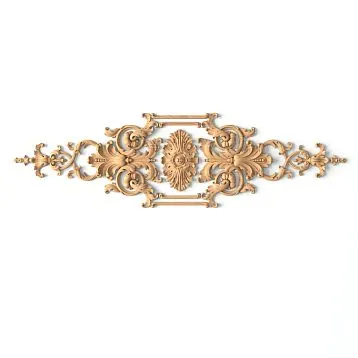
Russian style is unthinkable without the demonstration of craftsmanship. But this is not showy craftsmanship for effect, but craftsmanship as a means of expressing love for the craft and respect for the material. Decorative appliqués Russian style — a vivid example of such an approach: each element is created with an understanding of its role in the overall interior composition.
Wood carving in the Russian style is not merely decoration, but a way to tell a story. Each swirl, each leaf has its own meaning. The grapevine symbolizes abundance and fertility, oak leaves—strength and longevity, roses—beauty and love.
Principle of Multifunctionality
In Russian tradition, each item must serve multiple functions. A chest serves not only for storage, but also as a bench and a table. A stove not only heats, but also cooks food and serves as a place to rest. Modern furniture in the Russian style inherits this tradition, offering solutions that save space and increase functionality.
Materials and Textures: The Living Palette of the Russian Home
Wood — the soul of Russian interior
Wood in the Russian style is the main character, not just a material. Each species has its own character and purpose.
Oak—the king of the Russian forest. Its solidity and noble texture make it ideal for creating furniture that serves generations. Oak furniture is an investment in the future, a family treasure passed down through generations.
Spruce—democratic beauty. Its light wood with characteristic resin veins creates the atmosphere of a country house even in an urban apartment. Spruce 'breathes,' filling the air with healing phytoncides.
Birch—the symbol of Russia. Its light, almost white wood is ideal for furniture in bright interiors. Birch elements add lightness and airiness to a space.
Cedar—the aristocrat among conifers. Its beautiful texture and natural resistance to moisture make cedar ideal for creating exclusive furniture and decorative elements.
Stone and ceramic: strength of traditions
Stone in Russian interiors symbolizes reliability and connection to the earth. Modern technologies allow the use of both natural stone and high-quality imitations.
Natural stone—granite, marble, sandstone—is used to create accent elements: fireplaces, window sills, decorative panels. Each type of stone has its own character and energy.
Ceramics—from simple clay dishes to exquisite tiles—adds national character to interiors. Modern masters revive ancient techniques, creating unique works of ceramic art.
Textiles: The Soft Warmth of the Russian Home
Textiles in Russian interiors are not just functional elements, but carriers of cultural information. Each pattern, each color combination has its own history and symbolism.
Natural fabrics—linen, cotton, wool, silk—form the basis of textile decoration. It is not only the quality of the material, but also the way it is processed, dyed, and decorated that matters.
Traditional ornaments are adapted to modern needs. Geometric patterns from northern regions, plant motifs from the central belt, bright colors from southern areas—each region of Russia has contributed to the development of ornamental art.
Color Symphony of the Russian Interior
Color in the Russian style is not merely an aesthetic choice, but a way to create an emotional atmosphere in space. The Russian color palette is rich and diverse, yet always harmonious and natural.
Base Colors: The Foundation of the Style
The color white in Russian interiors is not sterile hospital whiteness, but a warm tone of linen, milk, snow. It creates a sense of purity and spaciousness, serving as an ideal backdrop for bright accents.
Brown shades—from light beige to dark wenge—connect the interior with nature. This is the color of earth, tree bark, autumn leaves. Brown creates a sense of stability and reliability.
Cream and beige tones add warmth and coziness to interiors. They combine perfectly with natural materials, creating an atmosphere of home comfort.
Accent Colors: The Soul of the Russian Home
Red color—symbol of life force and celebration. In Russian interiors, it is used sparingly, as bright accents. This may be a red shirt on the wall, crimson cushions on the sofa, cinnabar painting on furniture.
Blue color—from sky blue to deep indigo—reminds one of Russian expanses. Blue soothes, evokes a sense of depth and nobility. Especially popular when combined with white—the traditional combination of Gzhel pottery.
Green color—the color of Russian forests and fields. From delicate salad green to deep emerald, green brings freshness and vital energy into interiors.
Gold color—symbol of spirituality and abundance. In Russian interiors, gold is used in decorative elements, paintings, and textiles. It is important not to overuse gold—it should accentuate beauty rather than overshadow it.
Seasonal color solutions
The Russian style lives in rhythm with nature, so color solutions may vary depending on the season.
Winter palette—white, silver, blue, dark green. Creates a feeling of frosty freshness and festivity.
Spring palette—soft green, pink, yellow, blue. Fills the home with the joy of nature awakening.
Summer palette—vibrant greens, sunny yellows, cornflower blues. Creates an atmosphere of summer abundance.
Autumn palette—golden yellows, oranges, burgundies, browns. Fills the home with warmth and coziness before the long winter.
Furniture in Russian style: function and beauty in unity
Furniture in Russian style is not merely decorative items, but keepers of family history. Each piece is crafted with long-term service, inheritance, and the accumulation of family energy in mind.
Traditional furniture items
A chest is one of the most characteristic pieces of Russian furniture. In modern interiors, it can serve as a coffee table, storage space, or bench. Brackets Russian style help adapt traditional forms to modern needs.
A bench is a universal piece of furniture that can serve as a seat, table, or stand. Modern benches retain traditional proportions but are adapted to contemporary comfort requirements.
A cabinet—a traditional dish cabinet—transforms into a modern storage and display system for beautiful items. Glass doors allow showcasing collections of ceramics, books, and souvenirs.
A table—the center of family life. In Russian style, tables are always substantial and sturdy, designed to accommodate large families. Modern tables may be extendable or transformable, yet retain their sturdiness and dignity.
Modern interpretation of traditional forms
Modern manufacturers of Russian-style furniture do not copy antique models, but reinterpret them according to contemporary needs and technologies.
Modular furniture allows creating individual compositions while maintaining stylistic unity. Cabinets, shelves, and sideboards can be combined in various configurations.
Transformable furniture saves space without compromising style. A table-book, sofa-bed, or cabinet-bed—all these solutions are adapted to the aesthetics of Russian style.
Built-in furniture allows maximum space utilization, creating a unified ensemble with architectural elements of the interior.
Decorative elements of furniture
The beauty of Russian furniture is largely determined by the quality of decorative elements. Modern technologies enable the creation of decor of the highest quality.
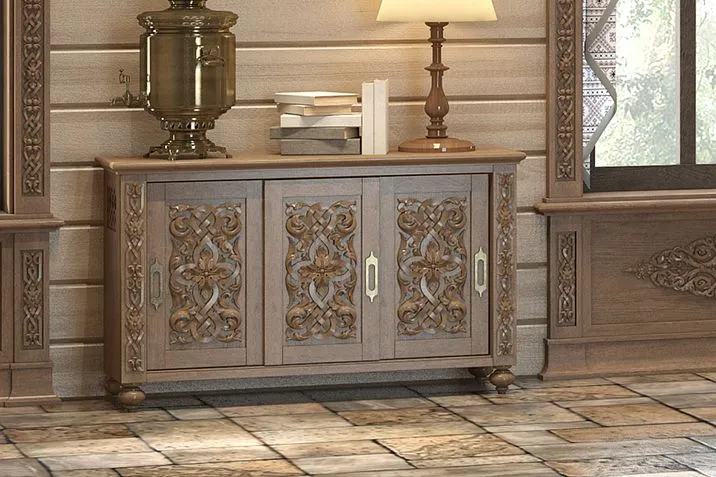
Carved appliqués transform simple furniture into works of art. Each appliqué is crafted with attention to the proportions and style of the specific furniture piece.
Hardware—handles, hinges, locks—is also executed in a unified style. Brass or bronze hardware with patina accentuates the nobility of natural wood.
Painting—a traditional method of decorating furniture—is today executed both manually and using modern wood printing technologies.
Decorative elements: the soul of Russian interiors
Decor in Russian style is not mere ornamentation, but a means to tell a story, convey an atmosphere, and create a unique ambiance. Each decorative element has its place and significance within the overall composition.
Carved Elements: Poetry of Wood
Wood carving is one of the oldest Russian arts. Modern masters continue this tradition, creating elements that seamlessly fit into contemporary interiors.
Applied elements are the most popular way to decorate furniture and architectural details. They allow transforming a simple surface into a work of art.
Relief carving creates a play of light and shadow, adding depth and expressiveness to interiors. It looks especially striking under proper lighting.
Through carving — a traditional element of Russian decoration — is used to create screens, partitions, decorative panels.
Painting: a colorful fairy tale
Painting in the Russian style is a special world of images and symbols. Each motif has its own meaning and traditions of execution.
Khokhloma painting, with its golden scrolls and berry motifs, evokes a sense of festivity and abundance. Modern masters adapt traditional motifs for decorating furniture, tableware, and textiles.
Gzhel painting in blue-and-white tones adds freshness and purity to interiors. Gzhel motifs are used not only on ceramics but also on textiles, furniture, and decorative panels.
Gorodets painting, with its vibrant colors and scenes from folk life, creates an atmosphere of a Russian fair. It looks especially striking in children's rooms and kitchens.
Palех miniature — the most refined form of Russian painting — is used to create unique decorative elements: boxes, panels, furniture inserts.
Textile decor: the softness of traditions
Textiles in Russian interiors serve not only decorative but also symbolic functions. Each ornament and color has its own meaning.
Embroidery — a traditional way to decorate textiles — is now used not only on clothing but also in interior textiles. Embroidered cushions, tablecloths, and panels create a unique handmade atmosphere.
Lace — especially Vologda lace — adds elegance and femininity to interiors. Lace curtains, tablecloths, and napkins create a feeling of home comfort.
Patchwork sewing — a folk art that transforms utilitarian items into works of art. Patchwork quilts, cushions, and rugs add color and warmth to interiors.
Lighting in Russian style: play of light and shadow
Lighting in Russian interiors should be warm, cozy, creating an atmosphere of a home hearth. It is important not only the quantity of light, but also its quality, direction, and color temperature.
Natural lighting
Russian houses were always built with maximum use of natural light in mind. Large windows, light walls, mirrors — all of this helped combat the long winter darkness.
Windows in Russian style are usually large, with wooden frames made of natural wood. Modern technologies allow creating windows that retain the traditional look while offering excellent thermal insulation.
Window textiles should let in maximum daylight during the day and create coziness in the evening. Light linen curtains, wooden blinds, Roman shades — all these solutions suit Russian style.
Artificial lighting
Central lighting — chandeliers in Russian style — are usually massive constructions made of wood, metal, and glass. They should be bright enough to illuminate the entire room, but not blinding.
Local lighting — table lamps, floor lamps, wall sconces — creates cozy zones for reading, crafting, and conversation. It is important that all fixtures are made in a unified style.
Decorative lighting — candles, candelabras, kerosene lamps — creates a special romantic and vintage atmosphere. Of course, they are used more as decorative elements, but can also serve as additional light sources.
Modern solutions
LED technologies allow creating quality lighting with minimal energy consumption. It is important to choose LEDs with warm color temperature (2700-3000K) to preserve a cozy atmosphere.
Lighting control systems allow creating various lighting scenarios for different times of day and different activities.
Hidden lighting — backlighting of cornices, niches, decorative elements — creates additional lighting accents without disrupting stylistic unity.
Layout of a Russian house: from general to specific
Interior layout in Russian style is based on principles of functionality, convenience, and family unity. Each room has its own purpose, but all are connected by a common concept and style.
Living room: the heart of the home
The living room in a Russian house is the center of family life, a place where all family members gather and receive guests. It should be spacious, comfortable, and beautiful.
The fireplace or stove usually serves as the center of composition. Even if the heating is electric or gas, imitating a traditional hearth creates the desired atmosphere.
Soft furniture — sofas, chairs — is arranged to create a cozy area for conversation. It is important that everyone seated can see each other and the central element — fireplace, TV, or window with a beautiful view.
Storage furniture — cabinets, shelves, racks — is not only functional but also serves to display beautiful items: books, tableware, souvenirs.
Kitchen: the queen's domain
Kitchen in a Russian home is not only a place for food preparation but also the center of family life. Here, people gather for morning tea, discuss daily plans, and welcome close friends.
The work area should be as functional as possible. Modern equipment can be integrated into traditional furniture forms or concealed behind decorative fronts.
Dining area — a large table where the whole family can gather. The table must be sturdy and beautiful, serving not only for meals but also for family celebrations.
Storage zone — cabinets, shelves for dishes, food, kitchenware. It is important that everything necessary is within reach, yet the kitchen does not appear cluttered.
Bedroom: Temple of Rest
Bedroom in Russian style — a place for rest and rejuvenation. It should be as comfortable, calm, and conducive to healthy sleep as possible.
Bed — the central element of the bedroom. It should be comfortable, beautiful, and match the overall style of the room. Traditionally, Russian beds are solid, made of natural wood.
Textiles — bedding, blankets, pillows — create an atmosphere of coziness and comfort. Preference is given to natural fabrics: linen, cotton, silk.
Lighting in the bedroom should be soft and not overly bright. In addition to general lighting, local lighting — for reading, crafting — should be provided.
Russian style in various types of housing
Country house: full embodiment of style
Country house — the ideal place to fully embody Russian style. Here, one can use all traditional elements: log walls, fireplace, carved window casings, spacious rooms with high ceilings.
Architectural features of a country house allow for creating an authentic atmosphere. Natural materials, traditional proportions, connection with the natural surroundings — all of this contributes to creating a true Russian home.
Landscape design can also be executed in Russian style: birch groves, flowerbeds with traditional Russian flowers, wooden gazebos and bridges.
City apartment: adaptation of traditions
Creating a full Russian interior in a city apartment is more challenging, but possible. The key is to correctly choose the main elements and harmoniously combine them.
Color scheme — one of the most accessible ways to create a Russian atmosphere in a city apartment. Properly chosen colors will create the desired mood even in a small space.
Decorative elements — carved appliqués, textiles with traditional patterns, ceramics — will help create the necessary accents without major renovations.
Furniture — even a few pieces of furniture in Russian style can dramatically change the atmosphere of the room.
Commercial interiors: Russian style in public spaces
Russian style is popular not only in residential interiors but also in public spaces: restaurants, hotels, offices, stores.
Restaurants serving Russian cuisine often use folk-style elements to create the appropriate atmosphere. It is important not to overdo ethnographic elements, so the interior does not appear theatrical.
Hotels use Russian style to create a unique offering, especially for foreign tourists. Here, it is important to combine authenticity with modern comfort.
Offices in Russian style — a way to emphasize a company's national identity, its connection to Russian traditions and culture.
Regional characteristics of Russian style
Russia is a vast country, and different regions have developed their own characteristics of folk art and architecture. These regional differences enrich modern Russian style, making it more diverse and interesting.
Northern Traditions
North Russian tradition is characterized by severity and minimalism. There is less decoration, and more attention is paid to functionality and durability.
The color palette of the northern style is more restrained: white, gray, brown, blue. Bright colors are used very sparingly.
Materials — primarily coniferous wood, stone, fur. All materials must be resistant to harsh weather conditions.
Ornaments — simple geometric patterns, symbols associated with sea and forest.
Central regions
Central Russia — classic Russian traditions, most often associated with Russian style.
Colors — full palette of traditional Russian colors: red, blue, white, gold, green.
Materials — hardwoods (oak, birch, linden), ceramics, textiles.
Ornaments — floral motifs, narrative compositions, complex multi-colored patterns.
Southern motifs
Southern Russian traditions are characterized by vividness and festivity. Here, Ukrainian and Caucasian traditions have more influence.
Colors — bright, saturated: red, yellow, green, blue.
Materials — light-colored woods, ceramics, textiles.
Ornaments — floral motifs, birds, complex compositions.
Siberian traditions
The Siberian style developed under special conditions: harsh climate, remoteness from central regions, influence of local peoples.
Colors — natural shades of wood, fur, stone.
Materials — local woods, stone, fur, bone.
Ornaments — simple, functional, often borrowed from local peoples.
Modern trends in Russian design
Russian style is not static — it evolves, adapts to modern needs, and enriches itself with new ideas and technologies.
Eco-Russian style
Modern society's ecological orientation has also influenced the development of Russian style. Eco-Russian style emphasizes the use of exclusively natural, ecologically clean materials.
Materials — only natural: wood, stone, clay, linen, wool. All materials must be certified as ecologically safe.
Technologies — use of renewable energy sources, energy-saving technologies, water and air purification systems.
Philosophy — living in harmony with nature, minimal impact on the environment, use of local resources.
Minimalist Russian style
The influence of modern minimalism led to the emergence of a simplified version of Russian style, where core principles are retained but excessive decorative elements are removed.
Principles — 'less is more', functionality, clean lines, minimal decoration.
Colors — neutral palette with occasional bright accents.
Materials — natural, but processed using modern methods to achieve perfectly smooth surfaces.
Neo-Russian Style
Neo-Russian style — a modern creative interpretation of traditions, where classical elements are reinterpreted using modern materials and technologies.
Materials — combination of traditional and modern materials. Wood can be combined with metal, glass, plastic.
Forms — simplified, stylized versions of traditional elements.
Colors — expanded palette, including modern colors.
Loft in Russian style
An unexpected combination of industrial loft and Russian traditions creates a unique style popular among young designers.
Principles — open spaces, high ceilings, natural materials, minimal partitions.
Materials — brick, wood, metal, glass.
Decor — selected elements of Russian decor against an industrial aesthetic.
Technologies in Russian interior design
Modern technologies have radically changed the possibilities of creating interiors in the Russian style. What used to require months of masterwork can now be created in days with modern equipment.
Production of decorative elements
CNC milling allows creating complex carved elements with perfect accuracy. Polyurethane overlays Russian style — an example of how modern materials and technologies help recreate traditional forms.
3D printing opens new possibilities for creating unique decorative elements. You can recreate any historical sample or create a new design based on traditional motifs.
Laser cutting allows creating delicate lace patterns from wood, metal, plastic.
Finishing materials
Modern paints and varnishes preserve the natural beauty of wood, protecting it from moisture, pests, and fading.
Vinyl finishes can imitate any natural materials with photographic accuracy.
Decorative plasters allow creating any textures and effects.
Smart home systems
Automation of heating, lighting, and security systems can be seamlessly integrated into a Russian interior.
Multimedia systems are concealed behind traditional furniture facades.
Climate control systems maintain ideal conditions for wooden furniture and decor.
Practical tips for creating a Russian interior
Project planning
Defining the budget — the first and most important step. You need to understand how much you are willing to spend on creating the interior.
Choosing a style — the modern Russian style has many variations; you need to select the one that best matches your tastes and possibilities.
Creating a plan — a detailed plan will help avoid mistakes and unnecessary expenses.
Selection of specialists
An interior designer must have experience working with the Russian style, understanding its features and nuances.
Contractors and finishers must be able to work with natural materials, understanding their specific processing requirements.
Material suppliers — it is important to find reliable suppliers of quality materials and decorative elements.
Phased implementation
Rough work — electrical, plumbing, and floor screeding must be completed before starting finish work.
Finish work — walls, ceilings, and floors are finished according to the project.
Furniture and decor — installed last, after all finish work is completed.
Quality control
Regular inspections at each stage of work will help avoid serious mistakes.
Adherence to the project — all work must be performed strictly according to the approved project.
Work acceptance — each stage must be accepted by the client before moving on to the next.
Interior care in Russian style
Interior in Russian style requires special care, especially if natural materials are used.
Care for wood
Regular cleaning with mild, non-aggressive chemical-free cleaners.
Maintaining humidity — wood does not like overly dry air; optimal humidity is 40-60%.
Protection from direct sunlight — it can cause fading and cracking.
Periodic renewal of finish — varnish or wax should be renewed every 3-5 years.
Care for textiles
Regular washing or cleaning according to manufacturer's recommendations.
Protection from moths — natural fabrics attract pests.
Proper storage — seasonal textiles must be properly packed for storage.
Care for ceramics
Gentle cleaning — avoid abrasive cleaners that may damage the decoration.
Proper storage — ceramic items must be stored so they do not collide with each other.
Restoration — consult ceramic restoration specialists if needed.
Conclusion
Russian style in interior design is not just a fashionable trend, but a way to preserve and develop cultural heritage. In a world where globalization erases national characteristics, creating a home in Russian traditions becomes an act of preserving identity.
Modern Russian style successfully combines centuries-old traditions with contemporary needs and technologies. It proves that national culture can be more than a museum exhibit — it can be a living, evolving system capable of adapting to changing conditions without losing its essence.
Creating an interior in Russian style is an investment in the future. Such a home will not become outdated in a few years, unlike interiors following fleeting trends. On the contrary, it will only become more beautiful over time, accumulating family history and becoming a keeper of traditions for future generations.
It is important to remember that Russian style is not a set of mandatory elements, but a philosophy of life. It is an understanding of beauty as harmony between function and form, respect for nature and craftsmanship, and the creation of a space where a person feels part of a great cultural tradition.
High-quality decorative elements play a key role in creating an authentic Russian interior. The company STAVROS specializes in producing items that help realize dreams of a genuine Russian home. Rich experience, use of modern technologies while preserving traditional approaches, attention to every detail — all this allows creating decorative elements that will become ornaments of any interior and serve many generations.
Choosing Russian style for your home means choosing not just a beautiful interior, but a lifestyle connected with the best traditions of domestic culture. It is a choice for quality over quantity, soul over showy luxury, tradition over fleeting trends. And in this choice lies deep meaning — preserving the best that our ancestors created for those who will come after us.