Article Contents:
- Tectonic shift: how the interior solutions market has changed
- From reverence for imports to rational choice
- New geopolitical reality
- Cultural turn: the search for identity
- Technological revolution: how Russian manufacturers caught up with and surpassed the West
- Investments in Equipment
- Digitalization of Production Processes
- Materials: from import dependence to self-sufficiency
- Polyurethane: the material of the future for stucco production
- Design: from copying to trendsetting
- School of Russian interior design
- Individual approach as a competitive advantage
- Synthesis of tradition and modernity
- Economics: why local production is more profitable
- Direct cost comparison
- Flexible pricing
- Investment in the local economy
- Quality: debunking myths
- First myth: "Imports are always of higher quality"
- Second myth: "Russian stucco looks cheap"
- Third myth: "Russian furniture design is outdated"
- Logistics: the advantage of proximity
- Delivery times
- Possibility of personal control
- Adaptation to local conditions
- Ecology and ethics: responsible consumption
- Carbon footprint
- Transparency of the production chain
- Support for craft traditions
- Service: the advantage of communication
- Language and cultural context
- Prompt problem solving
- Long-term relationships
- Case studies: success stories of Russian production
- Project: Country Residence in Classic Style
- Project: Premium-Class Restaurant
- Project: Apartments in Contemporary Classic Style
- The Future: What Awaits the Russian Industry
- Export Potential
- Technological Innovations
- Sustainable development
- How to Choose a Russian Manufacturer
- Criteria for Evaluation
- Questions to Ask
- Red Flags
- Answers to popular questions
- Is it true that Russian furniture is inferior to imported furniture in design?
- What is the actual service life of Russian solid wood furniture?
- Is polyurethane molding safe?
- Is it possible to order furniture in a style other than classic?
- How to Care for Moldings?
- How much does it cost to furnish a living room with Russian furniture?
- How long does it take to manufacture custom furniture?
- Is it possible to restore old furniture at the factory?
- What warranty is provided for furniture and molding?
- Is it possible to combine Russian and imported furniture in one interior?
- Conclusion: The Future is Local

The world is changing. What seemed unshakable just five years ago is now being reassessed. Global supply chains are cracking at the seams, logistics routes are being redrawn, and the concept of 'prestigious import' is losing its clarity. In this new reality, something amazing is happening:Russian designer furnitureandRussian Stuccoare experiencing a true renaissance, conquering not only the domestic but also the global market.
This is not a temporary surge or a temporary necessity. It is the result of years of investment in technology, accumulated craftsmanship, understanding of modern trends, and, critically, the ability to compete with any global manufacturers on all parameters: quality, design, service, price. 2026 will be a turning point when local production will finally prove its superiority.
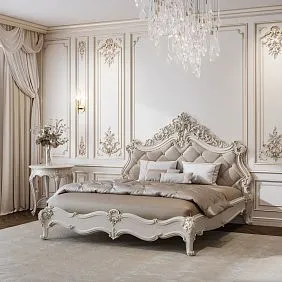

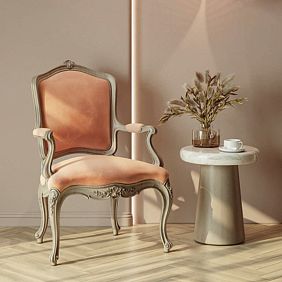


Tectonic Shift: How the Interior Solutions Market Has Changed




From Reverence for Imports to Rational Choice
Just a decade ago, the formula for a successful interior seemed simple: Italian furniture, French molding, German household appliances. The origin of the product was a status marker, and local production was perceived as a forced alternative for those who could not afford imports. This paradigm has collapsed under the weight of reality.
The modern buyer — educated, rational, environmentally conscious — evaluates not the brand of the country of origin, but the specific characteristics of the product. Quality of materials, craftsmanship, design value, environmental friendliness, delivery times, customization options, after-sales service. And on all these parameters,Production of designer furniturein Russia today not only competes with Western counterparts — it surpasses them.
Our factory also produces:


New Geopolitical Reality
Events of recent years have radically restructured global trade flows. Logistics chains that seemed unshakable turned out to be fragile. Delivery costs have increased many times over. Delivery times have become unpredictable. Customs procedures have become more complicated. All this has made imports an expensive, risky, and unpredictable venture.
Simultaneously, Russian manufacturers received an incentive and an opportunity for development. Investments in equipment, technology, and personnel training have increased manyfold. Designers who previously worked for Western brands have returned to Russia.Designer furniture factoriesmodernized, mastering new materials and techniques. The result exceeded expectations.
Get Consultation
Cultural Turn: The Search for Identity
In addition to economic and logistical factors, an important cultural shift has occurred. After decades of copying Western models, Russian society has begun to search for its own identity, turn to its roots, and reinterpret its national cultural heritage.
Russian Stucco— is not just a decorative element; it is part of an architectural tradition dating back to the palaces and estates of the Russian Empire. Modern masters do not blindly copy historical models but creatively reinterpret them, creating stucco decor that organically fits into contemporary interiors while carrying a recognizable national code.
Technological Revolution: How Russian Manufacturers Caught Up and Surpassed the West
Investment in equipment
The myth of the technological backwardness of Russian industry is shattered upon the first visit to a modernstucco productionor furniture factory. Here, equipment from leading global brands is installed: German, Italian, and Austrian machines of the latest generation. Multi-axis CNC milling centers capable of creating elements of the most complex geometry. Presses ensuring perfect bonding. Premium-class air filtration system painting booths.
Moreover, Russian engineers adapt imported equipment to the specifics of local production, develop their own technological solutions that sometimes prove more effective than Western counterparts. This is not mere copying—it is the creative development of technology.
Digitalization of Production Processes
ModernProduction of designer furniture— is a high-tech enterprise where digital technologies permeate all processes. 3D modeling allows for the creation of virtual product prototypes, making changes without producing physical samples, and calculating material usage with millimeter precision.
Scanning real objects—antique furniture, architectural elements—enables the creation of digital copies of historical models, which can then be reproduced with absolute accuracy or serve as the basis for new design developments.
Production management systems track every order from receipt to shipment, optimize equipment usage, minimize downtime, and ensure deadlines are met.
Materials: From Import Dependence to Self-Sufficiency
One of the main problems for Russian manufacturers for a long time was dependence on imported materials: special adhesives, varnishes, paints, and hardware. In recent years, the situation has changed dramatically. Russian chemical enterprises have mastered the production of adhesive compounds that are not inferior to German ones. Domestic eco-class paint and varnish materials have emerged.
As for wood—Russia has always had a natural advantage here. Oak, ash, beech, birch—species traditionally used in furniture production—grow within the country.Designer furniture factorieshave direct contracts with logging enterprises, control the quality of raw materials, its proper drying and storage.
Polyurethane: The Material of the Future for Stucco Production
custom molding productionmade of polyurethane is a high-tech process requiring precise adherence to temperature regimes, correct component proportions, and quality molds. Russian manufacturers have mastered this technology at a world-class level. Russian-made polyurethane stucco is not inferior to European counterparts in detail, strength, and durability but significantly wins in price.
Moreover, Russian technologists have developed polyurethane compositions with improved characteristics: increased resistance to ultraviolet light, non-yellowing over time, with the possibility of coloring in any colors directly in the mass. These are innovations that Western competitors do not have.
Design: From Copying to Trendsetting
The Russian Interior Design School
For a long time, Russian designers were perceived as copyists, adapting Western trends to local conditions. Today, the situation has changed. The Russian school of interior design has gained its own face, a recognizable style, and confidence in its abilities.
Russian designers actively participate in international exhibitions, receive prestigious awards, and are published in leading world publications. Their projects demonstrate boldness, creativity, and the ability to synthesize various cultural influences, creating something unique and recognizable.
Individual Approach as a Competitive Advantage
Western furniture brands, even premium ones, work primarily with collections. Yes, variations in upholstery color or wood species are possible, but the basic model remains unchanged.Russian designer furnitureoffers a completely different level of customization.
A client can come with their own sketches or photos of liked items, and the craftsmen will create an exact copy or, even more interestingly, develop an original project that takes into account all the client's wishes: dimensions, proportions, carving style, wood species, type of finish. This is not just furniture—it is a work of art created specifically for a particular interior.
The same applies to stucco.custom molding productionmade to order allows for the creation of unique compositions not found in catalogs—panels with family heraldry, rosettes based on original sketches, moldings with a unique profile. This makes the interior truly exclusive.
Synthesis of tradition and modernity
The uniqueness of the Russian approach lies in the ability to organically combine seemingly incompatible elements: classical forms and modern materials, historical ornaments and contemporary color solutions, craft techniques and high technology.
Russian Stuccoin modern interiors is not a stylization of the past but a living dialogue of eras. A classical cornice can be painted in graphite black and complemented with LED lighting. A Baroque panel can be made from a modern composite material and integrated into a minimalist interior, creating a captivating contrast.
Economy: Why Local Production is More Profitable
Direct Cost Comparison
Let's compare the total cost of ownership for imported and Russian furniture. A premium-class sofa imported from Italy may initially seem more expensive than its Russian counterpart. But add to the product price the delivery cost (which for large furniture can be up to 30% of the price), customs duties, currency exchange risks, and the cost of the long wait (often 4-6 months from order to receipt).
Now consider that if it breaks or needs repair, you will have to find a specialized service, order spare parts from Italy, and wait for months again. Now compare that withRussian designer furniture: the manufacturer is in your country, production time is 1-2 months, delivery takes a week, service is prompt, with no language barriers or customs hassles.
Flexible pricing
Russian manufacturers can offer more flexible pricing, especially for large orders or long-term cooperation.Designer furniture factoriesThey work directly with customers, without intermediaries, which allows them to reduce markups.
Moreover, when working with a local manufacturer, you can implement a project in stages, first ordering the essentials, then complementing the interior with new elements. With imports, you have to order everything at once to minimize logistics costs, which requires a large one-time investment.
Investment in the Local Economy
Choosingcustom molding productionBy choosing furniture of Russian production, you are investing in the development of the domestic economy. Your money stays in the country, creates jobs, pays taxes that go towards developing infrastructure, education, and healthcare.
This is not empty patriotism, but a rational economic calculation. A strong local industry means competition that keeps prices in check, innovations that improve quality, and service availability that enhances living comfort.
Quality: Debunking Myths
Myth one: 'Imports are always of higher quality'
This stereotype had grounds twenty years ago, but today it is absolutely not true.Production of designer furnitureFurniture production in Russia uses the same materials as European manufacturers. Often even better: Russian oak surpasses Italian oak in density and strength, as the latter grows in a milder climate.
The equipment is identical. A German milling machine works the same in Milan and in Saint Petersburg. The difference can only be in personnel qualifications and production culture. But Russian craftsmen, many of whom trained in the best European workshops or have years of experience in export, are not inferior to their Western colleagues.
Quality control at Russian enterprises is sometimes even stricter than in the West. Young companies actively conquering the market cannot afford reputational damage from defects. Each product undergoes multi-stage inspection.
Myth two: 'Russian molding looks cheap'
Russian StuccoModern production of molding is a product of high technology. Molds for casting are created from 3D models with micron precision. Polyurethane compositions are developed by chemists considering all requirements for strength, stability, and durability.
The detailing of modern Russian molding is not inferior to 19th-century handcrafted plasterwork. Every acanthus leaf, every volute curl is crafted with jeweler's precision. Finishing—painting, patination, gilding—is done by hand by highly qualified masters.
Only a specialist can distinguish quality Russian molding from European by detailed study. For an ordinary observer, there is no difference. However, the price difference is significant—up to 50-70% in favor of the domestic product.
Myth three: 'Russian furniture design is outdated'
Perhaps this myth had grounds in the 1990s, when Russian manufacturers indeed copied Western models with a lag of several years. TodayRussian designer furnitureRussian furniture design is at the forefront of global trends, and in some areas, it sets them.
Russian designers actively experiment with forms, materials, and techniques. They are not constrained by the strict corporate standards of large Western brands, which gives freedom for creativity.Designer furniture factoriesRussian manufacturers willingly take on the implementation of the boldest projects.
Logistics: The Advantage of Proximity
Delivery Times
When ordering furniture from Italy or molding from France, be prepared to wait 4-6 months. Production takes 2-3 months, sea freight delivery adds another month to a month and a half, customs clearance adds another week or two. And that's in the best-case scenario, without any force majeure.
custom molding productionThe lead time for furniture in Russia ranges from 2 weeks to 2 months, depending on the complexity of the order. Delivery within Russia takes from a few days to a week. So, from order to receipt, the maximum is 2.5 months. This allows for more flexible renovation planning and making changes to the project at later stages.
Personal oversight capability
When working with a local manufacturer, you can visit the factory, see how your order is being made, make adjustments during production, and personally inspect the finished item before shipping. This eliminates unpleasant surprises upon receipt.
With imports, you are entirely dependent on the supplier's integrity and the accuracy of translating your wishes. If something goes wrong, fixing the problem becomes a nightmare: negotiations through an interpreter, shipping samples, months of waiting.
Adaptation to local conditions
Russian manufacturers understand the specifics of the local climate, construction standards, and room dimensions. Furniture is created considering that apartments can be very dry in winter due to heating, and humidity can be high in summer.Russian Stuccois designed with the standard ceiling heights of Russian apartments in mind.
Imported furniture often requires adjustments: European cabinets may not fit standard niches, Italian sofas may be too low for Russian comfort standards, French moldings may be too large for typical apartments.
Ecology and ethics: responsible consumption
Carbon footprint
Transporting a ton of cargo from Italy to Russia by sea creates emissions of about 100 kg of CO2. For large furniture, the total carbon footprint of logistics can amount to hundreds of kilograms of greenhouse gases. When purchasingRussian designer furnituredelivery within the country creates emissions dozens of times lower.
For environmentally conscious consumers, and there are more and more of them, this is a significant argument. Choosing local production is a contribution to the fight against climate change, it is responsible consumption, it is caring for the planet's future.
Transparency of the production chain
When working with a local manufacturer, you can trace the entire chain: where the wood comes from (from sustainably managed forests or not), what glues and varnishes are used (eco-friendly or toxic), how workers' labor is organized (fair conditions or exploitation).
Production of designer furniturein Russia is increasingly receiving environmental certifications confirming a responsible approach. Many factories open their doors to visitors, conduct tours, demonstrating process transparency.
Supporting craft traditions
By purchasing products from Russian craftsmen, you support the preservation of traditional crafts: wood carving, molding, carpentry. This is a living cultural heritage that could disappear without demand.Designer furniture factoriesnot only produce goods but also train a new generation of craftsmen, pass on knowledge, and preserve technologies.
Service: the advantage of communication
Language and cultural context
Working with a Russian manufacturer eliminates the language barrier. You explain your wishes in your native language, use familiar cultural codes, and understand each other implicitly. When ordering imports, even with an interpreter, misunderstandings often arise, leading to results different from expectations.
Prompt problem resolution
If a problem arises—a defect, damage during transportation, need for adjustment—a Russian manufacturer can respond promptly. Send a technician, produce a replacement in a few days, offer compensation. With imports, resolving any problem stretches over months and requires nerves.
Long-term relationships
A local manufacturer is interested in long-term relationships with the client. They know that a satisfied customer will return, recommend to friends, leave a positive review. Therefore, service is built with a long-term perspective: flexibility, attentiveness, willingness to accommodate.
An import brand perceives you as one of thousands of anonymous buyers. Personal relationships are impossible, individual approach is more the exception than the rule.
Case studies: success stories of Russian production
Project: a country residence in a classic style
The client planned to fully furnish an 800 sq. meter country house with Italian furniture and French moldings. Budget — about 50 million rubles, timeline — one year. After consulting with a designer, it was decided to useRussian designer furnitureandRussian stucco.
Result: the project was implemented in 7 months, the budget amounted to 28 million rubles, quality exceeded expectations. All furniture is made of solid oak, with hand-carved details, created according to an individual design. Molding is a combination of gypsum and polyurethane elements, including unique panels with family heraldry. Savings of 22 million rubles were directed towards landscaping the territory and creating a winter garden.
Project: premium-class restaurant
The owner of a restaurant chain was opening a new establishment in the historical center of Moscow, the concept being Russian cuisine in a modern interpretation. The interior was supposed to reflect the philosophy: respect for traditions, but without museum-like stylization.
custom molding productioncreated modern interpretations of classical elements: moldings with simplified profiles, rosettes with geometrized floral ornaments.designer furniture factorymanufactured tables from solid oak boards, chairs with carved backs, but with modern proportions.
Result: the interior received numerous awards at professional competitions, the restaurant became one of the most photographed in the city. The cost of furnishing and decor turned out to be 40% lower than when using imported items, while exclusivity was one hundred percent — there are no similar products anywhere else in the world.
Project: apartments in contemporary classic style
A young couple, designers by profession, were furnishing their own apartment. The concept was modern comfort with classical accents. It was important that every element was unique and carried a personal story.
They personally visited theproduction facility, spent two days there, communicating with craftsmen, observing processes, adjusting designs. The following were created: a sofa with carved legs of a non-standard shape, a coffee table with inlay, a shelving unit combining open shelves and closed sections with carved doors. Molding — minimalist moldings forming a geometric pattern on one accent wall.
Result: an interior fully reflecting the personality of the owners, a budget 2.5 times lower than purchasing designer imported furniture, plus the invaluable experience of participating in the creation of their own home.
Future: what awaits the Russian industry
Export potential
Russian manufacturers are already exporting their products to dozens of countries.Russian Stuccoadorns interiors in the USA, Canada, and European countries.Russian designer furnitureappears in prestigious projects in the Middle East and Asia.
With the development of new logistics corridors and the growth of the reputation of Russian brands, exports will only increase. There is every reason to believe that by 2030, Russia will enter the top-10 global exporters of premium furniture and interior decor.
Technological Innovations
Russian manufacturers are actively investing in R&D. New composite materials are being developed, combining the strength of wood with the lightness of polymers. Processing technologies are being improved: laser cutting allows creating intricate elements of incredible complexity that cannot be carved by hand or with a milling machine.
Smart technologies are being implemented: furniture with built-in sensors that react to human presence, with integrated gadget charging systems, with heating or cooling.Production of designer furnitureof the future is a symbiosis of craftsmanship and high-tech.
Sustainable development
The environmental agenda will only intensify.custom molding productionand furniture in Russia is moving towards complete eco-friendliness: using wood from certified forests, switching to water-based varnishes and paints without volatile organic compounds, implementing closed-loop production cycles with minimal waste.
Some enterprises are already installing solar panels, collecting rainwater for technical needs, using heat from production processes to heat premises. This is not only environmentally friendly but also economically efficient.
How to choose a Russian manufacturer
Evaluation criteria
Consider ceiling height, room size, interior style, and functionality.Designer furniture factoriesor a company formolding productionpay attention to the following points:
Time in the market. Companies with a history of 10-20 years have proven their viability, survived crises, and accumulated experience.
Portfolio of completed projects. A serious manufacturer has photographs of completed works and can provide contacts of satisfied clients.
Own production. Make sure the company manufactures, not just resells. Visit production facilities if possible.
Staff qualifications. Find out who works at the enterprise: whether there are masters with years of experience, whether training is conducted, and whether they participate in professional competitions.
Technological base. Modern equipment is the key to quality and meeting deadlines. Manual labor is valuable, but basic operations should be performed on machines.
Materials. Inquire about what materials are used, where they are sourced from, and whether there are quality and environmental safety certificates.
Service. How customer work is structured: consultations, design project, production, delivery, installation, warranty, after-sales service.
Questions to ask
-
Can you create a product based on my sketch?
-
What are the production timelines?
-
How are delivery and installation organized?
-
What guarantees are provided?
-
Is it possible to visit the production facility and see the process?
-
Is there an opportunity to see samples of materials and finishes?
-
What is the cost of making changes to the project at different stages?
-
How are issues resolved when defects are identified?
Red flags
Be wary if:
-
They refuse to show the production facility, citing 'trade secrets'
-
They cannot provide a portfolio or contacts of previous clients
-
They promise unrealistically short deadlines (quality furniture and molding require time)
-
The price is significantly below market (most likely, there will be savings on materials or quality)
-
They require 100% prepayment (standard is 50% upon order, 50% upon receipt)
-
The contract is vague, without clear product specifications
Answers to Popular Questions
Is it true that Russian furniture is inferior to imported furniture in design?
No, this is an outdated stereotype. ModernRussian designer furnitureis created by designers with international experience, many of whom studied or worked abroad. Russian brands regularly receive awards at international exhibitions and are published in prestigious publications.
What is the real service life of Russian solid wood furniture?
With proper care, solid wood furniture produced with adherence to technology (proper wood drying, quality gluing, professional finishing) lasts for decades. Antique furniture over a hundred years old confirms: quality wood is practically eternal. ModernRussian designer furniturehas the same durability potential.
Is polyurethane molding safe?
Yes, qualityPolyurethane moldingsof Russian production is absolutely safe. After curing, the material is inert and does not emit any substances. Many manufacturers have obtained environmental certificates confirming the safety of the products for use in residential premises, including children's rooms.
Is it possible to order furniture in a style other than classical?
Absolutely.Production of designer furniturein Russia covers all styles: from Baroque to minimalism, from loft to Scandinavian, from Art Nouveau to eclectic. Moreover, it is possible to create furniture in a unique style developed specifically for your interior.
How to care for stucco?
Russian Stucco, regardless of material (plaster or polyurethane), requires minimal maintenance. Regularly remove dust with a soft brush or a vacuum cleaner with a brush attachment. Polyurethane molding can be wiped with a slightly damp cloth. Plaster molding (if painted with moisture-resistant paint) can also be gently wiped. Avoid abrasive agents and aggressive chemicals.
How much does it cost to furnish a living room with Russian furniture?
The range is very wide and depends on the size of the room, chosen style, and complexity of the items. Approximately: furnishing a 25-30 sq.m. living room with quality Russian furniture (sofa, two armchairs, coffee table, console, shelving unit or wardrobe) will cost 500-800 thousand rubles for serial models in the mid-price segment and from 1.5 million for premium custom-made items with hand-carved details.
How long does it take to produce custom furniture?
Standard lead times forcustom designer furnitureare: 4-8 weeks for relatively simple models, 8-12 weeks for complex items with abundant carving or intricate upholstery. Plus delivery time (usually up to a week within Russia).custom molding productionis faster: from a few days for standard elements to 4 weeks for individual projects.
Is it possible to restore old furniture at the factory?
Yes, manyDesigner furniture factoriesoffer restoration services. This can be a full restoration of antique pieces with recreation of lost carved elements, reupholstery, and finish restoration. Or partial repair: replacement of damaged parts, renewal of paintwork, structural reinforcement.
What warranty is provided for furniture and molding?
Standard warranty forRussian designer furnituresolid wood furniture is 2-3 years on structural integrity (integrity, absence of deformations, cracks) and 1 year on finish (paintwork, hardware). Formoldingmolding, it is usually 1-2 years. But this is a warranty against manufacturing defects. With proper care, the products last much longer than the warranty period.
Is it possible to combine Russian and imported furniture in one interior?
Of course! Eclecticism is one of the current trends. Russian furniture combines perfectly with items of any origin; the main thing is to maintain stylistic unity or, conversely, consciously create contrasts. You can save money by ordering large case furniture from a Russian manufacturer and buying a couple of accent pieces from imported designers.
Conclusion: the future is local
The choice between import and local production is increasingly being decided in favor of the latter. And this is not a forced measure, but a rational decision based on objective advantages: comparable or superior quality, lower price, shorter lead times, convenience of communication, eco-friendliness, support for the domestic economy.
Russian StuccoandRussian designer furniturein 2026 is not just an 'alternative to import,' it is the full-fledged number one choice for those who value quality, individuality, and conscious consumption.
The company STAVROS is a vivid example of a successful world-class Russian manufacturer. For over two decades, the company has been creating products from solid wood and polyurethane that adorn interiors not only in Russia but also far beyond its borders. The production base in St. Petersburg is equipped with modern equipment from leading world brands: over 19 CNC machines, allowing for work of any complexity.
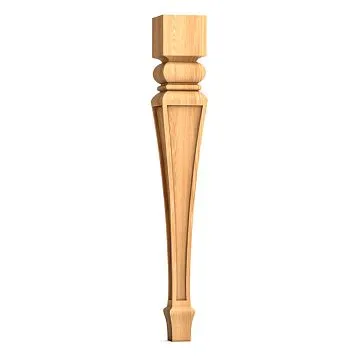
STAVROS offers over 4000 models of decorative elements: from furniture legs and overlays to finished furniture, from simple moldings to the most complex carved panels. The ability to work from individual sketches, a full cycle from design to installation, and flexible pricing make STAVROS the optimal choice for both private clients and professionals—designers, architects, furniture manufacturers.
custom molding productionat STAVROS is a combination of traditional craftsmanship and modern technology. The company's polyurethane molding is not inferior to European counterparts in quality of execution, strength, and durability, yet is significantly more affordable in price.
designer furniture factorySTAVROS creates products from selected solid oak, beech, and ash. Each piece of furniture is the result of the collaborative work of designers, technologists, and master cabinetmakers. Classical forms are reinterpreted, adapted to modern proportions and functional requirements, and complemented by original finds.
By choosing STAVROS products, you choose quality tested by time and thousands of completed projects. You choose an individual approach and the possibility of creating a unique interior. You support Russian production and contribute to the development of the domestic industry. You make a choice in favor of a future where local production wins not out of necessity, but by right—the right to be the best.