Article Contents:
- Strategy for selecting coatings
- Water-dispersive systems: ecology and universality
- Alkyd enamels: traditional quality and durability
- Polyurethane systems: technological perfection
- Professional toolset
- Brushes: classic in modern execution
- Rollers: efficiency and quality
- Spray systems: technological breakthrough
- Preparation operations: foundation for quality result
- Surface condition analysis
- Mechanical surface preparation
- Restoration of surface integrity
- Priming: creating a reliable base
- Functional purpose of primer systems
- Classification of primer materials
- Technology of applying primer systems
- Techniques for applying paint compositions
- Traditional brush technique
- Roller technology
- Spray technologies
- Decorative effects and artistic techniques
- Patina: The Nobility of Time
- Crackle finishes
- Metallic effects
- Multi-layer coating: creating depth and complexity
- Planning of coating system
- Inter-layer treatment technology
- Quality control and defect prevention
- Diagnosis and prevention of defects
- Methods for correcting defects
- Specialized techniques for various styles
- Classic style: elegance and luxury
- Provence style: romance of French countryside
- Scandinavian style: naturalness and functionality
- Ecological Aspects and Safety
- Ecologically clean materials
- Waste disposal and recycling
- Economic Efficiency of Projects
- Calculation of material costs
- Cost Optimization
When old furniture loses its former appeal, and purchasing new requires significant investment, it is time for a creative approach to solving interior design challenges. Understanding that how to paint furniture with paintbecomes key to creating unique design solutions that transform mundane furnishings into exclusive works of art.
Transforming furniture through painting is an engaging process where technical knowledge intertwines with artistic vision, creating unique interior accents. Each piece of furniture possesses hidden potential that is revealed through skillful application of modern coatings and decorative techniques.
The skill of painting furniture requires a deep understanding of materials, tools, and technological processes. This art combines the practical skills of a craftsman with the creativity of an artist, enabling the creation of items that reflect the owner's individuality and harmoniously fit into the concept of living space.


Strategy for selecting coatings
The success of any furniture painting project begins with the correct choice of paint compositions. Modern chemical industry offers a wide range of materials, each possessing specific characteristics and areas of application.




Water-dispersive systems: ecology and universality
Water-based acrylic paints have gained popularity due to their ecological purity and ease of application. The absence of toxic solvents makes them an ideal choice for work in residential spaces, especially when it comes to children's furniture or bedroom items.
Modern acrylic compositions demonstrate excellent adhesion to various surfaces, from natural wood to metal and plastic. Drying time is only 2-4 hours, allowing multiple layers to be applied within a single working day. The elasticity of the formed film prevents cracking even under significant temperature fluctuations.
The color palette of water-dispersive paints is impressive in its variety. Computer color matching allows obtaining any shade according to international color catalogs, ensuring accurate reproduction of design concepts. Particularly valuable are paints with added pearl and metallic pigments, creating effects of shimmer and depth.
Our factory also produces:


Alkyd enamels: traditional quality and durability
Organosoluble alkyd compositions form an exceptionally strong and wear-resistant coating that withstands intensive use for many years. The glossy surface has dirt-repellent properties and is easily cleaned with ordinary cleaning agents.
A unique feature of alkyd enamels is their ability to self-level during drying. This allows achieving a perfectly smooth surface even when applied with a brush, which is especially important for furniture with large flat surfaces. Drying time is 8-12 hours depending on temperature and air humidity.
A wide range of decorative effects is achieved by using special additives: from classic gloss to matte and semi-matte finishes. Enamels with a "hammer" effect are particularly popular, creating a distinctive textured surface that conceals minor imperfections of the base.
Get Consultation
Polyurethane systems: technological perfection
Two-component polyurethane paints represent the pinnacle of modern technology in furniture coatings. Chemical curing ensures the formation of a coating with unique performance characteristics: exceptional resistance to abrasion, chemical exposure, and ultraviolet radiation.
Working with polyurethane systems requires precise adherence to mixing component ratios and limited working time of the prepared mixture. Professional compositions have a shelf life of 4 to 8 hours, requiring clear planning of the work process. The result justifies the complexity of application — museum-quality coating capable of serving for decades without noticeable degradation.
Polyurethane paints are especially effective for restoring antique furniture, where it is important to ensure maximum preservation of decorative elements. The ability to create coatings of various gloss levels — from deep matte to mirror gloss — allows adapting the material to any design requirements.
Professional toolset
The quality of painting directly depends on the correct selection and preparation of tools. Each type of paint and application technique requires specific tool equipment.
Brushes: classic in modern form
Natural bristle remains the gold standard for applying alkyd enamels and oil-based compositions. The structure of natural hairs ensures optimal loading and even distribution of material, creating a smooth surface without visible tool marks.
High-quality brushes are made from Chinese boar bristles, specially processed to achieve the required stiffness and elasticity. Double or triple bristle attachment in a metal ferrule prevents bristle loss during work.
Synthetic fibers are specially developed for use with water-dilutable paints. Modern polyamide and polyester fibers match natural fibers in application quality, and in some cases surpass them in durability and ease of cleaning.
The shape of the brush determines its area of application. Flat brushes 50-100 mm wide are ideal for painting large surfaces, round brushes 12-25 mm in diameter — for detailed profiling and hard-to-reach areas, angled brushes — for working with internal corners and moldings.
Rollers: Efficiency and Quality
Velour rollers create a surface with minimal texture, approaching the quality of spraying. Short nap (4-6 mm) ensures thin and even application of enamels and glossy paints. Roller diameter affects coating quality — a smaller diameter (40-50 mm) provides a finer application.
Roller quality is determined by the density of the nap filling and the strength of attachment to the base. Professional rollers withstand multiple solvent cleanings without losing their working characteristics. Replaceable pads allow using one handle for different types of paints.
The quality of the roller is determined by the density of the pile filling and the strength of attachment to the base. Professional rollers withstand multiple solvent cleanings without losing their working properties. Replaceable sleeves allow using one handle for different types of paint.
Spray Systems: Technological Breakthrough
Electric spray guns open up the possibility of creating professional-quality coatings at home. Modern models are equipped with adjustments for spray pattern, material feed rate, and pressure, allowing the tool to be adapted to specific working conditions.
HVLP technology (High Volume Low Pressure) provides high material transfer efficiency with minimal mist formation. This not only saves expensive paints but also significantly improves working conditions by reducing the concentration of suspended particles in the working zone’s air.
Professional spray guns come with interchangeable nozzles of different diameters (from 1.2 to 2.5 mm), allowing work with materials of varying viscosity — from liquid stains to thick primers. The air filtration system ensures coatings free of dust and other contaminants.
Preparation Operations: Foundation of Quality Result
The thoroughness of the preparatory stage determines up to 70% of the success of the entire painting project. Deficiencies in preparation cannot be compensated by the quality of subsequent operations.
Surface Condition Analysis
Diagnosis of old coatings begins with determining their type and condition. A simple solubility test allows distinguishing between water- and organic-soluble coatings. A small amount of solvent is applied to an inconspicuous area — softening indicates an alkyd base, no reaction indicates an acrylic or polyurethane base.
Adhesion assessment is performed using a grid cut or a simple scraper. Easily detachable areas require complete removal of the old coating. Strongly adhering layers may serve as a base for new coating after appropriate preparation.
Defect detection includes identifying cracks, chips, dents, and signs of insect activity (wood-boring insects). Each type of defect requires a specific remediation method. Minor scratches are removed by sanding, deep dents — by filling, insect damage — by specialized insecticidal compounds.
Mechanical Surface Preparation
Fixture removal is performed with special care, especially when working with antique items. Each element is photographed in its original position and marked for subsequent correct installation. Rare historical fixtures require separate restoration.
Removal of old coatings can be performed mechanically or chemically. Sanding begins with coarse abrasives (P60-P80) to remove the bulk of the coating and gradually transitions to finer grits (P120-P180) to prepare the surface for priming.
Chemical strippers are effective for removing multi-layer coatings with complex profiles where mechanical processing is difficult. Modern chlorine-free formulations are less toxic but require safety precautions. After application, the surface must be neutralized according to the manufacturer’s instructions.
Restoring Surface Integrity
Defects are filled with specialized wood putties matched to the base material’s color. Modern acrylic putties exhibit minimal shrinkage and excellent adhesion to various wood species.
Deep defects are filled in multiple stages with intermediate sanding of each layer. Final sanding is performed with abrasive P220-P320 until achieving a perfectly smooth surface, seamlessly transitioning into the base material.
Degreasing removes residues of polishing pastes, silicones, and oily contaminants that prevent primer adhesion. Special degreasers or isopropyl alcohol are used. The surface must be completely dry before applying primer.
Priming: Creating a Reliable Base
Primer performs critically important functions in a multi-layer coating system and is a mandatory stage in professional painting.
Functional Purpose of Primer Systems
Improving adhesion is the primary task of the primer layer. Specifically selected resins create a chemical bond between the substrate and the finish coating, ensuring the longevity of the entire system.
Balancing absorption capacity is especially important when working with wood, where different areas have varying densities. The sapwood and heartwood of wood absorb paint differently, which may lead to uneven coating. Primer eliminates these differences.
Isolating problematic substances prevents resins, tannins, and extractives from wood from penetrating through the finish coating. This is especially relevant for coniferous and exotic woods with high natural pigment content.
Classification of Primer Materials
Pigmented primers contain colored pigments and create an opaque layer that masks color inconsistencies in the base. They are especially effective when changing the color of furniture dramatically or working with heavily damaged surfaces.
Transparent primers preserve the visibility of wood texture and are used under transparent or semi-transparent finish coatings. Modern acrylic primers barely alter the wood's color, enhancing its natural beauty.
Specialized systems solve specific technical tasks. Blocking primers isolate stains and stains, adhesive primers ensure adhesion to problematic surfaces, and leveling primers create a perfectly smooth base for glossy coatings.
Application Technology of Primer Systems
Material preparation includes thorough mixing to ensure even distribution of pigments and fillers. If necessary, the primer is diluted to the recommended viscosity using specified solvents.
Application is performed in a thin, uniform layer without streaks or missed spots. When using a brush, strokes should be long and even, with final blending along the wood grain. Roller application requires the use of special primer rollers with short nap.
Inter-layer treatment after complete primer drying includes light sanding with P320-P400 abrasive to remove raised fibers and create optimal surface roughness for paint adhesion. The resulting dust is carefully removed using special sticky cloths.
Techniques for Applying Coloring Compounds
Skill in the field of how to paint furniture with paintis largely determined by mastery of various application techniques and the ability to select the optimal method for each specific situation.
Traditional Brush Technique
Tool preparation begins with removing loosely held bristles and lightly moistening the working part with water for acrylic paints or solvent for alkyd paints. A new brush should be "broken in" on a rough surface to remove manufacturing dust.
Brush loading technique involves dipping the brush to one-third the length of its bristles, then squeezing out excess material at the edge of the container or using a special grid. The correct amount of material on the brush ensures even application without streaks or dry spots.
Application technique depends on the type of surface and desired coating quality. Flat surfaces are painted with long parallel strokes overlapping by 2-3 cm. Profiled elements require special attention to brush movement direction — along the profile elements to emphasize the shape.
Final blending is performed with light, almost dry brush strokes to eliminate tool marks and create a uniform surface texture. This technique is especially important when working with glossy enamels.
Roller Technology
The tray system includes a main paint container and a squeegee grid for even distribution of material across the roller surface. Professional trays are equipped with non-slip bases and convenient handles for carrying.
Roller application technique begins with lightly dipping the roller into paint and rolling it over the grid to remove excess. Even distribution of material across the entire roller surface ensures quality coverage without streaks or unevenness.
Coating application is performed with crosswise strokes to evenly distribute paint, followed by smoothing in one direction. Pressure should be moderate and consistent across the entire painted area.
Spray Technologies
Equipment preparation includes setting air pressure, spray nozzle shape, and material feed rate. Each type of paint requires individual adjustment to achieve optimal coating quality.
Material preparation may include diluting paint to working viscosity, determined using a viscometer or visually by the paint's flow from the mixer. Too thick paint results in large droplets, too thin paint causes runs.
Spray technique requires maintaining a constant distance from the nozzle to the surface (15-25 cm) and uniform movement speed of the spray gun (30-40 cm/sec). Each pass should overlap the previous one by 50% to ensure even coating.
Decorative Effects and Artistic Techniques
Modern furniture decoration possibilities far exceed simple single-tone painting, offering numerous ways to create unique visual effects.
Patina: The nobility of time
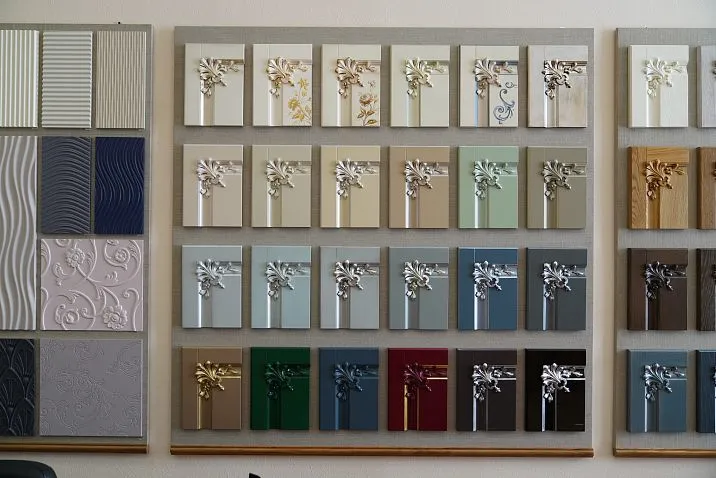
Classic patina creates an effect of noble aging, emphasizing relief elements and imparting historical value to furniture. Traditional technique involves applying a dark patina compound after base coating, followed by partial removal from raised areas.
Modern patina materials allow creating diverse effects. Gold patina adds luxury to classic interiors, silver patina highlights modern design, and colored patina opens possibilities for avant-garde solutions.
Application technique requires certain skill and artistic sensitivity. The patina compound is applied with a soft brush or sponge into profiled recesses, then excess is wiped away with cloth, leaving accents in desired areas. Effect intensity is controlled by the degree of material removal.
Crackle Coatings
The effect of old cracks is achieved using special crackle lacquers that create controlled cracking of the coating upon drying. Crack size and character depend on the thickness of the applied layer, drying temperature, and type of base coating.
One-step crackle is created by applying a special compound over base paint. Upon drying, a crack network forms, allowing the lower layer to show through. Two-step technique allows creating more complex effects with contrasting crack highlights.
Crack accentuation is performed by embedding contrasting pigments or special compounds into formed cracks. This enhances the effect and makes it more pronounced. Final protective lacquer coating ensures the durability of the decorative effect.
Metallic effects
Gilding and silvering with modern materials create a realistic imitation of noble metals. Special paints contain metal micro-particles or their imitations, providing the characteristic gloss and light play.
Surface preparation for metallic effects requires perfect leveling, as any defects become especially noticeable on glossy finishes. Often, a special black undercoat is used to enhance the depth of the metallic effect.
Application techniques for metallic paints have their own specifics. The best results are achieved by spraying, but special velour rollers can also be used. Brush application requires special care to avoid streaking in the finish.
Multi-layer coating: creating depth and complexity
Professional results are often achieved using multi-layer systems, where each layer performs a specific function in the overall composition.
Coating system planning
The base layer determines the main color and creates an even undercoat for subsequent operations. Its quality is critically important for the final result, so special attention is paid to even application and absence of defects.
Decorative layers create visual effects and artistic value of the finish. Their quantity and application sequence are determined by the desired result and techniques used. Each layer must be fully dry before applying the next.
Protective coating ensures the durability of decorative layers and required performance characteristics. The choice of protective material depends on the furniture's usage conditions — from simple acrylic varnishes for interior use to high-performance polyurethane systems for intensive use.
Interlayer Processing Technology
The dwell time between layers is determined by the material type and drying conditions. Insufficient dwell time may cause coating defects, excessive dwell time may cause adhesion problems. Paint manufacturers always indicate minimum and maximum inter-layer dwell times.
Sanding between layers is performed with fine abrasives (P400-P800) to create optimal surface roughness and remove surface defects. The intensity of processing should be minimal — it is sufficient to slightly dull the surface.
Dust removal is performed using special sticky cloths or anti-static wipes. Even the smallest dust particles may cause defects in the next layer, especially with glossy finishes.
Quality control and defect prevention
A professional approach to painting furniture with paint includes systematic quality control at all stages of the process and knowledge of methods to prevent typical defects.
Diagnosis and prevention of defects
Craters and delamination most often occur due to surface contamination with silicone, oils, or other substances that prevent adhesion. Prevention includes thorough degreasing and using anti-crater additives in the paint.
Runs and sags occur when applying too thick a layer of material or at low ambient temperatures. Proper viscosity adjustment of the paint and maintaining optimal working conditions prevent this defect.
Uneven gloss may be caused by varying absorbency of the substrate, uneven application, or disruption of drying conditions. Proper priming and adherence to application technology eliminate this defect.
Methods for Correcting Defects
Local correction is applied for small, point defects. The defective area is carefully sanded, primed, and painted with a smooth transition to the main finish.
Complete repainting is required for extensive defects or unsatisfactory overall quality. The process includes complete removal of the defective coating and re-execution of all technological operations.
Polishing and buffing help eliminate minor surface defects and bring the finish to an ideal state. Modern polishing systems allow achieving mirror gloss even after correcting serious defects.
Specialized techniques for different styles
Each interior style requires a specific approach to furniture painting, taking into account its distinctive features and aesthetic principles.
Classic style: elegance and luxury
Gilding and silvering remain classic techniques for creating luxurious interiors. Modern materials allow achieving an effect indistinguishable from real precious metal at significantly lower costs.
Preparation for gilding requires perfect surface leveling and application of a special primer. Electroplated gold or its imitation is applied to a special glue-mordant, followed by polishing with an agate tooth to create the characteristic gloss.
Imitation of valuable wood species is achieved through complex painting techniques, including creation of wood texture, knots, and growth rings. This work requires high skill and deep understanding of the structure of various wood species.
Provençal style: romance of French countryside
Artificial aging creates the effect of furniture that has undergone decades of use. The technique includes creating scuffs, scratches, and faded areas in places of natural wear.
Characteristic scuffs are created by partial removal of the top paint layer in areas of most frequent contact — corners, handles, edges of countertops. Using sandpaper and metal scrapers allows mimicking natural wear.
Floral motifs are applied using stencil painting or freehand brush techniques. The characteristic color palette includes pastel shades of lavender, rose, mint, and bone white.
Scandinavian style: naturalness and functionality
Wood whitening creates a distinctive light tone, highlighting the natural texture of the material. Special whitening agents lighten the wood without damaging its structure.
The brushing technique reveals and emphasizes the natural wood texture, removing soft fibers and leaving hard annual rings. Subsequent toning enhances the relief and creates the characteristic Scandinavian look.
Matte finishes create a sense of naturalness and tactile comfort. Modern matte varnishes provide surface protection without creating a "plastic" effect.
Ecological aspects and safety
Modern requirements for material and coloring process environmental safety determine the selection of technologies and materials.
Eco-friendly materials
Low-VOC (low volatile organic compound) paints minimize environmental and human health impact. Modern water-dispersed systems contain virtually no harmful vapors.
Natural pigments and dyes not only ensure ecological safety but also provide unique color characteristics unattainable with synthetic materials. Mineral pigments are especially valued in high-end furniture manufacturing.
Disposal and recycling
Proper waste disposal includes sorting different types of materials and transferring them to specialized organizations. Modern technologies allow recycling most coatings.
Solvent regeneration is economically beneficial for large-scale projects and significantly reduces environmental impact. Special installations ensure high levels of purification for recovered solvents.
Economic efficiency of projects
Proper budget planning for furniture painting allows achieving maximum results at optimal costs.
Material cost calculation
Painting area is calculated considering all surfaces, including internal parts, profiled elements, and hard-to-reach areas. A 15-20% reserve is added to account for losses and defect corrections.
Material consumption depends on multiple factors: paint type, application method, substrate absorbency, and technician skill level. Practical consumption typically exceeds theoretical consumption by 20-30%.
Cost Optimization
Choosing the optimal coating system should consider not only initial material cost but also coating durability, ease of maintenance, and possibility of local repair.
Planning work allows minimizing time and material losses. Simultaneous processing of multiple items increases efficiency in using expensive materials and tools.
Mastering the skill of how to paint furniture with paintopens unlimited opportunities for creative self-expression and unique interior design solutions. Each project presents new challenges and opportunities for developing professional skills.
Modern technologies and materials provide tools for realizing the most ambitious design ideas. From simple color refreshment to complex artistic compositions — everything depends on the craftsman's skill and the quality of materials used.
Properly executed furniture painting not only transforms the appearance of items but also extends their service life, protecting them from external factors. Investments in quality materials and professional execution are many times repaid by the longevity and aesthetic appeal of the result.
Revolution in furniture design: the art of painting as a means of interior transformation | STAVROS Company